


Genesis 6:10
Bible text: King James Version (1769 Blayney text) · Public domain
Bible text: Berean Standard Bible · Public domain
Bible text: American Standard Version (1901) · Public domain
Bible text: World English Bible, Messianic edition · Public domain
Bible text: Geneva Bible (1599) · Public domain
Bible text: Young's Literal Translation · Public domain
- וַיּוֹלֶדvai·Yo·ledand he fatheredH3205Conj-w ¦ V-Hiphil-ConsecImperf-3msVerb Hiphil Consecutive Imperfect 3rd Singular Masculineוַandיּוֹלֶדhe fathered
- נֹחַNo·achNoahH5146N-proper-mNoun Proper Masculine
- שְׁלֹשָׁהshe·lo·ShahthreeH7969Adj-csAdjective Numerical Singular common gender Absolute
- בָנִיםva·NimsonsH1121N-mpNoun Plural Masculine Absolute
- אֶת'et<obj.>H853DirObjMParticle Object Indicator
- שֵׁםshemShemH8035N-proper-mNoun Proper Masculine
- אֶת'et<obj.>H853DirObjMParticle Object Indicator
- חָםchamHamH2526N-proper-mNoun Proper Masculine
- וְאֶתve·'Etand <obj.>H853Conj-w ¦ DirObjMParticle Object Indicatorוְandאֶת<obj.>
- יָפֶתYa·fetJaphethH3315N-proper-mNoun Proper Masculine
English is a literal word-by-word gloss of the Hebrew, not the KJV's wording. Why?
This is the original text the KJV's translators worked from — each Hebrew word with its own literal English meaning in this verse, prepared by scholars at Tyndale House, Cambridge. The KJV translates whole sentences, not word by word, so its wording differs: one Hebrew word can become several English words, and the KJV may choose “the LORD” where the gloss reads “Yahweh”. Both are faithful — they answer different questions. For the KJV's own rendering, switch to the KJV text.
Details
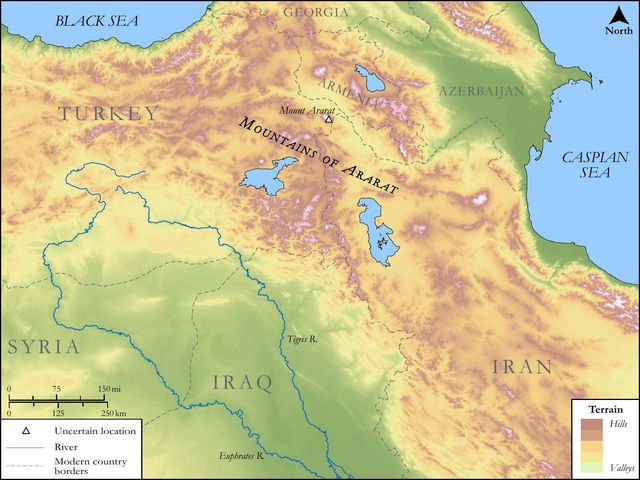
See on the biblical-era maps


Study this verse
Public-domain commentary
Matthew Henry
From his Commentary on the Whole Bible. Henry comments on passages, not single verses — this entry covers Genesis 6:8–10.
We have here Noah distinguished from the rest of the world, and a peculiar mark of honour put upon him. 1. When God was displeased with the rest of the world, he favoured Noah: But Noah found grace in the eyes of the Lord, Gen 6:8. This vindicates God's justice in his displeasure against the world, and shows that he had strictly examined the character of every person in it before he pronounced it universally corrupt; for, there being one good man, he found him out, and smiled upon him. It also magnifies his grace towards Noah that he was made a vessel of God's mercy when all mankind besides had become the generation of his wrath: distinguishing favours bring under peculiarly strong obligations. Probably Noah did not find favour in the eyes of men; they hated and persecuted him, because both by his life and preaching he condemned the world. But he found grace in the eyes of the Lord, and this was honour and comfort enough. God made more account of Noah than of all the world besides, and this made him greater and more truly honourable than all the giants that were in those days, who became mighty men and men of renown. Let this be the summit of our ambition, to find grace in the eyes of the Lord; herein let us labour, that, present or absent, we may be accepted of him, Co2 5:9. Those are highly favoured whom God favours. 2. When the rest of the world was corrupt and wicked, Noah kept his integrity: These are the generations of Noah (this is the account we have to give of him), Noah was a just man, Gen 6:9. This character of Noah comes in here either, (1.) As the reason of God's favour to him; his singular piety qualified him for singular tokens of God's loving-kindness. Those that would find grace in the eyes of the Lord must be as Noah was and do as Noah did; God loves those that love him: or, (2.) As the effect of God's favour to him. It was God's good-will to him that produced this good work in him. He was a very good man, but he was no better than the grace of God made him, Co1 15:10. Now observe his character. [1.] He was a just man, that is, justified before God by faith in the promised seed; for he was an heir of the righteousness which is by faith, Heb 11:7. he was sanctified, and had right principles and dispositions implanted in him; and he was righteous in his conversation, one that made conscience of rendering to all their due, to God his due and to men theirs. Note, None but a downright honest man can find favour with God. That conversation which will be pleasing to God must be governed by simplicity and godly sincerity, not by fleshly wisdom, Co2 1:12. God has sometimes chosen the foolish things of the world, but he never chose the knavish things of it. [2.] He was perfect, not with a sinless perfection, but a perfection of sincerity; and it is well for us that by virtue of the covenant of grace, upon the score of Christ's righteousness, sincerity is accepted as our gospel perfection. [3.] He walked with God, as Enoch had done before him. He was not only honest, but devout; he walked, that is, he acted with God, as one always under his eye. He lived a life of communion with God; it was his constant care to conform himself to the will of God, to please him, and to approve himself to him. Note, God looks down upon those with an eye of favour who sincerely look up to him with an eye of faith. But, [4.] That which crowns his character is that thus he was, and thus he did, in his generation, in that corrupt degenerate age in which his lot was cast. It is easy to be religious when religion is in fashion; but it is an evidence of strong faith and resolution to swim against a stream to heaven, and to appear for God when no one else appears for him: so Noah did, and it is upon record, to his immortal honour.
Continue studying Genesis 6:10 across the web’s major study libraries — every link below opens this exact verse, chapter, or book on the destination site.
Read & Compare
 BibleGatewayThis verse in more than 200 translations and 70 languages.
 Bible.comThe YouVersion reader — hundreds of translations, reading plans, and highlights.
 ESV.orgCrossway's official English Standard Version reader.
 NET BibleThe NET translation with 60,000+ translators' notes on every rendering decision.
 STEP BibleTyndale House's free study tool — original text, vocabulary, and scholarly resources.
 BibliaLogos Bible Software's free web reader.
 USCCBThe New American Bible (Revised Edition) with the U.S. bishops' study notes.
Commentaries
 BibleHub CommentariesDozens of classic commentaries on this verse, gathered on one page.
 StudyLightMore than 100 commentary sets — the largest collection on the web.
 BibleRefPlain-English commentary on what this verse means, verse by verse.
 Enduring WordDavid Guzik's free commentary on this chapter, widely used by Bible teachers.
 Bible Study ToolsVerse commentary alongside Greek and Hebrew study aids.
Original Language & Research
- BibleHub InterlinearThe verse word by word — original language, transliteration, and English.
- BibleHub LexiconEvery word's original-language definition and Strong's entry.
 Blue Letter BibleDeep-study tools — Strong's numbers, concordance, and word studies.
 SefariaThe Hebrew text with Rashi and centuries of Jewish commentary.
Sermons, Hymns & Audio


TrulyRandomVerse is not affiliated with these sites and doesn’t control their content. They’re linked because they’re genuinely useful.
Summary
Genesis 6:10, a concise yet profoundly significant genealogical statement, introduces Noah's three sons—Shem, Ham, and Japheth—who are divinely ordained to become the sole progenitors of all post-Flood humanity. This pivotal verse marks a critical juncture in the narrative, shifting focus from the pervasive wickedness of the antediluvian world to God's precise and merciful plan for preservation, ensuring the continuation of His redemptive purposes through a chosen family and subtly foreshadowing the repopulation of the earth and the unfolding of God's covenant with mankind.
Context
ShowHideLiterary Context
Genesis 6:10 is strategically placed immediately after God's lament over the pervasive corruption of humanity and His decision to bring a flood to "blot out man whom I have created from the face of the land" (Genesis 6:7). It follows the crucial declaration that "Noah found favor in the eyes of the LORD" (Genesis 6:8) and precedes the detailed instructions for building the ark (Genesis 6:14-16). This verse thus serves as a vital bridge, transitioning the narrative from the universal judgment pronounced upon a fallen world to the specific means of preservation through Noah's family. It highlights that even amidst divine wrath, God's redemptive plan is meticulously unfolding, focusing on the lineage through which His promises will continue.
Historical & Cultural Context
In Scripture, genealogies were far more than mere lists of names; they served as critical records of identity, inheritance, and divine blessing. The mention of sons was paramount, as they carried on the family name, legacy, and lineage. The patriarchal society placed immense importance on male progeny for the continuation of the family line and the fulfillment of any promises made to that line. In the context of the impending global flood, the existence of Noah's three sons signifies not just the continuity of one family, but the divinely orchestrated means by which all of humanity would be reconstituted. Their names, therefore, are not incidental but are foundational to the future of the entire human race.
Key Themes
ShowHideThis verse contributes significantly to several overarching themes within Genesis and the broader biblical narrative. It underscores the theme of Divine Sovereignty and Preservation, demonstrating that even in the face of widespread depravity and impending judgment, God remains in control, meticulously preserving a remnant for His purposes. It also introduces the theme of New Beginnings, as Noah's family represents the fresh start for humanity after the cataclysmic flood, anticipating the post-Flood command to "be fruitful and multiply and fill the earth" (Genesis 9:1). Furthermore, it subtly introduces the theme of Lineage and Covenant, as these three sons will become the progenitors of all nations, laying the groundwork for the future unfolding of God's covenant promises through specific families and ultimately through Abraham's seed (Genesis 12:1-3).
Exposition and Analysis
ShowHideKey Word Analysis
ShowHideFrom the root meaning "rest" or "comfort." This name is highly significant, as Noah is the one through whom humanity finds "rest" from the prevailing wickedness and "comfort" in God's preservation amidst judgment. He is the patriarch of the flood, chosen by God to carry humanity forward.
A primitive root meaning "to bear young" or "to beget." This term emphasizes the act of procreation and the natural, yet divinely ordained, continuation of the human lineage. It signifies the biological process by which new life is brought forth, ensuring the survival and growth of the family.
From a root meaning "to build" (referring to building the family name). This term signifies male offspring, emphasizing their role as inheritors and continuators of the family line. In the context of Noah, his sons are literally the "builders" of the post-Flood world, from whom all future nations will descend.
Verse Breakdown
ShowHide"And Noah begat three sons"
This opening clause establishes Noah's direct fatherhood and the number of his male offspring. It is a simple genealogical statement, yet it carries immense theological weight. In a world marked for destruction, the act of begetting sons signifies hope, continuity, and God's sovereign hand in preserving a remnant. It highlights that God's plan for humanity's future is already in motion through this chosen family.
"Shem, Ham, and Japheth"
The specific naming of these three sons is profoundly significant. They are not merely anonymous offspring but distinct individuals who will become the progenitors of all post-Flood humanity. Their names foreshadow the "Table of Nations" in Genesis 10, where their descendants are meticulously traced, illustrating the diversification and dispersion of peoples across the earth. This naming underscores God's meticulous attention to detail in His redemptive plan, identifying the very individuals through whom His purposes will be carried out.
Literary Devices
ShowHideThe verse, though brief, employs several significant literary devices. Conciseness is paramount, as the verse delivers critical information with extreme economy of words, making its impact more profound. It functions as a transition point in the narrative, moving from the broad description of human depravity to the specific details of God's chosen instrument for salvation. The naming of the three sons serves as foreshadowing, hinting at the future repopulation of the earth and the diverse nations that will spring from this single family, a theme fully developed in Genesis 10. Furthermore, the very act of "begetting" in this context carries strong symbolism of hope and continuity amidst impending judgment, representing God's commitment to life and His redemptive plan despite humanity's fallen state.
Theological and Thematic Connections
ShowHideGenesis 6:10 is a testament to God's unwavering faithfulness and sovereign control, even in the direst circumstances. It demonstrates that His redemptive plan is never derailed by human sin, but rather, He meticulously prepares a way for His purposes to continue. The mention of Noah's sons highlights the divine principle of preservation through a chosen remnant, a pattern seen throughout biblical history. This verse subtly points towards a new beginning for humanity, anticipating the post-Flood covenant God will establish with Noah and his descendants, a theme that recurs throughout Scripture, culminating in the ultimate new covenant in Christ.
Reflection and Application
ShowHideGenesis 6:10 offers profound hope and a powerful reminder that even when the world seems to be spiraling into chaos and corruption, God's redemptive plan remains steadfast and unstoppable. It encourages us to trust in God's unfailing faithfulness to preserve His people and His purposes, even when all seems lost. This verse challenges us to consider our own position within God's ongoing narrative: are we living in a way that aligns with His redemptive purposes, seeking to be part of the faithful remnant through whom His grace and truth are manifest in the world? Or are we contributing to the spiritual decline and moral decay that God ultimately judges? It calls us to live with a sense of divine purpose, knowing that our lives, like Noah's and his sons', can be instruments in God's grand plan for humanity.
Questions for Reflection
ShowHideFAQ
ShowHideWhy are only Noah's sons mentioned, and not his wife or their wives?
ShowHideBiblical genealogies, particularly in the patriarchal narratives, often focus on the male line to establish lineage, inheritance rights, and the continuity of covenant promises, which were culturally paramount. While Noah's wife and his sons' wives were undeniably crucial for the continuation of humanity, the emphasis here is on the direct male progenitors who would found the post-Flood nations. This focus on the male line is a common biblical convention for tracing the seed through whom God's redemptive plan unfolds, ultimately leading to Christ.
Does this verse imply that Noah's sons were righteous like him?
ShowHideThe verse itself does not explicitly state their righteousness, but their inclusion in the ark implies they were part of God's chosen remnant for preservation, likely due to their association with Noah's obedience and faith. However, later events, such as Ham's actions in Genesis 9:20-27, reveal that, like all humanity, they were still subject to sin. This demonstrates that salvation through the ark was by God's grace and Noah's faith, not by the inherent perfection of his sons.
How does this verse connect to the "Table of Nations" in Genesis 10?
ShowHideGenesis 6:10 serves as the foundational introduction to the three individuals—Shem, Ham, and Japheth—whose descendants are meticulously detailed in the Table of Nations. This later chapter traces how these three families spread out to populate the entire earth, fulfilling God's command to "be fruitful and multiply and fill the earth" (Genesis 9:1). Genesis 6:10 thus sets the stage for understanding the origins of diverse peoples from a single family, emphasizing humanity's common ancestry.
Christ-Centered Fulfillment
ShowHideGenesis 6:10, by highlighting the preservation of a righteous lineage through Noah's sons, subtly foreshadows Christ's ultimate role as the "seed" through whom all humanity finds spiritual salvation. Just as Noah's family was the sole hope for humanity's continuation after the Flood, so Jesus Christ, the promised "seed of the woman" (Genesis 3:15), the Son of David, and the true Son of Abraham, is the sole hope for spiritual new creation and reconciliation with God. The ark, carrying Noah and his sons through divine judgment to a new world, serves as a powerful type of Christ, who carries believers through the judgment of sin to eternal life. As Peter later affirms, baptism, which symbolizes our union with Christ, corresponds to the ark's salvation, saving us "through the resurrection of Jesus Christ" (1 Peter 3:20-21). Thus, Noah's sons represent the new humanity that emerges from judgment, pointing forward to the new humanity redeemed and regenerated in Christ.