


Genesis 8:14
Bible text: King James Version (1769 Blayney text) · Public domain
Bible text: Berean Standard Bible · Public domain
Bible text: American Standard Version (1901) · Public domain
Bible text: World English Bible, Messianic edition · Public domain
Bible text: Geneva Bible (1599) · Public domain
Bible text: Young's Literal Translation · Public domain
- וּבַחֹדֶשׁu·va·Cho·deshand in the monthH2320Conj-w ¦ Prep-b ¦ N-msNoun Singular Masculine Absoluteוּandבַin theחֹדֶשׁmonth
- הַשֵּׁנִיha·she·Ni<the> secondH8145Art ¦ Adj-msAdjective Numerical Position Singular Masculine Absoluteהַ<the>שֵּׁנִיsecond
- בְּשִׁבְעָהbe·shiv·'Ahon [the] sevenH7651Prep-b ¦ Adj-csAdjective Numerical Singular common gender Absoluteבְּonשִׁבְעָה[the] seven
- וְעֶשְׂרִיםve·'es·Rimand twentyH6242Conj-w ¦ Adj-mpAdjective Numerical Plural Masculine Absoluteוְandעֶשְׂרִיםtwenty
- יוֹםYomdayH3117N-msNoun Singular Masculine Absolute
- לַחֹדֶשׁla·Cho·deshof the monthH2320Prep-l ¦ N-msNoun Singular Masculine Absoluteלַof theחֹדֶשׁmonth
- יָבְשָׁהya·ve·Shah<it> was dryH3001V-Qal-Perf-3fsVerb Qal Perfect 3rd Singular Feminine
- הָאָרֶץha·'A·retzthe earthH776Art ¦ N-fsNoun Singular Feminine Absoluteהָtheאָרֶץearth
English is a literal word-by-word gloss of the Hebrew, not the KJV's wording. Why?
This is the original text the KJV's translators worked from — each Hebrew word with its own literal English meaning in this verse, prepared by scholars at Tyndale House, Cambridge. The KJV translates whole sentences, not word by word, so its wording differs: one Hebrew word can become several English words, and the KJV may choose “the LORD” where the gloss reads “Yahweh”. Both are faithful — they answer different questions. For the KJV's own rendering, switch to the KJV text.
Details
See on the biblical-era maps


Study this verse
Public-domain commentary
Matthew Henry
From his Commentary on the Whole Bible. Henry comments on passages, not single verses — this entry covers Genesis 8:13–14.
Here is, 1. The ground dry (Gen 8:13), that is, all the water carried off it, which, upon the first day of the first month (a joyful new-year's-day it was), Noah was himself an eye-witness of. He removed the covering of the ark, not the whole covering, but so much as would suffice to give him a prospect of the earth about it; and a most comfortable prospect he had. For behold, behold and wonder, the face of the ground was dry. Note, (1.) It is a great mercy to see ground about us. Noah was more sensible of it than we are; for mercies restored are much more affecting than mercies continued. (2.) The divine power which now renewed the face of the earth can renew the face of an afflicted troubled soul and of a distressed persecuted church. He can make dry ground to appear even where it seemed to have been lost and forgotten, Psa 18:16. 2. The ground dried (Gen 8:14), so as to be a fit habitation for Noah. Observe, Though Noah saw the ground dry the first day of the first month, yet God would not suffer him to go out of the ark till the twenty-seventh day of the second month. Perhaps Noah, being somewhat weary of his restraint, would have quitted the ark at first; but God, in kindness to him, ordered him to stay so much longer. Note, God consults our benefit rather than our desires; for he knows what is good for us better than we do for ourselves, and how long it is fit our restraints should continue and desired mercies should be delayed. We would go out of the ark before the ground is dried: and perhaps, if the door be shut, are ready to remove the covering, and to climb up some other way; but we should be satisfied that God's time of showing mercy is certainly the best time, when the mercy is ripe for us and we are ready for it.
Historical interpretation
Historical reception
1 surviving comment on this verse from the historical church.
In the second month, on the twenty-seventh day of the month, the earth was dried. It was stated above that the surface of the ground was dried up in the beginning of the first month; and now, in the second month, nearly completed, it is described as dry because then the ground was dried on the surface with growing grass, so that it could revive and produce anew the grass that the water had consumed. But now it is dried even inwardly to such an extent that it could bear the footsteps of those walking on it, and covered with so many flowering grasses that it was also suitable for the pasturing of animals and beasts of burden.
Continue studying Genesis 8:14 across the web’s major study libraries — every link below opens this exact verse, chapter, or book on the destination site.
Read & Compare
 BibleGatewayThis verse in more than 200 translations and 70 languages.
 Bible.comThe YouVersion reader — hundreds of translations, reading plans, and highlights.
 ESV.orgCrossway's official English Standard Version reader.
 NET BibleThe NET translation with 60,000+ translators' notes on every rendering decision.
 STEP BibleTyndale House's free study tool — original text, vocabulary, and scholarly resources.
 BibliaLogos Bible Software's free web reader.
 USCCBThe New American Bible (Revised Edition) with the U.S. bishops' study notes.
Commentaries
 BibleHub CommentariesDozens of classic commentaries on this verse, gathered on one page.
 StudyLightMore than 100 commentary sets — the largest collection on the web.
 BibleRefPlain-English commentary on what this verse means, verse by verse.
 Enduring WordDavid Guzik's free commentary on this chapter, widely used by Bible teachers.
 Bible Study ToolsVerse commentary alongside Greek and Hebrew study aids.
Original Language & Research
- BibleHub InterlinearThe verse word by word — original language, transliteration, and English.
- BibleHub LexiconEvery word's original-language definition and Strong's entry.
 Blue Letter BibleDeep-study tools — Strong's numbers, concordance, and word studies.
 SefariaThe Hebrew text with Rashi and centuries of Jewish commentary.
Sermons, Hymns & Audio


TrulyRandomVerse is not affiliated with these sites and doesn’t control their content. They’re linked because they’re genuinely useful.
Summary
Genesis 8:14 marks a profoundly significant moment in the biblical flood narrative, precisely detailing the date—the twenty-seventh day of the second month—when the earth was definitively dry after a period exceeding one year of global inundation. This verse serves as the chronological capstone to the flood's judgment phase, signaling the complete cessation of the waters and the readiness of the earth for Noah and all living creatures to disembark from the ark, thereby commencing a new era of life on a restored and purified world.
Context
ShowHideLiterary Context
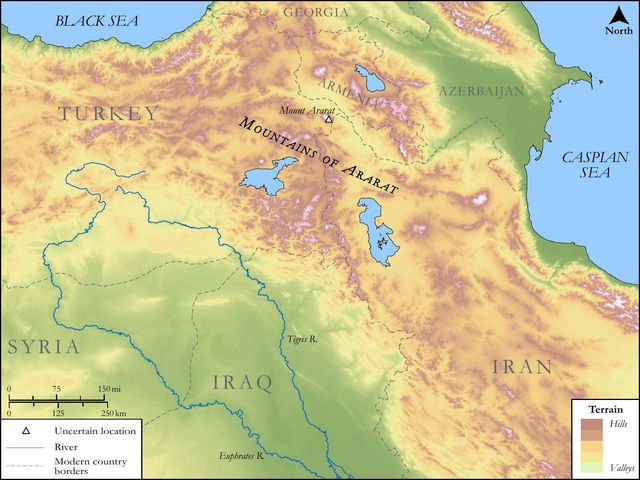
Genesis 8:14 concludes a remarkably precise chronological sequence that has meticulously detailed the duration and stages of the Great Flood. Following the initial inundation described in Genesis 7:11, the narrative tracks the rising and receding waters, the ark's resting place on the mountains of Ararat (Genesis 8:4), and Noah's strategic sending out of birds—first the raven, then the dove—to ascertain the earth's condition. The dove's return with an olive leaf in Genesis 8:11 provided the first tangible sign of vegetation and receding waters, but Genesis 8:14 provides the definitive, divinely appointed moment when the earth was fully desiccated. This verse directly precedes God's command to Noah to leave the ark in Genesis 8:15, setting the immediate stage for the re-population of the earth.
Historical & Cultural Context
In Scripture, the watery deep that lay over the earth before God's ordering word represents disorder, and in the Flood it returned as divine judgment. The drying of the earth, therefore, signified the triumph of order over chaos, the completion of divine judgment, and the re-establishment of a habitable earth. For a people whose lives were intimately tied to the land, the state of the "dry ground" was paramount for agriculture, settlement, and the very sustenance of life. The meticulous dating in this narrative, spanning over a year, underscores the historical and purposeful nature of God's actions, contrasting with the more mythical, less precise flood tales of the nations. It highlights a God who acts with sovereign control over creation and time, bringing about both destruction and restoration with precision.
Key Themes
ShowHideGenesis 8:14 contributes significantly to several overarching themes in the book of Genesis. It powerfully underscores Divine Sovereignty and Control, demonstrating God's absolute command over natural forces and His perfect timing in executing His purposes, whether in judgment or restoration. It marks the definitive Completion of Judgment through the flood, transitioning the narrative from an era of pervasive wickedness and divine wrath to one of New Beginning and Restoration. This verse is a crucial step towards the establishment of a New Covenant with Noah and all living creatures in Genesis 9:1-17, emphasizing God's enduring faithfulness despite humanity's sin. Furthermore, it highlights the theme of Patience and Waiting, as Noah and his family endured a prolonged period of confinement, trusting in God's ultimate deliverance and timing, a theme echoed in the broader biblical narrative of God's redemptive plan for humanity, as seen in passages like Psalm 27:14.
Exposition and Analysis
ShowHideKey Word Analysis
ShowHideFrom the root meaning "new," this word (H2320) primarily refers to the "new moon" and, by implication, a "month." Its use here, in conjunction with specific day numbers, highlights the precise calendrical tracking of the flood event. The ancient Hebrew calendar was lunar, with months beginning with the appearance of the new moon, making this a familiar and precise unit of time for the original audience. The repetition of "month" emphasizes the duration and the specific point in time.
This word (H3117) denotes a "day," often understood as the warm hours from sunrise to sunset, or a full 24-hour period from sunset to sunset. It can also signify a more general "space of time." In Genesis 8:14, its use with specific ordinal numbers ("seven and twentieth") reinforces the meticulous chronological record, emphasizing the exact point in time when the earth reached a specific state. This precision lends an air of historical veracity to the narrative.
This primitive root (H3001) means "to dry up" (as water) or "wither" (as herbage). While it can also carry connotations of shame or disappointment in other contexts, here it clearly refers to the physical state of the earth. The passive voice, "was dried," implies a divine agency in the drying process. It signifies not merely a reduction in water levels, but a complete desiccation, indicating that the ground had become firm, stable, and ready for habitation and traversal. This was the necessary condition for the re-establishment of life outside the ark.
Verse Breakdown
ShowHide"And in the second month"
This clause establishes the general timeframe within the Hebrew civil calendar. The flood began in the second month of the 600th year of Noah's life (Genesis 7:11), and this verse refers to the second month of the following year, indicating that over a full year had passed since the flood's onset. This highlights the extended duration of God's judgment and the patience required of those on the ark.
"on the seven and twentieth day of the month"
This provides the exact day within that second month, offering extreme chronological precision. Combined with the initial flood date, it allows for a precise calculation of the ark's duration—approximately one year and ten days—before the earth was fully dry. This meticulous detail underscores the historical, non-mythical nature of the account, presenting it as a verifiable event in God's unfolding plan.
"was the earth dried"
This concluding clause declares the definitive state of the land. The Hebrew verb implies a complete desiccation, not just a receding of water. It signifies that the ground was no longer muddy or waterlogged but firm, stable, and capable of supporting life and movement. This was the divine prerequisite for Noah and the animals to disembark, marking the end of the flood's active judgment and the beginning of a new chapter for creation.
Literary Devices
ShowHideThe primary literary device at play in Genesis 8:14 is Precision or Chronological Detail. The meticulous dating ("second month," "seven and twentieth day") is not merely incidental but serves to ground the narrative in historical reality, emphasizing the factual nature of the flood event and God's sovereign control over time and natural processes. This precision contrasts with the often vague timelines found in ancient myths, lending credibility and authority to the biblical account. Furthermore, there is an element of Symbolism present, where the "dried earth" symbolizes the completion of judgment and the inauguration of a new beginning. Just as the earth emerges from the chaos of the flood, it represents a clean slate, a renewed opportunity for humanity and creation under God's covenant. This foreshadows later biblical themes of new creation and divine restoration.
Theological and Thematic Connections
ShowHideGenesis 8:14 is a pivotal verse that encapsulates the themes of divine judgment, preservation, and new beginnings. It underscores God's absolute sovereignty, demonstrating His power to both destroy and restore. The precise timing of the earth's drying reveals a God who acts with intentionality and perfect control, bringing His purposes to fruition exactly as planned. This moment signifies the completion of a period of divine wrath and the faithful fulfillment of God's promise to preserve Noah and his family, paving the way for a renewed relationship between God and humanity through the subsequent covenant.
Reflection and Application
ShowHideGenesis 8:14 offers profound lessons for contemporary believers, particularly concerning patience, trust in divine timing, and the promise of new beginnings. Just as Noah and his family endured over a year of confinement and uncertainty, waiting patiently for the earth to dry completely, we too are called to trust God's perfect timing in our own lives. This is especially true during prolonged periods of difficulty, transition, or spiritual wilderness, where circumstances may feel overwhelming or stagnant. This verse serves as a powerful reminder that even after the most devastating "floods" of life—whether personal trials, societal upheaval, or deep spiritual struggles—God faithfully brings about a "dry land," a new opportunity, and a fresh start according to His sovereign plan. It encourages perseverance and unwavering faith, assuring us that God will complete what He has begun, leading us into new seasons of hope, restoration, and purpose. Our waiting is not in vain, for God is meticulously preparing the ground for our next step.
Questions for Reflection
ShowHideFAQ
ShowHideWhy is the date in Genesis 8:14 so specific?
ShowHideThe specific chronological details throughout the flood narrative, including Genesis 8:14, serve to emphasize the historical reality and precision of the events. This meticulous dating lends credibility to the biblical account, presenting it not as a mythical tale but as a significant, divinely orchestrated event in the early history of the world. It highlights God's direct involvement, sovereign control over time, and the purposeful nature of His judgment and subsequent restoration. The precision underscores the reliability of the biblical record.
How long did Noah and his family remain on the ark?
ShowHideBy calculating the dates provided in Genesis, Noah and his family were on the ark for approximately one year and ten days. The flood began on the 17th day of the second month of Noah's 600th year (Genesis 7:11). The ark rested on Ararat on the 17th day of the seventh month (Genesis 8:4). The mountain tops were seen on the first day of the tenth month (Genesis 8:5). Noah opened the ark window on the first day of the first month of his 601st year (Genesis 8:13). Finally, the earth was completely dry on the 27th day of the second month of his 601st year (Genesis 8:14). They disembarked shortly after this, as commanded by God in Genesis 8:15-19.
What does "was the earth dried" imply about its condition?
ShowHideThe phrase "was the earth dried" (Hebrew: vat-tivash ha'aretz) indicates that the land was not merely free of standing water, but had become firm, stable, and fully habitable. It implies the ground was solid enough to support the weight of humans and animals, and suitable for the re-establishment of vegetation, agriculture, and life outside the ark. This signifies a complete restoration of the earth's surface, making it ready for the next phase of God's plan for humanity and creation.
Christ-Centered Fulfillment
ShowHideWhile Genesis 8:14 describes a physical drying of the earth after a cataclysmic judgment, it profoundly foreshadows the spiritual new beginnings and ultimate restoration found in Jesus Christ. Just as the earth emerged from the judgment of the flood into a renewed, habitable state, humanity, through Christ, is delivered from the judgment of sin into a new and vibrant spiritual life. Christ is the ultimate "dry ground" of salvation, offering refuge and a fresh start after the deluge of sin and its consequences. His atoning death and glorious resurrection mark the definitive end of the old order of sin and death, inaugurating a new creation where believers are brought into a restored relationship with God (2 Corinthians 5:17). Through Him, we are raised to walk in newness of life (Romans 6:4), our lives hidden with Christ in God (Colossians 3:1-4). This event in Genesis anticipates the final and complete restoration of all things, culminating in the new heavens and new earth where righteousness dwells (Revelation 21:1-5). He is the faithful One who brings all things to their appointed completion, ensuring a secure and eternal foundation for those who trust in Him.