


Exodus 13:5
Bible text: King James Version (1769 Blayney text) · Public domain
Bible text: King James Version with Strong's numbers · Public domain
Bible text: Berean Standard Bible · Public domain
Bible text: American Standard Version (1901) · Public domain
Bible text: World English Bible, Messianic edition · Public domain
Bible text: Geneva Bible (1599) · Public domain
Bible text: Young's Literal Translation · Public domain
- וְהָיָהve·ha·Yahand it will beH1961Conj-w ¦ V-Qal-ConsecPerf-3msVerb Qal Consecutive Perfect 3rd Singular Masculineוְandהָיָהit will be
- כִיkhithatH3588PrtParticle Conditional
- יְבִיאֲךָye·vi·'a·Khahe will bring youH935V-Hiphil-Imperf-3ms ¦ 2msVerb Hiphil Imperfect 3rd Singular Masculineיְבִיאֲhe will bringךָyou
- יְהוָהYah·wehYahwehH3068N-properNoun Proper Title
- אֶל'elintoH413PrepPreposition
- אֶרֶץ'E·retz[the] land ofH776N-fscNoun Singular Feminine Construct
- הַכְּנַעֲנִיHa·ke·na·'a·nithe Canaanite[s]H3669Art ¦ N-msNoun Gentilic Singular Masculine AbsoluteהַtheכְּנַעֲנִיCanaanite[s]
- וְהַחִתִּיve·ha·chi·Tiand the Hittite[s]H2850Conj-w ¦ Art ¦ N-msNoun Gentilic Singular Masculine AbsoluteוְandהַtheחִתִּיHittite[s]
- וְהָאֱמֹרִיve·ha·'e·mo·Riand the Amorite[s]H567Conj-w ¦ Art ¦ N-msNoun Gentilic Singular Masculine AbsoluteוְandהָtheאֱמֹרִיAmorite[s]
- וְהַחִוִּיve·ha·chi·Viand the Hivite[s]H2340Conj-w ¦ Art ¦ N-msNoun Gentilic Singular Masculine AbsoluteוְandהַtheחִוִּיHivite[s]
- וְהַיְבוּסִיve·hay·vu·Siand the Jebusite[s]H2983Conj-w ¦ Art ¦ N-msNoun Gentilic Singular Masculine AbsoluteוְandהַtheיְבוּסִיJebusite[s]
- אֲשֶׁר'a·SherwhichH834RelParticle Relative
- נִשְׁבַּעnish·Ba'he sworeH7650V-Niphal-Perf-3msVerb Niphal Perfect 3rd Singular Masculine
- לַאֲבֹתֶיךָla·'a·vo·Tei·khato your ancestorsH1Prep-l ¦ N-fpc ¦ 2msNoun Plural Feminine Constructלַtoאֲבֹתֶיancestorsךָyour
- לָתֶתLa·tetto giveH5414Prep-l ¦ V-Qal-InfVerb Qal Infinitive Constructלָtoתֶתgive
- לָךְLakhto youPrep-l ¦ 2msSuffix Personal 2nd Singular Masculineלָtoךְyou
- אֶרֶץ'E·retza landH776N-fsNoun Singular Feminine Absolute
- זָבַתza·Vatflowing ofH2100V-Qal-Prtcpl-fsVerb Qal Participle Singular Feminine Construct
- חָלָבcha·LavmilkH2461N-msNoun Singular Masculine Absolute
- וּדְבָשׁu·de·Vashand honeyH1706Conj-w ¦ N-msNoun Singular Masculine Absoluteוּandדְבָשׁhoney
- וְעָבַדְתָּve·'a·vad·Taand you will serveH5647Conj-w ¦ V-Qal-ConsecPerf-2msVerb Qal Consecutive Perfect 2nd Singular Masculineוְandעָבַדְתָּyou will serve
- אֶת'et<obj.>H853DirObjMParticle Object Indicator
- הָעֲבֹדָהha·'a·vo·Dahthe serviceH5656Art ¦ N-fsNoun Singular Feminine Absoluteהָtheעֲבֹדָהservice
- הַזֹּאתha·Zot<the> thisH2063Art ¦ PrtParticle Demonstrativeהַ<the>זֹּאתthis
- בַּחֹדֶשׁba·Cho·deshin the monthH2320Prep-b ¦ N-msNoun Singular Masculine Absoluteבַּin theחֹדֶשׁmonth
- הַזֶּהha·Zeh<the> thisH2088Art ¦ PrtParticle Demonstrativeהַ<the>זֶּהthis
English is a literal word-by-word gloss of the Hebrew, not the KJV's wording. Why?
This is the original text the KJV's translators worked from — each Hebrew word with its own literal English meaning in this verse, prepared by scholars at Tyndale House, Cambridge. The KJV translates whole sentences, not word by word, so its wording differs: one Hebrew word can become several English words, and the KJV may choose “the LORD” where the gloss reads “Yahweh”. Both are faithful — they answer different questions. For the KJV's own rendering, switch to the KJV text.
Details
See on the biblical-era maps

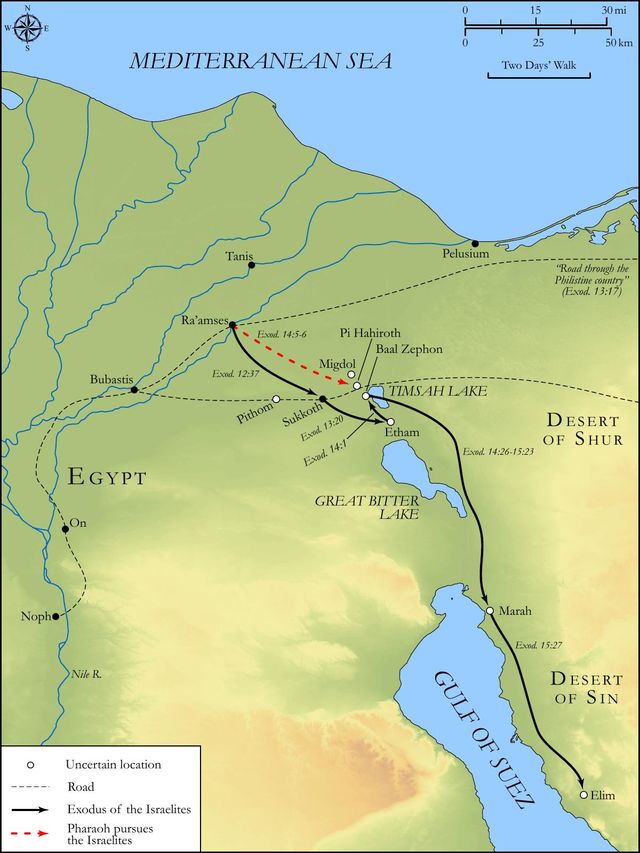
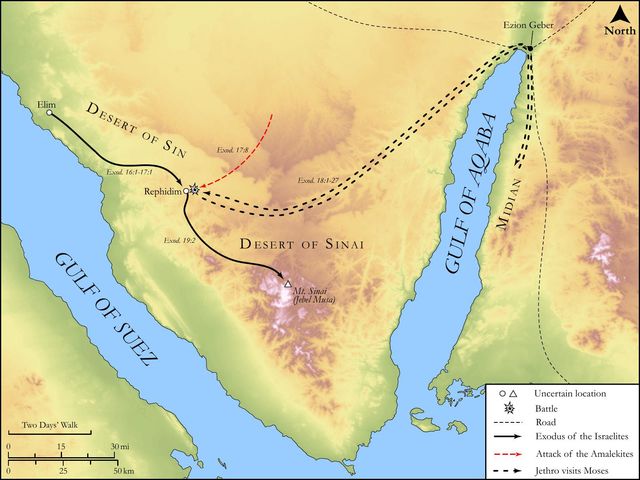
Study this verse
Public-domain commentary
Matthew Henry
From his Commentary on the Whole Bible. Henry comments on passages, not single verses — this entry covers Exodus 13:1–10. His three-level outline is real structure in the source text, so it is rendered as structure.
Care is here taken to perpetuate the remembrance,
I.Of the preservation of Israel's firstborn, when the firstborn of the Egyptians were slain.
In memory of that distinguishing favour, and in gratitude for it, the firstborn, in all ages, were to be consecrated to God, as his peculiars (Exo 13:2), and to be redeemed, Exo 13:13. God, who by the right of creation is proprietor and sovereign of all the creatures, here lays claim in particular to the firstborn of the Israelites, by right of protection: Sanctify to me all the firstborn. The parents were not to look upon themselves as interested in their firstborn, till they had first solemnly presented them to God, recognized his title to them, and received them back, at a certain rate, from him again. Note,
1.That which is by special distinguishing mercy spared to us should be in a peculiar manner dedicated to God's honour; at least some grateful acknowledgment, in works of piety and charity, should be made, when our lives, or the lives of our children, have been given us for a prey.
2.God, who is the first and best, should have the first and best, and to him we should resign that which is most dear to us, and most valuable. The firstborn were the joy and hope of their families. Therefore they shall be mine, says God. By this is will appear that we love God best (as we ought) if we are willing to part with that to him which we love best in this world.
3.It is the church of the firstborn that is sanctified to God, Heb 12:23. Christ it the firstborn among many brethren (Rom 8:29), and, by virtue of their union with him, all that are born again, and born from above, are accounted as firstborn. There is an excellency of dignity and power belonging to them; and, if children, then heirs.
II.The remembrance of their coming out of Egypt must also be perpetuated:
"Remember this day, Exo 13:3. Remember it by a good token, as the most remarkable day of your lives, the birthday of your nation, or the day of its coming of age, to be no longer under the rod." Thus the day of Christ's resurrection is to be remembered, for in it we were raised up with Christ out of death's house of bondage. The scripture tells us not expressly what day of the year Christ rose (as Moses told the Israelites what day of the year they were brought out of Egypt, that they might remember it yearly), but very particularly what day of the week it was, plainly intimating that, as the more valuable deliverance, and of greater importance, it should be remembered weekly. Remember it, for by strength of hand the Lord brought you out. Note, The more of God and his power appears in any deliverance, the more memorable it is. Now, that it might be remembered,
1.They must be sure to keep the feast of unleavened bread, Exo 13:5-7. It was not enough that they remembered it, but they must celebrate the memorial of it in that way which God had appointed, and use the instituted means of preserving the remembrance of it. So, under the gospel, we must not only remember Christ, but do this in remembrance of him. Observe, How strict the prohibition of leaven is (Exo 13:7); not only no leaven must be eaten, but none must be seen, no, not in all their quarters. Accordingly, the Jews' usage was, before the feast of the passover, to cast all the leavened bread out of their houses: they burnt it, or buried it, or broke it small and scattered it in the wind; they searched diligently with lighted candles in all the corners of their houses, lest any leaven should remain. The care and strictness enjoined in this matter were designed, (1.) To make the feast the more solemn, and consequently the more taken notice of by their children, who would ask, "Why is so much ado made?" (2.) To teach us how solicitous we should be to put away from us all sin, Co1 5:7.
2.They must instruct their children in the meaning of it, and relate to them the story of their deliverance out of Egypt, Exo 13:8. Note,
(1.)Care must be taken betimes to instruct children in the knowledge of God. Here is an ancient law for catechising.
(2.)It is particularly of great use to acquaint children betimes with the stories of the scripture, and to make them familiar to them.
(3.)It is a debt we owe to the honour of God, and to the benefit of our children's souls, to tell them of the great works God has done for his church, both those which we have seen with our eyes done in our day and which we have heard with our ears and our fathers have told us: Thou shalt show thy son in that day (the day of the feast) these things. When they were celebrating the ordinance, they must explain it. Every thing is beautiful in its season. The passover is appointed for a sign, and for a memorial, that the Lord's law may be in thy mouth. Note, We must retain the remembrance of God's works, that we may remain under the influence of God's law. And those that have God's law in their heart should have it in their mouth, and be often speaking of it, the more to affect themselves and to instruct others.
Continue studying Exodus 13:5 across the web’s major study libraries — every link below opens this exact verse, chapter, or book on the destination site.
Read & Compare
 BibleGatewayThis verse in more than 200 translations and 70 languages.
 Bible.comThe YouVersion reader — hundreds of translations, reading plans, and highlights.
 ESV.orgCrossway's official English Standard Version reader.
 NET BibleThe NET translation with 60,000+ translators' notes on every rendering decision.
 STEP BibleTyndale House's free study tool — original text, vocabulary, and scholarly resources.
 BibliaLogos Bible Software's free web reader.
 USCCBThe New American Bible (Revised Edition) with the U.S. bishops' study notes.
Commentaries
 BibleHub CommentariesDozens of classic commentaries on this verse, gathered on one page.
 StudyLightMore than 100 commentary sets — the largest collection on the web.
 BibleRefPlain-English commentary on what this verse means, verse by verse.
 Enduring WordDavid Guzik's free commentary on this chapter, widely used by Bible teachers.
 Bible Study ToolsVerse commentary alongside Greek and Hebrew study aids.
Original Language & Research
- BibleHub InterlinearThe verse word by word — original language, transliteration, and English.
- BibleHub LexiconEvery word's original-language definition and Strong's entry.
 Blue Letter BibleDeep-study tools — Strong's numbers, concordance, and word studies.
 SefariaThe Hebrew text with Rashi and centuries of Jewish commentary.
Sermons, Hymns & Audio


TrulyRandomVerse is not affiliated with these sites and doesn’t control their content. They’re linked because they’re genuinely useful.
Summary
Exodus 13:5 serves as a pivotal divine declaration, assuring the Israelites of their imminent entry into the Promised Land, a region of unparalleled fertility and abundance, which God had solemnly sworn to their patriarchs. This verse not only reinforces God's unwavering faithfulness to His ancient covenant but also establishes a crucial, perpetual link between Israel's future prosperity in their inheritance and their ongoing, grateful obedience to the "service" of the Feast of Unleavened Bread, ensuring the remembrance of their miraculous deliverance from Egyptian bondage.
Context
ShowHideLiterary Context
This verse is strategically placed within God's immediate post-Exodus instructions to Moses, following the devastating tenth plague and the dramatic departure from Egypt. The preceding verses (Exodus 13:1-4) detail the consecration of all firstborn and the foundational institution of the Feast of Unleavened Bread as an enduring memorial of their liberation. Verse 5 explicitly projects these commands into the future, emphasizing that these foundational rituals are not merely for their immediate deliverance but are to be diligently observed once they inherit the promised territory. The subsequent verses (Exodus 13:6-10) further elaborate on the practical observance and profound symbolic significance of the Feast of Unleavened Bread, reinforcing the imperative of remembering God's mighty acts of redemption.
Historical & Cultural Context
The Israelites had just emerged from centuries of brutal chattel slavery in Egypt, a land of oppression and scarcity for them. The concept of a "land" was therefore central to their nascent national identity and future hope, representing freedom, security, and divine blessing—a profound contrast to their recent bondage. The explicit mention of specific Canaanite tribes (Canaanites, Hittites, Amorites, Hivites, and Jebusites) highlights the geopolitical reality of the impending conquest and the divine mandate for Israel to displace these established inhabitants. In Hebrew speech, the phrase "a land flowing with milk and honey" was a widely understood and powerful idiom for extraordinary fertility, agricultural abundance, and overall prosperity, signifying a place of divine favor and provision, far superior to the arid wilderness they were about to traverse. This promise of land was deeply rooted in the ancient, unconditional covenant God had made with Abraham, Isaac, and Jacob, establishing Israel as a people with a divinely appointed inheritance.
Key Themes
ShowHideExodus 13:5 contributes significantly to several overarching themes within the book of Exodus and the Pentateuch. Foremost is the theme of God's Covenant Faithfulness, demonstrating His unwavering commitment to the promises made to the patriarchs, particularly the Abrahamic covenant concerning land and descendants. It also highlights Divine Sovereignty and Provision, as Yahweh is unequivocally the one who will "bring" them into the land, having prepared a place of abundance. The verse introduces and reinforces the theme of Remembrance and Obedience, linking future blessing directly to the diligent observance of God's commands, ensuring that Israel's identity remains rooted in God's redemptive history. Finally, it underscores the theme of Inheritance, portraying the Promised Land not merely as a geographical location but as the tangible fulfillment of divine blessing and a place of rest after their journey.
Exposition and Analysis
ShowHideKey Word Analysis
ShowHideFrom H7650, this primitive root properly means "to be complete," but is used as a denominative from שֶׁבַע (seven), implying "to seven oneself," i.e., to swear (as if by repeating a declaration seven times). When God "sware" unto the fathers, it signifies a solemn, binding oath, emphasizing the absolute and unbreakable nature of His promise. It underscores God's unchangeable character and the certainty of His covenant fulfillment, guaranteeing the inheritance of the land.
From H2461, this word refers to milk, specifically as the richness of kine (cattle). It symbolizes the abundance of livestock and dairy products, indicating a land well-suited for pasturage and animal husbandry.
From H1706, this refers to honey (from its stickiness), or by analogy, syrup, often date syrup or wild honey. It represents the sweetness and bounty of agricultural produce, such as fruits and cultivated crops. Together, "milk and honey" form a Hebrew idiom for unparalleled fertility, prosperity, and a land naturally overflowing with sustenance and delight.
The verb ʻâbad (H5647) is a primitive root meaning "to work (in any sense)," by implication "to serve, till, (causatively) enslave." In this context, "to keep" implies diligent observance, active performance, and faithful adherence to a duty. The noun ʻăbôdâh (H5656) refers to "work of any kind," including "service," "labour," or "ministering." Thus, "keep this service" is a command for the diligent, perpetual, and intentional observance of the prescribed ritual of the Feast of Unleavened Bread. It signifies not merely a mechanical act but a mindful, obedient engagement that guards the memory and significance of God's redemptive work.
Verse Breakdown
ShowHide"And it shall be when the LORD shall bring thee into the land"
This opening phrase establishes God as the singular, sovereign actor and the future arrival in the land as an absolute certainty, not a mere possibility or human endeavor. It highlights divine initiative, power, and faithfulness in fulfilling His promises to His people.
"of the Canaanites, and the Hittites, and the Amorites, and the Hivites, and the Jebusites,"
The specific enumeration of these five indigenous tribes underscores the magnitude of the task ahead—a divinely orchestrated displacement and conquest of established nations. It serves to identify the precise geographical and geopolitical reality of the promised inheritance, emphasizing that God would clear the way for Israel.
"which he sware unto thy fathers to give thee,"
This crucial clause explicitly grounds Israel's future possession of the land in God's ancient, solemn, and unbreakable covenant with Abraham, Isaac, and Jacob. It emphasizes that Israel's claim to the land is not based on their merit or strength, but solely on God's faithful, unconditional promise, underscoring His reliability.
"a land flowing with milk and honey,"
This evocative and powerful description vividly portrays the extraordinary abundance, fertility, and pleasantness that awaits them. It stands in stark contrast to their recent bondage in Egypt and the harsh, barren wilderness they were about to traverse, serving as a potent symbol of divine blessing, generous provision, and a place of rest.
"that thou shalt keep this service in this month."
This is the central imperative and the purpose clause of the verse. The future blessing of the land is directly linked to the present and ongoing command to observe the Feast of Unleavened Bread ("this service in this month," referring to the month of Abib/Nisan, when Passover and Unleavened Bread were celebrated). This command ensures that their future prosperity and enjoyment of the land will always be connected to the remembrance of God's past deliverance and their ongoing obedience to His covenant.
Literary Devices
ShowHideExodus 13:5 employs several effective literary devices. The phrase "it shall be when..." utilizes anticipatory language, building a sense of expectation and certainty regarding the fulfillment of God's promise. The vivid description "a land flowing with milk and honey" is a powerful metaphor for unparalleled abundance, fertility, and divine favor, painting a rich sensory picture for the audience. The enumeration of the five specific Canaanite tribes (Canaanites, Hittites, Amorites, Hivites, and Jebusites) serves to emphasize the scope and scale of the promised conquest, highlighting God's sovereign power to dispossess these nations. Furthermore, the verse's structure creates a clear cause-and-effect relationship: God's act of bringing Israel into the land (the divine cause) leads directly to Israel's obligation to diligently keep the prescribed service (the human effect), underscoring the reciprocal nature of the covenant.
Theological and Thematic Connections
ShowHideThis verse powerfully articulates several core theological truths foundational to Israel's identity and faith. First, it highlights God's unwavering faithfulness to His covenant promises, specifically the Abrahamic Covenant to give land to Abraham's descendants. This divine commitment provides a secure foundation for Israel's hope and future. Second, it underscores divine sovereignty and generous provision, as God is unequivocally the one who will "bring" them into the land and has prepared a place of extraordinary abundance ("flowing with milk and honey"). Third, it establishes the crucial principle of human responsibility and grateful remembrance in response to divine grace. The command to "keep this service" demonstrates that while the land is a gracious gift, their continued tenure, flourishing, and blessing within it are intrinsically tied to their obedient remembrance of God's mighty redemptive acts. This theme of remembering God's past faithfulness to fuel present obedience is a recurring motif throughout the Pentateuch, particularly emphasized in texts like Deuteronomy 6:10-12. The ultimate fulfillment of the land promise, affirming God's complete reliability, is celebrated in later historical accounts such as Joshua 21:43-45.
Reflection and Application
ShowHideFor believers today, Exodus 13:5 offers profound insights into God's character and our walk of faith. It serves as a powerful reminder that God is eternally faithful to His promises, even when the path to their fulfillment seems long, challenging, or involves confronting formidable obstacles, much like the "giants" of the Canaanite tribes. Just as the Israelites were called to remember their miraculous deliverance and God's commands upon entering their inheritance, we are called to live in grateful, intentional remembrance of God's redemptive work in our lives, supremely manifested through Christ. Our present walk of faith and obedience is intrinsically linked to the future blessings and spiritual inheritance God has promised us in Him. This verse encourages us to cultivate a lifestyle of intentional remembrance, allowing God's past faithfulness and His completed work in Christ to inspire our present obedience and deepen our trust for the future, knowing that He who promised is faithful to perform it.
Questions for Reflection
ShowHideFAQ
ShowHideWhy does God list so many specific tribes in the land?
ShowHideThe detailed listing of the Canaanites, Hittites, Amorites, Hivites, and Jebusites serves several crucial purposes. First, it emphasizes the reality and magnitude of the impending conquest; Israel was not entering an empty land but a territory already occupied by established, formidable nations. Second, it highlights God's sovereign power to dispossess these strong nations and give their territory to a newly liberated, unorganized people. Third, it reinforces the divine mandate for Israel to fully occupy the land, underscoring the complete fulfillment of God's promise to their ancestors. It also serves as a reminder to Israel of the significant challenges they would face, and thus, the necessity of God's miraculous intervention on their behalf.
Is the promise of the "land flowing with milk and honey" conditional on Israel's obedience?
ShowHideThe initial giving of the land was an unconditional promise based solely on God's covenant with Abraham, Isaac, and Jacob (Genesis 12, Genesis 15). However, Israel's continued tenure and enjoyment of the land's blessings and prosperity were indeed conditional upon their obedience to God's covenant laws. This verse, by linking the entry into the land with the command to "keep this service," demonstrates that while the land is a gracious gift, their flourishing within it requires ongoing faithfulness, remembrance of God's redemptive acts, and adherence to His commands. Disobedience would eventually lead to severe consequences, including exile, as tragically seen later in Israel's history.
What exactly does "keep this service in this month" refer to?
ShowHide"This service" refers specifically to the Feast of Unleavened Bread, which immediately followed the Passover, both celebrated in the first month of the Hebrew calendar (Abib, later called Nisan). Exodus 13:3-10 provides the detailed instructions for this feast. The command to "keep" it means to diligently observe, perform, and remember it annually. It was designed as a perpetual reminder of God's swift and mighty deliverance from Egyptian bondage, a foundational event that shaped Israel's identity as God's redeemed people and underscored His faithfulness.
Christ-Centered Fulfillment
ShowHideExodus 13:5, while deeply rooted in Israel's historical experience and the Mosaic Covenant, finds its ultimate and spiritual fulfillment in Jesus Christ. The "Promised Land flowing with milk and honey" serves as a profound type or shadow of the spiritual inheritance and abundant life that believers receive in Christ. Just as God sovereignly brought Israel into a physical land of rest and provision, Jesus brings His people into a spiritual rest and grants them "every spiritual blessing in the heavenly places in Christ" (Ephesians 1:3). He is the true and ultimate "land" of abundance, providing spiritual "milk and honey" through His indwelling Spirit, His boundless grace, and His living truth.
Furthermore, the command to "keep this service" in perpetual remembrance of God's deliverance from Egypt points forward to the New Covenant established by Christ. Believers are now called to remember Christ's ultimate act of deliverance—His atoning death and glorious resurrection—primarily through the celebration of the Lord's Supper, which replaces and infinitely transcends the Old Testament feasts. Our "service" under the New Covenant is no longer a ritualistic observance of shadows, but a life lived in grateful, Spirit-empowered obedience to Christ, who has brought us out of the bondage of sin and death and into the glorious freedom of His eternal kingdom. He is our true Passover Lamb, sacrificed for us (1 Corinthians 5:7), and through Him, we enter into the true "rest" that the earthly Promised Land could only foreshadow (Hebrews 4:9-10).