


Exodus 13:9
Bible text: King James Version (1769 Blayney text) · Public domain
Bible text: King James Version with Strong's numbers · Public domain
Bible text: Berean Standard Bible · Public domain
Bible text: American Standard Version (1901) · Public domain
Bible text: World English Bible, Messianic edition · Public domain
Bible text: Geneva Bible (1599) · Public domain
Bible text: Young's Literal Translation · Public domain
- וְהָיָהve·ha·Yahand it will becomeH1961Conj-w ¦ V-Qal-ConsecPerf-3msVerb Qal Consecutive Perfect 3rd Singular Masculineוְandהָיָהit will become
- לְךָle·Khafor youPrep-l ¦ 2msSuffix Personal 2nd Singular Masculineלְforךָyou
- לְאוֹתle·'ot<into> a signH226Prep-l ¦ N-fsNoun Singular Feminine Absoluteלְ<into>אוֹתa sign
- עַל'alonH5921PrepPreposition
- יָדְךָya·de·Khayour handH3027N-csc ¦ 2msNoun Singular common gender Constructיָדְhandךָyour
- וּלְזִכָּרוֹןu·le·zi·ka·rOnand <into> a reminderH2146Conj-w ¦ Prep-l ¦ N-msNoun Singular Masculine Absoluteוּandלְ<into>זִכָּרוֹןa reminder
- בֵּיןbeinbetweenH996Adj-mscAdjective Numerical Singular Masculine Construct
- עֵינֶיךָ'ei·Nei·khayour eyesH5869N-fdc ¦ 2msNoun Dual Feminine Constructעֵינֶיeyesךָyour
- לְמַעַןle·Ma·'anso thatH4616PrtParticle Conditional
- תִּהְיֶהtih·Yeh<it> may beH1961V-Qal-Imperf-3fsVerb Qal Imperfect 3rd Singular Feminine
- תּוֹרַתto·Rat[the] law ofH8451N-fscNoun Singular Feminine Construct
- יְהוָהYah·wehYahwehH3068N-properNoun Proper Title
- בְּפִיךָbe·Fi·khain your mouthH6310Prep-b ¦ N-msc ¦ 2msNoun Singular Masculine Constructבְּinפִיmouthךָyour
- כִּיkiforH3588PrtParticle Conditional
- בְּיָדbe·Yadby a handH3027Prep-b ¦ N-csNoun Singular common gender Absoluteבְּbyיָדa hand
- חֲזָקָהcha·za·KahstrongH2389Adj-fsAdjective Singular Feminine Absolute
- הוֹצִאֲךָho·tzi·'a·Khahe brought out youH3318V-Hiphil-Perf-3ms ¦ 2msVerb Hiphil Perfect 3rd Singular Masculineהוֹצִאֲhe brought outךָyou
- יְהֹוָהYah·wehYahwehH3068N-properNoun Proper Title
- מִמִּצְרָיִםmi·mitz·Ra·yimfrom EgyptH4714Prep-m ¦ N-properNoun Proper LocationמִfromמִּצְרָיִםEgypt
English is a literal word-by-word gloss of the Hebrew, not the KJV's wording. Why?
This is the original text the KJV's translators worked from — each Hebrew word with its own literal English meaning in this verse, prepared by scholars at Tyndale House, Cambridge. The KJV translates whole sentences, not word by word, so its wording differs: one Hebrew word can become several English words, and the KJV may choose “the LORD” where the gloss reads “Yahweh”. Both are faithful — they answer different questions. For the KJV's own rendering, switch to the KJV text.
Details
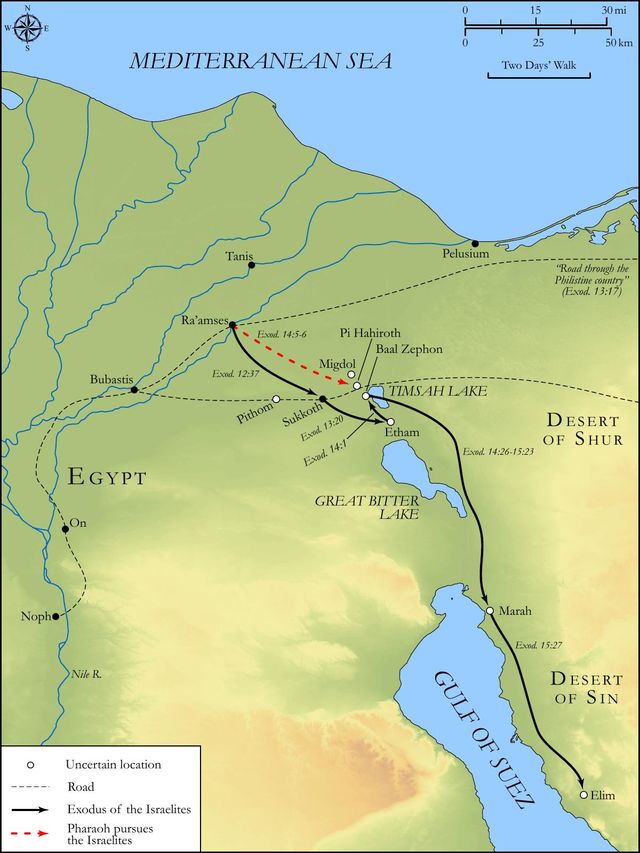
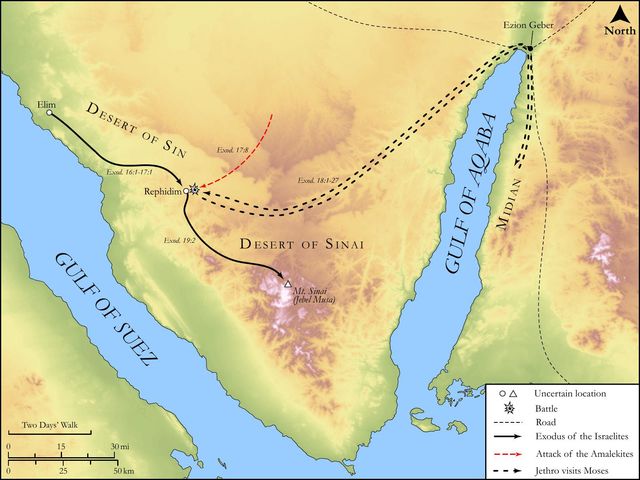
See on the biblical-era maps

Study this verse
Public-domain commentary
Matthew Henry
From his Commentary on the Whole Bible. Henry comments on passages, not single verses — this entry covers Exodus 13:1–10. His three-level outline is real structure in the source text, so it is rendered as structure.
Care is here taken to perpetuate the remembrance,
I.Of the preservation of Israel's firstborn, when the firstborn of the Egyptians were slain.
In memory of that distinguishing favour, and in gratitude for it, the firstborn, in all ages, were to be consecrated to God, as his peculiars (Exo 13:2), and to be redeemed, Exo 13:13. God, who by the right of creation is proprietor and sovereign of all the creatures, here lays claim in particular to the firstborn of the Israelites, by right of protection: Sanctify to me all the firstborn. The parents were not to look upon themselves as interested in their firstborn, till they had first solemnly presented them to God, recognized his title to them, and received them back, at a certain rate, from him again. Note,
1.That which is by special distinguishing mercy spared to us should be in a peculiar manner dedicated to God's honour; at least some grateful acknowledgment, in works of piety and charity, should be made, when our lives, or the lives of our children, have been given us for a prey.
2.God, who is the first and best, should have the first and best, and to him we should resign that which is most dear to us, and most valuable. The firstborn were the joy and hope of their families. Therefore they shall be mine, says God. By this is will appear that we love God best (as we ought) if we are willing to part with that to him which we love best in this world.
3.It is the church of the firstborn that is sanctified to God, Heb 12:23. Christ it the firstborn among many brethren (Rom 8:29), and, by virtue of their union with him, all that are born again, and born from above, are accounted as firstborn. There is an excellency of dignity and power belonging to them; and, if children, then heirs.
II.The remembrance of their coming out of Egypt must also be perpetuated:
"Remember this day, Exo 13:3. Remember it by a good token, as the most remarkable day of your lives, the birthday of your nation, or the day of its coming of age, to be no longer under the rod." Thus the day of Christ's resurrection is to be remembered, for in it we were raised up with Christ out of death's house of bondage. The scripture tells us not expressly what day of the year Christ rose (as Moses told the Israelites what day of the year they were brought out of Egypt, that they might remember it yearly), but very particularly what day of the week it was, plainly intimating that, as the more valuable deliverance, and of greater importance, it should be remembered weekly. Remember it, for by strength of hand the Lord brought you out. Note, The more of God and his power appears in any deliverance, the more memorable it is. Now, that it might be remembered,
1.They must be sure to keep the feast of unleavened bread, Exo 13:5-7. It was not enough that they remembered it, but they must celebrate the memorial of it in that way which God had appointed, and use the instituted means of preserving the remembrance of it. So, under the gospel, we must not only remember Christ, but do this in remembrance of him. Observe, How strict the prohibition of leaven is (Exo 13:7); not only no leaven must be eaten, but none must be seen, no, not in all their quarters. Accordingly, the Jews' usage was, before the feast of the passover, to cast all the leavened bread out of their houses: they burnt it, or buried it, or broke it small and scattered it in the wind; they searched diligently with lighted candles in all the corners of their houses, lest any leaven should remain. The care and strictness enjoined in this matter were designed, (1.) To make the feast the more solemn, and consequently the more taken notice of by their children, who would ask, "Why is so much ado made?" (2.) To teach us how solicitous we should be to put away from us all sin, Co1 5:7.
2.They must instruct their children in the meaning of it, and relate to them the story of their deliverance out of Egypt, Exo 13:8. Note,
(1.)Care must be taken betimes to instruct children in the knowledge of God. Here is an ancient law for catechising.
(2.)It is particularly of great use to acquaint children betimes with the stories of the scripture, and to make them familiar to them.
(3.)It is a debt we owe to the honour of God, and to the benefit of our children's souls, to tell them of the great works God has done for his church, both those which we have seen with our eyes done in our day and which we have heard with our ears and our fathers have told us: Thou shalt show thy son in that day (the day of the feast) these things. When they were celebrating the ordinance, they must explain it. Every thing is beautiful in its season. The passover is appointed for a sign, and for a memorial, that the Lord's law may be in thy mouth. Note, We must retain the remembrance of God's works, that we may remain under the influence of God's law. And those that have God's law in their heart should have it in their mouth, and be often speaking of it, the more to affect themselves and to instruct others.
Continue studying Exodus 13:9 across the web’s major study libraries — every link below opens this exact verse, chapter, or book on the destination site.
Read & Compare
 BibleGatewayThis verse in more than 200 translations and 70 languages.
 Bible.comThe YouVersion reader — hundreds of translations, reading plans, and highlights.
 ESV.orgCrossway's official English Standard Version reader.
 NET BibleThe NET translation with 60,000+ translators' notes on every rendering decision.
 STEP BibleTyndale House's free study tool — original text, vocabulary, and scholarly resources.
 BibliaLogos Bible Software's free web reader.
 USCCBThe New American Bible (Revised Edition) with the U.S. bishops' study notes.
Commentaries
 BibleHub CommentariesDozens of classic commentaries on this verse, gathered on one page.
 StudyLightMore than 100 commentary sets — the largest collection on the web.
 BibleRefPlain-English commentary on what this verse means, verse by verse.
 Enduring WordDavid Guzik's free commentary on this chapter, widely used by Bible teachers.
 Bible Study ToolsVerse commentary alongside Greek and Hebrew study aids.
Original Language & Research
- BibleHub InterlinearThe verse word by word — original language, transliteration, and English.
- BibleHub LexiconEvery word's original-language definition and Strong's entry.
 Blue Letter BibleDeep-study tools — Strong's numbers, concordance, and word studies.
 SefariaThe Hebrew text with Rashi and centuries of Jewish commentary.
Sermons, Hymns & Audio


TrulyRandomVerse is not affiliated with these sites and doesn’t control their content. They’re linked because they’re genuinely useful.
Summary
Exodus 13:9 is a divine command for the Israelites to perpetually remember God's powerful deliverance from Egyptian bondage. This remembrance is to be symbolized by tangible signs on their hand and between their eyes, ensuring that the LORD's law remains central to their thoughts, actions, and speech. The verse underscores that their past redemption by God's sovereign might is the foundational motivation for present and future obedience and the transmission of divine truth.
Context
ShowHideLiterary Context
This verse is situated within a series of foundational instructions given by God immediately after the momentous Exodus from Egypt and the institution of the Passover. Following the consecration of the firstborn (Exodus 13:1-2) and the detailed regulations for the Feast of Unleavened Bread (Exodus 13:3-8), God emphasizes the vital importance of remembering these pivotal acts of redemption. The command in Exodus 13:9 serves as a summary and reinforcement of the preceding instructions, linking the historical event of deliverance to the ongoing obligation of remembrance and obedience. A similar, reinforcing instruction appears later in Exodus 13:16, highlighting the thematic continuity.
Historical & Cultural Context
In Scripture, symbolic actions, mnemonic devices, and visible reminders were common and powerful ways to convey and reinforce significant truths, covenants, and historical events. The phrases "upon thine hand" and "between thine eyes" are idiomatic expressions signifying that something should be constantly before one's actions (hand) and thoughts (eyes/forehead). At this initial stage, it was likely a powerful metaphor for total immersion and constant awareness, rather than a literal command for physical binding. However, this verse, along with similar commands in Deuteronomy 6:8 and Deuteronomy 11:18, later became the scriptural basis for the Jewish practice of wearing tefillin (phylacteries) during prayer, physically embodying the command to keep God's law ever-present. The culture placed a high value on oral tradition and tangible signs to transmit heritage and covenant obligations across generations.
Key Themes
ShowHideExodus 13:9 contributes significantly to several major theological and narrative themes within the book of Exodus and the broader Pentateuch. Foremost among these is the theme of Divine Deliverance and Redemption, emphasizing God's sovereign power to save His people from bondage, as seen throughout the narrative of the plagues and the crossing of the Red Sea. Closely related is the theme of Remembrance and Covenant Loyalty, where Israel is repeatedly called to remember God's faithfulness as the basis for their ongoing obedience and identity as His chosen people. The verse also highlights the theme of The Centrality of God's Law, positing that the memory of His saving acts should directly lead to the internalization and proclamation of His divine commands. This interconnectedness between historical redemption, ongoing remembrance, and present obedience is a foundational principle of Israel's covenant relationship with Yahweh.
Exposition and Analysis
ShowHideKey Word Analysis
ShowHideThis term (H226) denotes a distinguishing mark, a token, or a miraculous indication. In this context, it refers to something that serves as a constant, visible reminder of a significant event or covenant. It is not merely a symbol but a tangible representation designed to prompt memory, understanding, and a proper response to God's mighty acts.
Derived from the root zakhar (to remember), zikrôwn (H2146) refers to something that causes remembrance or brings to mind. It emphasizes the active process of recalling, internalizing, and perpetuating past events, ensuring they are not forgotten but remain alive and influential in the collective consciousness of the community.
This word (H2389), used in the phrase "strong hand," signifies overwhelming power, authority, and irresistible force. It consistently attributes Israel's deliverance not to human might or chance, but to God's direct, sovereign, and unchallengeable intervention. It conveys the idea of a firm, unyielding grasp and an undeniable demonstration of divine strength.
Verse Breakdown
ShowHideExodus 13:9 can be broken down into three interconnected clauses, each building on the last:
Literary Devices
ShowHideThe verse primarily employs metaphorical language and idiomatic expressions. The "sign upon thine hand" and "memorial between thine eyes" are not meant to be understood literally as physical adornments at this point (though they later became the basis for such practices), but as vivid metaphors for constant, pervasive remembrance that influences both actions and thoughts. This use of concrete imagery to convey abstract concepts makes the command memorable and impactful. The phrase "strong hand" is a powerful idiom emphasizing God's overwhelming power and authority, a recurring motif throughout the Exodus narrative and indeed the entire Old Testament, serving as a theological shorthand for divine omnipotence and decisive intervention. The verse also exhibits a clear cause-and-effect structure, linking God's past action ("brought thee out of Egypt") to Israel's present obligation ("it shall be for a sign... that the LORD's law may be in thy mouth").
Theological and Thematic Connections
ShowHideExodus 13:9 encapsulates profound theological truths about God's character, humanity's responsibility, and the nature of salvation. It reveals God as a powerful, faithful, and covenant-keeping Redeemer who acts decisively in history to liberate His people. His "strong hand" demonstrates His absolute sovereignty and irresistible ability to deliver against all odds. For humanity, the verse underscores the vital importance of remembrance as the bedrock of faith and obedience. Forgetting God's past acts of salvation invariably leads to spiritual decline, disobedience, and a loss of identity. The theme of God's mighty deliverance is central to Israel's identity and is echoed throughout the biblical narrative, from the Psalms praising His works to the prophetic calls for remembrance and renewed covenant fidelity. This verse establishes a fundamental pattern: God acts in saving power, and His people are called to remember, internalize, and respond in faithful obedience, allowing His truth to shape their entire existence.
Reflection and Application
ShowHideFor believers today, Exodus 13:9 serves as a timeless and profound call to remember God's ultimate act of deliverance through Jesus Christ. Just as ancient Israel was redeemed from physical bondage in Egypt, we are redeemed from the spiritual bondage of sin and death through Christ's atoning work. This verse challenges us to internalize the truth of our salvation and allow it to shape every facet of our lives. We are called to: Cultivate Intentional Remembrance by actively recalling and meditating on God's redemptive work in our lives and in salvation history. This means regularly engaging with Scripture, remembering His faithfulness in prayer, participating in corporate worship that recounts His goodness, and recounting His mighty acts to others. Our thoughts, perceptions, and worldview should constantly reflect the reality of His saving power and grace. We are also called to Live Out Our Faith with Integrity. The command for God's "law in thy mouth" translates for believers into living a life that speaks of God's truth and character. This involves not only confessing our faith with our lips but also demonstrating it through our words, our ethical choices, our service to others, and our pursuit of righteousness. Our very lives become a "sign" and "memorial" to the world of God's transforming power and the reality of His kingdom. Finally, we are called to Acknowledge Divine Sovereignty and Grace, recognizing that our salvation is entirely by God's "strong hand"—His sovereign grace and power, not our own merit, effort, or wisdom. This fosters profound humility, overflowing gratitude, and a deep, unwavering reliance on Him in all circumstances, empowering us to live a life of joyful obedience and trust.
Questions for Reflection
ShowHideFAQ
ShowHideWere the commands in Exodus 13:9 meant to be taken literally as physical objects?
ShowHideWhile the language is highly metaphorical, emphasizing the pervasive and constant nature of remembrance, these commands, along with similar ones in Deuteronomy 6:8 and Deuteronomy 11:18, later became the scriptural basis for the Jewish practice of wearing tefillin (phylacteries). The original intent was likely to convey a holistic, internal commitment to remembering God's acts in both thought and deed, which then found a literal, ritualistic expression in later Jewish tradition.
What is the significance of the "hand" and "eyes" in this verse?
ShowHideThe "hand" typically symbolizes action, work, and outward conduct, representing all that one does. The "eyes" or "between thine eyes" (referring to the forehead) represent thought, intellect, perception, and worldview, signifying one's internal contemplation and understanding. Together, they convey that the remembrance of God's powerful deliverance should permeate every aspect of one's being—both internal cognition and external behavior—ensuring a comprehensive, constant, and active awareness.
How does remembering God's past acts relate to present obedience?
ShowHideThe verse explicitly links remembrance ("sign... memorial") to the outcome of God's "law in thy mouth." Remembering God's powerful and faithful deliverance in the past serves as a profound motivation for present obedience. It reminds us of His character, His covenant, and the great cost of our salvation, fostering deep gratitude, trust, and a desire to live according to His will. It grounds our present actions in the historical reality of His saving power, preventing forgetfulness and spiritual drift.
Christ-Centered Fulfillment
ShowHideExodus 13:9, with its emphasis on remembering God's "strong hand" in deliverance and keeping His law ever-present, finds its ultimate fulfillment and reinterpretation in the person and redemptive work of Jesus Christ. The Exodus from Egypt was a physical redemption from slavery, serving as a powerful type and foreshadowing of the spiritual redemption from sin and death accomplished by Jesus. While God delivered Israel from Egypt with a "strong hand," the New Testament reveals God's ultimate and decisive "strong hand" in the resurrection of Jesus Christ from the dead. This act demonstrates God's supreme power over sin, death, and the grave, fulfilling the promise of a greater, spiritual redemption (e.g., Colossians 2:13-15). Jesus's life, atoning death, and glorious resurrection are the definitive acts of God's saving power, making the Exodus a magnificent type of the far greater spiritual liberation He provides for all who believe. The Passover, which this verse directly relates to, is transformed and consummated in the New Covenant through the institution of the Lord's Supper. Jesus commands His followers, "Do this in remembrance of me" (Luke 22:19), shifting the focus from remembering a physical exodus to remembering His atoning sacrifice on the cross. This new "memorial" is not a physical sign on the hand or between the eyes, but an internal transformation by the Holy Spirit, where God's law is written not on tablets of stone, but on the heart of believers (Jeremiah 31:33). The desire for God's law to be "in thy mouth" is perfectly realized in Christ. He perfectly embodied and fulfilled the law, and through the indwelling Holy Spirit, believers are empowered to live according to God's will, not by external compulsion but by internal desire and renewed nature. Our lives, transformed by the gospel, become a living "sign" and "memorial" of Christ's transforming power, as we speak of His goodness, obey His commands, and testify to the ultimate deliverance He has secured, living out the reality of His kingdom.