


Luke 22:19
Bible text: King James Version (1769 Blayney text) · Public domain
Bible text: King James Version with Strong's numbers · Public domain
Bible text: Berean Standard Bible · Public domain
Bible text: American Standard Version (1901) · Public domain
Bible text: World English Bible, Messianic edition · Public domain
Bible text: Geneva Bible (1599) · Public domain
Bible text: Young's Literal Translation · Public domain
- ΚαὶKaiAndG2532CONJConjunction
- λαβὼνlabōnhaving takenG2983V-2AAP-NSMVerb 2nd Aorist Active Participle Nominative Singular Masculine
- ἄρτονarton[the] breadG740N-ASMNoun Accusative Singular Masculine
- εὐχαριστήσαςeucharistēsashaving given thanksG2168V-AAP-NSMVerb Aorist Active Participle Nominative Singular Masculine
- ἔκλασενeklasenHe broke [it]G2806V-AAI-3SVerb Aorist Active Indicative 3rd Singular
- καὶkaiandG2532CONJConjunction
- ἔδωκενedōkenHe gaveG1325V-AAI-3SVerb Aorist Active Indicative 3rd Singular
- αὐτοῖςautoisto themG846P-DPMPersonal pronoun Dative Plural Masculine
- λέγων·legōnsayingG3004V-PAP-NSMVerb Present Active Participle Nominative Singular Masculine
- τοῦτόtoutoThisG3778D-NSNDemonstrative pronoun Nominative Singular Neuter
- ἐστινestinisG1510V-PAI-3SVerb Present Active Indicative 3rd Singular
- τὸtotheG3588T-NSNDefinite article Nominative Singular Neuter
- σῶμάsōmabodyG4983N-NSNNoun Nominative Singular Neuter
- μουmouof MineG3165P-1GSPersonal pronoun Genitive 1st Singular
- τὸtowhichG3588T-NSNDefinite article Nominative Singular Neuter
- ὑπὲρhuperforG5228PREPPreposition
- ὑμῶνhumōnyouG4771P-2GPPersonal pronoun Genitive 2nd Plural
- διδόμενον·didomenonis givenG1325V-PPP-NSNVerb Present Passive Participle Nominative Singular Neuter
- τοῦτοtoutothisG3778D-ASNDemonstrative pronoun Accusative Singular Neuter
- ποιεῖτεpoieitedo performG4160V-PAM-2PVerb Present Active Imperative 2nd Plural
- εἰςeisinG1519PREPPreposition
- τὴνtēntheG3588T-ASFDefinite article Accusative Singular Feminine
- ἐμὴνemēnMyG1473S-1SASFPossessive pronoun Accusative 1st Person Singular Feminine
- ἀνάμνησινanamnēsinremembranceG364N-ASFNoun Accusative Singular Feminine
English is a literal word-by-word gloss of the Greek, not the KJV's wording. Why?
This is the original text the KJV's translators worked from — each Greek word with its own literal English meaning in this verse, prepared by scholars at Tyndale House, Cambridge. The KJV translates whole sentences, not word by word, so its wording differs: one Greek word can become several English words, and the KJV may choose “charity” where the gloss reads “love”. Both are faithful — they answer different questions. For the KJV's own rendering, switch to the KJV text.
Details
See on the biblical-era maps
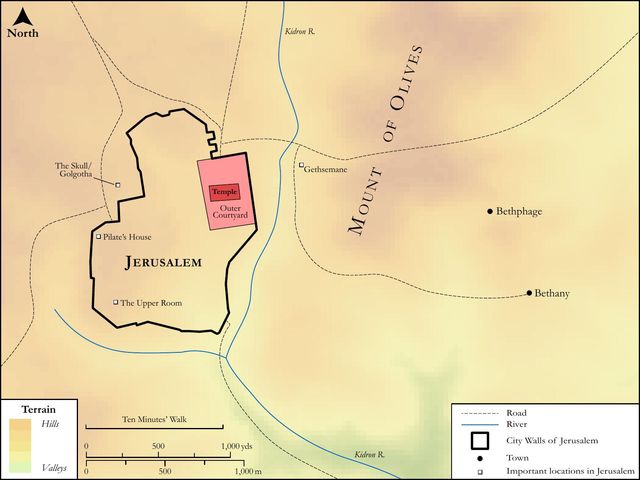
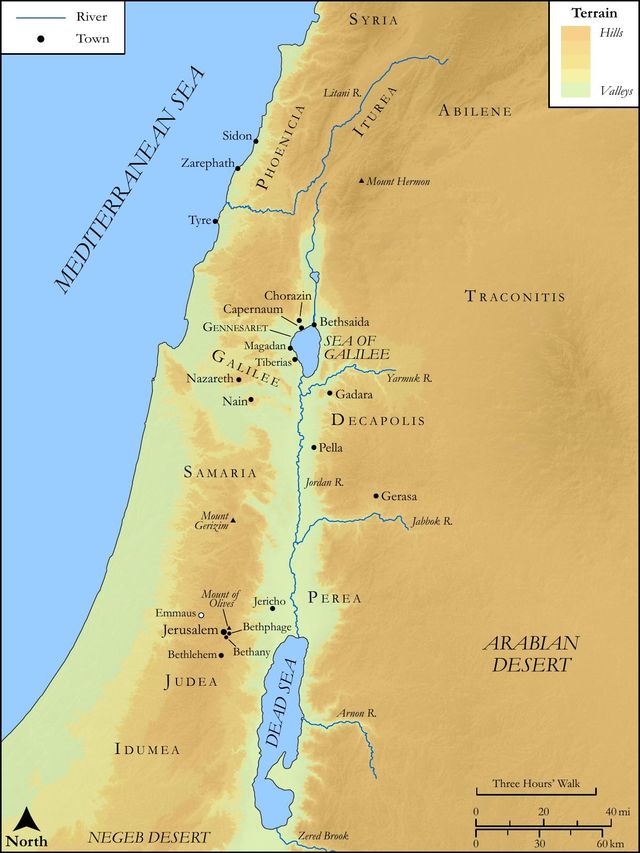
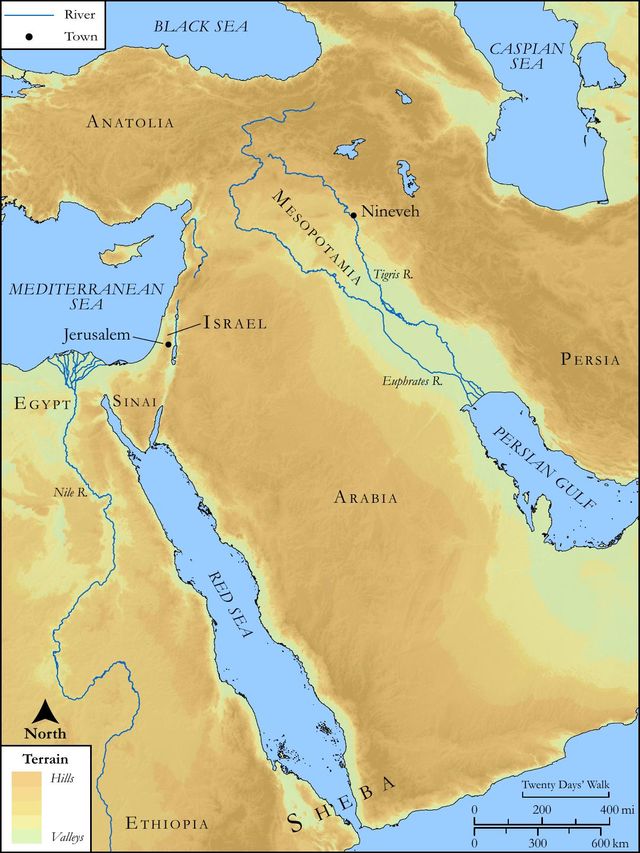
Study this verse
Public-domain commentary
Matthew Henry
From his Commentary on the Whole Bible. Henry comments on passages, not single verses — this entry covers Luke 22:7–20. His two-level outline is real structure in the source text, so it is rendered as structure.
What a hopeful prospect had we of Christ's doing a great deal of good by his preaching in the temple during the feast of unleavened bread, which continued seven days, when the people were every morning, and early in the morning, so attentive to hear him! But here is a stop put to it. He must enter upon work of another kind; in this, however, he shall do more good than in the other, for neither Christ's nor his church's suffering days are their idle empty days. Now here we have,
I.The preparation that was made for Christ's eating the passover with his disciples, upon the very day of unleavened bread, when the passover must be killed according to the law, Luk 22:7. Christ was made under the law, and observed the ordinances of it, particularly that of the passover, to teach us in like manner to observe his gospel institutions, particularly that of the Lord's supper, and not to neglect them. It is probable that he went to the temple to preach in the morning, when he sent Peter and John another way into the city to prepare the passover. Those who have attendants about them, to do their secular business for them in a great measure, must not think that this allows them to be idle; it engages them to employ themselves more in spiritual business, or service to the public. He directed those whom he employed whither they should go (Luk 22:9, Luk 22:10): they must follow a man bearing a pitcher of water, and he must be their guide to the house. Christ could have described the house to them; probably it was a house they knew, and he might have said no more than, Go to such a one's house, or to a house in such a street, with such a sign, etc. But he directed them thus, to teach them to depend upon the conduct of Providence, and to follow that, step by step. They went, not knowing whither they went, nor whom they followed. Being come to the house, they must desire the master of the house to show them a room (Luk 22:11), and he will readily do it, Luk 22:12. Whether it was a friend's house or a public house does not appear; but the disciples found their guide, and the house, and the room, just as he had said to them (Luk 22:13); for they need not fear a disappointment who go upon Christ's word; according to the orders given them, they got every thing in readiness for the passover, Luk 22:11.
II.The solemnizing of the passover, according to the law.
When the hour was come that they should go to supper he sat down, probably at the head-end of the table, and the twelve apostles with him, Judas not excepted; for it is possible that those whose hearts are filled with Satan, and all manner of wickedness, may yet continue a plausible profession of religion, and be found in the performance of its external services; and while it is in the heart, and does not break out into any thing scandalous, such cannot be denied the external privileges of their external profession. Though Judas has already been guilty of an overt act of treason, yet, it not being publicly known, Christ admits him to sit down with the rest at the passover. Now observe,
1.How Christ bids this passover welcome, to teach us in like manner to welcome his passover, the Lord's supper, and to come to it with an appetite (Luk 22:15): "With desire I have desired, I have most earnestly desired, to eat this passover with you before I suffer." He knew it was to be the prologue to his sufferings, and therefore he desired it, because it was in order to his Father's glory and man's redemption. He delighted to do even this part of the will of God concerning him as Mediator. Shall we be backward to any service for him who was so forward in the work of our salvation? See the love he had to his disciples; he desired to eat it with them, that he and they might have a little time together, themselves, and none besides, for private conversation, which they could not have in Jerusalem but upon this occasion. He was now about to leave them, but was very desirous to eat this passover with them before he suffered, as if the comfort of that would carry him the more cheerfully through his sufferings, and make them the easier to him. Note, Our gospel passover, eaten by faith with Jesus Christ, will be an excellent preparation for sufferings, and trials, and death itself.
2.How Christ in it takes his leave of all passovers, thereby signifying his abrogating all the ordinances of the ceremonial law, of which that of the passover was one of the earliest and one of the most eminent (Luk 22:16): "I will not any more eat thereof, nor shall it by any more celebrated by my disciples, until it be fulfilled in the kingdom of God." (1.) It was fulfilled when Christ our Passover was sacrificed for us, Co1 5:7. And therefore that type and shadow was laid aside, because now in the kingdom of God the substance was come, which superseded it. (2.) It was fulfilled in the Lord's supper, an ordinance of the gospel kingdom, in which the passover had its accomplishment, and which the disciples, after the pouring out of the Spirit, did frequently celebrate, as we find Act 2:42, Act 2:46. They ate of it, and Christ might be said to eat with them, because of the spiritual communion they had with him in that ordinance. He is said to sup with them and they with him, Rev 3:20. But, (3.) The complete accomplishment of that commemoration of liberty will be in the kingdom of glory, when all God's spiritual Israel shall be released from the bondage of death and sin, and be put in possession of the land of promise. What he had said of his eating of the paschal lamb, he repeats concerning his drinking of the passover wine, the cup of blessing, or of thanksgiving, in which all the company pledged the Master of the feast, at the close of the passover supper. This cup he took, according to the custom, and gave thanks for the deliverance of Israel out of Egypt, and the preservation of their first-born, and then said, Take this, and divide it among yourselves, Luk 22:17. This is not said afterwards of the sacramental cup, which being probably of much more weight and value, being the New Testament in his blood, he might give into every one's hand, to teach them to make a particular application of it to their own souls; but, as for the paschal cup which is to be abolished, it is enough to say, "Take it, and divide it among yourselves, do what you will with it, for we shall have no more occasion for it, Luk 22:18. I will not drink of the fruit of the vine any more, I will not have it any more drank of, till the kingdom of God shall come, till the Spirit be poured out, and then you shall in the Lord's supper commemorate a much more glorious redemption, of which both the deliverance out of Egypt and the passover commemoration of it were types and figures. The kingdom of God is now so near being set up that you will not need to eat or drink any more till it comes." Christ dying next day opened it. As Christ with a great deal of pleasure took leave of all the legal feasts (which fell of course with the passover) for the evangelical ones, both spiritual and sacramental; so may good Christians, when they are called to remove from the church militant to that which is triumphant, cheerfully exchange even their spiritual repasts, much more their sacramental ones, for the eternal feast.
III.The institution of the Lord's supper, Luk 22:19, Luk 22:20.
The passover and the deliverance out of Egypt were typical and prophetic signs of a Christ to come, who should by dying deliver us from sin and death, and the tyranny of Satan; but they shall no more say, The Lord liveth, that brought us up out of the land of Egypt; a much greater deliverance shall eclipse the lustre of that, and therefore the Lord's supper is instituted to be a commemorative sign or memorial of a Christ already come, that has by dying delivered us; and it is his death that is in a special manner set before us in that ordinance.
1.The breaking of Christ's body as a sacrifice for us is here commemorated by the breaking of bread; and the sacrifices under the law were called the bread of our God (Lev 21:6, Lev 21:8, Lev 21:17): This is my body which is given for you. And there is a feast upon that sacrifice instituted, in which we are to apply it to ourselves, and to take the benefit and comfort of it. This bread that was given for us is given to us to be food for our souls, for nothing can be more nourishing and satisfying to our souls than the doctrine of Christ's making atonement for sin, and the assurance of our interest in that atonement; this bread that was broken and given for us, to satisfy for the guilt of our sins, is broken and given to us, to satisfy the desire of our souls. And this we do in remembrance of what he did for us, when he died for us, and for a memorial of what we do, in making ourselves partakers of him, and joining ourselves to him in an everlasting covenant; like the stone Joshua set up for a witness, Jos 24:27.
2.The shedding of Christ's blood, by which the atonement was made (for the blood made atonement for the soul, Lev 17:11), as represented by the wine in the cup; and that cup of wine is a sign and token of the New Testament, or new covenant, made with us. It commemorates the purchase of the covenant by the blood of Christ, and confirms the promises of the covenant, which are all Yea and Amen in him. This will be reviving and refreshing to our souls, as wine that makes glad the heart. In all our commemorations of the shedding of Christ's blood, we must have an eye to it as shed for us; we needed it, we take hold of it, we hope to have benefit by it; who loved me, and gave himself for me. And in all our regards to the New Testament we must have an eye to the blood of Christ, which gave life and being to it, and seals to us all the promises of it. Had it not been for the blood of Christ, we had never had the New Testament; and, had it not been for the New Testament, we had never know the meaning of Christ's blood shed.
Historical interpretation
Twelve Centuries of Reception
19 surviving comments on this verse. Each one is dated, so this reads as a timeline rather than a list.
Select a marker to jump to its quote. Markers stagger vertically where authors wrote within a few decades of each other.
Now concerning the Thanksgiving (Eucharist), thus give thanks. First, concerning the cup: We thank thee, our Father, for the holy vine of David Thy servant, which Thou madest known to us through Jesus Thy Servant; to Thee be the glory for ever. And concerning the broken bread: We thank Thee, our Father, for the life and knowledge which Thou modest known to us through Jesus Thy Servant; to Thee be the glory for ever. Even as this broken bread was scattered over the hills, and was gathered together and became one, so let Thy Church be gathered together from the ends of the earth into Thy kingdom; for Thine is the glory and the power through Jesus Christ for ever. But let no one eat or drink of your Thanksgiving (Eucharist), but they who have been baptized into the name of the Lord; for concerning this also the Lord hath said, Give not that which is holy to the dogs.
But after ye are filled, thus give thanks: We thank Thee, holy Father, for Thy holy name which Thou didst cause to tabernacle in our hearts, and for the knowledge and faith and immortality, which Thou modest known to us through Jesus Thy Servant; to Thee be the glory for ever. Thou, Master almighty, didst create all things for Thy name's sake; Thou gavest food and drink to men for enjoyment, that they might give thanks to Thee; but to us Thou didst freely give spiritual food and drink and life eternal through Thy Servant. Before all things we thank Thee that Thou art mighty; to Thee be the glory for ever. Remember, Lord, Thy Church, to deliver it from all evil and to make it perfect in Thy love, and gather it from the four winds, sanctified for Thy kingdom which Thou hast prepared for it; for Thine is the power and the glory for ever. Let grace come, and let this world pass away. Hosanna to the God (Son) of David! If any one is holy, let him come; if any one is not so, let him repent. Maran atha. Amen. But permit the prophets to make Thanksgiving as much as they desire.
For the apostles, in the memoirs composed by them, which are called Gospels, have thus delivered unto us what was enjoined upon them; that Jesus took bread, and when He had given thanks, said, "This do ye in remembrance of Me, this is My body;" and that, after the same manner, having taken the cup and given thanks, He said, "This is My blood;" and gave it to them alone.
Then, having taken the bread and given it to His disciples, He made it His own body, by saying, "This is my body," that is, the figure of my body.
We may not, I say, we may not call into question the truth of the (poor vilified) senses, lest we should even in Christ Himself, bring doubt upon the truth of their sensation; lest perchance it should be said that He did not really "behold Satan as lightning fall from heaven; " that He did not really hear the Father's voice testifying of Himself; or that He was deceived in touching Peter's wife's mother; or that the fragrance of the ointment which He afterwards smelled was different from that which He accepted for His burial; and that the taste of the wine was different from that which He consecrated in memory of His blood. On this false principle it was that Marcion actually chose to believe that He was a phantom, denying to Him the reality of a perfect body.
Israel ate the meat of a dumb lamb to complete the Passover. Having done so, they smeared their doorposts with blood and laughed at the destroyer. We eat of the Word of the Father, the Son, our Savior. We have the lintels of our hearts sealed with the blood of the new covenant.
(Moral. Reg. 21. c. 3. Reg. Brev. ad int. 172.) Learn then in what manner you ought to eat the Body of Christ, namely, in remembrance of Christ's obedience even unto death, that they who live may no more live in themselves, but in Him who died for them, and rose again. (2 Cor. 5:15.)
Being mindful, therefore, of those things that He endured for our sakes, we give You thanks, O God Almighty, not in such a manner as we ought, but as we are able, and fulfil His constitution: "For in the same night that He was betrayed, He took bread" [1 Corinthians 11:23] in His holy and undefiled hands, and, looking up to You His God and Father, "He broke it, and gave it to His disciples, saying, This is the mystery of the new covenant: take of it, and eat. This is my body, which is broken for many, for the remission of sins." In like manner also "He took the cup," and mixed it of wine and water, and sanctified it, and delivered it to them, saying: "Drink all of this; for this is my blood which is shed for many, for the remission of sins: do this in remembrance of me. For as often as you eat this bread and drink this cup, you do show forth my death until I come." Being mindful, therefore, of His passion, and death, and resurrection from the dead, and return into the heavens, and His future second appearing, wherein He is to come with glory and power to judge the quick and the dead, and to recompense to every one according to his works, we offer to You, our King and our God, according to His constitution, this bread and this cup, giving You thanks, through Him, that You have thought us worthy to stand before You, and to sacrifice to You; and we beseech You that You will mercifully look down upon these gifts which are here set before You, O God, who standest in need of none of our offerings. And accept them, to the honour of Your Christ, and send down upon this sacrifice Your Holy Spirit, the Witness of the Lord Jesus' sufferings, that He may show this bread to be the body of Your Christ, and the cup to be the blood of Your Christ, that those who are partakers thereof may be strengthened for piety, may obtain the remission of their sins, may be delivered from the devil and his deceit, may be filled with the Holy Ghost, may be made worthy of Your Christ, and may obtain eternal life upon Your reconciliation to them, O Lord Almighty.
For this reason do you also, now the Lord is risen, offer your sacrifice, concerning which He made a constitution by us, saying, "Do this for a remembrance of me; "
(Orat. de Bapt. Christ.) For the bread before the consecration is common bread, but when the mystery has consecrated it, it is, and it is called, the Body of Christ.
(Hom. 46. in Joan.) Christ did this to bring us to a closer bond of friendship, and to betoken His love toward us, giving Himself to those who desire Him, not only to behold Him, but also to handle Him, to eat Him, to embrace Him with the fulness of their whole heart. Therefore as lions breathing fire do we depart from that table, rendered objects of terror to the devil.
(Hom. 46. in Joan.) For this Blood moulds in us a royal image, it suffers not our nobleness of soul to waste away, moreover it refreshes the soul, and inspires it with great virtue. This Blood puts to flight the devils, summons angels, and the Lord of angels. This Blood poured forth washed the world, and made heaven open. They that partake of it are built up with heavenly virtues, and arrayed in the royal robes of Christ; yea rather clothed upon by the King Himself. And since if thou comest clean, thou comest healthfully; so if polluted by an evil conscience, thou comest to thy own destruction, to pain and torment. For if they who defile the imperial purple are smitten with the same punishment as those who tear it asunder, it is not unreasonable that they who with an unclean heart receive Christ should be beaten with the same stripes as they were who pierced Him with nails.
You hold the sacraments in their order. First, after the prayer, you are admonished to lift up your hearts; this befits the members of Christ. For if you have become members of Christ, where is your head? Members have a head. If the head had not gone before, the members would not follow. Where did our head go? What did you recite in the Creed? On the third day, He rose again from the dead, He ascended into heaven, He sits at the right hand of the Father. Therefore, our head is in Heaven. Thus when it is said: Lift up your hearts, you answer: We have them with the Lord. And so that you do not attribute the fact that you have your hearts with the Lord to your own strengths, merits, or labors—for it is a gift of God to have your heart lifted up to Him—the bishop or the priest who offers the sacrifice continues and says—when the people respond: We have them with the Lord—: Let us give thanks to the Lord our God, because we have our hearts with the Lord. Let us give thanks because if he did not give it, we would have our hearts on earth. And you attest by saying: It is right and just, that we should give thanks to Him who made us have our hearts lifted up to our head. Then, after the sanctification of God's sacrifice, because he willed that we ourselves should be his sacrifice—this was shown when the first sacrifice of God was laid down and we—meaning the sign of the reality—which we are; behold where the sanctification has been accomplished, we say the Lord’s Prayer, which you have received and rendered. After it has been said: Peace be with you, and the Christians give each other a holy kiss. It is a sign of peace: as the lips show, let it be done in conscience, that is, just as your lips approach your brother’s lips, let your heart not depart from his heart. Great indeed are the sacraments and very great indeed. Do you wish to know how they are commended? The Apostle says: Whosoever shall eat of the body of Christ or drink of the cup of the Lord unworthily, shall be guilty of the body and blood of the Lord. What does it mean to receive unworthily? To receive it contemptuously, to receive it scoffingly. Do not make it seem cheap to you, because you see it. What you see passes away, but what is signified, the invisible, does not pass, but remains. Behold, it is received, eaten, consumed. Does the body of Christ perish? Does the Church of Christ perish? Do the members of Christ perish? By no means. Here they are cleansed, there they are crowned. Therefore, what is signified remains, even though that which signifies might seem to pass away.
(de Con. Ev. lib. iii. c. 1.) Or because Luke has twice mentioned the cup, first before Christ gave the bread, then after He had given it, on the first occasion he has anticipated, as he frequently does, but on the second that which he has placed in its natural order, he had made no mention of before. But both joined together make the same sense which we find in the others, that is, Matthew and Mark.
(in Luc.) Nor doubt that this is true; for He plainly says, This is my body; but rather receive the words of thy Saviour in faith. For since He is the Truth, He lies not. (Ep. ad Calosyr.). a They rave foolishly then who say that the mystical blessing loses its power of sanctifying, if any remains are left till the following day. For the most holy Body of Christ will not be changed, but the power of blessing and the life-giving grace is ever abiding in it. (in Luc. ut sup.). For the life-giving power of God the Father is the only-begotten Word, which was made flesh not ceasing to be the Word, but making the flesh life-giving. What then? since we have in us the life of God, the Word of God dwelling in us, will our body be life-giving? But it is one thing for us by the habit of participation to have in ourselves the Son of God, another for Himself to have been made flesh, that is, to have made the body which He took from the pure Virgin His own Body. He must needs then be in a certain manner united to our bodies by His holy Body and precious Blood, which we have received for a life-giving blessing in the bread and wine. For lest we should be shocked, seeing the Flesh and Blood placed on the holy altars, God, in compassion to our infirmities, pours into the offerings the power of life, changing them into the reality of His own flesh, that the body of life may be found in us, as it were a certain life-giving seed. He adds. Do this in commemoration of me.
Daniel the disciple of Arsenius used to talk also about a hermit in Scetis, saying that he was a great man but simple in the faith, and in his ignorance he thought and said that the bread which we receive is not in very truth the Body of Christ, but a symbol of His Body. Two of the monks heard what he said but because they knew of his sublime works and labours, they imagined that he had said it in innocence and simple-mindedness; and so they came to him and said unto him, ‘Abba, someone told us something that we do not believe; he said that this bread that we receive is not in very truth the Body of Christ, but a mere symbol.’ He said to them, ‘I said that.’ They begged him, saying, ‘You mustn’t say that, abba; according to what the Catholic Church has handed down to us, even so do we believe, that is to say, this bread is the Body of Christ in very truth, and is not a mere symbol. It is the same as when God took dust from the earth, and made man in His image; just as no one can say that he is not the image of God, so also with the bread of which He said, “This is My Body” is not to be regarded as a merely commemorative thing; we believe that it is indeed the Body of Christ.’ The hermit said, ‘Unless I can be convinced by the thing itself I will not listen to this.’ Then the monks said to him, ‘Let us pray to God all week about this mystery, and we believe that He will reveal the truth to us.’ The hermit agreed to this with great joy, and each went to his cell. Then the hermit prayed, saying, ‘O Lord, you know that it is not out of wickedness that I do not believe, so in order that I may not go astray through ignorance, reveal to me, Lord Jesus Christ, the truth of this mystery.’ The other two brothers prayed to God and said, ‘Lord Jesus Christ, give this hermit understanding about this mystery, and we believe that he will not be lost.’ God heard the prayer of the two monks. When the week was over they came to the church, and the three of them sat down by themselves on one seat, the hermit between the other two. The eyes of their understanding were opened, and when the time of the mysteries arrived, and the bread was laid upon the holy table, there appeared to the three of them as it were a child on the table. Then the priest stretched out his hand to break the bread, and behold the angel of the Lord came down from heaven with a knife in his hand, and he killed the child and pressed out his blood into the cup. When the priest broke off from the bread small pieces, the hermit went forward to receive communion and a piece of living flesh smeared and dripping with blood was given to him. Now when he saw this he was afraid and he cried out loudly, saying, ‘Lord, I believe that the bread is Your Body, and that the cup is Your Blood.’ At once the flesh that was in his hand became bread, and he took it and gave thanks to God. The brothers said to him, ‘God knows the nature of men, and that we are unable to eat living flesh, and so He turneth His Body into bread, and His Blood into wine for those who receive Him in faith.’ Then they gave thanks to God for the hermit, because He had not let Satan destroy him, and the three of them went back to their cells joyfully.
Having finished the rites of the old Passover, He passes on to the new, which He desires the Church to celebrate in memory of His redemption, substituting for the flesh and blood of the lamb, the Sacrament of His own Flesh and Blood in the figure of the bread and wine, being made a Priest for ever after the order of Melchisedech. (Ps. 110:4.) Hence it is said, And he took bread, and gave thanks, (Heb. 7:21.) as also He had given thanks upon finishing the old feast, leaving us an example to glorify God at the beginning and end of every good work. It follows, And brake it. He Himself breaks the bread which He holds forth, to show that the breaking of His Body, that is, His Passion, will not be without His will. And gave unto them, saying, This is my body which is given for you.
He gave to them, is here understood to complete the sentence.
Because the bread strengthens, and the wine produces blood in the flesh, the former is ascribed to the Body of Christ, the latter to His Blood. But because both we ought to abide in Christ, and Christ in us, the wine of the Lord's cup is mixed with water, for John bears witness, The people are many waters. (Rev. 17:15.)
For this reason then the Apostles communicated after supper, because it was necessary that the typical passover should be first completed, and then they should pass on to the Sacrament of the true Passover. But now in honour of so great a Sacrament, the masters of the Church think right that we should first be refreshed with the spiritual banquet, and afterward with the earthly.
And having taken the bread, he gave thanks, and broke it, and gave it to them, saying: This is my body, which is given for you. Do this in remembrance of me. With the old solemnities of the Passover having been completed, which were celebrated in memory of the ancient liberation from Egypt, he moved to the new, which the Church desires to celebrate in memory of his redemption. That namely, instead of the flesh of the lamb or its blood, substituting the sacrament of his flesh and blood in the figure of bread and wine, he showed that he himself was the one to whom the Lord swore and will not repent, you are a priest forever, according to the order of Melchizedek (Psalm 109). He himself breaks the bread which he hands out, to show that the breaking of his body would not be without his own will, but, as he says elsewhere, he has the power to lay down his life and to take it up again. And just as he had acted to end the old, so also to begin the new he gave thanks to the Father, giving us at the same time an example that in every beginning or completion of a good work, the Father who is in heaven should be glorified. But what he says: Do this in remembrance of me, the apostle Paul explains. For when he set forth the words themselves saying: Do this in remembrance of me, this is my body which is broken for you, and again: This cup is the new testament in my blood, do this as often as you drink it, in remembrance of me, he added by explaining, and said: For as often as you eat this bread, and drink this cup, you proclaim the Lord’s death until he comes. (I Cor. XI).
Receive the communion of the spotless mysteries of Christ, believing in fact that they are the body and blood of Christ our God, which he gave to the faithful for the forgiveness of sins. On the same night when he was betrayed, he ordained a new covenant with his holy disciples and apostles and through them for all that should believe on him. He said, “ ‘Take, eat, this is my body, which is broken for you, for the forgiveness of sins.’ In the same way he also took the cup and gave it to them saying, ‘Drink all of this. This is my blood of the new covenant, which is shed for you for the forgiveness of sins. Do this in memory of me.’ ” He, the Word of God, is quick, powerful and working all things by his might. He makes and transforms the bread and wine of the sacrifice through his divine operation into his own body and blood, by the visitation of the Holy Spirit, for the sanctification and enlightenment of those who eagerly participate in it.
Now Luke mentions two cups; of the one we spoke above, Take this, and divide it among yourselves, which we may say is a type of the Old Testament; but the other after the breaking and giving of bread, He Himself imparts to His disciples. Hence it is added, Likewise also the cup after supper.
Our Lord calls the cup the New Testament, as it follows, This cup is the New Testament in my blood, which shall be shed for you, signifying that the New Testament has its beginning in His blood. For in the Old Testament the blood of animals was present when the law was given, but now the blood of the Word of God signifies to us the New Testament. But when He says, for you, He does not mean that for the Apostles only was His Body given, and His Blood poured out, but for the sake of all mankind. And the old Passover was ordained to remove the slavery of Egypt; but the blood of the lamb to protect the first-born. The new Passover was ordained to the remission of sins; but the Blood of Christ to preserve those who are dedicated to God.
But first the bread is given, next the cup. For in spiritual things labour and action come first, that is, the bread, not only because it is toiled for by the sweat of the brow, but also because while being eaten it is not easy to swallow. Then after labour follows the rejoicing of Divine grace, which is the cup.
(Eutychius Patriarch.) He that communicates receives the whole Body and Blood of our Lord, even though he receive but a part of the Mysteries. For as one seal imparts the whole of its device to different substances, and yet remains entire after distribution, and as one word penetrates to the hearing of many, so there is no doubt that the Body and Blood of our Lord is received whole in all. But the breaking of the sacred bread signifies the Passion.
Continue studying Luke 22:19 across the web’s major study libraries — every link below opens this exact verse, chapter, or book on the destination site.
Read & Compare
 BibleGatewayThis verse in more than 200 translations and 70 languages.
 Bible.comThe YouVersion reader — hundreds of translations, reading plans, and highlights.
 ESV.orgCrossway's official English Standard Version reader.
 NET BibleThe NET translation with 60,000+ translators' notes on every rendering decision.
 STEP BibleTyndale House's free study tool — original text, vocabulary, and scholarly resources.
 BibliaLogos Bible Software's free web reader.
 USCCBThe New American Bible (Revised Edition) with the U.S. bishops' study notes.
Commentaries
 BibleHub CommentariesDozens of classic commentaries on this verse, gathered on one page.
 StudyLightMore than 100 commentary sets — the largest collection on the web.
 BibleRefPlain-English commentary on what this verse means, verse by verse.
 Enduring WordDavid Guzik's free commentary on this chapter, widely used by Bible teachers.
 Bible Study ToolsVerse commentary alongside Greek and Hebrew study aids.
Original Language & Research
- BibleHub InterlinearThe verse word by word — original language, transliteration, and English.
- BibleHub LexiconEvery word's original-language definition and Strong's entry.
 Blue Letter BibleDeep-study tools — Strong's numbers, concordance, and word studies.
 CNTR CollationThe earliest Greek manuscripts of this verse, collated letter by letter.
Sermons, Hymns & Audio


TrulyRandomVerse is not affiliated with these sites and doesn’t control their content. They’re linked because they’re genuinely useful.
Summary
Luke 22:19 records the pivotal moment during the Last Supper when Jesus instituted the sacrament of communion, transforming the traditional Passover meal into a profound act of remembrance and prophetic declaration. By taking bread, giving thanks, breaking it, and distributing it to His disciples, Jesus symbolically presented His body as the ultimate sacrifice "given for you," commanding His followers to repeat this action as an ongoing memorial of His atoning death until His return. This verse establishes the foundational practice of the Lord's Supper, inviting believers to continually recall and participate in the redemptive work of Christ.
Context
ShowHideLiterary Context
Luke 22:19 is situated within the narrative of Jesus' final hours before His crucifixion, specifically during the Passover meal He shared with His disciples, traditionally known as the Last Supper. This account immediately follows Jesus' instruction to His disciples to prepare the Passover and His declaration of His fervent desire to eat this meal with them before His suffering. The institution of the bread and the cup (the latter described in the subsequent verse, Luke 22:20) serves as the climax of this meal, reinterpreting the ancient Passover ritual through the lens of His impending sacrifice. This event is paralleled in the other Synoptic Gospels (Matthew 26:26-29 and Mark 14:22-25) and is given significant theological weight by the Apostle Paul in his instructions to the Corinthian church concerning the Lord's Supper (1 Corinthians 11:23-26).
Historical & Cultural Context
The Last Supper was a Passover Seder, a highly symbolic meal commemorating Israel's deliverance from slavery in Egypt, as detailed in Exodus 12. Central to the Passover meal were unleavened bread and wine, each element imbued with historical significance. The breaking of bread was a common practice in Jewish meals, often performed by the head of the household, symbolizing fellowship and sustenance. However, Jesus' actions here radically recontextualize these elements. By identifying the bread as "my body" and the wine (in Luke 22:20) as "my blood of the covenant," Jesus transforms a remembrance of past physical deliverance into a prophetic anticipation of spiritual deliverance through His own sacrificial death. The setting, an "upper room" in Jerusalem, suggests a private, intimate gathering, typical for such a sacred meal among close associates.
Key Themes
ShowHideThis verse contributes significantly to several overarching themes in Luke's Gospel and broader biblical theology. Foremost is the theme of Sacrifice and Atonement, as Jesus explicitly links the broken bread to His body "given for you," foreshadowing His atoning death on the cross as the ultimate sacrifice for sin, echoing the sacrificial system of the Old Testament. Another crucial theme is the Institution of the New Covenant, which, while fully articulated with the cup in Luke 22:20, begins its establishment with the breaking of the bread. This new covenant, sealed by Christ's blood, supersedes the Old Covenant and offers forgiveness and direct access to God. Furthermore, the command "this do in remembrance of me" introduces the theme of Remembrance and Communal Worship, establishing a perpetual ordinance for the church that fosters gratitude, unity, and a forward-looking hope for Christ's return, as seen in Paul's teaching in 1 Corinthians 11:26.
Exposition and Analysis
ShowHideKey Word Analysis
ShowHideFrom this verb, we derive the term "Eucharist," a common name for the Lord's Supper. The root signifies "to be grateful" or "to express gratitude." In this context, Jesus' act of giving thanks elevates the meal beyond a mere physical act of eating, imbuing it with spiritual significance as an act of profound gratitude to God the Father for His redemptive plan and the imminent offering of His Son. It emphasizes that the institution of communion is fundamentally an act of thanksgiving for salvation.
This verb specifically means "to break," particularly in the context of breaking bread. While a common action at meals, here it takes on immense symbolic weight. The breaking of the bread directly prefigures the breaking of Jesus' body—His physical suffering, crucifixion, and death. It points to the violent, yet voluntary, act of sacrifice that His body would undergo for the sake of humanity's redemption.
This term implies more than a simple mental recall of a past event. In a liturgical or cultic context, anámnēsis often carries the sense of "making present" or "re-presenting" an event, so that its power and significance become active in the present moment for the participants. Thus, "in remembrance of me" means that through the act of communion, believers are not merely thinking about Christ's death, but are participating in and experiencing the reality and benefits of His sacrifice anew, bringing the past redemptive act into their present experience.
Verse Breakdown
ShowHide"And he took bread"
This simple action initiates the transformative moment. Jesus, as the host of the Passover meal, performs the traditional action of taking the bread, but with an unprecedented new meaning. This act highlights His authority and intentionality in instituting this new covenant meal.
"and gave thanks"
As discussed in the key word analysis, this is the act of eucharistéō. It signifies Jesus' profound gratitude to God and consecrates the bread, setting it apart for a sacred purpose. It also models the proper posture of worship and gratitude for believers participating in the sacrament.
"and brake [it]"
This physical act of breaking the bread is deeply symbolic, foreshadowing the violent breaking of Jesus' body on the cross. It represents His suffering, His death, and the ultimate sacrifice He would make for the forgiveness of sins. The brokenness of the bread points to the brokenness of His physical form.
"and gave unto them, saying"
Jesus' act of giving the broken bread to His disciples signifies the distribution of the benefits of His sacrifice. It is a gift freely offered, inviting participation and reception. His accompanying words are crucial for interpreting the symbolic action.
"‹This is my body which is given for you"
This is the core interpretive statement. Jesus identifies the bread not merely as a symbol, but as a representation of His very self, His physical body, which is about to be "given" (sacrificed) on the cross. The phrase "for you" emphasizes the substitutionary and vicarious nature of His death—it is for the benefit of humanity, for their redemption and reconciliation with God.
"this do in remembrance of me.›"
This is Jesus' explicit command, establishing the continuing practice of the Lord's Supper for His followers. As explored in the key word analysis, "remembrance" (anámnēsis) is a dynamic act of making present the reality of Christ's sacrifice, ensuring that its power and meaning are continually apprehended by the community of faith across generations until His return.
Literary Devices
ShowHideLuke 22:19 is rich with literary devices that amplify its theological significance. The most prominent is Symbolism, where the physical elements of bread and wine (in Luke 22:20) are imbued with profound spiritual meaning, representing Christ's body and blood. The breaking of the bread is a powerful Metaphor for the breaking of Jesus' body in crucifixion, making an abstract theological truth tangible. The entire scene functions as an Institution Narrative, formally establishing a new ritual practice for the nascent Christian community, akin to how the Passover itself was instituted for Israel. There is also significant Foreshadowing, as Jesus' words and actions anticipate His imminent suffering and death, giving His disciples a framework for understanding the traumatic events that would soon unfold. The command "this do in remembrance of me" is a direct Imperative, highlighting the ongoing, mandatory nature of this practice for believers.
Theological and Thematic Connections
ShowHideLuke 22:19 stands as a foundational text for Christian theology, particularly concerning atonement, covenant, and ecclesiology. It teaches that Jesus' physical body was voluntarily "given" as a substitutionary sacrifice, bearing the sins of humanity to reconcile them to God. This act inaugurates the New Covenant, a relationship based not on adherence to law but on grace through faith in Christ's shed blood. The command to "do this in remembrance" underscores the communal and perpetual nature of this act, serving as a constant reminder of God's redemptive love and a visible sign of the church's unity in Christ. The Lord's Supper is thus both a backward look to the cross and a forward look to Christ's second coming, sustaining believers in their pilgrim journey.
Reflection and Application
ShowHideLuke 22:19 calls believers to a profound and active engagement with the central act of Christian salvation. When we partake in the Lord's Supper, we are not merely performing a ritual; we are participating in a sacred remembrance that transcends time, making Christ's sacrifice powerfully present to us. This act deepens our gratitude for the immense cost of our redemption, reminding us that our salvation was purchased by the broken body of our Savior. It also solidifies our identity as members of Christ's body, fostering unity with fellow believers who share in this common meal and common hope. The Supper is a moment to confess our sins, renew our commitment to Christ, and anticipate His glorious return, strengthening our faith and empowering us to live lives worthy of His sacrifice.
Questions for Reflection
ShowHideFAQ
ShowHideWhat is the primary significance of Jesus saying, "This is my body which is given for you"?
ShowHideThis statement is foundational to Christian theology, signifying that the bread Jesus broke and offered was a direct representation of His physical body, which was about to be sacrificed on the cross. The phrase "given for you" emphasizes the substitutionary nature of His death, meaning His life was offered as an atonement for the sins of humanity. It establishes the Lord's Supper as a perpetual reminder of His atoning sacrifice and the basis for the New Covenant.
How does the Lord's Supper relate to the Jewish Passover meal?
ShowHideThe Lord's Supper was instituted during a Passover Seder, a Jewish feast commemorating Israel's deliverance from slavery in Egypt (Exodus 12). Jesus reinterpreted the traditional Passover elements of bread and wine, transforming them into symbols of His own body and blood. Just as the Passover lamb's blood secured the deliverance of Israel, Christ, the ultimate "Lamb of God" (John 1:29), offers a new and greater deliverance from sin and death through His sacrifice, establishing a New Covenant. The Lord's Supper thus fulfills and transcends the Passover.
What does "in remembrance of me" truly mean in this context?
ShowHideThe Greek word for "remembrance" (anámnēsis) implies more than simply recalling a past event. In a liturgical sense, it means to "make present" or "re-present" the saving act of Christ, so that its power and benefits are experienced anew by the participants. When believers partake in the Lord's Supper, they are not just thinking about Christ's death, but are actively participating in the reality of His sacrifice, experiencing its ongoing efficacy and proclaiming its truth until He returns (1 Corinthians 11:26).
Christ-Centered Fulfillment
ShowHideLuke 22:19 finds its profound Christ-centered fulfillment in Jesus Himself being the ultimate Passover Lamb, whose body is "given for you" as the perfect, once-for-all sacrifice that atones for sin. The bread, broken and distributed, points directly to the Son of God who willingly offered His physical life on the cross to secure eternal redemption for humanity (Hebrews 9:28). This act inaugurates the New Covenant in His blood (as seen in Luke 22:20), replacing the Old Covenant's sacrificial system with direct access to God through Christ's finished work (Hebrews 10:10-14). Furthermore, the command "this do in remembrance of me" ensures that the church continually proclaims the Lord's death until His glorious return, keeping Christ's redemptive act at the very center of its worship and identity, anticipating the marriage supper of the Lamb (Revelation 19:7-9). Thus, the Lord's Supper is a tangible expression of Christ's ongoing presence and His future triumph.