


Luke 22:13
Bible text: King James Version (1769 Blayney text) · Public domain
Bible text: Berean Standard Bible · Public domain
Bible text: American Standard Version (1901) · Public domain
Bible text: World English Bible, Messianic edition · Public domain
Bible text: Geneva Bible (1599) · Public domain
Bible text: Young's Literal Translation · Public domain
- ἀπελθόντεςapelthontesHaving goneG565V-2AAP-NPMVerb 2nd Aorist Active Participle Nominative Plural Masculine
- δὲdethenG1161CONJConjunction
- εὗρονheuronthey found [it]G2147V-2AAI-3PVerb 2nd Aorist Active Indicative 3rd Plural
- καθὼςkathōseven asG2531CONJConjunction
- εἰρήκειeirēkeiHe had saidG2036V-LAI-3SVerb Pluperfect Active Indicative 3rd Singular
- αὐτοῖςautoisto themG846P-DPMPersonal pronoun Dative Plural Masculine
- καὶkaiandG2532CONJConjunction
- ἡτοίμασανhētoimasanthey preparedG2090V-AAI-3PVerb Aorist Active Indicative 3rd Plural
- τὸtotheG3588T-ASNDefinite article Accusative Singular Neuter
- πάσχαpaschaPassoverG3957N-ASNNoun Accusative Singular Neuter
English is a literal word-by-word gloss of the Greek, not the KJV's wording. Why?
This is the original text the KJV's translators worked from — each Greek word with its own literal English meaning in this verse, prepared by scholars at Tyndale House, Cambridge. The KJV translates whole sentences, not word by word, so its wording differs: one Greek word can become several English words, and the KJV may choose “charity” where the gloss reads “love”. Both are faithful — they answer different questions. For the KJV's own rendering, switch to the KJV text.
Details
See on the biblical-era maps

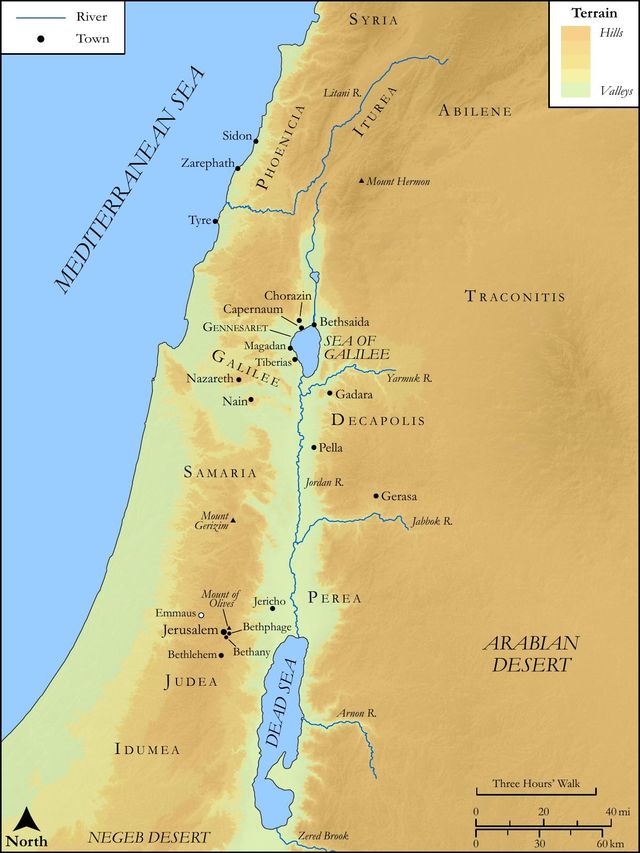
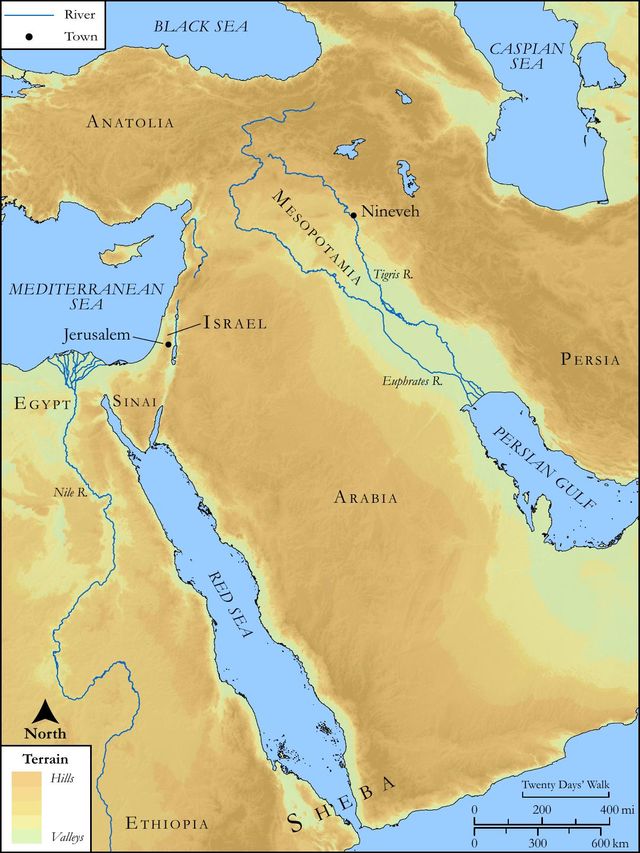
Study this verse
Public-domain commentary
Matthew Henry
From his Commentary on the Whole Bible. Henry comments on passages, not single verses — this entry covers Luke 22:7–20. His two-level outline is real structure in the source text, so it is rendered as structure.
What a hopeful prospect had we of Christ's doing a great deal of good by his preaching in the temple during the feast of unleavened bread, which continued seven days, when the people were every morning, and early in the morning, so attentive to hear him! But here is a stop put to it. He must enter upon work of another kind; in this, however, he shall do more good than in the other, for neither Christ's nor his church's suffering days are their idle empty days. Now here we have,
I.The preparation that was made for Christ's eating the passover with his disciples, upon the very day of unleavened bread, when the passover must be killed according to the law, Luk 22:7. Christ was made under the law, and observed the ordinances of it, particularly that of the passover, to teach us in like manner to observe his gospel institutions, particularly that of the Lord's supper, and not to neglect them. It is probable that he went to the temple to preach in the morning, when he sent Peter and John another way into the city to prepare the passover. Those who have attendants about them, to do their secular business for them in a great measure, must not think that this allows them to be idle; it engages them to employ themselves more in spiritual business, or service to the public. He directed those whom he employed whither they should go (Luk 22:9, Luk 22:10): they must follow a man bearing a pitcher of water, and he must be their guide to the house. Christ could have described the house to them; probably it was a house they knew, and he might have said no more than, Go to such a one's house, or to a house in such a street, with such a sign, etc. But he directed them thus, to teach them to depend upon the conduct of Providence, and to follow that, step by step. They went, not knowing whither they went, nor whom they followed. Being come to the house, they must desire the master of the house to show them a room (Luk 22:11), and he will readily do it, Luk 22:12. Whether it was a friend's house or a public house does not appear; but the disciples found their guide, and the house, and the room, just as he had said to them (Luk 22:13); for they need not fear a disappointment who go upon Christ's word; according to the orders given them, they got every thing in readiness for the passover, Luk 22:11.
II.The solemnizing of the passover, according to the law.
When the hour was come that they should go to supper he sat down, probably at the head-end of the table, and the twelve apostles with him, Judas not excepted; for it is possible that those whose hearts are filled with Satan, and all manner of wickedness, may yet continue a plausible profession of religion, and be found in the performance of its external services; and while it is in the heart, and does not break out into any thing scandalous, such cannot be denied the external privileges of their external profession. Though Judas has already been guilty of an overt act of treason, yet, it not being publicly known, Christ admits him to sit down with the rest at the passover. Now observe,
1.How Christ bids this passover welcome, to teach us in like manner to welcome his passover, the Lord's supper, and to come to it with an appetite (Luk 22:15): "With desire I have desired, I have most earnestly desired, to eat this passover with you before I suffer." He knew it was to be the prologue to his sufferings, and therefore he desired it, because it was in order to his Father's glory and man's redemption. He delighted to do even this part of the will of God concerning him as Mediator. Shall we be backward to any service for him who was so forward in the work of our salvation? See the love he had to his disciples; he desired to eat it with them, that he and they might have a little time together, themselves, and none besides, for private conversation, which they could not have in Jerusalem but upon this occasion. He was now about to leave them, but was very desirous to eat this passover with them before he suffered, as if the comfort of that would carry him the more cheerfully through his sufferings, and make them the easier to him. Note, Our gospel passover, eaten by faith with Jesus Christ, will be an excellent preparation for sufferings, and trials, and death itself.
2.How Christ in it takes his leave of all passovers, thereby signifying his abrogating all the ordinances of the ceremonial law, of which that of the passover was one of the earliest and one of the most eminent (Luk 22:16): "I will not any more eat thereof, nor shall it by any more celebrated by my disciples, until it be fulfilled in the kingdom of God." (1.) It was fulfilled when Christ our Passover was sacrificed for us, Co1 5:7. And therefore that type and shadow was laid aside, because now in the kingdom of God the substance was come, which superseded it. (2.) It was fulfilled in the Lord's supper, an ordinance of the gospel kingdom, in which the passover had its accomplishment, and which the disciples, after the pouring out of the Spirit, did frequently celebrate, as we find Act 2:42, Act 2:46. They ate of it, and Christ might be said to eat with them, because of the spiritual communion they had with him in that ordinance. He is said to sup with them and they with him, Rev 3:20. But, (3.) The complete accomplishment of that commemoration of liberty will be in the kingdom of glory, when all God's spiritual Israel shall be released from the bondage of death and sin, and be put in possession of the land of promise. What he had said of his eating of the paschal lamb, he repeats concerning his drinking of the passover wine, the cup of blessing, or of thanksgiving, in which all the company pledged the Master of the feast, at the close of the passover supper. This cup he took, according to the custom, and gave thanks for the deliverance of Israel out of Egypt, and the preservation of their first-born, and then said, Take this, and divide it among yourselves, Luk 22:17. This is not said afterwards of the sacramental cup, which being probably of much more weight and value, being the New Testament in his blood, he might give into every one's hand, to teach them to make a particular application of it to their own souls; but, as for the paschal cup which is to be abolished, it is enough to say, "Take it, and divide it among yourselves, do what you will with it, for we shall have no more occasion for it, Luk 22:18. I will not drink of the fruit of the vine any more, I will not have it any more drank of, till the kingdom of God shall come, till the Spirit be poured out, and then you shall in the Lord's supper commemorate a much more glorious redemption, of which both the deliverance out of Egypt and the passover commemoration of it were types and figures. The kingdom of God is now so near being set up that you will not need to eat or drink any more till it comes." Christ dying next day opened it. As Christ with a great deal of pleasure took leave of all the legal feasts (which fell of course with the passover) for the evangelical ones, both spiritual and sacramental; so may good Christians, when they are called to remove from the church militant to that which is triumphant, cheerfully exchange even their spiritual repasts, much more their sacramental ones, for the eternal feast.
III.The institution of the Lord's supper, Luk 22:19, Luk 22:20.
The passover and the deliverance out of Egypt were typical and prophetic signs of a Christ to come, who should by dying deliver us from sin and death, and the tyranny of Satan; but they shall no more say, The Lord liveth, that brought us up out of the land of Egypt; a much greater deliverance shall eclipse the lustre of that, and therefore the Lord's supper is instituted to be a commemorative sign or memorial of a Christ already come, that has by dying delivered us; and it is his death that is in a special manner set before us in that ordinance.
1.The breaking of Christ's body as a sacrifice for us is here commemorated by the breaking of bread; and the sacrifices under the law were called the bread of our God (Lev 21:6, Lev 21:8, Lev 21:17): This is my body which is given for you. And there is a feast upon that sacrifice instituted, in which we are to apply it to ourselves, and to take the benefit and comfort of it. This bread that was given for us is given to us to be food for our souls, for nothing can be more nourishing and satisfying to our souls than the doctrine of Christ's making atonement for sin, and the assurance of our interest in that atonement; this bread that was broken and given for us, to satisfy for the guilt of our sins, is broken and given to us, to satisfy the desire of our souls. And this we do in remembrance of what he did for us, when he died for us, and for a memorial of what we do, in making ourselves partakers of him, and joining ourselves to him in an everlasting covenant; like the stone Joshua set up for a witness, Jos 24:27.
2.The shedding of Christ's blood, by which the atonement was made (for the blood made atonement for the soul, Lev 17:11), as represented by the wine in the cup; and that cup of wine is a sign and token of the New Testament, or new covenant, made with us. It commemorates the purchase of the covenant by the blood of Christ, and confirms the promises of the covenant, which are all Yea and Amen in him. This will be reviving and refreshing to our souls, as wine that makes glad the heart. In all our commemorations of the shedding of Christ's blood, we must have an eye to it as shed for us; we needed it, we take hold of it, we hope to have benefit by it; who loved me, and gave himself for me. And in all our regards to the New Testament we must have an eye to the blood of Christ, which gave life and being to it, and seals to us all the promises of it. Had it not been for the blood of Christ, we had never had the New Testament; and, had it not been for the New Testament, we had never know the meaning of Christ's blood shed.
Historical interpretation
Ten Centuries of Reception
9 surviving comments on this verse. Each one is dated, so this reads as a timeline rather than a list.
Select a marker to jump to its quote. Markers stagger vertically where authors wrote within a few decades of each other.
(ut sup.) But we should know that they who are taken up with banquetings and worldly cares do not ascend into that upper part of the house, and therefore do not keep the Passover with Jesus. For after the words of the disciples wherewith they questioned the goodman of the house, (that is, the understanding,) the Divine Person came into that house to feast there with His disciples.
But should any one say, "If on the first day of unleavened bread the disciples of our Saviour prepare the Passover, on that day then should we also celebrate the Passover;" we answer, that this was not an admonition, but a history of the fact. It is what took place at the time of the saving Passion; but it is one thing to relate past events, another to sanction and leave them an ordinance to posterity. Moreover, the Saviour did not keep His Passover with the Jews at the time that they sacrificed the lamb. For they did this on the Preparation, when our Lord suffered. Therefore they entered not into the hall of Pilate, that they might not be defiled, but might eat the Passover. (John 18:28.) For from the time that they conspired against the truth, they drove far from them the Word of truth. Nor on the first day of unleavened bread, on which the Passover ought to be sacrificed, did they eat their accustomed Passover, for they were intent upon something else, but on the day after, which was the second of unleavened bread. But our Lord on the first day of unleavened bread, that is, on the fifth day of the week, kept the Passover with His disciples.
Our Lord, in order to leave us a heavenly Passover, ate a typical one, removing the figure, that the truth might take its place.
First observe the greatness of His divine power. He is talking with His disciples, yet knows what will happen in another place. Next behold His condescension, in that He chooses not the person of the rich or powerful, but seeks after the poor, and prefers a mean inn to the spacious palaces of nobles. Now the Lord was not ignorant of the name of the man whose mystery He knew, and that he would meet the disciples, but he is mentioned without a name, that he may be counted as ignoble.
Or the pitcher is a more perfect measure, but the water is that which was thought meet to be a sacrament of Christ; to wash, not to be washed.
Now in the upper parts he has a large room furnished, that you may consider how great were his merits in whom the Lord could sit down with His disciples, rejoicing in His exalted virtues.
(Hom. 81. in Matt.) But as they knew not to whom they were sent, He gave them a sign, as Samuel to Saul, as it follows, And he said unto them, Behold, when ye are entered into the city, there shall a man meet you bearing a pitcher of water; follow him into the house where he entereth in. (1 Sam. 10:3.)
When the disciples had prepared the Pascha, Christ ate it with them. Christ was patient toward the traitor, and from his infinite lovingkindness condescended to admit him to the table. Judas was already a traitor, because Satan was staying within him. What did Christ also say to the holy apostles? "I have desired a desire to eat this Pascha with you." Let us examine the deep meaning of this expression. Let us search out the meaning concealed in there, and let us search for what the Savior intended.I have already said that the greedy disciple was seeking an opportunity to betray Christ. So Judas might not deliver him to his murderers before the feast of the Pascha, the Savior did not openly state either the house or the person with whom he would celebrate the feast. He explains to them the cause of his unwillingness to tell them openly with whom he would lodge. He says, "I have desired a desire to eat with you this Pascha," apparently meaning, "I have used every effort to enable me to escape the wickedness of the traitor, that I might not endure my passion before the time."
By the day of unleavened bread of the Passover, He means the fourteenth day of the first month, the day on which, having put away the leaven, they were accustomed to hold the Passover, that is, the lamb, towards evening.
As if to say, We have no abode, we have no place of shelter. Let those hear this, who busy themselves in building houses. Let them know that Christ, the Lord of all places, had not where to lay His head.
To explain this Passover, the Apostle says, Christ our Passover is sacrificed for us. (1 Cor. 5:7.) Which Passover in truth must needs have been slain there, as it was so ordained by the Father's counsel and determination. And thus although on the next day, that is, the fifteenth, He was crucified, yet, on this night on which the lamb was slain by the Jews, being seized and bound, He consecrated the beginning of His sacrifice, that is, of His Passion.
They prepare the Passover in that house, whither the pitcher of water is carried, for the time is at hand in which to the keepers of the true Passover, the typical blood is taken away from the lintel, and the baptism of the lifegiving fountain is consecrated to take away sin.
Now on the same fifth day He sends two of His disciples to prepare the Passover, namely, Peter and John, the one in truth as loving, the other as loved. In all things showing, that even to the end of His life He opposed not the law. And He sends them to a strange house; for He and His disciples had no house, else would He have kept the Passover in one of them. So it is added, And they said, Where will thou that we prepare?
He sends them for this reason to an unknown man: to show them that He voluntarily underwent His Passion, since He who so swayed the mind of one unknown to Him, that He should receive them, was able to deal with the Jews just as He wished. But some say that He gave not the name of the man, lest the traitor knowing his name might open the house to the Pharisees, and they should have come and taken Him before that the supper was eaten, and He had delivered the spiritual mysteries to His disciples. But He directs them by particular signs to a certain house; whence it follows, And ye shall say to the goodman of the house, The Master saith, Where is the guestchamber, &c. And he will show you an upper room, &c.
By the day of unleavened bread, we must understand that conversation which is wholly in the light of the Spirit, having lost all trace of the old corruption of Adam's first transgression. And living in this conversation, it becomes us to rejoice in the mysteries of Christ. Now these mysteries Peter and John prepare, that is, action and contemplation, fervid zeal and peaceful meekness. And these preparers a certain man meets, because in what we have just mentioned, lies the condition of man who was created after the image of God. And he carries a pitcher of water, which signifies the grace of the Holy Spirit. But the pitcher is humbleness of heart; for He giveth grace to the humble, who know themselves to be but earth and dust.
(non occ.) And perceiving these signs, the disciples zealously fulfilled all that had been commanded them; as it follows, And they went, and found as he had said unto them, and made ready the Passover.
Continue studying Luke 22:13 across the web’s major study libraries — every link below opens this exact verse, chapter, or book on the destination site.
Read & Compare
 BibleGatewayThis verse in more than 200 translations and 70 languages.
 Bible.comThe YouVersion reader — hundreds of translations, reading plans, and highlights.
 ESV.orgCrossway's official English Standard Version reader.
 NET BibleThe NET translation with 60,000+ translators' notes on every rendering decision.
 STEP BibleTyndale House's free study tool — original text, vocabulary, and scholarly resources.
 BibliaLogos Bible Software's free web reader.
 USCCBThe New American Bible (Revised Edition) with the U.S. bishops' study notes.
Commentaries
 BibleHub CommentariesDozens of classic commentaries on this verse, gathered on one page.
 StudyLightMore than 100 commentary sets — the largest collection on the web.
 BibleRefPlain-English commentary on what this verse means, verse by verse.
 Enduring WordDavid Guzik's free commentary on this chapter, widely used by Bible teachers.
 Bible Study ToolsVerse commentary alongside Greek and Hebrew study aids.
Original Language & Research
- BibleHub InterlinearThe verse word by word — original language, transliteration, and English.
- BibleHub LexiconEvery word's original-language definition and Strong's entry.
 Blue Letter BibleDeep-study tools — Strong's numbers, concordance, and word studies.
 CNTR CollationThe earliest Greek manuscripts of this verse, collated letter by letter.
Sermons, Hymns & Audio


TrulyRandomVerse is not affiliated with these sites and doesn’t control their content. They’re linked because they’re genuinely useful.
Summary
Luke 22:13 succinctly records the disciples' immediate and faithful obedience to Jesus' specific instructions for preparing the Passover meal. This verse serves as a powerful testament to Jesus' divine foreknowledge and sovereign control over events, demonstrating the precise fulfillment of His word by Peter and John, thereby setting the stage for the pivotal institution of the Lord's Supper and the inauguration of the New Covenant.
Context
ShowHideLiterary Context
This verse immediately follows Jesus' detailed and somewhat enigmatic instructions to Peter and John in Luke 22:7-12. Having sent them into the city with a specific sign—a man carrying a jar of water—Jesus promised they would be led to a large, furnished upper room where they were to prepare the Passover. Luke 22:13 confirms the disciples' prompt and successful execution of these instructions, serving as the narrative's resolution to Jesus' directive and a crucial bridge to the Last Supper account that begins in Luke 22:14. The conciseness of this verse highlights the seamless and divinely orchestrated nature of the events leading up to Jesus' passion.
Historical & Cultural Context
The Passover was one of the most significant annual feasts in ancient Israel, commemorating the Israelites' liberation from slavery in Egypt, particularly the night when the angel of death "passed over" the houses marked with lamb's blood (Exodus 12). By Jesus' time, it involved a ritual meal with specific elements like unleavened bread, bitter herbs, and roasted lamb. The preparation for this feast was meticulous and culturally ingrained. Jesus' instructions, particularly the sign of a man carrying water (a task typically done by women), would have been unusual and served as a unique, identifiable marker in a bustling Jerusalem preparing for the festival. The "large upper room" was likely a common space rented for such gatherings, but its availability and readiness "as he had said" underscore a divine arrangement.
Key Themes
ShowHideLuke 22:13 contributes significantly to several overarching themes in Luke's Gospel and the broader biblical narrative. Foremost is the theme of Divine Sovereignty and Foreknowledge, as Jesus' precise prediction and its exact fulfillment underscore His divine authority and control over all circumstances, even those seemingly mundane. This aligns with His prophetic declarations throughout His ministry, such as His foretelling of His suffering and death in Luke 9:22. Another prominent theme is Obedience and Trust, exemplified by the disciples' immediate and unquestioning compliance with Jesus' instructions, which were unusual yet proved entirely reliable. This highlights the importance of faith-filled action in response to God's word. Finally, the verse subtly introduces the theme of Preparation for the New Covenant, as the physical act of "making ready the passover" sets the stage for Jesus to transform the ancient Passover ritual into the foundational meal of the new covenant, anticipating His sacrificial death and resurrection, as detailed in Luke 22:19-20.
Exposition and Analysis
ShowHideKey Word Analysis
ShowHideMeaning "to go off (i.e. depart), aside (i.e. apart) or behind (i.e. follow), literally or figuratively." Here, it signifies the disciples' physical departure from Jesus to carry out His command. The immediate nature of their "going" speaks to their prompt obedience and trust in Jesus' word, without hesitation or delay.
Meaning "to find (literally or figuratively)." This word confirms the exact fulfillment of Jesus' prophecy. The disciples "found" precisely what Jesus had described—the man with the water jar, the leading to the house, and the furnished upper room. This finding is not accidental but a direct result of divine orchestration and the accuracy of Jesus' foreknowledge.
Meaning "to prepare." This term implies a thorough and complete preparation, not just a hasty setup. It encompasses all the necessary actions to ensure the Passover meal could be properly observed, from acquiring the lamb to arranging the setting. The disciples' diligent "making ready" underscores their commitment to fulfilling Jesus' instructions for this sacred and pivotal meal.
Verse Breakdown
ShowHide"And they went"
This clause highlights the disciples' immediate and active response to Jesus' command. Peter and John, specifically commissioned for this task, demonstrate prompt obedience. Their "going" signifies the beginning of their mission, a journey undertaken in faith based on Jesus' preceding instructions.
"and found as he had said unto them"
This is the pivotal affirmation of Jesus' omniscience and authority. The conjunction "and" links their action to the successful outcome. The phrase "as he had said unto them" emphasizes the precise, point-for-point fulfillment of Jesus' detailed prophecy regarding the man with the water jar and the upper room. This finding validates Jesus' divine insight and the reliability of His word, reinforcing the disciples' trust.
"and they made ready the passover"
This final clause describes the successful completion of their task. Having found the designated place, the disciples diligently prepared the traditional Passover meal. This act of "making ready" is not merely a logistical detail but a profoundly significant action, as it sets the physical stage for the Last Supper, where Jesus would transform the ancient Passover into the new covenant meal, symbolizing His ultimate sacrifice.
Literary Devices
ShowHideLuke 22:13, though brief, employs several effective literary devices. Narrative Economy is evident in the concise reporting of the disciples' actions and the immediate fulfillment of Jesus' prophecy. The verse quickly moves from instruction to execution, highlighting the seamless unfolding of divine will without unnecessary detail. Foreshadowing is also present, as the meticulous preparation of the Passover meal subtly anticipates the profound theological significance of the Last Supper, which is about to occur. The disciples' act of "making ready" the old covenant meal unknowingly prepares the way for the institution of the new. Furthermore, there is an element of Validation or Confirmation, as the phrase "found as he had said unto them" serves to affirm Jesus' divine foreknowledge and the trustworthiness of His word, reinforcing His authority to the reader.
Theological and Thematic Connections
ShowHideLuke 22:13 is a powerful demonstration of divine sovereignty working through human obedience. It underscores that God's plans are meticulously laid out and infallibly executed, even in the mundane details of life. The disciples' faithful "going" and "finding" precisely "as he had said" reveals a God who is intimately involved in the unfolding of His redemptive purposes, orchestrating circumstances to bring about His will. This preparation for the Passover, an ancient feast commemorating deliverance, becomes the very setting for the institution of the New Covenant, where the ultimate deliverance from sin through Christ's sacrifice is revealed. It teaches us that our obedience, however small the task, can be a vital part of God's grand design.
Reflection and Application
ShowHideLuke 22:13, though brief, offers profound lessons for contemporary believers. The disciples' immediate and unquestioning obedience to Jesus' seemingly unusual instructions serves as a powerful model for our own walk of faith. They didn't hesitate or demand further explanation; they simply "went" and "found." This reminds us that true faith often involves stepping out in obedience even when the path ahead isn't fully clear, trusting that God's word is reliable and His promises are true. Just as their preparation of the Passover was crucial for the institution of the Lord's Supper, our seemingly small acts of faithfulness can be integral to God's larger, redemptive plan unfolding in our lives and in the world. It calls us to a posture of readiness and responsiveness, recognizing that every act of obedience is an act of worship and a participation in God's sovereign work.
Questions for Reflection
ShowHideFAQ
ShowHideWho were "they" who went and found as Jesus had said?
ShowHideThe "they" in Luke 22:13 refers specifically to Peter and John. In the preceding verses, Luke 22:8 states, "And he sent Peter and John, saying, Go and prepare us the passover, that we may eat." These two disciples were entrusted with the crucial task of making the arrangements for the Last Supper, demonstrating their prominent role among the Twelve.
Why was it important that they "found as he had said unto them"?
ShowHideThe precise fulfillment of Jesus' prophecy—that they would find a man carrying a jar of water who would lead them to a specific upper room—is profoundly important because it underscores Jesus' divine foreknowledge and sovereignty. It demonstrates that Jesus was not merely reacting to circumstances but was in complete control, orchestrating every detail according to His divine plan. This miraculous accuracy serves to validate His claims and affirm His divine authority, assuring both the disciples and future readers that His words are trustworthy and His plan is infallible, even in the face of His impending suffering and death, as foretold in Luke 18:31-33.
What is the significance of "making ready the passover" in this context?
ShowHide"Making ready the passover" was far more than a logistical detail; it was the essential preparation for one of the most pivotal events in salvation history. The traditional Passover meal commemorated Israel's deliverance from Egyptian bondage. By preparing this meal, the disciples unwittingly set the stage for Jesus to transform its meaning, instituting the Lord's Supper. This new meal would symbolize His body broken and blood shed for the forgiveness of sins, establishing the New Covenant, as described in Luke 22:19-20. Thus, their act of preparation was a bridge between the Old Covenant's shadows and the New Covenant's reality, pointing directly to Christ as the ultimate Paschal Lamb.
Christ-Centered Fulfillment
ShowHideLuke 22:13, while seemingly a simple narrative detail, profoundly points to Christ's central role in salvation history. The disciples' act of "making ready the passover" is not merely for a traditional Jewish feast, but for the very meal where Jesus would reveal Himself as the ultimate fulfillment of the Passover lamb. Just as the original Passover lamb's blood saved Israel from death (Exodus 12:13), Jesus, the Lamb of God who takes away the sin of the world, was preparing to offer His own life as the perfect sacrifice. The meticulous preparation, orchestrated by Jesus' divine foreknowledge, highlights that His sacrifice was not a random event but the culmination of God's eternal plan, "according to the definite plan and foreknowledge of God" (Acts 2:23). The old covenant Passover, with its animal sacrifice, served as a type and shadow, now fulfilled in Christ, who is our Passover lamb, sacrificed for us. Thus, the disciples' obedience in preparing the physical space for the Passover meal ultimately prepared the way for the spiritual reality of the New Covenant, inaugurated by Christ's body and blood, offered for the forgiveness of sins and eternal life (Matthew 26:26-28).