


Matthew 3:11
Bible text: King James Version (1769 Blayney text) · Public domain
Bible text: King James Version with Strong's numbers · Public domain
Bible text: Berean Standard Bible · Public domain
Bible text: American Standard Version (1901) · Public domain
Bible text: World English Bible, Messianic edition · Public domain
Bible text: Geneva Bible (1599) · Public domain
Bible text: Young's Literal Translation · Public domain
- ἐγὼegōI myselfG1473P-1NSPersonal pronoun Nominative 1st Singular
- μὲνmenindeedG3303PRTParticle or Disjunctive
- ὑμᾶςhumasyouG4771P-2APPersonal pronoun Accusative 2nd Plural
- βαπτίζωbaptizōbaptizeG907V-PAI-1SVerb Present Active Indicative 1st Singular
- ἐνenwithG1722PREPPreposition
- ὕδατιhudatiwaterG5204N-DSNNoun Dative Singular Neuter
- εἰςeistoG1519PREPPreposition
- μετάνοιανmetanoianrepentanceG3341N-ASFNoun Accusative Singular Feminine
- ὁho<the>G3588T-NSMDefinite article Nominative Singular Masculine
- δὲdehoweverG1161CONJConjunction
- ὀπίσωopisōafterG3694PREPPreposition
- μουmoumeG3165P-1GSPersonal pronoun Genitive 1st Singular
- ἐρχόμενοςerchomenosis comingG2064V-PNP-NSMVerb Present Middle Or Passive Deponent Participle Nominative Singular Masculine
- ἰσχυρότερόςischuroterosmightierG2478A-NSM-CAdjective Nominative Singular Masculine Comparative
- μούmouthan IG3165P-1GSPersonal pronoun Genitive 1st Singular
- ἐστὶνestinHe isG1510V-PAI-3SVerb Present Active Indicative 3rd Singular
- οὗhouof whomG3739R-GSMRelative pronoun Genitive Singular Masculine
- οὐκouknotG3756PRT-NNegative Particle Negative
- εἰμὶeimiI amG1510V-PAI-1SVerb Present Active Indicative 1st Singular
- ἱκανὸςhikanosfitG2425A-NSMAdjective Nominative Singular Masculine
- τὰtatheG3588T-APNDefinite article Accusative Plural Neuter
- ὑποδήματαhupodēmatasandalsG5266N-APNNoun Accusative Plural Neuter
- βαστάσαι·bastasaito carryG941V-AANVerb Aorist Active Infinitive
- αὐτὸςautosHe himselfG846P-NSMPersonal pronoun Nominative Singular Masculine
- ὑμᾶςhumasyouG4771P-2APPersonal pronoun Accusative 2nd Plural
- βαπτίσειbaptiseiwill baptizeG907V-FAI-3SVerb Future Active Indicative 3rd Singular
- ἐνenwithG1722PREPPreposition
- πνεύματιpneumati[the] SpiritG4151N-DSNNoun Dative Singular Neuter
- ἁγίῳhagiōHolyG40A-DSNAdjective Dative Singular Neuter
- καὶkaiandG2532CONJConjunction
- πυρί·puriwith fireG4442N-DSNNoun Dative Singular Neuter
English is a literal word-by-word gloss of the Greek, not the KJV's wording. Why?
This is the original text the KJV's translators worked from — each Greek word with its own literal English meaning in this verse, prepared by scholars at Tyndale House, Cambridge. The KJV translates whole sentences, not word by word, so its wording differs: one Greek word can become several English words, and the KJV may choose “charity” where the gloss reads “love”. Both are faithful — they answer different questions. For the KJV's own rendering, switch to the KJV text.
Details
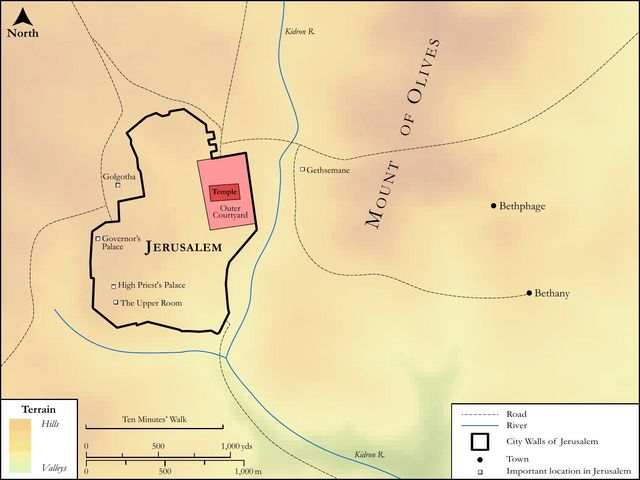
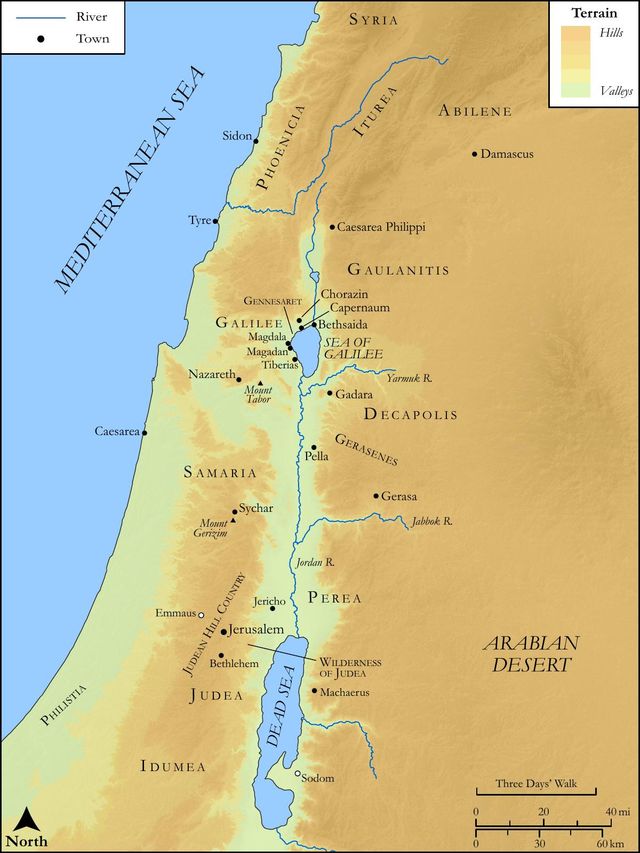
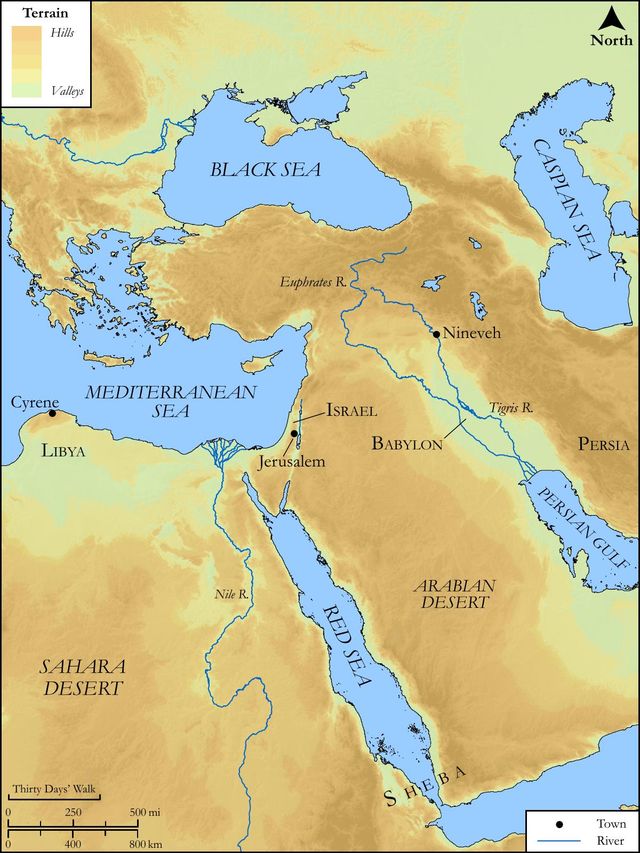
See on the biblical-era maps
Study this verse
Public-domain commentary
Matthew Henry
From his Commentary on the Whole Bible. Henry comments on passages, not single verses — this entry covers Matthew 3:7–12. His four-level outline is real structure in the source text, so it is rendered as structure.
The doctrine John preached was that of repentance, in consideration of the kingdom of heaven being at hand; now here we have the use of that doctrine. Application is the life of preaching, so it was of John's preaching.
Observe, 1. To whom he applied it; to the Pharisees and Sadducees that came to his baptism, Mat 3:7. To others he thought it enough to say, Repent, for the kingdom of heaven is at hand; but when he saw these Pharisees and Sadducees come about him, he found it necessary to explain himself, and deal more closely. These were two of the three noted sects among the Jews at that time, the third was that of the Essenes, whom we never read of in the gospels, for they affected retirement, and declined busying themselves in public affairs. The Pharisees were zealots for the ceremonies, for the power of the church, and the traditions of the elders; the Sadducees ran into the other extreme, and were little better than deists, denying the existence of spirits and a future state. It was strange that they came to John's baptism, but their curiosity brought them to be hearers; and some of them, it is probable, submitted to be baptized, but it is certain that the generality of them did not; for Christ says (Luk 7:29, Luk 7:30), that when the publicans justified God, and were baptized of John, the Pharisees and lawyers rejected the counsel of God against themselves, being not baptized of him. Note, Many come to ordinances, who come not under the power of them. Now to them John here addresses himself with all faithfulness, and what he said to them, he said to the multitude (Luk 3:7), for they were all concerned in what he said. 2. What the application was. It is plain and home, and directed to their consciences; he speaks as one that came not to preach before them, but to preach to them. Though his education was private, he was not bashful when he appeared in public, nor did he fear the face of man, for he was full of the Holy Ghost, and of power.
I.Here is a word of conviction and awakening.
He begins harshly, calls them not Rabbi, gives them not the titles, much less the applauses, they had been used to.
1.The title he gives them is, O generation of vipers. Christ gave them the same title; Mat 12:34; Mat 23:33. They were as vipers; though specious, yet venomous and poisonous, and full of malice and enmity to every thing that was good; they were a viperous brood, the seed and offspring of such as had been of the same spirit; it was bred in the bone with them. They gloried in it, that they were the seed of Abraham; but John showed them that they were the serpent's seed (compare Gen 3:15); of their father the Devil, Joh 8:44. They were a viperous gang, they were all alike; though enemies to one another, yet confederate in mischief. Note, A wicked generation is a generation of vipers, and they ought to be told so; it becomes the ministers of Christ to be bold in showing sinners their true character.
2.The alarm he gives them is, Who has warned you to flee from the wrath to come? This intimates that they were in danger of the wrath to come; and that their case was so nearly desperate, and their hearts so hardened in sin (the Pharisees by their parade of religion, and the Sadducees by their arguments against religion), that it was next to a miracle to effect anything hopeful among them. "What brings you hither? Who thought of seeing you here? What fright have you been put into, that you enquire after the kingdom of heaven?" Note,
(1.)There is a wrath to come; besides present wrath, the vials of which are poured out now, there is future wrath, the stores of which are treasured up for hereafter.
(2.)It is the great concern of every one of us to flee from this wrath.
(3.)It is wonderful mercy that we are fairly warned to flee from this wrath; think - Who has warned us? God has warned us, who delights not in our ruin; he warns by the written word, by ministers, by conscience.
(4.)These warnings sometime startle those who seemed to have been very much hardened in their security and good opinion of themselves.
II.Here is a word of exhortation and direction (Mat 3:8); "Bring forth therefore fruits meet for repentance.
Therefore, because you are warned to flee from the wrath to come, let the terrors of the Lord persuade you to a holy life." Or, "Therefore, because you profess repentance, and attend upon the doctrine and baptism of repentance, evidence that you are true penitents." Repentance is seated in the heart. There it is as a root; but in vain do we pretend to have it there, if we do not bring forth the fruits of it in a universal reformation, forsaking all sin, and cleaving to that which is good; these are fruits, axious tēs metanoias - worthy of repentance. Note, Those are not worthy the name of penitents, or their privileges, who say they are sorry for their sins, and yet persist in them. They that profess repentance, as all that are baptized do, must be and act as becomes penitents, and never do any thing unbecoming a penitent sinner. It becomes penitents to be humble and low in their own eyes, to be thankful for the least mercy, patient under the greatest affliction, to be watchful against all appearances of sin, and approaches towards it, to abound in every duty, and to be charitable in judging others.
III.Here is a word of caution, not to trust to their external privileges, so as with them to shift off these calls to repentance (Mat 3:9); Think not to say within yourselves, We have Abraham to our father. Note, There is a great deal which carnal hearts are apt to say within themselves, to put by the convincing, commanding power of the word of God, which ministers should labour to meet with and anticipate; vain thoughts which lodge within those who are called to wash their hearts, Jer 4:14. Mē doxēte - Pretend not, presume not, to say within yourselves; be not of the opinion that this will save you; harbour not such a conceit. "Please not yourselves with saying this" (so some read); "rock not yourselves asleep with this, nor flatter yourselves into a fool's paradise." Note, God takes notice of what we say within ourselves, which we dare not speak out, and is acquainted with all the false rests of the soul, and the fallacies with which it deludes itself, but which it will not discover, lest it should be undeceived. Many hide the lie that ruins them, in their right hand, and roll it under their tongue, because they are ashamed to own it; they keep in the Devil's interest, by keeping the Devil's counsel. Now John shows them,
1.What their pretense was; "We have Abraham to our father; we are not sinners of the Gentiles; it is fit indeed that they should be called to repent; but we are Jews, a holy nation, a peculiar people, what is this to us?" Note, The word does us no good, when we will not take it as it is spoken to us, and belonging to us. "Think not that because you are the seed of Abraham, therefore," (1.) "You need not repent, you have nothing to repent of; your relation to Abraham, and your interest in the covenant made with him, denominate you so holy, that there is no occasion for you to change your mind or way." (2.) "That therefore you shall fare well enough, though you do not repent. Think not that this will bring you off in the judgment, and secure you from the wrath to come; that God will connive at your impenitence, because you are Abraham's seed." Note, It is vain presumption to think that our having good relations will save us, though we be not good ourselves. What though we be descended from pious ancestors; have been blessed with a religious education; have our lot cast in families where the fear of God is uppermost; and have good friends to advise us, and pray for us; what will all this avail us, if we do not repent, and live a life of repentance? We have Abraham to our father, and therefore are entitled to the privileges of the covenant made with him; being his seed, we are sons of the church, the temple of the Lord, Jer 7:4. Note, Multitudes, by resting in the honours and advantages of their visible church-membership, take up short of heaven.
2.How foolish and groundless this pretence was; they thought that being the seed of Abraham, they were the only people God had in the world, and therefore that, if they were cut off, he would be at a loss for a church; but John shows them the folly of this conceit; I say unto you (whatever you say within yourselves), that God is able of these stones to raise up children unto Abraham. He was now baptizing in Jordan at Bethabara (Joh 1:28), the house of passage, where the children of Israel passed over; and there were the twelve stones, one for each tribe, which Joshua set up for a memorial, Jos 4:20. It is not unlikely that he pointed to those stones, which God could raise to be, more than in representation, the twelve tribes of Israel. Or perhaps he refers to Isa 51:1, where Abraham is called the rock out of which they were hewn. That God who raised Isaac out of such a rock, can, if there be an occasion, do as much again, for with him nothing is impossible. Some think he pointed to those heathen soldiers that were present, telling the Jews that God would raise up a church for himself among the Gentiles, and entail the blessing of Abraham upon them. Thus when our first parents fell, God could have left them to perish, and out of stones have raised up another Adam and another Eve. Or, take it thus, "Stones themselves shall be owned as Abraham's seed, rather than such hard, dry, barren sinners as you are." Note, As it is lowering to the confidence of the sinners in Zion, so it is encouraging to the hopes of the sons of Zion, that, whatever comes of the present generation, God will never want a church in the world; if the Jews fall off, the Gentiles shall be grafted in, Mat 21:43; Rom 11:12, etc.
IV.Here is a word of terror to the careless and secure Pharisees and Sadducees, and other Jews, that knew not the signs of the times, nor the day of their visitation, Mat 3:10. "Now look about you, now that the kingdom of God is at hand, and be made sensible."
1.How strict and short your trial is; Now the axe is carried before you, now it is laid to the root of the tree, now you are upon your good behavior, and are to be so but a while; now you are marked for ruin, and cannot avoid it but by a speedy and sincere repentance. Now you must expect that God will make quicker work with you by his judgments than he did formerly, and that they will begin at the house of God: "where God allows more means, he allows less time." Behold, I come quickly. Now they were put upon their last trial; now or never.
2."How sore and severe your doom will be, if you do not improve this." It is now declared with the axe at the root, to show that God is in earnest in the declaration, that every tree, however high in gifts and honours, however green in external professions and performances, if it bring not forth good fruit, the fruits meet for repentance, is hewn down, disowned as a tree in God's vineyard, unworthy to have room there, and is cast into the fire of God's wrath - the fittest place for barren trees: what else are they good for? If not fit for fruit, they are fit for fuel. Probably this refers to the destruction of Jerusalem by the Romans, which was not, as other judgments had been, like the lopping off of the branches, or cutting down of the body of the tree, leaving the root to bud again, but it would be the total, final, and irrecoverable extirpation of that people, in which all those should perish that continued impenitent. Now God would make a full end, wrath was coming on them to the utmost.
V.A word of instruction concerning Jesus Christ, in whom all John's preaching centered. Christ's ministers preach, not themselves, but him. Here is,
1.The dignity and pre-eminence of Christ above John. See how meanly he speaks of himself, that he might magnify Christ (Mat 3:11); "I indeed baptize you with water, that is the utmost I can do." Note, Sacraments derive not their efficacy from those who administer them; they can only apply the sign; it is Christ's prerogative to give the thing signified, Co1 3:6; Kg2 4:31. But he that comes after me is mightier than I. Though John had much power, for he came in the spirit and power of Elias, Christ has more; though John was truly great, great in the sight of the Lord (not a greater was born of woman), yet he thinks himself unworthy to be in the meanest place of attendance upon Christ, whose shoes I am not worthy to bear. He sees,
(1.)How mighty Christ is, in comparison with him. Note, It is a great comfort to the faithful ministers, to think that Jesus Christ is mightier than they, can do that for them, and that by them, which they cannot do; his strength is perfected in their weakness.
(2.)How mean he is in comparison with Christ, not worthy to carry his shoes after him! Note, Those whom God puts honour upon, are thereby made very humble and low in their own eyes; willing to be abased, so that Christ may be magnified; to be any thing, to be nothing, so that Christ may be all.
2.The design and intention of Christ's appearing, which they were now speedily to expect. When it was prophesied that John should be sent as Christ's forerunner (Mal 3:1, Mal 3:2), it immediately follows, The Lord, whom ye seek, shall suddenly come, and shall sit as a refiner, Mat 3:3. And after the coming of Elijah, the day comes that shall burn as an oven (Mal 4:1), to which the Baptist seems here to refer. Christ will come to make a distinction,
(1.)By the powerful working of his grace; He shall baptize you, that is, some of you, with the Holy Ghost and with fire. Note,
[1.]It is Christ's prerogative to baptize with the Holy Ghost. This he did in the extraordinary gifts of the Spirit conferred upon the apostles, to which Christ himself applies these words of John, Act 1:5. This he does in the graces and comforts of the Spirit given to them that ask him, Luk 11:13; Joh 7:38, Joh 7:39; See Act 11:16.
[2.]They who are baptized with the Holy Ghost are baptized as with fire; the seven spirits of God appear as seven lamps of fire, Rev 4:5. Is fire enlightening? So the Spirit is a Spirit of illumination. Is it warming? And do not their hearts burn within them? Is it consuming? And does not the Spirit of judgment, as a Spirit of burning, consume the dross of their corruptions? Does fire make all it seizes like itself? And does it move upwards? So does the Spirit make the soul holy like itself, and its tendency is heaven-ward. Christ says I am come to send fire, Luk 12:49.
(2.)By the final determinations of his judgment (Mat 3:12); Whose fan is in his hand. His ability to distinguish, as the eternal wisdom of the Father, who sees all by a true light, and his authority to distinguish, as the Person to whom all judgment is committed, is the fan that is in his hand, Jer 15:7. Now he sits as a Refiner. Observe here [1.] The visible church is Christ's floor; O my threshing, and the corn of my floor, Isa 21:10. The temple, a type of church, was built upon a threshing-floor. [2.] In this floor there is a mixture of wheat and chaff. True believers are as wheat, substantial, useful, and valuable; hypocrites are as chaff, light, and empty, useless and worthless, and carried about with every wind; these are now mixed, good and bad, under the same external profession; and in the same visible communion. [3.] There is a day coming when the floor shall be purged, and the wheat and chaff shall be separated. Something of this kind is often done in this world, when God calls his people out of Babylon, Rev 18:4. But it is the day of the last judgment that will be the great winnowing, distinguishing day, which will infallibly determine concerning doctrines and works (Co1 3:13), and concerning persons (Mat 25:32, Mat 25:33), when saints and sinners shall be parted for ever. [4.] Heaven is the garner into which Jesus Christ will shortly gather all his wheat, and not a grain of it shall be lost: he will gather them as the ripe fruits were gathered in. Death's scythe is made use of to gather them to their people. In heaven the saints are brought together, and no longer scattered; they are safe, and no longer exposed; separated from corrupt neighbours without, and corrupt affections within, and there is no chaff among them. They are not only gathered into the barn (Mat 13:30), but into the garner, where they are thoroughly purified. [5.] Hell is the unquenchable fire, which will burn up the chaff, which will certainly be the portion and punishment, and everlasting destruction, of hypocrites and unbelievers. So that here are life and death, good and evil, set before us; according as we now are in the field, we shall be then in the floor.
Historical interpretation
Eleven Centuries of Reception
22 surviving comments on this verse. Each one is dated, so this reads as a timeline rather than a list.
Select a marker to jump to its quote. Markers stagger vertically where authors wrote within a few decades of each other.
John himself professes that the celestial things are not his, but Christ's, by saying, "He who is from the earth speaketh concerning the earth; He who comes from the realms above is above all; " and again, by saying that he "baptized in repentance only, but that One would shortly come who would baptize in the Spirit and fire; " -of course because true and stable faith is baptized with water, unto salvation; pretended and weak faith is baptized with fire, unto judgment.
That, then, was no celestial thing which furnished no celestial (endowments): whereas the very thing which was celestial in John-the Spirit of prophecy-so completely failed, after the transfer of the whole Spirit to the Lord, that he presently sent to inquire whether He whom he had himself preached, whom he had pointed out when coming to him, were "HE.
The words “behind me” are used in the sense of “after me.” “He who is coming” is said rather than “he who shall be revealed.” The souls of the saints, in order to receive the mystery of revelation, are said to be baptized purely “in fire.” This is because the Spirit first came down upon the disciples in tongues of fire, by which they were baptized and their souls made perfect. Or because, in the age to come, all will be baptized with fire, for “everyone will be salted with fire,” so that “the fire may test everyone’s work, of what sort it is.” Fire is appointed for the material element, which in itself is neither wicked nor evil but powerful and able to purify from evil. For the power of fire is deemed to be beneficial and strong, destructive of evil things and preservative of what is better. This is why fire is associated with wisdom by the prophets. For this reason also, when God is called “a consuming fire,” this is to be understood as a term and symbol not for evil but for power. As fire is the strongest of the elements and conquers everything else, in the same way God is all-powerful and almighty, able to conquer, to create, to make, to nourish, to multiply, to save, possessing authority over both body and soul. Just as fire outperforms all the elements, so too all gods, powers and rulers are no match for the Almighty.Fire has a twofold potency. On the one hand, it is suitable for the formation and ripening of fruits and for the birth and sustenance of animals. The sun is the primary image of this power. On the other hand, fire is fit for destroying and consuming, as is the case with earthly fire. When God therefore is called a “consuming fire,” able to destroy, he is being called a mighty and irresistible power. To God nothing is impossible. Concerning such a power the Savior also says, “I came to cast fire upon the earth.” This is a power that purifies the saints, causes material things to disappear and, we might say, educates. Fire induces fear. Its light spreads outward.
Leaving to the Apostles the glory of bearing about the Gospel, to whose beautiful feet was due the carrying the tidings of God's peace.
He marks the time of our salvation and judgment in the Lord; those who are baptized in the Holy Ghost it remains that they be consummated by the fire of judgment.
The wheat, i. e. the full and perfect fruit of the believer, he declares, shall be laid up in heavenly barns; by the chaff he means the emptiness of the unfruitful.
The work of the law is now ineffectual for salvation. John appeared as a messenger of repentance to those about to be baptized. It was the task of the prophets to call people away from their sins, but it was proper to Christ to save those who believe. Thus John said that he was baptizing them for repentance. He also said that a mightier one would come whose sandals he was not worthy to untie. And he left to the apostles the glory of spreading God’s word. It would be their duty to go about with their trusty feet and proclaim God’s peace. He therefore points ahead to the time of our salvation and judgment in the Lord, saying, “He will baptize you with the Holy Spirit and with fire.”
Now we must focus on what is meant by these sandals from the spiritual standpoint. We know that Moses said long ago: “Put off your sandals from your feet, for the place on which you are standing is holy ground.” We read that Joshua the son of Nun likewise said, “Remove the latchet from your sandal.” But as to why they are ordered by the Lord to remove their sandals, we must understand this to be the type of a future truth. According to the law, if a man is unwilling to accept the wife of his brother after his brother’s death, he should take off his shoes, so that another may marry her and succeed by right of law. As to the commandment prefigured in law, we find it fulfilled in Christ, who is the true bridegroom of the church. Therefore, because neither Moses the lawgiver nor Joshua the leader of the people could be the bridegroom of the church, not without good reason was it said to them that they should remove the sandals from their feet, because the true future bridegroom of the church, Christ, was to be expected. John says concerning him: “He who has the bride is the bridegroom.” To bear or loosen his sandals, John professed himself to be unworthy. The Lord himself through David revealed that these sandals signify the footsteps of gospel preaching when he says, “Upon Edom I cast my shoe”; through his apostles he will take the steps of gospel teaching everywhere.
For (let me add) on account of this,-lest they should say, "Thou art alarming and pressing, and constraining us, applying an axe, and threatening us with being cut down, yet requiring produce in time of punishment,"-he hath added, to signify the ease of bearing that fruit, "I indeed baptize you with water, but He that cometh after me is mightier than I, the latchet of whose shoe I am not worthy to unloose; He shall baptize you with the Holy Ghost and with fire:" implying hereby that consideration only is needed and faith, not labors and toils; and as it is easy to be baptized, so is it easy to be converted, and to become better men. So having stirred their mind by the fear of God's judgment, and the expectation of His punishment, and by the mention of the axe, and by the loss of their ancestors, and by the bringing in of those other children, and by the double vengeance of cutting off and burning, and having by all means softened their hardness, and brought them to desire deliverance from so great evils; then he brings in what he hath to say touching Christ; and not simply, but with a declaration of His great superiority. Then in setting forth the difference between himself and Him, lest he should seem to say this out of favor, he establishes the fact by comparison of the gifts bestowed by each of them. For he did not at once say, "I am not worthy to unloose the lachet of His shoe;" but when he had first set forth the little value of his own baptism, and had shown that it hath nothing more than to lead them to repentance (for he did not say with water of remission, but of repentance), he sets forth Christ's also, which is full of the unspeakable gift. Thus he seems to say, "Lest, on being told that He cometh after me, thou shouldest despise Him as having come later; learn thou the virtue of His gift, and thou wilt clearly know that I uttered nothing worthy nor great, when I said, 'I am not worthy to unloose the latchet of His shoe.' So too when thou art told, 'He is mightier than I,' do not think I said this in the way of making a comparison. For I am not worthy to be ranked so much as among His servants, no, not even the lowest of His servants, nor to receive the least honored portion of His ministry." Therefore He did not merely say, "His shoes," but not even "the latchet," which kind of office was the very lowest. Then again, lest any one should deem what he had said to be an expression of humility, he adds also the proof from the facts: "For He shall baptize you," saith he, "with the Holy Ghost and with fire."
And mark again how he rouses the hearer, by putting that first which was to take place after all. For the Lamb was to be slain, and sin to be blotted out, and the enmity to be destroyed, and the burial to take place, and the resurrection, and then the Spirit to come. But none of these things doth he mention as yet, but that first which was last, and for the sake of which all the former were done, and which was fittest to proclaim His dignity; so that when the hearer should be told that he was to receive so great a Spirit he might search with himself, how and in what manner this shall be, while sin so prevails; that finding him full of thought and prepared for that lesson, he might thereupon introduce what he had to say touching the Passion, no man being any more offended, under the expectation of such a gift.
(Hom. x. 1.) For while as yet the sacrifice had not been offered, nor remission of sin sent, nor the Spirit had descended on the water, how could sin be forgiven? But since the Jews never perceived their own sin, and this was the cause of all their evils, John came to bring them to a sense of them by calling them to repentance.
When you hear for He is mightier than I, do not suppose this to be said by way of comparison, for I am not worthy to be numbered among his servants, that I might undertake the lowest office.
He does not say, shall give you the Holy Ghost, but shall baptize you in the Holy Ghost, showing in metaphor the abundance of the grace. fThis further shows, that even under the faith there is need of the will alone for justification, not of labours and toilings; and even as easy a thing as it is to be baptized, even so easy a thing it is to be changed and made better. By fire he signifies the strength of grace which cannot be overcome, and that it may be understood that He makes His own people at once like to the great and old prophets, most of the prophetic visions were by fire.
Seest thou how great is the wisdom of the Baptist? how, when He Himself is preaching, He saith everything to alarm, and fill them with anxiety; but when He is sending men to Him, whatever was mild and apt to recover them: not bringing forward the axe, nor the tree that is cut down and burnt, and cast into the fire, nor the wrath to come, but remission of sins, and removing of punishment, and righteousness, and sanctification, and redemption, and adoption, and brotherhood, and a partaking of the inheritance, and an abundant supply of the Holy Ghost. For all these things he obscurely denoted, when he said, "He shall baptize you with the Holy Ghost;" at once, by the very figure of speech, declaring the abundance of the grace (for he said not, "He will give you the Holy Ghost," but "He will baptize you with the Holy Ghost"); and by the specification of fire on the other hand indicating the vehement and uncontrollable quality of His grace.
Imagine only what sort of men it was meet for the hearers to become, when they considered that they were at once to be like the prophets, and like those great ones. For it was on this account, you see, that he made mention at all of fire; that he might lead them to reflect on the memory of those men. Because, of all the visions that appeared unto them, I had almost said, the more part appeared in fire; thus God discoursed with Moses in the bush, thus with all the people in the mount Sinai, thus with Ezekiel on the cherubim.
[Daniel 10:4] "And in the twenty-fourth day of the first month, I was beside the great river which is the Tigris." Ezekiel also had seen a great vision beside a river, the Chebar (Ezekiel 1:1). And it was by the stream of the Jordan that the heavens were opened to the gaze of our Lord and Savior and also to John the Baptist (Matthew 3:1-17). Therefore those critics should leave off their foolish objections who raise questions about the presence of shadows and symbols in a matter of historical truth and attempt to destroy the truth itself by imagining that they should employ allegorical methods to destroy the historicity of rivers and trees and of Paradise.
In the other Gospels it is, whose shoe latchet I am not worthy to loose. Here his humility, there his ministry is intended; Christ is the Bridegroom, and John is not worthy to loose the Bridegroom's shoe, that his house be not called according to the Law of Moses and the example of Ruth, The house of him that hath his shoe loosed. (Deut. 25:10.)
Either the Holy Ghost Himself is a fire, as we learn from the Acts, when there sat as it were fire on the tongues of the believers; and thus the word of the Lord was fulfilled who said, I am come to send fire on the earth, I will that it burn. (Luke 12:49.) Or, we are baptized now with the Spirit, hereafter with fire; as the Apostle speaks, Fire shall try every man's work, of what sort it ise. (1 Cor. 3:13.)
(Verse 10, 11.) For now the axe is laid to the root of the trees. Every tree therefore that does not bear good fruit will be cut down and thrown into the fire. I indeed baptize you with water for repentance, but he who is coming after me is mightier than I. The preaching of the Gospel word, which is sharp on both sides, is called an axe, according to the prophet Jeremiah, who compares the word of the Lord to an axe cutting through a rock (Jeremiah 46).
Whose shoes I am not worthy to bear. In another Gospel: Whose, he said, I am not worthy to untie the strap of his shoe: here humility is shown, there mystery is demonstrated, that Christ is the bridegroom, and John does not deserve to untie the bridegroom's shoe, lest his house be called according to the law of Moses, and the example of Ruth, the house of the barefoot (Deut. XXV, and Ruth. IV).
(in Joann. Tract. v. 5.) Or, he baptizes, because it behoved Christ to be baptized. But if indeed John was sent only to baptize Christ, why was not He alone baptized by John? Because had the Lord alone been baptized by John, there would not have lacked who should insist that John's baptism was greater than Christ's, inasmuch as Christ alone had the merit to be baptized by it.
(de Cons. Ev. ii. 12.) If any asks which were the actual words spoken by John, whether those reported by Matthew, or by Luke, or by Mark, it may be shown, that there is no difficulty here to him who rightly understands that the sense is essential to our knowledge of the truth, but the words indifferent. And it is clear we ought not to deem any testimony false, because the same fact is related by several persons who were present in different words and different ways. Whoever thinks that the Evangelists might have been so inspired by the Holy Ghost that they should have differed among themselves neither in the choice, nor the number, nor the order of their words, he does not see that by how much the authority of the Evangelists is preeminent, so much the more is to be by them established the veracity of other men in the same circumstances. But the discrepancy may seem to be in the thing, and not only in words, between, I am not worthy to bear His shoes, and, to loose His shoe-latchet. Which of these two expressions did John use? He who has reported the very words will seem to have spoken truth; he who has given other words, though he have not hid, or been forgetful, yet has he said one thing for another. But the Evangelists should be clear of every kind of falseness, not only that of lying, but also that of forgetfulness. If then this discrepancy be important, we may suppose John to have used both expressions, either at different times, or both at the same time. But if he only meant to express the Lord's greatness and his own humility, whether he used one or the other the sense is preserved, though any one should in his own words repeat the same profession of humility using the figure of the shoes; their will and intention does not differ. This then is a useful rule and one to be remembered, that it is no lie, when one fairly represents his meaning whose speech one is recounting, though one uses other words; if only one shows our meaning to be the same with his. Thus understood it is a wholesome direction, that we are to enquire only after the meaning of the speaker.
The blessed Baptist added to the word spirit the active and meaningful phrase “and with fire.” This was not to imply that through Christ we shall all be baptized with fire but to indicate through the designation fire that the life-giving energy of the Spirit is given.
Or, John was sent to baptize, that to such as came to his baptism he might announce the presence among them of the Lord in the flesh, as himself testifies in another place, That He might be manifested to Israel, therefore am I come to baptise with water. (John 1:31.)
Because then he baptized on account of Christ, therefore to them who came to him for baptism he preached that Christ should come, signifying the eminence of His power in the words, He who cometh after me is mightier than I.
Or, by the feet of Christ we may understand Christians, especially the Apostles, and other preachers, among whom was John Baptist; and the shoes are the infirmities with which he loads the preachers. These shoes all Christ's preachers wear; and John also wore them; but declares himself unworthy, that he might show the grace of Christ, and be greater than his deserts.
But since no one can give a benefit more worthy than he himself is, nor to make another what himself is not, he adds, He shall baptize you with the Holy Ghost and with fire. John who is carnal cannot give spiritual baptism; he baptizes with water, which is matter; so that he baptizes matter with matter. Christ is Spirit, because He is God; the Holy Ghost is Spirit, the soul is spirit; so that Spirit with Spirit baptizes our spirit. The baptism of the Spirit profits as the Spirit enters and embraces the mind, and surrounds it as it were with an impregnable wall, not suffering fleshly lusts to prevail against it. It does not indeed prevail that the flesh should not lust, but holds the will that it should not consent with it. And as Christ is Judge, He baptizes in fire, i. e. temptation; mere man cannot baptize in fire. He alone is free to tempt, who is strong to reward. This baptism of tribulation burns up the flesh that it does not generate lust, for the flesh does not fear spiritual punishment, but only such as is carnal. The Lord therefore sends carnal tribulation on his servants, that the flesh fearing its own pains, may not lust after evil. See then how the Spirit drives away lust, and suffers it not to prevail, and the fire burns up its very roots.
It is plain then that the baptismg of Christ does not undo the baptism of John, but includes it in itself; he who is baptized in Christ's name hath both baptisms, that of water and that of the Spirit. For Christ is Spirit, and hath taken to Him the body that He might give both bodily and spiritual baptism. John's baptism does not include in it the baptism of Christ, because the less cannot include the greater. Thus the Apostle having found certain Ephesians baptized with John's baptism, baptized them again in the name of Christ, because they had not been baptized in the Spirit: thus Christ baptized a second time those who had been baptized by John, as John himself declared he should, I baptize you with water; but He shall baptize you with the Spirit. And yet they were not baptized twice but once; for as the baptism of Christ was more than that of John, it was a new one given, not the same repeated.
The floor, is the Church, the barn, is the kingdom of heaven, the field, is the world. The Lord sends forth His Apostles and other teachers, as reapers to reap all nations of the earth, and gather them into the floor of the Church. Here we must be threshed and winnowed, for all men are delighted in carnal things as grain delights in the husk. But whoever is faithful and has the marrow of a good heart, as soon as he has a light tribulation, neglecting carnal things runs to the Lord; but if his faith be feeble, hardly with heavy sorrow; and he who is altogether void of faith, however he may be troubled, passes not over to God. The wheat when first thrashed lies in one heap with chaff and straw, and is after winnowed to separate it; so the faithful are mixed up in one Church with the unfaithful; but persecution comes as a wind, that, tossed by Christ's fan, they whose hearts were separate before, may be also now separated in place. He shall not merely cleanse, but throughly cleanse; therefore the Church must needs be tried in many ways till this be accomplished. And first the Jews winnowed it, then the Gentiles, now the heretics, and after a time shall Antichrist throughly winnow it. For as when the blast is gentle, only the lighter chaff is carried off, but the heavier remains; so a slight wind of temptation carries off the worst characters only; but should a greater storm arise, even those who seem stedfast will depart. There is need then of heavier persecution that the Church should be cleansed.
There are five points in which Christ comes after John, His birth, preaching, baptism, death, and descent into hell. A beautiful expression is that, mightier than I, because he is mere man, the other is God and man.
This His floor, to wit, the Church, the Lord cleanses in this life, both when by the sentence of the Priests the bad are put out of the Church, and when they are cut off by death.
The unquenchable fire is the punishment of eternal damnation; either because it never totally destroys or consumes those it has once seized on, but torments them eternally; or to distinguish it from purgatorial fire which is kindled for a time and again extinguished.
Therefore every tree that bringeth not forth good fruit shall be cut down, and cast into the fire, because he who here neglects to bring forth the fruit of good works finds a fire in hell prepared for him.
(Hom. in Ev. vii. 3.) John baptizes not with the Spirit but with water, because he had no power to forgive sins; he washes the body with water, but not at the same time the soul with pardon of sin.
(ubi sup.) Why then does he baptize who could not remit sin, but that he may preserve in all things the office of forerunner? As his birth had preceded Christ's birth, so his baptism should precede the Lord's baptism.
(Mor. xxxiv. 5.) After the threshing is finished in this life, in which the grain now groans under the burden of the chaff, the fan of the last judgment shall so separate between them, that neither shall any chaff pass into the granary, nor shall the grain fall into the fire which consumes the chaff.
"I baptize in water; but there has stood in your midst one whom you do not know." John baptizes not with the Spirit, but with water, because, not being able to forgive sins, he washes the bodies of the baptized through water, but nevertheless does not wash the mind through pardon. Why then does he baptize who does not remit sins through baptism, unless, preserving the order of his role as precursor, he who had preceded by being born the one who was to be born, might also precede by baptizing the Lord who was to baptize; and he who by preaching became the precursor of Christ, might also become his precursor in baptizing through imitation of the sacrament?
Or, by this sign of baptism he separates the penitent from the impenitent, and directs them to the baptism of Christ.
As though he had said, I indeed am mighty to invite to repentance, He to forgive sins; I to preach the kingdom of heaven, He to bestow it; I to baptize with water, He with the Spirit.
By the fan is signified the separation of a just trial; that it is in the Lord's hand, means, 'in His power,' as it is written, The Father hath committed all judgment to the Son.
The cleansing of the floor will then be finally accomplished, when the Son of Man shall send His Angels, and shall gather all offences out of His kingdom.
There is this difference between the chaff and the tares, that the chaff is produced of the same seed as the wheat, but the tares from one of another kind. The chaff therefore are those who enjoy the sacraments of the faith, but are not solid; the tares are those who in profession as well as in works are separated from the lot of the good.
He had told them to bring forth fruit; now he shows them what fruit to bring forth: to believe in Him that is coming after John. After him came Christ. For just as Christ came after John in birth, by only six months, so it was also in His public manifestation. First the Forerunner was made manifest, and then came Christ, after the testimony of the Forerunner.
am not even the least of His servants, he says, who carries His sandals. By "sandals" understand the Lord’s two descents, the one from heaven to earth, and the other from earth to hades. For the sandals, being leather, represent flesh and mortification. The Forerunner, then, is not able to carry these two descents, that is, not able to understand how they occurred.
That is, He shall flood you with the gifts and the grace of the Holy Spirit. For my baptism, John says, provides neither spiritual grace nor forgiveness of sins, but He will forgive you and give you the Spirit in abundance.
(non occ.) As in the preceding words John had explained more at length what he had shortly preached in the words, Repent ye, so now follows a more full enlargement of the words, The kingdom of heaven is at hand.
Continue studying Matthew 3:11 across the web’s major study libraries — every link below opens this exact verse, chapter, or book on the destination site.
Read & Compare
 BibleGatewayThis verse in more than 200 translations and 70 languages.
 Bible.comThe YouVersion reader — hundreds of translations, reading plans, and highlights.
 ESV.orgCrossway's official English Standard Version reader.
 NET BibleThe NET translation with 60,000+ translators' notes on every rendering decision.
 STEP BibleTyndale House's free study tool — original text, vocabulary, and scholarly resources.
 BibliaLogos Bible Software's free web reader.
 USCCBThe New American Bible (Revised Edition) with the U.S. bishops' study notes.
Commentaries
 BibleHub CommentariesDozens of classic commentaries on this verse, gathered on one page.
 StudyLightMore than 100 commentary sets — the largest collection on the web.
 BibleRefPlain-English commentary on what this verse means, verse by verse.
 Enduring WordDavid Guzik's free commentary on this chapter, widely used by Bible teachers.
 Bible Study ToolsVerse commentary alongside Greek and Hebrew study aids.
Original Language & Research
- BibleHub InterlinearThe verse word by word — original language, transliteration, and English.
- BibleHub LexiconEvery word's original-language definition and Strong's entry.
 Blue Letter BibleDeep-study tools — Strong's numbers, concordance, and word studies.
 CNTR CollationThe earliest Greek manuscripts of this verse, collated letter by letter.
Sermons, Hymns & Audio


TrulyRandomVerse is not affiliated with these sites and doesn’t control their content. They’re linked because they’re genuinely useful.
Summary
John the Baptist, serving as the prophetic forerunner, declares the nature and purpose of his water baptism for repentance while humbly contrasting it with the infinitely superior ministry of the Messiah who is to follow. He proclaims that this coming one, Jesus Christ, possesses unmatched power and authority, and will administer a baptism far greater than his own: a transformative immersion in the Holy Spirit and a purifying or judgmental fire.
Context
ShowHideLiterary Context
Matthew 3 opens with John the Baptist's emergence in the Judean wilderness, fulfilling Old Testament prophecies (e.g., Isaiah 40:3). His message is a direct call to "Repent, for the kingdom of heaven is at hand" (Matthew 3:2). The immediate verses leading up to Matthew 3:11 describe the large crowds, including Pharisees and Sadducees, coming to John for baptism. John challenges the superficiality of their repentance, warning them of impending judgment (Matthew 3:7-10). Verse 11 serves as the climax of John's prophetic introduction, shifting the focus from his preparatory ministry to the powerful, transformative, and ultimately decisive work of the Messiah.
Historical & Cultural Context
John the Baptist's ministry resonated with the Jewish expectation of a coming Messiah and the eschatological hope of God's direct intervention. Baptism, while not unique to John (ritual washings, or mikvaot, were common for purification, and proselyte baptism existed for Gentiles converting to Judaism), was uniquely re-purposed by John as a public sign of individual repentance and commitment in anticipation of the Messiah. The imagery of "bearing shoes" or "untying sandals" was the task of the lowest slave or servant in ancient Near Eastern culture. John's declaration that he was "not worthy to bear" Jesus' shoes powerfully underscored the vast, unbridgeable chasm between his own status and the divine authority of the one he announced. This cultural detail highlights John's profound humility and Jesus' supreme dignity.
Key Themes
ShowHideThis verse is central to several key themes in Matthew and the broader New Testament. It establishes the superiority of Jesus' ministry over John's, clearly delineating their respective roles. It introduces the concept of baptism with the Holy Spirit, a foundational promise of the New Covenant, signifying spiritual regeneration, empowerment, and inclusion in the body of Christ (as seen in Acts 1:5 and Acts 2). Furthermore, the mention of "fire" introduces the theme of divine judgment and purification, a dual aspect of the Messiah's coming that would refine the righteous and consume the unrighteous, echoing Old Testament prophetic warnings (e.g., Malachi 3:2-3). It also foreshadows the new era of the Spirit that Jesus would inaugurate, moving beyond external ritual to internal transformation.
Exposition and Analysis
ShowHideKey Word Analysis
ShowHideThis term signifies "to immerse, submerge; to make whelmed (i.e. fully wet)." While John's baptism involved immersion in water as a public symbol of repentance, the coming Messiah's baptism implies a complete overwhelming experience by the Holy Spirit and fire, signifying a profound, internal spiritual transformation or a consuming judgment.
Meaning "compunction (for guilt, including reformation); by implication, reversal (of (another's) decision)," this word denotes a fundamental change of mind, heart, and direction. John's water baptism was "unto repentance," a visible sign of this inward turning from sin towards God.
This adjective describes someone "forcible (literally or figuratively); powerful, strong, valiant." John uses it to emphasize the immense power, authority, and divine nature of Jesus, far surpassing his own human limitations and prophetic role.
A primary word for "fire" (literally or figuratively, specially, lightning), this term carries a dual symbolic meaning in biblical contexts. It can represent purification and the powerful presence of God (as in the Holy Spirit at Pentecost), or it can symbolize divine judgment and destruction upon the unrighteous.
Verse Breakdown
ShowHide"I indeed baptize you with water unto repentance:"
John clearly defines the scope and purpose of his ministry. His baptism is a physical act of immersion in water, serving as an outward sign of an inward commitment to repentance—a turning away from sin and towards God. It is a preparatory baptism, signifying a change of heart and readiness for the Messiah.
"but he that cometh after me is mightier than I,"
This clause introduces a stark contrast (indicated by "but") between John and the coming Messiah. John humbly acknowledges his own inferiority and powerfully exalts Jesus. The term "mightier" (ischyrós) highlights Jesus' inherent power, authority, and divine nature, setting Him apart from any mere human prophet.
"whose shoes I am not worthy to bear:"
This statement is a profound expression of John's humility and Jesus' supreme dignity. Bearing or untying someone's sandals was the task of the lowest servant or slave in ancient society. John declares himself unworthy even of this most menial service to Jesus, underscoring the infinite gap between their statuses.
"he shall baptize you with the Holy Ghost, and [with] fire:"
This is the core prophecy regarding the Messiah's unique baptism. Unlike John's water baptism, Jesus' baptism is spiritual and transformative. "Holy Ghost" (Holy Spirit) refers to the outpouring of God's Spirit, bringing new life, spiritual empowerment, and purification to believers. The addition of "fire" carries a dual meaning: it can symbolize the Spirit's refining and purifying work within believers, or it can represent the consuming judgment that Jesus will bring upon the unrepentant, as further elaborated in Matthew 3:12.
Literary Devices
ShowHideMatthew 3:11 employs several powerful literary devices. Contrast is central, as John explicitly differentiates his water baptism from Jesus' Spirit and fire baptism, and his own unworthiness from Jesus' might. This creates a clear distinction between the preparatory and the ultimate. Hyperbole is evident in John's declaration of unworthiness to bear Jesus' shoes, an exaggerated statement used to emphasize the Messiah's unparalleled supremacy. Symbolism is rich throughout the verse, with "water" symbolizing repentance and cleansing, "Holy Ghost" symbolizing divine presence and empowerment, and "fire" symbolizing both purification and judgment. The dual nature of "fire" also functions as a metaphor, representing both the refining process for the righteous and the destructive force for the unrighteous, depending on the context of one's response to the Messiah.
Theological and Thematic Connections
ShowHideMatthew 3:11 stands as a pivotal theological statement, bridging the Old Testament prophetic anticipation with the New Testament reality of Christ's advent. It underscores that while human repentance is necessary, true spiritual transformation, empowerment, and ultimate salvation come solely through the work of Jesus Christ and the Holy Spirit. John's prophecy points to the shift from a preparatory, external ritual to an internal, divine work, establishing the foundation for understanding the New Covenant's emphasis on spiritual regeneration. The dual aspect of the "fire" baptism highlights God's justice and holiness, revealing that the Messiah's coming brings both grace for the repentant and righteous judgment for the unrepentant.
Reflection and Application
ShowHideMatthew 3:11 serves as a profound reminder that true spiritual life and power are not found in outward rituals alone, but in a genuine encounter with Jesus Christ and the transformative work of the Holy Spirit. John's humble declaration challenges us to assess our own spiritual posture: are we merely going through the motions, or are we truly seeking the deeper, purifying, and empowering work of God in our lives? This verse calls us to move beyond superficial religiosity to a radical commitment to Christ, embracing the spiritual baptism He offers. It also prompts us to live in light of His dual role as both Savior and Judge, recognizing that His coming brings both the gift of the Spirit for those who believe and the certainty of just judgment for those who reject His call to repentance. Our lives should reflect the refining work of the Spirit, demonstrating both His power and His purity.
Questions for Reflection
ShowHideFAQ
ShowHideWhat is the meaning of "baptism with the Holy Ghost, and with fire"?
ShowHideThis phrase describes the two-fold nature of the Messiah's work. "Baptism with the Holy Ghost" refers to the outpouring of the Holy Spirit, which occurred definitively at Pentecost (Acts 2:1-4). This spiritual baptism regenerates believers, empowers them for service, and incorporates them into the body of Christ. The "baptism with fire" has a dual interpretation. In one sense, it refers to the purifying and refining work of the Holy Spirit in the lives of believers, burning away impurities and sanctifying them (similar to a refiner's fire, as seen in Malachi 3:2-3). In another sense, especially when read in conjunction with the following verse (Matthew 3:12), "fire" symbolizes divine judgment and destruction upon the unrepentant and unrighteous, like chaff consumed by unquenchable fire. Thus, Jesus' baptism brings either spiritual life and purification or divine judgment, depending on one's response to Him.
Christ-Centered Fulfillment
ShowHideMatthew 3:11 finds its profound Christ-centered fulfillment in Jesus' entire redemptive work. John the Baptist's prophecy of the "mightier one" who would baptize with the Holy Spirit and fire is directly realized in Jesus of Nazareth. The "baptism with the Holy Ghost" was inaugurated at Pentecost, where the promised Spirit descended upon the disciples, empowering them for witness and establishing the church (Acts 2:1-4). This outpouring of the Spirit, made possible by Jesus' atoning death and resurrection (John 16:7), is the New Covenant reality that grants believers new life, spiritual gifts, and a transformative relationship with God. Furthermore, the "baptism with fire" is fulfilled in Jesus' role as the ultimate judge. While the Holy Spirit refines and purifies His people, Jesus will also execute righteous judgment upon all who reject Him, separating the wheat from the chaff in a final, decisive act (Matthew 25:31-46). Thus, Jesus is the one who brings both the life-giving, sanctifying presence of the Holy Spirit to His followers and the consuming fire of divine justice upon those who remain in rebellion.