


Luke 3:16
Bible text: King James Version (1769 Blayney text) · Public domain
Bible text: King James Version with Strong's numbers · Public domain
Bible text: Berean Standard Bible · Public domain
Bible text: American Standard Version (1901) · Public domain
Bible text: World English Bible, Messianic edition · Public domain
Bible text: Geneva Bible (1599) · Public domain
Bible text: Young's Literal Translation · Public domain
- ἀπεκρίνατοapekrinatoAnsweredG611V-ADI-3SVerb Aorist Middle Deponent Indicative 3rd Singular
- λέγωνlegōnsayingG3004V-PAP-NSMVerb Present Active Participle Nominative Singular Masculine
- πᾶσινpasin[to] allG3956A-DPMAdjective Dative Plural Masculine
- ὁho<the>G3588T-NSMDefinite article Nominative Singular Masculine
- Ἰωάννης·IōannēsJohnG2491N-NSM-PNoun Nominative Singular Masculine Individual
- ἐγὼegōI myselfG1473P-1NSPersonal pronoun Nominative 1st Singular
- μὲνmenindeedG3303PRTParticle or Disjunctive
- ὕδατιhudatiwith waterG5204N-DSNNoun Dative Singular Neuter
- βαπτίζωbaptizōbaptizeG907V-PAI-1SVerb Present Active Indicative 1st Singular
- ὑμᾶς·humasyouG4771P-2APPersonal pronoun Accusative 2nd Plural
- ἔρχεταιerchetaicomesG2064V-PNI-3SVerb Present Middle Or Passive Deponent Indicative 3rd Singular
- δὲdehoweverG1161CONJConjunction
- ὁhothe [One]G3588T-NSMDefinite article Nominative Singular Masculine
- ἰσχυρότερόςischuroterosmightierG2478A-NSM-CAdjective Nominative Singular Masculine Comparative
- μουmouthan IG3165P-1GSPersonal pronoun Genitive 1st Singular
- οὗhouof whomG3739R-GSMRelative pronoun Genitive Singular Masculine
- οὐκouknotG3756PRT-NNegative Particle Negative
- εἰμὶeimiI amG1510V-PAI-1SVerb Present Active Indicative 1st Singular
- ἱκανὸςhikanosworthyG2425A-NSMAdjective Nominative Singular Masculine
- λῦσαιlusaito untieG3089V-AANVerb Aorist Active Infinitive
- τὸνtontheG3588T-ASMDefinite article Accusative Singular Masculine
- ἱμάνταhimantastrapG2438N-ASMNoun Accusative Singular Masculine
- τῶνtōnof theG3588T-GPNDefinite article Genitive Plural Neuter
- ὑποδημάτωνhupodēmatōnsandalsG5266N-GPNNoun Genitive Plural Neuter
- αὐτοῦautouof HimG846P-GSMPersonal pronoun Genitive Singular Masculine
- αὐτὸςautosHe himselfG846P-NSMPersonal pronoun Nominative Singular Masculine
- ὑμᾶςhumasyouG4771P-2APPersonal pronoun Accusative 2nd Plural
- βαπτίσειbaptiseiwill baptizeG907V-FAI-3SVerb Future Active Indicative 3rd Singular
- ἐνenwithG1722PREPPreposition
- πνεύματιpneumati[the] SpiritG4151N-DSNNoun Dative Singular Neuter
- ἁγίῳhagiōHolyG40A-DSNAdjective Dative Singular Neuter
- καὶkaiandG2532CONJConjunction
- πυρίpuriwith fireG4442N-DSNNoun Dative Singular Neuter
English is a literal word-by-word gloss of the Greek, not the KJV's wording. Why?
This is the original text the KJV's translators worked from — each Greek word with its own literal English meaning in this verse, prepared by scholars at Tyndale House, Cambridge. The KJV translates whole sentences, not word by word, so its wording differs: one Greek word can become several English words, and the KJV may choose “charity” where the gloss reads “love”. Both are faithful — they answer different questions. For the KJV's own rendering, switch to the KJV text.
Details
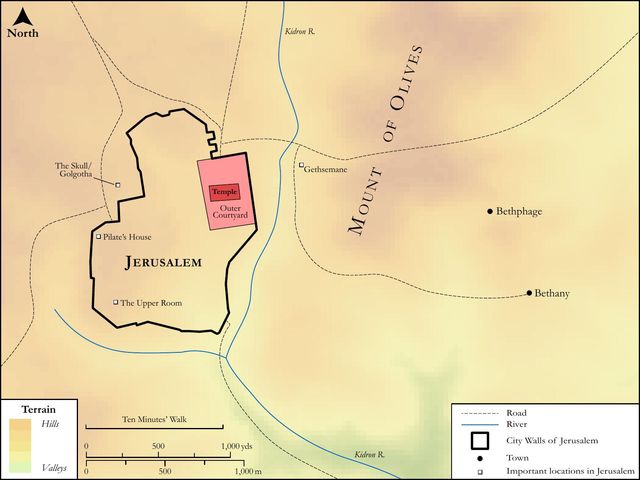
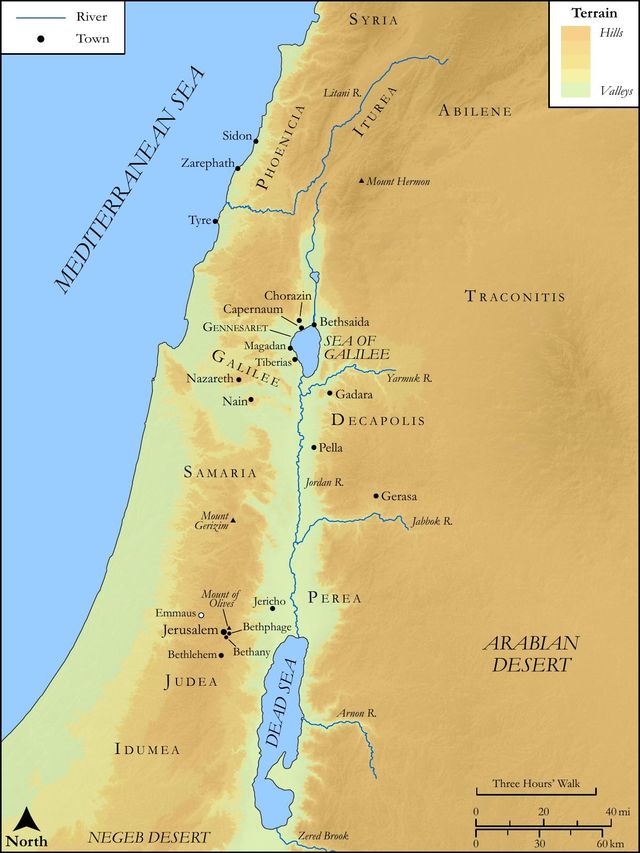
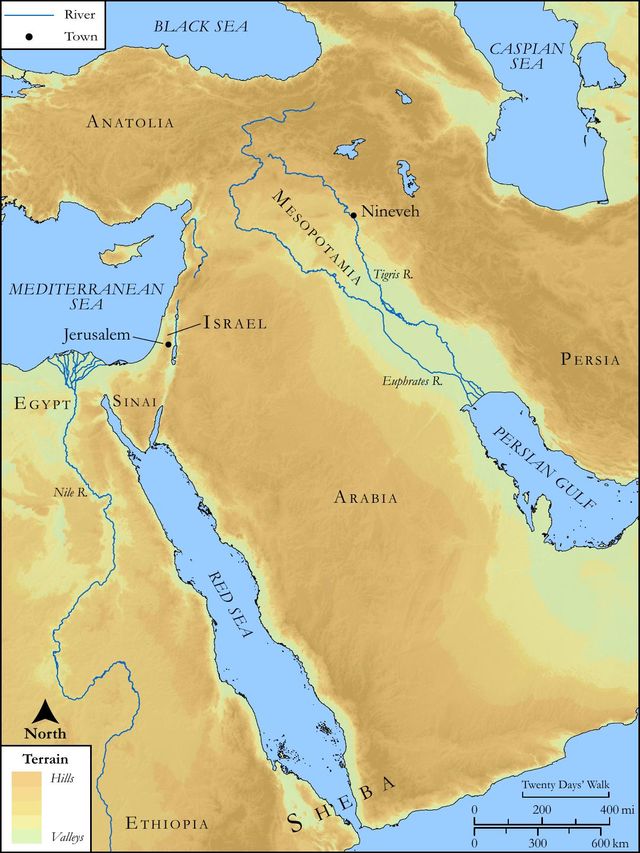
See on the biblical-era maps
Study this verse
Public-domain commentary
Matthew Henry
From his Commentary on the Whole Bible. Henry comments on passages, not single verses — this entry covers Luke 3:15–20. His four-level outline is real structure in the source text, so it is rendered as structure.
We are now drawing near to the appearance of our Lord Jesus publicly; the Sun will not be long after the morning-star. We are here told,
I.How the people took occasion, from the ministry and baptism of John, to think of the Messiah, and to think of him as at the door, as now come. Thus the way of the Lord was prepared, and people were prepared to bid Christ welcome; for, when men's expectations are raised, that which they are in expectation of becomes doubly acceptable. Now when they observed what an excellent doctrine John Baptist preached, what a divine power went along with it, and what a tendency it had to reform the world,
1.They began presently to consider that now was the time for the Messiah to appear. The sceptre was departed from Judah, for they had no king but Caesar; nay, and the law-giver too was gone from between his feet, for Herod had lately slain the sanhedrim. Daniel's seventy weeks were now expiring; and therefore it was but three or four years after this that they looked that the kingdom of heaven should appear immediately, Luk 19:11. Never did the corrupt state of the Jews more need a reformation, nor their distressed state more need a deliverance, than now.
2.Their next thought was, "Is not his he that should come?" All thinking men mused, or reasoned, in their hearts, concerning John, whether he were the Christ or not. He had indeed none of the external pomp and grandeur in which they generally expected the Messiah to appear; but his life was holy and strict, his preaching powerful and with authority, and therefore "why may we not think that he is the Messiah, and that he will shortly throw off this disguise, and appear in more glory?" Note, That which puts people upon considering, reasoning with themselves, prepares the way for Christ.
II.How John disowned all pretensions to the honour of being himself the Messiah, but confirmed them in their expectations of him that really was the Messiah, Luk 3:16, Luk 3:17. John's office, as a crier or herald, was to give notice that the kingdom of God and the King of that kingdom were at hand; and therefore, when he had told all manner of people severally what they must do ("You must do this, and you must do that"), he tells them one thing more which they must all do: they must expect the Messiah now shortly to appear. And this serves as an answer to their musings and debates concerning himself. Though he knew not their thoughts, yet, in declaring this, he answered them.
1.He declares that the utmost he could do was to baptize them with water. He had no access to the Spirit, nor could command that or work upon that; he could only exhort them to repent, and assure them of forgiveness, upon repentance; he could not work repentance in them, nor confer remission on them.
2.He consigns them, and turns them over, as it were, to Jesus Christ, for whom he was sent to prepare the way, and to whom he was ready to transfer all the interest he had in the affections of the people, and would have them no longer to debate whether John was the Messiah or no, but to look for him that was really so.
(1.)John owns the Messiah to have a greater excellency than he had, and that he was in all things preferable to him; he is one the latchet of whose shoe he does not think himself worthy to loose; he does not think himself worthy to be the meanest of his servants, to help him on and off with his shoes. John was a prophet, yea more than a prophet, more so than any of the Old Testament prophets; but Christ was a prophet more than John, for it was both by the Spirit of Christ, and of the grace of Christ, that all the prophets prophesied, and John among the rest, Pe1 1:10, Pe1 1:11. This was a great truth which John came to preach; but the manner of his expressing it bespeaks his humility, and in it he not only does justice to the Lord Jesus, but does him honour too: "He is one whom I am not worthy to approach, or draw nigh to, no not as a servant." Thus highly does it become us to speak of Christ, and thus humbly of ourselves.
(2.)He owns him to have a greater energy than he had: "He is mightier than I, and does that which I cannot do, both for the comfort of the faithful and for the terror of hypocrites and dissemblers." They thought that a wonderful power went along with John; but what was that compared with the power which Jesus would come clothed with?
[1.]John can do no more than baptize with water, in token of this, that they ought to purify and cleanse themselves; but Christ can, and will, baptize with the Holy Ghost; he can give the Spirit to cleanse and purify the heart, not only as water washes off the dirt on the outside, but as fire purges out the dross that is within, and melts down the metal, that it may be cast into a new mould.
[2.]John can only preach a distinguishing doctrine, and by word and sign separate between the precious and the vile; but Christ hath his fan in his hand, with which he can, and will, perfectly separate between the wheat and the chaff. He will thoroughly purge his floor; it is his own, and therefore he will purge it, and will cast out of his church the unbelieving impenitent Jews, and confirm in his church all that faithfully follow him.
[3.]John can only speak comfort to those that receive the gospel, and, like other prophets, say to the righteous that it shall be well with them; but Jesus Christ will give them comfort. John can only promise them that they shall be safe; but Christ will make them so: he will gather the wheat into his garner; good, serious, solid people he will gather now into his church on earth, which shall be made up of such, and he will shortly gather them into his church in heaven, where they shall be for ever sheltered.
[4.]John can only threaten hypocrites, and tell the barren trees that they shall be hewn down and cast into the fire; but Christ can execute that threatening; those that are as chaff, light, and vain, and worthless, he will burn with fire unquenchable. John refers here to Mal 3:18; Mal 4:1, Mal 4:2. Then, when the floor is purged, ye shall return, and discern between the righteous and the wicked, for the day comes that shall burn as an oven.
The evangelist concludes his account of John's preaching with an et caetera (Luk 3:18): Many other things in his exhortation preached he unto the people, which are not recorded. First, John was an affectionate preacher. He was parakalōn - exhorting, beseeching; he pressed things home upon his hearers, followed his doctrine close, as one in earnest. Secondly, He was a practical preacher. Much of his preaching was exhortation, quickening them to their duty, directing them in it, and not amusing them with matters of nice speculation. Thirdly, He was a popular preacher. Though he had scribes and Pharisees, men of polite learning, attending his ministry, and Sadducees, men of free thought, as they pretended, yet he addressed himself to the people, pros ton laon - to the laity, and accommodated himself to their capacity, as promising himself best success among them. Fourthly, He was an evangelical preacher, for so the word here used signifies, euēngelizeto - he preached the gospel to the people; in all his exhortations, he directed people to Christ, and excited and encouraged their expectations of him. When we press duty upon people, we must direct them to Christ, both for righteousness and strength. Fifthly, He was a copious preacher: Many other things he preached, polla men kai hetera - many things, and different. He preached a great deal, shunned not to declare the whole counsel of God; and he varied in his preaching, that those who were not reached, and touched, and wrought upon, by one truth, might be by another.
III.How full a stop was put to John's preaching.
When he was in the midst of his usefulness, going on thus successfully, he was imprisoned by the malice of Herod (Luk 3:19, Luk 3:20): Herod the tetrarch being reproved by him, not only for living in incest with his brother Philip's wife, but for the many other evils which Herod had done (for those that are wicked in one instance are commonly so in many others), he could not bear it, but contracted an antipathy to him for his plain dealing, and added this wickedness to all the rest, which was indeed above all, that he shut up John in prison, put that burning and shining light under a bushel. Because he could not bear his reproofs, others should be deprived of the benefit of his instructions and counsels. Some little good he might do to those who had access to him, when he was in prison; but nothing to what he might have done if he had had liberty to go about all the country, as he had done. We cannot think of Herod's doing this without the greatest compassion and lamentation, nor of God's permitting it without admiring the depth of the divine counsels, which we cannot account for. Must he be silenced who is the voice of one crying in the wilderness? Must such a preacher be shut up in prison who ought to have been set up in the courts of the temple? But thus the faith of his disciples must be tried; thus the unbelief of those who rejected him must be punished; thus he must be Christ's forerunner in suffering as well as preaching; and thus, having been for about a year and a half preparing people for Christ, he must now give way to him, and, the Sun being risen, the morning-star must of course disappear.
Historical interpretation
Five Centuries of Reception
17 surviving comments on this verse. Each one is dated, so this reads as a timeline rather than a list.
Select a marker to jump to its quote. Markers stagger vertically where authors wrote within a few decades of each other.
As a witness for simplicity in shoes let John suffice, who avowed that "he was not worthy to unloose the latchet of the Lord's shoes." For he who exhibited to the Hebrews the type of the true philosophy wore no elaborate shoes.
This, then, is the type of "the law and the prophets which were until John;" while he, though speaking more perspicuously as no longer prophesying, but pointing out as now present, Him, who was proclaimed symbolically from the beginning, nevertheless said, "I am not worthy to loose the latchet of the Lord's shoe." For he confesses that he is not worthy to baptize so great a Power; for it behooves those, who purify others, to free the soul from the body and its sins, as the foot from the thong.
And as John was waiting by the river Jordan for those who came to his baptism, and some he drove away, saying, Generation of vipers, but those who confessed their sins he received, so shall the Lord Jesus stand in the fiery stream with the flaming sword, that whoever after the close of this life desires to pass over to Paradise and needs purification, He may baptize him with this laver, and pass him over to paradise, but whoso has not the seal of the former baptisms, him He shall not baptize with the laver of fire.
(lib. de Spir. Sanct. c. 12.) But because he says, He shall baptize you with the Holy Spirit, let no one admit that baptism to be valid in which the name of His Spirit only has been invoked, for we must ever keep undiminished that tradition which has been sealed to us in quickening grace. To add or take away ought thereof excludes from eternal life.
(non occ.) But they are mixed up with those who are worthy of the kingdom of heaven, as the chaff with the wheat. This is not however from consideration of their love of God and their neighbour, nor from their spiritual gifts or temporal blessings.
John, filled with the Holy Spirit from his mother’s womb, was sanctified for the purpose of baptizing the Lord. John himself did not impart the Spirit but preached the glad tidings of him who does. He says, “I indeed baptize you with water, for repentance. But he who is coming after me, he will baptize you with the Holy Spirit and with fire.” Why fire? Because the descent of the Holy Spirit was in fiery tongues. Concerning this the Lord says with joy, “I have come to cast fire upon the earth, and how I wish that it would be kindled!”
(non occ.) But it is well to know, that the treasures, which according to the promises are laid up for those who live honestly, are such as the words of man cannot express, as eye hath not seen, nor the ear heard, nor hath it entered into the heart of man to conceive. And the punishments which await sinners bear no proportion to any of those things which now affect the senses. And although some of those punishments are called by our names, yet their difference is very great. For when you hear of fire, you are taught to understand something else from the expression which follows, that is not quenched, beyond what comes into the idea of other fire.
Now what could be more absurd than that he who was fancied to be in another should not be believed in his own person? He whom they thought to have come by a woman, is not believed to have come by a virgin; while in fact the sign of the Divine coming was placed in the childbearing of a virgin, not of a woman.
Or: John saw into the secrets of the heart; but let us remember by whose grace, for it is of the gift of God to reveal things to man, not of the virtue of man, which is assisted by the Divine blessing, rather than capable of perceiving by any natural power of its own. But quickly answering them, he proved that he was not the Christ, for his works were by visible operations. For as man is compounded of two natures, i. e. soul and body, the visible mystery is made holy by the visible, the invisible by the invisible; for by water the body is washed, by the Spirit the soul is cleansed of its stains. It is permitted to us also in the very water to have the sanctifying influence of the Deity breathed upon us. And therefore there was one baptism of repentance, another of grace. The latter was by both water and Spirit, the former by one only; the work of man is to bring forth repentance for his sin, it is the gift of God to pour in the grace of His mystery. Devoid therefore of all envy of Christ's greatness, he declared not by word but by work that he was not the Christ. Hence it follows, There cometh after me one mightier than I. In those words, mightier than I, he makes no comparison, for there can be none between the Son of God and man, but because there are many mighty, no one is mightier but Christ. So far indeed was he from making comparison, that he adds, Whose shoes latchet I am not worthy to unloose.
By the words, Whose shoes I am not worthy to bear, he shows that the grace of preaching the Gospel was conferred upon the Apostles, who were shod for the Gospel. (Eph. 6:15.) He seems however to say it, because John frequently represented the Jewish people.
By the sign of a fan then the Lord is declared to possess the power of discerning merits, since when the corn is winnowed in the threshing floor, the full cars are separated from the empty by the trial of the wind blowing them. Hence it follows, And he shall gather the wheat into his barn. By this comparison, the Lord shows that on the day of judgment He will discern the solid merits and fruits of virtue from the unfruitful lightness of empty boasting and vain deeds, about to place the men of more perfect righteousness in His heavenly mansion. For that is indeed the more perfect fruit which was thought worthy to be like to Him who fell as a grain of wheat, that He might bring forth fruit in abundance. (John 12:24.)
(Hom. in Matt. 11.) But John's desire when he spoke to the Publicans and soldiers, was to bring them over to a higher wisdom, for which as they were not fitted, he reveals to them commoner truths, lest if he put forward the higher they should pay no attention thereto, and be deprived of the others also.
(ubi sup.) And having said that his own baptism was only with water, he next shows the excellence of that baptism which was brought by Christ, adding, He shall baptize you with the Holy Spirit, and fire, signifying by the very metaphor which he uses the abundance of grace. For he says not, "He shall give you the Holy Spirit," but He shall baptize you. And again, by the addition of fire, he shows the power of grace. And as Christ calls the grace of the Spirit, water, (John 4:14; 7:38.) meaning by water the purity resulting from it, and the abundant consolation which is brought to minds which are capable of receiving Him; so also John, by the word fire, expresses the fervour and uprightness of grace, as well as the consuming of sins.
What happened in the case of our Master’s body also happens in the case of your own. Although John appeared to be holding his body by the head, it was the divine Word that led his body down into the streams of Jordan and baptized him. The Master’s body was baptized by the Word, by the voice of his Father from heaven which said, “This is my beloved Son,” and by the manifestation of the Holy Spirit which descended upon him. This also happens in the case of your body. The baptism is given in the name of the Father, the Son and the Holy Spirit. Therefore John the Baptist told us, for our instruction, that man does not baptize us but God: “There comes after me one who is mightier than I, and I am not worthy to loose the strap of his sandal. He will baptize you with the Holy Spirit and with fire.”For this reason, when the priest is baptizing he does not say, “I baptize so-and-so,” but “So-and-so is baptized in the name of the Father and of the Son and of the Holy Spirit.” In this way he shows that it is not he who baptizes but those whose names have been invoked, the Father, the Son and the Holy Spirit.
(de Cons. Evang. lib. ii. 12.) Matthew says, Whose shoes I am not worthy to bear. If therefore it is worth while to understand any difference in these expressions, we can only suppose that John said one at one time, another at another, or both together, To bear his shoes, and to loose the latchet of his shoes, so that though one Evangelist may have related this, the others that, yet all have related the truth. But if John intended no more when he spoke of the shoes of our Lord but His excellence and his own humility, whether he said loosing the latchet of the shoes, or bearing them, they have still kept the same sense who by the mention of shoes have in their own words expressed the same signification of humility.
After this, John brings forward a second argument, saying, “I indeed baptize you in water. He shall baptize you in the Holy Spirit and in fire.” This too is of great importance for the proof and demonstration that Jesus is God and Lord. For it is the sole and peculiar property of the Substance that transcends all, to be able to bestow on people the in-dwelling of the Holy Spirit and make those that draw near unto it partakers of the divine nature. But this exists in Christ, not as a thing received, nor by communication from another, but as his own and as belonging to his substance. He baptizes in the Holy Spirit.
(Hom. 7. in Evan.) But John denounces himself as unworthy to loose the latchet of Christ's shoes: as if he openly said, I am not able to disclose the footsteps of my Redeemer, who do not presume unworthily to take unto myself the name of bridegroom, for it was an ancient custom thata when a man refused to take to wife her whom he ought, whoever should come to her betrothed by right of kin, was to loose his shoe. Or because shoes are made from the skins of dead animals, our Lord being made flesh appeared as it were with shoes, as taking upon Himself the carcase of our corruption. The latchet of the shoe is the connection of the mystery. John therefore can not loose the latchet of the shoe, because neither is he able to fathom the mystery of the Incarnation, though he acknowledged it by the Spirit of prophecy.
(Mor. 15. sup. Job 20.) The fire of hell is here wonderfully expressed, for our earthly fire is kept up by heaping wood upon it, and cannot live unless supplied with fuel, but on the contrary the fire of hell, though a bodily fire, and burning bodily the wicked who are put into it, is not kept up by wood, but once made remains unquenchable.
To show what he was, he said: "There comes one mightier than I after me, the strap of whose sandal I am not worthy to loose." Behold, although he was such through his wonderful working of virtues that he was believed to be Christ, he not only answered that he was not Christ, but also declared that he was not worthy to loose the strap of his sandal, that is, to scrutinize the mystery of his incarnation.
"I baptize in water; but there has stood in your midst one whom you do not know. He who comes after me was made before me, whose sandal strap I am not worthy to untie." John baptizes not with the Spirit, but with water, because, not being able to forgive sins, he washes the bodies of the baptized through water, but nevertheless does not wash the mind through pardon. Why then does he baptize who does not remit sins through baptism, unless, preserving the order of his role as precursor, he who had preceded by being born the one who was to be born, might also precede by baptizing the Lord who was to baptize; and he who by preaching became the precursor of Christ, might also become his precursor in baptizing through imitation of the sacrament?
But how could he answer them who in secret thought that he was Christ, except it was that they not only thought, but also (as another Evangelist declares) sending Priests and Levites to him asked him whether he was the Christ or not?
The Holy Spirit also may be understood by the word fire, for He kindles with love and enlightens with wisdom the hearts which He fills. Hence also the Apostles received the baptism of the Spirit in the appearance of fire. There are some who explain it, that now we are baptized with the Spirit, hereafter we shall be with fire, that as in truth we are now born again to the remission of our sins by water and the Spirit, so then we shall be cleansed from certain lighter sins by the baptism of purifying fire.
For by the floor is represented the present Church, in which many are called but few are chosen. The purging of which floor is even now carried on individually, when every perverse offender is either cast out of the Church for his open sins, (by the hands of the Priesthood,) or for his secret sins is after death condemned by Divine judgment. And at the end of the world it will be accomplished universally, when the Son of Man shall send His angels, and they shall gather out of His kingdom every thing that has offended.
I indeed baptize you with water. However, one mightier than I is coming, whose sandal strap I am not worthy to untie. John does not baptize with the spirit, but with water, because he, being unable to absolve sins, washes the bodies of the baptized with water but does not wash the mind through forgiveness. So why does he baptize who does not remit sins through baptism? Except that by maintaining the order of his forerunning, he who was born before Christ by birth would also be a forerunner to the Lord by baptizing Him, and thus he who was made the forerunner of Christ by preaching would also become His forerunner by baptizing in imitation of the sacrament. It was a custom among the ancients that if anyone did not wish to take as his wife the one who was properly his to take, the one who came as a suitor by the right of kinship would untie his sandal. What, then, was Christ among men except the bridegroom of the holy Church? About whom the same John also says, "He who has the bride is the bridegroom" (John III). But because people thought John to be the Christ, which John himself denies, it is proper that he declares himself unworthy to untie His sandal strap. As if he said openly: I cannot lay bare the feet of the Redeemer, because I, unworthy, do not usurp the name of the bridegroom. However, this can be understood in another way: for who does not know that sandals are made from dead animals? When the Lord incarnate came, He appeared as if shod, who in His divinity assumed the mortality of our corruption. But the mystery of this incarnation the human eye is not able to penetrate. For it cannot at all be investigated how the Word is made flesh, how the supreme and life-giving Spirit is animated in the womb of the mother, how He who has no beginning both exists and is conceived. Therefore, the sandal strap is the binding of the mystery. Thus, John cannot untie the strap of His sandal, because the mystery of the incarnation he also cannot sufficiently investigate, he who recognized it through the spirit of prophecy.
He will baptize you with the Holy Spirit and fire. This is both the cleansing of sanctification and the testing of tribulation. However, the same Holy Spirit can also be understood as signified by the name of fire. Because He both enkindles through love and illuminates the hearts which He fills with wisdom. Hence, to those to whom it was said, "John indeed baptized with water, but you will be baptized with the Holy Spirit" (Acts XI), the same baptism of the spirit is perceived in the vision of fire. Some explain it in this way, that in the present we are baptized in the spirit, and in the future we will be baptized in fire. Namely, just as now we are reborn in the remission of all sins from water and the spirit, so also then, from certain light sins which have adhered to us as we go from here, we are cleansed by the baptism of purgatorial fire before the final judgment. As the Apostle says: "If anyone builds on this foundation, gold, silver, precious stones, wood, hay, straw, each one's work will be made clear by fire. If anyone's work remains which he has built on it, he will receive a reward. If anyone's work is burned, he will suffer loss; but he himself will be saved, though as through fire" (I Corinthians III). Although this can also be understood of the fire of tribulation applied to us in this life, yet if anyone takes this as referring to the fire of future purification, it should be carefully considered, because he said that he can be saved through fire, not someone who builds on the foundation of Christ with iron, bronze, or lead, that is, greater and harder sins which are already unresolvable, but with wood, hay, and straw, that is, the smallest and lightest sins, which fire easily consumes. Nevertheless, it should be known that no one will obtain any purification even from the smallest sins there, unless he has acted with good deeds in this life so that he may deserve to obtain it there.
Continue studying Luke 3:16 across the web’s major study libraries — every link below opens this exact verse, chapter, or book on the destination site.
Read & Compare
 BibleGatewayThis verse in more than 200 translations and 70 languages.
 Bible.comThe YouVersion reader — hundreds of translations, reading plans, and highlights.
 ESV.orgCrossway's official English Standard Version reader.
 NET BibleThe NET translation with 60,000+ translators' notes on every rendering decision.
 STEP BibleTyndale House's free study tool — original text, vocabulary, and scholarly resources.
 BibliaLogos Bible Software's free web reader.
 USCCBThe New American Bible (Revised Edition) with the U.S. bishops' study notes.
Commentaries
 BibleHub CommentariesDozens of classic commentaries on this verse, gathered on one page.
 StudyLightMore than 100 commentary sets — the largest collection on the web.
 BibleRefPlain-English commentary on what this verse means, verse by verse.
 Enduring WordDavid Guzik's free commentary on this chapter, widely used by Bible teachers.
 Bible Study ToolsVerse commentary alongside Greek and Hebrew study aids.
Original Language & Research
- BibleHub InterlinearThe verse word by word — original language, transliteration, and English.
- BibleHub LexiconEvery word's original-language definition and Strong's entry.
 Blue Letter BibleDeep-study tools — Strong's numbers, concordance, and word studies.
 CNTR CollationThe earliest Greek manuscripts of this verse, collated letter by letter.
Sermons, Hymns & Audio


TrulyRandomVerse is not affiliated with these sites and doesn’t control their content. They’re linked because they’re genuinely useful.
Summary
Luke 3:16 captures John the Baptist's profound declaration to the crowds, clarifying his preparatory role in contrast to the coming Messiah. John humbly asserts that his water baptism is merely a precursor to the infinitely greater work of the "one mightier" than himself, who will baptize with the Holy Spirit and with fire, signifying a transformative spiritual empowerment and a decisive judgment. This pivotal statement underscores Christ's supremacy, the nature of His redemptive and judicial work, and the distinct spiritual reality inaugurated by His arrival.
Context
ShowHideLiterary Context
This verse is a direct response from John the Baptist to the public's speculation about his identity. Prior to this, Luke details John's prophetic ministry, his call to repentance, and his practice of water baptism in the Jordan River, fulfilling the prophecy of Isaiah 40:3-5. The preceding verses (Luke 3:10-14) show various groups—the crowds, tax collectors, and soldiers—asking John what they should do to demonstrate their repentance, indicating a widespread spiritual hunger and an expectation of a coming deliverer. John's answer in Luke 3:16-17 serves to redirect their attention from himself to the true Messiah, emphasizing his own subservience and the radical nature of the Messiah's work, which includes both spiritual renewal and divine judgment. The immediate follow-up in Luke 3:17 elaborates on the "fire" aspect, describing the Messiah's winnowing fork and unquenchable fire, thus providing an interpretive key for understanding the dual nature of the baptism with fire.
Historical & Cultural Context
John's ministry occurred during a period of intense messianic expectation among the Jewish people, who longed for liberation from Roman rule and the restoration of God's kingdom. Baptism, while not unique to John, was a significant ritual. Proselyte baptism was practiced for Gentiles converting to Judaism, symbolizing purification and entry into the covenant community. John's baptism, however, was unique in that it was for Jews, signifying a personal repentance and preparation for the coming kingdom, a radical concept for many who believed their Jewish heritage alone guaranteed salvation. The act of unloosing someone's sandals was a task reserved for the lowest of servants or even slaves, highlighting the profound humility and reverence implied by John's statement that he was not even worthy to perform such a menial task for the Messiah. This cultural understanding amplifies John's declaration of Christ's unparalleled superiority.
Key Themes
ShowHideLuke 3:16 is rich with theological themes. It powerfully articulates Christ's Supremacy and Authority, positioning Him as infinitely greater than any human prophet, including John, who was widely recognized. It introduces the theme of Divine Transformation and Empowerment through the Holy Spirit, foreshadowing the outpouring of the Spirit at Pentecost, which would empower believers for witness and new life, as seen in Acts 2. Concurrently, the mention of "fire" introduces the theme of Divine Judgment and Purification, a recurring motif in prophetic literature that speaks to both the refining of the righteous and the condemnation of the wicked. This dual aspect of the Messiah's work—salvation for those who repent and judgment for those who reject—is a central theme throughout Luke's Gospel and the broader New Testament, echoing the separation described in Matthew 3:11-12.
Exposition and Analysis
ShowHideKey Word Analysis
ShowHideFrom a derivative of βάπτω (báptō, to immerse); to immerse, submerge; to make whelmed (i.e. fully wet); used only (in the New Testament) of ceremonial ablution, especially (technically) of the ordinance of Christian baptism. John's use of this term here distinguishes his water ritual from the deeper, spiritual immersion that the Messiah would bring, signifying a profound, internal transformation rather than merely an outward washing.
From ἰσχύς (ischýs, strength); forcible (literally or figuratively):--boisterous, mighty(-ier), powerful, strong(-er, man), valiant. This word emphasizes the immense power, authority, and divine nature of the coming Messiah. John acknowledges not just a difference in degree, but a fundamental difference in kind between his own human strength and the Messiah's divine might.
A primary verb; to "loosen" (literally or figuratively):--break (up), destroy, dissolve, (un-)loose, melt, put off. Compare ῥήγνυμι. In this context, it refers specifically to the act of untying the thongs or latchets of sandals, a task so menial that John declares himself utterly unworthy to perform it for the Messiah, further highlighting the Messiah's supreme status.
Verse Breakdown
ShowHide"John answered, saying unto [them] all, I indeed baptize you with water;"
John directly addresses the entire crowd, acknowledging his current ministry of water baptism. The phrase "I indeed" (Greek: egō men) sets up a clear contrast, emphasizing that while he performs a specific, visible rite, his work is limited and preparatory. His baptism with water symbolizes repentance and a cleansing from sin, preparing the way for the Messiah.
"but one mightier than I cometh,"
The conjunction "but" (Greek: dé) introduces the sharp contrast between John and the coming Messiah. John immediately shifts the focus from himself to the "one mightier," underscoring the Messiah's superior power, authority, and divine nature. This statement builds anticipation for the arrival of this unparalleled figure.
"the latchet of whose shoes I am not worthy to unloose:"
This is a powerful expression of profound humility and reverence. Unloosing a master's or guest's sandals was the duty of the lowest servant or slave. By stating he is "not worthy" even of this most menial task, John vividly illustrates the Messiah's infinite superiority and his own utter subservience, reinforcing the Messiah's divine status.
"he shall baptize you with the Holy Ghost and with fire:"
This climactic declaration reveals the true nature of the Messiah's transformative work. Unlike John's water baptism, the Messiah's baptism is spiritual and powerful. "Holy Ghost" (Holy Spirit) signifies spiritual regeneration, the indwelling of God's Spirit, and empowerment for new life. "And with fire" carries a dual meaning: it speaks to the purifying and refining work of the Spirit in believers, and also to the consuming judgment that awaits the unrepentant, a theme further elaborated in the subsequent verse.
Literary Devices
ShowHideLuke 3:16 employs several potent literary devices. Contrast is paramount, as John sharply distinguishes his water baptism from the Messiah's baptism "with the Holy Ghost and with fire," highlighting the qualitative difference between human preparatory work and divine transformative power. Hyperbole is evident in John's declaration that he is "not worthy to unloose" the latchet of the Messiah's shoes. While literally a menial task, this exaggerated statement powerfully conveys John's profound humility and the Messiah's immeasurable superiority. Symbolism is central, with "water" representing repentance and outward cleansing, "Holy Ghost" symbolizing spiritual regeneration and empowerment, and "fire" carrying the dual symbolism of purification for the righteous and judgment for the wicked. This verse also functions as Foreshadowing, pointing forward to the outpouring of the Holy Spirit at Pentecost and the ultimate judgment that Christ will execute.
Theological and Thematic Connections
ShowHideJohn's declaration in Luke 3:16 is a foundational theological statement that distinguishes the preparatory work of the Old Covenant from the transformative power of the New Covenant inaugurated by Christ. It emphasizes that while human repentance is a necessary precursor, true spiritual regeneration and empowerment come solely through the Messiah. The dual nature of the Messiah's baptism—with the Holy Spirit and with fire—underscores both the gracious indwelling and sanctifying work of God in believers, and the inevitable judgment upon those who reject His saving grace. This highlights God's character as both merciful Redeemer and righteous Judge, demonstrating the comprehensive scope of Christ's mission.
Reflection and Application
ShowHideLuke 3:16 serves as a powerful reminder that our spiritual journey begins with repentance and preparation, but it culminates in a profound, supernatural transformation wrought by Christ through His Spirit. John's humility in acknowledging Christ's infinite superiority challenges us to examine our own hearts for any self-reliance or pride, urging us to recognize Jesus as the ultimate source of life and power. The promise of baptism with the Holy Spirit invites us to seek a deeper, Spirit-filled life, one marked by inner purification and divine empowerment for living righteously and bearing witness. Conversely, the mention of "fire" as judgment calls us to sober reflection on the eternal consequences of rejecting Christ, prompting urgent repentance and faith. This verse compels us to move beyond mere outward religiosity to embrace the radical, life-altering work of Christ in our innermost being, trusting Him to refine us and equip us for His purposes.
Questions for Reflection
ShowHideFAQ
ShowHideWhat is the significance of John the Baptist's statement that he is "not worthy to unloose" the latchet of Jesus' shoes?
ShowHideThis statement is a profound expression of humility and reverence, deeply rooted in the cultural norms of the time. Unloosing someone's sandals was a task typically performed by the lowest servant or even a slave. By declaring himself unworthy of even this most menial service for the coming Messiah, John vividly underscores Jesus' immeasurable superiority and divine authority. It highlights John's recognition of Jesus' unique status as God's Son and the Christ, emphasizing the vast chasm between himself, a great prophet, and the One who was to come. This humility sets a powerful example for all who serve God, reminding us that true service involves exalting Christ above ourselves, as John later states in John 3:30.
Christ-Centered Fulfillment
ShowHideLuke 3:16 finds its ultimate Christ-centered fulfillment in the person and work of Jesus, who indeed proved to be the "one mightier" than John. John's prophecy of baptism "with the Holy Ghost and with fire" was profoundly realized through Christ's redemptive work. The baptism with the Holy Spirit became a reality at Pentecost, subsequent to Jesus' ascension, when the Spirit was poured out upon His disciples, empowering them for ministry and establishing the church, as meticulously recorded in Acts 2:1-4. This spiritual baptism signifies the new birth, the indwelling presence of God, and the empowerment for a life of holiness and witness that is available to all who believe in Christ, as promised by Jesus Himself in Acts 1:8. Furthermore, the "baptism with fire" speaks to Christ's role as the righteous Judge, a theme consistently woven through the Gospels and the New Testament. While the Spirit purifies and refines believers, Christ's ultimate return will bring a decisive judgment upon the unrepentant, separating the wheat from the chaff, as vividly described in Matthew 25:31-46. Thus, John's words perfectly foreshadowed the comprehensive scope of Christ's saving and judicial reign, demonstrating His supreme authority over both spiritual transformation and eternal destiny.