


Luke 3:15
Bible text: King James Version (1769 Blayney text) · Public domain
Bible text: King James Version with Strong's numbers · Public domain
Bible text: Berean Standard Bible · Public domain
Bible text: American Standard Version (1901) · Public domain
Bible text: World English Bible, Messianic edition · Public domain
Bible text: Geneva Bible (1599) · Public domain
Bible text: Young's Literal Translation · Public domain
- ΠροσδοκῶντοςProsdokōntosWhen were expectingG4328V-PAP-GSMVerb Present Active Participle Genitive Singular Masculine
- δὲdethenG1161CONJConjunction
- τοῦtoutheG3588T-GSMDefinite article Genitive Singular Masculine
- λαοῦlaoupeopleG2992N-GSMNoun Genitive Singular Masculine
- καὶkaiandG2532CONJConjunction
- διαλογιζομένωνdialogizomenōnwonderingG1260V-PNP-GPMVerb Present Middle Or Passive Deponent Participle Genitive Plural Masculine
- πάντωνpantōnallG3956A-GPMAdjective Genitive Plural Masculine
- ἐνeninG1722PREPPreposition
- ταῖςtaistheG3588T-DPFDefinite article Dative Plural Feminine
- καρδίαιςkardiaisheartsG2588N-DPFNoun Dative Plural Feminine
- αὐτῶνautōnof themG846P-GPMPersonal pronoun Genitive Plural Masculine
- περὶpericoncerningG4012PREPPreposition
- τοῦtou<the>G3588T-GSMDefinite article Genitive Singular Masculine
- ἸωάννουIōannouJohnG2491N-GSM-PNoun Genitive Singular Masculine Individual
- μήποτεmēpotewhetherG4218PRT-N + G4218=PRT
- αὐτὸςautoshe himselfG846P-NSMPersonal pronoun Nominative Singular Masculine
- εἴηeiēwould beG1510V-PAO-3SVerb Present Active Optative 3rd Singular
- ὁhotheG3588T-NSMDefinite article Nominative Singular Masculine
- χριστόςchristosChristG5547N-NSM-TNoun Nominative Singular Masculine Title
English is a literal word-by-word gloss of the Greek, not the KJV's wording. Why?
This is the original text the KJV's translators worked from — each Greek word with its own literal English meaning in this verse, prepared by scholars at Tyndale House, Cambridge. The KJV translates whole sentences, not word by word, so its wording differs: one Greek word can become several English words, and the KJV may choose “charity” where the gloss reads “love”. Both are faithful — they answer different questions. For the KJV's own rendering, switch to the KJV text.
Details
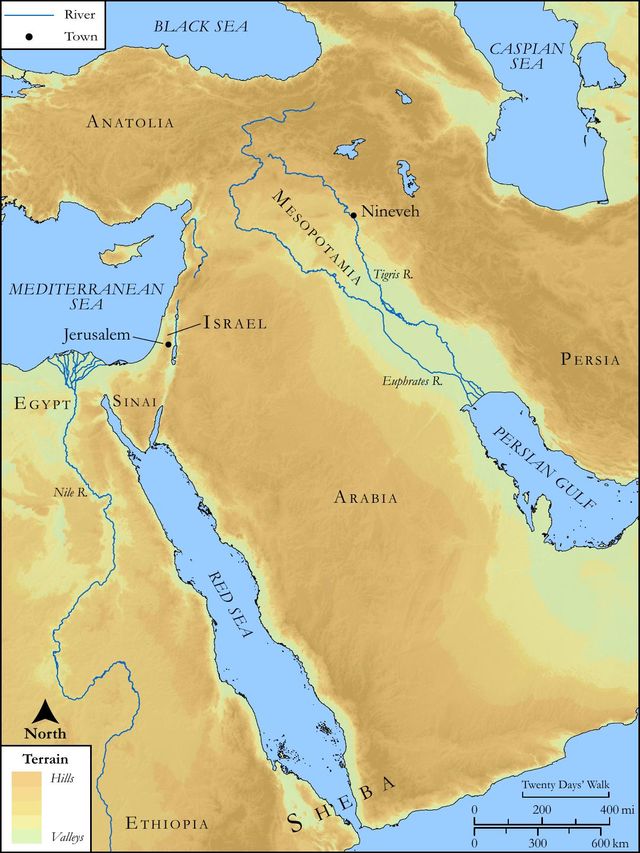
See on the biblical-era maps


Study this verse
Public-domain commentary
Matthew Henry
From his Commentary on the Whole Bible. Henry comments on passages, not single verses — this entry covers Luke 3:15–20. His four-level outline is real structure in the source text, so it is rendered as structure.
We are now drawing near to the appearance of our Lord Jesus publicly; the Sun will not be long after the morning-star. We are here told,
I.How the people took occasion, from the ministry and baptism of John, to think of the Messiah, and to think of him as at the door, as now come. Thus the way of the Lord was prepared, and people were prepared to bid Christ welcome; for, when men's expectations are raised, that which they are in expectation of becomes doubly acceptable. Now when they observed what an excellent doctrine John Baptist preached, what a divine power went along with it, and what a tendency it had to reform the world,
1.They began presently to consider that now was the time for the Messiah to appear. The sceptre was departed from Judah, for they had no king but Caesar; nay, and the law-giver too was gone from between his feet, for Herod had lately slain the sanhedrim. Daniel's seventy weeks were now expiring; and therefore it was but three or four years after this that they looked that the kingdom of heaven should appear immediately, Luk 19:11. Never did the corrupt state of the Jews more need a reformation, nor their distressed state more need a deliverance, than now.
2.Their next thought was, "Is not his he that should come?" All thinking men mused, or reasoned, in their hearts, concerning John, whether he were the Christ or not. He had indeed none of the external pomp and grandeur in which they generally expected the Messiah to appear; but his life was holy and strict, his preaching powerful and with authority, and therefore "why may we not think that he is the Messiah, and that he will shortly throw off this disguise, and appear in more glory?" Note, That which puts people upon considering, reasoning with themselves, prepares the way for Christ.
II.How John disowned all pretensions to the honour of being himself the Messiah, but confirmed them in their expectations of him that really was the Messiah, Luk 3:16, Luk 3:17. John's office, as a crier or herald, was to give notice that the kingdom of God and the King of that kingdom were at hand; and therefore, when he had told all manner of people severally what they must do ("You must do this, and you must do that"), he tells them one thing more which they must all do: they must expect the Messiah now shortly to appear. And this serves as an answer to their musings and debates concerning himself. Though he knew not their thoughts, yet, in declaring this, he answered them.
1.He declares that the utmost he could do was to baptize them with water. He had no access to the Spirit, nor could command that or work upon that; he could only exhort them to repent, and assure them of forgiveness, upon repentance; he could not work repentance in them, nor confer remission on them.
2.He consigns them, and turns them over, as it were, to Jesus Christ, for whom he was sent to prepare the way, and to whom he was ready to transfer all the interest he had in the affections of the people, and would have them no longer to debate whether John was the Messiah or no, but to look for him that was really so.
(1.)John owns the Messiah to have a greater excellency than he had, and that he was in all things preferable to him; he is one the latchet of whose shoe he does not think himself worthy to loose; he does not think himself worthy to be the meanest of his servants, to help him on and off with his shoes. John was a prophet, yea more than a prophet, more so than any of the Old Testament prophets; but Christ was a prophet more than John, for it was both by the Spirit of Christ, and of the grace of Christ, that all the prophets prophesied, and John among the rest, Pe1 1:10, Pe1 1:11. This was a great truth which John came to preach; but the manner of his expressing it bespeaks his humility, and in it he not only does justice to the Lord Jesus, but does him honour too: "He is one whom I am not worthy to approach, or draw nigh to, no not as a servant." Thus highly does it become us to speak of Christ, and thus humbly of ourselves.
(2.)He owns him to have a greater energy than he had: "He is mightier than I, and does that which I cannot do, both for the comfort of the faithful and for the terror of hypocrites and dissemblers." They thought that a wonderful power went along with John; but what was that compared with the power which Jesus would come clothed with?
[1.]John can do no more than baptize with water, in token of this, that they ought to purify and cleanse themselves; but Christ can, and will, baptize with the Holy Ghost; he can give the Spirit to cleanse and purify the heart, not only as water washes off the dirt on the outside, but as fire purges out the dross that is within, and melts down the metal, that it may be cast into a new mould.
[2.]John can only preach a distinguishing doctrine, and by word and sign separate between the precious and the vile; but Christ hath his fan in his hand, with which he can, and will, perfectly separate between the wheat and the chaff. He will thoroughly purge his floor; it is his own, and therefore he will purge it, and will cast out of his church the unbelieving impenitent Jews, and confirm in his church all that faithfully follow him.
[3.]John can only speak comfort to those that receive the gospel, and, like other prophets, say to the righteous that it shall be well with them; but Jesus Christ will give them comfort. John can only promise them that they shall be safe; but Christ will make them so: he will gather the wheat into his garner; good, serious, solid people he will gather now into his church on earth, which shall be made up of such, and he will shortly gather them into his church in heaven, where they shall be for ever sheltered.
[4.]John can only threaten hypocrites, and tell the barren trees that they shall be hewn down and cast into the fire; but Christ can execute that threatening; those that are as chaff, light, and vain, and worthless, he will burn with fire unquenchable. John refers here to Mal 3:18; Mal 4:1, Mal 4:2. Then, when the floor is purged, ye shall return, and discern between the righteous and the wicked, for the day comes that shall burn as an oven.
The evangelist concludes his account of John's preaching with an et caetera (Luk 3:18): Many other things in his exhortation preached he unto the people, which are not recorded. First, John was an affectionate preacher. He was parakalōn - exhorting, beseeching; he pressed things home upon his hearers, followed his doctrine close, as one in earnest. Secondly, He was a practical preacher. Much of his preaching was exhortation, quickening them to their duty, directing them in it, and not amusing them with matters of nice speculation. Thirdly, He was a popular preacher. Though he had scribes and Pharisees, men of polite learning, attending his ministry, and Sadducees, men of free thought, as they pretended, yet he addressed himself to the people, pros ton laon - to the laity, and accommodated himself to their capacity, as promising himself best success among them. Fourthly, He was an evangelical preacher, for so the word here used signifies, euēngelizeto - he preached the gospel to the people; in all his exhortations, he directed people to Christ, and excited and encouraged their expectations of him. When we press duty upon people, we must direct them to Christ, both for righteousness and strength. Fifthly, He was a copious preacher: Many other things he preached, polla men kai hetera - many things, and different. He preached a great deal, shunned not to declare the whole counsel of God; and he varied in his preaching, that those who were not reached, and touched, and wrought upon, by one truth, might be by another.
III.How full a stop was put to John's preaching.
When he was in the midst of his usefulness, going on thus successfully, he was imprisoned by the malice of Herod (Luk 3:19, Luk 3:20): Herod the tetrarch being reproved by him, not only for living in incest with his brother Philip's wife, but for the many other evils which Herod had done (for those that are wicked in one instance are commonly so in many others), he could not bear it, but contracted an antipathy to him for his plain dealing, and added this wickedness to all the rest, which was indeed above all, that he shut up John in prison, put that burning and shining light under a bushel. Because he could not bear his reproofs, others should be deprived of the benefit of his instructions and counsels. Some little good he might do to those who had access to him, when he was in prison; but nothing to what he might have done if he had had liberty to go about all the country, as he had done. We cannot think of Herod's doing this without the greatest compassion and lamentation, nor of God's permitting it without admiring the depth of the divine counsels, which we cannot account for. Must he be silenced who is the voice of one crying in the wilderness? Must such a preacher be shut up in prison who ought to have been set up in the courts of the temple? But thus the faith of his disciples must be tried; thus the unbelief of those who rejected him must be punished; thus he must be Christ's forerunner in suffering as well as preaching; and thus, having been for about a year and a half preparing people for Christ, he must now give way to him, and, the Sun being risen, the morning-star must of course disappear.
Historical interpretation
Ten Centuries of Reception
11 surviving comments on this verse. Each one is dated, so this reads as a timeline rather than a list.
Select a marker to jump to its quote. Markers stagger vertically where authors wrote within a few decades of each other.
It was meet that more deference should be paid to John than to other men, for he lived such as no other man. Wherefore indeed most rightly did they regard him with affection, only they kept not within due bounds; hence it is said, But while the people were expecting whether he were the Christ.
But love is dangerous when it is uncontrolled. For he who loves any one ought to consider the nature and causes of loving, and not to love more than the object deserves. For if he pass the due measure and bounds of love, both he who loves, and he who is loved, will be in sin.
(lib. de Spir. Sanct. c. 12.) But because he says, He shall baptize you with the Holy Spirit, let no one admit that baptism to be valid in which the name of His Spirit only has been invoked, for we must ever keep undiminished that tradition which has been sealed to us in quickening grace. To add or take away ought thereof excludes from eternal life.
(non occ.) But they are mixed up with those who are worthy of the kingdom of heaven, as the chaff with the wheat. This is not however from consideration of their love of God and their neighbour, nor from their spiritual gifts or temporal blessings.
(non occ.) But it is well to know, that the treasures, which according to the promises are laid up for those who live honestly, are such as the words of man cannot express, as eye hath not seen, nor the ear heard, nor hath it entered into the heart of man to conceive. And the punishments which await sinners bear no proportion to any of those things which now affect the senses. And although some of those punishments are called by our names, yet their difference is very great. For when you hear of fire, you are taught to understand something else from the expression which follows, that is not quenched, beyond what comes into the idea of other fire.
Now what could be more absurd than that he who was fancied to be in another should not be believed in his own person? He whom they thought to have come by a woman, is not believed to have come by a virgin; while in fact the sign of the Divine coming was placed in the childbearing of a virgin, not of a woman.
Or: John saw into the secrets of the heart; but let us remember by whose grace, for it is of the gift of God to reveal things to man, not of the virtue of man, which is assisted by the Divine blessing, rather than capable of perceiving by any natural power of its own. But quickly answering them, he proved that he was not the Christ, for his works were by visible operations. For as man is compounded of two natures, i. e. soul and body, the visible mystery is made holy by the visible, the invisible by the invisible; for by water the body is washed, by the Spirit the soul is cleansed of its stains. It is permitted to us also in the very water to have the sanctifying influence of the Deity breathed upon us. And therefore there was one baptism of repentance, another of grace. The latter was by both water and Spirit, the former by one only; the work of man is to bring forth repentance for his sin, it is the gift of God to pour in the grace of His mystery. Devoid therefore of all envy of Christ's greatness, he declared not by word but by work that he was not the Christ. Hence it follows, There cometh after me one mightier than I. In those words, mightier than I, he makes no comparison, for there can be none between the Son of God and man, but because there are many mighty, no one is mightier but Christ. So far indeed was he from making comparison, that he adds, Whose shoes latchet I am not worthy to unloose.
By the words, Whose shoes I am not worthy to bear, he shows that the grace of preaching the Gospel was conferred upon the Apostles, who were shod for the Gospel. (Eph. 6:15.) He seems however to say it, because John frequently represented the Jewish people.
By the sign of a fan then the Lord is declared to possess the power of discerning merits, since when the corn is winnowed in the threshing floor, the full cars are separated from the empty by the trial of the wind blowing them. Hence it follows, And he shall gather the wheat into his barn. By this comparison, the Lord shows that on the day of judgment He will discern the solid merits and fruits of virtue from the unfruitful lightness of empty boasting and vain deeds, about to place the men of more perfect righteousness in His heavenly mansion. For that is indeed the more perfect fruit which was thought worthy to be like to Him who fell as a grain of wheat, that He might bring forth fruit in abundance. (John 12:24.)
(Hom. in Matt. 11.) But John's desire when he spoke to the Publicans and soldiers, was to bring them over to a higher wisdom, for which as they were not fitted, he reveals to them commoner truths, lest if he put forward the higher they should pay no attention thereto, and be deprived of the others also.
(ubi sup.) And having said that his own baptism was only with water, he next shows the excellence of that baptism which was brought by Christ, adding, He shall baptize you with the Holy Spirit, and fire, signifying by the very metaphor which he uses the abundance of grace. For he says not, "He shall give you the Holy Spirit," but He shall baptize you. And again, by the addition of fire, he shows the power of grace. And as Christ calls the grace of the Spirit, water, (John 4:14; 7:38.) meaning by water the purity resulting from it, and the abundant consolation which is brought to minds which are capable of receiving Him; so also John, by the word fire, expresses the fervour and uprightness of grace, as well as the consuming of sins.
IT is written, that "a just father will bring up (his children) excellently." For those who are clad in the glory of the righteousness that is by Christ, and are acquainted with His sacred commands, will train up excellently and piously those who are their sons in the faith, giving them not the material bread of earth, but that which is from above, even from heaven. Of which bread the admirable Psalmist also makes mention, where he says, "Bread establisheth man's heart, and wine rejoiceth man's heart." Let us therefore now also establish our hearts: let our faith in Christ be assured, as we correctly understand the meaning of those evangelic writings now read unto us. "For when the people, it says, were in expectation, and all reasoned in their hearts of John, whether he were not the Christ, he answered them in the words which we have just heard read."
They had beheld with admiration the incomparable beauty of John's mode of life: the splendour of his conduct: the unparalleled and surpassing excellence of his piety. For so great and admirable was he, that even the Jewish populace began to conjecture whether he were not himself the Christ, Whom the law had described to them in shadows, and the holy prophets had before proclaimed. Inasmuch therefore as some ventured on this conjecture, he at once cuts away their surmise, declining as a servant the honours due to the Master, and transferring the glory to Him Who transcends all, even to Christ. For he knew that He is faithful unto those that serve Him. And what he acknowledges is in very deed the truth: for between God and man the distance is immeasurable. "Ye yourselves, therefore, he says, bear me witness that I said I am not the Christ, but that I am sent before Him." But where shall we find the holy Baptist thus speaking? In the Gospel of John, who has thus spoken concerning him; "And this is the testimony of John when the scribes and Pharisees at Jerusalem sent to ask him whether he were the Christ. And he confessed, and denied not, and said, that I am not the Christ, but am he that is sent before Him." Great therefore and admirable in very deed is the forerunner, who was the dawning before the Saviour's meridian splendour, the precursor of the spiritual daylight, beautiful as the morning star, and called of God the Father a torch.
Having therefore thus declared himself not to be the Christ, he now brings forward proofs, which we must necessarily consider, and by which we may learn how immeasurable the distance evidently is between God and man, between the slave and the Master, between the minister and Him Who is ministered unto, between him who goes before as a servant, and Him Who shines forth with divine dignity. What, therefore, is the proof? "I indeed baptize in water: after me shall come He Who is mightier than I, Whose shoe's latchet I am not worthy to stoop down and unloose." As I said, therefore, the difference is incomparable, the superiority immeasurable, if, as is the case, the blessed Baptist, being so great in virtue, declares that he is not worthy even, as it were, to touch His shoes. And his declaration is true: for if the rational powers above, principalities, and thrones, and lordships, and the holy Seraphim themselves, who stand around His godlike throne, holding the rank of ministers, unceasingly crown Him with praises as the Lord of all, what dweller upon earth is worthy even to be nigh unto God? For though He be loving unto man, and gentle, and mild, yet must we, as being of slight account, and children of earth, confess the weakness of our nature.
And after this, he again brings forward a second proof, saying, "I indeed baptize you in water: but He shall baptize you in the Holy Ghost and in fire." And this too is of great importance for the proof and demonstration that Jesus is God and Lord. For it is the sole and peculiar property of the Substance That transcends all, to be able to bestow on men the indwelling of the Holy Ghost, and make those that draw near unto It partakers of the divine nature. But this exists in Christ, not as a thing received, nor by communication from another, but as His own, and as belonging to His substance: for "He baptizes in the Holy Ghost." The Word therefore That became man is, as it appears, God, and the fruit of the Father's substance. But to this, it may be, those will object who divide the one Christ into two sons,----those I mean who, as Scripture says, are "animal, and dividers, and having not the Spirit,"----that He Who baptizes in the Holy Ghost is the Word of God, and not He Who is of the seed of David. What answer shall we make, then, to this? Yes! we too affirm, without fear of contradiction, that the Word being God as of His own fulness bestows the Holy Ghost on such as are worthy: but this He still wrought, even when He was made man, as being the One Son with the flesh united to Him in an ineffable and incomprehensible manner. For so the blessed Baptist, after first saying, "I am not worthy to stoop down "and loose the thong of His shoes," immediately added, |40 "He shall baptize you in the Holy Ghost and in fire;" plainly while having feet for shoes. For no one whose mind was awake would say, that the Word, while still incorporeal, and not as yet made like unto us, had feet and shoes, but only when He had become a man. Inasmuch, however, as He did not then cease to be God, He wrought even so works worthy of the Godhead, by giving the Spirit unto them that believe in Him. For He, in one and the same person, was at the same time both God and also man.
But yes, he objects, the Word wrought the works of Deity by means of Him Who is of the seed of David. If so then thou arguest, we will repeat to thee in answer the words of John; for he somewhere said unto the Jews, "There cometh after me a man Who was before me, because He is before me: and I knew Him not, but He That sent me to baptize in water, He said unto me, Upon Whom thou seest the Spirit descending from heaven, and abiding upon Him, This is He That baptizeth in the Holy Ghost: and I saw, and bare witness, that This is the Son of God." Behold, therefore, while plainly calling Him a man, he says that He is prior to him, and was before him, in that He is first, evidently in His divine nature; according to what was plainly said by Himself to the Jewish populace, "Verily I say unto you, before Abraham was, I am."
Next, he says as well, that the Spirit also came down from heaven upon Him. Do they pretend that the Holy Ghost came down upon the Word of God while still abstract and incorporeal? and represent Him Who bestows the Spirit as made partaker of His own Spirit? Or rather is this their meaning, that having received the Spirit in His human nature, He in His divine nature baptizes in the Holy Ghost? For He is Himself singly, and alone, and verily the Son of God the Father, as the blessed Baptist, being taught of God, himself bare witness, saying, "And I saw, and bare witness that This is the Son of God!"
Wouldst thou have also a third proof, in addition to what have already been given? "His fan," he says, "is in His hand, and He shall purge His floor, and gather His wheat into His stores, but the chaff He shall burn with fire unquenchable." For he compares those upon earth to ears of corn, or rather to the threshingfloor and the wheat upon it: for each one of us has grown like an ear of corn. And our Lord once, when speaking to the holy Apostles, made a similar comparison of our state: "The harvest indeed is great: but the labourers are few: pray therefore the Lord of the harvest to send forth labourers into His harvest." We therefore, who are upon the earth, are called ears of corn and wheat, and the harvest. And this harvest belongs to God over all: for He is Lord of all. But behold! says the blessed Baptist, the threshing floor belongs to Christ as its owner; for as such He purges it, removing and separating the chaff from the wheat. For the wheat is the just, whose faith is established and assured: but the chaff signifies those whose mind is weak, and their heart easy to be ensnared, and unsafe and timorous, and blown about by every wind. The wheat, then, he says, is stored up in the granary: is deemed worthy, that is, of safety at God's hand, and mercy, and protection and love: but the chaff, as useless matter, is consumed in the fire.
In every way, therefore, we may perceive that the Word of God, even when He was man, nevertheless continued to be one Son. For He performs those works that belong to Deity, possessing the majesty and glory of the Godhead inseparable from Him. If so we believe, He will crown us with His grace: by Whom and with Whom to God the Father be glory and dominion with the Holy Ghost, for ever and ever, Amen.
(Hom. 7. in Evan.) But John denounces himself as unworthy to loose the latchet of Christ's shoes: as if he openly said, I am not able to disclose the footsteps of my Redeemer, who do not presume unworthily to take unto myself the name of bridegroom, for it was an ancient custom thata when a man refused to take to wife her whom he ought, whoever should come to her betrothed by right of kin, was to loose his shoe. Or because shoes are made from the skins of dead animals, our Lord being made flesh appeared as it were with shoes, as taking upon Himself the carcase of our corruption. The latchet of the shoe is the connection of the mystery. John therefore can not loose the latchet of the shoe, because neither is he able to fathom the mystery of the Incarnation, though he acknowledged it by the Spirit of prophecy.
(Mor. 15. sup. Job 20.) The fire of hell is here wonderfully expressed, for our earthly fire is kept up by heaping wood upon it, and cannot live unless supplied with fuel, but on the contrary the fire of hell, though a bodily fire, and burning bodily the wicked who are put into it, is not kept up by wood, but once made remains unquenchable.
The people, seeing that John the Baptist himself was endowed with wonderful holiness, believed him to be that singularly lofty and solid mountain of which it is written: "In the last days the mountain of the house of the Lord shall be prepared on the top of the mountains." For they thought he was Christ, as it is said through the Gospel: "And as the people were in expectation, and all were reasoning in their hearts concerning John, whether perhaps he might be the Christ," whom they also sought out saying: "Are you the Christ?" But unless John had been a valley within himself, he would not have been filled with the spirit of grace.
But how could he answer them who in secret thought that he was Christ, except it was that they not only thought, but also (as another Evangelist declares) sending Priests and Levites to him asked him whether he was the Christ or not?
The Holy Spirit also may be understood by the word fire, for He kindles with love and enlightens with wisdom the hearts which He fills. Hence also the Apostles received the baptism of the Spirit in the appearance of fire. There are some who explain it, that now we are baptized with the Spirit, hereafter we shall be with fire, that as in truth we are now born again to the remission of our sins by water and the Spirit, so then we shall be cleansed from certain lighter sins by the baptism of purifying fire.
For by the floor is represented the present Church, in which many are called but few are chosen. The purging of which floor is even now carried on individually, when every perverse offender is either cast out of the Church for his open sins, (by the hands of the Priesthood,) or for his secret sins is after death condemned by Divine judgment. And at the end of the world it will be accomplished universally, when the Son of Man shall send His angels, and they shall gather out of His kingdom every thing that has offended.
But as the people were expecting, and all were pondering in their hearts about John, whether perhaps he might be the Christ, John answered them all, saying. How did he respond to those who were considering him, and secretly in their hearts were thinking that he might be Christ? Except that they not only were thinking but also, as another Evangelist declares, they sent priests and Levites to him to inquire if he was Christ. From this, it is evident that at that time the Jews were very much aware from the Scriptures that the time of the Lord’s incarnation was at hand. But a marvelous blindness, that what they believed willingly in John, they did not believe in the Savior, approved by so many signs and virtues, and testified to by John himself.
(Metaphrastes.) And hence John gloried not in the estimation in which all held him, nor in any way seemed to desire the deference of others, but embraced the lowest humility. Hence it follows, John answered.
Continue studying Luke 3:15 across the web’s major study libraries — every link below opens this exact verse, chapter, or book on the destination site.
Read & Compare
 BibleGatewayThis verse in more than 200 translations and 70 languages.
 Bible.comThe YouVersion reader — hundreds of translations, reading plans, and highlights.
 ESV.orgCrossway's official English Standard Version reader.
 NET BibleThe NET translation with 60,000+ translators' notes on every rendering decision.
 STEP BibleTyndale House's free study tool — original text, vocabulary, and scholarly resources.
 BibliaLogos Bible Software's free web reader.
 USCCBThe New American Bible (Revised Edition) with the U.S. bishops' study notes.
Commentaries
 BibleHub CommentariesDozens of classic commentaries on this verse, gathered on one page.
 StudyLightMore than 100 commentary sets — the largest collection on the web.
 BibleRefPlain-English commentary on what this verse means, verse by verse.
 Enduring WordDavid Guzik's free commentary on this chapter, widely used by Bible teachers.
 Bible Study ToolsVerse commentary alongside Greek and Hebrew study aids.
Original Language & Research
- BibleHub InterlinearThe verse word by word — original language, transliteration, and English.
- BibleHub LexiconEvery word's original-language definition and Strong's entry.
 Blue Letter BibleDeep-study tools — Strong's numbers, concordance, and word studies.
 CNTR CollationThe earliest Greek manuscripts of this verse, collated letter by letter.
Sermons, Hymns & Audio


TrulyRandomVerse is not affiliated with these sites and doesn’t control their content. They’re linked because they’re genuinely useful.
Summary
Luke 3:15 captures a pivotal moment in John the Baptist's ministry, revealing the heightened anticipation among the Jewish people. As John's powerful preaching and ascetic lifestyle drew large crowds, many began to ponder deeply in their hearts whether he might be the long-awaited Messiah. This verse encapsulates the fervent messianic expectation prevalent in Israel, setting the stage for John's clear declaration regarding the true Christ who was to come.
Context
ShowHideLiterary Context
Luke 3:15 is situated within the narrative of John the Baptist's public ministry, which immediately precedes the baptism of Jesus and the commencement of His own earthly ministry. Chapters 1 and 2 of Luke's Gospel establish the miraculous births of both John and Jesus, highlighting their divinely appointed roles. Chapter 3 opens with John's emergence from the wilderness, preaching a baptism of repentance for the forgiveness of sins to large crowds flocking from all over Judea and Jerusalem. His bold pronouncements, including his challenge to the Pharisees and Sadducees (Luke 3:7-9) and his ethical instructions to various groups (Luke 3:10-14), generated immense public interest and spiritual stirrings. Verse 15 specifically captures the climax of this public speculation, directly preceding John's own definitive testimony about the One greater than himself, who would baptize with the Holy Spirit and fire, as detailed in Luke 3:16-17.
Historical & Cultural Context
The first century Jewish world was steeped in messianic expectation, fueled by centuries of prophetic promises concerning a deliverer who would restore Israel's fortunes, overthrow foreign oppressors (like the Roman Empire), and establish God's righteous kingdom. This hope was particularly acute under Roman occupation, which was perceived by many as a direct affront to God's covenant with Israel. Prophets like John the Baptist, who emerged from the wilderness echoing the ancient prophetic tradition (e.g., Malachi 3:1 and Isaiah 40:3), often ignited such hopes. John's austere lifestyle, his powerful call to repentance, and his unique baptism rite resonated deeply with a people longing for spiritual renewal and national liberation, leading many to wonder if he was the fulfillment of these long-held prophecies.
Key Themes
ShowHideThis verse contributes significantly to several key themes within Luke's Gospel and the broader biblical narrative. Firstly, it vividly portrays the theme of Messianic Expectation, showcasing the fervent hope among the Jewish people for the coming of the Christ, the Anointed One, who would fulfill the promises given to their ancestors. Secondly, it highlights John the Baptist's Role as Forerunner, emphasizing that despite the people's intense speculation, John consistently understood and clarified his own subservient role as the one sent to prepare the way for the true Messiah, not to be the Messiah himself. His ministry was essential for awakening hearts and pointing them toward the true deliverer, as further elaborated in Luke 3:16. Lastly, the people's questioning underscores the crucial theme of Spiritual Discernment, illustrating the need for careful evaluation in identifying God's true messengers and the Messiah Himself, warning against misplaced hope or mistaking a preparatory figure for the ultimate deliverer.
Exposition and Analysis
ShowHideKey Word Analysis
ShowHideMeaning "to anticipate (in thought, hope or fear); by implication, to await." This word conveys more than mere curiosity; it suggests an active, eager, and perhaps anxious looking forward to something significant. The people were not passively observing John but were actively awaiting the fulfillment of a long-held hope, projecting their messianic hopes onto him.
Meaning "to reckon thoroughly, i.e. (genitive case) to deliberate (by reflection or discussion)." This term indicates a deep, internal process of reasoning, questioning, and weighing possibilities. It's not a fleeting thought but a serious, sustained mental engagement, reflecting the profound impact of John's ministry and the gravity of the question of his identity.
Meaning "anointed, i.e. the Messiah, an epithet of Jesus." This is the Greek equivalent of the Hebrew "Messiah," signifying the divinely appointed, anointed King and Deliverer. The people's question was whether John embodied this ultimate figure, the one who would bring salvation and establish God's kingdom.
Verse Breakdown
ShowHide"And as the people were in expectation"
This clause sets the scene, emphasizing the widespread and intense anticipation among the general populace. John's ministry had stirred a deep spiritual hunger and a renewed hope for the fulfillment of ancient prophecies concerning a coming deliverer. The word "expectation" signifies a state of active waiting and looking forward, not merely passive observation.
"and all men mused in their hearts of John"
This phrase highlights the internal, contemplative nature of the people's engagement with John's ministry. "All men" suggests a pervasive sentiment, indicating that the question of John's identity was a widespread topic of personal reflection. The phrase "in their hearts" underscores that this was not just intellectual speculation but a deeply felt spiritual inquiry, touching on their hopes, fears, and understanding of God's plan.
"whether he were the Christ, or not;"
This final clause articulates the precise nature of their internal debate. The central question was John's messianic identity. Given the power of his preaching, his prophetic demeanor, and the spiritual awakening he ignited, it was a natural, albeit mistaken, conclusion for many to consider him the long-awaited Messiah. This question sets up John's subsequent clear denial and redirection to Jesus.
Literary Devices
ShowHideLuke 3:15 effectively employs several literary devices to convey its message. Anticipation is a dominant theme, palpable in the phrase "the people were in expectation," creating a sense of heightened suspense for the reader. This anticipation is further amplified by the people's internal deliberation or "musing," which builds narrative tension as the audience, like the crowds, awaits the revelation of the true Messiah. There is also a subtle irony present: the people are looking for the Christ, and the Christ is indeed present, but they are looking in the wrong place, mistaking the forerunner for the Messiah himself. This sets up the dramatic foreshadowing of Jesus's imminent appearance and John's role in pointing to Him, creating a narrative bridge between John's preparatory ministry and the advent of the true Christ.
Theological and Thematic Connections
ShowHideLuke 3:15 powerfully illustrates the deep-seated messianic longing that characterized first-century Judaism, a longing rooted in centuries of Old Testament prophecy. It underscores the divine timing of God's redemptive plan, where John the Baptist served as the divinely appointed herald, preparing hearts for the true Messiah. The people's mistaken identification of John as the Christ highlights the critical need for spiritual discernment, particularly when confronted with powerful spiritual figures or movements. It reminds us that even genuine spiritual fervor can be misdirected if not properly anchored in God's revealed truth. This verse also implicitly emphasizes the uniqueness of Christ; while many might embody aspects of a deliverer, only one could truly be the Anointed One who fulfills all prophecy.
Reflection and Application
ShowHideLuke 3:15 offers profound insights for believers today, particularly regarding the nature of spiritual expectation and discernment. In an age saturated with voices and claims, it is crucial for us to cultivate a discerning spirit, carefully evaluating all teachings and leaders against the unadulterated truth of God's Word. We must resist the temptation to place our ultimate hope or allegiance in any human figure, no matter how charismatic or influential, remembering that our focus must always remain steadfastly on Jesus Christ, the only true Messiah and Savior. Furthermore, this verse invites us to reflect on our own spiritual "expectation." Are we living with a vibrant, active anticipation of Christ's return, or have we become complacent? This blessed hope should not lead to idle speculation but should motivate us to live lives of holiness, purpose, and active witness, pointing others to the One who truly saves, just as John pointed to Jesus.
Questions for Reflection
ShowHideFAQ
ShowHideWhy were the people so quick to assume John the Baptist might be the Christ?
ShowHideThe Jewish people of the first century lived under Roman occupation and had a deep-seated longing for the promised Messiah, who they believed would deliver them politically and spiritually. John the Baptist emerged with a powerful prophetic ministry, echoing the ancient prophets, calling for repentance, and performing a unique baptism. His ascetic lifestyle, bold preaching, and the spiritual revival he ignited resonated deeply with the messianic expectations of the time. He fulfilled many of the popular conceptions of a prophet who would precede the Messiah, leading many to wonder if he was the long-awaited Anointed One, as seen in John 1:19-20.
What is the significance of the people "musing in their hearts"?
ShowHideThe Greek word translated "mused" (dialogízomai) implies a thorough and active process of reasoning, deliberating, and weighing possibilities, not just idle wondering. The phrase "in their hearts" indicates that this was a deep, internal, and spiritual inquiry, touching on their core beliefs and hopes. It signifies the profound impact John's ministry had on them, causing them to seriously consider the ultimate question of his identity in relation to God's redemptive plan. It shows that the crowds were not merely passive observers but were deeply engaged with the spiritual implications of John's message and presence, as also seen in other instances of people "musing" or reasoning in the Gospels, such as Luke 5:21.
Christ-Centered Fulfillment
ShowHideLuke 3:15, with its depiction of a people "in expectation" and "musing" about John's identity as the Christ, finds its profound fulfillment in Jesus of Nazareth. John the Baptist, though a divinely appointed prophet and forerunner, was never the Christ; his entire ministry was designed to point to the One who was to come after him, the true Messiah. Jesus is the ultimate answer to the fervent messianic expectation of Israel, the one who truly baptizes with the Holy Spirit and fire, as John himself prophesied in Luke 3:16. He is the Lamb of God who takes away the sin of the world, as John later declared in John 1:29. Jesus perfectly embodies and fulfills all the Old Testament prophecies concerning the Anointed One, not merely as a political deliverer, but as the Savior who brings spiritual liberation, eternal life, and the establishment of God's kingdom. His life, death, and resurrection are the definitive answer to the question "whether he were the Christ, or not," revealing Him as the Lord and Christ, the very Son of God, through whom all God's promises find their "Yes" and "Amen" (see 2 Corinthians 1:20).