


Matthew 23:1
- ΤότεToteThenG5119ADVAdverb
- ὁho<the>G3588T-NSMDefinite article Nominative Singular Masculine
- ἸησοῦςIēsousJesusG2424N-NSM-PNoun Nominative Singular Masculine Individual
- ἐλάλησενelalēsenspokeG2980V-AAI-3SVerb Aorist Active Indicative 3rd Singular
- τοῖςtoisto theG3588T-DPMDefinite article Dative Plural Masculine
- ὄχλοιςochloiscrowdsG3793N-DPMNoun Dative Plural Masculine
- καὶkaiandG2532CONJConjunction
- τοῖςtoisto theG3588T-DPMDefinite article Dative Plural Masculine
- μαθηταῖςmathētaisdisciplesG3101N-DPMNoun Dative Plural Masculine
- αὐτοῦautouof HimG846P-GSMPersonal pronoun Genitive Singular Masculine
English is a literal word-by-word gloss of the Greek, not the KJV's wording. Why?
This is the original text the KJV's translators worked from — each Greek word with its own literal English meaning in this verse, prepared by scholars at Tyndale House, Cambridge. The KJV translates whole sentences, not word by word, so its wording differs: one Greek word can become several English words, and the KJV may choose “charity” where the gloss reads “love”. Both are faithful — they answer different questions. For the KJV's own rendering, switch to the KJV text.
Details
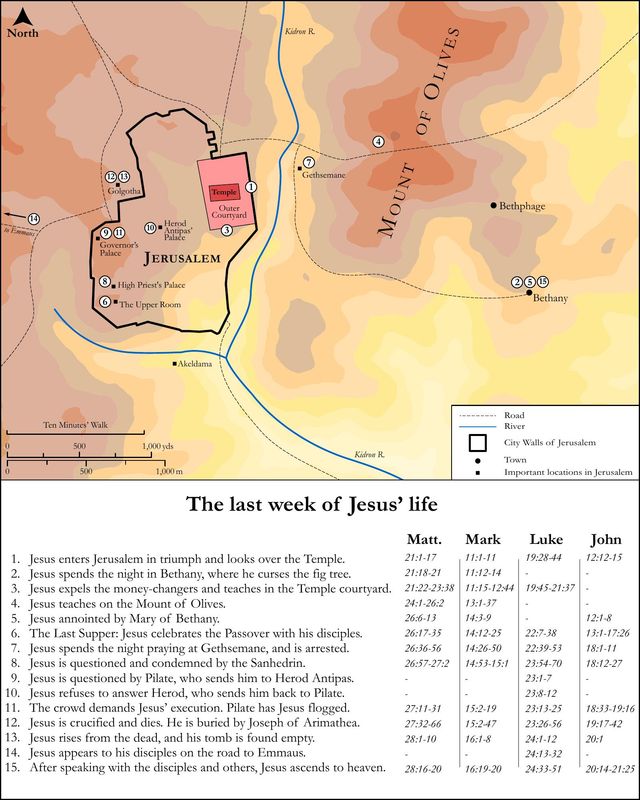
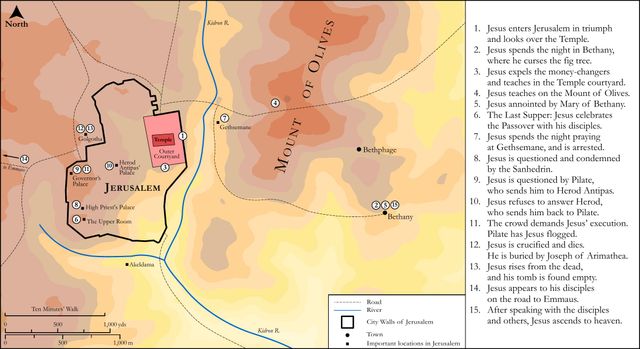
See on the biblical-era map

Study this verse
Historical interpretation
Eleven Centuries of Reception
8 surviving comments on this verse. Each one is dated, so this reads as a timeline rather than a list.
Select a marker to jump to its quote. Markers stagger vertically where authors wrote within a few decades of each other.
But further, if Christ reproves the scribes and Pharisees, sitting in the official chair of Moses, but not doing what they taught, what kind of (supposition).
The disciples of Christ are better than the common herd; and you may find in the Church such as with more ardent affection come to the word of God; these are Christ's disciples, the rest are only His people. And sometimes He speaks to His disciples alone, sometimes to the multitudes and His disciples together, as here.
"Then spake Jesus to the multitudes and to His disciples, saying, The Scribes and the Pharisees sit in Moses' seat: all therefore whatsoever they bid you do, that do; but do not after their works."
Then. When? When He had said these things, when He had stopped their mouths; when He had brought them that they should no more dare to tempt Him; when He had shown their state incurable.
And since He had made mention of "the Lord" and "my Lord," He recurs again to the law. And yet the law said nothing of this kind, but, "The Lord thy God is one Lord." But Scripture calls the whole Old Testament the law.
But these things He saith, showing by all thinks His full agreement with Him that begat Him. For if He were opposed, He would have said the opposite about the law; but now He commands so great reverence to be shown towards it, that, even when they that teach it are depraved, He charges them to hold to it. But here He is discoursing about their life and morals, since this was chiefly the cause of their unbelief, their depraved life, and the love of glory. To amend therefore His hearers; that which in the first place most contributes to salvation, not to despise our teachers, neither to rise up against our priests, this doth He command with superabundant earnestness. But He does not only command it, but also Himself doth it. For though they were depraved, He doth not depose them from their dignity; to them rendering their condemnation heavier, and to His disciples leaving no cloke for disobedience.
I mean, that lest any one should say, that because my teacher is bad, therefore am I become more remiss, He takes away even this pretext. So much at any rate did He establish their authority, although they were wicked men, as even after so heavy an accusation to say, "All whatsoever they command you to do, do." For they speak not their own words, but God's, what He appointed for laws by Moses. And mark how much honor He showed towards Moses, again showing His agreement with the Old Testament; since indeed even by this doth He make them objects of reverence. "For they sit," He saith, "on Moses' seat." For because He was not able to make them out worthy of credit by their life, He doth it from the grounds that were open to Him, from their seat, and their succession from him. But when thou hearest all, do not understand all the law, as, for instance, the ordinances about meats, those about sacrifices, and the like for how was He to say so of these things, which He had taken away beforehand? but He meant all things that correct the moral principle, and amend the disposition, and agree with the laws of the New Testament, and suffer them not any more to be under the yoke of the law.
Wherefore then doth He give these things divine authority, not from the law of grace, but from Moses? Because it was not yet time, before the crucifixion, for these things to be plainly declared.
But to me He seems, in addition to what has been said, to be providing for another object, in saying these things. For since He was on the point of accusing them, that He might not seem in the sight of the foolish to set His heart on this authority of theirs, or for enmity to be doing these things, first He removed this thought, and having set himself clear from suspicion, then begins His accusation. And for what intent doth He convict them, and run out into a long discourse against them? To set the multitude on their guard, so that they might not fall into the same sins. For neither is dissuading like pointing out those that have offended; much as recommending what is right, is not like bringing forward those that have done well. For this cause also He is beforehand in saying, "Do not after their works." For, lest they should suppose, because of their listening to them, they ought also to imitate them, He uses this means of correction, and makes what seems to be their dignity a charge against them. For what can be more wretched than a teacher, when the preservation of his disciples is, not to give heed to his life? So that what seemeth to be their dignity is a most heavy charge against them, when they are shown to live such a life, as they that imitate are ruined.
For this cause He also falls upon His accusations against them, but not for this only, but that He might show, that both their former unbelief wherewith they had not believed, and the crucifixion after this, which they dared to perpetrate, were not a charge against Him who was crucified and disbelieved, but against their perverseness.
But see whence He begins, and whence He aggravates His blame of them. "For they say," He saith, and do not." For every one is worthy of blame in transgressing the law, but especially he that bears the authority of teaching, for doubly and triply doth he deserve to be condemned. For one cause, because he transgresses; for another, that as he ought to amend others, and then halteth, he is worthy of a double punishment, because of his dignity; and in the third place, that he even corrupts the more, as committing such transgression in a teacher's place.
(Hom. lxxii.) But that none should say, For this cause am I slack to practise, because my instructor is evil, He removes every such plea, saying, All therefore whatsoever they say unto you, that observe and do, for they speak not their own, but God's, which things He taught through Moses in the Law. And look with how great honour He speaks of Moses, showing again what harmony there is with the Old Testament.
Look with what He begins His reproof of them, For they say, and do not. Every one who transgresses the Law is deserving of blame, but especially he who has the post of instruction. And this for a threefold cause; first, because he is a transgressor; secondly, because when he ought to set others right, be himself halts; thirdly, because, being in the rank of a teacher, his influence is more corrupting. Again, He brings a further charge against them, that they oppress those that are put under them; They bind heavy burdens; in this He shows a double evil in them; that they exacted without any allowance the utmost rigour of life from those that were put under them, while they allowed themselves large licence herein. But a good ruler should do the contrary of this, to be to himself a severe judge, to others a merciful one. Observe in what forcible words He utters His reproof; He says not they cannot, but they will not; and not, lift them, but touch them with one of their fingers.
(Chapter 23, Verses 1 and following.) Then Jesus spoke to the crowds and to his disciples, saying: The scribes and Pharisees have seated themselves on the chair of Moses. Therefore, whatever they tell you, observe and do it, but do not do their works. For they speak, but do not practice. What is gentler, what is kinder than the Lord? He is tempted by the Pharisees, their plots are crushed, and according to the Psalmist: The arrows of little children have become their wounds (Psalm 63:8). And nevertheless, because of their priesthood and the dignity of their office, he urges the people to submit to them, considering not their works, but their teaching. But when He says, 'The scribes and the Pharisees sit on Moses' seat,' He shows that the seat represents the teaching of the Law. Therefore, we must also understand the teaching in the passages that say, 'He did not sit on the throne of pestilence' (Psalm 1:1) and 'He overturned the seats of those selling doves' (Matthew 21:12; Mark 11:15).
But all these things, the shoulders, the finger, the burdens, and the bands with which they bind the burdens, have a spiritual meaning. Herein also the Lord speaks generally against all masters who enjoin high things, but do not even little things.
When the Lord had overthrown the Priests by His answer, and shown their condition to be irremediable, forasmuch as clergy, when they do wickedly, cannot be amended, but laymen who have gone wrong are easily set right, He turns His discourse to His Apostles and the people. For that is an unprofitable word which silences one, without conveying improvement to another.
But regard must be had to this, after what sort each man fills his seat; for not the seat makes the Priest, but the Priest the seat; the place does not consecrate the man, but the man the place. A wicked Priest derives guilt and not honour from his Priesthood.
But as gold is picked out of the dross, and the dross is left, so hearers may take doctrine and leave practice, for good doctrine oft comes from an evil man. But as Priests judge it better to teach the bad for the sake of the good, rather than to neglect the good for the sake of the bad; so also let those who are set under them pay respect to the bad Priests for the sake of the good, that the good may not be despised because of the bad; for it is better to give the bad what is not their due, rather than to defraud the good of what is justly theirs.
And to the Scribes and Pharisees of whom He is now speaking, heavy burdens not to be borne are the commandments of the Law; as St. Peter speaks in the Acts, Why seek ye to put a yoke upon the neck of the disciples, which neither we nor our fathers were able to bear? (Acts 15:10.) For commending the burdens of the Law by fabulous proofs, they bound as it were the shoulders of the heart of their hearers with bands, that thus tied as though with proof of reason to them, they might not fling them off; but themselves did not in the least measure fulfil them, that is, not only did not wholly, but did not so much as attempt to.
Such also are they who lay a heavy burden upon those who come to penitence, so that while men would avoid present punishment, they overlook that which is to come. For if you lay upon a boy's shoulders a burden more than he can bear, he must needs cither cast it off, or be broken down by it; so the man on whom you lay too grievous a burden of penance must either wholly refuse it, or if he submit himself to it will find himself unable to bear it, and so be offended, and sin worse. Also, if we should be wrong in imposing too light a penance, is it not better to have to answer for mercy than for severity? Where the master of the household is liberal, the steward should not be oppressive. If God be kind, should His Priest be harsh? Do you seek thereby the character of sanctity? Be strict in ordering your own life, in that of others lenient; let men hear of you as enjoining little, and performing much. The Priest who gives licence to himself, and exacts the utmost from others, is like a corrupt tax-gatherer in the state, who to ease himself taxes others heavily.
(interlin.) Or, bind burdens, that is, gather traditions from all sides, not to aid, but to burden the conscience.
Continue studying Matthew 23:1 across the web’s major study libraries — every link below opens this exact verse, chapter, or book on the destination site.
Read & Compare
 BibleGatewayThis verse in more than 200 translations and 70 languages.
 Bible.comThe YouVersion reader — hundreds of translations, reading plans, and highlights.
 ESV.orgCrossway's official English Standard Version reader.
 NET BibleThe NET translation with 60,000+ translators' notes on every rendering decision.
 STEP BibleTyndale House's free study tool — original text, vocabulary, and scholarly resources.
 BibliaLogos Bible Software's free web reader.
 USCCBThe New American Bible (Revised Edition) with the U.S. bishops' study notes.
Commentaries
 BibleHub CommentariesDozens of classic commentaries on this verse, gathered on one page.
 StudyLightMore than 100 commentary sets — the largest collection on the web.
 BibleRefPlain-English commentary on what this verse means, verse by verse.
 Enduring WordDavid Guzik's free commentary on this chapter, widely used by Bible teachers.
 Bible Study ToolsVerse commentary alongside Greek and Hebrew study aids.
Original Language & Research
- BibleHub InterlinearThe verse word by word — original language, transliteration, and English.
- BibleHub LexiconEvery word's original-language definition and Strong's entry.
 Blue Letter BibleDeep-study tools — Strong's numbers, concordance, and word studies.
 CNTR CollationThe earliest Greek manuscripts of this verse, collated letter by letter.
Sermons, Hymns & Audio


TrulyRandomVerse is not affiliated with these sites and doesn’t control their content. They’re linked because they’re genuinely useful.
Summary
Matthew 23:1 serves as a pivotal introductory verse, meticulously setting the stage for Jesus' most profound and scathing public discourse against the religious leadership of His day. It precisely identifies His dual audience—the general populace and His committed disciples—underscoring the universal and specific relevance of the solemn truths He is about to proclaim concerning hypocrisy, spiritual authority, and true righteousness.
Context
ShowHideLiterary Context
This verse immediately follows a series of intense confrontations in Matthew 21-22. Jesus has just silenced the chief priests and elders (challenging His authority), the Pharisees (questioning tribute to Caesar), and the Sadducees (challenging the resurrection). Having masterfully navigated these theological traps and demonstrated His supreme wisdom, Jesus now shifts from defensive answers to a proactive, authoritative declaration. The ensuing discourse in Matthew 23 is a direct and severe indictment of the scribes and Pharisees, exposing their hypocrisy and misguidance. Verse 1 thus acts as a crucial narrative hinge, signaling a transition from debate to denunciation, from private instruction to public warning.
Historical & Cultural Context
The setting is Jerusalem, likely within the temple precincts, during the final week of Jesus' earthly ministry, just days before His crucifixion. The "multitude" (Greek: ochlos) would have comprised pilgrims gathered for Passover, as well as local residents, many of whom had witnessed Jesus' miracles and heard His teachings. The scribes and Pharisees were the dominant religious authorities of the time, revered by the people for their strict adherence to the Law and traditions. However, Jesus consistently challenged their outward religiosity that often lacked inward transformation (e.g., Matthew 6:1-18). Addressing both the general public and His disciples in this public forum was significant: it served to warn the people against following blind guides, while simultaneously instructing His followers on the nature of true spiritual leadership and discipleship, in stark contrast to the prevailing models.
Key Themes
ShowHideMatthew 23:1 introduces several key themes that permeate the chapter and resonate throughout the Gospel. Firstly, it highlights Jesus' Unquestionable Authority as the ultimate teacher and interpreter of God's will, a theme powerfully established in the Sermon on the Mount and reaffirmed by the people's astonishment at His teaching in Matthew 7:28-29. Secondly, the verse emphasizes the Discernment of True vs. False Leadership, preparing the audience for Jesus' detailed critique of the Pharisees' failure to practice what they preached, a warning echoed in Matthew 15:1-9. Lastly, it underscores the Call to Authentic Discipleship, implying that while the multitude might simply listen, the disciples are expected to internalize and embody the principles of humility and service that Jesus will soon contrast with the Pharisees' pride and self-exaltation (e.g., Matthew 20:25-28).
Exposition and Analysis
ShowHideKey Word Analysis
ShowHideThis verb signifies "to talk, i.e. utter words," and can also mean "preach, say, speak (after), talk, tell, utter." In this context, it denotes a deliberate, formal, and authoritative address rather than casual conversation. Jesus is not merely chatting; He is delivering a weighty and intentional message, emphasizing its importance and the speaker's authority.
This term refers to "a throng (as borne along); by implication, the rabble; by extension, a class of people." It describes the general public, the common people who followed Jesus, often drawn by His miracles and teachings, but not necessarily committed followers. Their inclusion highlights the public nature and universal relevance of Jesus' forthcoming warnings.
Meaning "a learner, i.e. pupil." This word specifically refers to those who had committed themselves to learning from Jesus, following His teachings, and emulating His way of life. Their presence signifies that Jesus' message is not only a public warning but also a crucial lesson for those who genuinely seek to follow Him, preparing them to discern true spiritual leadership and avoid the pitfalls of hypocrisy.
Verse Breakdown
ShowHide"¶ Then spake Jesus"
The adverb "Then" (Greek: tóte, G5119) indicates a temporal and logical progression, marking a significant shift in Jesus' ministry from answering challenges to delivering a direct, public, and severe denunciation. It signals the immediate aftermath of His triumphs in debate, setting the stage for His authoritative pronouncement. The subject, "Jesus," emphasizes that the following words carry the weight of divine authority, coming from the Son of God Himself.
"to the multitude"
This phrase identifies the first, broader segment of Jesus' audience. The "multitude" represents the general public, the common people who were present in the temple area. Jesus' decision to address them publicly underscores the universal importance of His message, particularly as it pertains to warning them against the misleading influence of the religious leaders. It implies a pastoral concern for those who might be led astray.
"and to his disciples"
This phrase introduces the second, more specific segment of Jesus' audience. "His disciples" were those who had committed to following Jesus, learning from Him, and embodying His teachings. Their inclusion indicates that the ensuing discourse, while a public warning, also contained vital lessons specifically for those who would carry on His ministry. It was a lesson in discerning true righteousness, avoiding hypocrisy, and understanding the nature of authentic spiritual leadership from the perspective of those who are called to embody it.
Literary Devices
ShowHideMatthew 23:1 employs several literary devices to enhance its impact. Audience Segmentation is prominent, as Jesus deliberately addresses two distinct groups: the general "multitude" and "his disciples." This highlights the dual purpose of His message—a public warning for all to hear and a specific instruction for His followers. The verse also utilizes Foreshadowing, as this simple introduction sets a solemn tone, signaling that the discourse to follow will be weighty and critical, moving beyond parables or general teachings to direct confrontation. Furthermore, there is a subtle Juxtaposition implied by the presence of both groups. The "multitude" represents those who might be swayed by outward appearances, while the "disciples" are those called to deeper, inward transformation, creating a dynamic tension that the subsequent woes will explore.
Theological and Thematic Connections
ShowHideMatthew 23:1, by clearly defining Jesus' audience, underscores His unique role as the ultimate divine teacher and the authoritative revealer of God's truth. His address to both the general public and His inner circle highlights the comprehensive nature of His ministry: to warn the unwary, to guide the seeking, and to equip those called to lead. The verse implicitly sets up the contrast between the flawed, self-serving leadership of the scribes and Pharisees, and the humble, servant-hearted leadership exemplified by Jesus and expected of His true followers. It emphasizes the critical importance of discerning authentic spiritual authority from mere outward religious display, a theme central to the New Testament's call for genuine faith over superficial religiosity.
Reflection and Application
ShowHideMatthew 23:1 invites us to consider our own position as listeners to Jesus' words. Are we part of the "multitude," casually observing and perhaps intrigued, or are we among "his disciples," committed to actively learning, internalizing, and applying His teachings? This verse challenges us to recognize Jesus' supreme authority in all matters of faith and life, understanding that His words are not merely historical accounts but living truths relevant for every generation. It calls us to a posture of humble receptivity, discerning between genuine spiritual leadership that points to Christ and any form of religious pretense that prioritizes outward show over inward transformation. Just as Jesus prepared His followers for the challenges of false teaching, we too are called to be vigilant, ensuring that our faith is rooted in authentic devotion rather than superficial adherence to rules or traditions.
Questions for Reflection
ShowHideFAQ
ShowHideWhy did Jesus address both the "multitude" and "his disciples" at the same time?
ShowHideJesus addressed both groups simultaneously to serve a dual purpose. For the "multitude," it was a public warning against the hypocrisy and misguidance of the religious leaders (scribes and Pharisees), whom they typically revered. This protected the common people from being led astray by those who taught correctly but lived inconsistently. For "his disciples," it was a crucial lesson in discerning true spiritual leadership and avoiding the pitfalls of pride, self-righteousness, and external religiosity without internal devotion. It prepared them for their future roles as leaders and teachers, emphasizing the importance of humble service and authentic faith, in stark contrast to the examples Jesus was about to condemn. This dual address underscored the universal applicability of His message, while also providing specific instruction for those committed to following Him.
Christ-Centered Fulfillment
ShowHideMatthew 23:1 subtly yet profoundly points to Christ as the ultimate and true Teacher, fulfilling the prophetic expectation of a prophet like Moses (Deuteronomy 18:15). In contrast to the scribes and Pharisees who sat "in Moses' seat" but failed to embody the spirit of the Law, Jesus speaks with inherent divine authority, not derived from tradition or human appointment, but from His very being as the Son of God (John 1:18). His address to both the multitude and His disciples signifies His universal call to all humanity to hear and obey His voice, for He is the embodiment of truth and grace (John 14:6). The subsequent discourse, exposing the spiritual blindness of the religious leaders, further highlights Jesus as the true light of the world, who alone can guide humanity out of darkness (John 8:12). Ultimately, this introductory verse sets the stage for Jesus to reveal Himself as the one who not only teaches the perfect will of God but also perfectly lives it out, offering Himself as the Lamb of God to atone for the very sins of hypocrisy and rebellion He condemns, thereby establishing the path to true righteousness through faith in Him (2 Corinthians 5:21).