


Matthew 23:10
Bible text: King James Version (1769 Blayney text) · Public domain
Bible text: Berean Standard Bible · Public domain
Bible text: American Standard Version (1901) · Public domain
Bible text: World English Bible, Messianic edition · Public domain
Bible text: Geneva Bible (1599) · Public domain
Bible text: Young's Literal Translation · Public domain
- μηδὲmēdeNeitherG3366CONJ-NConjunction Negative
- κληθῆτεklēthētemay be calledG2564V-APS-2PVerb Aorist Passive Subjunctive 2nd Plural
- καθηγηταίkathēgētaiinstructorsG2519N-NPM-TNoun Nominative Plural Masculine Title
- ὅτιhotisinceG3754CONJConjunction
- ὁhotheG3588T-NSMDefinite article Nominative Singular Masculine
- καθηγητὴςkathēgētēsinstructorG2519N-NSMNoun Nominative Singular Masculine
- ὑμῶνhumōnof youG4771P-2GPPersonal pronoun Genitive 2nd Plural
- ἐστινestinisG1510V-PAI-3SVerb Present Active Indicative 3rd Singular
- εἷςheisOneG1520A-NSMAdjective Nominative Singular Masculine
- ὁhotheG3588T-NSMDefinite article Nominative Singular Masculine
- ΧριστόςChristosChristG5547N-NSM-TNoun Nominative Singular Masculine Title
English is a literal word-by-word gloss of the Greek, not the KJV's wording. Why?
This is the original text the KJV's translators worked from — each Greek word with its own literal English meaning in this verse, prepared by scholars at Tyndale House, Cambridge. The KJV translates whole sentences, not word by word, so its wording differs: one Greek word can become several English words, and the KJV may choose “charity” where the gloss reads “love”. Both are faithful — they answer different questions. For the KJV's own rendering, switch to the KJV text.
Details
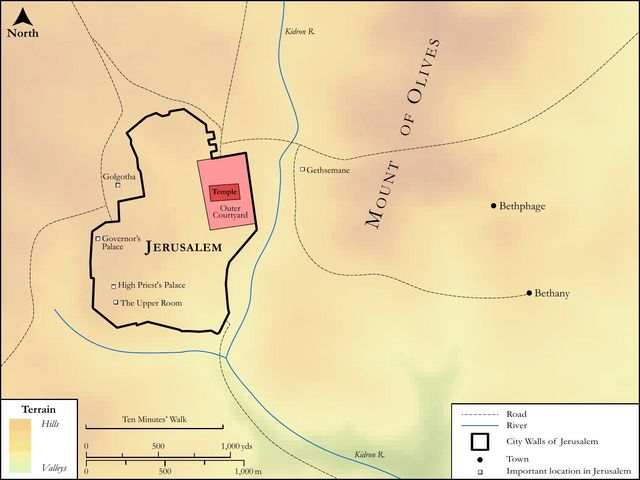
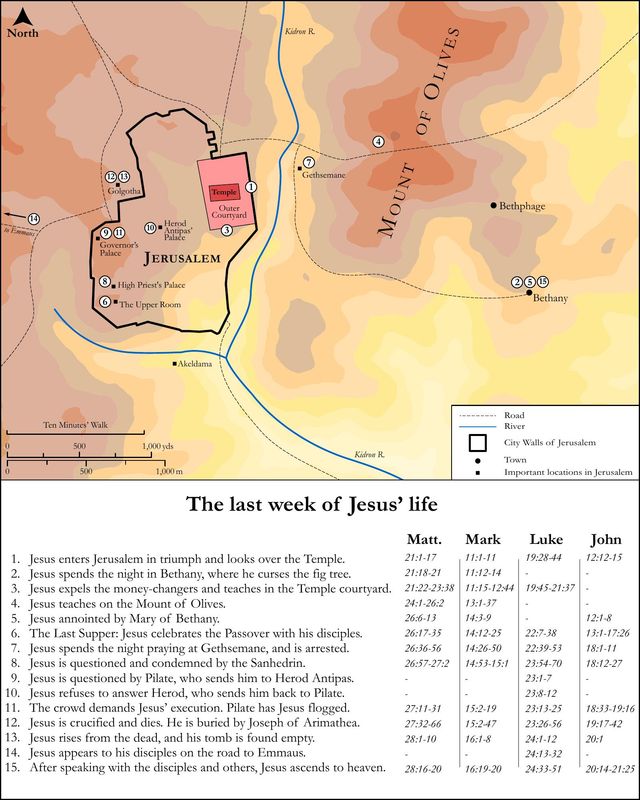
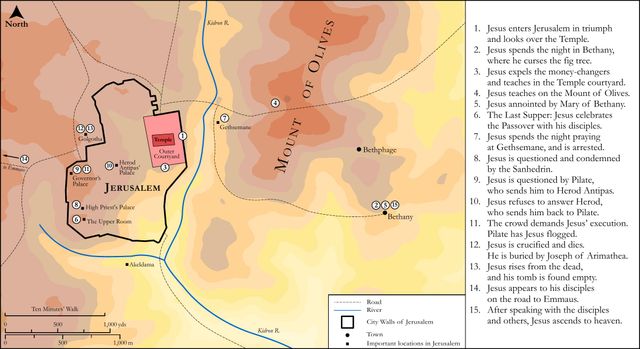
See on the biblical-era maps
Study this verse
Historical interpretation
Nine Centuries of Reception
9 surviving comments on this verse. Each one is dated, so this reads as a timeline rather than a list.
Select a marker to jump to its quote. Markers stagger vertically where authors wrote within a few decades of each other.
And that the disciples may ever remember that they are the children of one parent, and that by their new birth they have passed the limits of their earthly origin.
The Lord had charged the Scribes and Pharisees with harshness and neglect; He now brings forward their vain-glory, which made them depart from God.
Note the intensive force of the words of His reproofs. He says not merely that they do their works to be seen of men, but added, all their works. And not only in great things but in some things trivial they were vainglorious, They make broad their phylacteries and enlarge the borders of their garments.
Observe where vain glory governed them, to wit, in the synagogues, whither they entered to guide others. It had been tolerable to have felt thus at feasts, notwithstanding that a doctor ought to be had in honour in all places alike, and not in the Churches only. But if it be blameworthy to love such things, how wrong is it to seek to attain them?
Or otherwise; Of the foregoing things with which He had charged the Pharisees, He now passes over many as of no weight, and such as His disciples needed not to be instructed in; but that which was the cause of all evils, namely, ambition of the master's seat, that He insists upon to instruct His disciples.
Not that when Christ is here said to be our Master, the Father is excluded, as neither when God is said to be our Father, is Christ excluded, Who is the Father of men.
Not only does the Lord forbid us to seek supremacy, but would lead His hearer to the very opposite; He that is greatest among you shall be your servant.
And again He adds, "Neither be ye called guides, for one is your guide, even Christ;" and He said not, I. For like as above He said, "What think ye of Christ?" and He said not, "of me," so here too.
But I should be glad to ask here, what they would say, who are repeatedly applying the term one, one, to the Father alone, to the rejection of the Only-begotten. Is the Father guide? All would declare it, and none would gainsay it. And yet "one," He saith, "is your guide, even Christ." For like as Christ, being called the one guide, casts not out the Father from being guide; even so the Father, being called Master, doth not cast out the Son from being Master. For the expression, one, one, is spoken in contra-distinction to men, and the rest of the creation.
(Verse 8 onwards) But you must not be called Rabbi; for One is your Teacher, and you are all brothers. And do not call anyone on earth your father; for One is your Father, who is in heaven. Nor are you to be called teachers; for One is your Teacher, the Christ. But the greatest among you shall be your servant. Whoever exalts himself shall be humbled, and whoever humbles himself shall be exalted. Neither be called masters; for One is your Master, that is, Christ. And do not call anyone on earth your father; for One is your Father, He who is in heaven. Father, because from Him all things are. Teacher, because through Him all things: or because through the dispensation of His flesh, we all are reconciled to God. It is asked why the Apostle, the teacher of the Gentiles, declared himself to be against this precept (2 Corinthians 5; Colossians 1); or how, in the common language, especially in the monasteries of Palestine and Egypt, they call each other Fathers? This is resolved as follows: It is one thing to be a father or a teacher by nature, another thing by indulgence. If we call someone our father, we show honor to their age, not that they are the author of our life. Likewise, a teacher is called such from the fellowship of a true teacher. And to avoid endless repetition, just as one God and one Son do not prejudice others from being called gods and sons by adoption, so one father and one teacher do not prejudice others from being called fathers and teachers in an abusive manner.
For the Lord, when He had given the commandments of the Law through Moses, added at the end, And thou shalt bind them for a sign upon thine hand, and they shall be ever before thine eyes; (Deut. 6:8.) the meaning of which is, Let my precepts be in thine hand so as to be fulfilled in thy works; let them be before thine eyes so as that thou shalt meditate upon them day and night. This the Pharisees misinterpreting, wrote on parchments the Decalogue of Moses, that is, the Ten Commandments, and folding them up, tied them on their forehead, so making them a crown for their head, that they should be always before their eyes. Moses had in another place given command that they should make fringes of blue in the borders of their garments, to distinguish the people of Israel (Numb. 15:39.); that as in their bodies circumcision, so in their garments the fringe, might discriminate the Jewish nation. But these superstitious teachers, catching at popular favour, and making gain of silly women, made broad hems, and fastened them with sharp pins, that as they walked or sat they might be pricked, and by such monitors be recalled to the duties of God's ministry. This embroidery then of the Decalogue they called phylacteries, that is, conservatories, because those who wore them, wore them for their own protection and security. So little did the Pharisees understand that they were to be worn on the heart and not on the body; for in equal degree may cases and chests be said to have books, which assuredly have not the knowledge of God.
Seeing they thus make broad their phylacteries, and make them broad fringes, desiring to have glory of men, they are convicted also in other things; For they love the uppermost rooms at feasts, and the chief seats in the synagogues.
(cont. Helvid. 15.) All men may be called brethren in affection, which is of two kinds, general and particular. Particular, by which all Christians are brethren; general, by which all men being born of one Father are bound together by like tie of kindred.
It is a difficulty that the Apostle against this command calls himself the teacher of the Gentiles; and that in monasteries in their common conversation, they call one another, Father. It is to be cleared thus. It is one thing to be father or master by nature, another by sufferance. Thus when we call any man our father, we do it to show respect to his age, not as regarding him as the author of our being. We also call men 'Master,' from resemblance to a real master; and, not to use tedious repetition, as the One God and One Son, who are by nature, do not preclude us from calling others gods and sons by adoption, so the One Father and One Master, do not preclude us from speaking of other fathers and masters by an abuse of the terms.
Such also are they who lay a heavy burden upon those who come to penitence, so that while men would avoid present punishment, they overlook that which is to come. For if you lay upon a boy's shoulders a burden more than he can bear, he must needs cither cast it off, or be broken down by it; so the man on whom you lay too grievous a burden of penance must either wholly refuse it, or if he submit himself to it will find himself unable to bear it, and so be offended, and sin worse. Also, if we should be wrong in imposing too light a penance, is it not better to have to answer for mercy than for severity? Where the master of the household is liberal, the steward should not be oppressive. If God be kind, should His Priest be harsh? Do you seek thereby the character of sanctity? Be strict in ordering your own life, in that of others lenient; let men hear of you as enjoining little, and performing much. The Priest who gives licence to himself, and exacts the utmost from others, is like a corrupt tax-gatherer in the state, who to ease himself taxes others heavily.
Every substance breeds in itself that which destroys it, as wood the worm, and garments the moth; so the Devil strives to corrupt the ministry of the Priests, who are ordained for the edification of holiness, endeavouring that this good, while it is done to be seen of men, should be turned into evil. Take away this fault from the clergy, and you will have no further labour in their reform, for of this it comes that a clergyman who has sinned can hardly perform penance. Also the Lord here points out the cause why they could not believe in Christ, because nearly all they did was in order to be seen of men; for he whose desire is for earthly glory from men, cannot believe on Christ who preaches things heavenly. I have read one who interprets this place thus. In Moses' seat, that is, in the rank and degree instituted by Moses, the Scribes and Pharisees are seated unworthily, forasmuch as they preached to others the Law which foretold Christ's coming, but themselves did not receive Him when come. For this cause He exhorts the people to hear the Law which they preached, that is, to believe in Christ who was preached by the Law, but not to follow the Scribes and Pharisees in their disbelief of Him. And He shows the reason why they preached the coming of Christ out of the Law, yet did not believe on Him; namely, because they did not preach that Christ should come through any desire of His coming, but that they might be seen by men to be doctors of the Law.
But after their example do many invent Hebrew names of Angels, and write them, and bind them on themselves, and they seem dreadful to such as are without understanding. Others again wear round their neck a portion of the Gospel written out. But is not the Gospel read every day in the Church, and heard by all? Those therefore who receive no profit from the Gospel sounded in their ears, how shall the having them hung about their neck save them? Further, wherein is the virtue of the Gospel? in the shape of its letters, or in the understanding its meaning? If in the characters, you do well to hang them round your neck; if in their meaning, they are of more profit when laid up in the heart, than hung round the neck. But others explain this place thus, That they made broad their teachings concerning special observances, as phylacteries, or preservatives of salvation, preaching them continually to the people. And the broad fringes of their garments they explain of the same undue stress upon such commandments.
For He rebukes not those who recline in the highest place, but those who love such places, blaming the will not the deed. For to no purpose does he humble himself in place who exalts himself in heart. For some vain men hearing that it was a commendable thing to seat himself in the lowest place, chooses so to do; and thus not only does not put away the vanity of his heart, but adds this additional vain ostentation of his humility, as one who would be thought righteous and humble. For many proud men take the lowest place in their bodies, but in haughtiness of heart think themselves to be seated among the highest; and there are many humble men who, placed among the highest, are inwardly in their own esteem among the lowest.
They love the first salutations, first, that is, not in time only, before others; but in tone, that we should say with a loud voice, Hail, Rabbi; and in body that we should bow low our head; and in place, that the salutation should be in public.
That is, they wish to be called, not to be such; they desire the name, and neglect the duties.
Be not ye called Rabbi, that ye take not to yourselves what belongs to God. And call not others Rabbi, that ye pay not to men a divine honour. For One is the Master of all, who instructs all men by nature. For if man were taught by man, all men would learn that have teachers; but seeing it is not man that teaches, but God, many are taught, but few learn. Man cannot by teaching impart an understanding to man, but that understanding which is given by God man calls forth
And call no man your Father upon earth; because in this world though man begets man, yet there is one Father who created all men. For we have not beginning of life from our parents, but we have our life transmitted through them.a
Which means that every one who thinks highly of his own deserts, shall be humbled before God; and every one who humbles himself concerning his good deeds, shall be exalted with God.
It should be noted, that He does not forbid those to whom this belongs by right of rank to be saluted in the forum, or to sit or recline in the highest room; but those who unduly desire these things, whether they obtain them or not, these He enjoins the believers to shun as wicked.
And herein they are not without fault, that the same men should be concerned in the litigations of the forum, who in the synagogue in Moses' seat, seek to be called Rabbi by men.
(non occ.) Because it was clear who was the Father of all, by this which was said, Which art in Heaven, He would teach them who was the Master of all, and therefore repeats the same command concerning a master, Neither be ye called masters; for one is your Master, even Christ.
Continue studying Matthew 23:10 across the web’s major study libraries — every link below opens this exact verse, chapter, or book on the destination site.
Read & Compare
 BibleGatewayThis verse in more than 200 translations and 70 languages.
 Bible.comThe YouVersion reader — hundreds of translations, reading plans, and highlights.
 ESV.orgCrossway's official English Standard Version reader.
 NET BibleThe NET translation with 60,000+ translators' notes on every rendering decision.
 STEP BibleTyndale House's free study tool — original text, vocabulary, and scholarly resources.
 BibliaLogos Bible Software's free web reader.
 USCCBThe New American Bible (Revised Edition) with the U.S. bishops' study notes.
Commentaries
 BibleHub CommentariesDozens of classic commentaries on this verse, gathered on one page.
 StudyLightMore than 100 commentary sets — the largest collection on the web.
 BibleRefPlain-English commentary on what this verse means, verse by verse.
 Enduring WordDavid Guzik's free commentary on this chapter, widely used by Bible teachers.
 Bible Study ToolsVerse commentary alongside Greek and Hebrew study aids.
Original Language & Research
- BibleHub InterlinearThe verse word by word — original language, transliteration, and English.
- BibleHub LexiconEvery word's original-language definition and Strong's entry.
 Blue Letter BibleDeep-study tools — Strong's numbers, concordance, and word studies.
 CNTR CollationThe earliest Greek manuscripts of this verse, collated letter by letter.
Sermons, Hymns & Audio


TrulyRandomVerse is not affiliated with these sites and doesn’t control their content. They’re linked because they’re genuinely useful.
Summary
Matthew 23:10 encapsulates Jesus' profound teaching on spiritual authority, asserting that ultimate mastery and guidance belong exclusively to Christ. This verse, part of a broader discourse condemning the hypocrisy and self-exaltation of religious leaders, prohibits His followers from seeking or accepting honorific titles like "master," thereby promoting humility, equality, and singular devotion to Christ as the supreme teacher and guide for all believers.
Context
ShowHideLiterary Context
Matthew 23:10 is embedded within Jesus' final and most severe public denunciation of the scribes and Pharisees, delivered in the temple courts shortly before His crucifixion. The entire chapter serves as a powerful indictment of religious hypocrisy, focusing on their love for public recognition, honorific titles, and burdensome legalism, all while neglecting justice, mercy, and faithfulness. Immediately preceding this verse, Jesus explicitly warns His disciples against being called "Rabbi" in Matthew 23:8 and "father" in Matthew 23:9, creating a deliberate rhetorical progression that culminates in the prohibition against being called "master." This sequence underscores Jesus' radical redefinition of spiritual leadership, moving away from hierarchical, honor-based systems towards a community founded on humility and service under the sole authority of Christ.
Historical & Cultural Context
In first-century Judaism, titles like "Rabbi" (teacher), "Abba" (father, signifying spiritual paternity), and "Master" (guide/instructor) were honorifics bestowed upon respected religious authorities and teachers. These titles conveyed significant social status, intellectual prestige, and spiritual authority, often implying a relationship of absolute submission from disciples to their teachers. The scribes and Pharisees, as the religious elite, actively sought and cherished these titles, using them to distinguish themselves and solidify their positions of power and influence within Jewish society. Jesus' prohibition directly challenges this cultural norm, striking at the heart of their system of honor and status, and advocating for a counter-cultural community where such human-conferred distinctions are rendered meaningless in light of Christ's singular authority.
Key Themes
ShowHideThis verse powerfully contributes to several overarching themes in Matthew's Gospel and Jesus' teachings. Primarily, it reinforces the sole authority and supremacy of Christ as the ultimate teacher, guide, and Lord over His disciples, a theme echoed in the Great Commission in Matthew 28:18-20. Secondly, it champions humility and equality among believers, dismantling any notion of spiritual hierarchy that elevates one human over another, as all are "brethren" under one Master. This aligns with Jesus' teaching on servant leadership found in Matthew 20:25-28. Lastly, it serves as a warning against human pride and the pursuit of worldly honor within the spiritual realm, emphasizing that true spiritual influence flows from humble service and submission to God, not from titles or public acclaim, a concept Jesus frequently addressed, such as in Matthew 6:1-6.
Exposition and Analysis
ShowHideKey Word Analysis
ShowHideFrom a compound of κατά (kata, down) and ἡγέομαι (hēgeomai, to lead), this word literally means "a guide" or "instructor." It denotes someone who leads the way, directs, or teaches. In the context of Matthew 23:10, Jesus uses it to refer to a spiritual authority or teacher who commands ultimate allegiance and provides definitive instruction. By forbidding His disciples from being called "masters," Jesus asserts that He alone fulfills this role as the singular, authoritative guide for their faith and life, thereby challenging the human tendency to elevate certain individuals to a position of unquestionable spiritual authority.
This verb means "to call" (properly, aloud), but is used in a variety of applications, including naming, inviting, or designating. In this verse, "be ye called" (passive voice) implies both the act of others bestowing a title upon someone and the acceptance of that title by the individual. Jesus' prohibition is thus twofold: it discourages His followers from seeking such titles and from allowing others to confer them in a way that usurps Christ's unique position. It speaks to the recognition and honor associated with the title rather than merely a descriptive label.
Derived from χρίω (chriō, to anoint), this term means "anointed" and is the Greek equivalent of the Hebrew "Messiah." It is an epithet of Jesus, signifying His divine appointment as the promised deliverer, king, and ultimate prophet. In Matthew 23:10, identifying "Christ" as the "one Master" is a direct theological claim to His unique authority and messianic identity. It underscores that His anointing by God establishes Him as the sole and supreme spiritual guide, to whom all believers owe their ultimate allegiance and from whom all true teaching flows.
Verse Breakdown
ShowHide"Neither be ye called masters:"
This clause serves as a direct, emphatic prohibition. The Greek μηδέ (mēdé, neither/nor) reinforces the preceding prohibitions against being called "Rabbi" and "father." Jesus is not merely suggesting a preference but issuing a command against His followers seeking or accepting the honorific title of "master" (καθηγητής). This injunction challenges the prevailing cultural norms where such titles conferred status and authority, redirecting the disciples away from human-centric hierarchies and towards a community where such distinctions are nullified by Christ's headship.
"for one is your Master, [even] Christ."
This second clause provides the theological rationale for the prohibition. The particle γάρ (gár, for) introduces the reason: there is only "one" (εἷς, heîs) who legitimately holds the title and position of "Master" (καθηγητής) for believers, and that one is Christ (Χριστός). This statement unequivocally declares Christ's singular and supreme authority as the ultimate teacher, guide, and Lord. It establishes Him as the exclusive source of spiritual truth and direction, rendering any human claim to such ultimate mastery as illegitimate and an affront to His unique status. The phrase "[even] Christ" clarifies and emphasizes the identity of the singular Master.
Literary Devices
ShowHideMatthew 23:10 employs several literary devices to convey its powerful message. The most prominent is Antithesis, where Jesus sets up a stark contrast between human aspiration for the title "master" and the singular, divine reality that Christ alone holds this position. This creates a clear opposition between worldly recognition and heavenly authority. The verse also utilizes Didacticism, as it is a direct instruction from Jesus to His disciples, teaching them a fundamental principle about spiritual leadership and the nature of their community. Furthermore, the term "Master" functions as a Metaphor for ultimate spiritual authority and guidance, extending beyond a mere pedagogical role to encompass the entirety of Christ's Lordship over His followers. The cumulative effect of these devices is to underscore the radical nature of Jesus' teachings regarding humility and His own unparalleled sovereignty.
Theological and Thematic Connections
ShowHideMatthew 23:10 is a cornerstone for understanding the nature of spiritual authority within the Christian faith. It unequivocally asserts Christ's exclusive claim to ultimate mastery, teaching, and guidance, thereby challenging any human attempt to usurp or imitate this unique position. Theologically, it reinforces the concept of Christ's headship over the church and the equality of all believers under His singular authority. It calls for a radical humility among those in leadership, transforming the model from one of hierarchical dominion to one of humble service, where leaders are facilitators and equippers, not ultimate sources of truth or objects of undue reverence. The verse compels believers to direct their ultimate allegiance and intellectual submission solely to Christ, ensuring that all human teaching and leadership remain subordinate to His divine word and example.
Reflection and Application
ShowHideMatthew 23:10 serves as a timeless reminder for every believer and every Christian community: our ultimate allegiance and source of truth must always be Christ alone. In a world that often values titles, status, and human charisma, Jesus' words call us to a profound counter-cultural humility. For individuals, this means diligently testing all teaching against the revealed truth of Scripture, recognizing that no human teacher, no matter how gifted or esteemed, possesses infallible authority. Our faith should be anchored in Christ, not in personalities or institutions. For the church, this verse challenges us to cultivate environments where servant leadership is genuinely practiced, where leaders see themselves as humble stewards rather than elevated figures, and where every member is valued as an equal "brother" or "sister" under the one Master. It prompts us to guard against spiritual pride, the idolization of leaders, and the creation of hierarchies that diminish the direct relationship between Christ and His followers.
Questions for Reflection
ShowHideFAQ
ShowHideDoes Matthew 23:10 mean Christians cannot have teachers or leaders, or that we shouldn't use titles like "Pastor" or "Reverend"?
ShowHideMatthew 23:10, along with the preceding verses in Matthew 23:8-9, is not a blanket prohibition against all forms of teaching, leadership, or descriptive titles within the church. The context reveals Jesus' condemnation of the scribes and Pharisees' hypocrisy, their love of honorific titles, and their desire to be elevated above others, thereby usurping the unique authority that belongs to God and Christ alone. The Greek term kathēgētḗs (master/guide) here refers to someone who claims ultimate, unquestionable authority as the definitive source of truth, a role Jesus reserves for Himself. The New Testament clearly acknowledges and affirms the existence of various leadership roles and spiritual gifts, including teachers, pastors, and elders (e.g., Ephesians 4:11; 1 Timothy 3:1-7; Titus 1:5-9). Therefore, the spirit of Jesus' command is against seeking or accepting titles that foster pride, create undue spiritual hierarchy, or imply an ultimate authority over others that rivals Christ's. It's a call to humility, servant leadership, and the recognition that Christ is the ultimate Master, while human leaders are merely His servants and instruments.
Christ-Centered Fulfillment
ShowHideMatthew 23:10 finds its profound Christ-centered fulfillment in Jesus' unique identity as the ultimate and singular Master, Teacher, and Lord. He is not merely a master among many, but the one Master, the very embodiment of divine wisdom and truth, as proclaimed in Colossians 2:3. Unlike the hypocritical religious leaders who sought honor for themselves, Christ perfectly exemplified servant leadership, humbling Himself to the point of death on a cross, as detailed in Philippians 2:5-8. His authority is not derived from human acclaim but from His divine nature and His resurrection, by which all authority in heaven and on earth has been given to Him (Matthew 28:18). As the "Master," Christ is the definitive interpreter of God's will, the source of eternal life (John 6:68), and the head of His body, the church (Colossians 1:18). Therefore, the prohibition against human "masters" in Matthew 23:10 serves to elevate Christ to His rightful place as the sole object of ultimate spiritual allegiance and the perfect, living standard for all genuine teaching and leadership within His kingdom.