


Matthew 23:8
Bible text: King James Version (1769 Blayney text) · Public domain
Bible text: Berean Standard Bible · Public domain
Bible text: American Standard Version (1901) · Public domain
Bible text: World English Bible, Messianic edition · Public domain
Bible text: Geneva Bible (1599) · Public domain
Bible text: Young's Literal Translation · Public domain
- ὑμεῖςhumeisyou yourselvesG4771P-2NPPersonal pronoun Nominative 2nd Plural
- δὲdehoweverG1161CONJConjunction
- μὴmēnotG3361PRT-NNegative Particle Negative
- κληθῆτεklēthētemay be calledG2564V-APS-2PVerb Aorist Passive Subjunctive 2nd Plural
- ῥαββί·rhabbiRabbiG4461N-NSM-TNoun Nominative Singular Masculine Title
- εἷςheisOneG1520A-NSMAdjective Nominative Singular Masculine
- γάρgarforG1063CONJConjunction
- ἐστινestinisG1510V-PAI-3SVerb Present Active Indicative 3rd Singular
- ὑμῶνhumōnof youG4771P-2GPPersonal pronoun Genitive 2nd Plural
- ὁhotheG3588T-NSMDefinite article Nominative Singular Masculine
- διδάσκαλοςdidaskalosTeacherG1320N-NSM-TNoun Nominative Singular Masculine Title
- ὁho<the>G3588T-NSMDefinite article Nominative Singular Masculine
- ΧριστόςChristosChristG5547N-NSM-TNoun Nominative Singular Masculine Title
- πάντεςpantesallG3956A-NPMAdjective Nominative Plural Masculine
- δὲdenowG1161CONJConjunction
- ὑμεῖςhumeisyou yourselvesG4771P-2NPPersonal pronoun Nominative 2nd Plural
- ἀδελφοίadelphoibrothersG80N-NPMNoun Nominative Plural Masculine
- ἐστεesteareG1510V-PAI-2PVerb Present Active Indicative 2nd Plural
English is a literal word-by-word gloss of the Greek, not the KJV's wording. Why?
This is the original text the KJV's translators worked from — each Greek word with its own literal English meaning in this verse, prepared by scholars at Tyndale House, Cambridge. The KJV translates whole sentences, not word by word, so its wording differs: one Greek word can become several English words, and the KJV may choose “charity” where the gloss reads “love”. Both are faithful — they answer different questions. For the KJV's own rendering, switch to the KJV text.
Details
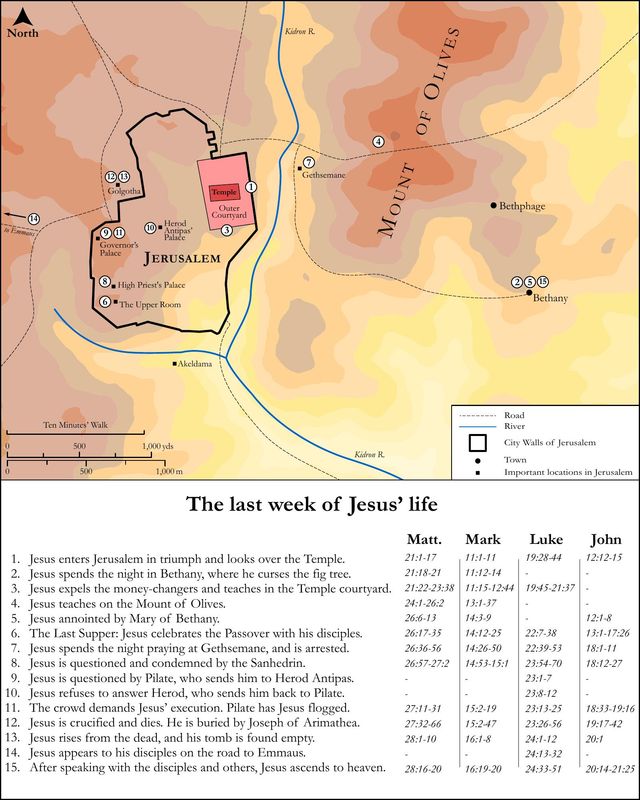
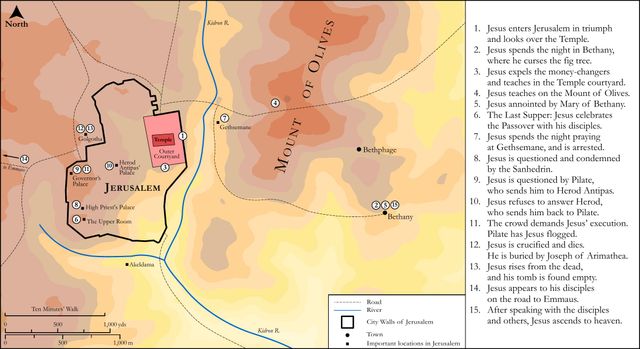
See on the biblical-era maps

Study this verse
Historical interpretation
Eleven Centuries of Reception
13 surviving comments on this verse. Each one is dated, so this reads as a timeline rather than a list.
Select a marker to jump to its quote. Markers stagger vertically where authors wrote within a few decades of each other.
So, too, righteousness-for the God of righteousness and of creation is the same-was first in a rudimentary state, having a natural fear of God: from that stage it advanced, through the Law and the Prophets, to infancy; from that stage it passed, through the Gospel, to the fervour of youth: now, through the Paraclete, it is settling into maturity. He will be, after Christ, the only one to be called and revered as Master; for He speaks not from Himself, but what is commanded by Christ.
Therefore a wife, when her husband is dead, will not marry; for if she marry, she will of course be marrying (his) brother: for "all we are brethren." Again, the woman, if intending to marry, has to marry "in the Lord; " that is, not to an heathen, but to a brother, inasmuch as even the ancient law forbids marriage with members of another tribe.
You are not “to be called rabbi” and especially “not by men,” nor are you to love to be called righteous by someone else. “For you have one teacher, and you are all brothers” to each other. For you have been born anew, not only from water but also from the spirit, and you have received the “spirit of adoption,” so that it might be said of you that you were “born not of the flesh, nor of the will of man” but from God. It is hard to imagine this being said of anyone or any son until now. You do not call anyone on earth “Father” in the sense that you say “our Father” of the one who gives all things through all ages and according to the divine plan. Whoever ministers with the divine word does not put himself forward to be called “teacher,” for he knows that when he performs well it is Christ who is within him. He should only call himself “servant” according to the command of Christ, saying, “Whoever is greater among you, let him be the servant of all.”
And in the Church of Christ are found some who take to themselves the uppermost places, that is, become deacons; next they aspire to the chief seats of those that are called presbyters; and some intrigue to be styled among men Bishop, that is, to be called Rabbi. But Christ's disciple loves the uppermost place indeed, but at the spiritual banquet, where he may feed on the choicer morsels of spiritual food, for, with the Apostles who sit upon twelve thrones, he loves the chief seats, and hastes by his good works to render himself worthy of such seats; and he also loves salutations made in the heavenly market-place, that is, in the heavenly congregations of the primitive. But the righteous man would be called Rabbi, neither by man, nor by any other, because there is One Master of all men.
And that the disciples may ever remember that they are the children of one parent, and that by their new birth they have passed the limits of their earthly origin.
The other things then He carried no further than to accuse them, as being small and trifling, and as though His disciples needed not at all to be corrected about these matters; but what was a cause of all the evils, even ambition, and the violent seizing of the teacher's chair, this He brings forward, and corrects with diligence, touching this vehemently and earnestly charging them.
For what saith He? "But be not ye called Rabbi." Then follows the cause also; "For one is your master, and all ye are brethren;" and one hath nothing more than another, in respect of his knowing nothing from himself. Wherefore Paul also saith, "For who is Paul, and who is Apollos, but ministers?"
The Lord had charged the Scribes and Pharisees with harshness and neglect; He now brings forward their vain-glory, which made them depart from God.
Note the intensive force of the words of His reproofs. He says not merely that they do their works to be seen of men, but added, all their works. And not only in great things but in some things trivial they were vainglorious, They make broad their phylacteries and enlarge the borders of their garments.
Observe where vain glory governed them, to wit, in the synagogues, whither they entered to guide others. It had been tolerable to have felt thus at feasts, notwithstanding that a doctor ought to be had in honour in all places alike, and not in the Churches only. But if it be blameworthy to love such things, how wrong is it to seek to attain them?
Or otherwise; Of the foregoing things with which He had charged the Pharisees, He now passes over many as of no weight, and such as His disciples needed not to be instructed in; but that which was the cause of all evils, namely, ambition of the master's seat, that He insists upon to instruct His disciples.
Not that when Christ is here said to be our Master, the Father is excluded, as neither when God is said to be our Father, is Christ excluded, Who is the Father of men.
Not only does the Lord forbid us to seek supremacy, but would lead His hearer to the very opposite; He that is greatest among you shall be your servant.
(Verse 8 onwards) But you must not be called Rabbi; for One is your Teacher, and you are all brothers. And do not call anyone on earth your father; for One is your Father, who is in heaven. Nor are you to be called teachers; for One is your Teacher, the Christ. But the greatest among you shall be your servant. Whoever exalts himself shall be humbled, and whoever humbles himself shall be exalted. Neither be called masters; for One is your Master, that is, Christ. And do not call anyone on earth your father; for One is your Father, He who is in heaven. Father, because from Him all things are. Teacher, because through Him all things: or because through the dispensation of His flesh, we all are reconciled to God. It is asked why the Apostle, the teacher of the Gentiles, declared himself to be against this precept (2 Corinthians 5; Colossians 1); or how, in the common language, especially in the monasteries of Palestine and Egypt, they call each other Fathers? This is resolved as follows: It is one thing to be a father or a teacher by nature, another thing by indulgence. If we call someone our father, we show honor to their age, not that they are the author of our life. Likewise, a teacher is called such from the fellowship of a true teacher. And to avoid endless repetition, just as one God and one Son do not prejudice others from being called gods and sons by adoption, so one father and one teacher do not prejudice others from being called fathers and teachers in an abusive manner.
For the Lord, when He had given the commandments of the Law through Moses, added at the end, And thou shalt bind them for a sign upon thine hand, and they shall be ever before thine eyes; (Deut. 6:8.) the meaning of which is, Let my precepts be in thine hand so as to be fulfilled in thy works; let them be before thine eyes so as that thou shalt meditate upon them day and night. This the Pharisees misinterpreting, wrote on parchments the Decalogue of Moses, that is, the Ten Commandments, and folding them up, tied them on their forehead, so making them a crown for their head, that they should be always before their eyes. Moses had in another place given command that they should make fringes of blue in the borders of their garments, to distinguish the people of Israel (Numb. 15:39.); that as in their bodies circumcision, so in their garments the fringe, might discriminate the Jewish nation. But these superstitious teachers, catching at popular favour, and making gain of silly women, made broad hems, and fastened them with sharp pins, that as they walked or sat they might be pricked, and by such monitors be recalled to the duties of God's ministry. This embroidery then of the Decalogue they called phylacteries, that is, conservatories, because those who wore them, wore them for their own protection and security. So little did the Pharisees understand that they were to be worn on the heart and not on the body; for in equal degree may cases and chests be said to have books, which assuredly have not the knowledge of God.
Seeing they thus make broad their phylacteries, and make them broad fringes, desiring to have glory of men, they are convicted also in other things; For they love the uppermost rooms at feasts, and the chief seats in the synagogues.
(cont. Helvid. 15.) All men may be called brethren in affection, which is of two kinds, general and particular. Particular, by which all Christians are brethren; general, by which all men being born of one Father are bound together by like tie of kindred.
It is a difficulty that the Apostle against this command calls himself the teacher of the Gentiles; and that in monasteries in their common conversation, they call one another, Father. It is to be cleared thus. It is one thing to be father or master by nature, another by sufferance. Thus when we call any man our father, we do it to show respect to his age, not as regarding him as the author of our being. We also call men 'Master,' from resemblance to a real master; and, not to use tedious repetition, as the One God and One Son, who are by nature, do not preclude us from calling others gods and sons by adoption, so the One Father and One Master, do not preclude us from speaking of other fathers and masters by an abuse of the terms.
Such also are they who lay a heavy burden upon those who come to penitence, so that while men would avoid present punishment, they overlook that which is to come. For if you lay upon a boy's shoulders a burden more than he can bear, he must needs cither cast it off, or be broken down by it; so the man on whom you lay too grievous a burden of penance must either wholly refuse it, or if he submit himself to it will find himself unable to bear it, and so be offended, and sin worse. Also, if we should be wrong in imposing too light a penance, is it not better to have to answer for mercy than for severity? Where the master of the household is liberal, the steward should not be oppressive. If God be kind, should His Priest be harsh? Do you seek thereby the character of sanctity? Be strict in ordering your own life, in that of others lenient; let men hear of you as enjoining little, and performing much. The Priest who gives licence to himself, and exacts the utmost from others, is like a corrupt tax-gatherer in the state, who to ease himself taxes others heavily.
Every substance breeds in itself that which destroys it, as wood the worm, and garments the moth; so the Devil strives to corrupt the ministry of the Priests, who are ordained for the edification of holiness, endeavouring that this good, while it is done to be seen of men, should be turned into evil. Take away this fault from the clergy, and you will have no further labour in their reform, for of this it comes that a clergyman who has sinned can hardly perform penance. Also the Lord here points out the cause why they could not believe in Christ, because nearly all they did was in order to be seen of men; for he whose desire is for earthly glory from men, cannot believe on Christ who preaches things heavenly. I have read one who interprets this place thus. In Moses' seat, that is, in the rank and degree instituted by Moses, the Scribes and Pharisees are seated unworthily, forasmuch as they preached to others the Law which foretold Christ's coming, but themselves did not receive Him when come. For this cause He exhorts the people to hear the Law which they preached, that is, to believe in Christ who was preached by the Law, but not to follow the Scribes and Pharisees in their disbelief of Him. And He shows the reason why they preached the coming of Christ out of the Law, yet did not believe on Him; namely, because they did not preach that Christ should come through any desire of His coming, but that they might be seen by men to be doctors of the Law.
But after their example do many invent Hebrew names of Angels, and write them, and bind them on themselves, and they seem dreadful to such as are without understanding. Others again wear round their neck a portion of the Gospel written out. But is not the Gospel read every day in the Church, and heard by all? Those therefore who receive no profit from the Gospel sounded in their ears, how shall the having them hung about their neck save them? Further, wherein is the virtue of the Gospel? in the shape of its letters, or in the understanding its meaning? If in the characters, you do well to hang them round your neck; if in their meaning, they are of more profit when laid up in the heart, than hung round the neck. But others explain this place thus, That they made broad their teachings concerning special observances, as phylacteries, or preservatives of salvation, preaching them continually to the people. And the broad fringes of their garments they explain of the same undue stress upon such commandments.
For He rebukes not those who recline in the highest place, but those who love such places, blaming the will not the deed. For to no purpose does he humble himself in place who exalts himself in heart. For some vain men hearing that it was a commendable thing to seat himself in the lowest place, chooses so to do; and thus not only does not put away the vanity of his heart, but adds this additional vain ostentation of his humility, as one who would be thought righteous and humble. For many proud men take the lowest place in their bodies, but in haughtiness of heart think themselves to be seated among the highest; and there are many humble men who, placed among the highest, are inwardly in their own esteem among the lowest.
They love the first salutations, first, that is, not in time only, before others; but in tone, that we should say with a loud voice, Hail, Rabbi; and in body that we should bow low our head; and in place, that the salutation should be in public.
That is, they wish to be called, not to be such; they desire the name, and neglect the duties.
Be not ye called Rabbi, that ye take not to yourselves what belongs to God. And call not others Rabbi, that ye pay not to men a divine honour. For One is the Master of all, who instructs all men by nature. For if man were taught by man, all men would learn that have teachers; but seeing it is not man that teaches, but God, many are taught, but few learn. Man cannot by teaching impart an understanding to man, but that understanding which is given by God man calls forth
And call no man your Father upon earth; because in this world though man begets man, yet there is one Father who created all men. For we have not beginning of life from our parents, but we have our life transmitted through them.a
Which means that every one who thinks highly of his own deserts, shall be humbled before God; and every one who humbles himself concerning his good deeds, shall be exalted with God.
It should be noted, that He does not forbid those to whom this belongs by right of rank to be saluted in the forum, or to sit or recline in the highest room; but those who unduly desire these things, whether they obtain them or not, these He enjoins the believers to shun as wicked.
And herein they are not without fault, that the same men should be concerned in the litigations of the forum, who in the synagogue in Moses' seat, seek to be called Rabbi by men.
(non occ.) Because it was clear who was the Father of all, by this which was said, Which art in Heaven, He would teach them who was the Master of all, and therefore repeats the same command concerning a master, Neither be ye called masters; for one is your Master, even Christ.
Continue studying Matthew 23:8 across the web’s major study libraries — every link below opens this exact verse, chapter, or book on the destination site.
Read & Compare
 BibleGatewayThis verse in more than 200 translations and 70 languages.
 Bible.comThe YouVersion reader — hundreds of translations, reading plans, and highlights.
 ESV.orgCrossway's official English Standard Version reader.
 NET BibleThe NET translation with 60,000+ translators' notes on every rendering decision.
 STEP BibleTyndale House's free study tool — original text, vocabulary, and scholarly resources.
 BibliaLogos Bible Software's free web reader.
 USCCBThe New American Bible (Revised Edition) with the U.S. bishops' study notes.
Commentaries
 BibleHub CommentariesDozens of classic commentaries on this verse, gathered on one page.
 StudyLightMore than 100 commentary sets — the largest collection on the web.
 BibleRefPlain-English commentary on what this verse means, verse by verse.
 Enduring WordDavid Guzik's free commentary on this chapter, widely used by Bible teachers.
 Bible Study ToolsVerse commentary alongside Greek and Hebrew study aids.
Original Language & Research
- BibleHub InterlinearThe verse word by word — original language, transliteration, and English.
- BibleHub LexiconEvery word's original-language definition and Strong's entry.
 Blue Letter BibleDeep-study tools — Strong's numbers, concordance, and word studies.
 CNTR CollationThe earliest Greek manuscripts of this verse, collated letter by letter.
Sermons, Hymns & Audio


TrulyRandomVerse is not affiliated with these sites and doesn’t control their content. They’re linked because they’re genuinely useful.
Summary
Matthew 23:8 encapsulates a pivotal instruction from Jesus, directly challenging the prevailing religious hierarchy of His day and establishing foundational principles for His disciples. Within His final public discourse, Jesus explicitly prohibits His followers from seeking or accepting honorific titles like "Rabbi," emphasizing that their ultimate Master and sole authoritative teacher is Christ Himself. This directive underscores the spiritual equality of all believers, fostering a community where mutual respect and humble service supersede human-derived status and pride.
Context
ShowHideLiterary Context
This verse is an integral part of Jesus's scathing critique of the scribes and Pharisees, detailed in Matthew 23. Following a series of denunciations against their hypocrisy, self-exaltation, and burdening of the people with legalistic requirements (Matthew 23:1-7), Jesus turns to His disciples, warning them against adopting similar practices. The immediate preceding verse, Matthew 23:7, highlights the Pharisees' desire for public greetings and the title "Rabbi," setting the stage for Jesus's counter-instruction. This section serves as a sharp contrast between the outward show of religious leaders and the inward humility expected of true followers of Christ.
Historical & Cultural Context
In first-century Judaism, the title "Rabbi" (from the Hebrew rav, meaning "great one" or "master") was a highly esteemed honorific given to learned teachers of the Law. These rabbis held significant social and religious authority, interpreting the Torah, settling disputes, and guiding their disciples. They often sat in prominent seats in synagogues and were publicly honored. Jesus's prohibition directly challenges this cultural norm, which had become intertwined with pride and a desire for human recognition. His teaching was revolutionary, advocating for a spiritual community that subverted traditional power structures and emphasized internal disposition over external status.
Key Themes
ShowHideMatthew 23:8 contributes significantly to several overarching themes within the Gospel of Matthew and Jesus's broader ministry. Firstly, it highlights the theme of Authentic Discipleship vs. Hypocrisy, contrasting the self-serving actions of the Pharisees with the humble and servant-hearted nature required of Christ's followers. Secondly, it powerfully asserts Christ's Unique Authority and Mastership, establishing Him as the singular source of truth and ultimate guide for His people, a theme echoed throughout Matthew (e.g., Matthew 7:28-29). Thirdly, the verse establishes the crucial theme of Spiritual Equality and Brotherhood among believers, dismantling any notion of a hierarchical spiritual elite and promoting mutual respect and shared identity in Christ, foreshadowing the unity described in passages like Ephesians 4:1-6.
Exposition and Analysis
ShowHideKey Word Analysis
ShowHideThis term, derived from Hebrew, literally means "my great one" or "my master." It was a title of profound respect and authority for a Jewish teacher or scholar. Jesus's prohibition here is not a blanket ban on all forms of address but a specific injunction against the pursuit or acceptance of titles that elevate one person above others in spiritual authority or status, fostering pride and dependence on human recognition rather than on God.
This word translates to "guide" or "teacher." It emphasizes Christ's unique and singular role as the authoritative instructor and spiritual head of His disciples. By designating Himself as the only Master, Jesus asserts His supreme authority over all truth and spiritual guidance, positioning Himself as the ultimate source of wisdom and direction for His followers, precluding any human from usurping this divine prerogative.
Meaning "brother," this term underscores the familial bond and spiritual equality shared by all who follow Christ. It signifies that in the family of God, all believers stand on equal footing before the one Master. This promotes a spirit of mutual respect, humble service, and shared identity, dismantling any hierarchical structures that might lead to spiritual elitism or a sense of superiority among believers.
Verse Breakdown
ShowHide"But be not ye called Rabbi"
This is a direct, imperative command from Jesus to His disciples, forbidding them from seeking or accepting the honorific title "Rabbi." This prohibition targets the underlying attitude of pride, self-exaltation, and the desire for human recognition that characterized the religious leaders Jesus condemned. It calls for a radical humility that rejects status-seeking within the spiritual community.
"for one is your Master, [even] Christ"
This clause provides the foundational reason for the preceding prohibition. The authority and ultimate teaching come from one source: Christ Himself. By declaring "one is your Master," Jesus asserts His singular, supreme authority as the ultimate teacher, guide, and head of His followers. This establishes a Christ-centered discipleship where all truth and direction flow from Him alone, rendering any human claim to such ultimate authority illegitimate.
"and all ye are brethren"
This final clause articulates the profound implication of Christ's sole Mastership: if Christ is the one Master, then all His followers are spiritual equals, bound together as "brethren." This statement dismantles any hierarchical structure based on spiritual status or knowledge, emphasizing a community founded on mutual respect, love, and shared identity in Christ, rather than on titles or positions of power.
Literary Devices
ShowHideMatthew 23:8 employs several potent literary devices to convey its message. Contrast is central, setting Jesus's counter-cultural teaching against the self-aggrandizing practices of the scribes and Pharisees described in the preceding verses. The verse itself presents a clear antithesis: "be not ye called Rabbi" (human elevation) vs. "one is your Master, even Christ" (divine authority). Didacticism is evident in the direct, instructional tone of Jesus's command, serving as a clear teaching for His disciples. The use of Hyperbole might be perceived in the absolute nature of the prohibition ("be not ye called Rabbi"), not necessarily forbidding all titles, but emphatically condemning the spirit of seeking honorifics that elevate one human over another in spiritual authority. Finally, Metaphor is present in the concept of "Master" as a guide and teacher, and "brethren" as a familial bond, illustrating the nature of the relationship between Christ and His followers, and among the followers themselves.
Theological and Thematic Connections
ShowHideMatthew 23:8 is a cornerstone text for understanding Christian leadership, community, and the unique authority of Jesus Christ. Theologically, it underscores the priesthood of all believers, asserting that no human mediator or spiritual elite stands between the individual believer and Christ. It challenges the human tendency to create hierarchical structures that obscure Christ's singular headship over His church. This verse calls for a radical humility in ministry, where leaders are servants rather than masters, reflecting Christ's own example of servant leadership. The principle of spiritual equality among "brethren" fosters a community of mutual submission and love, where every member is valued for their direct relationship with the Master, Christ, rather than their position or title. This teaching guards against spiritual pride, cultic followings, and the idolization of human leaders, ensuring that all glory and ultimate authority are ascribed to Christ alone.
Reflection and Application
ShowHideMatthew 23:8 serves as a timeless call to humility and a profound reorientation of our understanding of spiritual authority within the Christian community. In a world that often values status, titles, and public recognition, Jesus's words challenge believers to resist the temptation to seek personal glory or elevate human leaders to positions that rightly belong only to Christ. For those in positions of spiritual influence, this verse is a sobering reminder to lead with a servant's heart, avoiding any posture that might create distance or hierarchy between themselves and their fellow believers. For all disciples, it cultivates a deep appreciation for the inherent spiritual equality we share in Christ, fostering a community where mutual respect, love, and shared identity as "brethren" are paramount. It encourages us to constantly direct our gaze and allegiance to Christ as our sole Master, ensuring that our faith is rooted in His truth and authority, not in the wisdom or charisma of any human.
Questions for Reflection
ShowHideFAQ
ShowHideDoes this verse forbid all titles, such as "Pastor," "Doctor," or "Reverend"?
ShowHideWhile Jesus's command "But be not ye called Rabbi" is direct, biblical scholars generally interpret it not as a blanket prohibition against all functional titles, but as a condemnation of the spirit of pride, self-exaltation, and the desire for honorifics that elevate human beings to a level of ultimate spiritual authority or reverence that belongs only to Christ. Titles like "Pastor" or "Teacher" (used elsewhere in the New Testament, e.g., Ephesians 4:11) are often understood as descriptive of a function or gift within the body of Christ, rather than a claim to ultimate spiritual mastery. The emphasis is on rejecting titles that foster spiritual elitism, create undue dependence on human leaders, or detract from Christ's singular authority as the head of the church. The core message is humility and the recognition of spiritual equality among believers.
What does "Master" mean in this context, and why is Christ the only one?
ShowHideIn Matthew 23:8, "Master" (Greek: kathēgētḗs) means "guide" or "teacher." It signifies the ultimate, authoritative instructor. Christ is declared the only Master because He is the unique Son of God, the embodiment of divine truth, and the sole source of salvation and spiritual wisdom. Unlike human teachers, who are fallible and limited, Christ speaks with absolute authority and infallibility. His teachings are the very words of God, and He alone has the power to grant eternal life and guide His followers into all truth (John 14:6). Therefore, all ultimate allegiance, learning, and spiritual direction must flow from Him, not from any human.
How does the phrase "and all ye are brethren" apply to the church today?
ShowHideThe declaration "and all ye are brethren" establishes a fundamental principle of spiritual equality among all believers. It means that regardless of our roles, gifts, social status, or perceived spiritual maturity, we are all equally children of God through faith in Christ and are united as members of His one family. This principle calls the church to foster a community characterized by mutual respect, love, and humble service, rather than by hierarchical power structures or spiritual elitism. It reminds us that every believer has direct access to the "one Master," Christ, and that our identity and value are derived from our relationship with Him, not from any human position or title. This promotes unity, guards against pride, and encourages a spirit of genuine fellowship and interdependence within the body of Christ.
Christ-Centered Fulfillment
ShowHideMatthew 23:8 finds its profound Christ-centered fulfillment in Jesus's own life, ministry, and ultimate redemptive work. While condemning the self-exaltation of the religious leaders, Jesus simultaneously presents Himself as the antithesis of their prideful pursuit of titles. He is the true and ultimate "Master" (Greek: kathēgētḗs), not by seeking human acclaim, but by embodying divine authority and truth. His teaching is not burdensome rules but life-giving grace, demonstrating His unique qualification as the sole authoritative guide for humanity. Furthermore, Jesus Himself exemplified the humility He commanded, famously taking on the form of a servant and humbling Himself even to death on a cross (Philippians 2:5-8). He did not come to be served, but to serve, and to give His life as a ransom for many (Mark 10:45). Through His sacrifice, He established a new covenant community where all who believe are brought into a familial relationship with God as His children, and thus become "brethren" to one another, united under His singular headship. This equality in Christ, where there is "neither Jew nor Gentile, neither slave nor free, nor is there male and female" (Galatians 3:28), is a direct outcome of His redemptive work, fulfilling the vision of a community where status is dissolved in the shared identity of being His disciples. He is the perfect Master who leads by humble service, and the loving Brother who makes all others brethren in Him, establishing a kingdom founded on grace, humility, and equality.