


Luke 20:46
Bible text: King James Version (1769 Blayney text) · Public domain
Bible text: King James Version with Strong's numbers · Public domain
Bible text: Berean Standard Bible · Public domain
Bible text: American Standard Version (1901) · Public domain
Bible text: World English Bible, Messianic edition · Public domain
Bible text: Geneva Bible (1599) · Public domain
Bible text: Young's Literal Translation · Public domain
- προσέχετεprosechetedo bewareG4337V-PAM-2PVerb Present Active Imperative 2nd Plural
- ἀπὸapoofG575PREPPreposition
- τῶνtōntheG3588T-GPMDefinite article Genitive Plural Masculine
- γραμματέωνgrammateōnscribesG1122N-GPMNoun Genitive Plural Masculine
- τῶνtōnwhoG3588T-GPMDefinite article Genitive Plural Masculine
- θελόντωνthelontōnare desiringG2309V-PAP-GPMVerb Present Active Participle Genitive Plural Masculine
- περιπατεῖνperipateinto walkG4043V-PANVerb Present Active Infinitive
- ἐνeninG1722PREPPreposition
- στολαῖςstolaislong robesG4749N-DPFNoun Dative Plural Feminine
- καὶkaiandG2532CONJConjunction
- φιλούντωνphilountōnlovingG5368V-PAP-GPMVerb Present Active Participle Genitive Plural Masculine
- ἀσπασμοὺςaspasmousgreetingsG783N-APMNoun Accusative Plural Masculine
- ἐνeninG1722PREPPreposition
- ταῖςtaistheG3588T-DPFDefinite article Dative Plural Feminine
- ἀγοραῖςagoraismarketplacesG58N-DPFNoun Dative Plural Feminine
- καὶkaiandG2532CONJConjunction
- πρωτοκαθεδρίαςprōtokathedriasfirst seatsG4410N-APFNoun Accusative Plural Feminine
- ἐνeninG1722PREPPreposition
- ταῖςtaistheG3588T-DPFDefinite article Dative Plural Feminine
- συναγωγαῖςsunagōgaissynagoguesG4864N-DPFNoun Dative Plural Feminine
- καὶkaiandG2532CONJConjunction
- πρωτοκλισίαςprōtoklisiasfirst placesG4411N-APFNoun Accusative Plural Feminine
- ἐνeninG1722PREPPreposition
- τοῖςtoistheG3588T-DPNDefinite article Dative Plural Neuter
- δείπνοιςdeipnoisbanquetsG1173N-DPNNoun Dative Plural Neuter
English is a literal word-by-word gloss of the Greek, not the KJV's wording. Why?
This is the original text the KJV's translators worked from — each Greek word with its own literal English meaning in this verse, prepared by scholars at Tyndale House, Cambridge. The KJV translates whole sentences, not word by word, so its wording differs: one Greek word can become several English words, and the KJV may choose “charity” where the gloss reads “love”. Both are faithful — they answer different questions. For the KJV's own rendering, switch to the KJV text.
Details
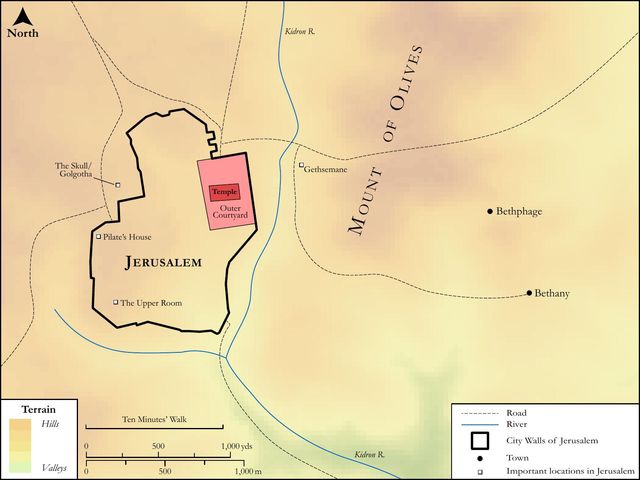
See on the biblical-era maps


Study this verse
Public-domain commentary
Matthew Henry
From his Commentary on the Whole Bible. Henry comments on passages, not single verses — this entry covers Luke 20:39–47. His two-level outline is real structure in the source text, so it is rendered as structure.
The scribes were students in the law, and expositors of it to the people, men in reputation for wisdom and honour, but the generality of them were enemies to Christ and his gospel. Now here we have some of them attending him, and four things we have in these verses concerning them, which we had before: -
I.We have them here commending the reply which Christ made to the Sadducees concerning the resurrection:
Certain of the scribes said, Master, thou hast well said, Luk 20:39. Christ had the testimony of his adversaries that he said well; and therefore the scribes were his enemies because he would not conform to the traditions of the elders, but yet when he vindicated the fundamental practices of religion, and appeared in the defence of them, even the scribes commended his performance, and owned that he said well. Many that call themselves Christians come short even of this spirit.
II.We have them here struck with an awe of Christ, and of his wisdom and authority (Luk 20:40):
They durst not ask him any questions at all, because they say that he was too hard for all that contended with him. His own disciples, though weak, yet, being willing to receive his doctrine, durst ask him any question; but the Sadducees, who contradicted and cavilled at his doctrine, durst ask him none.
III.We have them here puzzled and run aground with a question concerning the Messiah, Luk 20:41.
It was plain by many scriptures that Christ was to be the Son of David; even the blind man knew this (Luk 18:39); and yet it was plain that David called the Messiah his Lord (Luk 20:42, Luk 20:44), his owner, and ruler, and benefactor: The Lord said to my Lord. God said it to the Messiah, Psa 110:1. Now if he be his Son, why doth he call him his Lord? If he be his Lord, why do we call him his Son? This he left them to consider of, but they could not reconcile this seeming contradiction; thanks be to God, we can; that Christ, as God, was David's Lord, but Christ, as man, was David's Son. He was both the root and the offspring of David, Rev 22:16. By his human nature he was the offspring of David, a branch of his family; by his divine nature he was the root of David, from whom he had his being and life, and all the supplies of grace.
IV.We have them here described in their black characters, and a public caution given to the disciples to take heed of them, Luk 20:45-47.
This we had, just as it is here, Mar 12:38, and more largely Mt. 23. Christ bids his disciples beware of the scribes, that is,
1."Take heed of being drawn into sin by them, of learning their way, and going into their measures; beware of such a spirit as they are governed by. Be not you such in the Christian church as they are in the Jewish church."
2."Take heed of being brought into trouble by them," in the same sense that he had said (Mat 10:17), "Beware of men, for they will deliver you up to the councils; beware of the scribes, for they will do so. Beware of them, for," (1.) "They are proud and haughty. They desire to walk about the streets in long robes, as those that are above business (for men of business went with their loins girt up), and as those that take state, and take place." Cedant arma togae - Let arms yield to the gown. They loved in their hearts to have people make their obeisance to them in the markets, that many might see what respect was paid them; and were very proud of the precedency that was given them in all places of concourse. They loved the highest seats in the synagogues and the chief rooms at feasts, and, when they were placed in them, looked upon themselves with great conceit and upon all about them with great contempt. I sit as a queen. (2.) "They are covetous and oppressive, and make their religion a cloak and cover for crime." They devour widows' houses, get their estates into their hands, and then by some trick or other make them their own, or they live upon them, and eat up what they have; and widows are an easy prey to them, because they are apt to be deluded by their specious pretences: for a show they make long prayers, perhaps long prayers with the widows when they are in sorrow, as if they had not only a piteous but a pious concern for them, and thus endeavour to ingratiate themselves with them, and get their money and effects into their hands. Such devout men may surely be trusted with untold gold; but they will give such an account of it as they think fit.
Christ reads them their doom in a few words: These shall receive a more abundant judgment, a double damnation, both for their abuse of the poor widows, whose houses they devoured, and for their abuse of religion, and particularly of prayer, which they had made use of as a pretence for the more plausible and effectual carrying on of their worldly and wicked projects; for dissembled piety is double iniquity.
Historical interpretation
Seven Centuries of Reception
6 surviving comments on this verse. Each one is dated, so this reads as a timeline rather than a list.
Select a marker to jump to its quote. Markers stagger vertically where authors wrote within a few decades of each other.
(Hom. 19. in Joann.) Now nothing is more powerful than to argue from the Prophets. For this is even of more weight than miracles themselves. For when Christ worked miracles, He was often gainsayed. But when He cited the Prophets, men were at once silent, because they had nothing to say. But when they were silent, He warns against them; as it is said, Then in the audience of all the people he said to his disciples.
Thrusting themselves also into the possessions of widows, they grind down their poverty, not content to eat as it may be afforded them, but greedily devouring; using prayer also to an evil end, they thus expose themselves to a heavier condemnation; as it follows, These shall receive the greater damnation.
The passions of the Scribes were the love of vainglory and the love of gain. That the disciples should avoid these hateful crimes, He gives them this warning, and adds, And love greetings in the markets.
To keep the company of the holy disciples free from disgraceful faults, he usefully testifies. He says, “Beware of the scribes and Pharisees.” That means do not expose yourselves to be the prey of their vices and do not be partakers of their disregard of God. What was their custom? They walked in the streets beautifully clothed, dragging with them a pompous dignity to catch the praises of those who saw them. While they were wicked and their hearts were full of all dishonesty, they falsely assumed to themselves the reputation of piety. With solemn ways not based on reality, they diligently lengthened their prayers, supposing that unless they used many words, God would not know what their requests were. The Savior of all did not permit his worshipers to act so shamefully. He said, “When you pray, do not babble as the heathen do. They think that they will be heard for their many words.” He commanded them to be humble and not lovers of boasting. He commanded them not to pay any regard to the desire of empty glory but rather to seek the honor that comes from above, from God. In such ways, he deposits the knowledge of his mystery. He also appoints instructors of others, as possessing an exact and blameless knowledge of the sacred doctrines. He makes them to know how David’s Son is also David’s Lord. We also will classify ourselves with them, God the Father illuminating us with divine light in Christ.
He does not forbid those to sit first in the synagogue, or at the feast, to whom this dignity belongs by right, but He tells them to beware of those who love this unduly; denouncing not the distinction, but the love of it. Though the other also would not be free from blame, when the same men who wish to take part in the disputes in the market, desire also to be called masters in the synagogue. For two reasons we are bid to beware of those who seek after vain-glory, either lest we be led away by their pretences, supposing those things to be good which they do, or be inflamed with jealousy, desiring in vain to be praised for the good deeds which they pretend to. But they seek not only for praise from men, but money; for it follows, Who devour widows' houses, and for a show make long prayers. For pretending to be righteous and of great merit before God, they do not fail to receive large sums of money from the sick and those whose consciences are disturbed with their sins, as though they would be their protectors in the judgment.
Or because they seek from men praise and money, they are punished with the greater damnation.
When all the people were listening, he said to his disciples: Beware of the scribes who wish to walk in long robes, and love greetings in the marketplaces, the best seats in the synagogues, and the places of honor at banquets. To walk in stoles means to proceed to the public adorned in more distinguished garments. In which among other things, the rich man who feasted sumptuously every day is described as having sinned (Luke 16). However, it should be noted that he does not forbid those whose duty these things properly belong to, to be greeted in the forum, or to sit in the first places, or to recline at banquets; but rather, he teaches that those who, whether having them or not, unjustly love these things, are to be considered as reprobate by every faithful person, rightly censuring the mind and not the rank. Nonetheless, it is not without fault if those wish to engage in lawsuits in the forum, who desire to be called teachers in the Synagogue in the seat of Moses. Truly, we are commanded to beware of those desirous of vain glory for two reasons: first, so that we are not led astray by their pretense, thinking that what they do is good, and second, that we are not inflamed by emulation, foolishly rejoicing in being praised for the good things they pretend.
For as He was sending them to teach the world, He rightly warns them not to imitate the pride of the Pharisees. Beware of the Scribes, who desire to walk in long robes, that is, to go forth into public, dressed in fine clothes, which was one of the sins remarked in the rich man. (Luke 16:19.)
Which is the way of those who court and hunt after a good reputation, or they do it for the sake of collecting money.
It follows, And the chief seats in synagogues.
Because they not only do what is evil, but make a pretence of prayer, so making virtue an excuse for their sin. They also impoverish widows whom they were bound to pity, by their presence driving them to great expenses.
Continue studying Luke 20:46 across the web’s major study libraries — every link below opens this exact verse, chapter, or book on the destination site.
Read & Compare
 BibleGatewayThis verse in more than 200 translations and 70 languages.
 Bible.comThe YouVersion reader — hundreds of translations, reading plans, and highlights.
 ESV.orgCrossway's official English Standard Version reader.
 NET BibleThe NET translation with 60,000+ translators' notes on every rendering decision.
 STEP BibleTyndale House's free study tool — original text, vocabulary, and scholarly resources.
 BibliaLogos Bible Software's free web reader.
 USCCBThe New American Bible (Revised Edition) with the U.S. bishops' study notes.
Commentaries
 BibleHub CommentariesDozens of classic commentaries on this verse, gathered on one page.
 StudyLightMore than 100 commentary sets — the largest collection on the web.
 BibleRefPlain-English commentary on what this verse means, verse by verse.
 Enduring WordDavid Guzik's free commentary on this chapter, widely used by Bible teachers.
 Bible Study ToolsVerse commentary alongside Greek and Hebrew study aids.
Original Language & Research
- BibleHub InterlinearThe verse word by word — original language, transliteration, and English.
- BibleHub LexiconEvery word's original-language definition and Strong's entry.
 Blue Letter BibleDeep-study tools — Strong's numbers, concordance, and word studies.
 CNTR CollationThe earliest Greek manuscripts of this verse, collated letter by letter.
Sermons, Hymns & Audio


TrulyRandomVerse is not affiliated with these sites and doesn’t control their content. They’re linked because they’re genuinely useful.
Summary
In this poignant warning, Jesus cautions His disciples and the crowds against the scribes, highlighting their pervasive desire for public recognition and esteemed positions. He exposes their love for outward displays of piety, such as walking in distinctive robes, receiving public greetings, and occupying places of honor in religious and social settings. This indictment serves as a critical lesson on the dangers of hypocrisy and the pursuit of self-glory over genuine humility and service in the Kingdom of God.
Context
ShowHideLiterary Context
This warning is situated within Jesus' final days in Jerusalem, specifically during His teaching in the Temple courts. It immediately follows a series of intense theological and political interrogations by the chief priests, scribes, and elders, whom Jesus masterfully silences (e.g., Luke 20:1-8, Luke 20:20-26). Having exposed the insincerity and flawed motives of His religious opponents, Jesus turns to His disciples and the gathered multitude, offering this direct admonition. This passage serves as a bridge, concluding His public debates and setting the stage for His private teachings to His disciples and the subsequent Passion narrative. Parallel accounts are found in Mark 12:38-40 and, most extensively, in Matthew 23, where Jesus pronounces seven "woes" against the scribes and Pharisees for their hypocrisy and spiritual blindness.
Historical & Cultural Context
The "scribes" (Greek: grammateís) were a highly respected and influential class in first-century Jewish society. They were experts in the Mosaic Law, responsible for copying, interpreting, and teaching the Scriptures. Many were Pharisees, though not all. Their role was crucial for preserving and transmitting Jewish tradition. In a society that highly valued public honor and social status, outward displays were significant. "Long robes" (stolḗ) were flowing, dignified garments worn by those of high standing, signifying their authority and wisdom. "Markets" (agorá) were public squares, centers of commerce and social interaction, where prominent individuals would receive public greetings (aspasmós) and salutations, reinforcing their status. "Synagogues" (synagōgḗ) were not only places of worship but also community centers where seating arrangements reflected social hierarchy, with "highest seats" (prōtokathedría) reserved for the most honored guests or leaders. Similarly, "feasts" (deîpnon) were important social gatherings, and "chief rooms" (prōtoklisía) referred to the most honored reclining positions at the dinner table, typically closest to the host. Jesus' critique is not of their office, but of their abuse of it for personal glory, a direct challenge to the prevailing cultural norms of honor and shame.
Key Themes
ShowHideThis verse contributes to several overarching themes in Luke's Gospel and Jesus' broader ministry. Firstly, it underscores the theme of hypocrisy, contrasting outward religious performance with inward spiritual reality. The scribes' actions were driven by a desire for human praise, diametrically opposed to the genuine humility and service Jesus taught (e.g., Luke 14:7-11). Secondly, it highlights the theme of true versus false leadership. Jesus consistently warns against leaders who burden others while seeking personal gain and glory, in stark contrast to His own servant leadership (e.g., Luke 22:24-27). Thirdly, the passage emphasizes discernment, urging followers to "beware" of those whose outward piety masks a corrupt heart. This call to spiritual discernment is vital for navigating religious authority and avoiding spiritual deception, a recurring motif throughout Jesus' teachings on the Kingdom of God.
Exposition and Analysis
ShowHideKey Word Analysis
ShowHideThis verb means "to hold the mind towards," "to pay attention to," or "to be cautious about." It is a strong imperative, an urgent call to heed a warning. Jesus is not merely observing but actively commanding His audience to be vigilant and guard themselves against the scribes' influence and example. This implies a danger that is not immediately obvious but requires careful discernment.
Derived from the word for "writing," a grammateús was primarily a writer, a public secretary, or, in the context of Jewish society, an expert in the Law. These individuals were highly educated, responsible for copying and interpreting the Torah. While their role was essential for the preservation and understanding of Scripture, Jesus' use of the term here focuses on their behavior and motivations, not their professional function, highlighting how even a sacred office could be corrupted by pride.
This compound word literally means "first sitting" or "preeminence in council." It refers to the most honorable seats in the synagogue, typically at the front facing the congregation, signifying status and authority. The scribes' desire for these seats, along with the "chief rooms at feasts" (prōtoklisía, "first reclining place"), reveals their craving for public honor and social distinction, prioritizing visible recognition over humble service or genuine spiritual standing.
Verse Breakdown
ShowHide"Beware of the scribes,"
Jesus issues a direct and urgent command to "beware" or "take heed" (from proséchō), indicating a serious spiritual danger posed by these religious leaders. This is not a call to despise their persons but to guard against their corrupting influence and hypocritical example.
"which desire to walk in long robes,"
The scribes actively "desire" (from thélō, indicating a strong preference or choice) to parade in their distinctive, flowing garments (stolḗ). These robes were symbols of their esteemed position and learning, and their deliberate "walking in" them suggests a conscious effort to draw attention to their status and command public respect, rather than wearing them simply as part of their office.
"and love greetings in the markets,"
Their "love" (from philéō, denoting personal affection or fondness) for "greetings" (aspasmós, salutations) in the "markets" (agorá, public squares) reveals a craving for public adulation. They enjoyed being acknowledged and honored by the crowds in prominent public spaces, indicating a deep-seated need for external validation and recognition of their perceived importance.
"and the highest seats in the synagogues,"
This clause further specifies their pursuit of preeminence. The "highest seats" (prōtokathedría) in the synagogues were reserved for the most honored individuals, often facing the congregation. Their desire for these positions underscores their ambition for visible authority and social hierarchy within religious settings, valuing status over humble participation.
"and the chief rooms at feasts;"
Similarly, they sought the "chief rooms" (prōtoklisía), referring to the most prestigious reclining positions at banquets or social gatherings. This desire for the place of honor at social events, whether religious or secular, demonstrates a consistent pattern of seeking preeminence and public recognition in all aspects of their lives, revealing a heart driven by pride and self-exaltation.
Literary Devices
ShowHideLuke 20:46 masterfully employs several literary devices to convey Jesus' powerful critique. The primary device is Contrast, setting the scribes' outward show against the true humility and inner righteousness that Jesus consistently taught. Their desire for public display (robes, greetings, seats, rooms) is presented as the antithesis of genuine spiritual devotion. Symbolism is also prominent, as the "long robes," "highest seats," and "chief rooms" are not merely literal objects but potent symbols of the scribes' pride, vanity, and craving for social status and power. Jesus uses these tangible examples to represent their internal spiritual corruption. Furthermore, the passage functions as a Warning or Exhortation, with the imperative "Beware" (from proséchō) serving as a direct command to the audience to discern and avoid the spiritual pitfalls exemplified by the scribes. This strong admonition underscores the gravity of their hypocrisy and its potential to mislead others.
Theological and Thematic Connections
ShowHideLuke 20:46 serves as a profound theological statement on the nature of true spiritual authority and the dangers of religious hypocrisy. It highlights that God values inward character and humble service far above outward displays of piety or social status. The scribes' actions reveal a heart that seeks human applause rather than divine approval, a fundamental distortion of true worship and leadership. This passage challenges the notion that religious knowledge or position automatically confers spiritual authority, asserting instead that genuine authority flows from a life lived in humble obedience and selfless service to God and others. It underscores the New Testament emphasis on the heart's condition as paramount, contrasting sharply with the externalism often prevalent in religious practice.
Reflection and Application
ShowHideJesus' warning against the scribes in Luke 20:46 remains profoundly relevant for believers today, calling us to a deep introspection of our own motivations and a careful discernment of leadership. It challenges us to examine whether our spiritual practices are driven by a genuine desire to honor God and serve others, or by a subtle craving for recognition, praise, or status from people. In a world that often values outward success and public image, this verse reminds us that true spiritual greatness in God's kingdom is found not in seeking the highest seats, but in embracing the lowest place of humble service, just as Jesus Himself taught and exemplified. It compels us to prioritize a pure heart and sincere devotion over any external show or religious performance.
Questions for Reflection
ShowHideFAQ
ShowHideWho were the scribes, and why did Jesus warn against them?
ShowHideThe scribes (Greek: grammateús) were highly educated Jewish experts in the Mosaic Law, responsible for copying, interpreting, and teaching the Scriptures. Jesus warned against them not because of their office, which was important, but because of their corrupt motivations and hypocritical behavior. As highlighted in Luke 20:46, they sought personal glory, public recognition, and esteemed positions (like "highest seats in the synagogues" and "chief rooms at feasts") rather than humbly serving God and His people. Their outward piety masked an inward pride and desire for human praise, which Jesus condemned as a dangerous example for His followers.
What is the significance of "long robes," "greetings in the markets," and "highest seats" in this context?
ShowHideThese elements were cultural symbols of status and honor in first-century Jewish society. "Long robes" (Greek: stolḗ) were distinctive, flowing garments worn by those of high standing, signifying their authority and wisdom. Their desire to "walk in" them indicated a conscious effort to display their importance. "Greetings in the markets" (Greek: agorá for market, aspasmós for greeting) referred to the public salutations and deference they received in prominent public spaces, which they relished as affirmations of their status. "Highest seats in the synagogues" (Greek: prōtokathedría) and "chief rooms at feasts" (Greek: prōtoklisía) were the most prestigious seating or reclining positions in religious and social gatherings, reserved for the most honored individuals. Jesus points to these specific desires as evidence of their deep-seated pride and craving for human adulation, contrasting sharply with the humility expected of God's true servants.
Christ-Centered Fulfillment
ShowHideJesus' warning against the scribes' hypocrisy and love for preeminence in Luke 20:46 finds its profound Christ-centered fulfillment in Jesus Himself, who stands as the ultimate antithesis to the scribes' self-exalting behavior. While the scribes sought honor from men, Jesus consistently rejected worldly acclaim, declaring that He did not receive glory from people (John 5:41). Instead of desiring the "highest seats," He taught that true greatness in His Kingdom is found in humble service, famously stating that "whoever would be great among you must be your servant" (Matthew 20:26). The scribes paraded in "long robes" to signify their status, but Jesus, the Lord of glory, "emptied himself, by taking the form of a servant" (Philippians 2:7), ultimately demonstrating His humility by washing His disciples' feet (John 13:1-17). His life and ministry were a living embodiment of self-giving love, culminating in His ultimate sacrifice on the cross, where He became the "Lamb of God who takes away the sin of the world" (John 1:29), a stark contrast to those who sought to exalt themselves. Jesus perfectly models the humble, God-glorifying leadership that the scribes so tragically lacked, inviting all who follow Him to walk in His footsteps of selfless devotion rather than self-promotion.