


Luke 20:44
Bible text: King James Version (1769 Blayney text) · Public domain
Bible text: Berean Standard Bible · Public domain
Bible text: American Standard Version (1901) · Public domain
Bible text: World English Bible, Messianic edition · Public domain
Bible text: Geneva Bible (1599) · Public domain
Bible text: Young's Literal Translation · Public domain
- ΔαυὶδDauidDavidG1138N-NSM-PNoun Nominative Singular Masculine Individual
- οὖνounthereforeG3767CONJConjunction
- κύριονkurionLordG2962N-ASM-TNoun Accusative Singular Masculine Title
- αὐτὸνautonHimG846P-ASMPersonal pronoun Accusative Singular Masculine
- καλεῖkaleicallsG2564V-PAI-3SVerb Present Active Indicative 3rd Singular
- καὶkaiandG2532CONJConjunction
- πῶςpōshowG4459PRT-IInterrogative Particle Interrogative
- αὐτοῦautouof himG846P-GSMPersonal pronoun Genitive Singular Masculine
- υἱόςhuiossonG5207N-NSMNoun Nominative Singular Masculine
- ἐστιν;estinis He?G1510V-PAI-3SVerb Present Active Indicative 3rd Singular
English is a literal word-by-word gloss of the Greek, not the KJV's wording. Why?
This is the original text the KJV's translators worked from — each Greek word with its own literal English meaning in this verse, prepared by scholars at Tyndale House, Cambridge. The KJV translates whole sentences, not word by word, so its wording differs: one Greek word can become several English words, and the KJV may choose “charity” where the gloss reads “love”. Both are faithful — they answer different questions. For the KJV's own rendering, switch to the KJV text.
Details
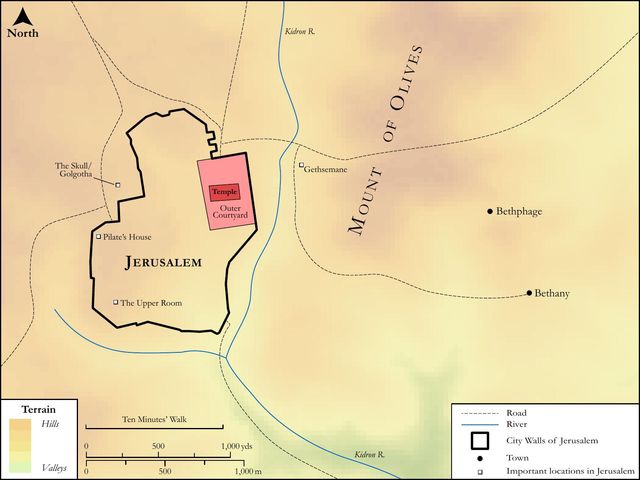
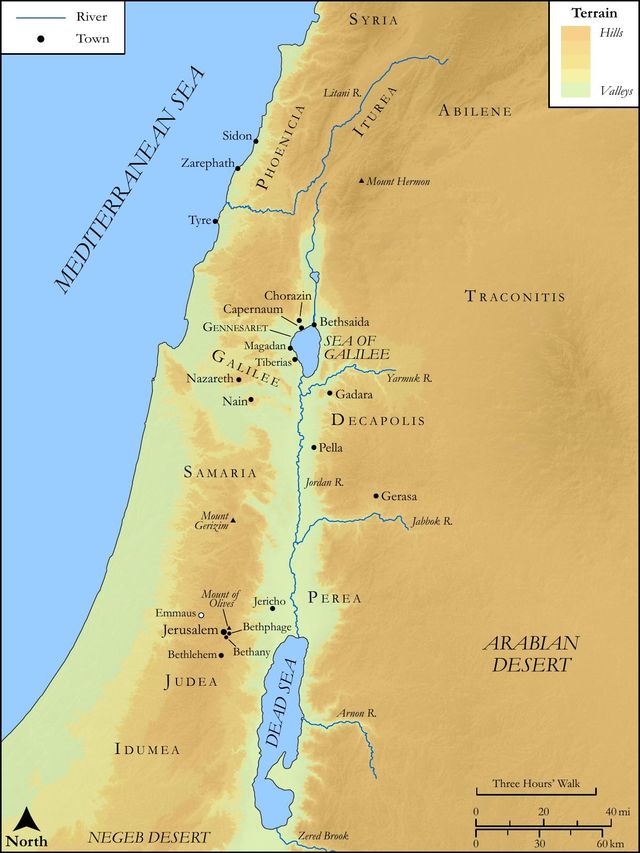
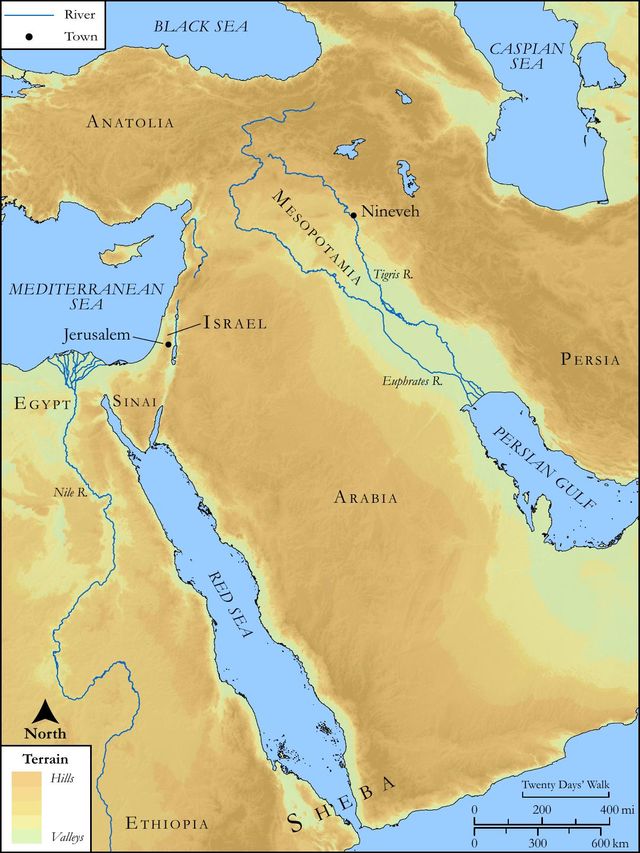
See on the biblical-era maps
Study this verse
Public-domain commentary
Matthew Henry
From his Commentary on the Whole Bible. Henry comments on passages, not single verses — this entry covers Luke 20:39–47. His two-level outline is real structure in the source text, so it is rendered as structure.
The scribes were students in the law, and expositors of it to the people, men in reputation for wisdom and honour, but the generality of them were enemies to Christ and his gospel. Now here we have some of them attending him, and four things we have in these verses concerning them, which we had before: -
I.We have them here commending the reply which Christ made to the Sadducees concerning the resurrection:
Certain of the scribes said, Master, thou hast well said, Luk 20:39. Christ had the testimony of his adversaries that he said well; and therefore the scribes were his enemies because he would not conform to the traditions of the elders, but yet when he vindicated the fundamental practices of religion, and appeared in the defence of them, even the scribes commended his performance, and owned that he said well. Many that call themselves Christians come short even of this spirit.
II.We have them here struck with an awe of Christ, and of his wisdom and authority (Luk 20:40):
They durst not ask him any questions at all, because they say that he was too hard for all that contended with him. His own disciples, though weak, yet, being willing to receive his doctrine, durst ask him any question; but the Sadducees, who contradicted and cavilled at his doctrine, durst ask him none.
III.We have them here puzzled and run aground with a question concerning the Messiah, Luk 20:41.
It was plain by many scriptures that Christ was to be the Son of David; even the blind man knew this (Luk 18:39); and yet it was plain that David called the Messiah his Lord (Luk 20:42, Luk 20:44), his owner, and ruler, and benefactor: The Lord said to my Lord. God said it to the Messiah, Psa 110:1. Now if he be his Son, why doth he call him his Lord? If he be his Lord, why do we call him his Son? This he left them to consider of, but they could not reconcile this seeming contradiction; thanks be to God, we can; that Christ, as God, was David's Lord, but Christ, as man, was David's Son. He was both the root and the offspring of David, Rev 22:16. By his human nature he was the offspring of David, a branch of his family; by his divine nature he was the root of David, from whom he had his being and life, and all the supplies of grace.
IV.We have them here described in their black characters, and a public caution given to the disciples to take heed of them, Luk 20:45-47.
This we had, just as it is here, Mar 12:38, and more largely Mt. 23. Christ bids his disciples beware of the scribes, that is,
1."Take heed of being drawn into sin by them, of learning their way, and going into their measures; beware of such a spirit as they are governed by. Be not you such in the Christian church as they are in the Jewish church."
2."Take heed of being brought into trouble by them," in the same sense that he had said (Mat 10:17), "Beware of men, for they will deliver you up to the councils; beware of the scribes, for they will do so. Beware of them, for," (1.) "They are proud and haughty. They desire to walk about the streets in long robes, as those that are above business (for men of business went with their loins girt up), and as those that take state, and take place." Cedant arma togae - Let arms yield to the gown. They loved in their hearts to have people make their obeisance to them in the markets, that many might see what respect was paid them; and were very proud of the precedency that was given them in all places of concourse. They loved the highest seats in the synagogues and the chief rooms at feasts, and, when they were placed in them, looked upon themselves with great conceit and upon all about them with great contempt. I sit as a queen. (2.) "They are covetous and oppressive, and make their religion a cloak and cover for crime." They devour widows' houses, get their estates into their hands, and then by some trick or other make them their own, or they live upon them, and eat up what they have; and widows are an easy prey to them, because they are apt to be deluded by their specious pretences: for a show they make long prayers, perhaps long prayers with the widows when they are in sorrow, as if they had not only a piteous but a pious concern for them, and thus endeavour to ingratiate themselves with them, and get their money and effects into their hands. Such devout men may surely be trusted with untold gold; but they will give such an account of it as they think fit.
Christ reads them their doom in a few words: These shall receive a more abundant judgment, a double damnation, both for their abuse of the poor widows, whose houses they devoured, and for their abuse of religion, and particularly of prayer, which they had made use of as a pretence for the more plausible and effectual carrying on of their worldly and wicked projects; for dissembled piety is double iniquity.
Historical interpretation
Seven Centuries of Reception
9 surviving comments on this verse. Each one is dated, so this reads as a timeline rather than a list.
Select a marker to jump to its quote. Markers stagger vertically where authors wrote within a few decades of each other.
They are not blamed here because they acknowledge Him to be David's Son, for the blind man for so doing was thought worthy to be healed. (Luke 18:42.) And the children saying, Hosanna to the Son of David, (Matt. 21:9.) rendered to God the glory of the highest praise; but they are blamed because they believe Him not to be the Son of God. Hence it is added, And David himself saith in the book of Psalms, The Lord said unto my Lord. (Ps. 110:1.) Both the Father is Lord and the Son is Lord, but there are not two Lords, but one Lord, for the Father is in the Son, and the Son is in the Father. He Himself sits at the right hand of the Father, for He is coequal with the Father, inferior to none; for it follows, Sit thou at my right hand. He is not honoured by sitting at the right hand, nor is He degraded by being sent. Degrees of dignity are not sought for, where is the fulness of divinity.
We must believe then that Christ is both God and man, and that His enemies are made subject to Him by the Father, not through the weakness of His power, but through the unity of their nature, since in the one the other works. For the Son also subjects enemies to the Father, in that He glorifies the Father upon earth. (John 17:6.)
Before summarizing his commandments, the Lord included the faith and mercy preceding his passion at the end of his testament. Faith is that we believe Christ is our Lord and God and sits at the right hand of God. … He rebukes those who say that Christ is the Son of David. How then did that blind man deserve healing by acknowledging the Son of David?44 How did the children, saying “Hosanna to the Son of David,” give the glory of their lofty proclamation to God? Here Jesus did not rebuke them because they acknowledged the Son of David but because they do not believe him to be the Son of God. The true faith does not confess one versus the other but both. Although at the beginning we judged to know nothing but Jesus Christ and him crucified, yet now since we are near the judgment, we already do not know Christ only crucified but also wait for him coming in the clouds. The unbeliever looks on the wounds. The faithful one is taken up and runs to meet Christ in the air. Let us therefore believe that Christ is God and man.
David in truth was both the Father and the servant of Christ, the former indeed according to the flesh, the latter in the Spirit.
The Pharisees did not answer Christ’s question. They did this in spitefulness, or rather against their own selves, for perhaps being convicted by the inquiry the word of salvation would have shined in them. They did not wish to know the truth, but sinfully seizing for themselves the Lord’s inheritance, they denied the heir, or rather wickedly murdered him. They rejected the faith because of their love of leadership, greed for profit, and for their shameful gains.…To remove from them the habit of thinking and speaking of him in a derogatory and scornful manner, he asked them, “How do they say that Christ is David’s Son, etc.?” As I have already remarked, they were silent from malicious motives and thereby condemned themselves as unworthy of eternal life and of the knowledge of the truth.
The Savior asked them, “How do they say that Christ is David’s son? David himself says in the book of Psalms, ‘The Lord said to my Lord, “Sit on my right hand until I place your enemies as a footstool under your feet.” ’ David therefore calls him Lord, and how is he his son?” The beginning of understanding is faith. He says, “If you will not believe, you cannot understand.” The examination of important truths leads to salvation. Emmanuel is the Son and the Lord of David. If anyone would learn in what way he is to understand this, he must certainly begin the exact and blameless examination of his mystery. This was kept in silence from the foundation of the world but has been revealed in the latter ages of the world.
Or, that He sits on the Father's right hand proves His heavenly glory. For whose throne is equal, their Majesty is equal. But sitting when it is said of God signifies a universal kingdom and power. Therefore He sitteth at the right hand of the Father, because the Word proceeding from the substance of the Father, being made flesh, putteth not off His divine glory.
We then likewise in answer to the new Pharisees, who neither confess the Son of the holy Virgin to be the true Son of God, nor to be God, but divide one son into two, put the like objections: How then is the Son of David David's Lord, and that not by human lordship, but divine?
We also will ask the Pharisees of today a similar question. They deny that he who was born of the holy Virgin is very Son of God the Father and himself also God. They also divide the one Christ into two sons. Let these people explain to us how David’s Son is his Lord, not so much as to human lordship as divine. To sit at the right hand of the Father is the assurance and pledge of supreme glory. Those who share the same throne are equal also in dignity, and those who are crowned with equal honors are understood of course to be equal in nature. To sit by God can signify nothing else than sovereign authority. The throne declares to us that Christ possesses power over everything and supremacy by right of his substance. How is the Son of David David’s Lord, seated at the right hand of God the Father and on the throne of Deity? Is it not altogether according to the unerring word of the mystery that the Word as God sprung from the very substance of God the Father? Being in his likeness and equal with him, he became flesh. He became man, perfectly and yet without departing from the incomparable excellence of the divine dignities. He continued in that state in which he had always been. He still was God, although he became flesh and in form like us. He is David’s Lord therefore according to that which belongs to his divine glory, nature and sovereignty. He is his son according to the flesh.
And since they had been defeated in argument, they ask Him no further questions, but seize Him, and deliver Him up to the Roman power. From which we may learn, that the poison of envy may indeed be subdued, but it is a hard thing to keep it at rest.
Although our Lord was shortly about to enter on His Passion, He proclaims His own Godhead, and that too neither incautiously nor boastfully, but with modesty. For He puts a question to them, and having thrown them into perplexity, leaves them to reason out the conclusion; as it follows, And he said unto them, How say they that Christ is David's son?
He manifests then that He is not opposed to the Father, but agrees with Him, since the Father resists the Son's enemies, Until I make thine enemies thy footstool.
Therefore He asks the question, and having excited their doubts, leaves them to deduce the consequence; as it follows, David therefore calleth him Lord, how is he then his son?
Continue studying Luke 20:44 across the web’s major study libraries — every link below opens this exact verse, chapter, or book on the destination site.
Read & Compare
 BibleGatewayThis verse in more than 200 translations and 70 languages.
 Bible.comThe YouVersion reader — hundreds of translations, reading plans, and highlights.
 ESV.orgCrossway's official English Standard Version reader.
 NET BibleThe NET translation with 60,000+ translators' notes on every rendering decision.
 STEP BibleTyndale House's free study tool — original text, vocabulary, and scholarly resources.
 BibliaLogos Bible Software's free web reader.
 USCCBThe New American Bible (Revised Edition) with the U.S. bishops' study notes.
Commentaries
 BibleHub CommentariesDozens of classic commentaries on this verse, gathered on one page.
 StudyLightMore than 100 commentary sets — the largest collection on the web.
 BibleRefPlain-English commentary on what this verse means, verse by verse.
 Enduring WordDavid Guzik's free commentary on this chapter, widely used by Bible teachers.
 Bible Study ToolsVerse commentary alongside Greek and Hebrew study aids.
Original Language & Research
- BibleHub InterlinearThe verse word by word — original language, transliteration, and English.
- BibleHub LexiconEvery word's original-language definition and Strong's entry.
 Blue Letter BibleDeep-study tools — Strong's numbers, concordance, and word studies.
 CNTR CollationThe earliest Greek manuscripts of this verse, collated letter by letter.
Sermons, Hymns & Audio


TrulyRandomVerse is not affiliated with these sites and doesn’t control their content. They’re linked because they’re genuinely useful.
Summary
Luke 20:44 captures a pivotal moment in Jesus's public ministry, where He masterfully turns the tables on the religious authorities by posing a profound rhetorical question concerning the identity of the Messiah. Drawing from Psalm 110:1, a widely accepted messianic prophecy attributed to King David, Jesus highlights the paradox that the Christ, though David's descendant, is also David's Lord. This question challenges the prevailing human-centric understanding of the Messiah, compelling His interrogators—and all who hear—to grapple with the Messiah's pre-existent divine nature alongside His human lineage, revealing Jesus's own claim to both divine and human identity.
Context
ShowHideLiterary Context
This verse is the culmination of a series of strategic interrogations initiated by the Jewish religious leaders in Jerusalem, as recorded in Luke 20. Following attempts by the chief priests, scribes, and elders to trap Jesus with questions about His authority (Luke 20:1-8), tribute to Caesar (Luke 20:20-26), and the resurrection (Luke 20:27-40), Jesus shifts from defense to offense. Having silenced His opponents, who "dared not ask him any question after that" (Luke 20:40), Jesus then poses His own question about the Messiah's true identity, directly quoting Psalm 110:1 in Luke 20:42-43 before delivering the piercing question of Luke 20:44. This strategic move not only demonstrates Jesus's superior wisdom but also exposes the theological limitations of His adversaries.
Historical & Cultural Context
In first-century Judaism, the expectation of the Messiah was deeply rooted in the promise that He would be a descendant of King David—the "Son of David" (2 Samuel 7:12-16). This lineage was crucial for establishing messianic credentials. However, the concept of the Messiah also carried implications of a powerful, liberating king who would restore Israel's sovereignty. The religious leaders, while acknowledging the Davidic lineage, largely overlooked or struggled with the prophetic hints of the Messiah's divine nature and pre-existence. Jesus's question in Luke 20:44 directly challenges this limited, purely human understanding, forcing them to confront the implications of David, a revered king, calling his future descendant "Lord" (Adonai in Hebrew, Kyrios in Greek)—a term often reserved for God or one of supreme authority. This was a direct theological challenge to their established interpretations of messianic prophecy.
Key Themes
ShowHideLuke 20:44 powerfully encapsulates several key themes central to Luke's Gospel and Christian theology. Foremost is the Dual Nature of Christ, emphasizing that the Messiah is both fully human (the "son" of David by lineage) and fully divine (David's "Lord"). This foundational truth is echoed in passages like Philippians 2:6-7 and John 1:1-14. Another theme is the Fulfillment of Messianic Prophecy, as Jesus uses a well-known Old Testament passage (Psalm 110:1) to reveal His own unique identity, demonstrating that He is the promised Christ, but in a way that transcends human expectations. Finally, the verse highlights Jesus's Authority and Wisdom, as His unanswerable question silences His adversaries and underscores His divine insight into Scripture and His own identity, a recurring motif throughout Luke's Gospel.
Exposition and Analysis
ShowHideKey Word Analysis
ShowHideRefers to King David, the revered ancestor of the Messiah. Jesus's argument hinges on the fact that David himself, inspired by the Holy Spirit, recognized a figure in his lineage who was also his superior, his "Lord." This highlights the paradox of the Messiah's identity.
This verb means "to call" or "to name." In this context, it signifies David's act of acknowledging or designating the Messiah as "Lord." It implies a recognition of authority and status, not merely a casual address. The choice of this word emphasizes David's deliberate and Spirit-inspired declaration.
This is a crucial term, meaning "supreme in authority," "controller," or "Master." While it can be used as a respectful title for a human, in the context of Psalm 110:1, the second "Lord" (Adonai in Hebrew) carries a weight that transcends mere human respect, pointing towards divine sovereignty. Jesus's use of this term here forces the religious leaders to confront the implications of David's recognition of the Messiah as a divine figure.
This term denotes a descendant or offspring. In Jewish messianic expectation, the Messiah was unequivocally understood as the "Son of David," a direct lineal descendant. Jesus's question juxtaposes this clear understanding of human lineage with the divine appellation "Lord," creating the central tension of the passage.
Verse Breakdown
ShowHide"David therefore calleth him Lord"
This clause establishes the premise of Jesus's argument, drawing directly from Psalm 110:1. Jesus points out that David, the revered patriarch and king, under divine inspiration, referred to the coming Messiah as "my Lord." This is a profound statement, as it implies a relationship of subordination on David's part to his own future descendant, suggesting a status for the Messiah far beyond that of a mere human king.
"how is he then his son?"
This is the rhetorical question that exposes the theological dilemma for Jesus's audience. If the Messiah is merely a human descendant ("son") of David, how could David, the great king, call him "Lord"—a title implying superior authority, even divine status? The question highlights the apparent contradiction between the Messiah's human lineage and the divine honor ascribed to Him by David himself. It forces a consideration of the Messiah's pre-existence and divine nature, which transcends simple human genealogy.
Literary Devices
ShowHideJesus employs several potent literary devices in Luke 20:44. The most prominent is the Rhetorical Question, "how is he then his son?" This question is not posed to elicit an answer from His adversaries, but to expose the inadequacy of their understanding of the Messiah and to highlight a profound theological truth. It functions as a challenge to their limited, human-centric view. Closely related is Paradox, as Jesus presents the seemingly contradictory truth that the Messiah is both David's human descendant ("son") and David's divine sovereign ("Lord"). This paradox encapsulates the mystery of Christ's hypostatic union—His dual nature as fully God and fully man. Furthermore, Jesus utilizes Intertextuality by quoting and interpreting Psalm 110:1, a sacred text familiar to His audience. By re-contextualizing this well-known prophecy, Jesus reveals its deeper, Christological meaning, demonstrating His mastery of the Scriptures and His own fulfillment of them.
Theological and Thematic Connections
ShowHideLuke 20:44 serves as a foundational text for understanding the person of Jesus Christ, particularly His divine and human natures. It challenges any simplistic view of the Messiah as merely a human king or a political liberator, compelling us to grapple with the profound mystery of His pre-existence and deity. Jesus, the Son of David according to the flesh, is simultaneously the eternal Son of God, to whom David himself paid homage. This paradox is essential for comprehending the efficacy of His atoning work, as only one who is both truly God and truly man could bridge the infinite gap between a holy God and sinful humanity. It underscores that salvation is not merely a political or earthly deliverance, but a spiritual redemption wrought by a divine-human Savior.
Reflection and Application
ShowHideLuke 20:44 invites us to move beyond superficial understandings of faith and to delve into the profound depths of who Jesus truly is. It challenges us to examine our own preconceptions about Christ, ensuring that our view encompasses both His full humanity and His full deity. For believers, this verse reinforces the bedrock truth of Christology, reminding us that the one who walked among us, ate with sinners, and died on a cross is also the eternal God, worthy of all worship and obedience. This understanding deepens our appreciation for His sacrifice and His sovereignty. It also serves as a model for engaging with Scripture: to seek not just the obvious meaning, but the Spirit-inspired, Christ-revealing truths that may challenge our comfortable assumptions. True spiritual insight often comes when we allow God's Word to expose our limitations and expand our understanding of His infinite wisdom and love.
Questions for Reflection
ShowHideFAQ
ShowHideWhy did Jesus ask this question about the Messiah?
ShowHideJesus asked this question to expose the theological limitations and spiritual blindness of the religious leaders who sought to trap Him. They understood the Messiah as a human descendant of David, a political king. By quoting Psalm 110:1, where David calls his descendant "Lord," Jesus forced them to confront the paradox of a Messiah who was simultaneously David's son (human lineage) and David's Lord (divine authority and pre-existence). His aim was not to get an answer, but to silence their challenges and reveal His own unique, divine identity, which transcended their earthly expectations. As Luke 20:40 notes, "they dared not ask him any question after that."
What does "David therefore calleth him Lord" imply about the Messiah?
ShowHideThis phrase, taken from Psalm 110:1, implies that the Messiah possessed a status far greater than that of a mere human king or descendant. For David, a great king and ancestor, to call his own future descendant "Lord" (Hebrew: Adonai; Greek: Kyrios) signifies a recognition of supreme authority, even divine authority. It points to the Messiah's pre-existence and His identity as God, not just a human figure. David, inspired by the Holy Spirit, foresaw a Messiah who would not only be his physical heir but also his divine sovereign. This underpins the Christian doctrine of Christ's deity.
How does this verse relate to the Christian understanding of Jesus?
ShowHideLuke 20:44 is a cornerstone for the Christian understanding of Jesus's dual nature: He is both fully God and fully man. As the "Son of David," Jesus fulfills the Old Testament prophecies of the Messiah's human lineage (Matthew 1:1). As "David's Lord," He is the pre-existent, divine Son of God (John 1:1). This theological truth, known as the hypostatic union, is crucial for understanding His redemptive work. Only a God-man could perfectly obey God's law and offer a sufficient sacrifice for the sins of humanity, bridging the gap between God and man (Hebrews 4:15).
Christ-Centered Fulfillment
ShowHideLuke 20:44 is a profound Christological statement, revealing Jesus as the ultimate fulfillment of the paradoxical identity of the Messiah—both human descendant and divine sovereign. Jesus is indeed the "Son of David" according to His human lineage, fulfilling the ancient promises made to David that his throne would be established forever (2 Samuel 7:12-16). Yet, as "David's Lord," He transcends mere humanity, embodying the divine nature that existed "in the beginning with God" (John 1:1-2). The very one whom David, under the inspiration of the Holy Spirit, called "Lord" in Psalm 110:1 is Jesus Christ, who, after His resurrection, ascended to sit at the right hand of God, just as the Psalm prophesied (Acts 2:34-36). He is the unique God-man, the only mediator between God and humanity (1 Timothy 2:5), whose dual nature makes Him perfectly qualified to be our Savior and King, fully understanding our human condition while possessing the divine power to redeem us from sin and death (Hebrews 4:15).