


Luke 20:40
Bible text: King James Version (1769 Blayney text) · Public domain
Bible text: Berean Standard Bible · Public domain
Bible text: American Standard Version (1901) · Public domain
Bible text: World English Bible, Messianic edition · Public domain
Bible text: Geneva Bible (1599) · Public domain
Bible text: Young's Literal Translation · Public domain
- οὐκέτιouketino longerG2089PRT-N + G2089=ADV
- γὰρgarthenG1063CONJConjunction
- ἐτόλμωνetolmōnwere they daringG5111V-IAI-3PVerb Imperfect Active Indicative 3rd Plural
- ἐπερωτᾶνeperōtanto askG1905V-PANVerb Present Active Infinitive
- αὐτὸνautonHimG846P-ASMPersonal pronoun Accusative Singular Masculine
- οὐδένoudenno [thing]G3762A-ASNAdjective Accusative Singular Neuter
English is a literal word-by-word gloss of the Greek, not the KJV's wording. Why?
This is the original text the KJV's translators worked from — each Greek word with its own literal English meaning in this verse, prepared by scholars at Tyndale House, Cambridge. The KJV translates whole sentences, not word by word, so its wording differs: one Greek word can become several English words, and the KJV may choose “charity” where the gloss reads “love”. Both are faithful — they answer different questions. For the KJV's own rendering, switch to the KJV text.
Details
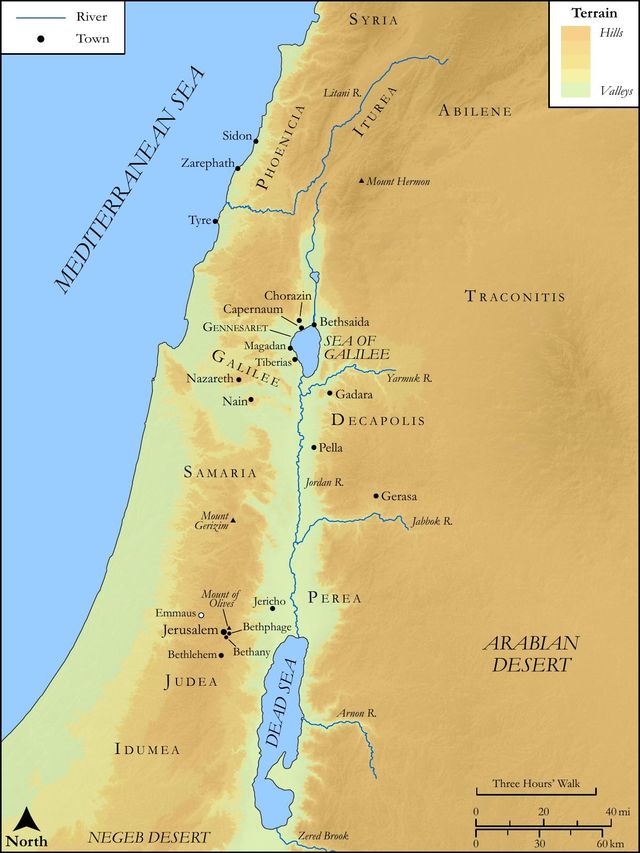
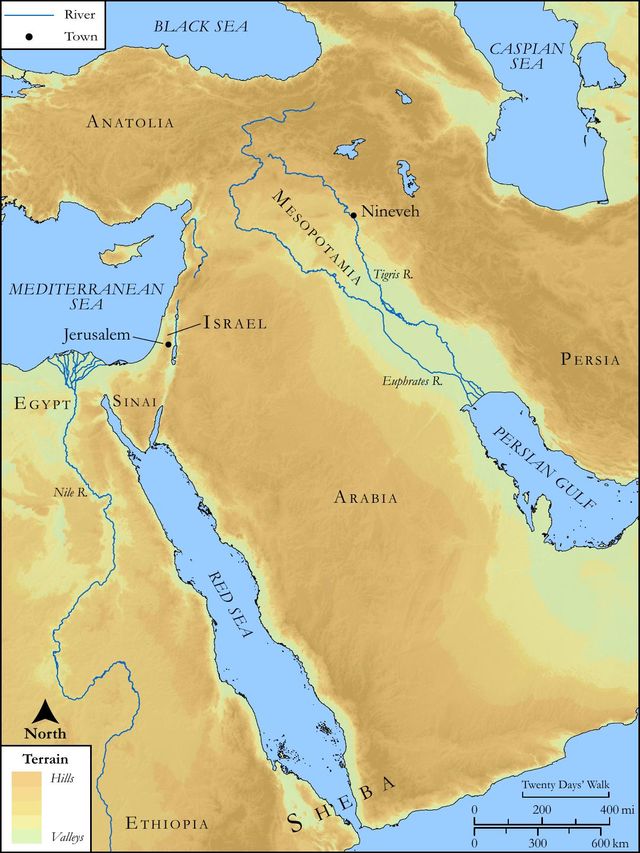
See on the biblical-era maps

Study this verse
Public-domain commentary
Matthew Henry
From his Commentary on the Whole Bible. Henry comments on passages, not single verses — this entry covers Luke 20:39–47. His two-level outline is real structure in the source text, so it is rendered as structure.
The scribes were students in the law, and expositors of it to the people, men in reputation for wisdom and honour, but the generality of them were enemies to Christ and his gospel. Now here we have some of them attending him, and four things we have in these verses concerning them, which we had before: -
I.We have them here commending the reply which Christ made to the Sadducees concerning the resurrection:
Certain of the scribes said, Master, thou hast well said, Luk 20:39. Christ had the testimony of his adversaries that he said well; and therefore the scribes were his enemies because he would not conform to the traditions of the elders, but yet when he vindicated the fundamental practices of religion, and appeared in the defence of them, even the scribes commended his performance, and owned that he said well. Many that call themselves Christians come short even of this spirit.
II.We have them here struck with an awe of Christ, and of his wisdom and authority (Luk 20:40):
They durst not ask him any questions at all, because they say that he was too hard for all that contended with him. His own disciples, though weak, yet, being willing to receive his doctrine, durst ask him any question; but the Sadducees, who contradicted and cavilled at his doctrine, durst ask him none.
III.We have them here puzzled and run aground with a question concerning the Messiah, Luk 20:41.
It was plain by many scriptures that Christ was to be the Son of David; even the blind man knew this (Luk 18:39); and yet it was plain that David called the Messiah his Lord (Luk 20:42, Luk 20:44), his owner, and ruler, and benefactor: The Lord said to my Lord. God said it to the Messiah, Psa 110:1. Now if he be his Son, why doth he call him his Lord? If he be his Lord, why do we call him his Son? This he left them to consider of, but they could not reconcile this seeming contradiction; thanks be to God, we can; that Christ, as God, was David's Lord, but Christ, as man, was David's Son. He was both the root and the offspring of David, Rev 22:16. By his human nature he was the offspring of David, a branch of his family; by his divine nature he was the root of David, from whom he had his being and life, and all the supplies of grace.
IV.We have them here described in their black characters, and a public caution given to the disciples to take heed of them, Luk 20:45-47.
This we had, just as it is here, Mar 12:38, and more largely Mt. 23. Christ bids his disciples beware of the scribes, that is,
1."Take heed of being drawn into sin by them, of learning their way, and going into their measures; beware of such a spirit as they are governed by. Be not you such in the Christian church as they are in the Jewish church."
2."Take heed of being brought into trouble by them," in the same sense that he had said (Mat 10:17), "Beware of men, for they will deliver you up to the councils; beware of the scribes, for they will do so. Beware of them, for," (1.) "They are proud and haughty. They desire to walk about the streets in long robes, as those that are above business (for men of business went with their loins girt up), and as those that take state, and take place." Cedant arma togae - Let arms yield to the gown. They loved in their hearts to have people make their obeisance to them in the markets, that many might see what respect was paid them; and were very proud of the precedency that was given them in all places of concourse. They loved the highest seats in the synagogues and the chief rooms at feasts, and, when they were placed in them, looked upon themselves with great conceit and upon all about them with great contempt. I sit as a queen. (2.) "They are covetous and oppressive, and make their religion a cloak and cover for crime." They devour widows' houses, get their estates into their hands, and then by some trick or other make them their own, or they live upon them, and eat up what they have; and widows are an easy prey to them, because they are apt to be deluded by their specious pretences: for a show they make long prayers, perhaps long prayers with the widows when they are in sorrow, as if they had not only a piteous but a pious concern for them, and thus endeavour to ingratiate themselves with them, and get their money and effects into their hands. Such devout men may surely be trusted with untold gold; but they will give such an account of it as they think fit.
Christ reads them their doom in a few words: These shall receive a more abundant judgment, a double damnation, both for their abuse of the poor widows, whose houses they devoured, and for their abuse of religion, and particularly of prayer, which they had made use of as a pretence for the more plausible and effectual carrying on of their worldly and wicked projects; for dissembled piety is double iniquity.
Historical interpretation
Nine Centuries of Reception
9 surviving comments on this verse. Each one is dated, so this reads as a timeline rather than a list.
Select a marker to jump to its quote. Markers stagger vertically where authors wrote within a few decades of each other.
If anyone ponders over this answer about the resurrection of the dead, he will find that the Lord is not rejecting marriage but is purging the expectation of physical desire in the resurrection. The words “the children of this age” were not spoken in contrast to the children of some other age. It is like saying, “those born in this generation,” who are children by force of birth, being born and engendering themselves, since without the process of birth no one will pass into this life. This process of birth is balanced by a process of decay and is no longer in store for the person who has once been cut off from life here.
Virgins, persevere in what you have begun to be. Persevere in what you will be. A great reward, a glorious prize for virtue, and an excellent reward for purity are reserved for you. Do you wish to know from what misery the virtue of continence is free and what advantage it provides? “I will multiply,” said God to the woman, “your sorrows and your groans, and in sorrow you will bring forth your children, and your desire shall be for your husband, and he shall have dominion over you.” You are free from this sentence. You do not fear the sorrows of women and their groans. You have no fear about the birth of children, nor is your husband your master, but your master and head is Christ, in the likeness of and in place of the man. Your fortune and condition are in common. The voice of the Lord says, “The children of this world give birth and are born. Those who will be found worthy of that world and of the resurrection from the dead, they neither marry nor are given in marriage. They will not die anymore, for they are equal to the angels of God since they are the children of the resurrection.” What we shall be, you already have begun to be. You already have in this world the glory of the resurrection. You pass through the world without the pollution of the world. While you remain chaste and virgins, you are equal to the angels of God.
“The Sadducees came and were saying to him, ‘There is no resurrection of the dead.’ ” They are called Sadducees, that is “the just,” because they say, “We do not serve God for the sake of reward.” They do not await the resurrection, and for this reason they call themselves “the just,” since they say, “We should love God without a reward.”
According to the letter of the law, a woman is compelled to marry, however unwilling, in order that a brother may raise up seed to his brother who is dead. The letter therefore killeth, but the Spirit is the master of charity.
Mystically, this woman is the synagogue, which had seven husbands, as it is said to the Samaritan, Thou hadst five husbands, (John 4:18.) because the Samaritan follows only the five books of Moses, the synagogue for the most part seven. And from none of them has she received the seed of an hereditary offspring, and so can have no part with her husbands in the resurrection, because she perverts the spiritual meaning of the precept into a carnal. For not any carnal brother is pointed at, who should raise seed to his deceased brother, but that brother who from the dead people of the Jews should claim unto himself for wife the wisdom of the divine worship, and from it should raise up seed in the Apostles, who being left as it were unformed in the womb of the synagogue, have according to the election of grace been thought worthy to be preserved by the admixture of a new seed.
(de Anna, Serm. 4.) As the saints claim as their own the common Lord of the world, not as derogating from His dominion, but testifying their affection after the manner of lovers, who do not brook to love with many, but desire to express a certain peculiar and especial attachment; so likewise does God call Himself especially the God of these, not thereby narrowing but enlarging His dominion; for it is not so much the multitude of His subjects that manifests His power, as the virtue of His servants. Therefore He does not so delight in the name of the God of heaven and earth, as in that of the God of Abraham, Isaac, and Jacob. Now among men servants are thus denominated by their masters; for we say, 'The steward of such a man,' but on the contrary God is called the God of Abraham.
The prophet’s words are applicable to those who sin without perceiving their sin. A sinner who has received baptism, although he may be dead toward his soul because he does not perceive his sin, he is alive to God because of the grace of baptism that he possesses. This agrees with the words “God is not of the dead but of the living, for they are all living in him.”
But some of the scribes answering said: "Master, you have spoken well." And they dared not ask him anything further. The chief priests, Sadducees, and scribes seeking a cause for calumny, and to find a word that could be ensnared, since they were confounded in their speeches, asked no more, but openly handed him over to the Roman authority. From this, we understand that the poison of envy can indeed be overcome, but it is difficult to rest.
There were two heresies among the Jews, one of the Pharisees, who boasted in the righteousness of their traditions, and hence they were called by the people, "separated;" the other of the Sadducees, whose name signified "righteous," claiming to themselves that which they were not. When the former went away, the latter came to tempt Him.
(ut sup.) They devise this story in order to convict those of folly, who assert the resurrection of the dead. Hence they object a base fable, that they may deny the truth of the resurrection.
Or these seven brothers answer to the reprobate, who throughout the whole life of the world, which revolves in seven days, are fruitless in good works, and these being carried away by death one after another, at length the course of the evil world, as the barren woman, itself also passes away.
Which must not be taken as if only they who are worthy were either to rise again or be without marriage, but all sinners also shall rise again, and abide without marriage in that new world. But our Lord wished to mention only the elect, that He might incite the minds of His hearers to search into the glory of the resurrection.
Or they are equal to the angels, and the children of God, because made new by the glory of the resurrection, with no fear of death, with no spot of corruption, with no quality of an earthly condition, they rejoice in the perpetual beholding of God's presence.
Or He says this, that after having proved that the souls abide alter death, (which the Sadducees denied,) He might next introduce the resurrection also of the bodies, which together with the souls have done good or evil. But that is a true life which the just live unto God, even though they are dead in the body. Now to prove the truth of the resurrection, He might have brought much more obvious examples from the Prophets, but the Sadducees received only the five books of Moses, rejecting the oracles of the Prophets.
And since they had been defeated in argument, they ask Him no further questions, but seize Him, and deliver Him up to the Roman power. From which we may learn, that the poison of envy may indeed be subdued, but it is a hard thing to keep it at rest.
This was their main object, to rebuke Him before the people, which they were unable to do because of the wonderful wisdom of His answer.
Now the Sadducees resting upon a weak foundation, did not believe in the doctrine of the resurrection. For imagining the future life in the resurrection to be carnal, they were justly misled, and hence reviling the doctrine of the resurrection as a thing impossible they invent the story, There were seven brothers, &c.
But our Lord shows that in the resurrection there will be no fleshly conversation, thereby overthrowing their doctrine together with its slender foundation; as it follows, And Jesus said unto them, The children of this world marry, &c.
As if He said, Because it is God who worketh in the resurrection, rightly are they called the sons of God, who are regenerated by the resurrection. For there is nothing carnal seen in the regeneration of them that rise again, there is neither coming together, nor the womb, nor birth.
Or to the reason above given the Lord added the testimony of Scripture, Now that the dead are raised, Moses also showed at the bush, (Exod. 3:6.) as the Lord saith, I am the God of Abraham, the God of Isaac, and the God of Jacob. As if he said, If the patriarchs have once returned to nothing so as not to live with God in the hope of a resurrection, He would not have said, I am, but, I was, for we are accustomed to speak of things dead and gone thus, I was the Lord or Master of such a thing; but now that He said, I am, He shows that He is the God and Lord of the living. This is what follows, But he is not a God of the dead, but of the living: for all live unto him. For though they have departed from life, yet live they with Him in the hope of a resurrection.
But when the Sadducees were silenced, the Scribes commend Jesus, for they were opposed to them, saying to Him, Master, thou hast well said.
Continue studying Luke 20:40 across the web’s major study libraries — every link below opens this exact verse, chapter, or book on the destination site.
Read & Compare
 BibleGatewayThis verse in more than 200 translations and 70 languages.
 Bible.comThe YouVersion reader — hundreds of translations, reading plans, and highlights.
 ESV.orgCrossway's official English Standard Version reader.
 NET BibleThe NET translation with 60,000+ translators' notes on every rendering decision.
 STEP BibleTyndale House's free study tool — original text, vocabulary, and scholarly resources.
 BibliaLogos Bible Software's free web reader.
 USCCBThe New American Bible (Revised Edition) with the U.S. bishops' study notes.
Commentaries
 BibleHub CommentariesDozens of classic commentaries on this verse, gathered on one page.
 StudyLightMore than 100 commentary sets — the largest collection on the web.
 BibleRefPlain-English commentary on what this verse means, verse by verse.
 Enduring WordDavid Guzik's free commentary on this chapter, widely used by Bible teachers.
 Bible Study ToolsVerse commentary alongside Greek and Hebrew study aids.
Original Language & Research
- BibleHub InterlinearThe verse word by word — original language, transliteration, and English.
- BibleHub LexiconEvery word's original-language definition and Strong's entry.
 Blue Letter BibleDeep-study tools — Strong's numbers, concordance, and word studies.
 CNTR CollationThe earliest Greek manuscripts of this verse, collated letter by letter.
Sermons, Hymns & Audio


TrulyRandomVerse is not affiliated with these sites and doesn’t control their content. They’re linked because they’re genuinely useful.
Summary
Luke 20:40 marks a decisive turning point in Jesus's public ministry, signifying the complete and utter defeat of His religious adversaries in their attempts to trap or discredit Him through intellectual questioning. Following a series of masterfully answered challenges from various Jewish factions, this verse highlights the profound impact of Jesus's divine wisdom and authority, leaving His opponents utterly silenced and without the courage to pose any further inquiries.
Context
ShowHideLiterary Context
This verse serves as the culmination of a series of intense and public confrontations between Jesus and the religious authorities in the Temple courts, specifically detailed in Luke 20. Prior to this, Jesus had already asserted His authority by clearing the Temple (Luke 19:45-48) and then faced direct challenges regarding the source of His authority (Luke 20:1-8). He then exposed their true intentions through the parable of the wicked tenants (Luke 20:9-19). The immediate preceding verses recount Jesus's brilliant responses to two distinct traps: first, the question from the chief priests and scribes about paying taxes to Caesar, which He deftly answered by declaring, "Render therefore unto Caesar the things which be Caesar's, and unto God the things which be God's" (Luke 20:25); and second, the Sadducees' intricate hypothetical question designed to disprove the resurrection, which Jesus refuted with profound theological insight, concluding that God "is not a God of the dead, but of the living: for all live unto him" (Luke 20:38). The scribes, impressed by His answer to the Sadducees, even acknowledged, "Master, thou hast well said" (Luke 20:39). This verse, Luke 20:40, therefore acts as a conclusive statement, demonstrating that Jesus had so thoroughly outmaneuvered and exposed His opponents that they simply had no more questions to ask.
Historical & Cultural Context
The setting for these confrontations is the Temple in Jerusalem during the final week before Jesus's crucifixion, likely during the Passover festival, a time when Jerusalem was teeming with pilgrims and religious fervor was high. The various groups challenging Jesus—the chief priests, scribes, Pharisees, and Sadducees—represented the established religious and political powers of the day. The chief priests and scribes were the religious elite, guardians of the Law and Temple traditions. The Pharisees were a popular lay movement known for their strict adherence to the Law and oral traditions, believing in the resurrection and angels. The Sadducees, on the other hand, were a priestly aristocracy who accepted only the Pentateuch (the first five books of Moses) as authoritative and famously denied the resurrection, angels, and spirits. Each group had a vested interest in discrediting Jesus, whose growing popularity and unconventional teachings threatened their authority and interpretation of Judaism. Their questions were not genuine inquiries but calculated attempts to trap Jesus, either by forcing Him to contradict Roman law (taxes) or Jewish law/tradition (resurrection), thereby providing grounds for His arrest or undermining His credibility with the crowds. The public nature of these debates further amplified the stakes, as Jesus's responses were heard by many.
Key Themes
ShowHideLuke 20 powerfully highlights several key themes. Foremost is Jesus's Unchallengeable Authority and Divine Wisdom. His responses consistently transcend human cunning, revealing a profound understanding of God's Law and purposes that far surpasses the limited, often self-serving, interpretations of His opponents. This wisdom is rooted in His divine nature, demonstrating that He speaks with the authority of God Himself, as evidenced by His ability to silence even the most learned and powerful religious leaders. Another crucial theme is the Escalating Opposition and the Futility of Human Resistance to Divine Truth. Despite their concerted efforts, the religious leaders are utterly defeated, illustrating that human schemes and intellectual traps cannot ultimately prevail against God's truth incarnate. This verse marks a shift from open debate to a more sinister, conspiratorial form of opposition, as the leaders realize they cannot defeat Jesus intellectually and must resort to other means (e.g., Luke 22:1-6). Finally, the chapter underscores the Contrast Between True Piety and Hypocrisy. Jesus consistently exposes the hidden motives and spiritual blindness of His interrogators, revealing that their questions stem not from a genuine desire for truth but from envy, fear, and a determination to maintain their own power and prestige.
Exposition and Analysis
ShowHideKey Word Analysis
ShowHideThis verb signifies 'to venture,' 'to dare,' or 'to be courageous.' In the context of "durst not," it conveys a complete lack of courage or boldness. The religious leaders, who had previously been audacious in their challenges, were now utterly intimidated. Their intellectual and spiritual resources were exhausted, and they no longer possessed the nerve to confront Jesus, knowing that any further attempt would only lead to greater humiliation and exposure of their own spiritual bankruptcy.
This word means 'to ask for,' 'to inquire,' or 'to seek.' It highlights the specific method of attack employed by Jesus's opponents—interrogation. They sought to trap Him with questions, but Jesus turned their own method against them, using His answers to expose their folly. The cessation of their asking signifies the complete failure of their strategy.
This pronoun means 'not even one,' 'none,' 'nobody,' or 'nothing.' When combined with "question at all," it emphasizes the absolute finality of their silence. It was not merely that they ran out of good questions, but that they had no questions left, signifying a total intellectual and spiritual surrender in the face of Jesus's overwhelming wisdom.
Verse Breakdown
ShowHide"And after that"
This phrase serves as a temporal and consequential marker, indicating that the events described are a direct result of the preceding confrontations. It signals the culmination of the series of interrogations Jesus endured in the Temple, emphasizing that His triumph over His adversaries was complete and undeniable.
"they durst not ask him"
This clause reveals the psychological and spiritual state of Jesus's opponents. The word "durst" (from the Old English "dare") implies a lack of courage or boldness. Having been repeatedly outsmarted and publicly humiliated, the religious leaders lost their nerve. They were not merely out of questions; they were afraid to ask more, knowing that any further attempt would only lead to greater personal and public embarrassment.
"any [question at all]"
This concluding phrase underscores the absolute and comprehensive nature of their silence. It was not just a temporary pause or a lack of specific questions, but a complete cessation of all interrogation attempts. Jesus had so thoroughly defeated their intellectual and theological challenges that they were left with literally nothing more to ask.
Literary Devices
ShowHideLuke 20:40, though concise, effectively employs several literary devices. Irony is prominent, as the highly educated and authoritative religious leaders, who prided themselves on their knowledge of the Law, are utterly silenced by Jesus, whom they considered a mere Galilean carpenter. This reversal of expectations underscores Jesus's divine wisdom. The phrase "durst not ask him any [question at all]" also functions as a form of Litotes (a figure of speech that employs an understatement by using double negatives or a single negative to express an affirmative), subtly emphasizing the profound impact Jesus had. Instead of stating they were utterly defeated or terrified, it states they "durst not ask," which understates the depth of their intimidation and intellectual vanquishment. Furthermore, the verse acts as a Climax to the series of intellectual duels in Luke 20, marking the peak of Jesus's public triumph over His opponents' intellectual traps before the narrative shifts to their conspiracy to kill Him.
Theological and Thematic Connections
ShowHideLuke 20:40 powerfully affirms Jesus's divine nature and unparalleled wisdom, demonstrating that He is the very embodiment of God's truth. His ability to silence the most learned and cunning religious leaders of His day underscores His authority as the Son of God, the ultimate revealer of divine mysteries. This is not merely a display of human cleverness but a manifestation of the wisdom that existed with God from the beginning, through whom all things were made. The theological implication is profound: human wisdom, even that steeped in religious tradition, is ultimately no match for the divine wisdom of Christ. This verse serves as a testament to the fact that God's truth cannot be trapped, manipulated, or defeated by human argumentation or malicious intent. It highlights the futility of opposing God's plan and the inevitable triumph of divine revelation over human rebellion and spiritual blindness.
Reflection and Application
ShowHideLuke 20:40 offers profound insights for contemporary believers. It reminds us that divine truth, as embodied in Jesus Christ, is ultimately unassailable. Just as Jesus silenced His opponents, the truth of God's Word has the power to expose error, dismantle false arguments, and bring clarity amidst confusion. For us, this should foster a deep trust in Christ's wisdom as the ultimate source of understanding and guidance in a world often filled with conflicting ideologies and deceptive narratives. When we approach Scripture and life's challenges with humility and a genuine desire to know God's truth, we open ourselves to divine illumination rather than intellectual traps. Conversely, if we approach spiritual matters with a critical, cynical, or self-serving agenda, we risk being silenced by the very truth we seek to challenge. This verse encourages us to submit to the authority of Christ's teaching, recognizing that His wisdom far surpasses our own, and to allow His truth to shape our understanding and actions, rather than attempting to fit Him into our preconceived notions. It also challenges us to consider our own motives when engaging in spiritual discussions: are we genuinely seeking truth, or are we attempting to assert our own opinions or win an argument?
Questions for Reflection
ShowHideFAQ
ShowHideWhy did the religious leaders stop asking Jesus questions after this incident?
ShowHideThe religious leaders ceased questioning Jesus not merely because they ran out of questions, but because they ran out of courage and viable strategies. Jesus had consistently and publicly exposed their ignorance, hypocrisy, and malicious intent with His profound and unassailable answers. Each attempt to trap Him backfired, humiliating them before the crowds and solidifying His authority. For instance, after the Sadducees' question about the resurrection, Jesus's answer was so powerful that some of the scribes, their theological rivals, even applauded Him (Luke 20:39). Their intellectual and public standing was severely undermined, leaving them with no further recourse in open debate. Their cessation of questions marked a tactical defeat, shifting their approach from public interrogation to private conspiracy to kill Him.
What was the significance of the Sadducees' question about the resurrection that immediately preceded this verse?
ShowHideThe Sadducees' question (Luke 20:27-39) was highly significant because it struck at the core of their theological distinctives. Unlike the Pharisees, the Sadducees denied the resurrection of the dead, the existence of angels, and spirits. Their elaborate hypothetical scenario about a woman married to seven brothers was a common rabbinic riddle designed to expose the supposed absurdity of resurrection. By asking this, they aimed to publicly discredit Jesus and the concept of resurrection, aligning Him with what they considered a flawed theology. Jesus's response was brilliant because He not only affirmed the resurrection but did so by appealing to the Pentateuch (specifically Exodus 3:6), which was the only part of the Old Testament they fully accepted as authoritative. He demonstrated that God's declaration "I am the God of Abraham, and the God of Isaac, and the God of Jacob" implies a continuing relationship with those who have died, thus proving that they are alive to God. This answer utterly silenced the Sadducees on their own terms, proving their interpretation of Scripture to be flawed and their understanding of God's power limited.
Christ-Centered Fulfillment
ShowHideLuke 20:40, while a historical account of Jesus's triumph over His adversaries, points profoundly to His Christ-centered fulfillment as the very embodiment of divine wisdom and truth. Jesus is not merely a wise teacher; He is the Logos, the eternal Word of God, through whom all things were made (John 1:1-3). His ability to silence every human challenge is a testament to the fact that "in Him are hidden all the treasures of wisdom and knowledge" (Colossians 2:3). This verse foreshadows His ultimate victory over all opposing powers—not just intellectual adversaries, but the spiritual forces of darkness, sin, and death. The wisdom displayed here is the same wisdom by which God governs the universe and by which He accomplished salvation through the cross. Just as His words silenced His earthly opponents, His word, spoken from the cross and through the resurrection, ultimately silences the accusations of the law and the power of death (Romans 8:31-39). He is the one who "spoke as one having authority, and not as the scribes" (Matthew 7:29), and His authority remains unchallenged. Ultimately, Luke 20:40 anticipates the day when "every knee should bow, in heaven and on earth and under the earth, and every tongue confess that Jesus Christ is Lord" (Philippians 2:10-11), for no one will "durst ask him any question at all" in the presence of His glorious, unassailable truth.