


Luke 2:11
Bible text: King James Version (1769 Blayney text) · Public domain
Bible text: Berean Standard Bible · Public domain
Bible text: American Standard Version (1901) · Public domain
Bible text: World English Bible, Messianic edition · Public domain
Bible text: Geneva Bible (1599) · Public domain
Bible text: Young's Literal Translation · Public domain
- ὅτιhotiForG3754CONJConjunction
- ἐτέχθηetechthēhas been bornG5088V-API-3SVerb Aorist Passive Indicative 3rd Singular
- ὑμῖνhuminto youG4771P-2DPPersonal pronoun Dative 2nd Plural
- σήμερονsēmerontodayG4594ADVAdverb
- σωτὴρsōtēra SaviorG4990N-NSMNoun Nominative Singular Masculine
- ὅςhoswhoG3739R-NSMRelative pronoun Nominative Singular Masculine
- ἐστινestinisG1510V-PAI-3SVerb Present Active Indicative 3rd Singular
- χριστὸςchristosChristG5547N-NSM-TNoun Nominative Singular Masculine Title
- κύριοςkurios[the] LordG2962N-NSM-TNoun Nominative Singular Masculine Title
- ἐνeninG1722PREPPreposition
- πόλειpolei[the] CityG4172N-DSFNoun Dative Singular Feminine
- ΔαυίδDauidof DavidG1138N-GSM-PNoun Genitive Singular Masculine Individual
English is a literal word-by-word gloss of the Greek, not the KJV's wording. Why?
This is the original text the KJV's translators worked from — each Greek word with its own literal English meaning in this verse, prepared by scholars at Tyndale House, Cambridge. The KJV translates whole sentences, not word by word, so its wording differs: one Greek word can become several English words, and the KJV may choose “charity” where the gloss reads “love”. Both are faithful — they answer different questions. For the KJV's own rendering, switch to the KJV text.
Details
See on the biblical-era maps
Study this verse
Public-domain commentary
Matthew Henry
From his Commentary on the Whole Bible. Henry comments on passages, not single verses — this entry covers Luke 2:8–20. His two-level outline is real structure in the source text, so it is rendered as structure.
The meanest circumstances of Christ's humiliation were all along attended with some discoveries of his glory, to balance them, and take off the offence of them; for even when he humbled himself God did in some measure exalt him and give him earnests of his future exaltation. When we saw him wrapped in swaddling clothes and laid in a manger, we were tempted to say, "Surely this cannot be the Son of God." But see his birth attended, as it is here, with a choir of angels, and we shall say, "Surely this cannot be the Son of God." But see his birth attended, as it is here, with a choir of angels, and we shall say, "Surely it can be no other than the Son of God, concerning whom it was said, when he was brought into the world, Let all the angels of God worship him," Heb 1:6.
We had in Matthew an account of the notice given of the arrival of this ambassador, this prince from heaven, to the wise men, who were Gentiles, by a star; here we are told of the notice given of it to the shepherds, who were Jews, by an angel: to each God chose to speak in the language they were most conversant with.
I.See here how the shepherds were employed; they were abiding in the fields adjoining to Bethlehem, and keeping watch over their flocks by night, Luk 2:8. The angel was not sent to the chief priests or the elders (they were not prepared to receive these tidings), but to a company of poor shepherds, who were like Jacob, plain men dwelling in tents, not like Esau, cunning hunters. The patriarchs were shepherds. Moses and David particularly were called from keeping sheep to rule God's people; and by this instance God would show that he had still a favour for those of that innocent employment. Tidings were brought to Moses of the deliverance of Israel out of Egypt, when he was keeping sheep, and to these shepherds, who, it is probable, were devout pious men, the tidings were brought of a greater salvation. Observe,
1.They were not sleeping in their beds, when this news was brought them (though many had very acceptable intelligence from heaven in slumbering upon the bed), but abiding in the fields, and watching. Those that would hear from God must stir up themselves. They were broad awake, and therefore could not be deceived in what they saw and heard, so as those may be who are half asleep.
2.They were employed now, not in acts of devotion, but in the business of their calling; they were keeping watch over their flock, to secure them from thieves and beasts of prey, it being probably in the summer time, when they kept their cattle out all night, as we do now, and did not house them. Note, We are not out of the way of divine visits when we are sensibly employed in an honest calling, and abide with God in it.
II.How they were surprised with the appearance of the angel (Luk 2:9):
Behold, an angel of the Lord came upon them, of a sudden, epestē - stood over them; most probably, in the air over their heads, as coming immediately from heaven. We read it, the angel, as if it were the same that appeared once and again in the chapter before, the angel Gabriel, that was caused to fly swiftly; but that is not certain. The angel's coming upon them intimates that they little thought of such a thing, or expected it; for it is in a preventing way that gracious visits are made us from heaven, or ever we are aware. That they might be sure it was an angel from heaven, they saw and heard the glory of the Lord round about them; such as made the night as bright as day, such a glory as used to attend God's appearance, a heavenly glory, or an exceedingly great glory, such as they could not bear the dazzling lustre of. This made them sore afraid, put them into great consternation, as fearing some evil tidings. While we are conscious to ourselves of so much guilt, we have reason to fear lest every express from heaven should be a messenger of wrath.
III.What the message was which the angel had to deliver to the shepherds, Luk 2:10-12.
1. He gives a supersedeas to their fears: "Fear not, for we have nothing to say to you that needs be a terror to you; you need not fear your enemies, and should not fear your friends." 2. He furnishes them with abundant matter for joy: "Behold, I evangelize to you great joy; I solemnly declare it, and you have reason to bid it welcome, for it shall bring joy to all people, and not to the people of the Jews only; that unto you is born this day, at this time, a Saviour, the Saviour that has been so long expected, which is Christ the Lord, in the city of David," Luk 2:11. Jesus is the Christ, the Messiah, the Anointed; he is the Lord, Lord of all; he is a sovereign prince; nay, he is God, for the Lord, in the Old Testament, answers to Jehovah. He is a Saviour, and he will be a Saviour to those only that accept him for their Lord. "The Saviour is born, he is born this day; and, since it is matter of great joy to all people, it is not to be kept secret, you may proclaim it, may tell it to whom you please. He is born in the place where it was foretold he should be born, in the city of David; and he is born to you; to you Jews he is sent in the first place, to bless you, to you shepherds, though poor and mean in the world." This refers to Isa 9:6, Unto us a child is born, unto us a son is given. To you men, not to us angels; he took not on him the nature of angels. This is matter of joy indeed to all people, great joy. Long-looked for is come at last. Let heaven and earth rejoice before this Lord, for he cometh. 3. He gives them a sign for the confirming of their faith in this matter. "How shall we find out this child in Bethlehem, which is now full of the descendants from David?" "You will find him by this token: he is lying in a manger, where surely never any new-born infant was laid before." They expected to be told, "You shall find him, though a babe, dressed up in robes, and lying in the best house in the town, lying in state, with a numerous train of attendants in rich liveries." "No, you will find him wrapped in swaddling clothes, and laid in a manger." When Christ was here upon earth, he distinguished himself, and made himself remarkable, by nothing so much as the instances of his humiliation.
IV.The angels' doxology to God, and congratulations of men, upon this solemn occasion, Luk 2:13, Luk 2:14.
The message was no sooner delivered by one angel (that was sufficient to go express) than suddenly there was with that angel a multitude of the heavenly hosts; sufficient, we may be sure, to make a chorus, that were heard by the shepherds, praising God; and certainly their song was not like that (Rev 14:3) which no man could learn, for it was designed that we should all learn it.
1.Let God have the honour of this work: Glory to God in the highest. God's good-will to men, manifested in sending the Messiah, redounds very much to his praise; and angels in the highest heavens, though not immediately interested in it themselves, will celebrate it to his honour, Rev 5:11, Rev 5:12. Glory to God, whose kindness and love designed this favour, and whose wisdom contrived it in such a way as that one divine attribute should not be glorified at the expense of another, but the honour of all effectually secured and advanced. Other works of God are for his glory, but the redemption of the world is for his glory in the highest.
2.Let men have the joy of it: On earth peace, good-will toward men. God's good-will in sending the Messiah introduced peace in this lower world, slew the enmity that sin had raised between God and man, and resettled a peaceable correspondence. If God be at peace with us, all peace results from it: peace of conscience, peace with angels, peace between Jew and Gentile. Peace is here put for all good, all that good which flows to us from the incarnation of Christ. All the good we have, or hope, is owing to God's good-will; and, if we have the comfort of it, he must have the glory of it. Nor must any peace, and good, be expected in a way inconsistent with the glory of God; therefore not in any way of sin, nor in any way but by a Mediator. Here was the peace proclaimed with great solemnity; whoever will, let them come and take the benefit of it. It is on earth peace, to men of good-will (so some copies read it), en anthrōpois eudokias; to men who have a good-will to God, and are willing to be reconciled; or to men whom God has a good-will to, though vessels of his mercy. See how well affected the angels are to man, and to his welfare and happiness; how well pleased they were in the incarnation of the Son of God, though he passed by their nature; and ought not we much more to be affected with it? This is a faithful saying, attested by an innumerable company of angels, and well worthy of all acceptation, That the good-will of God toward men is glory to God in the highest, and peace on the earth.
V.The visit which the shepherds made to the new-born Saviour.
1.They consulted about it, Luk 2:15. While the angels were singing their hymn, they could attend to that only; but, when they were gone away from them into heaven (for angels, when they appeared, never made any long stay, but returned as soon as they had despatched their business), the shepherds said one to another, Let us go to Bethlehem. Note, When extraordinary messages from the upper world are no more to be expected, we must set ourselves to improve the advantages we have for the confirming of our faith, and the keeping up of our communion with God in this lower world. And it is no reflection upon the testimony of angels, no nor upon a divine testimony itself, to get it corroborated by observation and experience. But observe, These shepherds do not speak doubtfully, "Let us go see whether it be so or no;" but with assurance, Let us go see this thing which is come to pass; for what room was left to doubt of it, when the Lord had thus made it known to them? The word spoken by angels was stedfast and unquestionably true.
2.They immediately made the visit, Luk 2:16. They lost no time, but came with haste to the place, which, probably, the angel directed them to more particularly than is recorded ("Go to the stable of such an inn"); and there they found Mary and Joseph, and the babe lying in the manger. The poverty and meanness in which they found Christ the Lord were no shock to their faith, who themselves knew what it was to live a life of comfortable communion with God in very poor and mean circumstances. We have reason to think that the shepherds told Joseph and Mary of the vision of the angels they had seen, and the song of the angels they had heard, which was a great encouragement to them, more than if a visit had been made them by the best ladies in the town. And it is probable that Joseph and Mary told the shepherds what visions they had had concerning the child; and so, by communicating their experiences to each other, they greatly strengthened one another's faith.
VI.The care which the shepherds took to spread the report of this (Luk 2:17):
When they had seen it, though they saw nothing in the child that should induce them to believe that he was Christ the Lord, yet the circumstances, how mean soever they were, agreeing with the sign that the angel had given them, they were abundantly satisfied; and as the lepers argued (Kg2 12:9, This being a day of good tidings, we dare not hold our peace), so they made known abroad the whole story of what was told them, both by the angels, and by Joseph and Mary, concerning this child, that he was the Saviour, even Christ the Lord, that in him there is peace on earth, and that he was conceived by the power of the Holy Ghost, and born of a virgin. This they told every body, and agreed in their testimony concerning it. And now if, when he is in the world, the world knows him not, it is their own fault, for they have sufficient notice given them. What impression did it make upon people? Why truly, All they that heard it wondered at those things which were told them by the shepherds, Luk 2:18. The shepherds were plain, downright, honest men, and they could not suspect them guilty of any design to impose upon them; what they had said therefore was likely to be true, and, if true, they could not but wonder at it, that the Messiah should be born in a stable and not in a palace, that angels should bring news of it to poor shepherds and not to the chief priests. They wondered, but never enquired any further about the Saviour, their duty to him, or advantages by him, but let the thing drop as a nine days' wonder. O the amazing stupidity of the men of that generation! Justly were the things which belonged to their peace hid from their eyes, when they thus wilfully shut their eyes against them.
VII.The use which those made of these things, who did believe them.
1.The virgin Mary made them the matter of her private meditation. She said little, but kept all these things, and pondered them in her heart, Luk 2:19. She laid the evidences together, and kept them in reserve, to be compared with the discoveries that should afterwards be made her. As she had silently left it to God to clear up her virtue, when that was suspected, so she silently leaves it to him to publish her honour, now when it was veiled; and it is satisfaction enough to find that, if no one else takes notice of the birth of her child, angels do. Note, The truths of Christ are worth keeping; and the way to keep them safe is to ponder them. Meditation is the best help to memory.
2.The shepherds made them the matter of their more public praises. If others were not affected with those things, yet they themselves were (Luk 2:20): They returned, glorifying and praising God, in concurrence with the holy angels. If others would not regard the report they made to them, God would accept the thanksgivings they offered to him. They praised God for what they had heard from the angel, and for what they had seen, the babe in the manger, and just then in the swaddling, when they came in, as it had been spoken to them. They thanked God that they had seen Christ, though in the depth of his humiliation. As afterwards the cross of Christ, so now his manger, was to some foolishness and a stumbling-block, but others saw in it, and admired, and praised, the wisdom of God and the power of God.
Historical interpretation
Eleven Centuries of Reception
18 surviving comments on this verse. Each one is dated, so this reads as a timeline rather than a list.
Select a marker to jump to its quote. Markers stagger vertically where authors wrote within a few decades of each other.
And the angel of the Lord, he says, appeared to the shepherds, proclaiming joy to them: "For [Luke 2:11, etc.] there is born in the house of David, a Saviour, which is Christ the Lord. Then [appeared] a multitude of the heavenly host, praising God, and saying, Glory in the highest to God, and on earth peace, to men of good will." The falsely-called Gnostics say that these angels came from the Ogdoad, and made manifest the descent of the superior Christ. But they are again in error, when saying that the Christ and Saviour from above was not born, but that also, after the baptism of the dispensational Jesus, he, [the Christ of the Pleroma,] descended upon him as a dove. Therefore, according to these men, the angels of the Ogdoad lied, when they said, "For unto you is born this day a Saviour, who is Christ the Lord, in the city of David." For neither was Christ nor the Saviour born at that time, by their account; but it was he, the dispensational Jesus, who is of the framer of the world, the [Demiurge], and upon whom, after his baptism, that is, after [the lapse of] thirty years, they maintain the Saviour from above descended. But why did [the angels] add, "in the city of David," if they did not proclaim the glad tidings of the fulfilment of God's promise made to David, that from the fruit of his body there should be an eternal King? For the Framer [Demiurge] of the entire universe made promise to David, as David himself declares: "My help is from God, who made heaven and earth;" and again: "In His hand are the ends of the earth, and the heights of the mountains are His. For the sea is His, and He did Himself make it; and His hands founded the dry land. Come, let us worship and fall down before Him, and weep in the presence of the Lord who made us; for He is the Lord our God." The Holy Spirit evidently thus declares by David to those hearing him, that there shall be those who despise Him who formed us, and who is God alone. Wherefore he also uttered the foregoing words, meaning to say: See that you do not err; besides or above Him there is no other God, to whom you should rather stretch out [your hands], thus rendering us pious and grateful towards Him who made, established, and [still] nourishes us. What, then, shall happen to those who have been the authors of so much blasphemy against their Creator? This identical truth was also what the angels [proclaimed]. For when they exclaim, "Glory to God in the highest, and in earth peace," they have glorified with these words Him who is the Creator of the highest, that is, of super-celestial things, and the Founder of everything on earth: who has sent to His own handiwork, that is, to men, the blessing of His salvation from heaven. Wherefore he adds: "The shepherds returned, glorifying God for all which they had heard and seen, as it was told unto them." [Luke 2:20] For the Israelitish shepherds did not glorify another god, but Him who had been announced by the law and the prophets, the Maker of all things, whom also the angels glorified. But if the angels who were from the Ogdoad were accustomed to glorify any other, different from Him whom the shepherds [adored], these angels from the Ogdoad brought to them error and not truth.
Listen, shepherds of the churches! Listen, God's shepherds! His angel always comes down from heaven and proclaims to you, "Today a Savior is born for you, who is Christ the Lord." For, unless that Shepherd comes, the shepherds of the churches will be unable to guard the flock well. Their custody is weak, unless Christ pastures and guards along with them. We read in the apostle: "We are coworkers with God." A good shepherd, who imitates the good Shepherd, is a coworker with God and Christ. He is a good shepherd precisely because he has the best Shepherd with him, pasturing his sheep along with him. For "God established in his church apostles, prophets, evangelists, shepherds and teachers. He established everything for the perfection of the saints."
As peace began to be established, the angels proclaimed: “Glory in the highest and peace on earth.” When lower beings received peace from superior beings, “they cried, Glory on earth and peace in the heavens.” At that time when the divinity came down and was clothed in humanity, the angels cried, “Peace on earth.” And at the time when that humanity ascended in order to be absorbed into the divinity and sit on the right, “Peace in heaven,” the infants were crying forth before him, “Hosanna in the highest.” Hence the apostle also learned that one should say, “He made peace by the blood of his cross for that which is in heaven and on earth.” A further interpretation is that the angels cried forth: “Glory in the highest and peace on earth,” and that the children cried out, “Peace in heaven and glory on earth.” This is to show that just as the grace of his mercy gave joy to sinners on earth, so too their repentance gave joy to the angels in heaven. “Glory to God!” came from free will. Peace and reconciliation were for those against whom he was angry, and hope and remission were for the guilty.
He was wrapped in swaddling bands, but at the resurrection he released the swaddling bands of the grave. He was laid in a manger but was praised by angels, disclosed by a star and adored by magi.
Observe with what care God builds up our faith. An Angel teaches Mary; an Angel teaches Joseph; an Angel the shepherds also, of whom it is said, And there were in the same country shepherds abiding in the field.
See how divine providence strengthens faith: the angel instructs Mary, the angel instructs Joseph, the angel instructs the shepherds. It is not enough to send once; for every word stands on the testimony of two or three witnesses.
To Joseph the Angel appeared in a dream, as to one who might be easily brought to believe, but to the shepherds in visible shape as to men of a ruder nature. But the Angel went not to Jerusalem, sought not for Scribes and Pharisees, (for they were corrupt and tormented with envy.) But these were simple men living in the ancient practices of Moses and the Patriarchs. There is a certain road which leads by innocence to Philosophy.
In heaven, where there is no discord, glory rules. On earth, where every day is warfare, peace prevails. Peace among whom? Among men. Why are the Gentiles without peace? Why, too, the Jews? That is exactly the reason for the qualification: Peace among men of good will, among those who acknowledge the birth of Christ.
Your faith, which has gathered you all here in this large crowd, is well aware that a Savior was born for us today. He was born of the Father always, of his mother once; of the Father without reference to sex, of his mother without the use of it. With the Father, of course, there was no womb to conceive him in; with his mother there was no male embrace to beget him. By the first nativity from the Father nature was preserved. By the second nativity from his mother the seeds of grace were sown. In the former he retained the majesty of the divine substance. In the latter he took on fellowship with us in our human mortality. And the reason he was prepared to come through this latter birth was so that he might become obedient to the death and by dying might conquer death.
But that which is in the middle, namely, Christ, has reference to the adoration, and signifies not the nature, but the compound substance of two natures. For on Christ our Saviour we confess the anointing to have been performed, not however figuratively, (as formerly on kings by the oil,) and as if by prophetic grace, nor for the accomplishment of any work, as it is said in Isaiah, Thus saith the Lord to his anointed, to Cyrus; (Isa. 45.) who although he was an idolater was said to be anointed, that he might by the decree of Heaven take possession of the whole province of Babylon; but the Saviour as man in the form of a servant, was anointed by the Holy Spirit, as God He Himself by His Holy Spirit anoints those that believe on Him.
(in Serm. Nativ. 4.) But if perhaps the swaddling clothes are mean in thy eyes, admire the Angels singing praises together. If thou despisest the manger, raise thy eyes a little, and behold the new star in heaven proclaiming to the world the Lord's nativity. If thou believest the mean things, believe also the mighty. If thou disputest about those which betoken His lowliness, look with reverence on what is high and heavenly.
(ubi sup.) It was in a mystery that the Angel appeared to the shepherds while they were watching, and the glory of the Lord shone round about them, implying that they are thought worthy above the rest to see sublime things who take a watchful care of their faithful flocks; and while they themselves are piously watching over them, the Divine grace shines widely round about them.
Before the Redeemer was born in the flesh, there was discord between us and the angels, from whose brightness and holy perfection we were separated, in punishment first of original sin and then because of our daily offences. Because through sin we had become strangers to God, the angels as God’s subjects cut us off from their fellowship. But since we have now acknowledged our King, the angels receive us as fellow citizens. Because the King of heaven has taken unto himself the flesh of our earth, the angels from their heavenly heights no longer look down upon our infirmity. Now they are at peace with us, putting away the remembrance of the ancient discord. Now they honor us as friends, whom before they considered to be weak and despised.
For today a Savior has been born to you, who is Christ the Lord, in the city of David. This is the first power, this is the kingdom of the daughter of Zion, which by the testimony of the aforesaid prophet was promised to come in the tower of the flock. Where it is noteworthy that the angel who indeed speaks to the shepherds in the watches of the night, did not say: This night but Today a Savior has been born to you. Indeed, for no other reason, but because he came to proclaim great joy. For where sorrow is signified to have been done or to be done at night, there often the night either is joined, or even alone is named. As it is said: All of you will fall away because of me this night (Matthew 26). And elsewhere: Truly I tell you, today, this very night, before the rooster crows twice, you will deny me three times (Mark 14). For it is not without reason that the angel appeared surrounded by such great light, so that it is said that the glory of God shone around the shepherds, that is, rays of light shone from every part of them, which is never added in the entire series of the Old Testament as so often when angels appeared. But mystically, he forewarned what the Apostle later openly warned, saying: The night is far spent, the day is at hand: let us therefore cast off the works of darkness, and let us put on the armor of light, let us walk properly, as in the day (Romans 13).
It is good that the angel said “has been born today” and did not say “this night.” He appeared with heavenly light to those who were conducting the watch by night and brought the good news that day was born.… He who appeared temporally in the city of David as a human being from a virgin mother was, in truth, himself born before all time and without spatial limitation, light from light, true God from true God. Because, therefore, the light of life rose for those of us dwelling in the region of the shadow of death, the herald of this rising says, “A savior has been born to you today.” So that being always advised by this word we may remember that the night of ancient blindness is past and the day of eternal salvation has arrived. Let us cast off the works of darkness. And let us walk as children of light, “for the fruit of the light is in all justice and holiness.”
(Hom. inter Hyem. de Sanctis v.) No where in the whole course of the Old Testament do we find that the Angels who so constantly appear to the Patriarchs, came with light. This privilege was rightly kept for this time when there arose in the darkness a light to them that were true of heart. Hence it follows, and the glory of God shone round about them. (Ps. 112:4.) He is sent forth from the womb, but He shines from heaven. He lies in a common inn, but He lives in celestial light.
The infancy of the Saviour was impressed upon us, both by frequent heraldings of Angels and testimonies of Evangelists, that we might be the more deeply penetrated in our hearts by what has been done for us. And we may observe, that the sign given us of the newborn Saviour was, that He would be found not clothed in Tyrian purple, but wrapped in poor swaddling clothes, not laying on gilded couches, but in a manger.
(Home. ubi sup.) For in a mystery, those shepherds, and their flocks, signify all teachers and guides of faithful souls. The night in which they were keeping watch over their flocks, indicates the dangerous temptations from which they never cease to keep themselves, and those placed under their care. Well also at the birth of our Lord do shepherds watch over their flocks; for He was born who says, I am the good Shepherd: (John 10:11, 16.) but the time also was at hand in which the same Shepherd was to recal His scattered sheep to the pastures of life.
(Geometer.) They were alarmed at the miracle, as it follows, And they were afraid, &c. But the Angel dispels their rising fears. He not only soothes their terrors, but pours gladness into their hearts; for it follows, For, behold, I bring you good tidings of great joy, &c. not to the Jewish people only, but to all. The cause of their joy is declared; the new and wonderful birth is made manifest by the very names. It follows, For unto you is born this day in the city of David a Saviour, which is Christ the Lord. The first of these, i. e. the Saviour, has reference to the action, the third, i. e. the Lord, to the dignity of the person.
(Geometer) He marks the time of our Lord's nativity, when he says, To-day, and the place when he adds, In the city of David; and the signs thereof when it follows, And there shall be a sign, &c. Now the Angels bring tidings to the shepherds of the Chief Shepherd, as of a lamb discovered and brought up in a cave.
Heaven and earth are united today, for Christ is born! Today God has come upon earth, and humankind gone up to heaven. Today, for the sake of humankind, the invisible one is seen in the flesh. Therefore let us glorify him and cry aloud: glory to God in the highest, and on earth peace bestowed by your coming, Savior: glory to you!Today in Bethlehem, I hear the angels: glory to God in the highest! Glory to him whose good pleasure it was that there be peace on earth! The Virgin is now more spacious than the heavens. Light has shone on those in darkness, exalting the lowly who sing like the angels: Glory to God in the highest!
Beholding him [Adam] who was in God’s image and likeness fallen through transgression, Jesus bowed the heavens and came down, without change taking up his dwelling in a virgin womb, that he might refashion Adam fallen in corruption, and crying out: glory to your epiphany, my Savior and my God!
Continue studying Luke 2:11 across the web’s major study libraries — every link below opens this exact verse, chapter, or book on the destination site.
Read & Compare
 BibleGatewayThis verse in more than 200 translations and 70 languages.
 Bible.comThe YouVersion reader — hundreds of translations, reading plans, and highlights.
 ESV.orgCrossway's official English Standard Version reader.
 NET BibleThe NET translation with 60,000+ translators' notes on every rendering decision.
 STEP BibleTyndale House's free study tool — original text, vocabulary, and scholarly resources.
 BibliaLogos Bible Software's free web reader.
 USCCBThe New American Bible (Revised Edition) with the U.S. bishops' study notes.
Commentaries
 BibleHub CommentariesDozens of classic commentaries on this verse, gathered on one page.
 StudyLightMore than 100 commentary sets — the largest collection on the web.
 BibleRefPlain-English commentary on what this verse means, verse by verse.
 Enduring WordDavid Guzik's free commentary on this chapter, widely used by Bible teachers.
 Bible Study ToolsVerse commentary alongside Greek and Hebrew study aids.
Original Language & Research
- BibleHub InterlinearThe verse word by word — original language, transliteration, and English.
- BibleHub LexiconEvery word's original-language definition and Strong's entry.
 Blue Letter BibleDeep-study tools — Strong's numbers, concordance, and word studies.
 CNTR CollationThe earliest Greek manuscripts of this verse, collated letter by letter.
Sermons, Hymns & Audio


TrulyRandomVerse is not affiliated with these sites and doesn’t control their content. They’re linked because they’re genuinely useful.
Summary
Luke 2:11 stands as the pivotal declaration within the angelic announcement to the shepherds, unveiling the identity and mission of the newborn child. It proclaims that on that very day, in Bethlehem, the ancestral home of King David, a deliverer has been born, identified unequivocally as the Messiah and the sovereign Lord. This concise yet profound verse encapsulates the essence of the Christmas message, revealing God's redemptive plan set in motion through the Incarnation of Jesus Christ, who comes to save humanity and establish His divine reign.
Context
ShowHideLiterary Context
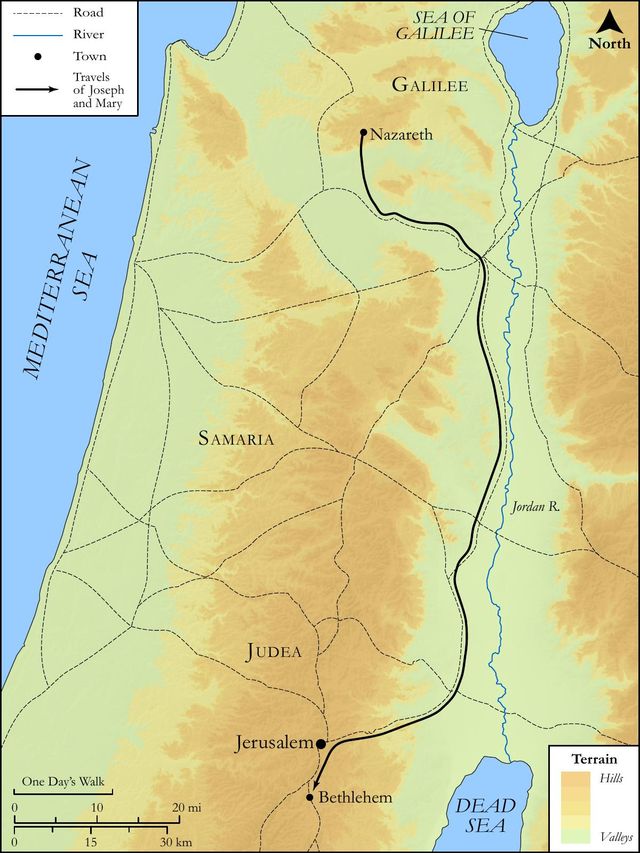
Luke 2:11 is the climax of the angelic pronouncement to the shepherds, immediately following the angel's appearance and the declaration of "good news of great joy for all the people" in Luke 2:10. The preceding verses set the stage with the decree from Caesar Augustus, Mary and Joseph's journey to Bethlehem, and Jesus' humble birth in a manger due to no room in the inn (Luke 2:1-7). After this verse, the angel provides a sign for the shepherds—a baby wrapped in swaddling clothes and lying in a manger (Luke 2:12)—which is then followed by a multitude of the heavenly host praising God (Luke 2:13-14). The entire narrative in Luke 2 is carefully constructed to highlight the miraculous nature of Jesus' birth and its universal significance.
Historical & Cultural Context
The mention of "the city of David" immediately identifies Bethlehem, a small town with immense historical and prophetic significance. It was the birthplace of King David (1 Samuel 17:12) and, more importantly, the prophesied birthplace of the Messiah, as foretold in Micah 5:2. The angel's announcement to shepherds is also culturally significant; shepherds were often overlooked in Jewish society, yet they are the first recipients of this divine revelation, underscoring God's heart for the humble and outcast. This event occurs within the broader context of Roman occupation, where a census had brought Mary and Joseph to Bethlehem, fulfilling God's sovereign plan despite human decrees. The titles "Saviour, Christ, Lord" would resonate deeply within a Jewish context, where messianic expectations for a deliverer king were fervent, while also challenging preconceived notions about the nature of that deliverance.
Key Themes
ShowHideThis verse powerfully contributes to several overarching themes in Luke's Gospel and biblical theology. Foremost is the theme of Salvation, as Jesus is explicitly named "a Saviour," highlighting humanity's dire need for deliverance from sin and its consequences, a theme woven throughout Scripture from Genesis 3 to Revelation 22. The designation "Christ" (Messiah) underscores the theme of Fulfillment of Prophecy, as Jesus is presented as the long-awaited Anointed One who fulfills the promises made to Israel, particularly those concerning the Davidic covenant found in 2 Samuel 7:12-16. Finally, the title "the Lord" speaks to Jesus' Divine Authority and Sovereignty, affirming His unique relationship with God and His supreme position, a truth that becomes central to the early Christian proclamation, as seen in Acts 2:36.
Exposition and Analysis
ShowHideKey Word Analysis
ShowHideFrom the verb meaning "to save" or "deliver," this noun denotes a deliverer or preserver. Among the Greeks, sōtḗr was often applied to deities, rulers, or heroes who rescued people from danger, illness, or oppression. Its application to Jesus here signifies His ultimate spiritual deliverance, not merely from physical or political bondage, but from sin and its eternal consequences, providing salvation for all humanity.
This word is the Greek equivalent of the Hebrew "Messiah," meaning "Anointed One." In the Old Testament, kings, priests, and prophets were anointed with oil as a sign of their divine appointment. By calling Jesus "Christ," the angel declares Him to be the divinely appointed, long-prophesied Messiah of Israel, the one who would fulfill all the messianic expectations and bring about God's kingdom.
This term signifies supreme authority, a master or controller. While it can be a respectful title like "Sir," in a theological context, especially in the Septuagint (the Greek Old Testament), kýrios was frequently used to translate the divine name YHWH. Its application to Jesus in this angelic announcement elevates His status beyond that of a mere human king or prophet, affirming His divine nature and supreme authority as God Himself, worthy of worship and obedience.
Verse Breakdown
ShowHide"For unto you is born this day"
This opening phrase emphasizes the immediate and personal nature of the announcement. "Unto you" (plural) highlights that this good news is for the shepherds, and by extension, for all people. "This day" stresses the present reality and historical specificity of the event, marking it as a definitive moment in time, not a future hope or a past legend. The passive voice "is born" underscores God's active role in bringing about this birth; it is a divine initiative.
"in the city of David"
This geographical detail is crucial, identifying Bethlehem as the birthplace. By calling it "the city of David," the angel explicitly links Jesus' birth to the lineage and prophecy concerning King David, thereby affirming Jesus' messianic credentials as the rightful heir to David's throne and the fulfillment of ancient prophecies.
"a Saviour"
This is the first and foundational title given to the newborn. It declares Jesus' primary purpose: to deliver and rescue humanity. This salvation is comprehensive, encompassing deliverance from sin, death, and the power of evil, offering reconciliation with God.
"which is Christ the Lord"
This climactic phrase reveals the full identity and authority of the "Saviour." "Which is" serves as an explanatory link, clarifying who this Saviour is. "Christ" identifies Him as the promised Messiah, the Anointed One of God. "The Lord" elevates Him to the highest possible status, signifying His divine sovereignty and authority, aligning Him with God Himself. This combination of titles—Saviour, Christ, and Lord—presents a profound and complete theological statement about Jesus' person and mission.
Literary Devices
ShowHideLuke 2:11 masterfully employs several literary devices to convey its profound message. The primary device is Annunciation, as the verse is part of a divine message delivered by an angel, marking a significant, divinely ordained event. The angel's words also demonstrate Fulfillment of Prophecy, specifically by identifying Bethlehem as "the city of David," directly referencing Old Testament prophecies like Micah 5:2 concerning the Messiah's birthplace. The use of a series of escalating titles—"Saviour," "Christ," and "the Lord"—is a form of Title Accumulation or Climax, building from a functional role (Saviour) to a messianic identity (Christ) and culminating in a declaration of divine sovereignty (Lord). This progression emphasizes the comprehensive nature of Jesus' identity and authority. Furthermore, the phrase "unto you" employs Direct Address and Emphasis, making the message intensely personal and highlighting that this divine gift is for the benefit of the hearers, and by extension, for all humanity.
Theological and Thematic Connections
ShowHideLuke 2:11 is a theological cornerstone, articulating the very essence of the Incarnation and God's redemptive plan. It reveals God's profound initiative in sending His Son, not as a conquering king in earthly splendor, but as a humble baby born to save. The combination of "Saviour, Christ, Lord" encapsulates Jesus' threefold office as Prophet (revealing God), Priest (offering Himself for sin), and King (ruling over all creation). This verse affirms that Jesus is the long-awaited answer to humanity's spiritual plight, the fulfillment of divine promises, and the sovereign ruler over all things. It underscores that salvation is a divine gift, freely given to a humanity incapable of saving itself, and that this gift is embodied in the person of Jesus, whose identity is both fully human and fully divine.
Reflection and Application
ShowHideLuke 2:11 is far more than a historical announcement; it is a timeless declaration of hope, joy, and profound truth that continues to resonate with believers today. The angelic proclamation "unto you" reminds us that the birth of Jesus is intensely personal. It is a gift offered to each individual, inviting us to receive the salvation He brings. Understanding Jesus as "Saviour" compels us to acknowledge our need for redemption, recognizing that He alone can deliver us from the bondage of sin and death. His identity as "Christ" calls us to place our faith in Him as the promised Messiah, the Anointed One who fulfills all God's purposes. And His designation as "the Lord" demands our worship, obedience, and submission to His divine authority in every area of our lives. This verse challenges us to move beyond a sentimental view of Christmas and embrace the radical implications of God becoming man—a humble birth that ushers in eternal redemption. It invites us to respond with the same awe and wonder as the shepherds, spreading the good news of this glorious birth to a world desperately in need of a Saviour, Christ the Lord.
Questions for Reflection
ShowHideFAQ
ShowHideWhy is Bethlehem called the "city of David" in this verse, and what is its significance?
ShowHideBethlehem is called the "city of David" because it was the birthplace of King David, Israel's most famous king, as recounted in 1 Samuel 17:12. This designation is highly significant because Old Testament prophecy, specifically Micah 5:2, foretold that the Messiah, the promised deliverer of Israel, would be born in Bethlehem. By stating that Jesus was born "in the city of David," the angel's announcement directly links Jesus' birth to these ancient prophecies, affirming His identity as the long-awaited Messiah, the rightful heir to David's throne, and the one who would establish an eternal kingdom. It underscores God's faithfulness in fulfilling His promises through the lineage of David.
What is the theological significance of the three titles "Saviour, Christ, the Lord" being used together for Jesus?
ShowHideThe combination of "Saviour, Christ, the Lord" in Luke 2:11 provides a comprehensive and profound theological statement about Jesus' identity and mission. "Saviour" (Greek: sōtḗr) emphasizes His primary purpose: to deliver humanity from sin, death, and spiritual bondage, offering reconciliation with God, as also seen in Matthew 1:21. "Christ" (Greek: Christós) identifies Him as the Messiah, the Anointed One of God, fulfilling all the messianic prophecies and expectations of the Old Testament, particularly those concerning a king from David's line (2 Samuel 7:12-16). Finally, "the Lord" (Greek: kýrios) is the highest title, signifying His divine authority and sovereignty. In the Septuagint, kýrios often translates the divine name YHWH, implying that Jesus possesses the very nature and authority of God. Together, these titles declare that Jesus is not merely a human deliverer or a prophet, but the divinely appointed, sovereign God who has come to save His people, as later affirmed by Peter in Acts 2:36.
Christ-Centered Fulfillment
ShowHideLuke 2:11 stands as the initial, profound declaration of Jesus' Christ-centered fulfillment, laying the groundwork for His entire redemptive work. The titles "Saviour, Christ, the Lord" are not merely descriptive but prophetic, pointing to the complete scope of His mission. As "Saviour," Jesus ultimately fulfills this role not just by being born, but by living a sinless life, dying on the cross as the perfect atoning sacrifice for humanity's sins (Romans 5:8), and triumphing over death through His resurrection (Romans 4:25). His identity as "Christ" (Messiah) is fully realized in His anointing by the Holy Spirit for ministry (Luke 4:18-19), His authoritative teaching, His miraculous deeds, and ultimately His establishment of the new covenant through His blood (Hebrews 9:15). Finally, the declaration "the Lord" finds its ultimate fulfillment in Jesus' resurrection and ascension, where He is exalted to the right hand of God, receiving "all authority in heaven and on earth" (Matthew 28:18), and being proclaimed as "Lord of all" (Acts 10:36). Thus, the angelic announcement in Luke 2:11 is the foundational promise of the One who would accomplish eternal redemption, reigning eternally as the sovereign King, the Lamb of God who takes away the sin of the world (John 1:29).