


Luke 14:21
- καὶkaiAndG2532CONJConjunction
- παραγενόμενοςparagenomenoshaving comeG3854V-2ADP-NSMVerb 2nd Aorist Middle Deponent Participle Nominative Singular Masculine
- ὁhotheG3588T-NSMDefinite article Nominative Singular Masculine
- δοῦλοςdoulosservantG1401N-NSMNoun Nominative Singular Masculine
- ἐκεῖνοςekeinosthatG1565D-NSMDemonstrative pronoun Nominative Singular Masculine
- ἀπήγγειλενapēngeilenreportedG518V-AAI-3SVerb Aorist Active Indicative 3rd Singular
- τῷtōto theG3588T-DSMDefinite article Dative Singular Masculine
- κυρίῳkuriōmasterG2962N-DSMNoun Dative Singular Masculine
- αὐτοῦautouof himG846P-GSMPersonal pronoun Genitive Singular Masculine
- ταῦταtautathese thingsG3778D-APNDemonstrative pronoun Accusative Plural Neuter
- ΤότεToteThenG5119ADVAdverb
- ὀργισθεὶςorgistheishaving become angryG3710V-APP-NSMVerb Aorist Passive Participle Nominative Singular Masculine
- ὁhotheG3588T-NSMDefinite article Nominative Singular Masculine
- οἰκοδεσπότηςoikodespotēsmaster of the houseG3617N-NSMNoun Nominative Singular Masculine
- εἶπενeipensaidG2036V-2AAI-3SVerb 2nd Aorist Active Indicative 3rd Singular
- τῷtōto theG3588T-DSMDefinite article Dative Singular Masculine
- δούλῳdoulōservantG1401N-DSMNoun Dative Singular Masculine
- αὐτοῦ·autouof himG846P-GSMPersonal pronoun Genitive Singular Masculine
- ἔξελθεexelthedo go outG1831V-2AAM-2SVerb 2nd Aorist Active Imperative 2nd Singular
- ταχέωςtacheōssoonG5030ADVAdverb
- εἰςeisintoG1519PREPPreposition
- τὰςtastheG3588T-APFDefinite article Accusative Plural Feminine
- πλατείαςplateiasstreetsG4116N-APFNoun Accusative Plural Feminine
- καὶkaiandG2532CONJConjunction
- ῥύμαςrhumaslanesG4505N-APFNoun Accusative Plural Feminine
- τῆςtēsof theG3588T-GSFDefinite article Genitive Singular Feminine
- πόλεωςpoleōscityG4172N-GSFNoun Genitive Singular Feminine
- καὶkaiandG2532CONJConjunction
- τοὺςtoustheG3588T-APMDefinite article Accusative Plural Masculine
- πτωχοὺςptōchouspoorG4434N-APMNoun Accusative Plural Masculine
- καὶkaiandG2532CONJConjunction
- ἀναπείρουςanapeirouscrippledG376A-APMAdjective Accusative Plural Masculine
- καὶkaiandG2532CONJConjunction
- τυφλοὺςtuphlousblindG5185A-APMAdjective Accusative Plural Masculine
- καὶkaiandG2532CONJConjunction
- χωλοὺςchōlouslameG5560A-APMAdjective Accusative Plural Masculine
- εἰσάγαγεeisagagedo bring inG1521V-2AAM-2SVerb 2nd Aorist Active Imperative 2nd Singular
- ὧδεhōdehereG5602ADVAdverb
English is a literal word-by-word gloss of the Greek, not the KJV's wording. Why?
This is the original text the KJV's translators worked from — each Greek word with its own literal English meaning in this verse, prepared by scholars at Tyndale House, Cambridge. The KJV translates whole sentences, not word by word, so its wording differs: one Greek word can become several English words, and the KJV may choose “charity” where the gloss reads “love”. Both are faithful — they answer different questions. For the KJV's own rendering, switch to the KJV text.
Details
See on the biblical-era map

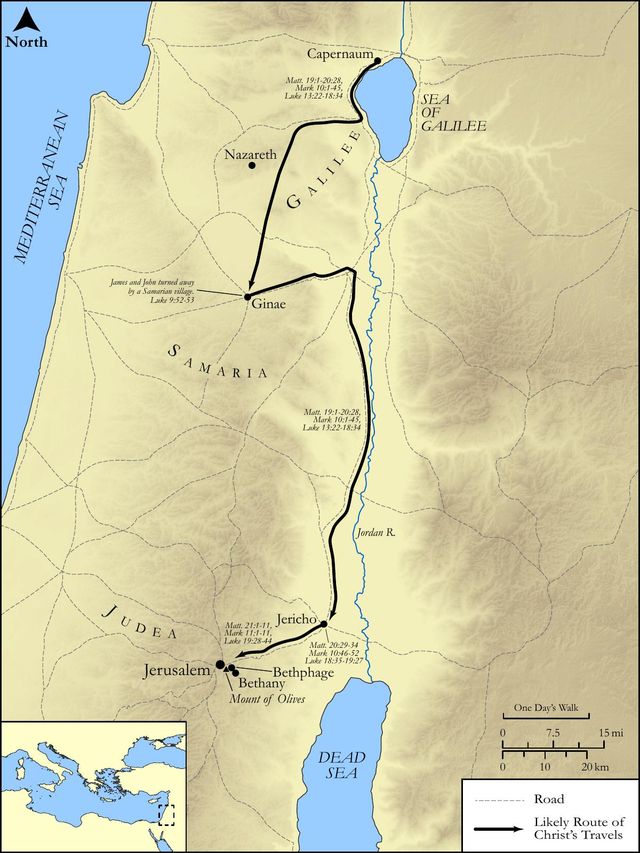
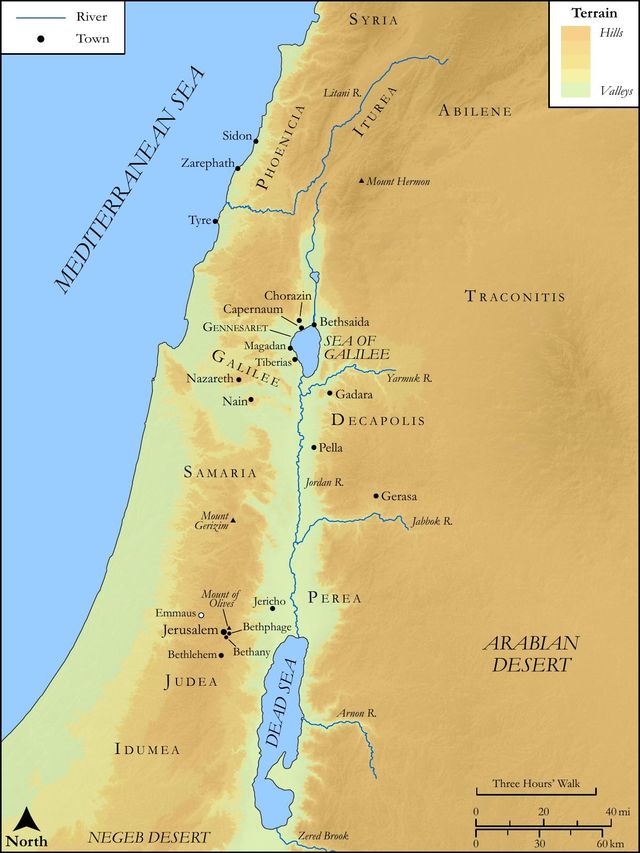
Study this verse
Public-domain commentary
Matthew Henry
From his Commentary on the Whole Bible. Henry comments on passages, not single verses — this entry covers Luke 14:15–24. His four-level outline is real structure in the source text, so it is rendered as structure.
Here is another discourse of our Saviour's, in which he spiritualizes the feast he was invited to, which is another way of keeping up good discourse in the midst of common actions.
I.The occasion of the discourse was given by one of the guests, who, when Christ was giving rules about feasting, said to him, Blessed is he that shall eat bread in the kingdom of God (Luk 14:15), which, some tell us, was a saying commonly used among the rabbin.
1.But with what design does this man bring it in here?
(1.)Perhaps this man, observing that Christ reproved first the guests and then the master of the house, fearing he should put the company out of humour, started this, to divert the discourse to something else. Or,
(2.)Admiring the good rules of humility and charity which Christ had now given, but despairing to see them lived up to in the present degenerate state of things, he longs for the kingdom of God, when these and other good laws shall prevail, and pronounces them blessed who shall have a place in that kingdom. Or,
(3.)Christ having mentioned the resurrection of the just, as a recompence for acts of charity to the poor, he here confirms what he said, "Yea, Lord, they that shall be recompensed in the resurrection of the just, shall eat bread in the kingdom, and that is a greater recompence than being reinvited to the table of the greatest man on earth." Or,
(4.)Observing Christ to be silent, after he had given the foregoing lessons, he was willing to draw him in again to further discourse, so wonderfully well-pleased was he with what he said; and he knew nothing more likely to engage him than to mention the kingdom of God. Note, Even those that are not of ability to carry on good discourse themselves ought to put in a word now and then, to countenance it, and help it forward.
2.Now what this man said was a plain and acknowledged truth, and it was quoted very appositely now that they were sitting at meat; for we should take occasion from common things to think and speak of those heavenly and spiritual things which in scripture are compared to them, for that is one end of borrowing similitudes from them. And it will be good for us, when we are receiving the gifts of God's providence, to pass through them to the consideration of the gifts of his grace, those better things. This thought will be very seasonable when we are partaking of bodily refreshments: Blessed are they that shall eat bread in the kingdom of God.
(1.)In the kingdom of grace, in the kingdom of the Messiah, which was expected now shortly to be set up. Christ promised his disciples that they should eat and drink with him in his kingdom. They that partake of the Lord's supper eat bread in the kingdom of God.
(2.)In the kingdom of glory, at the resurrection. The happiness of heaven is an everlasting feast; blessed are they that shall sit down at that table, whence they shall rise no more.
II.The parable which our Lord Jesus put forth upon this occasion, Luk 14:16, etc.
Christ joins with the good man in what he said: "It is very true, Blessed are they that shall partake of the privileges of the Messiah's kingdom. But who are they that shall enjoy that privilege? You Jews, who think to have the monopoly of it, will generally reject it, and the Gentiles will be the greatest sharers in it." This he shows by a parable, for, if he had spoken it plainly, the Pharisees would not have borne it. Now in the parable we may observe,
1.The free grace and mercy of God, shining in the gospel of Christ; it appears,
(1.)In the rich provision he has made for poor souls, for their nourishment, refreshment, and entertainment (Luk 14:16): A certain man made a great supper. There is that in Christ and the grace of the gospel which will be food and a feast for the soul of man that knows its own capacities, for the soul of a sinner that knows its own necessities and miseries. It is called a supper, because in those countries supper time was the chief feasting time, when the business of the day was over. The manifestation of gospel grace to the world was the evening of the world's day; and the fruition of the fulness of that grace in heaven is reserved for the evening of our day.
(2.)In gracious invitation given us to come and partake of this provision. Here is,
[1.]A general invitation given: He bade many. Christ invited the whole nation and people of the Jews to partake of the benefits of his gospel. There is provision enough for as many as come; it was prophesied of as a feast for all people, Isa 25:6. Christ in the gospel, as he keeps a good house, so he keeps an open house.
[2.]A particular memorandum given, when the supper time was at hand; the servant was sent round to put them in mind of it: Come, for all things are now ready. When the Spirit was poured out, and the gospel church planted, those who before were invited were more closely pressed to come in presently: Now all things are ready, the full discovery of the gospel mystery is now made, all the ordinances of the gospel are now instituted, the society of Christians is now incorporated, and, which crowns all, the Holy Ghost is now given. This is the call now given to us: "All things are now ready, now is the accepted time; it is now, and has not been long; it is now, and will not be long; it is a season of grace that will be soon over, and therefore come now; do not delay; accept the invitation; believe yourselves welcome; eat, O friends; drink, yea drink abundantly, O beloved."
2.The cold entertainment which the grace of the gospel meets with. The invited guests declined coming. They did not say flatly and plainly that they would not come, but they all with one consent began to make excuse, Luk 14:18. One would have expected that they should all with one consent have come to a good supper, when they were so kindly invited to it: who would have refused such an invitation? Yet, on the contrary, they all found out some pretence or other to shift off their attendance. This bespeaks the general neglect of the Jewish nation to close with Christ, and accept of the offers of his grace, and the contempt they put upon the invitation. It also intimates the backwardness there is in most people to close with the gospel call. They cannot for shame avow their refusal, but they desire to be excused: they all apo mias, some supply hōras, all straightway, they could give an answer extempore, and needed not to study for it, had not to seek for an excuse. Others supply gnōmēs, they were unanimous in it; with one voice.
(1.)Here were two that were purchasers, who were in such haste to go and see their purchases that they could not find time to go to this supper. One had purchased land; he had bought a piece of ground, which was represented to him to be a good bargain, and he must needs to and see whether it was so or no; and therefore I pray thee have me excused. His heart was so much upon the enlarging of his estate that he could neither be civil to his friend nor kind to himself. Note, Those that have their hearts full of the world, and fond of laying house to house and field to field, have their ears deaf to the gospel invitation. But what a frivolous excuse was this! He might have deferred going to see his piece of ground till the next day, and have found it in the same place and plight it was now in, if he had so pleased. Another had purchased stock for his land. "I have bought five yoke of oxen for the plough, and I must just now go and prove them, must go and try whether they be fit for my purpose; and therefore excuse me for this time." The former intimates that inordinate complacency in the world, this the inordinate care and concern about the world, which keep people from Christ and his grace; both intimate a preference given to the body above the soul, and to the things of time above those of eternity. Note, It is very criminal, when we are called to any duty, to make excuses for our neglect of it: it is a sign that there are convictions that it is duty, but no inclination to it. These things here, that were the matter of the excuses, were, [1.] Little things, and of small concern. It had better become them to have said, "I am invited to eat bread in the kingdom of God, and therefore must be excused from going to see the ground or the oxen." [2.] Lawful things. Note, Things lawful in themselves, when the heart is too much set upon them, prove fatal hindrances in religion - Licitus perimus omnes. It is a hard matter so to manage our worldly affairs that they may not divert us from spiritual pursuits; and this ought to be our great care.
(2.)Here was one that was newly married, and could not leave his wife to go out to supper, no, not for once (Luk 14:30): I have married a wife, and therefore, in short, I cannot come. He pretends that he cannot, when the truth is he will not. Thus many pretend inability for the duties of religion when really they have an aversion to them. He has married a wife. It is true, he that married was excused by the law from going to war for the first year (Deu 24:5), but would that excuse him from going up to the feasts of the Lord, which all the males were yearly to attend? Much less will it excuse from the gospel feast, of which the other were but types. Note, Our affection to our relations often proves a hindrance to us in our duty to God. Adam's excuse was, The woman that thou gavest me persuaded me to eat; this here was, The woman persuaded me not to eat. He might have gone and taken his wife along with him; they would both have been welcome.
3.The account which was brought to the master of the feast of the affront put upon him by his friends whom he had invited, who now showed how little they valued him (Luk 14:21): That servant came, and showed his lord these things, told him with surprise that he was likely to sup alone, for the guests that were invited, though they had had timely notice a good while before, that they might order their affairs accordingly, yet were now engaged in some other business. He made the matter neither better nor worse, but related it just as it was. Note, Ministers must give account of the success of their ministry. They must do it now at the throne of grace. If they see of the travail of their soul, they must go to God with their thanks; if they labour in vain, they must go to God with their complaints. They will do it hereafter at the judgment-seat of Christ: they shall be produced as witnesses against those who persist and perish in their unbelief, to prove that they were fairly invited; and for those who accepted the call, Behold, I and the children thou hast given me. The apostle urges this as a reason why people should give ear to the word of God sent them by his ministers; for they watch for your souls, as those that must give account, Heb 13:17.
4.The master's just resentment of this affront: He was angry, Luk 14:21. Note, The ingratitude of those that slight gospel offers, and the contempt they put upon the God of heaven thereby, are a very great provocation to him, and justly so. Abused mercy turns into the greatest wrath. The doom he passed upon them was, None of the men that were bidden shall taste of my supper. This was like the doom passed upon the ungrateful Israel, when they despised the pleasant land: God swore in his wrath that they should not enter into his rest. Note, Grace despised is grace forfeited, like Esau's birthright. They that will not have Christ when they may shall not have him when they would. Even those that were bidden, if they slight the invitation, shall be forbidden; when the door is shut, the foolish virgins will be denied entrance.
5.The care that was taken to furnish the table with guests, as well as meat. "Go" (saith he to the servants), "go first into the streets and lanes of the city, and invite, not the merchants that are going from the custom-house, nor the tradesmen that are shutting up their shops; they will desire to be excused (one is going to his counting-house to cast up his books, another to the tavern to drink a bottle with his friend); but, that you may invite those that will be glad to come, bring in hither the poor and the maimed, the halt and the blind; pick up the common beggars." The servants object not that it will be a disparagement to the master and his house to have such guests at his table; for they know his mind, and they soon gather an abundance of such guests: Lord, it is done as thou hast commanded. Many of the Jews are brought in, not of the scribes and Pharisees, such as Christ was now at dinner with, who thought themselves most likely to be guests at the Messiah's table, but the publicans and sinners; these are the poor and the maimed. But yet there is room for more guests, and provision enough for them all. "Go, then, secondly, into the highways and hedges. Go out into the country, and pick up the vagrants, or those that are returning now in the evening from their work in the field, from hedging and ditching there, and compel them to come in, not by force of arms, but by force of arguments. Be earnest with them; for in this case it will be necessary to convince them that the invitation is sincere and not a banter; they will be shy and modest, and will hardly believe that they shall be welcome, and therefore be importunate with them and do not leave them till you have prevailed with them." This refers to the calling of the Gentiles, to whom the apostles were to turn when the Jews refused the offer, and with them the church was filled. Now observe here,
(1.)The provision made for precious souls in the gospel of Christ shall appear not to have been made in vain; for, if some reject it, yet others will thankfully accept the offer of it. Christ comforts himself with this, that, though Israel be not gathered, yet he shall be glorious, as a light to the Gentiles, Isa 49:5, Isa 49:6. God will have a church in the world, though there are those that are unchurched; for the unbelief of man shall not make the promise of God of no effect.
(2.)Those that are very poor and low in the world shall be as welcome to Christ as the rich and great; nay, and many times the gospel has greatest success among those that labour under worldly disadvantages, as the poor, and bodily infirmities, as the maimed, and the halt, and the blind. Christ here plainly refers to what he had said just before, in direction to us, to invite to our tables the poor and maimed, the lame and blind, Luk 14:13. For consideration for the countenance which Christ's gospel gives to the poor should engage us to be charitable to them. His condescensions and compassions towards them should engage ours.
(3.)Many times the gospel has the greatest success among those that are least likely to have the benefit of it, and whose submission to it was least expected. The publicans and harlots went into the kingdom of God before the scribes and Pharisees; so the last shall be first, and the first last. Let us not be confident concerning those that are most forward, nor despair of those that are least promising.
(4.)Christ's ministers must be both very expeditious and very importunate in inviting to the gospel feast: "Go out quickly (Luk 14:21); lose not time, because all things are now ready. Call to them to come today, while it is called today; and compel them to come in, by accosting them kindly, and drawing them with the cords of a man and the bands of love." Nothing can be more absurd than fetching an argument hence for compelling men's consciences, nay, for compelling men against their consciences, in matters of religion: "You shall receive the Lord's supper, or you shall be fined and imprisoned, and ruined in your estate." Certainly nothing like this was the compulsion here meant, but only that of reason and love; for the weapons of our warfare are not carnal.
(5.)Though many have been brought in to partake of the benefits of the gospel, yet still there is room for more; for the riches of Christ are unsearchable and inexhaustible; there is in him enough for all, and enough for each; and the gospel excludes none that do not exclude themselves.
(6.)Christ's house, though it be large, shall at last be filled; it will be so when the number of the elect is completed, and as many as were given him are brought to him.
Historical interpretation
Nine Centuries of Reception
17 surviving comments on this verse. Each one is dated, so this reads as a timeline rather than a list.
Select a marker to jump to its quote. Markers stagger vertically where authors wrote within a few decades of each other.
(app. Hom. in Ps. 37.) Not that the passion of anger belongs to the Divine substance, but an operation such as in us is caused by anger, is called the anger and indignation of God.
The holy agape is the sublime and saving creation of the Lord.…An agape is in reality heavenly food, a banquet of the Word. The agape, or love, “bears all things, endures all things, hopes all things. Love never fails.” “Blessed is he who eats bread in the kingdom of God.” The most unlikely of all downfalls is charity that does not fail to be thrown down from heaven to earth among all these dainty seasonings. Do you still imagine that I refer to a meal that will be destroyed? “If I distribute my goods to the poor and do not have love,” Scripture says, “I am nothing.” The whole law and the word depend on this love. If you love the Lord your God and your neighbor, there will be a heavenly feast in heaven. The earthly feast, as we have proved from Scripture, is called a supper. It is permeated with love yet is not identified with it but is an expression of mutual and generous good will.
Then He was moved (He did well to be moved; for, as Marcion denies emotion to his god, He must be therefore my God), and commanded them to invite out of "the streets and lanes of the city." Let us see whether this is not the same in purport as His words by Jeremiah: "Have I been a wilderness to the house of Israel, or a land left uncultivated? " That is to say: "Then have I none whom I may call to me; have I no place whence I may bring them? ""Since my people have said, We will come no more unto thee.
Our Lord had just before taught us to prepare our feasts for those who cannot repay, seeing that we shall have our reward at the resurrection of the just. Some one then, supposing the resurrection of the just to be one and the same with the kingdom of God, commends the above-mentioned recompense; for it follows, When one of them that sat at meat with him heard these things, he said unto him, Blessed is he that shall eat bread in the kingdom of God.
Oh, brothers and sisters, what a banquet that is! How great is the harmony and joy of those who eat at this heavenly table! They enjoy food that produces everlasting life, not that ordinary food which passes right on through the body. Who will be considered worthy to be in that group? Who is so blessed as to be called to and counted worthy of that divine feast? “Blessed is he who will eat bread in your kingdom.” Although he has been washed, even a person who has been judged worthy of this heavenly calling and has been sanctified by it can become unclean. How can he become unclean? “Counting as unclean the blood of the covenant by which he was sanctified and despising the Spirit of grace,” he hears the Lord say, “Friend, how did you get in here without wedding garments?”
But he says, I cannot come, because that the human mind when it is degenerating to worldly pleasures, is feeble in attending to the things of God.
He turned to the Gentiles from the careless scorn of the rich. He invites both good and evil to enter in order to strengthen the good and change the disposition of the wicked for the better. The saying that was read today is fulfilled, “Then wolves and lambs will feed together.” He summons the poor, the maimed and the blind. By this, he shows us either that handicaps do not exclude us from the kingdom of heaven and whoever lacks the enticements of sinning rarely offends, or that the Lord’s mercy forgives the weakness of sinners. Whoever glories in the Lord glories as one redeemed from reproach not by works but by faith.He sends them into the highways, because wisdom sings aloud in passages. He sends them to the streets, because he sent them to sinners, so that they should come from the broad paths to the narrow way that leads to life. He sends them to the highways and hedges. They, who are not busied with any desires for present things, hurry to the future on the path of good will. Like a hedge that separates the wild from the cultivated and wards off the attacks of wild beasts, they can distinguish between good and evil and extend a rampart of faith against the temptations of spiritual wickedness.
Thus it is that the worn out soldier is appointed to serve degraded offices, as he who intent upon things below buys for himself earthly possessions, can not enter into the kingdom of heaven. Our Lord says, Sell all that thou hast, and follow me.
It follows, And another said, I have bought five yoke of oxen, and I go to prove them.
Or marriage is not blamed; but purity is held up to greater honour, since the unmarried woman careth for the things of the Lord, that she may be holy in body and spirit, but she that is married careth for the things of the world. (1 Cor. 7:34.)
Or let us suppose that three classes of men are excluded from partaking of that supper, Gentiles, Jews, Heretics. The Jews by their fleshly service impose upon themselves the yoke of the law, for the five yoke are the yoke of the Ten Commandments, of which it is said, And he declared unto you his covenant, which he commanded you to perform, even ten commandments; and he wrote them upon two tables of stone. (Deut. 4:13.) That is, the commands of the Decalogue. Or the five yoke are the five books of the old law. But heresy indeed, like Eve with a woman's obstinacy, tries the affection of faith. And the Apostle says that we must flee from covetousness, lest entangled in the customs of the Gentiles we be unable to come to the kingdom of Christ. (Eph. 5:3, Col. 3:5, Heb. 13:5, 1 Tim. 6:11.) Therefore both he who has bought a farm is a stranger to the kingdom, and he who has chosen the yoke of the law rather than the gift of grace, and he also who excuses himself because he has married a wife.
It follows, And the servant returned, and told these things to his Lord.
He invites the poor, the weak, and the blind, to show that weakness of body shuts out no one from the kingdom of heaven, and that he is guilty of fewer sins who lacks the incitement to sin; or that the infirmities of sin are forgiven through the mercy of God. Therefore he sends to the streets, that from the broader ways they may come to the narrow way.
Because then the proud refuse to come, the poor (Greg. Hom. 36.) are chosen, since they are called weak and poor who are weak in their own judgment of themselves, for there are poor, and yet as it were strong, who though lying in poverty are proud; the blind are they who have no brightness of understanding; the lame are they who have walked not uprightly in their works. But since the faults of these are expressed in the weakness of their members, as those were sinners who when bidden refused to come, so also are these who are invited and come; but the proud sinners are rejected, the humble are chosen. God then chooses those whom the world despises, because for the most part the very act of contempt recals a man to himself. And men so much the sooner hear the voice of God, as they have nothing in this world to take pleasure in. When then the Lord calls certain from the streets and lanes to supper, He denotes that people who had learnt to observe in the city the constant practice of the law. But the multitude who believed of the people of Israel did not fill the places of the upper feast room. Hence it follows, And the servant said, Lord, it is done as thou hast commanded, and yet there is room. For already had great numbers of the Jews entered, but yet there was room in the kingdom for the abundance of the Gentiles to be received. Therefore it is added, And the Lord said unto the servant, Go out into the highways and hedges, and compel them to come in, that my house may be filled. When He commanded His guests to be collected from the wayside and the hedges, He sought for a rural people, that is, the Gentiles.
Or, He sends to the highways and about the hedges, because they are fit for the kingdom of God, who, not absorbed in the desire for present goods, are hastening on to the future, set in a certain fixed path of good will. And who like a hedge which separates the cultivated ground from the uncultivated, and keeps off the incursion of the cattle, know how to distinguish good and evil, and to hold up the shield of faith against the temptations of spiritual wickedness.
(in Gen. ad lit. c. 19.) Not for the sake of knowing inferior beings does God require messengers, as though He gained aught from them, for He knows all things stedfastly and unchangeably. But he has messengers for oursakes and their own, because to be present with God, and stand before Him so as to consult Him about His subjects, and obey His heavenly commandments, is good for them in the order of their own nature.
That man was carnal, and a careless hearer of the things which Christ delivered, for he thought the reward of the saints was to be bodily.
This man represents God the Father just as images are formed to give the resemblance of power. For as often as God wishes to declare His avenging power, He is called by the names of bear, leopard, lion, and others of the same kind; but when He wishes to express mercy, by the name of man. The Maker of all things, therefore, and Father of Glory, or the Lord, prepared the great supper which was finished in Christ.
For in these latter times, and as it were the setting of our world, the Son of God has shone upon us, and enduring death for our sakes, has given us His own body to eat. Hence also the lamb was sacrificed in the evening according to the Mosaic law. Rightly then was the banquet which was prepared in Christ called a supper.
That servant who was sent is Christ Himself, who being by nature God and the true Son of God, emptied Himself, and took upon Him the form of a servant. But He was sent at supper time. For not in the beginning did the Word take upon Him our nature, but in the last time; and he adds, For all things are ready. For the Father prepared in Christ the good things bestowed upon the world through Him, the removal of sins, the participation of the Holy Spirit, the glory of adoption. To these Christ bade men by the teaching of the Gospel.
But whom can we suppose these to be who refused to come for the reason just mentioned, but the rulers of the Jews, whom throughout the sacred history we find to have been often reproved for these things?
But with the rulers of the Jews who refused their call, as they themselves confessed, Have any of the rulers believed on him? (John 7:48.) the Master of the household was wroth, as with them that deserved His indignation and anger; whence it follows, Then the master of the house being angry, &c.
Thus it was that the master of the house is said to have been enraged with the chiefs of the Jews, and in their stead were called men taken from out of the Jewish multitude, and of weak and impotent minds. For at Peter's preaching, first indeed three thousand, then five thousand believed, and afterwards much people; whence it follows, He said unto his servant, Go out straightway into the streets and lanes of the city, and bring in hither the poor, and the maimed, and the halt, and the blind. (Acts 2:41, 44.
It says that when the house owner heard their refusal, he was angry and commanded "to gather from the streets and marketplaces of the city the poor, the maimed, the blind, and the lame." Who are they who refused to come because of lands, farming and the physical procreation of children? It must be those who stood at the head of the Jewish synagogue. They were people with wealth, the slaves of covetousness with their mind set on profit on which they lavished all their seriousness.
The leaders of the Israelites remained aloof from the supper, as being obstinate, proud and disobedient. They scorned a surpassing invitation, because they had turned aside to earthly things and focused their mind on the vain distractions of this world. The common crowd was invited, and immediately after them the Gentiles.
There follows: The servant returned and reported these things to his master. Then the angry master of the house said to his servant: Go out quickly into the streets and lanes of the city, and bring in here the poor and the feeble, and the blind and the lame. Behold, he who clings to earthly substance more than is right refuses to come to the Lord's supper; he who sweats at the labor of curiosity disdains the prepared nourishments of life; he who serves carnal desires rejects the feasts of the spiritual banquet. Therefore, because the proud refuse to come, the poor are chosen. Why is this? Because, according to Paul's words, God chooses the weak things of the world to confound the strong. But it must be noted how those who are called to the supper and come are described: the poor and the feeble. They are called poor and feeble who in their own judgment are weak in their own eyes. For there are poor who are as if strong, who even when placed in poverty are proud. The blind, indeed, are those who have no light of understanding. The lame also are those who do not have right steps in their conduct. But since vices of character are signified in the weakness of the limbs, it is certainly clear that just as those were sinners who when called refused to come, so also these are sinners who are invited and come. But proud sinners are rejected, so that humble sinners may be chosen.
Therefore God chose these whom the world despises, because very often that contempt itself calls a person back to himself. For he who left his father and squandered prodigally the portion of substance he had received, after he began to hunger, returned to himself and said: "How many hired servants in my father's house have bread in abundance?" Indeed he had departed far from himself when he was sinning. And if he had not hungered, he would never have returned to himself, because only after he lacked earthly things did he begin to consider what he had lost of spiritual things. Therefore the poor and the weak, the blind and the lame are called, and they come, because all who are infirm and despised in this world very often hear the voice of God more quickly, precisely because they have nothing in this world in which to take delight.
This is well represented by that Egyptian boy of the Amalekites, who, when the Amalekites were plundering and advancing, remained sick on the road, and wasted away from hunger and thirst. Yet David found him and provided him food and drink; and he, immediately recovering, became David's guide. He found the Amalekites feasting, and with great strength he overthrew those who had abandoned him in his weakness. For the Amalekite people are called "the licking ones." And what is designated by the licking people except the minds of worldly persons? They lick, as it were, all earthly things by grasping at them, since they delight only in temporal matters. For like a licking people taking plunder, those who love earthly gains heap them up from the losses of others. But the Egyptian boy is left sick on the road, because whenever any sinner begins to weaken from his standing in this world, he soon becomes an object of contempt to worldly minds. Yet David finds him and offers him food and drink, because the Lord, strong of hand, does not despise those cast off by the world, and very often he converts to the grace of his love those who, being unable to follow the world, remain as it were on the road, and he extends to them the food and drink of his word; and he chooses them as guides for himself on the way, as it were, when he makes them his preachers as well. For when they bring Christ into the hearts of sinners, they lead David, as it were, against his enemies. They strike the feasting Amalekites as if with David's sword, because by the Lord's power they overthrow all the proud who had despised them in the world. Therefore the Egyptian boy who had remained on the road kills the Amalekites, because very often those same ones overcome the minds of worldly persons by preaching, who previously were unable to run with the worldly in this world.
(Hom. 36. in Evan.) Or he made a great supper, as having prepared for us the full enjoyment of eternal sweetness. He bade many, but few came, because sometimes they who themselves are subject to him by faith, by their lives oppose his eternal banquet. And this is generally the difference between the delights of the body and the soul, that fleshly delights when not possessed provoke a longing desire for them, but when possessed and devoured, the eater soon turns from satiety to loathing; spiritual delights, on the other hand, when not possessed are loathed, when possessed the more desired. But heavenly mercy recalls those despised delights to the eyes of our memory, and in order that we should drive away our disgust, bids us to the feast. Hence it follows, And he sent his servant, &c.
By this servant then who is sent by the master of the family to bid to supper, the order of preachers is signified. But it is often the case that a powerful person has a despised servant, and when his Lord orders any thing through him, the servant speaking is not despised, because respect for the master who sends him is still kept up in the heart. Our Lord then offers what he ought to be asked for, not ask others to receive. He wishes to give what could scarcely be hoped for; yet all begin at once to make excuse, for it follows, And they all began with one consent to make excuse. Behold a rich man invites, and the poor hasten to come. We are invited to the banquet of God, and we make excuse.
(ubi sup.) Or by the piece of ground is meant worldly substance. Therefore he goes out to see it who thinks only of outward things for the sake of his living.
(in Hom. 36. in Ev.) By the bodily senses also because they cannot comprehend things within, but take cognizance only of what is without, curiosity is rightly represented, which while it seeks to shake off a life which is strange to it, not knowing its own secret life, desires to dwell upon things without. But we must observe, that the one who for his farm, and the other who to prove his five yoke of oxen, excuse themselves from the supper of their Inviter, mix up with their excuse the words of humility. For when they say, I pray thee, and then disdain to come, the word sounds of humility, but the action is pride. It follows, And this said, I have married a wife, and therefore I cannot come.
(Hom. 36.) But although marriage is good, and appointed by Divine Providence for the propagation of children, some seek therein not fruitfulness of offspring, but the lust of pleasure. And so by means of a righteous thing may not unfitly an unrighteous thing be represented.
(in Hom. 36.) They then who, broken down by the calamities of this world, return to the love of God, are compelled to enter. But very terrible is the sentence which comes next. For I say unto you, That none of those men which were bidden shall taste of my supper. Let no one then despise the call, lest if when bidden he make excuse, when he wishes to enter he shall not be able.
But because some receive this bread by faith merely, as if by smelling, but its sweetness they loathe to really touch with their mouths, our Lord by the following parable condemns the dulness of those men to be unworthy of the heavenly banquet. For it follows, But he said unto him, A certain man made a great supper, and bade many.
And the servant returned and reported these things to his master. Then the head of the household, being angry, said to his servant: Go out quickly into the streets and alleys of the city, and bring in the poor, and the crippled, and the blind, and the lame. Behold, whoever clings to earthly substance more than justly refuses to come to the Lord's supper; whoever strives in the labor of curiosity despises the prepared nourishment of life; whoever clings to carnal desires rejects the spiritual banquet of the feast. Therefore, since the proud refuse to come, the poor are chosen. Why is this? Because, according to Paul's word, God chooses the weak of the world to confound the strong (1 Cor. 1). But the poor and weak are said to be those who consider themselves weak in their own judgement. For there are also the poor and seemingly strong, who, even positioned in poverty, are proud. The blind, however, are those who have no light of understanding. And the lame are those who do not have upright steps in action. But as the vices of morals are designated in the weakness of members, it is clear that just as those who were invited and refused to come were sinners, so too those invited and who come are sinners; but proud sinners are rejected, and humble sinners are chosen. Therefore, He chooses those whom the world despises, because often that very contempt brings a man back to himself. The poor and weak, the blind and lame are called and come, because the weak and despised in this world often hear God's voice all the more quickly, since they do not have where they find delight in this world. But, having brought the poor to the supper, let us hear what the boy adds:
The rulers of the Jews were rejected, and not one of them believed in Christ. And they even boasted of their malice, saying, Have any of the rulers believed on Him? [Jn. 7:48] Therefore these students of the law and scribes, as the prophet says, became foolish and fell from grace. But the simple from among the Jews are likened to the halt, the blind, and the maimed. It is the foolish of this world, the lowly, who were called. For the multitude marvelled at the words of grace which proceeded from the mouth of Jesus, and they rejoiced in His teaching. But after these had come to Him from the sons of Israel, that is, from the chosen whom God foreordained for His glory, such as Peter, and the sons of Zebedee, and the tens of thousands of those Jews who believed, then God's goodness was poured out also upon the Gentiles. For those who are in the highways and hedges mean the Gentiles. The Israelites were within the city, inasmuch as they had received the lawgiving and inherited a civil and moral way of life. But the Gentiles were strangers to the Covenants, and the lawgiving of Christ was foreign to them. They were not fellow citizens of the saints, and did not travel the one true path, but instead followed many highways of lawlessness and coarseness, and were to be found in the hedges, that is, in sins. For sin is a great hedge and middle wall which separates us from God. By highways He signifies the Gentiles' coarse way of life, which led them to so many false beliefs. By hedges He signifies their life of sins. The master does not command his servant simply to call all those in the highways and hedges, but to compel them to come in, although each man is free whether to believe or not. But He uses the word compel to teach us that it is a sign of God's great power that the Gentiles, who were in such ignorance, came to believe. If the power of the preaching and the might of the word of truth had not been so great, how could men who were crazed with idol worship and practiced unspeakable things have been persuaded all at once to know the true God, and to perfect a spiritual life? He called this "compulsion" to show the miraculousness of their change. One might say that the pagan Greeks did not want to leave their idols and their rich feasting, yet they were compelled to flee from them by the truth of the Gospel. Also, the power of the miracles He worked was a strong force that induced them to be converted to faith in Christ. Every day this Supper is prepared and we are all invited to the kingdom which God prepared for man even before the foundation of the world. But we are not worthy of this Supper—some of us because of useless philosophical musings, others because of love of material things, and yet others because of pleasures of the flesh. But God in His love for man freely bestows this kingdom upon other sinners, upon the blind who have no spiritual vision to perceive the will of God; or if they can perceive it, upon those who are crippled and unable to take a step to do the will of God. And in short He grants the kingdom of heaven to all the poor who have fallen away from the glory above, and even to the maimed who cannot show forth in themselves a blameless life. To invite these sinners to the Supper, who are wandering astray in the streets and broad avenues of sin, the Father sends His Son Who became a Servant according to the flesh, and Who came not to call the righteous, but sinners. All these He feasts liberally, instead of the clever, the rich, and those who indulge the flesh. By the judgments known to Him alone He sends diseases and dangers upon many, causing them, even against their will, to renounce this life. Thus He leads them to His Supper, "compelling" them by means of the dangers. There are many examples of this. Understood in a simpler way, this parable also teaches us to show favor to the poor and the crippled rather than to the rich, just as He exhorted us to do a short while before. [Lk. 14:13-14] It is for this reason that He tells this parable, to confirm that we must give hospitality to the poor. And we may also learn from this that we should be so eager and generous in welcoming our brethren that, even when they are reluctant, we should compel them to partake of our good things. This is also good advice for teachers: teach what is necessary, even when the students are unwilling.
Continue studying Luke 14:21 across the web’s major study libraries — every link below opens this exact verse, chapter, or book on the destination site.
Read & Compare
 BibleGatewayThis verse in more than 200 translations and 70 languages.
 Bible.comThe YouVersion reader — hundreds of translations, reading plans, and highlights.
 ESV.orgCrossway's official English Standard Version reader.
 NET BibleThe NET translation with 60,000+ translators' notes on every rendering decision.
 STEP BibleTyndale House's free study tool — original text, vocabulary, and scholarly resources.
 BibliaLogos Bible Software's free web reader.
 USCCBThe New American Bible (Revised Edition) with the U.S. bishops' study notes.
Commentaries
 BibleHub CommentariesDozens of classic commentaries on this verse, gathered on one page.
 StudyLightMore than 100 commentary sets — the largest collection on the web.
 BibleRefPlain-English commentary on what this verse means, verse by verse.
 Enduring WordDavid Guzik's free commentary on this chapter, widely used by Bible teachers.
 Bible Study ToolsVerse commentary alongside Greek and Hebrew study aids.
Original Language & Research
- BibleHub InterlinearThe verse word by word — original language, transliteration, and English.
- BibleHub LexiconEvery word's original-language definition and Strong's entry.
 Blue Letter BibleDeep-study tools — Strong's numbers, concordance, and word studies.
 CNTR CollationThe earliest Greek manuscripts of this verse, collated letter by letter.
Sermons, Hymns & Audio


TrulyRandomVerse is not affiliated with these sites and doesn’t control their content. They’re linked because they’re genuinely useful.
Summary
Luke 14:21 is a pivotal verse within the Parable of the Great Supper, revealing the master's righteous indignation at the rejection of his gracious invitation and his subsequent radical expansion of the guest list. After the initially invited guests offer various excuses for their refusal, the servant reports their dismissals to his lord. In response, the master, filled with anger, commands his servant to swiftly go into the city's public spaces and gather those typically excluded from such esteemed gatherings: the poor, the crippled, the lame, and the blind, ensuring his house will be filled.
Context
ShowHideLiterary Context
This verse is situated within the broader narrative of the Parable of the Great Supper, found in Luke 14:15-24. Jesus shares this parable immediately after teaching about humility and the proper way to invite guests to a feast, emphasizing inviting those who cannot repay you (Luke 14:7-14). The parable itself is a direct response to a guest's pious exclamation about the blessedness of eating bread in the Kingdom of God (Luke 14:15). Luke 14:21 marks a dramatic turning point in the parable, shifting from the initial, privileged invitees' rejection to the master's inclusive, almost desperate, call to the lowly, setting the stage for the final command to invite even those outside the city.
Historical & Cultural Context
In ancient Near Eastern culture, a banquet invitation was a significant social event, often involving two stages: an initial invitation and a second, final call when the meal was ready. To refuse the second invitation, especially with flimsy excuses, was a profound insult to the host, bringing shame upon him and his household. The "streets and lanes of the city" (plateîa and rhýmē) were public spaces where the poor, sick, and disabled often congregated to beg. These groups—the poor, maimed, halt, and blind—were frequently overlooked, considered ritually unclean, or even thought to be under divine judgment for sin, making them social outcasts. A host inviting such individuals to a grand feast would be an astonishing act of radical hospitality, overturning social conventions and honor codes.
Key Themes
ShowHideLuke 14:21 powerfully contributes to several overarching themes in Luke's Gospel and Jesus's ministry. Firstly, it underscores the Divine Invitation and Rejection, illustrating God's gracious offer of the Kingdom and the serious consequences of spurning it. The master's "anger" reflects divine displeasure at such a profound slight, not petty rage but righteous indignation at the refusal of grace. Secondly, the verse highlights the Universal reach of God's Kingdom, demonstrating that the Kingdom banquet is not exclusively for the privileged or self-righteous, but is open to those who recognize their need and unworthiness. This aligns with Jesus's consistent ministry to the lowly, as seen in his mission statement in Luke 4:18-19 to preach good news to the poor and set the oppressed free. Finally, it emphasizes the Reversal of Societal Norms, where those esteemed by human standards are excluded, and those despised are welcomed, a theme prevalent throughout Luke's Gospel, such as in Mary's Magnificat (Luke 1:52-53).
Exposition and Analysis
ShowHideKey Word Analysis
ShowHideFrom δέω, meaning "to bind," this term refers to a slave, bond-man, or servant. In the context of the parable, the servant (G1401) is not merely an employee but one bound to the master's will, acting as his direct agent. This highlights the servant's absolute obedience and the master's unquestionable authority in issuing the command.
A compound word from οἶκος ("house") and δεσπότης ("master" or "lord"), this term denotes "the head of a family" or "householder." The "master of the house" (G3617) in the parable symbolizes God, emphasizing His sovereign authority over His household (the Kingdom) and His right to determine who participates in His divine banquet.
From πτώσσω ("to crouch" or "cringe"), this word describes a beggar or pauper, strictly denoting absolute or public mendicancy. It implies a state of utter destitution and dependence. The "poor" (G4434) in this verse are those without means, often forced to beg, representing not only material poverty but also a spiritual humility and recognition of need, in contrast to the self-sufficient initial guests.
Verse Breakdown
ShowHide"So that servant came, and shewed his lord these things."
This clause establishes the immediate consequence of the initial guests' rejections. The servant, having delivered the second invitation, dutifully reports the excuses and refusals to the master. This act of reporting underscores the master's awareness of the slight and sets the stage for his response.
"Then the master of the house being angry said to his servant,"
The master's reaction to the rejection is described as "angry" (G3710, orgízō). This is not a petty human tantrum but a righteous indignation at the profound dishonor and ingratitude shown by the invited guests. It signifies the gravity of spurning God's gracious offer, revealing divine displeasure at those who prioritize worldly concerns over the Kingdom's call.
"Go out quickly into the streets and lanes of the city,"
The master's command is urgent ("quickly," G5030, tachéōs) and specific in its destination. The "streets" (G4113, plateîa) and "lanes" (G4505, rhýmē) refer to the main thoroughfares and narrower alleys within the city. This signifies a radical shift in the target audience for the banquet, moving from the privileged, invited elite to the common, public spaces where the lowly resided.
"and bring in hither the poor, and the maimed, and the halt, and the blind."
This final part of the command explicitly names the new invitees. "The poor" (G4434, ptōchós) refers to the destitute; "the maimed" (G376, anápēros) are the crippled or disabled; "the halt" (G5560, chōlós) are the lame; and "the blind" (G5185, typhlós) are those without sight. These individuals represent the most vulnerable and socially ostracized members of society, those typically excluded from elite gatherings. Their inclusion signifies God's radical grace and the Kingdom's open invitation to all who recognize their need.
Literary Devices
ShowHideLuke 14:21, as part of the larger parable, employs several significant literary devices. The primary device is Parable itself, a narrative form that uses a relatable earthly story to convey a profound spiritual truth about the Kingdom of God. The master, the feast, the servant, and the guests are all symbolic. Symbolism is pervasive: the "great supper" symbolizes the eschatological banquet of the Kingdom of God, a metaphor for salvation and fellowship with God. The "master of the house" clearly symbolizes God, the ultimate host. The "servant" can symbolize Jesus Himself, who came to invite, or His disciples, who are commissioned to spread the Gospel. The initial guests symbolize those who, despite being privileged with God's invitation (often interpreted as Israel, or more broadly, the self-righteous), reject it due to worldly preoccupations. The "poor, maimed, halt, and blind" symbolize the lowly, the outcasts, and spiritually, those who recognize their utter dependence on God's grace. Furthermore, the verse demonstrates Irony and Reversal, as those initially invited and deemed worthy are excluded, while those considered unworthy and outcast are now welcomed. This dramatic reversal highlights God's justice and His grace to the humble and needy, overturning human expectations of who is worthy.
Theological and Thematic Connections
ShowHideLuke 14:21 profoundly illustrates the expansive and counter-cultural nature of God's grace and the Kingdom of God. The master's anger at the rejection of his invitation underscores the seriousness of spurning divine grace, while his subsequent command to invite the lowly reveals God's boundless love and inclusive heart. Theologically, this verse points to the principle that God's Kingdom is not built on human merit, social status, or self-sufficiency, but on a recognition of one's spiritual poverty and a humble acceptance of His gracious invitation. It foreshadows the universal scope of the Gospel, which extends beyond any perceived elite to embrace all who are willing to come, especially those whom society has cast aside. This universal reach challenges believers to reflect God's heart in their own outreach and community.
Reflection and Application
ShowHideLuke 14:21 serves as a powerful call to self-examination and compassionate action for believers today. It compels us to consider whether we, like the initially invited guests, are allowing worldly concerns, self-importance, or perceived busyness to prevent us from fully embracing God's ongoing invitation to deeper fellowship and service. The master's anger reminds us that divine grace, though freely offered, is not to be taken lightly or casually dismissed. More profoundly, the command to invite the "poor, and the maimed, and the halt, and the blind" challenges us to share the heart of God. Are we actively seeking out and welcoming those on the fringes of society, those overlooked, despised, or deemed "unworthy" by worldly standards, into our communities and into the transformative message of the Gospel? This verse urges us to lay aside our own biases and extend hospitality, recognizing that true spiritual wealth often resides in those who are outwardly poor and broken, and that God's Kingdom is truly for all who humbly respond to His call.
Questions for Reflection
ShowHideFAQ
ShowHideWhy was the master "angry" in this parable?
ShowHideThe master's anger (Greek: orgízō) is not a petty human emotion but reflects a righteous indignation and profound displeasure at the invited guests' disrespectful and ungrateful rejection of his gracious invitation. In ancient culture, refusing a banquet invitation, especially with flimsy excuses, was a grave insult that brought shame upon the host. The master's anger signifies the seriousness of spurning God's generous offer. It underscores that while God's grace is freely given, it is not to be trifled with, and there are consequences for those who prioritize worldly concerns over His divine call, as seen in the parable's broader context in Luke 14.
Who do "the poor, and the maimed, and the halt, and the blind" represent in this parable?
ShowHideLiterally, these terms refer to the most vulnerable and overlooked people in ancient society—beggars, the crippled, the lame, and the sightless. They were often socially ostracized, ritually excluded, and dependent on charity. Symbolically, in the parable, they represent those who are spiritually needy, humble, and recognize their utter dependence on God's grace, in contrast to the self-sufficient and proud who rejected the initial invitation. Jesus consistently ministered to such individuals throughout His earthly ministry, demonstrating God's mercy to the humble and the broken, as illustrated in Luke 7:22. Their inclusion in the feast highlights the universal reach of the Kingdom of God, which is open to all who respond in faith, regardless of their social standing or perceived worthiness.
Christ-Centered Fulfillment
ShowHideLuke 14:21 finds its profound Christ-centered fulfillment in the person and work of Jesus Christ Himself. The "master of the house" is God the Father, and the "servant" who goes out to invite is supremely embodied by Jesus. Just as the servant was commanded to go into the "streets and lanes," Jesus came to earth, not for the self-righteous or the healthy, but for sinners and the sick (Matthew 9:12-13). His entire earthly ministry was characterized by reaching out to the "poor, and the maimed, and the halt, and the blind"—literally healing the physically afflicted and spiritually embracing the outcasts of society, such as tax collectors, prostitutes, and Samaritans. He declared His mission was to preach good news to the poor and set the captives free (Luke 4:18-19). Through His life, death, and resurrection, Jesus became the ultimate invitation to the divine banquet, offering salvation and fellowship to all who recognize their spiritual poverty and respond in faith. The feast foreshadows not only the New Covenant established through His blood but also the ultimate eschatological "wedding supper of the Lamb" (Revelation 19:7-9), where all who have humbly accepted His gracious invitation will gather to feast in His presence forever.