


Jeremiah 7:32
- לָכֵןla·Khen<to> thereforeH3651Prep-l ¦ AdvAdverbלָ<to>כֵןtherefore
- הִנֵּהhi·nehhere!H2009PrtParticle Interjection
- יָמִיםya·MimdaysH3117N-mpNoun Plural Masculine Absolute
- בָּאִיםba·'Im[are] comingH935V-Qal-Prtcpl-mpVerb Qal Participle Plural Masculine Absolute
- נְאֻםne·'um[the] utterance ofH5002N-mscNoun Singular Masculine Construct
- יְהוָהYah·wehYahwehH3068N-properNoun Proper Title
- וְלֹאve·lo'and notH3808Conj-w ¦ NegParticle Negativeוְandלֹאnot
- יֵאָמֵרye·'a·Merit will be saidH559V-Niphal-Imperf-3msVerb Niphal Imperfect 3rd Singular Masculine
- עוֹדodagainH5750Adj-msAdjective Numerical Singular Masculine Absolute
- הַתֹּפֶתha·To·fet<the> TophethH8612Art ¦ N-properNoun Proper Locationהַ<the>תֹּפֶתTopheth
- וְגֵיאve·Gei'and [the] valley ofH1516Conj-w ¦ N-cscNoun Singular common gender Constructוְandגֵיא[the] valley of
- בֶןvenBenH1121N-properNoun Proper Location
- הִנֹּםhi·NomHinnomH2011N-properNoun Proper Location
- כִּיkithatH3588PrtParticle Conditional
- אִם'imexceptH518PrtParticle Conditional
- גֵּיאgei'[the] valley ofH1516N-cscNoun Singular common gender Construct
- הַהֲרֵגָהha·ha·re·Gah<the> slaughterH2028Art ¦ N-fsNoun Singular Feminine Absoluteהַ<the>הֲרֵגָהslaughter
- וְקָבְרוּve·ka·ve·Ruand people will buryH6912Conj-w ¦ V-Qal-ConsecPerf-3cpVerb Qal Consecutive Perfect 3rd Plural common genderוְandקָבְרוּpeople will bury
- בְתֹפֶתve·To·fetin TophethH8612Prep-b ¦ N-properNoun Proper LocationבְinתֹפֶתTopheth
- מֵאֵיןme·'Einfrom notH369Prep-m ¦ N-mscNoun Singular Masculine Constructמֵfromאֵיןnot
- מָקוֹםma·KomroomH4725N-msNoun Singular Masculine Absolute
English is a literal word-by-word gloss of the Hebrew, not the KJV's wording. Why?
This is the original text the KJV's translators worked from — each Hebrew word with its own literal English meaning in this verse, prepared by scholars at Tyndale House, Cambridge. The KJV translates whole sentences, not word by word, so its wording differs: one Hebrew word can become several English words, and the KJV may choose “the LORD” where the gloss reads “Yahweh”. Both are faithful — they answer different questions. For the KJV's own rendering, switch to the KJV text.
Details
See on the biblical-era map
Study this verse
Public-domain commentary
Matthew Henry
From his Commentary on the Whole Bible. Henry comments on passages, not single verses — this entry covers Jeremiah 7:29–34. His three-level outline is real structure in the source text, so it is rendered as structure.
Here is, I. A loud call to weeping and mourning. Jerusalem, that had been a joyous city, the joy of the whole earth, must now take up a lamentation on high places (Jer 7:29), the high places where they had served their idols; there must they now bemoan their misery. In token both of sorrow and slavery, Jerusalem must now cut off her hair and cast it away; the word is peculiar to the hair of the Nazarites, which was the badge and token of their dedication to God, and it is called their crown. Jerusalem had been a city which was a Nazarite to God, but now must cut off her hair, must be profaned, degraded, and separated from God, as she had been separated to him. It is time for those that have lost their holiness to lay aside their joy.
II.Just cause given for this great lamentation.
1.The sin of Jerusalem appears here very heinous, nowhere worse, or more exceedingly sinful (Jer 7:30): "The children of Judah" (God's profession people, that came forth out of the waters of Judah, Isa 48:1) "have done evil in my sight, under my eye, in my presence; they have affronted me to my face, which very much aggravates the affront:" or, "They have done that which they know to be evil in my sight, and in the highest degree offensive to me." Idolatry was the sin which was above all other sins evil in God's sight. Now here are two things charged upon them in their idolatry, which were very provoking:
(1.)That they were very impudent in it towards God and set him at defiance: They have set their abominations (their abominable idols and the altars erected to them) in the house that is called by my name, in the very courts of the temple, to pollute it (Manasseh did so, Kg2 21:7, Kg2 23:12), as if they thought God would connive at it, or cared not though he was ever so much displeased with it, or as if they would reconcile heaven and hell, God and Baal. The heart is the place which God has chosen to put his name there; if sin have the innermost and uppermost place there, we pollute the temple of the Lord, and therefore he resents nothing more than setting up idols in the heart, Eze 14:4.
(2.)That they were very barbarous in it towards their own children, Jer 7:31. They have particularly built the high places of Tophet, where the image of Moloch was set up, in the valley of the son of Hinnom, adjoining to Jerusalem; and there they burnt their sons and their daughters in the fire, burnt them alive, killed them, and killed them in the most cruel manner imaginable, to honour or appease those idols that were devils and not gods. This was surely the greatest instance that ever was of the power of Satan in the children of disobedience, and of the degeneracy and corruption of the human nature. One would willingly hope that there were not many instances of such a barbarous idolatry; but it is amazing that there should be any, that men could be so perfectly void of natural affection as to do a thing so inhuman as to burn little innocent children, and their own too, that they should be so perfectly void of natural religion as to think it lawful to do this, nay, to think it acceptable. Surely it was in a way of righteous judgment, because they had changed the glory of God into the similitude of a beast, that God gave them up to such vile affections that changed them into worse than beasts. God says of this that it was what he commanded them not, neither cam it into his heart, which is not meant of his not commanding them thus to worship Moloch (this he had expressly forbidden them), but he had never commanded that his worshippers should be at such an expense, nor put such a force upon their natural affection, in honouring him; it never came into his heart to have children offered to him, yet they had forsaken his service for the service of such gods as, by commanding this, showed themselves to be indeed enemies to mankind.
2.The destruction of Jerusalem appears here very terrible. That speaks misery enough in general (Jer 7:29), The Lord hath rejected and forsaken the generation of his wrath. Sin makes those the generation of God's wrath that had ben the generation of his love. And God will reject and quite forsake those who have thus made themselves vessels of wrath fitted to destruction. He will disown them for his. "Verily, I say unto you, I know you not." And he will give them up to the terrors of their own guilt, and leave them in those hands.
(1.)Death shall triumph over them, Jer 7:32. 33. Sin reigns unto death; for that is the wages of it, the end of those things. Tophet, the valley adjoining to Jerusalem, shall be called the valley of slaughter, for there multitudes shall be slain, when, in their sallies out of the city and their attempts to escape, they fall into the hands of the besiegers. Or it shall be called the valley of slaughtered ones, because thither the corpses of those that are slain shall be brought to be buried, all other burying places being full; and there they shall bury until there be no more place to make a grave. This intimates the multitude of those that shall die by the sword, pestilence, and famine. Death shall ride on prosperously, with dreadful pomp and power, conquering and to conquer. The slain of the Lord shall be many. This valley of Tophet was a place where the citizens of Jerusalem walked to take the air; but it shall now be spoiled for that use, for it shall be so full of graves that there shall be no walking there, because of the danger of contracting a ceremonial pollution by the touch of a grave. There it was that they sacrificed some of their children, and dedicated others to Moloch, and there they should fall as victims to divine justice. Tophet had formerly been the burying place, or burning place, of the dead bodies of the besiegers, when the Assyrian army was routed by an angel; and for this it was ordained of old, Isa 30:33. But they having forgotten this mercy, and made it the place of their sin, God will now turn it into a burying place for the besieged. In allusion to this valley, hell is in the New Testament called Gehenna - the valley of Hinnom, for there were buried both the invading Assyrians and the revolting Jews; so hell is a receptacle after death both for infidels and hypocrites, the open enemies of God's church and its treacherous friends; it is the congregation of the dead; it is prepared for the generation of God's wrath. But so great shall that slaughter be that even the spacious valley of Tophet shall not be able to contain the slain; and at length there shall not be enough left alive to bury the dead, so that the carcases of the people shall be meat for the birds and beasts of prey, that shall feed upon them like carrion, and none shall have the concern or courage to frighten them away, as Rizpah did from the dead bodies of Saul's sons, 2 Sa. 28:26, Thy carcase shall be meat to the fowls and beasts, and no man shall drive them away. Thus do the law and the prophets agree, and the execution with both. The decent burying of the dead is a piece of humanity, in remembrance of what the dead body has been - the tabernacle of a reasonable soul. Nay, it is a piece of divinity, in expectation of what the dead body shall be at the resurrection. The want of it has sometimes been an instance of the rage of men against God's witnesses, Rev 11:9. Here it is threatened as an instance of the wrath of God against his enemies, and is an intimation that evil pursues sinners even after death.
(2.)Joy shall depart from them (Jer 7:34): Then will I cause to cease the voice of mirth. God had called by his prophets, and by less judgments, to weeping and mourning; but they walked contrary to him, and would hear of nothing but joy and gladness, Isa 22:12, Isa 22:13. And what came of it? Now God called to lamentation (Jer 7:29), and he made his call effectual, leaving them neither cause nor heart for joy and gladness. Those that will not weep shall weep; those that will not by the grace of God be cured of their vain mirth shall by the justice of God be deprived of all mirth; for when God judges he will overcome. It is threatened here that there shall be nothing to rejoice in. There shall be none of the joy of weddings; no mirth, for there shall be no marriages. The comforts of life shall be abandoned, and all care to keep up mankind upon earth cast off; there shall be none of the voice of the bridegroom and the bride, no music, no nuptial songs. Nor shall there be any more of the joy of the harvest, for the land shall be desolate, uncultivated and unimproved. Both the cities of Judah and the streets of Jerusalem shall look thus melancholy; and when they thus look about them, and see no cause to rejoice, no marvel if they retire into themselves and find no heart to rejoice. Note, God can soon mar the mirth of the most jovial, and make it to cease, which is a reason why we should always rejoice with trembling, be merry and wise.
Historical interpretation
Two Centuries of Reception
2 surviving comments on this verse. Each one is dated, so this reads as a timeline rather than a list.
Select a marker to jump to its quote. Markers stagger vertically where authors wrote within a few decades of each other.
Last of all he sent to those unbelievers his own Son, our Lord Jesus Christ, whom the wicked husbandmen cast out of the vineyard when they had killed him. For this reason, the Lord God gave it up (no longer hedged around but thrown open throughout all the world) to other tenants, who render the fruits in their seasons—the beautiful elect tower being also raised everywhere. For the illustrious church is now everywhere, and everywhere is the winepress dug. Those who do receive the Spirit are everywhere. Because the former tenants have rejected the Son of God and cast him out of the vineyard when they killed him, God has justly rejected them and given to the Gentiles outside the vineyard the fruits of its cultivation. This is in accordance with what Jeremiah says: “The Lord has rejected and cast off the nation that does these things. The children of Judah have done evil in my sight, says the Lord.”
(Verse 32, 33.) Therefore, behold the days are coming, says the Lord, and it shall no longer be called Topheth, or the Valley of the Son of Hinnom, but the Valley of Slaughter; for they will bury in Topheth until there is no more room. The corpses of this people will be food for the birds of the air and the animals of the earth, and there will be no one to frighten them away. The time of the siege is indicated, which they endured from the ninth year of King Zedekiah until the eleventh year (2 Kings 25); and the fact that the valley itself should not be called Gehenna, that is, the Valley of Hinnom or the Valley of the Sons of Hinnom, but rather the Valley of Slaughter due to the killing of many. But there will be such a slaughter, that in the place previously dedicated to religion, countless graves will be buried: and those who could not be buried, will be torn apart by birds and devoured by beasts. And let there be no one to drive them away, fearing the same, and the duties of burying the dead. We hurry through the obvious, so that wherever there is a place, we may dwell in darkness. For the magnitude of the book itself can cause disgust to readers, let alone if it is more extensively discussed by us.
Continue studying Jeremiah 7:32 across the web’s major study libraries — every link below opens this exact verse, chapter, or book on the destination site.
Read & Compare
 BibleGatewayThis verse in more than 200 translations and 70 languages.
 Bible.comThe YouVersion reader — hundreds of translations, reading plans, and highlights.
 ESV.orgCrossway's official English Standard Version reader.
 NET BibleThe NET translation with 60,000+ translators' notes on every rendering decision.
 STEP BibleTyndale House's free study tool — original text, vocabulary, and scholarly resources.
 BibliaLogos Bible Software's free web reader.
 USCCBThe New American Bible (Revised Edition) with the U.S. bishops' study notes.
Commentaries
 BibleHub CommentariesDozens of classic commentaries on this verse, gathered on one page.
 StudyLightMore than 100 commentary sets — the largest collection on the web.
 BibleRefPlain-English commentary on what this verse means, verse by verse.
 Enduring WordDavid Guzik's free commentary on this chapter, widely used by Bible teachers.
 Bible Study ToolsVerse commentary alongside Greek and Hebrew study aids.
Original Language & Research
- BibleHub InterlinearThe verse word by word — original language, transliteration, and English.
- BibleHub LexiconEvery word's original-language definition and Strong's entry.
 Blue Letter BibleDeep-study tools — Strong's numbers, concordance, and word studies.
 SefariaThe Hebrew text with Rashi and centuries of Jewish commentary.
Sermons, Hymns & Audio


TrulyRandomVerse is not affiliated with these sites and doesn’t control their content. They’re linked because they’re genuinely useful.
Summary
Jeremiah 7:32 presents a chilling divine decree from the LORD, prophesying a radical and devastating transformation for the infamous site of Tophet and the Valley of the son of Hinnom. Once a place of abhorrent child sacrifice and pagan worship, these locations are declared to be stripped of their former names and instead be known as "the valley of slaughter." This renaming signifies an impending, overwhelming judgment upon Judah, where the sheer volume of casualties will be so immense that the valley will become a vast, overflowing burial ground, a stark monument to their unrepentant idolatry and moral depravity.
Context
ShowHideLiterary Context
This potent prophecy is embedded within Jeremiah's renowned "Temple Sermon" (Jeremiah 7:1-15), a pivotal address where the prophet confronts the people of Judah for their superficial reliance on the Jerusalem Temple while simultaneously engaging in egregious sins. The sermon exposes their false security, as they believe the Temple's presence grants them immunity from divine judgment, despite their rampant idolatry, theft, murder, adultery, and false swearing. Specifically, the preceding verses, Jeremiah 7:30-31, vividly detail the abominable practice of child sacrifice to pagan deities like Molech, an act explicitly condemned by God as something He "commanded them not" and which "never entered into my heart." Therefore, Jeremiah 7:32 serves as the direct, severe consequence and divine retribution for these abhorrent acts, declaring that the very ground defiled by their sin will become a testament to their catastrophic destruction.
Historical & Cultural Context
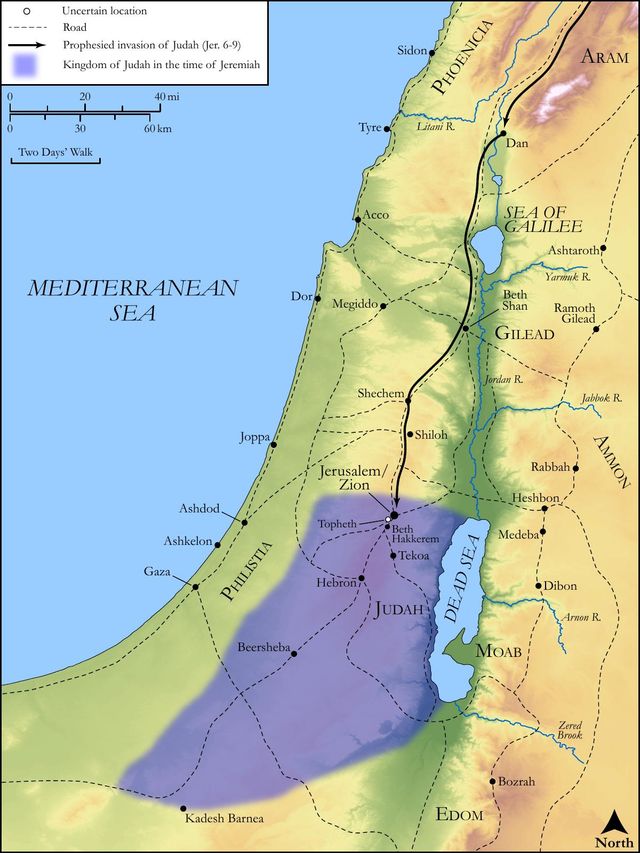
The "Valley of the son of Hinnom" (Hebrew: Ge Ben-Hinnom), a deep ravine bordering Jerusalem to the south and west, held a dark reputation. Within this valley lay Tophet, a specific cultic site notorious for the horrific ritual of child sacrifice, where infants and young children were burned alive as offerings to foreign gods, particularly Molech. This practice was a direct violation of God's covenant with Israel and His express commands, such as those found in Deuteronomy 18:10. The people of Judah, influenced by surrounding Canaanite cultures, had adopted these detestable rites, demonstrating a profound spiritual apostasy that deeply grieved the LORD. The prophecy in Jeremiah 7:32 thus speaks into a historical reality of profound spiritual rebellion and moral decay within the nation, highlighting the severity of their departure from the covenant.
Key Themes
ShowHideJeremiah 7:32 powerfully underscores several major theological and narrative themes prevalent in the book of Jeremiah and the broader prophetic tradition. Firstly, it highlights Divine Judgment and Retribution, demonstrating God's unwavering justice against severe sin, especially idolatry and the abhorrent practice of child sacrifice. The renaming of the valley from a place of pagan ritual to a "valley of slaughter" signifies the ultimate, devastating consequence of unrepentant rebellion against God's covenant. Secondly, it emphasizes Desecration and Transformation, as a place once used for horrific, pagan rituals will be utterly desecrated by overwhelming death. This transformation from a site of ritual burning to a mass grave underscores the complete reversal of fortune and the depth of God's wrath against a people who had repeatedly rejected His warnings and mercy, as seen throughout Jeremiah's prophecies. Lastly, the verse reinforces God's Sovereignty, asserting His ultimate control over history and His ability to execute His plans and judgments, even amidst human rebellion. The declaration that "the days come, saith the LORD," despite Judah's persistent sin, affirms God's absolute authority and His commitment to upholding His righteous standards.
Exposition and Analysis
ShowHideKey Word Analysis
ShowHideThis term refers to a specific cultic site within the Valley of Hinnom, infamous for the practice of child sacrifice by fire to pagan deities. Its very name became synonymous with horror and abomination. The prophecy here declares that this place, once known for its detestable rituals, will be renamed and repurposed by divine judgment, highlighting the complete reversal of its identity and function.
This word denotes a gorge or ravine, often characterized by lofty sides. In this context, it refers specifically to the "Valley of the son of Hinnom." The transformation of this geographical feature's name from one associated with a particular family (Hinnom) and later with pagan worship, to a "valley of slaughter," underscores the profound and devastating nature of the impending judgment. It signifies a complete redefinition of the landscape based on the consequences of sin.
This feminine noun directly translates to "slaughter." Its application as the new name for the valley is not merely descriptive but profoundly prophetic. It signifies the immense scale of death and destruction that will occur, so great that the valley will be filled with corpses, emphasizing the severity of God's judgment and the catastrophic end result of Judah's idolatry.
Verse Breakdown
ShowHide"Therefore, behold, the days come, saith the LORD,"
This opening clause serves as a solemn divine pronouncement, signaling an imminent and certain future event. The "Therefore" links this judgment directly to the preceding sins of child sacrifice and idolatry. "Behold" draws the listener's urgent attention, while "saith the LORD" emphasizes the divine authority and unwavering certainty of the prophecy.
"that it shall no more be called Tophet, nor the valley of the son of Hinnom,"
This declares a definitive end to the former names of this infamous location. The cessation of these names signifies a complete repudiation of their former associations, particularly the horrific pagan rituals. God Himself is orchestrating a re-naming, erasing the memory of past abominations through a new, grim reality.
"but the valley of slaughter:"
This is the new, divinely appointed name for the valley. It is a prophetic designation that vividly describes the future state of the location. "Slaughter" indicates mass killing, implying a devastating military defeat or widespread death, turning the valley into a testament to the consequences of Judah's sin and God's righteous judgment.
"for they shall bury in Tophet, till there be no place."
This final clause explains why the valley will be called the "valley of slaughter." It foretells a burial crisis of unprecedented scale. The sheer number of dead bodies will be so overwhelming that the designated burial site, Tophet, and by extension the entire valley, will be completely filled, leaving no room for further interments. This hyperbole underscores the catastrophic extent of the impending judgment and the complete desolation that will befall Judah.
Literary Devices
ShowHideJeremiah 7:32 employs several powerful literary devices to convey its message of impending judgment. Prophecy is the overarching device, as the verse declares a future event with divine certainty, transforming a place of abomination into a site of overwhelming death. The renaming of the valley from "Tophet" and "Valley of the son of Hinnom" to "the valley of slaughter" is a striking example of Symbolism and Irony. The valley, once symbolic of Judah's spiritual depravity and rebellion, becomes a symbol of God's righteous judgment and the catastrophic consequences of their actions. The irony lies in the fact that the very place where they sacrificed their children to false gods will become a place where their own dead children (and adults) will be buried en masse. Furthermore, the phrase "till there be no place" utilizes Hyperbole, an exaggeration not meant to be taken literally as an absolute lack of space, but rather to emphasize the immense and unprecedented number of casualties, underscoring the severity and scale of the coming devastation.
Theological and Thematic Connections
ShowHideJeremiah 7:32 serves as a stark theological declaration of God's unwavering justice and the severe consequences of unrepentant sin, particularly idolatry and the defilement of human life. It reveals that God does not passively observe the rebellion of His people, but actively intervenes to uphold His holiness and covenant. The transformation of Tophet into the "valley of slaughter" is a powerful testament to the principle that actions have consequences, and that persistent disobedience to divine commands ultimately leads to catastrophic judgment. This prophecy underscores the gravity of spiritual apostasy and the profound impact of turning away from the one true God to embrace detestable practices. It also highlights God's sovereign control over history, demonstrating His ability to execute His declared will, even when it involves severe retribution.
Reflection and Application
ShowHideWhile the immediate context of Jeremiah 7:32 is ancient Judah's specific sins, its message resonates powerfully today as a timeless reminder of the seriousness of sin and the immutable justice of God. We may not engage in literal child sacrifice, but modern idolatry manifests in myriad forms: placing wealth, career, pleasure, power, or self above God. This verse serves as a profound warning that any allegiance that displaces God from His rightful, supreme position in our lives carries severe spiritual consequences. It challenges us to examine our own hearts and priorities, ensuring that our trust is placed solely in the LORD and that our lives reflect His commandments, not the fleeting allure of worldly idols. The prophecy also calls us to acknowledge God's ultimate sovereignty and His commitment to justice, reminding us that while His mercy is vast, His holiness demands a response to sin. This should lead not to despair, but to a humble recognition of our need for repentance and a renewed commitment to walk in obedience and faithfulness.
Questions for Reflection
ShowHideFAQ
ShowHideWhat was Tophet and why was it so significant in ancient Judah?
ShowHideTophet was a specific cultic site located within the Valley of the son of Hinnom (Ge Ben-Hinnom), a deep ravine bordering Jerusalem. Its significance, tragically, stemmed from its notorious use as a place where the people of Judah engaged in the abhorrent practice of child sacrifice. They would burn their own children as offerings to pagan deities like Molech, a practice explicitly forbidden and condemned by God in the strongest terms (e.g., Leviticus 18:21). Tophet thus became a symbol of Judah's profound spiritual apostasy, moral depravity, and their ultimate rejection of God's covenant, making its renaming by divine decree a powerful statement of judgment.
How does this prophecy about the "valley of slaughter" relate to the concept of Gehenna in the New Testament?
ShowHideThe "Valley of the son of Hinnom" (Ge Ben-Hinnom) is the Hebrew name that, when transliterated into Greek, became Gehenna. In the Old Testament, as seen in Jeremiah 7:32, it was a literal place of horrific child sacrifice and later prophesied to become a site of mass burial and divine judgment. By the time of the New Testament, Gehenna had evolved in Jewish thought to become a metaphorical term for a place of eternal punishment, often associated with hellfire and ultimate destruction. Jesus Himself frequently used Gehenna to describe the eternal consequences of sin (e.g., Matthew 5:22, Mark 9:43). Thus, the prophecy in Jeremiah 7:32, foretelling the valley's transformation into a "valley of slaughter" due to divine judgment, serves as a grim foreshadowing of the ultimate, eternal judgment symbolized by Gehenna in the New Testament.
Christ-Centered Fulfillment
ShowHideJeremiah 7:32, with its grim prophecy of a "valley of slaughter" as the consequence of Judah's sin, finds its ultimate and profound fulfillment in the person and work of Jesus Christ. The judgment foretold for Tophet, a place defiled by the shedding of innocent blood and the worship of false gods, points to the universal reality of sin and its catastrophic wages (Romans 6:23). Humanity's spiritual idolatry and rebellion against God, epitomized by the abominations in the Valley of Hinnom, necessitated a divine reckoning. Yet, God's ultimate response to sin was not merely judgment, but a salvific act of love. The "slaughter" that truly dealt with the depth of human sin occurred not in Tophet, but on Calvary, where the innocent Lamb of God, Jesus Christ, was sacrificed. He bore the full weight of God's righteous wrath against sin, becoming the ultimate atoning sacrifice (2 Corinthians 5:21). Through His death and resurrection, Christ delivers us from the "valley of slaughter" that our sins deserve, offering forgiveness and eternal life to all who believe. He transforms the destiny of those who were once condemned by their idolatry, leading them from the path of destruction to the path of life, fulfilling the promise of a new covenant where sins are remembered no more.