


Hosea 4:6
Bible text: King James Version (1769 Blayney text) · Public domain
Bible text: King James Version with Strong's numbers · Public domain
Bible text: Berean Standard Bible · Public domain
Bible text: American Standard Version (1901) · Public domain
Bible text: World English Bible, Messianic edition · Public domain
Bible text: Geneva Bible (1599) · Public domain
Bible text: Young's Literal Translation · Public domain
- נִדְמוּnid·Muthey have been destroyedH1820V-Niphal-Perf-3cpVerb Niphal Perfect 3rd Plural common gender
- עַמִּי'a·Mimy peopleH5971N-msc ¦ 1csNoun Singular Masculine Constructעַמִּpeopleיmy
- מִבְּלִיmi·be·Libecause notH1097Prep-m ¦ N-mscNoun Singular Masculine Constructמִbecauseבְּלִיnot
- הַדָּעַתha·Da·'at<the> knowledgeH1847Art ¦ N-fsNoun Singular Feminine Absoluteהַ<the>דָּעַתknowledge
- כִּיkiforH3588PrtParticle Conditional
- אַתָּה'a·TahyouH859Pro-2msPronoun Personal 2nd Singular Masculine
- הַדַּעַתha·Da·'at<the> knowledgeH1847Art ¦ N-fsNoun Singular Feminine Absoluteהַ<the>דַּעַתknowledge
- מָאַסְתָּma·'As·tayou have rejectedH3988V-Qal-Perf-2msVerb Qal Perfect 2nd Singular Masculine
- וְאֶמְאָסְאךָve·'em·'a·se·Khaand I will reject youH3988Conj-w ¦ V-Qal-ConjImperf-1cs ¦ 2msVerb Qal Conjunction+Imperfect 1st Singular common genderוְandאֶמְאָסְאI will rejectךָyou
- מִכַּהֵןmi·ka·Henfrom serving as a priestH3547Prep-m ¦ V-Piel-InfVerb Piel Infinitive Constructמִfromכַּהֵןserving as a priest
- לִיLi<to> mePrep-l ¦ 1csSuffix Personal 1st Singular common genderלִ<to>יme
- וַתִּשְׁכַּחva·tish·Kachand you have forgottenH7911Conj-w ¦ V-Qal-ConsecImperf-2msVerb Qal Consecutive Imperfect 2nd Singular Masculineוַandתִּשְׁכַּחyou have forgotten
- תּוֹרַתto·Rat[the] law ofH8451N-fscNoun Singular Feminine Construct
- אֱלֹהֶיךָ'e·lo·Hei·khayour GodH430N-mpc ¦ 2msNoun Plural Masculine ConstructאֱלֹהֶיGodךָyour
- אֶשְׁכַּח'esh·KachI will forgetH7911V-Qal-Imperf-1csVerb Qal Imperfect 1st Singular common gender
- בָּנֶיךָba·Nei·khayour childrenH1121N-mpc ¦ 2msNoun Plural Masculine Constructבָּנֶיchildrenךָyour
- גַּםgamalsoH1571AdvAdverb
- אָנִי'A·niIH589Pro-1csPronoun Personal 1st Singular common gender
English is a literal word-by-word gloss of the Hebrew, not the KJV's wording. Why?
This is the original text the KJV's translators worked from — each Hebrew word with its own literal English meaning in this verse, prepared by scholars at Tyndale House, Cambridge. The KJV translates whole sentences, not word by word, so its wording differs: one Hebrew word can become several English words, and the KJV may choose “the LORD” where the gloss reads “Yahweh”. Both are faithful — they answer different questions. For the KJV's own rendering, switch to the KJV text.
Details
See on the biblical-era map
Study this verse
Public-domain commentary
Matthew Henry
From his Commentary on the Whole Bible. Henry comments on passages, not single verses — this entry covers Hosea 4:6–11. His two-level outline is real structure in the source text, so it is rendered as structure.
God is here proceeding in his controversy both with the priests and with the people. The people were as those that strove with the priests (Hos 4:4) when they had priests that did their duty; but the generality of them lived in the neglect of their duty, and here is a word for those priests, and for the people that love to have it so, Jer 5:31. And it is observable here how the punishment answers to the sin, and how, for the justifying of his own proceedings, God sets the one over-against the other.
I.The people strove with the priests that should have taught them the knowledge of God; justly therefore were they destroyed for lack of knowledge, Hos 4:6. Note, Those that rebel against the light can expect no other than to perish in the dark. Or it is a charge upon the priests, who should have been still teaching the people knowledge (Ecc 12:9), but they did not, or did it in such a manner that it was as if they had not done it at all, so there was no knowledge of God in the land; and because there was no vision, or none to any purpose, the people perished, Pro 29:18. Note, Ignorance is so far from being the mother of devotion that it is the mother of destruction; lack of knowledge is ruining to any person or people. They are my people that are thus destroyed; their relation to God as his people aggravates both their sin in not taking pains to get the knowledge of that God whose command they were under and with whom they were taken into covenant, and likewise the sin of those who should have taught them; God set his children to school to them, and they never minded them nor took any pains with them.
II.Both priests and people rejected knowledge; and justly therefore will God reject them.
The reason why the people did not learn, and the priests did not teach, was not because they had not the light, but because they hated it - not because they had not ways of coming to the knowledge of God and of communicating it, but because they had no heart to it; they rejected it. They desired not the knowledge of God's ways, but put it from them, and shut their eyes against the light; and therefore "I will also reject thee; I will refuse to take cognizance of thee and to own thee; you will not know me, but bid me depart; I will therefore say, Depart from me, I know you not. Thou shalt be no priest to me." 1. The priests shall be no longer admitted to the privileges, or employed in the services, of the priesthood, nor shall they ever be received again, as we find, Eze 44:13. Note, Ministers that reject knowledge, that are grossly ignorant and scandalous, ought not to be owned as ministers; but that which they seem to have should be taken away, Luk 8:18. 2. The people shall be no longer as they have been, a kingdom of priests, a royal priesthood, Exo 19:6. God's people, by rejecting knowledge, forfeit their honour and profane their own crown.
III.They forgot the law of God, neither desired nor endeavoured to retain it in mind, nor to transmit the remembrance of it to their posterity, and therefore justly will God forget them and their children, the people's children; they did not educate them, as they ought to have done, in the knowledge of God and their duty to him, and therefore God will disown them, as not in covenant with him. Note, If parents do not teach their children, when they are young, to remember their Creator, they cannot expect that their Creator should remember them. Or it may be meant of the priests' children; they shall not succeed them in the priests' office, but shall be reduced to poverty, as is threatened against Eli's house, Sa1 2:20.
IV.They dishonoured God with that which was their honour, and justly therefore will God strip them of it, Hos 4:7.
It was their honour that they were increased in number, wealth, power, and dignity. The beginning of their nation was small, but in process of time it greatly increased, and grew very considerable; the family of the priests increased wonderfully. But, as they were increased, so they sinned against God. The more populous the nation grew, the more sin was committed and the more profane they were; their wealth, honour, and power, did but make them the more daring in sin. Therefore, says God, will I change their glory into shame. Are their numbers their glory? God will diminish them and make them few. Is their wealth their glory? God will impoverish them and bring them low; so that they shall themselves be ashamed of that which they gloried in. Their priests shall be made contemptible and base, Mal 2:9. Note, That which is our honour, if we dishonour God with it, will sooner or later be turned into shame to us: for those that despise God shall be lightly esteemed, Sa1 2:30.
V.The priests ate up the sin of God's people, and therefore they shall eat and not have enough.
1.They abused the maintenance that was allowed to the priests, to the priests of the house of Aaron, by the law of God, and to the mock-priests of the calves by their constitution (Hos 4:8): They eat up the sin of my people, that is, their sin-offerings. If it be meant of the priests of the calves, it intimates their seizing that which they had no right to; they usurped the revenues of the priests, though they were no priests. If it be meant of those who were legal priests, it intimates their greediness of the profits and perquisites of their office, when they took no care at all to do the duty of it. They feasted upon their part of the offerings of the Lord, but forgot the work for which they were so well paid. They set their heart upon the people's iniquities; they lifted up their soul to them, that is, they were glad then people did commit iniquity, that they might be obliged to bring an offering to make atonement for it, which they should have their share of; the more sins the more sacrifices, and therefore they cared not how much sin people were guilty of. Instead of warning the people against sin, from the consideration of the sacrifices, which showed them what an offence sin was to God, since it needed such an expiation, they emboldened and encouraged the people to sin, since an atonement might be made at so small an expense. Thus they glutted themselves upon the sins of the people, and helped to keep up that which they should have beaten down. Note, It is a very wicked thing to be well pleased with the sins of others because, in some way or other, they may turn to our advantage.
2.God will therefore deny them his blessing upon their maintenance (Hos 4:10): They shall eat and not have enough. Though they have great plenty by the abundance of offerings that are brought in, yet they shall have no satisfaction in it. Either their food shall yield no good nourishment or their greedy appetites shall not be satisfied with it. Note, What is unlawfully gained cannot be comfortably used; no, nor that which is inordinately coveted; it is just that the desires which are insatiable should always be unsatisfied, and that those should never have enough who never know when they have enough. See Mic 6:14; Hag 1:6.
VI.The more they increased the more they sinned (Hos 4:7), and therefore though they commit whoredom, though they take the most wicked methods to multiply their people, yet they shall not increase. Though they have many wives and concubines, as Solomon had, yet they shall not have their families built up thereby in a numerous progeny, any more than he had. Note, Those that hope any way to increase by unlawful means will be disappointed. And therefore God will thus blast all their projects because they have left off to take heed to the Lord; time was when they had some regard to God, and to his authority over them and interest in them, but they have left it off; they take no heed to his word nor to his providences; they do not eye him in either. They forsake him, so as not to take heed to him; they have apostatized to such a degree that they have no manner of regard to God, but are perfectly without God in the world. Note, Those that leave off to take heed to the Lord leave off all good, and can expect no other than that all good should leave them.
VII.The people and the priests did harden one another in sin; and therefore justly shall they be sharers in the punishment (Hos 4:9):
There shall be, like people, like priest. So they were in character; people and priest were both alike ignorant and profane, regardless of God and their duty, and addicted to idolatry: and so they shall be in condition; God will bring judgments upon them, that shall be the destruction both of priest and people; the famine that deprives the people of their meat shall deprive the priests of their meat-offerings, Joe 1:9. It is part of the description of a universal desolation that it shall be as with the people, so with the priest, Isa 24:2. God's judgments, when they come with commission, will make no difference. Note, Sharers in sin must expect to be sharers in ruin. Thus God will punish them both for their ways, and reward them for their doings. God will cause their doings to return upon them (so the word is); when a sin is committed the sinner thinks it is gone and he shall hear no more of it, but he shall find it called over again, and made to return, either to his humiliation or to his condemnation.
VIII.They indulged themselves in the delights of sense, to hold up their hearts; but they shall find that they take away their hearts (Hos 4:11):
Whoredom, and wine, and new wine take away the heart. Some join this with the foregoing words. They have forsaken the Lord, to take heed to whoredom, and wine, and new wine. Or, Because these have taken away their heart. Their sensual pleasures have taken them off from their devotions and drowned all that is good in them. Or we may take it as a distinct sentence, containing a great truth which we see confirmed by every day's experience, that drunkenness and uncleanness are sins which besot and infatuate men, weaken and enfeeble them. They take away both the understanding and the courage.
Historical interpretation
Historical reception
1 surviving comment on this verse from the historical church.
"At night, I made your mother be silent, my people have become silent, because they have no knowledge: for you have rejected knowledge, I will reject you, and you will not serve as a priest to me; and you have forgotten the law of your God, I will also forget your sons." LXX: "I have compared thy mother to the night, and my people to have no knowledge. Since thou hast refused knowledge, I will also refuse thee, that thou shalt not be a priest to me. Thou hast forgotten the law of thy God, and I will forget thy children." Not because there are other mothers and other sons, does she call herself mother and sons; but just as the Lord spoke to the Jewish people and said, "Jerusalem, Jerusalem, thou that killest the prophets and stonest those sent to thee, how often I have desired to gather thy children together, as a hen gathers her chicks under her wings, and thou didst not want it." (Matthew 23, 5). Not as another Jerusalem, and another people thereof: for it did not speak without the people to the building of the city and the wood and the stones. Thus the mother is called the crowd of the people and every multitude of the Hebrew nation, to whom it speaks: but the sons, either single or dispersed through the towns and villages of the people. Therefore in the night and darkness of captivity, mourning and pressing distress, Israel is surrendered and its people remain silent in eternal silence; because it did not have knowledge of the law, nor did it keep the commandments of God, and received what it had done. For she herself has rejected God's law, and thus she has lost the priesthood forever, and worships the golden calves in Dan and Bethel; and because she has forgotten God's law, and entirely enslaved herself to Egyptian idols, therefore the Lord will also forget her children, delivering them to eternal captivity: "For he who is ignorant, let him be ignorant." (I Cor. XIV), and in the Psalms we read: "They did not know, nor did they understand, they walked in darkness." (Ps. LXXXI, 5). We can refer everything that is said about the ten tribes to the heretics who have left the kingdom of David and Jerusalem, that is, Christ and the Church: and therefore they are covered with eternal night, they do not have the knowledge of God, and they are rejected by the Lord so that they may not perform the priesthood to him, and they never remember the children they have generated, because they have become aliens to him.
Continue studying Hosea 4:6 across the web’s major study libraries — every link below opens this exact verse, chapter, or book on the destination site.
Read & Compare
 BibleGatewayThis verse in more than 200 translations and 70 languages.
 Bible.comThe YouVersion reader — hundreds of translations, reading plans, and highlights.
 ESV.orgCrossway's official English Standard Version reader.
 NET BibleThe NET translation with 60,000+ translators' notes on every rendering decision.
 STEP BibleTyndale House's free study tool — original text, vocabulary, and scholarly resources.
 BibliaLogos Bible Software's free web reader.
 USCCBThe New American Bible (Revised Edition) with the U.S. bishops' study notes.
Commentaries
 BibleHub CommentariesDozens of classic commentaries on this verse, gathered on one page.
 StudyLightMore than 100 commentary sets — the largest collection on the web.
 BibleRefPlain-English commentary on what this verse means, verse by verse.
 Enduring WordDavid Guzik's free commentary on this chapter, widely used by Bible teachers.
 Bible Study ToolsVerse commentary alongside Greek and Hebrew study aids.
Original Language & Research
- BibleHub InterlinearThe verse word by word — original language, transliteration, and English.
- BibleHub LexiconEvery word's original-language definition and Strong's entry.
 Blue Letter BibleDeep-study tools — Strong's numbers, concordance, and word studies.
 SefariaThe Hebrew text with Rashi and centuries of Jewish commentary.
Sermons, Hymns & Audio


TrulyRandomVerse is not affiliated with these sites and doesn’t control their content. They’re linked because they’re genuinely useful.
Summary
Hosea 4:6 serves as a profound indictment against ancient Israel, particularly the Northern Kingdom, declaring that their destruction is a direct consequence of their deliberate rejection and forgetting of divine knowledge and God's law. This spiritual amnesia, particularly acute among the priestly class who were meant to preserve and teach truth, led to God's reciprocal rejection of their priestly function and a devastating intergenerational curse, highlighting the critical importance of knowing and obeying God for national and spiritual flourishing.
Context
ShowHideLiterary Context
Hosea 4 marks a significant shift in the book, moving from the allegorical portrayal of Israel's spiritual adultery through Hosea's marriage to Gomer (chapters 1-3) to a direct divine indictment, often termed a "covenant lawsuit" (Hebrew: riv). The preceding verses (Hosea 4:1-3) lay the groundwork for this judgment, listing a litany of moral failures—lying, murder, stealing, adultery—and lamenting the absence of faithfulness, steadfast love, and knowledge of God in the land. Verse 6 specifically targets the root cause of this widespread moral decay: a profound and deliberate lack of divine knowledge, particularly among the spiritual leaders, the priests, who were entrusted with teaching God's law. It explains why the land mourns and its inhabitants waste away, connecting the national destruction to spiritual negligence.
Historical & Cultural Context
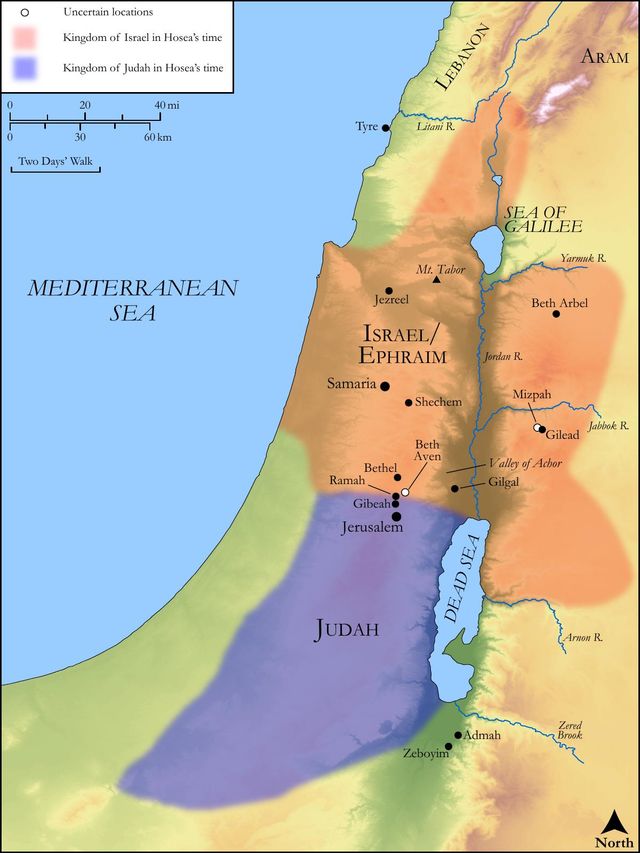
Hosea prophesied during the tumultuous final decades of the Northern Kingdom of Israel (c. 750-715 BC), a period marked by rapid dynastic changes, political instability, and increasing Assyrian pressure. Despite a period of economic prosperity under Jeroboam II, spiritual and moral decay was rampant. The people had assimilated Canaanite religious practices, engaging in widespread idolatry and syncretism, often under the guise of worshipping Yahweh. Culturally, the priests (kohanim) held a crucial role as mediators between God and the people, responsible for temple rituals, offering sacrifices, and, most importantly, teaching the Torah and discerning God's will. Their failure to uphold this duty, as highlighted in this verse, was a catastrophic dereliction that led the entire nation astray. The judgment pronounced here reflects the covenant stipulations of Deuteronomy 28, where obedience to God's law brings blessing, and disobedience brings curses and ultimately, destruction.
Key Themes
ShowHideHosea 4:6 encapsulates several major themes central to the book of Hosea and the broader prophetic tradition. The primary theme is the consequences of spiritual ignorance and rejection of divine truth. The "knowledge" (Hebrew: da'ath) referred to is not mere intellectual assent but an intimate, relational understanding of God's character, His covenant, and His revealed will, which naturally leads to obedience and faithfulness. The verse underscores that Israel's destruction was not arbitrary but a direct result of their active rejection of this knowledge. This leads to the theme of priestly accountability and failure, as those specifically called to preserve and transmit God's law (Malachi 2:7) had themselves become ignorant and complicit. Finally, the verse highlights the intergenerational impact of spiritual negligence, where the spiritual failures of one generation, particularly the forgetting of God's law, lead to devastating consequences for future generations, underscoring the vital importance of passing on a godly heritage (Deuteronomy 6:6-7).
Exposition and Analysis
ShowHideKey Word Analysis
ShowHideMeaning "to be dumb or silent; hence, to fail or perish; trans. to destroy; cease, be cut down (off), destroy, be brought to silence, be undone, utterly." This word conveys a sense of utter cessation and ruin. It's not merely a decline but a complete perishing or being cut off, indicating the severe consequences of their spiritual state.
Meaning "knowledge; cunning, (ig-) norantly, know(-ledge), (un-) awares (wittingly)." In this context, it refers to a deep, intimate, and experiential understanding of God, His character, His covenant, and His revealed will (Torah). It implies not just intellectual apprehension but a moral discernment that leads to right living and obedience. Its absence is catastrophic.
Meaning "to spurn; also (intransitively) to disappear; abhor, cast away (off), contemn, despise, disdain, (become) loathe(some), melt away, refuse, reject, reprobate, utterly, vile person." This is a strong verb indicating a deliberate, willful act of despising or scorning something valuable. Israel's lack of knowledge was not accidental but a conscious and active turning away from God's truth.
Verse Breakdown
ShowHide"My people are destroyed for lack of knowledge:"
This opening clause states the dire consequence of Israel's spiritual condition. The term "My people" (H5971, ʻam) emphasizes the covenant relationship that God had with Israel, making their destruction all the more tragic and ironic. Their perishing (H1820, dâmâh) is directly attributed to an absence of "knowledge" (H1847, daʻath), which, as noted, is not intellectual deficiency but a relational and moral failure to know God intimately and obey His will. This lack of knowledge leads to a breakdown in covenant faithfulness, resulting in national ruin.
"because thou hast rejected knowledge, I will also reject thee, that thou shalt be no priest to me:"
This clause reveals the reason for the "lack of knowledge" and introduces the specific judgment upon the spiritual leaders. The destruction is not merely due to ignorance but a deliberate, active "rejection" (H3988, mâʼaç) of that vital knowledge. This rejection is met with a reciprocal divine rejection. The phrase "that thou shalt be no priest to me" (H3547, kâhan) specifically targets the priests, who were meant to be the custodians and teachers of God's law. Their failure to uphold their sacred duty, by rejecting the very knowledge they were to impart, resulted in God stripping them of their priestly function and privilege.
"seeing thou hast forgotten the law of thy God, I will also forget thy children."
This final clause provides a further, deeper explanation for the rejection of knowledge: they had "forgotten" (H7911, shâkach) the "law" (H8451, tôwrâh) of their God (H430, ʼĕlôhîym). This forgetting is not a mere lapse of memory but a willful neglect and abandonment of God's revealed will. The devastating consequence is an intergenerational curse: God's reciprocal "forgetting" (H7911, shâkach) of "thy children" (H1121, bên). This implies a withdrawal of divine favor, protection, and covenant blessing from the next generation, underscoring the profound and lasting impact of spiritual negligence on future descendants.
Literary Devices
ShowHideHosea 4:6 powerfully employs several literary devices to convey its urgent message. Central to the verse is Cause and Effect, where the destruction of the people is directly linked to their lack of knowledge, which in turn is caused by their rejection of knowledge and forgetting of the law. This creates a clear logical progression of spiritual decline and divine judgment. The verse also utilizes striking Parallelism, particularly in the reciprocal nature of God's action: "because thou hast rejected knowledge, I will also reject thee" and "seeing thou hast forgotten the law of thy God, I will also forget thy children." This parallel structure emphasizes the justice and direct correspondence of God's judgment to Israel's sin. Furthermore, the concept of God "forgetting" is an example of Anthropomorphism, attributing a human characteristic (forgetting) to God. In this context, it signifies God's withdrawal of His covenant relationship, favor, and protection from those who have forgotten Him, rather than a literal inability to remember. The "knowledge" and "law" can also be seen as Metonymy, standing in for the entire covenant relationship, obedience, and the intimate understanding of God's character that should define His people.
Theological and Thematic Connections
ShowHideHosea 4:6 is a stark reminder of the intrinsic link between divine knowledge and spiritual vitality, both individually and corporately. It underscores that true knowledge of God is not optional but foundational for a flourishing relationship with Him and for the very existence of His covenant people. The verse highlights God's justice in responding to human rebellion and negligence, particularly among those entrusted with spiritual leadership. It reveals that God's "forgetting" is a terrifying consequence of human "forgetting" of His law, signifying a withdrawal of His presence and blessing from a people who have deliberately turned away from Him. This passage resonates deeply with the biblical emphasis on the importance of hearing, knowing, and obeying God's Word as the path to life and blessing, and the severe repercussions of spiritual apathy and deliberate ignorance.
Reflection and Application
ShowHideHosea 4:6 serves as a timeless warning for all generations, emphasizing the critical importance of a deep, personal, and transformative knowledge of God and His Word. In an age saturated with information, it's easy to mistake intellectual familiarity with spiritual intimacy. This verse challenges believers to move beyond superficial understanding to a profound, experiential knowledge that shapes character and behavior. Spiritual ignorance, especially when it stems from a deliberate rejection of truth or a forgetting of God's commands, leads to destructive outcomes in personal lives, families, and communities. For those in spiritual leadership, it is a sobering call to accountability, reminding them of their sacred duty to diligently teach and embody God's truth, lest they lead others astray and face divine rejection. For parents, it underscores the immense responsibility of diligently discipling the next generation, ensuring that the spiritual heritage of God's law is not forgotten, thereby safeguarding their children from spiritual desolation. Ultimately, this passage compels us to prioritize God's Word, embrace its transforming power, and actively transmit its truths, recognizing that a vibrant relationship with God, founded on knowing and obeying Him, is essential for true flourishing.
Questions for Reflection
ShowHideFAQ
ShowHideWhat kind of "knowledge" is Hosea 4:6 referring to?
ShowHideThe "knowledge" (Hebrew: daʻath) in Hosea 4:6 is not merely intellectual information or academic understanding. It refers to a deep, intimate, and relational acquaintance with God, His character, His covenant, and His revealed will, particularly as expressed in His law (Torah). It implies a knowledge that leads to moral discernment, covenant faithfulness, and practical obedience. It's the kind of knowledge that transforms one's life and relationship with God, rather than just filling one's head. It's akin to the knowledge implied in Jeremiah 9:24, where true boasting is in knowing and understanding God.
Why are the priests specifically mentioned in this judgment?
ShowHideThe priests (H3547, kâhan) were divinely appointed to mediate between God and His people. A primary aspect of their role, alongside offering sacrifices, was to preserve, interpret, and teach God's law to the Israelites. Leviticus 10:11 explicitly states their duty to "teach the children of Israel all the statutes which the Lord has spoken." By "rejecting knowledge" and "forgetting the law," the priests had failed in their most fundamental duty, leading the entire nation astray. Their spiritual negligence and complicity in the nation's idolatry and moral decay made them particularly culpable, leading to God's judgment that they would "be no priest" to Him, signifying a loss of their sacred office and divine favor.
How does God "forget" His children? Does this mean He literally forgets them?
ShowHideWhen the Bible speaks of God "forgetting" (H7911, shâkach), it's an example of anthropomorphism, attributing a human action or characteristic to God to help us understand His divine response. It does not mean God literally suffers from memory loss. Instead, in this context, God's "forgetting" signifies His withdrawal of covenant favor, protection, and blessing from those who have forgotten Him and His law. It implies a cessation of the intimate, active relationship He desires with His people and their descendants. It's a terrifying consequence of spiritual abandonment, leading to a state of being cut off from His life-giving presence, as seen in the ultimate judgment where Jesus declares, "I never knew you" to those who claim to serve Him but do not truly know Him.
Christ-Centered Fulfillment
ShowHideHosea 4:6, with its lament over a people destroyed for lack of knowledge and a priesthood rejected for forgetting God's law, finds its profound Christ-centered fulfillment in the person and work of Jesus Christ. Israel's failure to know God intimately and uphold His law highlighted their desperate need for a perfect revelation and a perfect mediator. Jesus is the ultimate embodiment of divine knowledge; He is the Word made flesh, through whom we truly know God (John 1:18). In Him "are hidden all the treasures of wisdom and knowledge" (Colossians 2:3). Unlike the failed priests of Israel, Jesus serves as our perfect and eternal High Priest, who "always lives to intercede for them" (Hebrews 7:25), offering a sacrifice that truly atones for sin and providing access to God's presence. Through His New Covenant, established by His blood, the law is no longer merely external and forgotten, but is "written on their hearts" (Jeremiah 31:33, fulfilled in Hebrews 8:10), enabling a genuine, internal knowledge of God for all who believe. Furthermore, believers in Christ are now part of a "royal priesthood" (1 Peter 2:9), called to proclaim the excellencies of Him who called them out of darkness into His marvelous light. Thus, the destruction for lack of knowledge is overcome by the saving knowledge of Christ, and the forgotten law is fulfilled in the obedient life and atoning death of the Son, who grants us true access to God and empowers us to live in His truth.