


Hosea 4:9
Bible text: King James Version (1769 Blayney text) · Public domain
Bible text: Berean Standard Bible · Public domain
Bible text: American Standard Version (1901) · Public domain
Bible text: World English Bible, Messianic edition · Public domain
Bible text: Geneva Bible (1599) · Public domain
Bible text: Young's Literal Translation · Public domain
- וְהָיָהve·ha·Yahand it will beH1961Conj-w ¦ V-Qal-ConsecPerf-3msVerb Qal Consecutive Perfect 3rd Singular Masculineוְandהָיָהit will be
- כָעָםkha·'Amas the peopleH5971Prep-k ¦ N-msNoun Singular Masculine Absoluteכָas theעָםpeople
- כַּכֹּהֵןka·ko·Henas the priestH3548Prep-k ¦ N-msNoun Singular Masculine Absoluteכַּas theכֹּהֵןpriest
- וּפָקַדְתִּיu·fa·kad·Tiand I will visitH6485Conj-w ¦ V-Qal-ConsecPerf-1csVerb Qal Consecutive Perfect 1st Singular common genderוּandפָקַדְתִּיI will visit
- עָלָיו'a·Lavon himH5921Prep ¦ 3msPrepositionעָלָיonוhim
- דְּרָכָיוde·ra·Khavhis waysH1870N-mpc ¦ 3msNoun Plural Masculine Constructדְּרָכָיwaysוhis
- וּמַעֲלָלָיוu·ma·'a·la·Lavand his deedsH4611Conj-w ¦ N-mpc ¦ 3msNoun Plural Masculine Constructוּandמַעֲלָלָיdeedsוhis
- אָשִׁיב'a·ShivI will repayH7725V-Hiphil-Imperf-1csVerb Hiphil Imperfect 1st Singular common gender
- לוֹloto himPrep-l ¦ 3msSuffix Personal 3rd Singular Masculineלtoוֹhim
English is a literal word-by-word gloss of the Hebrew, not the KJV's wording. Why?
This is the original text the KJV's translators worked from — each Hebrew word with its own literal English meaning in this verse, prepared by scholars at Tyndale House, Cambridge. The KJV translates whole sentences, not word by word, so its wording differs: one Hebrew word can become several English words, and the KJV may choose “the LORD” where the gloss reads “Yahweh”. Both are faithful — they answer different questions. For the KJV's own rendering, switch to the KJV text.
Details
See on the biblical-era map
Study this verse
Public-domain commentary
Matthew Henry
From his Commentary on the Whole Bible. Henry comments on passages, not single verses — this entry covers Hosea 4:6–11. His two-level outline is real structure in the source text, so it is rendered as structure.
God is here proceeding in his controversy both with the priests and with the people. The people were as those that strove with the priests (Hos 4:4) when they had priests that did their duty; but the generality of them lived in the neglect of their duty, and here is a word for those priests, and for the people that love to have it so, Jer 5:31. And it is observable here how the punishment answers to the sin, and how, for the justifying of his own proceedings, God sets the one over-against the other.
I.The people strove with the priests that should have taught them the knowledge of God; justly therefore were they destroyed for lack of knowledge, Hos 4:6. Note, Those that rebel against the light can expect no other than to perish in the dark. Or it is a charge upon the priests, who should have been still teaching the people knowledge (Ecc 12:9), but they did not, or did it in such a manner that it was as if they had not done it at all, so there was no knowledge of God in the land; and because there was no vision, or none to any purpose, the people perished, Pro 29:18. Note, Ignorance is so far from being the mother of devotion that it is the mother of destruction; lack of knowledge is ruining to any person or people. They are my people that are thus destroyed; their relation to God as his people aggravates both their sin in not taking pains to get the knowledge of that God whose command they were under and with whom they were taken into covenant, and likewise the sin of those who should have taught them; God set his children to school to them, and they never minded them nor took any pains with them.
II.Both priests and people rejected knowledge; and justly therefore will God reject them.
The reason why the people did not learn, and the priests did not teach, was not because they had not the light, but because they hated it - not because they had not ways of coming to the knowledge of God and of communicating it, but because they had no heart to it; they rejected it. They desired not the knowledge of God's ways, but put it from them, and shut their eyes against the light; and therefore "I will also reject thee; I will refuse to take cognizance of thee and to own thee; you will not know me, but bid me depart; I will therefore say, Depart from me, I know you not. Thou shalt be no priest to me." 1. The priests shall be no longer admitted to the privileges, or employed in the services, of the priesthood, nor shall they ever be received again, as we find, Eze 44:13. Note, Ministers that reject knowledge, that are grossly ignorant and scandalous, ought not to be owned as ministers; but that which they seem to have should be taken away, Luk 8:18. 2. The people shall be no longer as they have been, a kingdom of priests, a royal priesthood, Exo 19:6. God's people, by rejecting knowledge, forfeit their honour and profane their own crown.
III.They forgot the law of God, neither desired nor endeavoured to retain it in mind, nor to transmit the remembrance of it to their posterity, and therefore justly will God forget them and their children, the people's children; they did not educate them, as they ought to have done, in the knowledge of God and their duty to him, and therefore God will disown them, as not in covenant with him. Note, If parents do not teach their children, when they are young, to remember their Creator, they cannot expect that their Creator should remember them. Or it may be meant of the priests' children; they shall not succeed them in the priests' office, but shall be reduced to poverty, as is threatened against Eli's house, Sa1 2:20.
IV.They dishonoured God with that which was their honour, and justly therefore will God strip them of it, Hos 4:7.
It was their honour that they were increased in number, wealth, power, and dignity. The beginning of their nation was small, but in process of time it greatly increased, and grew very considerable; the family of the priests increased wonderfully. But, as they were increased, so they sinned against God. The more populous the nation grew, the more sin was committed and the more profane they were; their wealth, honour, and power, did but make them the more daring in sin. Therefore, says God, will I change their glory into shame. Are their numbers their glory? God will diminish them and make them few. Is their wealth their glory? God will impoverish them and bring them low; so that they shall themselves be ashamed of that which they gloried in. Their priests shall be made contemptible and base, Mal 2:9. Note, That which is our honour, if we dishonour God with it, will sooner or later be turned into shame to us: for those that despise God shall be lightly esteemed, Sa1 2:30.
V.The priests ate up the sin of God's people, and therefore they shall eat and not have enough.
1.They abused the maintenance that was allowed to the priests, to the priests of the house of Aaron, by the law of God, and to the mock-priests of the calves by their constitution (Hos 4:8): They eat up the sin of my people, that is, their sin-offerings. If it be meant of the priests of the calves, it intimates their seizing that which they had no right to; they usurped the revenues of the priests, though they were no priests. If it be meant of those who were legal priests, it intimates their greediness of the profits and perquisites of their office, when they took no care at all to do the duty of it. They feasted upon their part of the offerings of the Lord, but forgot the work for which they were so well paid. They set their heart upon the people's iniquities; they lifted up their soul to them, that is, they were glad then people did commit iniquity, that they might be obliged to bring an offering to make atonement for it, which they should have their share of; the more sins the more sacrifices, and therefore they cared not how much sin people were guilty of. Instead of warning the people against sin, from the consideration of the sacrifices, which showed them what an offence sin was to God, since it needed such an expiation, they emboldened and encouraged the people to sin, since an atonement might be made at so small an expense. Thus they glutted themselves upon the sins of the people, and helped to keep up that which they should have beaten down. Note, It is a very wicked thing to be well pleased with the sins of others because, in some way or other, they may turn to our advantage.
2.God will therefore deny them his blessing upon their maintenance (Hos 4:10): They shall eat and not have enough. Though they have great plenty by the abundance of offerings that are brought in, yet they shall have no satisfaction in it. Either their food shall yield no good nourishment or their greedy appetites shall not be satisfied with it. Note, What is unlawfully gained cannot be comfortably used; no, nor that which is inordinately coveted; it is just that the desires which are insatiable should always be unsatisfied, and that those should never have enough who never know when they have enough. See Mic 6:14; Hag 1:6.
VI.The more they increased the more they sinned (Hos 4:7), and therefore though they commit whoredom, though they take the most wicked methods to multiply their people, yet they shall not increase. Though they have many wives and concubines, as Solomon had, yet they shall not have their families built up thereby in a numerous progeny, any more than he had. Note, Those that hope any way to increase by unlawful means will be disappointed. And therefore God will thus blast all their projects because they have left off to take heed to the Lord; time was when they had some regard to God, and to his authority over them and interest in them, but they have left it off; they take no heed to his word nor to his providences; they do not eye him in either. They forsake him, so as not to take heed to him; they have apostatized to such a degree that they have no manner of regard to God, but are perfectly without God in the world. Note, Those that leave off to take heed to the Lord leave off all good, and can expect no other than that all good should leave them.
VII.The people and the priests did harden one another in sin; and therefore justly shall they be sharers in the punishment (Hos 4:9):
There shall be, like people, like priest. So they were in character; people and priest were both alike ignorant and profane, regardless of God and their duty, and addicted to idolatry: and so they shall be in condition; God will bring judgments upon them, that shall be the destruction both of priest and people; the famine that deprives the people of their meat shall deprive the priests of their meat-offerings, Joe 1:9. It is part of the description of a universal desolation that it shall be as with the people, so with the priest, Isa 24:2. God's judgments, when they come with commission, will make no difference. Note, Sharers in sin must expect to be sharers in ruin. Thus God will punish them both for their ways, and reward them for their doings. God will cause their doings to return upon them (so the word is); when a sin is committed the sinner thinks it is gone and he shall hear no more of it, but he shall find it called over again, and made to return, either to his humiliation or to his condemnation.
VIII.They indulged themselves in the delights of sense, to hold up their hearts; but they shall find that they take away their hearts (Hos 4:11):
Whoredom, and wine, and new wine take away the heart. Some join this with the foregoing words. They have forsaken the Lord, to take heed to whoredom, and wine, and new wine. Or, Because these have taken away their heart. Their sensual pleasures have taken them off from their devotions and drowned all that is good in them. Or we may take it as a distinct sentence, containing a great truth which we see confirmed by every day's experience, that drunkenness and uncleanness are sins which besot and infatuate men, weaken and enfeeble them. They take away both the understanding and the courage.
Historical interpretation
Seven Centuries of Reception
5 surviving comments on this verse. Each one is dated, so this reads as a timeline rather than a list.
Select a marker to jump to its quote. Markers stagger vertically where authors wrote within a few decades of each other.
"According to their abundance, so they sinned against me: I will change their glory into shame, they will eat the sins of my people, and lift up their souls to their iniquity, and it shall be as the people, so the priest, and I will visit upon him his ways, and render to him his thoughts." LXX: "According to their abundance, so they sinned against me, I will turn their glory into shame": they will eat the sins of my people, and receive them in their iniquities"; "others their souls, and it will be as the people, so also the priest, and I will take vengeance on him for his ways, and render to him his thoughts." Israel had as many altars built for demons as they had men, in whose sacrifices they sinned against me. Therefore, I will exchange their glory, in which they boasted to themselves and preferred to God, into ignominy, so that both the priests and the people may be captured. For indeed, the priests eat the sins of my people, concerning whom it is written: "Those who devour my people, like bread" (Ps 13:8). And therefore they eat the sins of my people, consenting to the crimes of wrongdoers since, when they witness them sinning, not only do they not rebuke them, but they praise and exalt them and call them blessed. About whom Isaiah speaks: "My people, who call you blessed, deceive you, and they "supplant" the paths of your feet" (Isa. III, 12). Concerning them, the Psalmist cries out: "For the sinner is praised in the desires of his soul, and the unjust is blessed" (Ps. IX, 24). Hence, both the people and the priest will equally endure the sentence of God's indignation; for not only will He visit the works that they call "ways," in which they walk, but also the thoughts which they have entertained to do such things. For not only the work, but also the contemplation of evil deeds will pay the penalty. It is easy to understand about heretics, that the more there are, the more they sin against God and glory in the people; and so they deceive the unfortunate, so that they may eat the sins of the people, and by sweet words devour the houses of widows (Luke XX). For when they see some sinning, they say: God seeks nothing else but the truth of faith, which if you keep, he does not care what you do. For by saying these things, they lift up their souls in their iniquities, so that they not only do not repent or humble themselves, but rejoice in their wicked deeds and walk with heads held high. Therefore both the people and the priest, the learned and the teachers of the law, will be equally punished.
Seemingly he calls “ways” the walking in works and “counsels” the faults from outrageous thoughts. Then, he says, she [Israel] did not go rightly, having turned aside from the straight road. As if marching the footpath of all profanity, they devised the most shameful and absurd things, dishonoring the God of all while turning toward idolatry.
When, he says, the avenging judgment begins to work, these measures of griefs that they [Israel] made in sins will be filled, so that they may experience in punishments what they have achieved in desires.
We do not seek to gain souls; we devote ourselves daily to our own pursuits, we attend to earthly matters, we strive for human praise with all our will. From being set over others we have greater freedom to do anything we like, and so we turn the ministry we have received into an occasion for display. We abandon God’s cause, and we devote ourselves to earthly business; we accept a place of holiness and involve ourselves in earthly deeds. What is written in Hosea is truly fulfilled in us: “And so it will be, like people, like priest.” A priest does not differ from the people when he does not surpass their deeds by any merit of his own.
By calling the deeds “ways” he says that “I will bring over them all the judgment and punishment for their deeds. And I will punish not the deeds only but also ‘his’ counsels,” namely, of the people. For we will suffer punishment not only for the deeds but for the outrageous thoughts.
Continue studying Hosea 4:9 across the web’s major study libraries — every link below opens this exact verse, chapter, or book on the destination site.
Read & Compare
 BibleGatewayThis verse in more than 200 translations and 70 languages.
 Bible.comThe YouVersion reader — hundreds of translations, reading plans, and highlights.
 ESV.orgCrossway's official English Standard Version reader.
 NET BibleThe NET translation with 60,000+ translators' notes on every rendering decision.
 STEP BibleTyndale House's free study tool — original text, vocabulary, and scholarly resources.
 BibliaLogos Bible Software's free web reader.
 USCCBThe New American Bible (Revised Edition) with the U.S. bishops' study notes.
Commentaries
 BibleHub CommentariesDozens of classic commentaries on this verse, gathered on one page.
 StudyLightMore than 100 commentary sets — the largest collection on the web.
 BibleRefPlain-English commentary on what this verse means, verse by verse.
 Enduring WordDavid Guzik's free commentary on this chapter, widely used by Bible teachers.
 Bible Study ToolsVerse commentary alongside Greek and Hebrew study aids.
Original Language & Research
- BibleHub InterlinearThe verse word by word — original language, transliteration, and English.
- BibleHub LexiconEvery word's original-language definition and Strong's entry.
 Blue Letter BibleDeep-study tools — Strong's numbers, concordance, and word studies.
 SefariaThe Hebrew text with Rashi and centuries of Jewish commentary.
Sermons, Hymns & Audio


TrulyRandomVerse is not affiliated with these sites and doesn’t control their content. They’re linked because they’re genuinely useful.
Summary
Hosea 4:9 delivers a stark declaration of divine judgment against the Northern Kingdom of Israel, emphasizing that the widespread moral and spiritual corruption had permeated all levels of society, from the common people to the religious leaders. The verse proclaims a principle of equitable retribution: because both the populace and the priests had become indistinguishable in their rebellion and unfaithfulness, God would justly punish them according to their wicked actions and deeds, ensuring that none would escape accountability for their profound apostasy.
Context
ShowHideLiterary Context
Hosea 4:9 is situated within a broader divine indictment against Israel that begins in Hosea 4:1. The preceding verses detail the nation's profound moral decay, citing a pervasive lack of truth, mercy, and knowledge of God in the land, leading to rampant swearing, lying, murder, stealing, and adultery (Hosea 4:1-2). The land itself is depicted as mourning, and all its inhabitants, including animals and fish, are perishing due to this spiritual depravity (Hosea 4:3). Immediately preceding verse 9, God specifically condemns the priests for their complicity in the nation's sin, stating that they stumble day and night, and even the prophets stumble with them, leading to the destruction of the people for their lack of knowledge (Hosea 4:4-6). Verse 9 reinforces this by declaring that the priests, who should have been spiritual guides, had become as corrupt as the people they were meant to lead, thus making them equally deserving of divine punishment.
Historical & Cultural Context
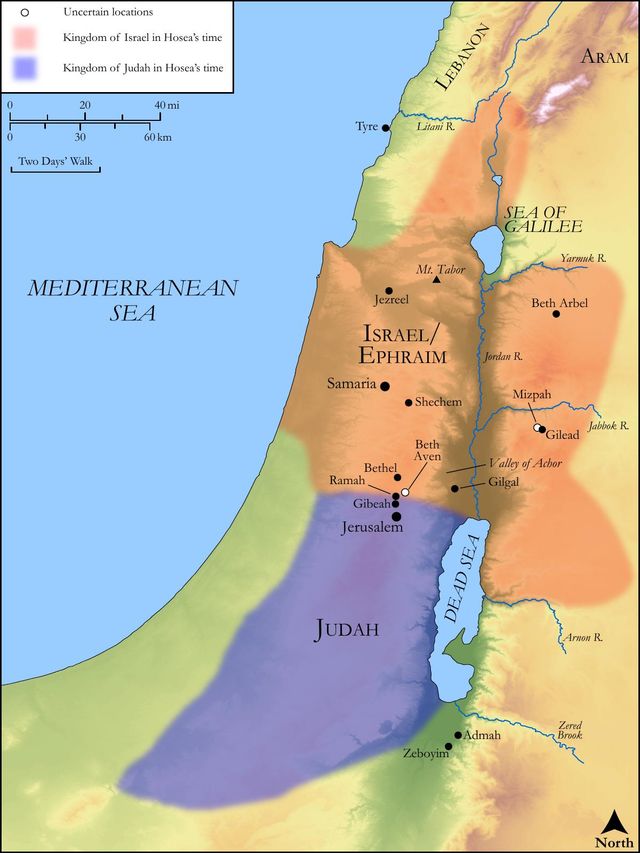
The prophet Hosea ministered to the Northern Kingdom of Israel (Ephraim) during the tumultuous 8th century BCE, a period marked by political instability, assassinations, and rapid succession of kings, all leading up to its eventual fall to Assyria in 722 BCE. Spiritually, this era was characterized by widespread idolatry, syncretism (mixing the worship of Yahweh with Baal), and a profound abandonment of the Mosaic covenant. The priests, divinely appointed to uphold the Law, teach the people God's statutes, and mediate between God and Israel, had largely failed in their sacred duties. Instead of being beacons of righteousness, many had become corrupt, often profiting from the people's sins by consuming the sin offerings without genuinely leading the people to repentance (Hosea 4:8). This cultural climate fostered a moral relativism where the sacred was profaned, and the distinct roles of spiritual leadership were blurred, leading to the complete breakdown of the covenant relationship and a society steeped in unrighteousness.
Key Themes
ShowHideHosea 4:9 powerfully contributes to several overarching themes within the book of Hosea and the broader prophetic literature. Firstly, it highlights the theme of Shared Guilt and Accountability, asserting that sin had become so pervasive that both the general populace and those in positions of spiritual authority were equally culpable in their disobedience, thus facing the same divine judgment. There was no special exemption for leaders, underscoring the principle that all are accountable to God. Secondly, the verse underscores the Corruption of Leadership, implicitly condemning the priesthood's profound failure. Instead of being moral exemplars and preservers of God's law, their moral decay mirrored, and indeed exacerbated, the spiritual decline of the entire nation, illustrating the profound impact of leadership on a community's spiritual health. Finally, it emphasizes the theme of Divine Justice and Retribution. God's promise to "punish them for their ways, and reward them their doings" is a foundational principle of His character, affirming that He is just and will hold individuals and nations accountable for their actions, ensuring that everyone ultimately reaps the consequences of their choices, as echoed in Galatians 6:7.
Exposition and Analysis
ShowHideKey Word Analysis
ShowHideThis term refers to a "people" as a congregated unit, specifically often denoting the nation of Israel as God's chosen community. In this context, it signifies the general populace, the common Israelites, whose collective actions and spiritual state are being judged. The phrase "like people, like priest" indicates that the moral and spiritual distinction between the ordinary citizen and the sacred office-holder had vanished, implying a pervasive societal corruption.
This word designates one who officiates in sacred rites, a priest. In ancient Israel, priests were divinely appointed to teach God's law, offer sacrifices, and guide the people in righteousness. Hosea's use of this term here highlights the profound failure of those specifically entrusted with spiritual leadership. Their corruption was not merely a personal failing but a catastrophic betrayal of their sacred trust, directly contributing to the nation's downfall.
This versatile Hebrew root carries the sense of "to visit," which can imply either friendly or hostile intent. In this context, it clearly signifies a hostile visitation—to oversee, muster, or charge with the intent to bring judgment or retribution. It means to hold accountable, to exact punishment, or to visit with disciplinary action. The use of pâqad here emphasizes God's active, intentional, and just intervention to address the people's and priests' unrighteousness.
Verse Breakdown
ShowHide"And there shall be, like people, like priest"
This striking simile declares that the moral and spiritual condition of the common people had become indistinguishable from that of the priests. It signifies a complete breakdown of the divine order, where those meant to be spiritual exemplars and guides had descended to the same level of corruption, or even led the way in apostasy. This phrase powerfully conveys the pervasive nature of sin throughout Israelite society, leaving no segment untouched by moral decay.
"and I will punish them for their ways"
This clause reveals God's righteous response to the widespread corruption. The pronoun "them" refers collectively to both the people and the priests, emphasizing their shared culpability. "Their ways" refers to their course of life, their mode of action, their conduct, and their habitual practices, which were characterized by unfaithfulness, idolatry, and moral depravity. God, as the just judge, declares His intent to hold them accountable for these actions.
"and reward them their doings"
This parallel clause reinforces the certainty and nature of divine retribution. The word "reward" here (from the Hebrew shûwb, "to turn back" or "repay") does not imply a positive recompense but rather a just requital or retribution. It means God will bring back upon them the consequences of their "doings"—their acts, endeavors, and works, which were evil. This statement underscores the principle of divine justice, where individuals and nations reap what they sow, receiving the just deserts for their unrighteousness.
Literary Devices
ShowHideHosea 4:9 masterfully employs several literary devices to convey its powerful message of judgment. The most prominent is Simile, found in the phrase "like people, like priest," which starkly compares the moral degradation of the general populace to that of the spiritual leadership. This comparison highlights the pervasive nature of sin and the failure of those meant to uphold righteousness. The verse also utilizes Parallelism in the second half: "I will punish them for their ways, and reward them their doings." This synonymous parallelism emphasizes the certainty and comprehensive nature of God's judgment, reiterating that both their conduct ("ways") and their actions ("doings") will incur divine retribution. Furthermore, there is a profound sense of Irony present, as the priests, who were consecrated to God and meant to lead the people in holiness, had become indistinguishable from the very people they were supposed to guide away from sin. This reversal of roles underscores the depth of Israel's spiritual decline and the severity of their apostasy.
Theological and Thematic Connections
ShowHideHosea 4:9 profoundly articulates the principle of divine justice and accountability, particularly highlighting the unique responsibility of spiritual leadership. The theological truth conveyed is that God holds all individuals, regardless of their status or position, accountable for their actions, and that the corruption of those entrusted with sacred duties has far-reaching and devastating consequences for the entire community. This verse underscores that God's character demands righteousness, and He will not overlook sin, especially when it pervades His covenant people and their designated leaders. It serves as a stark reminder that privilege and position do not exempt one from divine scrutiny, but rather intensify the expectation of faithfulness and integrity.
Reflection and Application
ShowHideHosea 4:9 serves as a timeless and sobering mirror for individuals and communities of faith today. It compels us to examine the state of our own hearts and the integrity of our leaders. The principle that "like people, like priest" warns against the normalization of sin and the erosion of moral distinctions within the church. It reminds us that true spiritual health requires both the congregation and its leadership to pursue genuine knowledge of God, embody His truth, and live in faithful obedience. When leaders compromise biblical standards or fail to model righteousness, the entire body suffers, and the church's witness is diminished. Conversely, when the people are spiritually apathetic or rebellious, they can corrupt their leaders. This verse calls for mutual accountability and a shared commitment to holiness, urging us to recognize that God's justice is impartial and that genuine repentance is always the path to restoration.
Questions for Reflection
ShowHideFAQ
ShowHideWhat does "like people, like priest" truly mean in this context?
ShowHideThe phrase "like people, like priest" (Hebrew: k'am k'kohen) is a powerful declaration signifying that the moral and spiritual corruption in ancient Israel had become so pervasive that there was no longer any meaningful distinction between the general populace and those in positions of spiritual authority. It means that the priests, who were meant to be holy and set apart to teach God's law and lead the people in righteousness, had themselves become just as unfaithful, idolatrous, and morally bankrupt as the common people. This indicates a complete breakdown of spiritual integrity and highlights the profound failure of the leadership to uphold their sacred duties, mirroring and even contributing to the nation's apostasy. It underscores a shared guilt and accountability before God.
Why was God's judgment so severe on both the people and the priests?
ShowHideGod's judgment was severe because the sin was pervasive and deeply entrenched, representing a profound betrayal of His covenant with Israel. The people had abandoned the knowledge of God, pursuing idolatry and immorality, as detailed in Hosea 4:1-2. The priests, however, bore an even greater responsibility. They were the custodians of the Law, meant to be the spiritual guides and intercessors, yet they had become complicit in the sin, even profiting from it (Hosea 4:8). Their failure to lead, teach, and uphold righteousness meant that the entire nation suffered from a "lack of knowledge" (Hosea 4:6), leading to their destruction. God, being perfectly just, could not overlook such widespread and deliberate unfaithfulness, especially from those entrusted with His sacred truths.
Does the word "reward" in this verse imply something positive?
ShowHideNo, in the context of Hosea 4:9, the word "reward" (Hebrew: shûwb, meaning "to turn back" or "repay") does not imply a positive recompense or blessing. Instead, it carries the strong connotation of retribution, repayment, or bringing back upon them the just consequences of their wicked actions. It signifies that God will give them what their "doings" deserve, which, given their unfaithfulness and sin, is punishment and judgment. This is a common prophetic usage where "reward" or "recompense" refers to the just deserts for evil deeds, aligning with the principle of reaping what one sows, as seen in Proverbs 1:31.
Christ-Centered Fulfillment
ShowHideHosea 4:9, with its stark portrayal of shared guilt and the failure of the priesthood, powerfully underscores humanity's profound need for a perfect High Priest and a righteous King. The corruption of Israel's priests, who were meant to mediate between God and His people, highlights the inherent limitations and ultimate inadequacy of the Old Covenant sacrificial system and its human administrators. Their inability to lead the people to true knowledge of God and their own complicity in sin revealed that no human priest could truly bridge the chasm created by sin. This points forward to Jesus Christ, who fulfills the priestly office flawlessly. He is the Great High Priest who is "holy, innocent, unstained, separated from sinners, and exalted above the heavens" (Hebrews 7:26). Unlike the corrupt priests of Hosea's day, Jesus offered Himself as the perfect, once-for-all sacrifice, bearing the punishment for our "ways" and "doings," thereby satisfying divine justice on our behalf. In Christ, the principle of "like people, like priest" is reversed; through His perfect life and atoning death, He makes it possible for His people to be made righteous, transforming us into a holy priesthood who can truly offer spiritual sacrifices acceptable to God, no longer mirroring the world's corruption but reflecting His glory.