


Hosea 4:11
Bible text: King James Version (1769 Blayney text) · Public domain
Bible text: Berean Standard Bible · Public domain
Bible text: American Standard Version (1901) · Public domain
Bible text: World English Bible, Messianic edition · Public domain
Bible text: Geneva Bible (1599) · Public domain
Bible text: Young's Literal Translation · Public domain
- זְנוּתze·NutprostitutionH2184N-fsNoun Singular Feminine Absolute
- וְיַיִןve·Ya·yinand wineH3196Conj-w ¦ N-msNoun Singular Masculine Absoluteוְandיַיִןwine
- וְתִירוֹשׁve·ti·Ro·oshand new wineH8492Conj-w ¦ N-msNoun Singular Masculine Absoluteוְandתִירוֹשׁnew wine
- יִקַּחyi·kachit takes awayH3947V-Qal-Imperf-3msVerb Qal Imperfect 3rd Singular Masculine
- לֵבLev[the] heartH3820N-msNoun Singular Masculine Absolute
English is a literal word-by-word gloss of the Hebrew, not the KJV's wording. Why?
This is the original text the KJV's translators worked from — each Hebrew word with its own literal English meaning in this verse, prepared by scholars at Tyndale House, Cambridge. The KJV translates whole sentences, not word by word, so its wording differs: one Hebrew word can become several English words, and the KJV may choose “the LORD” where the gloss reads “Yahweh”. Both are faithful — they answer different questions. For the KJV's own rendering, switch to the KJV text.
Details
See on the biblical-era map
Study this verse
Public-domain commentary
Matthew Henry
From his Commentary on the Whole Bible. Henry comments on passages, not single verses — this entry covers Hosea 4:6–11. His two-level outline is real structure in the source text, so it is rendered as structure.
God is here proceeding in his controversy both with the priests and with the people. The people were as those that strove with the priests (Hos 4:4) when they had priests that did their duty; but the generality of them lived in the neglect of their duty, and here is a word for those priests, and for the people that love to have it so, Jer 5:31. And it is observable here how the punishment answers to the sin, and how, for the justifying of his own proceedings, God sets the one over-against the other.
I.The people strove with the priests that should have taught them the knowledge of God; justly therefore were they destroyed for lack of knowledge, Hos 4:6. Note, Those that rebel against the light can expect no other than to perish in the dark. Or it is a charge upon the priests, who should have been still teaching the people knowledge (Ecc 12:9), but they did not, or did it in such a manner that it was as if they had not done it at all, so there was no knowledge of God in the land; and because there was no vision, or none to any purpose, the people perished, Pro 29:18. Note, Ignorance is so far from being the mother of devotion that it is the mother of destruction; lack of knowledge is ruining to any person or people. They are my people that are thus destroyed; their relation to God as his people aggravates both their sin in not taking pains to get the knowledge of that God whose command they were under and with whom they were taken into covenant, and likewise the sin of those who should have taught them; God set his children to school to them, and they never minded them nor took any pains with them.
II.Both priests and people rejected knowledge; and justly therefore will God reject them.
The reason why the people did not learn, and the priests did not teach, was not because they had not the light, but because they hated it - not because they had not ways of coming to the knowledge of God and of communicating it, but because they had no heart to it; they rejected it. They desired not the knowledge of God's ways, but put it from them, and shut their eyes against the light; and therefore "I will also reject thee; I will refuse to take cognizance of thee and to own thee; you will not know me, but bid me depart; I will therefore say, Depart from me, I know you not. Thou shalt be no priest to me." 1. The priests shall be no longer admitted to the privileges, or employed in the services, of the priesthood, nor shall they ever be received again, as we find, Eze 44:13. Note, Ministers that reject knowledge, that are grossly ignorant and scandalous, ought not to be owned as ministers; but that which they seem to have should be taken away, Luk 8:18. 2. The people shall be no longer as they have been, a kingdom of priests, a royal priesthood, Exo 19:6. God's people, by rejecting knowledge, forfeit their honour and profane their own crown.
III.They forgot the law of God, neither desired nor endeavoured to retain it in mind, nor to transmit the remembrance of it to their posterity, and therefore justly will God forget them and their children, the people's children; they did not educate them, as they ought to have done, in the knowledge of God and their duty to him, and therefore God will disown them, as not in covenant with him. Note, If parents do not teach their children, when they are young, to remember their Creator, they cannot expect that their Creator should remember them. Or it may be meant of the priests' children; they shall not succeed them in the priests' office, but shall be reduced to poverty, as is threatened against Eli's house, Sa1 2:20.
IV.They dishonoured God with that which was their honour, and justly therefore will God strip them of it, Hos 4:7.
It was their honour that they were increased in number, wealth, power, and dignity. The beginning of their nation was small, but in process of time it greatly increased, and grew very considerable; the family of the priests increased wonderfully. But, as they were increased, so they sinned against God. The more populous the nation grew, the more sin was committed and the more profane they were; their wealth, honour, and power, did but make them the more daring in sin. Therefore, says God, will I change their glory into shame. Are their numbers their glory? God will diminish them and make them few. Is their wealth their glory? God will impoverish them and bring them low; so that they shall themselves be ashamed of that which they gloried in. Their priests shall be made contemptible and base, Mal 2:9. Note, That which is our honour, if we dishonour God with it, will sooner or later be turned into shame to us: for those that despise God shall be lightly esteemed, Sa1 2:30.
V.The priests ate up the sin of God's people, and therefore they shall eat and not have enough.
1.They abused the maintenance that was allowed to the priests, to the priests of the house of Aaron, by the law of God, and to the mock-priests of the calves by their constitution (Hos 4:8): They eat up the sin of my people, that is, their sin-offerings. If it be meant of the priests of the calves, it intimates their seizing that which they had no right to; they usurped the revenues of the priests, though they were no priests. If it be meant of those who were legal priests, it intimates their greediness of the profits and perquisites of their office, when they took no care at all to do the duty of it. They feasted upon their part of the offerings of the Lord, but forgot the work for which they were so well paid. They set their heart upon the people's iniquities; they lifted up their soul to them, that is, they were glad then people did commit iniquity, that they might be obliged to bring an offering to make atonement for it, which they should have their share of; the more sins the more sacrifices, and therefore they cared not how much sin people were guilty of. Instead of warning the people against sin, from the consideration of the sacrifices, which showed them what an offence sin was to God, since it needed such an expiation, they emboldened and encouraged the people to sin, since an atonement might be made at so small an expense. Thus they glutted themselves upon the sins of the people, and helped to keep up that which they should have beaten down. Note, It is a very wicked thing to be well pleased with the sins of others because, in some way or other, they may turn to our advantage.
2.God will therefore deny them his blessing upon their maintenance (Hos 4:10): They shall eat and not have enough. Though they have great plenty by the abundance of offerings that are brought in, yet they shall have no satisfaction in it. Either their food shall yield no good nourishment or their greedy appetites shall not be satisfied with it. Note, What is unlawfully gained cannot be comfortably used; no, nor that which is inordinately coveted; it is just that the desires which are insatiable should always be unsatisfied, and that those should never have enough who never know when they have enough. See Mic 6:14; Hag 1:6.
VI.The more they increased the more they sinned (Hos 4:7), and therefore though they commit whoredom, though they take the most wicked methods to multiply their people, yet they shall not increase. Though they have many wives and concubines, as Solomon had, yet they shall not have their families built up thereby in a numerous progeny, any more than he had. Note, Those that hope any way to increase by unlawful means will be disappointed. And therefore God will thus blast all their projects because they have left off to take heed to the Lord; time was when they had some regard to God, and to his authority over them and interest in them, but they have left it off; they take no heed to his word nor to his providences; they do not eye him in either. They forsake him, so as not to take heed to him; they have apostatized to such a degree that they have no manner of regard to God, but are perfectly without God in the world. Note, Those that leave off to take heed to the Lord leave off all good, and can expect no other than that all good should leave them.
VII.The people and the priests did harden one another in sin; and therefore justly shall they be sharers in the punishment (Hos 4:9):
There shall be, like people, like priest. So they were in character; people and priest were both alike ignorant and profane, regardless of God and their duty, and addicted to idolatry: and so they shall be in condition; God will bring judgments upon them, that shall be the destruction both of priest and people; the famine that deprives the people of their meat shall deprive the priests of their meat-offerings, Joe 1:9. It is part of the description of a universal desolation that it shall be as with the people, so with the priest, Isa 24:2. God's judgments, when they come with commission, will make no difference. Note, Sharers in sin must expect to be sharers in ruin. Thus God will punish them both for their ways, and reward them for their doings. God will cause their doings to return upon them (so the word is); when a sin is committed the sinner thinks it is gone and he shall hear no more of it, but he shall find it called over again, and made to return, either to his humiliation or to his condemnation.
VIII.They indulged themselves in the delights of sense, to hold up their hearts; but they shall find that they take away their hearts (Hos 4:11):
Whoredom, and wine, and new wine take away the heart. Some join this with the foregoing words. They have forsaken the Lord, to take heed to whoredom, and wine, and new wine. Or, Because these have taken away their heart. Their sensual pleasures have taken them off from their devotions and drowned all that is good in them. Or we may take it as a distinct sentence, containing a great truth which we see confirmed by every day's experience, that drunkenness and uncleanness are sins which besot and infatuate men, weaken and enfeeble them. They take away both the understanding and the courage.
Historical interpretation
Historical reception
1 surviving comment on this verse from the historical church.
"And they shall eat, and not be satisfied: and they have committed fornication, and have not ceased: because they have forsaken the Lord in not keeping him: fornication, and wine, and drunkenness take away the heart. My people hath consulted their stocks, and their staff hath declared unto them: for the spirit of fornication hath deceived them, and they have committed fornication against their God." "And they shall eat, and not be filled:" "they have committed fornication, and shall not be directed: because they have forsaken the Lord, to keep not his law: fornication, and wine, and drunkenness take away the heart of my people. They consulted their wood, and their staff answered them: for the spirit of fornication hath deceived them" "and they have committed fornication against their God." Insatiable pleasure is created, and the more one is captured by it, the more hunger it creates. On the contrary, blessed are the hungry and thirsty for justice, for they will be satisfied. As justice satisfies, so too does iniquity, having no substance, delude those who consume it deceitfully and leave the stomachs of the devourers empty. They have committed fornication and have not ceased. Their strength fails in fornication, and the desire to fornicate does not rest. They committed fornication with the idols of Jeroboam, the son of Nebat, and left their Lord God, not keeping what he had commanded, saying: "You shall worship the Lord your God, and him only shall you serve" (Deuteronomy 6:13), but it should be read emphatically: Fornication and wine and drunkenness take away the heart. For just as wine and drunkenness make him who drinks thereof incapable of his own mind, so does fornication and pleasure pervert the senses and weaken the spirit; and it turns a rational man into a brute animal, so that he pursues brothels, dens of vice, and places of debauchery. And when his heart is stirred out of its place, he holds wood and stones as gods, and worships the works of his own hands. Hence the prophet, as if amazed and bewildered, speaks: “My people who were once called by my name have asked counsel of a wooden idol, and have sought intuition from rods, which the Greeks call divination by rods." Therefore in Ezekiel we read that Nebuchadnezzar mixed his rods against Ammon and Jerusalem, and a rod went forth against Jerusalem (Ezek. 25): and the cause of this madness of fornication is the spirit that deceived them, so that they might fornicate against their God. But he calls fornication idolatry, according to what we read in Jeremiah: "And they committed adultery with wood and stone, and I said, After they have committed adultery with all these things, return to me, but she did not return with all her heart, but with lies." And again: "You have left me and said, I will go on every high hill, and under every green tree I will spread myself in my fornication" (Jer. 3:5, 6). And in the Psalm it is said: 'You have destroyed all who commit fornication away from you' (Ps. 72:27). For the beginning of fornication is the invention of idols. Heretics are never satisfied with their own error, and do not cease from the disgracefulness of fornication. They do not keep the holy Law and Scriptures, abandon the Lord, become insane and inebriated, and, with the judgment of their mind destroyed, worship idols which they themselves have fashioned from their hearts and are possessed by the spirit of fornication.
Continue studying Hosea 4:11 across the web’s major study libraries — every link below opens this exact verse, chapter, or book on the destination site.
Read & Compare
 BibleGatewayThis verse in more than 200 translations and 70 languages.
 Bible.comThe YouVersion reader — hundreds of translations, reading plans, and highlights.
 ESV.orgCrossway's official English Standard Version reader.
 NET BibleThe NET translation with 60,000+ translators' notes on every rendering decision.
 STEP BibleTyndale House's free study tool — original text, vocabulary, and scholarly resources.
 BibliaLogos Bible Software's free web reader.
 USCCBThe New American Bible (Revised Edition) with the U.S. bishops' study notes.
Commentaries
 BibleHub CommentariesDozens of classic commentaries on this verse, gathered on one page.
 StudyLightMore than 100 commentary sets — the largest collection on the web.
 BibleRefPlain-English commentary on what this verse means, verse by verse.
 Enduring WordDavid Guzik's free commentary on this chapter, widely used by Bible teachers.
 Bible Study ToolsVerse commentary alongside Greek and Hebrew study aids.
Original Language & Research
- BibleHub InterlinearThe verse word by word — original language, transliteration, and English.
- BibleHub LexiconEvery word's original-language definition and Strong's entry.
 Blue Letter BibleDeep-study tools — Strong's numbers, concordance, and word studies.
 SefariaThe Hebrew text with Rashi and centuries of Jewish commentary.
Sermons, Hymns & Audio


TrulyRandomVerse is not affiliated with these sites and doesn’t control their content. They’re linked because they’re genuinely useful.
Summary
Hosea 4:11 delivers a stark prophetic warning to ancient Israel, declaring that "Whoredom and wine and new wine take away the heart." This verse encapsulates the spiritual and moral decay rampant in the northern kingdom, identifying specific vices—idolatrous unfaithfulness and intoxicating indulgences—as potent forces that corrupt the core of one's being, leading to a profound loss of spiritual discernment, devotion, and the capacity to know and obey God. It serves as a timeless indictment against anything that distracts, dulls, or detaches the human spirit from its rightful allegiance to the Lord.
Context
ShowHideLiterary Context
Hosea 4 marks a significant shift in the prophet's message, moving from the symbolic portrayal of Israel's unfaithfulness through Hosea's marriage to Gomer (chapters 1-3) to a direct indictment against the nation. The chapter opens with God's "controversy" or "legal case" against Israel, citing a pervasive lack of truth, mercy, and knowledge of God throughout the land Hosea 4:1. This moral vacuum leads to widespread societal breakdown, including swearing, lying, murder, stealing, and adultery Hosea 4:2. The priests, who should have been spiritual guides, are themselves implicated in the corruption, indulging in the very sins they should oppose Hosea 4:6-10. Within this broader accusation of societal and religious apostasy, verse 11 pinpoints specific agents of spiritual stupor that prevent the people from returning to God.
Historical & Cultural Context
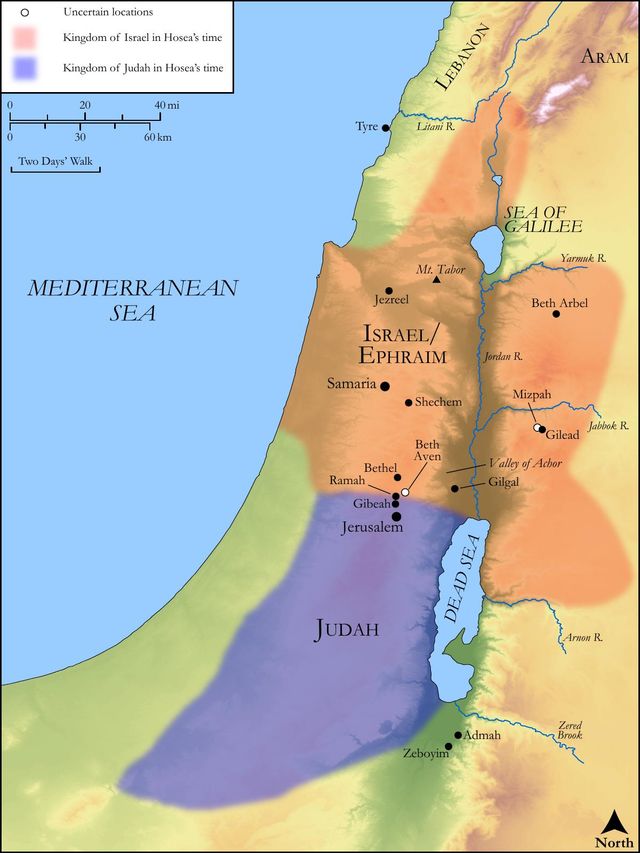
Hosea prophesied during the tumultuous final decades of the northern kingdom of Israel (Ephraim), roughly 750-715 BC, prior to its conquest and exile by Assyria in 722 BC. This period was characterized by political instability, economic prosperity for some, and a severe decline in spiritual integrity. Syncretism was rampant, as Israel adopted Canaanite fertility cults, often involving ritual prostitution and excessive feasting, in an attempt to ensure agricultural abundance. These practices blurred the lines between worship of Yahweh and pagan deities, leading to profound spiritual adultery. Wine and new wine were staples of the diet and celebrations of Israel, but their excessive consumption was frequently associated with pagan rituals and moral laxity, contributing to a culture of indulgence that further eroded the nation's spiritual foundation.
Key Themes
ShowHideHosea 4:11 contributes significantly to several overarching themes in the book of Hosea. Firstly, it underscores the theme of Israel's Spiritual Apostasy, portraying their unfaithfulness to God as "whoredom," a recurring metaphor for covenant betrayal throughout the prophetic books. This spiritual infidelity is often linked to literal sexual immorality and idolatrous practices. Secondly, the verse highlights the Consequences of Sin, demonstrating how specific vices—sexual immorality and drunkenness—do not merely affect external behavior but profoundly corrupt the inner person, leading to spiritual blindness and an inability to discern God's will. This spiritual stupor is a direct result of rejecting the "knowledge of God" Hosea 4:6. Finally, it emphasizes the Loss of Discernment and Devotion, as the "heart," the seat of intellect, will, and moral character, is "taken away," rendering the people incapable of repentance or genuine worship. This spiritual dullness is a tragic outcome of their chosen path of rebellion.
Exposition and Analysis
ShowHideKey Word Analysis
ShowHideFrom the root zânah, meaning to commit fornication or adultery. In Hosea, this term is primarily used metaphorically to describe Israel's spiritual infidelity to Yahweh, their covenant husband. It encompasses not only literal sexual immorality, often associated with pagan fertility cults, but more broadly, the nation's apostasy, idolatry, and turning away from the exclusive worship of God. It signifies a profound betrayal of their covenant relationship.
A primitive root meaning "to take" in a wide variety of applications, including to seize, carry away, or receive. In this context, it denotes a forceful or compelling action where these vices actively seize or capture the heart, removing it from its proper function and orientation towards God. It implies a loss of control and agency, as the heart is overcome and diverted.
A central concept in Hebrew anthropology, referring not merely to the physical organ but to the very core of a person's being. It is the seat of intellect (understanding, wisdom), will (decisions, intentions), emotions (feelings, affections), and moral character. When the heart is "taken away," it implies a corruption or incapacitation of these vital faculties, leading to a loss of spiritual discernment, moral compass, and the capacity for true devotion to God.
Verse Breakdown
ShowHide"Whoredom and wine and new wine"
This tripartite phrase identifies the specific corrupting influences. "Whoredom" (zᵉnûwth) represents spiritual and literal sexual immorality, particularly Israel's idolatrous pursuit of other gods. "Wine" (yayin) refers to fermented grape juice, often associated with revelry and intoxication. "New wine" (tîyrôwsh) refers to fresh, unfermented grape juice or must, but it could also refer to fermented wine. Together, "wine and new wine" symbolize excessive indulgence, drunkenness, and the pursuit of carnal pleasures that lead to spiritual stupor. These three elements collectively represent the alluring yet destructive forces that captivated Israel.
"take away the heart"
This is the devastating consequence of indulging in the aforementioned vices. The verb "take away" (lâqach) suggests a forceful seizure or removal. The "heart" (lêb), as the center of intellect, will, and emotion, is depicted as being captured or alienated. This means that these sins do not merely affect external behavior; they corrupt the very core of one's being, dulling spiritual understanding, distorting judgment, and ultimately diverting one's affections and loyalty away from God. The result is spiritual blindness, apathy, and an inability to perceive or respond to divine truth.
Literary Devices
ShowHideHosea 4:11 employs several powerful Literary Devices to convey its urgent message. The most prominent is Personification, where "whoredom and wine and new wine" are depicted as active agents capable of seizing or removing the "heart." This gives these abstract vices a predatory quality, emphasizing their destructive power over human will and intellect. Furthermore, the use of Metaphor is central, as "whoredom" is a pervasive metaphor throughout Hosea for Israel's spiritual unfaithfulness to God, likening their idolatry to adultery against their divine husband. The "heart" itself functions as a potent Symbolism, representing the totality of human inner life—intellect, will, emotion, and moral center. Its "removal" symbolizes a profound spiritual incapacitation. Finally, the enumeration of three distinct vices ("whoredom and wine and new wine") forms a Tricolon, a rhetorical device that creates a sense of completeness and emphasizes the comprehensive nature of the destructive forces at play, highlighting that multiple avenues of indulgence lead to the same spiritual ruin.
Theological and Thematic Connections
ShowHideHosea 4:11 powerfully articulates a core biblical truth: that unbridled sin, particularly spiritual idolatry and carnal indulgence, has a profound and debilitating effect on the human spirit, severing its connection to divine truth and wisdom. The "taking away of the heart" signifies a spiritual stupor that renders one incapable of discerning God's will, exercising moral judgment, or offering genuine devotion. This spiritual blindness is not merely an emotional state but a corruption of the intellect and will, leading to a hardened heart that cannot repent. This verse serves as a crucial warning against anything that captures our affections and dulls our spiritual senses, diverting our ultimate allegiance from the Lord. It underscores the sanctity of the heart as the wellspring of life and the primary battleground for spiritual integrity.
Reflection and Application
ShowHideHosea 4:11 offers a timeless and sobering warning for believers today. The "whoredom" in our contemporary context may not always be literal cultic prostitution, but it manifests as any form of spiritual idolatry—placing anything or anyone above God in our affections and allegiance. This includes the worship of success, wealth, pleasure, power, or even self. Similarly, "wine and new wine" represent not only literal substance abuse but any excessive indulgence in worldly pleasures, entertainment, or distractions that dull our spiritual senses and cloud our judgment. When these things capture our "heart"—our intellect, will, and emotions—they effectively "take it away" from God, leading to spiritual apathy, a diminished capacity to discern His voice, and a gradual alienation from His presence. To guard against this, we must cultivate a disciplined spiritual life, actively pursuing knowledge of God through His Word, prayer, and fellowship, and intentionally setting our affections on things above, not on earthly things.
Questions for Reflection
ShowHideFAQ
ShowHideWhat does it mean for "whoredom and wine and new wine" to "take away the heart"?
ShowHideIn biblical thought, the "heart" (Hebrew: lêb) is the comprehensive center of a person's inner life, encompassing intellect, will, emotions, and moral character. When Hosea says these things "take away the heart," he means they corrupt, incapacitate, or divert these essential faculties. "Whoredom" (spiritual idolatry and literal immorality) and "wine and new wine" (excessive indulgence and drunkenness) are presented as powerful forces that seize control of one's inner being. This leads to a loss of spiritual discernment, a dulling of moral sensitivity, a distortion of judgment, and ultimately, a profound detachment from God. The individual becomes spiritually blind and unresponsive to divine truth, unable to truly know, love, or obey the Lord. It's a warning that these sins don't just affect behavior; they fundamentally alter one's spiritual core, making genuine repentance and devotion impossible. As Proverbs 4:23 warns, "Above all else, guard your heart, for everything you do flows from it."
Christ-Centered Fulfillment
ShowHideHosea 4:11 describes the tragic spiritual consequence of sin: the "heart" being taken away from God, leading to spiritual blindness and an inability to respond to divine truth. In stark contrast, Jesus Christ comes not to take away the heart, but to restore it and draw it fully to God. He is the embodiment of truth, contrasting with the spiritual "whoredom" that leads to deception. Where "wine and new wine" symbolize intoxicating indulgences that dull the spirit, Jesus offers the "living water" that truly satisfies and brings spiritual clarity John 4:10-14. He declares Himself the "true vine" John 15:1, inviting His followers to abide in Him, thereby producing fruit that contrasts sharply with the barrenness of a heart taken away by sin. Through His atoning sacrifice, Christ provides the means for a new heart to be given, one of flesh instead of stone Ezekiel 36:26, enabling true knowledge of God and genuine devotion. He came to purify hearts Titus 2:14 and to gather those whose hearts have strayed, bringing them into a right relationship with the Father, fulfilling the very longing for restoration that Hosea's prophecy implicitly expresses.