


Hosea 4:12
Bible text: King James Version (1769 Blayney text) · Public domain
Bible text: King James Version with Strong's numbers · Public domain
Bible text: Berean Standard Bible · Public domain
Bible text: American Standard Version (1901) · Public domain
Bible text: World English Bible, Messianic edition · Public domain
Bible text: Geneva Bible (1599) · Public domain
Bible text: Young's Literal Translation · Public domain
- עַמִּי'a·Mimy peopleH5971N-msc ¦ 1csNoun Singular Masculine Constructעַמִּpeopleיmy
- בְּעֵצוֹbe·'e·Tzoby his woodH6086Prep-b ¦ N-msc ¦ 3msNoun Singular Masculine Constructבְּbyעֵצwoodוֹhis
- יִשְׁאָלyish·'Alhe enquiresH7592V-Qal-Imperf-3msVerb Qal Imperfect 3rd Singular Masculine
- וּמַקְלוֹu·mak·Loand his stickH4731Conj-w ¦ N-msc ¦ 3msNoun Singular Masculine Constructוּandמַקְלstickוֹhis
- יַגִּידya·Gidit tellsH5046V-Hiphil-Imperf-3msVerb Hiphil Imperfect 3rd Singular Masculine
- לוֹloto himPrep-l ¦ 3msSuffix Personal 3rd Singular Masculineלtoוֹhim
- כִּיkiforH3588PrtParticle Conditional
- רוּחַRu·acha spirit ofH7307N-fscNoun Singular Feminine Construct
- זְנוּנִיםze·nu·Nimprostitution<s>H2183N-mpNoun Plural Masculine Absolute
- הִתְעָהhit·'Ahit has misledH8582V-Hiphil-Perf-3msVerb Hiphil Perfect 3rd Singular Masculine
- וַיִּזְנוּvai·yiz·Nuand they have prostituted themselvesH2181Conj-w ¦ V-Qal-ConsecImperf-3mpVerb Qal Consecutive Imperfect 3rd Plural Masculineוַandיִּזְנוּthey have prostituted themselves
- מִתַּחַתmi·Ta·chatfrom underH8478Prep-m ¦ N-mscNoun Singular Masculine Constructמִfromתַּחַתunder
- אֱלֹהֵיהֶם'e·lo·hei·Hemtheir GodH430N-mpc ¦ 3mpNoun Plural Masculine ConstructאֱלֹהֵיGodהֶםtheir
English is a literal word-by-word gloss of the Hebrew, not the KJV's wording. Why?
This is the original text the KJV's translators worked from — each Hebrew word with its own literal English meaning in this verse, prepared by scholars at Tyndale House, Cambridge. The KJV translates whole sentences, not word by word, so its wording differs: one Hebrew word can become several English words, and the KJV may choose “the LORD” where the gloss reads “Yahweh”. Both are faithful — they answer different questions. For the KJV's own rendering, switch to the KJV text.
Details
See on the biblical-era map
Study this verse
Public-domain commentary
Matthew Henry
From his Commentary on the Whole Bible. Henry comments on passages, not single verses — this entry covers Hosea 4:12–19. His three-level outline is real structure in the source text, so it is rendered as structure.
In these verses we have, as before,
I.The sins charged upon the people of Israel, for which God had a controversy with them, and they are,
1.Spiritual whoredom, or idolatry. They have in them a spirit of whoredoms, a strong inclination to that sin; the bent and bias of their hearts are that way; it is their own iniquity; they are carried out towards it with an unaccountable violence, and this causes them to err. Note, The errors and mistakes of the judgment are commonly owing to the corrupt affections; men therefore have a good opinion of sin, because they have a disposition towards it. And having such erroneous notions of idols, and such passionate motions towards them, no marvel that with such a head and such a heart they have gone a whoring from under their God, Hos 4:12. They ought to have been in subjection to him as their head and husband, to have been under his guidance and command, but they revolted from their allegiance, and put themselves under the guidance and protection of false gods. So (Hos 4:15) Israel has played the harlot; their conduct in the worship of their idols was like that of a harlot, wanton and impudent. And (Hos 4:16), Israel slideth back as a backsliding heifer, as an untamed heifer (so some), or as a perverse or refractory one (so others), as a heifer that is turned loose runs madly about the pasture, or, if put under the yoke (which seems rather to be alluded to here), will draw back instead of going forward, will struggle to get her neck out of the yoke and her feet out of the furrow. Thus unruly, ungovernable, untractable, were the people of Israel. They had begun to draw in the yoke of God's ordinances, but they drew back, as children of Belial, that will not endure the yoke; and when the prophets were sent with the goads of reproof, to put them forward, they kicked against the pricks, and ran backwards. The sum of all is (Hos 4:17), Ephraim is joined to idols, is perfectly wedded to them; his affections are glued to them, and his heart is upon them. There are two instances given of their spiritual whoredom, in both which they gave that honour to their idols which is due to God only: - (1.) They consulted them as oracles, and used those arts of divination which they had learned from their idolatrous priests (Hos 4:12): My people ask counsel at their stocks, their wooden gods; they apply to them for advice and direction in what they should do and for information concerning the event. They say to a stock, Thou art my father (Jer 2:27); and, if it were indeed a father, it were worthy of this honour; but it was a great affront to God, who was indeed their Father, and whose lively oracles they had among them, with which they had liberty to consult at any time, thus to ask counsel at their stocks. And they expect that their staff should declare to them what course they should take and what the event should be. It is probable that this refers to some wicked methods of divination used among the Gentiles, and which the Jews learned from them, by a piece of wood, or by a staff, like Nebuchadnezzar's divining by his arrows, Eze 21:21. Note, Those who forsake the oracles of God, to take their measures from the world and the flesh, do in effect but consult with their stocks and their staves. (2.) They offered sacrifice to them as gods, whose favour they wanted and whose wrath they dreaded and deprecated (Hos 4:13): They sacrifice to them, to atone and pacify them, and burn incense to them, to please and gratify them, and hope by both to recommend themselves to them. God had pitched upon the place where he would record his name; but they, having forsaken that, chose places for their irreligious rites which pleased their own fancies; they chose, [1.] High places, upon the tops of the mountains and upon the hills, foolishly imagining that the height of the ground gave them some advantage in their approaches towards heaven. [2.] Shady places, under oaks, and poplars, and elms, because the shadow thereof is pleasant to them, especially in those hot countries, and therefore they thought it was pleasing to their gods; or they fancied that a thick shade befriends contemplation, possesses the mind with something of awe, and therefore is proper for devotion.
2.Corporal whoredom is another crime here charged upon them: They have committed whoredom continually, Hos 4:18. They drove a trade of uncleanness; it was not a single act now and then, but their constant practice, as it is of many that have eyes full of adultery and which cannot cease from that sin, Pe2 2:14. Now the abominable filthiness and lewdness that was found in Israel is here spoken of,
(1.)As a concomitant of their idolatry; their false gods drew them to it; for the devil whom they worshipped, though a spirit, is an unclean spirit. Those that worshipped idols were separated with harlots, and they sacrificed with harlots; for because they liked not to retain God in their knowledge, but dishonoured him, therefore God gave them up to vile affections, by the indulging of which they dishonoured themselves, Rom 1:24, Rom 1:28.
(2.)As a punishment of it. The men that worshipped idols were separated with harlots that attended the idolatrous rites, as in the worship of Baal-peor, Num 25:1, Num 25:2. To punish them for that God gave up their wives and daughters to the like vile affections: They committed whoredom and adultery (Hos 4:13), which could not but be a great grief and reproach to their husbands and parents; for those that are not chaste themselves desire to have their wives and daughters so. But thus they might read their sin in their punishment, as David's adultery was punished in the debauching of his concubines by his own son, Sa2 12:11. Note, When the same sin in others is made men's grief and affliction which they have themselves been guilty of they must own that the Lord is righteous.
3.The perverting of justice, Hos 4:18. Their rulers (be it spoken to their shame) do love, Give ye, that is, they love bribes, and have it continually in their mouths, Give, give. They are given to filthy lucre; every one that has any business with them must expect to be asked, What will you give? Though, as rulers, they are bound by office to do justice, yet none can have justice done them without a fee; and you may be sure that for a fee they will do injustice. Note, The love of money is the ruin of equity and the root of all iniquity. But of all men it is a shame for rulers (who should be men fearing God and hating covetousness) to love Give ye. Perhaps this is intended in that part of the charge here, Their drink is sour; it is dead; it is gone. Justice, duly administered, is refreshing, like drink to the thirsty, but when it is perverted, and rulers take rewards either to acquit the guilty or to condemn the innocent, the drink is sour; they turn judgment into wormwood, Amo 5:7. Or it may refer in general to the depraved morals of the whole nation; they had lost all their life and spirit, and were as offensive to God as dead and sour drink is to us. See Deu 32:32, Deu 32:33.
II.The tokens of God's wrath against them for their sins.
1.Their wives and daughters should not be punished for the injury and disgrace they did to their families (Hos 4:14): I will not punish your daughters; and, not being punished for their sin, they would go on in it. Note, The impunity of one sinner is sometimes made the punishment of another. Or, "I will not punish them as I will punish you; for you must own, as Judah did concerning his daughter-in-law, that they are more righteous than you," Gen 38:26.
2.They themselves should prosper for a while, but their prosperity should help to destroy them. It comes in as a token of God's wrath (Hos 4:16): The Lord will feed them as a lamb in a large place; they shall have a fat pasture, and a large one, in which they shall be fed to the full, and fed of the best, but it shall be only to prepare them for the slaughter, as a lamb is that is so fed. If they wax fat and kick, they do but wax fat for the butcher. But others make them feed as a lamb on the common, a large place indeed, but where it has short grass and lies exposed. The Shepherd of Israel will turn them both out of his pastures and out of his protection.
3.No means should be used to bring them to repentance (Hos 4:17): "Ephraim is joined to idols, is in love with them and addicted to them, and therefore let him alone, as Hos 4:4, Let no man reprove him. Let him be given up to his own heart's lusts, and walk in his own counsel; we would have healed him, and he would not be healed, therefore forsake him," See what their end will be, Deu 32:20. Note, It is a sad and sore judgment for any man to be let alone in sin, for God to say concerning a sinner, "He is joined to his idols, the world and the flesh; he is incurably proud, covetous, or profane, an incurable drunkard or adulterer; let him alone; conscience, let him alone; minister, let him alone; providences, let him alone. Let nothing awaken him till the flames of hell do it." The father corrects not the rebellious son any more when he determines to disinherit him. "Those that are not disturbed in their sin will be destroyed for their sin." 4. They should be hurried away with a swift and shameful destruction (Hos 4:19): The wind has bound her up in her wings, to carry her away into captivity, suddenly, violently, and irresistibly; he shall take them away as with a whirlwind, Psa 58:9. And then they shall be ashamed because of their sacrifices, ashamed of their sin in offering sacrifice to idols, ashamed of their folly in putting themselves to such an expense upon gods that have no power to help them, and thereby making that God their enemy who has almighty power to destroy them. Note, There are sacrifices that men will one day be ashamed of. Those that have sacrificed their time, strength, honour, and all their comforts, to the world and the flesh, will shortly be ashamed of it. Yea, and those that bring to God blind, and lame, and heartless sacrifices, will be ashamed of them too.
III.The warning given to Judah not to sin after the similitude of Israel's transgression.
It is said in the close of Hos 4:14, Those that do not understand shall fall; those must needs fall that do not understand how to avoid, or get over, the stumbling-blocks they meet with (and therefore let him that thinks he stands take heed lest he fall), particularly the two tribes (Hos 4:15): Though thou, Israel, play the harlot, yet let not Judah offend. Though Israel be given to idolatry, yet let not Judah take the infection. Now,
1.This was a very needful caution. The men of Israel were brethren, and near neighbours, to the men of Judah; Israel was more numerous, and at this time in a prosperous condition, and therefore there was danger lest the men of Judah should learn their way and get a snare to their souls. Note, The nearer we are to the infection of sin the more need we have to stand upon our guard.
2.It was a very rational caution: "Let Israel play the harlot, yet let not Judah do so; for Judah has greater means of knowledge than Israel, has the temple and priesthood, and a king of the house of David; from Judah Shiloh is to come; and for Judah God has reserved great blessings in store; therefore let not Judah offend, for more is expected from them than from Israel, they will have more to answer for if they do offend, and from them God will take it more unkindly. If Israel play the harlot, let not Judah do so too, for then God will have no professing people in the world." God bespeaks Judah here, as Christ does the twelve, when many turned their backs upon him, Will you also go away? Joh 6:67. Note, Those that have hitherto kept their integrity should, for that reason, still hold it fast, even in times of general apostasy. Now, to preserve Judah from offending as Israel had done, two rules are here given: - (1.) That they might not be guilty of idolatry they must keep at a distance from the places of idolatry: Come not you unto Gilgal, where all their wickedness was (Hos 9:15; Hos 12:11); there they multiplied transgression (Amo 4:4); and perhaps they contracted a veneration for that place because there it was said to Joshua, The place where thou standest is holy ground (Jos 5:15); therefore they are forbidden to enter into Gilgal, Amo 5:5. And for the same reason they must not go up to Bethel, here called the house of vanity, for so Bethaven signifies, not the house of God, as Bethel signifies. Note, Those that would be kept from sin, and not fall into the devil's hands, must studiously avoid the occasions of sin and not come upon the devil's ground. (2.) That they might not be guilty of idolatry they must take heed of profaneness, and not swear, The Lord liveth. They are commanded to swear, The Lord liveth in truth and righteousness (Jer 4:2); and therefore that which is here forbidden is swearing so in untruth and unrighteousness, swearing rashly and lightly, or falsely and with deceit, or swearing by the Lord and the idol, Zep 1:5. Note, Those that would be steady in their adherence to God must possess themselves with an awe and reverence of God, and always speak of him with solemnity and seriousness; for those that can make a jest of the true God will make a god of any thing.
Historical interpretation
Historical reception
4 surviving comments on this verse. Each one is dated, so this reads as a timeline rather than a list.
Select a marker to jump to its quote. Markers stagger vertically where authors wrote within a few decades of each other.
Anthony then asked, “Who are you who say such things to me? And at once he [the demonic voice] uttered a contemptible speech: ‘I am a lover of fornication; I have undertaken to ensnare the young and to entice them to it, and I am called the spirit of fornication. How many I have deceived who wished to be chaste! How many who practiced self-restraint have I by my seductions persuaded to change! I am he on whose account the prophet reproaches the fallen, saying, “You have been deceived by the spirit of fornication,” for through me they were tripped up. I am he who often troubled you but whom you as often overthrew.’ ”
"And they shall eat, and not be satisfied: and they have committed fornication, and have not ceased: because they have forsaken the Lord in not keeping him: fornication, and wine, and drunkenness take away the heart. My people hath consulted their stocks, and their staff hath declared unto them: for the spirit of fornication hath deceived them, and they have committed fornication against their God." "And they shall eat, and not be filled:" "they have committed fornication, and shall not be directed: because they have forsaken the Lord, to keep not his law: fornication, and wine, and drunkenness take away the heart of my people. They consulted their wood, and their staff answered them: for the spirit of fornication hath deceived them" "and they have committed fornication against their God." Insatiable pleasure is created, and the more one is captured by it, the more hunger it creates. On the contrary, blessed are the hungry and thirsty for justice, for they will be satisfied. As justice satisfies, so too does iniquity, having no substance, delude those who consume it deceitfully and leave the stomachs of the devourers empty. They have committed fornication and have not ceased. Their strength fails in fornication, and the desire to fornicate does not rest. They committed fornication with the idols of Jeroboam, the son of Nebat, and left their Lord God, not keeping what he had commanded, saying: "You shall worship the Lord your God, and him only shall you serve" (Deuteronomy 6:13), but it should be read emphatically: Fornication and wine and drunkenness take away the heart. For just as wine and drunkenness make him who drinks thereof incapable of his own mind, so does fornication and pleasure pervert the senses and weaken the spirit; and it turns a rational man into a brute animal, so that he pursues brothels, dens of vice, and places of debauchery. And when his heart is stirred out of its place, he holds wood and stones as gods, and worships the works of his own hands. Hence the prophet, as if amazed and bewildered, speaks: “My people who were once called by my name have asked counsel of a wooden idol, and have sought intuition from rods, which the Greeks call divination by rods." Therefore in Ezekiel we read that Nebuchadnezzar mixed his rods against Ammon and Jerusalem, and a rod went forth against Jerusalem (Ezek. 25): and the cause of this madness of fornication is the spirit that deceived them, so that they might fornicate against their God. But he calls fornication idolatry, according to what we read in Jeremiah: "And they committed adultery with wood and stone, and I said, After they have committed adultery with all these things, return to me, but she did not return with all her heart, but with lies." And again: "You have left me and said, I will go on every high hill, and under every green tree I will spread myself in my fornication" (Jer. 3:5, 6). And in the Psalm it is said: 'You have destroyed all who commit fornication away from you' (Ps. 72:27). For the beginning of fornication is the invention of idols. Heretics are never satisfied with their own error, and do not cease from the disgracefulness of fornication. They do not keep the holy Law and Scriptures, abandon the Lord, become insane and inebriated, and, with the judgment of their mind destroyed, worship idols which they themselves have fashioned from their hearts and are possessed by the spirit of fornication.
The unclean spirit before had been in the synagogue and had led them into idolatry. Of him it is written, “The spirit of harlotry has led them astray.” The spirit had gone out of a man and was roaming in the dry places in search of a resting place and could find none. He took with him seven other demons and returned to his former dwelling place. All these spirits were in the synagogue and could not bear the presence of the Savior. Indeed, “what harmony is there between Christ and Belial?” Christ and Belial could not abide in the same assembly. “Now in their synagogue there was a man with an unclean spirit, and he cried out, saying, ‘What have we to do with you?’ ” Who is asking, “What have we to do with you?” He is only one, but he cries out the recognition of many. He is aware that in his own defeat, his devils have been vanquished with him.
“It is written in the law: ‘You shall not commit fornication.’ ” This is kept in a beneficial way according to the simple sound of the letter by the person who is still entangled in the passions of fleshly impurity. It is necessarily observed in spiritual fashion, however, by one who has already left behind this filthy behavior and impure disposition. This person also rejects not only all idolatrous ceremonies but also every superstition of the Gentiles and the observance of auguries and omens, and of all signs and days and times, and is certainly not engaged in the divination of particular words or names. [This] befouls the wholesomeness of our faith. Jerusalem is said to have been debauched by this fornication, having fornicated “on every high hill and under every green tree.” And the Lord, rebuking [Jerusalem], says by the prophet: “Let the astrologers stand and save you, who gazed on the stars and counted the months, so that from them they might announce the things that are to happen to you.” Concerning this fornication the Lord reproaches them elsewhere when he says, “The spirit of fornication has deceived them, and they went fornicating away from their God.”
Continue studying Hosea 4:12 across the web’s major study libraries — every link below opens this exact verse, chapter, or book on the destination site.
Read & Compare
 BibleGatewayThis verse in more than 200 translations and 70 languages.
 Bible.comThe YouVersion reader — hundreds of translations, reading plans, and highlights.
 ESV.orgCrossway's official English Standard Version reader.
 NET BibleThe NET translation with 60,000+ translators' notes on every rendering decision.
 STEP BibleTyndale House's free study tool — original text, vocabulary, and scholarly resources.
 BibliaLogos Bible Software's free web reader.
 USCCBThe New American Bible (Revised Edition) with the U.S. bishops' study notes.
Commentaries
 BibleHub CommentariesDozens of classic commentaries on this verse, gathered on one page.
 StudyLightMore than 100 commentary sets — the largest collection on the web.
 BibleRefPlain-English commentary on what this verse means, verse by verse.
 Enduring WordDavid Guzik's free commentary on this chapter, widely used by Bible teachers.
 Bible Study ToolsVerse commentary alongside Greek and Hebrew study aids.
Original Language & Research
- BibleHub InterlinearThe verse word by word — original language, transliteration, and English.
- BibleHub LexiconEvery word's original-language definition and Strong's entry.
 Blue Letter BibleDeep-study tools — Strong's numbers, concordance, and word studies.
 SefariaThe Hebrew text with Rashi and centuries of Jewish commentary.
Sermons, Hymns & Audio


TrulyRandomVerse is not affiliated with these sites and doesn’t control their content. They’re linked because they’re genuinely useful.
Summary
Hosea 4:12 delivers a scathing divine indictment against the northern kingdom of Israel, highlighting their profound spiritual apostasy. The verse vividly portrays the people's abandonment of their covenant relationship with Yahweh, as they turn to pagan idols and superstitious divination practices for guidance instead of seeking the living God. This spiritual unfaithfulness is powerfully depicted as "whoredom," a pervasive internal disposition that has led them astray from their divine husband, underscoring the deep betrayal inherent in their idolatry.
Context
ShowHideLiterary Context
Hosea 4 marks a pivotal shift in the prophet's message, moving from the allegorical portrayal of God's relationship with Israel through Hosea's marriage to Gomer (chapters 1-3) to a direct divine lawsuit (rib) against the nation. Chapter 4 opens with a comprehensive list of Israel's sins, including a lack of truth, mercy, and knowledge of God, leading to widespread moral decay (swearing, lying, murder, stealing, adultery, and bloodshed, as seen in Hosea 4:1-2). Verse 12 specifically zeroes in on their idolatry and spiritual prostitution, which is presented as the root cause of their errant behavior, linking their moral failures directly to their theological unfaithfulness. This verse is part of a broader indictment that extends through chapter 5, emphasizing the consequences of their covenant breach.
Historical & Cultural Context
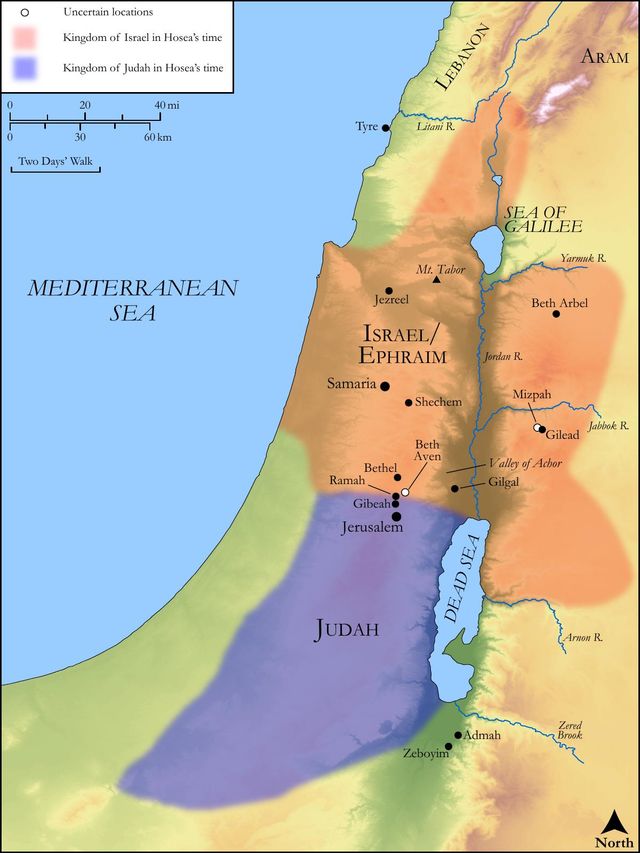
Hosea prophesied during the tumultuous period of the late 8th century BCE, specifically to the northern kingdom of Israel (Ephraim) before its fall to Assyria in 722 BCE. This era was characterized by political instability, oppression, and rampant syncretism, where the worship of Yahweh was blended with the worship of Canaanite deities, particularly Baal. The practices described in Hosea 4:12—consulting "stocks" (wooden idols or Asherah poles) and "staffs" (for divination, known as rhabdomancy)—were common in Canaanite fertility cults. These rituals were often accompanied by cultic prostitution, which Hosea frequently uses as a metaphor for Israel's spiritual unfaithfulness. The people sought prosperity and guidance from these pagan gods, believing they controlled agricultural fertility and daily fortunes, rather than relying on the God who had delivered them from Egypt and established a covenant with them.
Key Themes
ShowHideThe central theme in Hosea 4 is Israel's profound spiritual unfaithfulness and idolatry, depicted as "whoredom" or spiritual adultery. This verse highlights the rejection of divine knowledge and wisdom, as the people turn from God's instruction to superstitious practices. It also underscores the theme of divine grief and disappointment, as Yahweh laments that "My people" (a term emphasizing their covenant relationship) have so thoroughly abandoned Him. The consequences of this apostasy are also a key theme, leading to moral decay and ultimately, divine judgment, as implied by the land mourning in Hosea 4:3. The prophet consistently portrays Israel's relationship with God as a marriage covenant, making their idolatry a profound act of betrayal and infidelity, a theme woven throughout the book, beginning with Hosea's own marital struggles in Hosea 1:2.
Exposition and Analysis
ShowHideKey Word Analysis
ShowHideThis term (H5971) signifies a congregated unit, specifically a tribe or nation, often referring to Israel as a chosen, covenantal people. Its use here highlights the profound tragedy and betrayal: it is God's own people, those with whom He established a special relationship, who are engaging in such grievous sin. The possessive "My" underscores God's deep personal connection and subsequent grief over their apostasy.
This word (H6086) literally means "tree" or "wood." In this context, it refers to wooden idols, cultic poles (like Asherah poles), or sacred groves used in pagan worship. The act of "asking counsel at their stocks" signifies a profound turning away from the living God to inanimate, man-made objects, illustrating the depth of their idolatry and their reliance on false deities for guidance.
Derived from the root H2181 (zânâh), this noun (H2183) signifies adultery or, figuratively and more commonly in prophetic literature, idolatry. It describes not just an isolated act but a pervasive spiritual disposition or inclination towards unfaithfulness. The "spirit of whoredoms" therefore implies an internal, corrupting influence that drives the people consistently towards spiritual adultery, a deep-seated spiritual sickness that has caused them to err and abandon their covenant with God.
Verse Breakdown
ShowHide"My people ask counsel at their stocks,"
This clause immediately establishes the covenant relationship ("My people") and then highlights the shocking betrayal. Instead of seeking counsel from Yahweh, their God and covenant partner, they turn to "stocks"—wooden idols or cultic objects. This indicates a complete rejection of divine authority and wisdom, opting for the perceived guidance of lifeless objects, a practice strictly forbidden in the Mosaic Law (e.g., Deuteronomy 18:10-12).
"and their staff declareth unto them:"
This continues the theme of seeking illegitimate guidance, specifically referencing rhabdomancy, a form of divination using rods or staffs to cast lots or interpret omens. This practice further demonstrates their reliance on superstitious, pagan methods rather than the clear revelation and prophetic word of God. It underscores their active pursuit of forbidden knowledge and their deep entanglement with Canaanite religious practices.
"for the spirit of whoredoms hath caused [them] to err,"
This clause provides the underlying spiritual reason for their actions. It's not merely ignorance, but a pervasive "spirit of whoredoms" (a deep-seated inclination towards spiritual unfaithfulness, idolatry, and rebellion against God) that has led them astray. This "spirit" suggests an internal disposition or even a demonic influence that corrupts their judgment and draws them away from truth and righteousness, causing them to wander from the right path.
"and they have gone a whoring from under their God."
This final clause reiterates and confirms the extent of their spiritual apostasy. "Gone a whoring" explicitly defines their idolatry as spiritual adultery, a breach of the marital covenant between God and Israel. The phrase "from under their God" emphasizes that their unfaithfulness is a deliberate act of rebellion against the one true God who had chosen, redeemed, and sustained them. They have willfully broken free from His protective and guiding hand, choosing instead to pursue illicit spiritual relationships.
Literary Devices
ShowHideHosea 4:12 is rich with Metaphor and Personification. The central metaphor is that of Israel as an unfaithful wife, with their idolatry described as "whoredom" or spiritual adultery. This powerful imagery, consistent throughout the book of Hosea, conveys the deep betrayal and broken covenant relationship between God and His people. The "spirit of whoredoms" is a metaphorical representation of a pervasive, corrupting spiritual inclination or disposition that drives their unfaithfulness. Furthermore, the "stocks" and "staff" are personified as if they possess agency, "asking counsel" and "declaring" guidance. This highlights the absurdity and futility of their pagan practices, as inanimate objects are treated as sources of divine wisdom, contrasting sharply with the living, speaking God whom they have abandoned. The use of Irony is also present, as God's "people," who should know Him, turn to lifeless objects for the very counsel that only He can truly provide.
Theological and Thematic Connections
ShowHideHosea 4:12 profoundly illustrates the nature of idolatry as spiritual adultery, a betrayal of the covenant relationship between God and His people. It reveals God's deep grief over Israel's unfaithfulness, emphasizing that their turning to "stocks" and "staffs" for counsel is a direct rejection of His sovereignty, wisdom, and loving guidance. This passage underscores the truth that true knowledge of God is not merely intellectual assent but a relational intimacy that precludes seeking guidance from any source other than Him. Their "spirit of whoredoms" signifies a pervasive spiritual sickness that leads to moral decay and separation from the source of life and truth, demonstrating that sin is often rooted in a fundamental misdirection of worship and trust.
Reflection and Application
ShowHideHosea 4:12 serves as a timeless mirror for self-examination, challenging us to consider where we truly seek counsel and place our ultimate trust. While modern society may not consult wooden idols or divining staffs, the essence of idolatry remains—diverting our allegiance and trust from God to anything else. We "ask counsel at our stocks" when we prioritize human wisdom, societal trends, financial security, career success, or even personal desires above God's revealed will and the guidance of His Spirit. This can manifest as seeking validation from social media, trusting political ideologies more than biblical principles, or allowing personal comfort to dictate moral choices. The "spirit of whoredoms" warns us that a pervasive inclination towards self-reliance or worldly conformity can subtly lead us astray from genuine faithfulness. This verse calls us to a radical reorientation: to consistently and intentionally seek God's counsel through His Word, prayer, and the wisdom of His community. It is a call to cultivate a deep, abiding intimacy with God, ensuring that our lives are lived "under our God," faithfully dependent on Him alone, so that we do not err or go astray from His loving presence and perfect guidance.
Questions for Reflection
ShowHideFAQ
ShowHideWhat does "stocks" and "staff" refer to in Hosea 4:12?
ShowHideIn Hosea 4:12, "stocks" (Hebrew: ʻêts) refers to wooden idols or cultic poles (like Asherah poles) that were objects of pagan worship. The term "staff" (Hebrew: maqqêl) refers to a rod or stick used in a form of divination known as rhabdomancy, where sticks were cast or interpreted to gain insight or make decisions. Both terms signify the people's reliance on inanimate objects and superstitious practices for guidance, rather than seeking the living God. This was a direct violation of God's commands against idolatry and divination, as seen in Deuteronomy 18:9-12.
What is meant by "the spirit of whoredoms"?
ShowHide"The spirit of whoredoms" (Hebrew: rûwach zânûwn) refers to a pervasive, internal disposition or spiritual inclination towards idolatry and spiritual unfaithfulness. In the Old Testament, Israel's relationship with God is often depicted as a marriage covenant, making idolatry a form of spiritual adultery or "whoredom." This "spirit" indicates that their unfaithfulness was not merely an occasional lapse but a deep-seated corruption, an inner drive that led them consistently to abandon God and pursue illicit spiritual relationships with false gods. It suggests a profound spiritual blindness and a heart that has turned away from the truth, as also described in Isaiah 44:18.
Christ-Centered Fulfillment
ShowHideHosea 4:12, with its stark portrayal of Israel's spiritual whoredom and reliance on false gods, finds its ultimate fulfillment and resolution in Jesus Christ. Israel's failure to remain faithful "under their God" highlights humanity's pervasive sinfulness and inability to perfectly uphold the covenant. This spiritual adultery, driven by a "spirit of whoredoms," underscores the deep-seated brokenness of the human heart that constantly turns away from the true God. Jesus, however, perfectly embodies the faithful Son and the true Israel, who never strayed from His Father's will, always seeking counsel from Him alone (John 5:19). He came to redeem a people enslaved by this "spirit of whoredoms," offering liberation from the power of sin and idolatry. Through His atoning sacrifice, Christ cleanses His church, making her a pure bride, faithful and devoted to Him (Ephesians 5:25-27). The New Covenant, established in His blood, replaces the old covenant that Israel continually broke, offering a new heart and a new spirit (Ezekiel 36:26-27) that empowers believers to walk in faithfulness. In Christ, we are no longer prone to "go a whoring from under our God" but are empowered by the Holy Spirit to worship God in spirit and truth (John 4:24), finding all counsel and life in Him, the true Lamb of God who takes away the sin of the world (John 1:29).