


Matthew 5:22
Bible text: King James Version (1769 Blayney text) · Public domain
Bible text: King James Version with Strong's numbers · Public domain
Bible text: Berean Standard Bible · Public domain
Bible text: American Standard Version (1901) · Public domain
Bible text: World English Bible, Messianic edition · Public domain
Bible text: Geneva Bible (1599) · Public domain
Bible text: Young's Literal Translation · Public domain
- ἐγὼegōI myselfG1473P-1NSPersonal pronoun Nominative 1st Singular
- δὲdehoweverG1161CONJConjunction
- λέγωlegōsayG3004V-PAI-1SVerb Present Active Indicative 1st Singular
- ὑμῖνhuminto youG4771P-2DPPersonal pronoun Dative 2nd Plural
- ὅτιhotithatG3754CONJConjunction
- πᾶςpaseveryoneG3956A-NSMAdjective Nominative Singular Masculine
- ὁhowhoG3588T-NSMDefinite article Nominative Singular Masculine
- ὀργιζόμενοςorgizomenosis being angry withG3710V-PMP-NSMVerb Present Middle Participle Nominative Singular Masculine
- τῷtōtheG3588T-DSMDefinite article Dative Singular Masculine
- ἀδελφῷadelphōbrotherG80N-DSMNoun Dative Singular Masculine
- αὐτοῦautouof himG846P-GSMPersonal pronoun Genitive Singular Masculine
- εἰκῆeikēin vainG1500ADVAdverb
- ἔνοχοςenochosliableG1777A-NSMAdjective Nominative Singular Masculine
- ἔσταιestaiwill beG1510V-FDI-3SVerb Future Middle Deponent Indicative 3rd Singular
- τῇtēato theG3588T-DSFDefinite article Dative Singular Feminine
- κρίσει·kriseijudgmentG2920N-DSFNoun Dative Singular Feminine
- ὃςhoswho[ever]G3739R-NSMRelative pronoun Nominative Singular Masculine
- δ᾽d᾽nowG1161CONJConjunction
- ἂνanmaybeG302PRTParticle or Disjunctive
- εἴπῃeipēmay sayG2036V-2AAS-3SVerb 2nd Aorist Active Subjunctive 3rd Singular
- τῷtōto theG3588T-DSMDefinite article Dative Singular Masculine
- ἀδελφῷadelphōbrotherG80N-DSMNoun Dative Singular Masculine
- αὐτοῦ·autouof himG846P-GSMPersonal pronoun Genitive Singular Masculine
- ῥακάrhakaRaca,’G4469N-VSM-ARAMNoun Vocative Singular Masculine
- ἔνοχοςenochosliableG1777A-NSMAdjective Nominative Singular Masculine
- ἔσταιestaiwill beG1510V-FDI-3SVerb Future Middle Deponent Indicative 3rd Singular
- τῷtōto theG3588T-DSNDefinite article Dative Singular Neuter
- συνεδρίῳ·sunedriōSanhedrinG4892N-DSNNoun Dative Singular Neuter
- ὃςhoswho[ever]G3739R-NSMRelative pronoun Nominative Singular Masculine
- δ᾽d᾽nowG1161CONJConjunction
- ἂνanmaybeG302PRTParticle or Disjunctive
- εἴπῃ·eipēmay sayG2036V-2AAS-3SVerb 2nd Aorist Active Subjunctive 3rd Singular
- μωρέmōreFoolG3474A-VSMAdjective Vocative Singular Masculine
- ἔνοχοςenochosliableG1777A-NSMAdjective Nominative Singular Masculine
- ἔσταιestaiwill beG1510V-FDI-3SVerb Future Middle Deponent Indicative 3rd Singular
- εἰςeistoG1519PREPPreposition
- τὴνtēntheG3588T-ASFDefinite article Accusative Singular Feminine
- γέεννανgeennanhellG1067N-ASF-TNoun Accusative Singular Feminine
- τοῦtou<the>G3588T-GSNDefinite article Genitive Singular Neuter
- πυρόςpurosof fireG4442N-GSNNoun Genitive Singular Neuter
English is a literal word-by-word gloss of the Greek, not the KJV's wording. Why?
This is the original text the KJV's translators worked from — each Greek word with its own literal English meaning in this verse, prepared by scholars at Tyndale House, Cambridge. The KJV translates whole sentences, not word by word, so its wording differs: one Greek word can become several English words, and the KJV may choose “charity” where the gloss reads “love”. Both are faithful — they answer different questions. For the KJV's own rendering, switch to the KJV text.
Details
See on the biblical-era maps
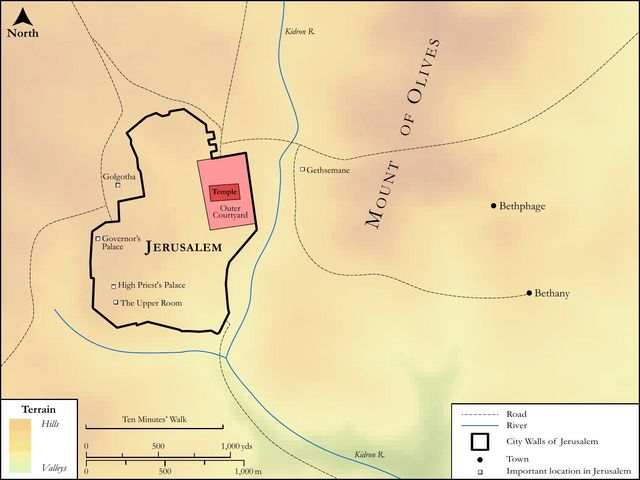
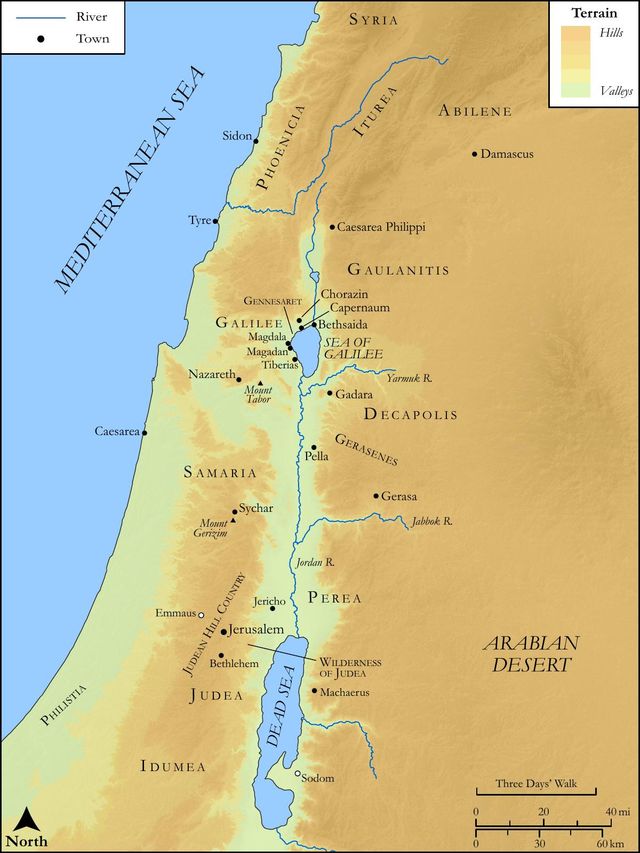
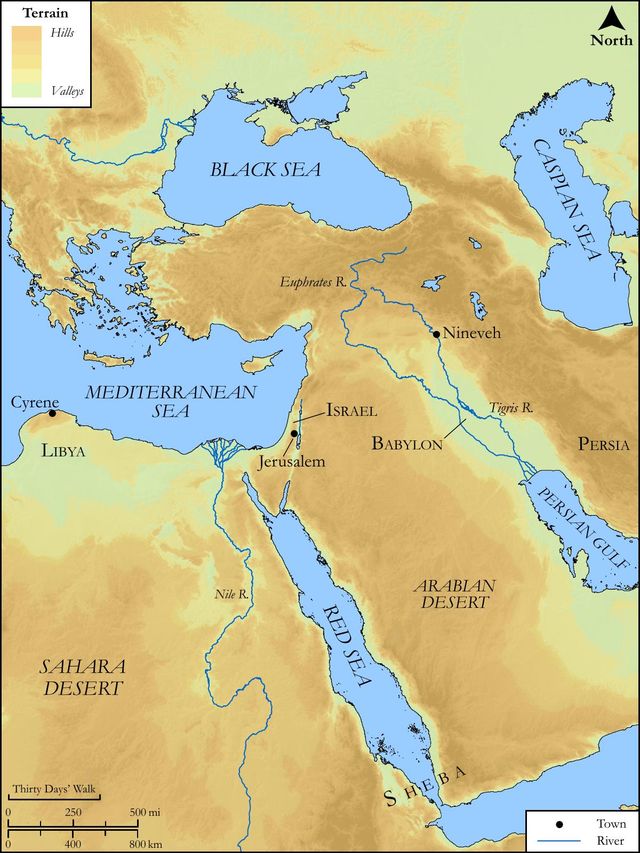
Study this verse
Public-domain commentary
Matthew Henry
From his Commentary on the Whole Bible. Henry comments on passages, not single verses — this entry covers Matthew 5:21–26. His three-level outline is real structure in the source text, so it is rendered as structure.
Christ having laid down these principles, that Moses and the prophets were still to be their rulers, but that the scribes and Pharisees were to be no longer their rulers, proceeds to expound the law in some particular instances, and to vindicate it from the corrupt glosses which those expositors had put upon it. He adds not any thing new, only limits and restrains some permissions which had been abused: and as to the precepts, shows the breadth, strictness, and spiritual nature of them, adding such explanatory statutes as made them more clear, and tended much toward the perfecting of our obedience to them. In these verses, he explains the law of the sixth commandment, according to the true intent and full extent of it.
I.Here is the command itself laid down (Mat 5:12); We have heard it, and remember it; he speaks to them who know the law, who had Moses read to them in their synagogues every sabbath-day; you have heard that it was said by them, or rather as it is in the margin, to them of old time, to your forefathers the Jews, Thou shalt not kill. Note, The laws of God are not novel, upstart laws, but were delivered to them of old time; they are ancient laws, but of that nature as never to be antiquated nor grow obsolete. The moral law agrees with the law of nature, and the eternal rules and reasons of good and evil, that is, the rectitude of the eternal Mind. Killing is here forbidden, killing ourselves, killing any other, directly or indirectly, or being any way accessory to it. The law of God, the God of life, is a hedge of protection about our lives. It was one of the precepts of Noah, Gen 9:5, Gen 9:6.
II.The exposition of this command which the Jewish teachers contended themselves with; their comment upon it was, Whosoever shall kill, shall be in danger of the judgment. This was all they had to say upon it, that wilful murderers were liable to the sword of justice, and casual ones to the judgment of the city of refuge. The courts of judgment sat in the gate of their principal cities; the judges, ordinarily, were in number twenty-three; these tried, condemned, and executed murderers; so that whoever killed, was in danger of their judgment. Now this gloss of theirs upon this commandment was faulty, for it intimated,
1.That the law of the sixth commandment was only external, and forbade no more than the act of murder, and laid to restraint upon the inward lusts, from which wars and fightings come. This was indeed the prōton pseudos - the fundamental error of the Jewish teachers, that the divine law prohibited only the sinful act, not the sinful thought; they were disposed haerere in cortice - to rest in the letter of the law, and they never enquired into the spiritual meaning of it. Paul, while a Pharisee, did not, till, by the key of the tenth commandment, divine grace let him into the knowledge of the spiritual nature of all the rest, Rom 7:7, Rom 7:14.
2.Another mistake of theirs was, that this law was merely political and municipal, given for them, and intended as a directory for their courts, and no more; as if they only were the people, and the wisdom of the law must die with them.
III.The exposition which Christ gave of this commandment; and we are sure that according to his exposition of it we must be judged hereafter, and therefore ought to be ruled now. The commandment is exceeding broad, and not to be limited by the will of the flesh, or the will of men.
1.Christ tells them that rash anger is heart-murder (Mat 5:22); Whosoever is angry with his brother without a cause, breaks the sixth commandment. By our brother here, we are to understand any person, though ever so much our inferior, as a child, a servant, for we are all made of one blood. Anger is a natural passion; there are cases in which it is lawful and laudable; but it is then sinful, when we are angry without cause. The word is eikē, which signifies, sine caus, sine effectu, et sine modo - without cause, without any good effect, without moderation; so that the anger is then sinful,
(1.)When it is without any just provocation given; either for no cause, or no good cause, or no great and proportionable cause; when we are angry at children or servants for that which could not be helped, which was only a piece of forgetfulness or mistake, that we ourselves might easily have been guilty of, and for which we should not have been angry at ourselves; when we are angry upon groundless surmises, or for trivial affronts not worth speaking of.
(2.)When it is without any good end aimed at, merely to show our authority, to gratify a brutish passion, to let people know our resentments, and excite ourselves to revenge, then it is in vain, it is to do hurt; whereas if we are at any time angry, it should be to awaken the offender to repentance, and prevent his doing so again; to clear ourselves (Co2 7:11), and to give warning to others.
(3.)When it exceeds due bounds; when we are hardy and headstrong in our anger, violent and vehement, outrageous and mischievous, and when we seek the hurt of those we are displeased at. This is a breach of the sixth commandment, for he that is thus angry, would kill if he could and durst; he has taken the first step toward it; Cain's killing his brother began in anger; he is a murderer in the account of God, who knows his heart, whence murder proceeds, Mat 15:19.
2.He tells them, that given opprobrious language to our brother is tongue-murder, calling him, Raca, and, Thou fool. When this is done with mildness and for a good end, to convince others of their vanity and folly, it is not sinful. Thus James says, O vain man; and Paul, Thou fool; and Christ himself, O fools, and slow of heart. But when it proceeds from anger and malice within, it is the smoke of that fire which is kindled from hell, and falls under the same character.
(1.)Raca is a scornful word, and comes from pride, "Thou empty fellow;" it is the language of that which Solomon calls proud wrath (Pro 21:24), which tramples upon our brother - disdains to set him even with the dogs of our flock. This people who knoweth not the law, is cursed, is such language, Joh 7:49.
(2.)Thou fool, is a spiteful word, and comes from hatred; looking upon him, not only as mean and not to be honoured, but as vile and not to be loved; "Thou wicked man, thou reprobate." The former speaks a man without sense, this (in scripture language) speaks a man without grace; the more the reproach touches his spiritual condition, the worse it is; the former is a haughty taunting of our brother, this is a malicious censuring and condemning of him, as abandoned of God. Now this is a breach of the sixth commandment; malicious slanders and censures are poison under the tongue, that kills secretly and slowly; bitter words are as arrows that would suddenly (Psa 64:3), or as a sword in the bones. The good name of our neighbour, which is better than life, is thereby stabbed and murdered; and it is an evidence of such an ill-will to our neighbour as would strike at his life, if it were in our power.
3.He tells them, that how light soever they made of these sins, they would certainly be reckoned for; he that is angry with is brother shall be in danger of the judgment and anger of God; he that calls him Raca, shall be in danger of the council, of being punished by the Sanhedrim for reviling an Israelite; but whosoever saith, Thou fool, thou profane person, thou child of hell, shall be in danger of hell-fire, to which he condemns his brother; so the learned Dr. Whitby. Some think, in allusion to the penalties used in the several courts of judgment among the Jews, Christ shows that the sin of rash anger exposes men to lower or higher punishments, according to the degrees of its proceeding. The Jews had three capital punishments, each worse than the other; beheading, which was inflicted by the judgment; stoning, by the council or chief Sanhedrim; and burning in the valley of the son of Hinnom, which was used only in extraordinary cases: it signifies, therefore, that rash anger and reproachful language are damning sins; but some are more sinful than others, and accordingly there is a greater damnation, and a sorer punishment reserved for them: Christ would thus show which sin was most sinful, by showing which it was the punishment whereof was most dreadful.
IV.From all this it is here inferred, that we ought carefully to preserve Christian love and peace with our brethren, and that if at any time a breach happens, we should labour for a reconciliation, by confessing our fault, humbling ourselves to our brother, begging his pardon, and making restitution, or offering satisfaction for wrong done in word or deed, according as the nature of the thing is; and that we should do this quickly for two reasons:
1.Because, till this be done, we are utterly unfit for communion with God in holy ordinances, Mat 5:23, Mat 5:24. The case supposed is, "That thy brother have somewhat against thee," that thou has injured and offended him, either really or in his apprehension; if thou are the party offended, there needs not this delay; if thou have aught against thy brother, make short work of it; no more is to be done but to forgive him (Mar 11:25), and forgive the injury; but if the quarrel began on thy side, and the fault was either at first or afterwards thine, so that thy brother has a controversy with thee, go and be reconciled to him before thou offer thy gift at the altar, before thou approach solemnly to God in the gospel-services of prayer and praise, hearing the word or the sacraments. Note,
(1.)When we are addressing ourselves to any religious exercises, it is good for us to take that occasion of serious reflection and self-examination: there are many things to be remembered, when we bring our gift to the altar, and this among the rest, whether our brother hath aught against us; then, if ever, we are disposed to be serious, and therefore should then call ourselves to an account.
(2.)Religious exercises are not acceptable to God, if they are performed when we are in wrath; envy, malice, and uncharitableness, are sins so displeasing to God, that nothing pleases him which comes from a heart wherein they are predominant, Ti1 2:8. Prayers made in wrath are written in gall, Isa 1:15; Isa 58:4.
(3.)Love or charity is so much better than all burnt-offerings and sacrifice, that God will have reconciliation made with an offended brother before the gift be offered; he is content to stay for the gift, rather than have it offered while we are under guilt and engaged in a quarrel.
(4.)Though we are unfitted for communion with God, by a continual quarrel with a brother, yet that can be no excuse for the omission or neglect of our duty: "Leave there thy gift before the altar, lest otherwise, when thou has gone away, thou be tempted not to come again." Many give this as a reason why they do not come to church or to the communion, because they are at variance with some neighbour; and whose fault is that? One sin will never excuse another, but will rather double the guilt. Want of charity cannot justify the want of piety. The difficulty is easily got over; those who have wronged us, we must forgive; and those whom we have wronged, we must make satisfaction to, or at least make a tender of it, and desire a renewal of the friendship, so that if reconciliation be not made, it may not be our fault; and then come, come and welcome, come and offer thy gift, and it shall be accepted. Therefore we must not let the sun go down upon our wrath any day, because we must go to prayer before we go to sleep; much less let the sun rise upon our wrath on a sabbath-day, because it is a day of prayer.
2.Because, till this be done, we lie exposed to much danger, Mat 5:25, Mat 5:26. It is at our peril if we do not labour after an agreement, and that quickly, upon two accounts:
(1.)Upon a temporal account. If the offence we have done to our brother, in his body, goods, or reputation, be such as will bear action, in which he may recover considerable damages, it is our wisdom, and it is our duty to our family, to prevent that by a humble submission and a just and peaceable satisfaction; lest otherwise he recover it by law, and put us to the extremity of a prison. In such a case it is better to compound and make the best terms we can, than to stand it out; for it is in vain to contend with the law, and there is danger of our being crushed by it. Many ruin their estates by an obstinate persisting in the offences they have given, which would soon have been pacified by a little yielding at first. Solomon's advice in case of suretyship is, Go, humble thyself, and so secure and deliver thyself, Pro 6:1-5. It is good to agree, for the law is costly. Though we must be merciful to those we have advantage against, yet we must be just to those that have advantage against us, as far as we are able. "Agree, and compound with thine adversary quickly, lest he be exasperated by thy stubbornness, and provoked to insist upon the utmost demand, and will not make thee the abatement which at first he would have made." A prison is an uncomfortable place to those who are brought to it by their own pride and prodigality, their own wilfulness and folly.
(2.)Upon a spiritual account. "Go, and be reconciled to thy brother, be just to him, be friendly with him, because while the quarrel continues, as thou art unfit to bring thy gift to the altar, unfit to come to the table of the Lord, so thou art unfit to die: if thou persist in this sin, there is danger lest thou be suddenly snatched away by the wrath of God, whose judgment thou canst not escape nor except against; and if that iniquity be laid to thy charge, thou art undone for ever." Hell is a prison for all that live and die in malice and uncharitableness, for all that are contentious (Rom 2:8), and out of that prison there is no rescue, no redemption, no escape, to eternity.
This is very applicable to the great business of our reconciliation to God through Christ; Agree with him quickly, whilst thou art in the way. Note, [1.] The great God is an Adversary to all sinners, antidikos - a law-adversary; he has a controversy with them, an action against them. [2.] It is our concern to agree with him, to acquaint ourselves with him, that we may be at peace, Job 22:21; Co2 5:20. [3.] It is our wisdom to do this quickly, while we are in the way. While we are alive, we are in the way; after death, it will be too late to do it; therefore give not sleep to thine eyes till it be done. [4.] They who continue in a state of enmity to God, are continually exposed to the arrests of his justice, and the most dreadful instances of his wrath. Christ is the Judge, to whom impenitent sinners will be delivered; for all judgment is committed to the Son; he that was rejected as a Saviour, cannot be escaped as a Judge, Rev 6:16, Rev 6:17. It is a fearful thing to be thus turned over to the Lord Jesus, when the Lamb shall become the Lion. Angels are the officers to whom Christ will deliver them (Mat 13:41, Mat 13:42); devils are so too, having the power of death as executioners to all unbelievers, Heb 2:14. Hell is the prison, into which those will be cast that continue in a state of enmity to God, Pe2 2:4. [5.] Damned sinners must remain in it to eternity; they shall not depart till they have paid the uttermost farthing, and that will not be to the utmost ages of eternity: divine justice will be for ever in the satisfying, but never satisfied.
Historical interpretation
Eleven Centuries of Reception
21 surviving comments on this verse. Each one is dated, so this reads as a timeline rather than a list.
Select a marker to jump to its quote. Markers stagger vertically where authors wrote within a few decades of each other.
That we may not be as far from the ears of God as we are from His precepts, the memory of His precepts paves for our prayers a way unto heaven; of which precepts the chief is, that we go not up unto God's altar before we compose whatever of discord or offence we have contracted with our brethren. For what sort of deed is it to approach the peace of God without peace? the remission of debts while you retain them? How will he appease his Father who is angry with his brother, when from the beginning "all anger" is forbidden us? For even Joseph, when dismissing his brethren for the purpose of fetching their father, said, "And be not angry in the way.
But after He has supervened, and has united the grace of faith with patience, now it is no longer lawful to assail even with word, nor to say "fool" even, without "danger of the judgment.
He has said two things: “Whoever says, ‘Raca,’ and whoever says, ‘You fool,’ ” referring foolishness to the soul, and “despicable” to things of the body. By this he describes one who assumes an air of superiority, exalts himself over his brothers in the faith. Such a one hates them and turns away from them or looks down upon them with disgust or, frequently, passes them by as not worthy of a single look. He derives this sense of superiority from advantages of either body or soul and, on this account, looks down on his brothers as inferior to him. Such a person, Jesus says, is not considered by me as immune from condemnation. For the one who hates is akin to a murderer; such a person ought especially to have had love for these others on account of their shared faith, even though their common human nature should have been reason enough to unite them in friendship.
Beautiful entrance He here makes to a teaching beyond the works of the Law, declaring to the Apostles that they should have no admission to the kingdom of heaven without a righteousness beyond that of Pharisees.
Or, he who reproaches with emptiness one full of the Holy Spirit, will he arraigned in the assembly of the Saints, and by their sentence will be punished for an affront against that Holy Spirit Himself.
“Whoever says to his brother, ‘Raca,’ shall be liable to the council.” One who reproaches with empty-headedness someone who is filled with the Holy Spirit becomes liable to the council of holy men and is to expiate this outrage against the Holy Spirit through punishment handed down by the holy judges. “Whoever says, ‘You fool!’ shall be liable to the hell of fire.” … Thus whatever the law has not condemned as to a person’s works, the faith of the Gospels castigates because of one’s readiness simply to use insulting words.
How greatly the Lord esteems fraternal love we know from this, for he makes clear that a gift offered to God is not acceptable unless the giver of a gift to his brother puts aside his anger and becomes reconciled to him.Furthermore, we learn that the gifts offered by Cain were rejected by God. He failed to observe charity toward his brother and harbored anger in his heart. Hence, not without good reason does the Lord in the Gospel indicate in many places the prime necessity of fraternal charity when he says, “A new commandment I give you, that you love one another.”
And again: “By this will all men know that you are my disciples, if you have love for one another.” Rightly so, the Lord also spoke through Zechariah: “Render true judgments, show kindness and mercy each to his brother.” Through David he likewise declared: “Refrain from anger, and forsake wrath!”
By righteousness is here meant universal virtue. But observe the superior power of grace, in that He requires of His disciples who were yet uninstructed to be better than those who were masters under the Old Testament. Thus He does not call the Scribes and Pharisees unrighteous, but speaks of their righteousness. And see how even herein He confirms the Old Testament that He compares it with the New, for the greater and the less are always of the same kind.
This, it was said by them of old time, shows that it was long ago that they had received this precept. He says this that He might rouse His sluggish hearers to proceed to more sublime precepts, as a teacher might say to an indolent boy, Know you not how long time you have spent already in merely learning to spell? In that, I say unto you, mark the authority of the legislator, none of the old Prophets spoke thus; but rather, Thus saith the Lord. They as servants repeated the commands of their Lord; He as a Son declared the will of His Father, which was also His own. They preached to their fellow servants; Ha as master ordained a law for his slaves.
Or, Racha is a word signifying contempt, and worthlessness. For where we in speaking to servants or children say, Go thou, or, Tell thou him; in Syriac they would say Racha for 'thou.' For the Lord descends to the smallest trifles even of our behaviour, and bids us treat one another with mutual respect.
This is the first mention of hell, though the kingdom of Heaven had been mentioned some time before, which shows that the gifts of the one comes of His love, the condemnation of the other of our sloth. Many thinking this a punishment too severe for a mere word, say that this was said figuratively. But I fear that if we thus cheat ourselves with words here, we shall suffer punishment in deed there. Think not then this too heavy a punishment, when so many sufferings and sins have their beginning in a word; a little word has often begotten a murder, and overturned whole cities. And yet it is not to be thought a little word that denies a brother reason and understanding by which we are men, and differ from the brutes.
Or, the judgment and the council denote punishment in this word; hell-fire future punishment. He denounces punishment against anger, yet does not mention any special punishment, showing therein that it is not possible that a man should be altogether free from the passion. The Council here means the Jewish senate, for He would not seem to be always superseding all their established institutions, and introducing foreignf.
"But I say unto you, that whosoever is angry with his brother without a cause, shall be in danger of the judgment."
Seest thou authority in perfection? Seest thou a bearing suited to a legislator? Why, which among prophets ever spake on this wise? which among righteous men? which among patriarchs? None; but, "Thus saith the Lord." But the Son not so. Because they were publishing their Master's commands, He His Father's. And when I say, "His Father's," I mean His own. "For mine," saith He, "are thine, and thine are mine." And they had their fellow-servants to legislate for, He His own servants.
Let us now ask those who reject the law, "is, 'Be not angry' contrary to 'Do no murder'? or is not the one commandment the completion and the development of the other?" Clearly the one is the fulfilling of the other, and that is greater on this very account. Since he who is not stirred up to anger, will much more refrain from murder; and he who bridles wrath will much more keep his hands to himself. For wrath is the root of murder. And you see that He who cuts up the root will much more remove the branches; or rather, will not permit them so much as to shoot out at all. Not therefore to abolish the law did He make these enactments, but for the more complete observation of it. For with what design did the law enjoin these things? Was it not, that no one might slay his neighbor? It follows, that he who was opposing the law would have to enjoin murder. For to murder, were the contrary to doing no murder. But if He doth not suffer one even to be angry, the mind of the law is established by Him more completely. For he that studies to avoid murder will not refrain from it equally with him that hath put away even anger; this latter being further removed from the crime.
But these things we have said, as one might say them incidentally, concerning all the commandments. Now we must go on to that which is before us, and keep to the thread of what had been affirmed. "He that is angry with his brother without a cause shall be in danger of the judgment:" so He speaks. Thus He hath not altogether taken the thing away: first, because it is not possible, being a man, to be freed from passions: we may indeed get the dominion over them, but to be altogether without them is out of the question.
Next, because this passion is even useful, if we know how to use it at the suitable time. See, for instance, what great good was wrought by that anger of Paul, which he felt against the Corinthians, on that well-known occasion; and how, as it delivered them from a grievous pest, so by the same means again he recovered the people of the Galatians likewise, which had fallen aside; and others too beside these. What then is the proper time for anger? When we are not avenging ourselves, but checking others in their lawless freaks, or forcing them to attend in their negligence.
And what is the unsuitable time? When we do so as avenging ourselves: which Paul also forbidding, said "Avenge not yourselves, dearly beloved, but rather give place unto wrath." When we are contending for riches: yea, for this hath he also taken away, where he saith, "Why do ye not rather take wrong? why do ye not rather suffer yourselves to be defrauded?" For as this last sort is superfluous, so is the first necessary and profitable. But most men do the contrary; becoming like wild beasts when they are injured themselves, but remiss and cowardly when they see despite done to another: both which are just opposite to the laws of the Gospel.
Being angry then is not a transgression, but being so unseasonably. For this cause the prophet also said, "Be ye angry, and sin not."
"And whosoever shall say to his brother, Raca, shall be in danger of the council."
By the council in this place He means the tribunal of the Hebrews: and He hath mentioned this now, on purpose that He might not seem everywhere to play the stranger and innovator.
But this word, "Raca," is not an expression of a great insolence, but rather of some contempt and slight on the part of the speaker. For as we, giving orders either to our servants, or to any very inferior person, say, "Away with thee; you here, tell such an one:" so they who make use of the Syrians' language say, "Raca," putting that word in stead of "thou." But God, the lover of man, roots up even the least faults, commanding us to behave to one another in seemly manner, and with due respect; and this with a view of destroying hereby also the greater.
"But whosoever shall say, Thou fool, shall be in danger of hell fire."
To many this commandment hath appeared grievous and galling, if for a mere word we are really to pay so great a penalty. And some even say that it was spoken rather hyperbolically. But I fear lest, when we have deceived ourselves with words here, we may in deeds there suffer that extreme punishment.
For wherefore, tell me, doth the commandment seem overburdensome? Knowest thou not that most punishments and most sins have their beginning from words? Yea, for by words are blasphemies, and denials are by words, and revilings, and reproaches, and perjuries, and bearing false witness. Regard not then its being a mere word, but whether it have not much danger, this do thou inquire. Art thou ignorant that in the season of enmity, when wrath is inflamed, and the soul kindled, even the least thing appears great, and what is not very reproachful is counted intolerable? And often these little things have given birth even to murder, and overthrown whole cities. For just as where friendship is, even grievous things are light, so where enmity lies beneath, very trifles appear intolerable. And however simply a word be spoken, it is surmised to have been spoken with an evil meaning.
And see how He proceeds by little and little in His punishments, all but excusing Himself unto thee, and signifying that His desire indeed is to threaten nothing of the kind, but that we drag Him on to such denunciations. For observe: "I bade thee," saith He, "not be angry for nought, because thou art in danger of the judgment. Thou hast despised the former commandment: see what anger hath produced; it hath led thee on straightway to insult, for thou hast called thy brother 'Raca.' Again, I set another punishment, 'the council.' If thou overlook even this, and proceed to that which is more grievous, I visit thee no longer with these finite punishments, but with the undying penalty of hell, lest after this thou shouldest break forth even to murder." For there is nothing, nothing in the world more intolerable than insolence; it is what hath very great power to sting a man's soul. But when the word too which is spoken is in itself more wounding than the insolence, the blaze becomes twice as great. Think it not then a light thing to call another "fool." For when of that which separates us from the brutes, and by which especially we are human beings, namely, the mind and the understanding, when of this thou hast robbed thy brother, thou hast deprived him of all his nobleness.
Let us not then regard the words merely, but realizing the things themselves, and his feeling, let us consider how great a wound is made by this word, and unto how much evil it proceeds. For this cause Paul likewise cast out of the kingdom not only "the adulterous" and "the effeminate," but "the revilers" also. And with great reason: for the insolent man mars all the beauty of charity, and casts upon his neighbor unnumbered ills, and works up lasting enmities, and tears asunder the members of Christ, and is daily driving away that peace which God so desires: giving much vantage ground unto the devil by his injurious ways, and making him the stronger. Therefore Christ Himself, cutting out the sinews of the devil's power, brought in this law.
For indeed He makes much account of love: this being above all things the mother of every good, and the badge of His disciples, and the bond which holds together our whole condition. With reason therefore doth He remove with great earnestness the roots and the sources of that hatred which utterly spoils it.
And let us be diligent, if we would attain unto the kingdom, to show forth something more than the old commandments; since we cannot otherwise lay hold of the things of Heaven. For if we arrive but at the same measure, that of the ancients, we shall stand without that threshold; for "except your righteousness shall exceed the righteousness of the Scribes and Pharisees, ye cannot enter into the kingdom of Heaven."
Yet, although so heavy a threat is set down, there are some who so far from over-passing this righteousness, even come short of it; so far from shunning oaths, they even swear falsely; so far from avoiding an unchaste gaze, they even fall into the very act of wickedness. And all the rest of the things which are forbidden, they dare to do, as though past feeling: waiting for one thing only, the day of punishment, and the time when they are to pay the most extreme penalty for their misdoings.
Some copies add here the words, without cause; but by the true readingc the precept is made unconditional, and anger altogether forbidden. For when we are told to pray for them that persecute us, all occasion of anger is taken away. The words without cause then must be erased, for the wrath of man worketh not the righteousness of God.
Or, Racha is a Hebrew word signifying, 'empty,' 'vain;' as we might say in the common phrase of reproach, 'empty-pate.' Observe that He says brother; for who is our brother, but he who has the same Father as ourselves?
(Verse 22) Because whoever is angry with his brother will be liable to judgment. In some manuscripts it is added, without cause: but in the true definitive sentence, anger is completely eliminated, as the Scripture says: Whoever is angry with his brother. For if we are commanded to offer the other cheek to the one who strikes us, and to love our enemies, and to pray for those who persecute us (Luke 6), all occasion for anger is removed. Therefore, without cause must be removed, because the anger of man does not produce the righteousness of God (James 1).
But whoever says to his brother, 'Raca,' shall be liable to the council. This word 'Raca' is properly of the Hebrews: for Raca signifies 'empty,' that is, foolish or senseless: which we can call a common insult, without a brain. If we are to give an account for idle words, how much more for an insult (Matthew 5:22)! But it is also distinctly added: Whoever says to his brother, 'Raca.' For our brother is no one else, unless he has the same Father as us. When someone believes in God in the same way and knows Christ as the wisdom of God (1 Cor. 1): by what means can it be indicated by the praise of foolishness?
But whoever says, 'You fool!' will be liable to the hell of fire. Ἀπὸ κοινοῦ ex superioribus subauditur: Whoever says to his brother, 'You fool!' will be liable to the hell of fire. For whoever says to a believer, 'You fool!' is impious in religion.
In speaking of the judgment and of the council and of the Gehenna of fire, Jesus refers to one and the same punishment. He does not indicate various things through the difference of the words, nor some different chastisement. But if it is not permissible to call somebody a fool, why does the Lord himself employ the expression fools? It is not fitting to call one’s particular brother a fool, for such a word issues from anger and not from righteousness. It is even more impious when it is spoken against someone who is holy. But the Lord justly terms as fools people who are in no way righteous and in no way what he is. He does this not out of anger but for the sake of truth. Again, Gehenna is the place of eternal and infernal punishment.
But here one obscure word has found a place, for Raca is neither Latin nor Greek. The others, however, are current in our language. Now, some have wished to derive the interpretation of this expression from the Greek, supposing that a ragged person is called Raca, because a rag is called in Greek ῥάκος; yet, when one asks them what a ragged person is called in Greek, they do not answer Raca; and further, the Latin translator might have put the word ragged where he has placed Raca, and not have used a word which, on the one hand, has no existence in the Latin language, and, on the other, is rare in the Greek. Hence the view is more probable which I heard from a certain Hebrew whom I had asked about it; for he said that the word does not mean anything, but merely expresses the emotion of an angry mind. Grammarians call those particles of speech which express an affection of an agitated mind interjections; as when it is said by one who is grieved, Alas, or by one who is angry, Hah. And these words in all languages are proper names, and are not easily translated into another language; and this cause certainly compelled alike the Greek and the Latin translators to put the word itself, inasmuch as they could find no way of translating it.
There is therefore a gradation in the sins referred to, so that first one is angry, and keeps that feeling as a conception in his heart; but if now that emotion shall draw forth an expression of anger not having any definite meaning, but giving evidence of that feeling of the mind by the very fact of the outbreak wherewith he is assailed with whom one is angry, this is certainly more than if the rising anger were restrained by silence; but if there is heard not merely an expression of anger, but also a word by which the party using it now indicates and signifies a distinct censure of him against whom it is directed, who doubts but that this is something more than if merely an exclamation of anger were uttered? Hence in the first there is one thing, i.e. anger alone; in the second two things, both anger and a word that expresses anger; in the third three things, anger and a word that expresses anger, and in that word the utterance of distinct censure. Look now also at the three degrees of liability—the judgment, the council, the gehenna of fire. For in the judgment an opportunity is still given for defence; in the council, however, although there is also wont to be a judgment, yet because the very distinction compels us to acknowledge that there is a certain difference in this place, the production of the sentence seems to belong to the council, inasmuch as it is not now the case of the accused himself that is in question, whether he is to be condemned or not, but they who judge confer with one another to what punishment they ought to condemn him, who, it is clear, is to be condemned; but the gehenna of fire does not treat as a doubtful matter either the condemnation, like the judgment, or the punishment of him who is condemned, like the council; for in the gehenna of fire both the condemnation and the punishment of him who is condemned are certain. Thus there are seen certain degrees in the sins and in the liability to punishment; but who can tell in what ways they are invisibly shown in the punishments of souls? We are therefore to learn how great the difference is between the righteousness of the Pharisees and that greater righteousness which introduces into the kingdom of heaven, because while it is a more serious crime to kill than to inflict reproach by means of a word, in the one case killing exposes one to the judgment, but in the other anger exposes one to the judgment, which is the least of those three sins; for in the former case they were discussing the question of murder among men, but in the latter all things are disposed of by means of a divine judgment, where the end of the condemned is the gehenna of fire. But whoever shall say that murder is punished by a more severe penalty under the greater righteousness if a reproach is punished by the gehenna of fire, compels us to understand that there are differences of gehennas.
Indeed, in the three statements before us, we must observe that some words are understood. For the first statement has all the words that are necessary. Whosoever, says He, is angry with his brother without a cause, shall be in danger of the judgment. But in the second, when He says, and whosoever shall say to his brother, Raca, there is understood the expression without cause, and thus there is subjoined, shall be in danger of the council. In the third, now, where He says, but whosoever shall say, You fool, two things are understood, both to his brother and without cause. And in this way we defend the apostle when he calls the Galatians fools, to whom he also gives the name of brethren; for he does not do it without cause. And here the word brother is to be understood for this reason, that the case of an enemy is spoken of afterwards, and how he also is to be treated under the greater righteousness.
(de Civ. Dei, ix. 4.) There are two different opinions among philosophers concerning the passions of the mind: the Stoics do not allow that any passion is incident to the wise man; the Peripatetics affirm that they are incident to the wise man but in a moderate degree and subject to reason; as, for example, when mercy is shown in such a manner that justice is preserved. But in the Christian rule we do not enquire whether the mind is first affected with anger or with sorrow, but whence.
(Retract. i. 19.) This also we affirm should be taken into consideration, what is being angry with a brother; for he is not angry with a brother who is angry at his offence. He then it is who is angry without cause, who is angry with his brother, and not with the offence.
(de Civ. Dei, xiv. 9.) But to be angry with a brother to the end that he may be corrected, there is no man of sound mind who forbids. Such sort of motions as come of love of good and of holy charity, are not to be called vices when they follow right reason.
(Serm. in Mont. i. 9.) And there is this same distinction between the first case here put by the Saviour and the second: in the first case there is one thing, the passion; in the second two, anger and speech following thereupon, He who saith to his brother, Raca, is in danger of the council. Some seek the interpretation of this word in the Greek, and think that Raca means ragged, from the Greek ῥάκος, a rag. But more probably it is not a word of any meaning, but a mere sound expressing the passion of the mind, which grammarians call an interjection, such as the cry of pain, 'heu.'
(ubi sup.) In the third case are three things; anger, the voice expressive of anger, and a word of reproach, Thou fool. Thus here are three different degrees of sin; in the first when one is angry, but keeps the passion in his heart without giving any sign of it. If again he suffers any sound expressive of the passion to escape him, it is more than had he silently suppressed the rising anger; and if he speaks a word which conveys a direct reproach, it is a yet greater sin.
(ubi sup.) Here we have three arraignments, the judgment, the council, and hell-fire, being different stages ascending from the lesser to the greater. For in the judgment there is yet opportunity for defence; to the council belongs the respite of the sentence, what time the judges confer among themselves what sentence ought to be inflicted; in the third, hell-fire, condemnation is certain, and the punishment fixed. Hence is seen what a difference is between the righteousness of the Pharisees and Christ; in the first, murder subjects a man to judgment; in the second, anger alone, which is the least of the three degrees of sin.
(ubi sup.) Should any ask what greater punishment is reserved for murder, if evil-speaking is visited with hell-fire? This obliges us to understand, that there are degrees in hell.
(ubi sup.) In all these three sentences there are some words understood. In the first indeed, as many copies read without cause, there is nothing to be supplied. In the second, He who saith to his brother, Racha, we must supply the words, without cause; and again, in He who says, Thou fool, two things are understood, to his brother, and, without cause. And this forms the defence of the Apostle, when he calls the Galatians fools, though he considers them his brethren; for he did it not without cause.
What are we to do? “Whoever says, ‘You fool!’ shall be liable to the hell of fire.” But “no human being can tame the tongue.” Will everyone therefore go to the hell of fire? By no means. “Lord, you have become our refuge from generation to generation.” Your wrath is just. You send no one to hell unjustly. “Where shall I go from your spirit? or where shall I flee from your presence,” unless to you? Thus let us understand, my dearly beloved, that if no human being can tame the tongue, we must take refuge in God, who will tame it. Does your own human nature prevent you from taming your tongue? “No human being can tame the tongue.”Consider this analogy from the animals that we tame. A horse does not tame itself; a camel does not tame itself; an elephant does not tame itself; a snake does not tame itself; a lion does not tame itself. So too a man does not tame himself. In order to tame a horse, an ox, a camel, an elephant, a lion and a snake, a human being is required. Therefore God should be required in order for a human being to be tamed.
“Whoever says to his brother, ‘Raca,’ shall be liable to the council.” The word raca, my brothers, is not simply an expression but the visceral reaction of a ridiculer as well as an insult. It usually manifests itself by a sidelong glance or a flaring of the nostrils or a rattle in the throat, so that one’s will concocts insults and the extent of the harm done is unknown. But God, who looks at a person’s intentions, sees his desires and judges his feelings, brings the one who is guilty of ridiculing his brother to the council of the holy, because ridicule aimed at one person redounds to the insulting of everyone; the condition of one limb spreads to the body, and the suffering of the body goes up to the head. Thus, as to what a ridiculer has inflicted on his brother, he will realize and regret in the heavenly council that his insight reached up to God.“Whoever says, ‘You fool!’ shall be liable to the hell of fire.” What the angry man concealed in his heart, what the ridiculer held in his throat, the backbiter has put into words. Thus the expressed insult will be reckoned with in the fire of hell. The judgment for hidden faults depends on the Savior’s decision, so that based on an examination of causes a just judgment is rendered. Clearly then a manifest crime will produce a punishment. But someone may ask, “Just how great is the force of a word, that whoever says to his brother, ‘You fool!’ will be accorded severe punishment?” Very great, my brothers, very great, for Christ is in your brother, and Christ is the wisdom of God. Therefore whoever says to his brother “You fool!” has ridiculed God’s wisdom.
A brother asked Poemen, ‘What is the meaning of the text, “Whoever is angry with his brother without a cause” (Matt. 5:22)?’ He answered, ‘If you are angry with your brother for any kind of trouble that he gives you, that is anger without a cause, and it is better to pluck out your right eye and cast it from you. But if anyone wants to separate you from God, then you must be angry with him.’
The righteousness of the Scribes and Pharisees are the commandments of Moses; but the commandments of Christ are the fulfilment of that Law. This then is His meaning; Whosoever in addition to the commandments of the Law shall not fulfil My commandments, shall not enter into the kingdom of heaven. For those indeed save from the punishment due to transgressors of the Law, but do not bring into the kingdom; but My commandments both deliver from punishment, and bring into the kingdom. But seeing that to break the least commandments and not to keep them are one and the same, why does He say above of him that breaks the commandments, that he shall be the least in the kingdom of heaven, and here of him who keeps them not, that he shall not enter into the kingdom of heaven? See how to be the least in the kingdom is the same with not entering into the kingdom. For a man to be in the kingdom is not to reign with Christ, but only to be numbered among Christ's people; what He says then of him that breaks the commandments is, that he shall indeed be reckoned among Christians, yet the least of them. But he who enters into the kingdom, becomes partaker of His kingdom with Christ. Therefore he who does not enter into the kingdom of heaven, shall not indeed have a part of Christ's glory, yet shall he be in the kingdom of heaven, that is, in the number of those over whom Christ reigns as King of heaven.
Christ willing to show that He is the same God who spoke of old in the Law, and who now gives commandments in grace, now puts first of all his commandments (vid. Mat. 19:18.), that one which was the first in the Law, first, at least, of all those that forbade injury to our neighbour.
He who is angry without cause shall be judged; but he who is angry with cause shall not be judged. For if there were no anger, neither teaching would profit, nor judgments hold, nor crimes be controlled. So that he who on just cause is not angry, is in sin; for an unreasonable patience sows vices, breeds carelessness, and invites the good as well as the bad to do evil.
Yet that anger which arises from just cause is indeed not anger, but a sentence of judgment. For anger properly means a feeling of passion; but he whose anger arises from just cause does not suffer any passion, and is rightly said to sentence, not to be angry with.
But I think that Christ does not speak of anger of the flesh, but anger of the heart; for the flesh cannot be so disciplined as not to feel the passion. When then a man is angry but refrains from doing what his anger prompts him, his flesh is angry, but his heart is free from anger.
And it were an unworthy reproach to him who has in him the Holy Spirit to call him 'empty.'
But as none is empty who has the Holy Spirit, so none is a fool who has the knowledge of Christ; and if Racha signifies 'empty,' it is one and the same thing, as far as the meaning of the word goes, to say Racha, or 'thou fool.' But there is a difference in the meaning of the speaker; for Racha was a word in common use among the Jews, not expressing wrath or hate, but rather in a light careless way expressing confident familiarity, not anger. But you will perhaps say, if Racha is not an expression of wrath, how is it then a sin? Because it is said for contention, not for edification; and if we ought not to speak even good words but for the sake of edification, how much more not such as are in themselves bad?
In danger of the council; that is, (according to the interpretation given by the Apostles in their Constitutions,) in danger of being one of that Council which condemned Christe.
The Saviour here names the torments of hell, Gehenna, a name thought to be derived from a valley consecrate to idols near Jerusalem, and filled of old with dead bodies, and defiled by Josiah, as we read in the Book of Kings.
The prophets, about to prophesy, would say, "Thus saith the Lord," but Christ says, "I say," showing the authority of His divinity. For the prophets were servants; but He is the Son and possesses all that the Father has. He who "is angry with his brother without good cause" is condemned; but if anyone should get angry for good reason, either by way of chastisement or out of spiritual zeal, he is not condemned. For even Paul spoke words of anger to Ely mas the Magician and to the high priest, not "without good cause," but out of zeal (Acts 13:6-12 and 23:2-3). But when we get angry over money or opinions, then it is "without good cause."
"The council" means the court of the Hebrews. "Raca" means something like "Hey, you!" as when we say to someone whom we scorn, "Hey you, get out of here!" The Lord exhorts us in these matters because He desires to teach us to be strict even in small things and to give honor to one another. Some say that "Raca" is a Syriac word for "despicable" or "scum." Therefore, whoever insults his brother as "despicable" will be liable to the council of the holy apostles when they sit to judge the twelve tribes.
There are many who say and believe that this is too grievous and severe a judgement. But it is not. For is he who would deny the existence of his brother’s faculties of reason and thought, those characteristics by which we differ from the beasts, is such a man not deserving of gehenna? For he who reviles and insults, dissolves love; and when love is dissolved, all the virtues are destroyed along with it, just as when love is present it unites to itself all the virtues. Therefore, he who hurls insults, destroys all the virtues by tearing love to shreds, and rightly does he deserve the fire of hell.
(non occ.) Or, we may explain by referring to the way in which the Scribes and Pharisees understood the Law, not to the actual contents of the Law.
Continue studying Matthew 5:22 across the web’s major study libraries — every link below opens this exact verse, chapter, or book on the destination site.
Read & Compare
 BibleGatewayThis verse in more than 200 translations and 70 languages.
 Bible.comThe YouVersion reader — hundreds of translations, reading plans, and highlights.
 ESV.orgCrossway's official English Standard Version reader.
 NET BibleThe NET translation with 60,000+ translators' notes on every rendering decision.
 STEP BibleTyndale House's free study tool — original text, vocabulary, and scholarly resources.
 BibliaLogos Bible Software's free web reader.
 USCCBThe New American Bible (Revised Edition) with the U.S. bishops' study notes.
Commentaries
 BibleHub CommentariesDozens of classic commentaries on this verse, gathered on one page.
 StudyLightMore than 100 commentary sets — the largest collection on the web.
 BibleRefPlain-English commentary on what this verse means, verse by verse.
 Enduring WordDavid Guzik's free commentary on this chapter, widely used by Bible teachers.
 Bible Study ToolsVerse commentary alongside Greek and Hebrew study aids.
Original Language & Research
- BibleHub InterlinearThe verse word by word — original language, transliteration, and English.
- BibleHub LexiconEvery word's original-language definition and Strong's entry.
 Blue Letter BibleDeep-study tools — Strong's numbers, concordance, and word studies.
 CNTR CollationThe earliest Greek manuscripts of this verse, collated letter by letter.
Sermons, Hymns & Audio


TrulyRandomVerse is not affiliated with these sites and doesn’t control their content. They’re linked because they’re genuinely useful.
Summary
In Matthew 5:22, Jesus profoundly redefines the Sixth Commandment, moving beyond the external act of murder to address the internal disposition of the heart. He reveals that unrighteous anger and contemptuous speech toward a fellow human being are not trivial matters but serious offenses that incur escalating degrees of spiritual judgment, culminating in the gravest consequence of "hell fire." This teaching underscores the radical nature of God's moral law, which demands not merely outward obedience but an inner transformation of attitudes and intentions, highlighting the profound value God places on human dignity and brotherly love.
Context
ShowHideLiterary Context
This verse is a crucial component of Jesus's Sermon on the Mount, specifically within the series of "antitheses" (Matthew 5:21-48) where Jesus declares, "You have heard that it was said... But I say unto you..." In Matthew 5:21, Jesus references the traditional understanding of the Sixth Commandment, "Thou shalt not kill; and whosoever shall kill shall be in danger of the judgment." Immediately, in Matthew 5:22, He expands upon this, demonstrating that God's law penetrates beyond outward actions to the very thoughts and intentions of the heart. This pattern of intensifying the Law's demands is central to the Sermon, revealing the true breadth of God's righteousness and the inadequacy of mere external compliance. The progression from anger to verbal abuse ("Raca," "Thou fool") illustrates a deepening spiritual offense, mirroring the escalating consequences.
Historical & Cultural Context
The "judgment" (κρίσις, krisis) and "council" (συνέδριον, synedrion) mentioned in the verse refer to the Jewish legal system of Jesus's day. "Judgment" likely refers to local courts, while the "council" signifies the Sanhedrin, the supreme Jewish judicial body in Jerusalem, which had the authority to try capital cases. These references would have been immediately understood by Jesus's audience as earthly legal proceedings with severe penalties. The terms "Raca" (Aramaic for "empty one" or "worthless") and "Thou fool" (Greek: μωρός, mōros, implying moral or spiritual emptiness) were deeply insulting terms, used to strip a person of their dignity and humanity. The climax, "hell fire," translates "Gehenna of fire" (γέεννα τοῦ πυρός, géenna tou pyros). Gehenna was the Valley of Hinnom, a ravine south of Jerusalem, notorious as a place where ancient Israelites had offered child sacrifices to Molech (2 Kings 23:10). By Jesus's time, it had become a refuse dump where fires burned continuously to consume waste and corpses, making it a vivid and terrifying symbol of utter destruction, defilement, and divine judgment.
Key Themes
ShowHideMatthew 5:22 contributes significantly to several overarching themes in the Sermon on the Mount and beyond. Firstly, it highlights The Radical Nature of Jesus' Teaching, demonstrating that true righteousness goes beyond external conformity to the law and demands a transformation of the inner person. Jesus reveals that sin originates in the heart, not just in outward actions, as seen in His later teaching on defilement in Matthew 15:18-19. Secondly, the verse emphasizes The Seriousness of Unrighteous Anger and Contempt. It elevates these internal attitudes and verbal expressions to the same moral plane as physical violence, indicating their profound offense against God and neighbor. Thirdly, it illustrates Escalating Degrees of Sin and Judgment, showing a progression from internal anger to verbal abuse, each with increasingly severe consequences, culminating in eternal judgment. This progression underscores the gravity of devaluing another person, who is created in God's image (Genesis 1:27). Finally, the verse speaks to Divine Justice and Accountability, reminding listeners that God sees and judges not only actions but also the hidden motives and words of the heart, with ultimate consequences that extend beyond earthly tribunals.
Exposition and Analysis
ShowHideKey Word Analysis
ShowHideThis adverb, derived from the idea of failure or idleness, signifies acting "idly," "without reason," or "in vain." In this context, it qualifies "angry," meaning anger that is unjustified, irrational, or not provoked by a righteous cause (such as anger against sin or injustice, as seen in Mark 3:5). The inclusion of this phrase, though debated in textual criticism, emphasizes that it is unrighteous anger that is condemned, not all forms of anger.
This Aramaic transliteration, meaning "empty one" or "worthless," was a deeply contemptuous insult. It implied that the person addressed was intellectually or morally vacuous, devoid of substance or worth. To call someone "Raca" was to utterly dismiss their dignity and standing, treating them as a non-entity.
From this Greek word, we derive "moron." Unlike "Raca," which suggested intellectual emptiness, mōrós in this context carries a stronger moral and spiritual connotation. In biblical wisdom literature (e.g., Psalm 14:1), a "fool" is not merely unintelligent but morally perverse, one who rejects God or lives in defiance of His wisdom. To call someone "fool" in this sense was to pronounce a spiritual judgment on them, usurping God's role as the ultimate judge of a person's spiritual state.
"Hell" translates géenna, which refers to Gehenna, the Valley of Hinnom, a literal valley outside Jerusalem that became a symbol of divine judgment and destruction. The addition of pŷr ("fire") emphasizes the destructive, purifying, and punishing nature associated with this ultimate judgment. It represents the most severe and final consequence for those who persist in profound contempt and rejection of God's ways.
Verse Breakdown
ShowHide"But I say unto you, That whosoever is angry with his brother without a cause shall be in danger of the judgment:"
Jesus asserts His supreme authority ("But I say unto you"), elevating His teaching above traditional interpretations of the Law. He declares that even internal, unrighteous anger directed at a fellow believer ("his brother") is a serious offense, placing one "in danger of the judgment," referring to accountability before a local court, signifying a serious breach of God's moral order.
"and whosoever shall say to his brother, Raca, shall be in danger of the council:"
The offense escalates from internal anger to verbal contempt. To utter "Raca" is to verbally demean and devalue one's brother, treating them as utterly worthless. This level of contempt is deemed so severe that it puts one "in danger of the council," implying accountability before the Sanhedrin, the highest Jewish court, typically reserved for more grievous offenses.
"but whosoever shall say, Thou fool, shall be in danger of hell fire."
The progression reaches its terrifying climax. To call someone "Thou fool" (μωρός, mōrós) is to pronounce a moral or spiritual condemnation, implying they are godless or beyond redemption. This ultimate expression of contempt, which usurps God's prerogative to judge the heart, places the offender "in danger of hell fire" (Gehenna of fire), symbolizing the most severe and ultimate divine judgment, eternal separation from God.
Literary Devices
ShowHideMatthew 5:22 employs several powerful literary devices. Gradation is evident in the escalating series of offenses (anger, "Raca," "Thou fool") and their corresponding judgments (local court, Sanhedrin, Gehenna). This creates a powerful sense of increasing severity, emphasizing that even seemingly minor internal attitudes or verbal slights can lead to profound spiritual consequences. Symbolism is prominent, particularly with "Gehenna of fire," which moves beyond its literal geographical reference to symbolize ultimate divine judgment and eternal destruction. The terms "Raca" and "fool" also function as Metonymy, where the words themselves stand for the deep-seated contempt and devaluing attitude they represent. Jesus's use of "But I say unto you" is a Rhetorical Device known as an Antithesis, directly contrasting His authoritative teaching with the traditional understanding of the Law, thereby highlighting the radical new standard He is establishing.
Theological and Thematic Connections
ShowHideMatthew 5:22 profoundly reshapes our understanding of sin, righteousness, and human relationships. It reveals that God's law is not merely a set of external rules but a reflection of His holy character, demanding purity of heart and intention. Unrighteous anger and contemptuous speech are not trivial matters; they are rooted in a failure to love one's neighbor as oneself and a disregard for the divine image in which every human being is created. This verse challenges us to recognize that hatred in the heart is akin to murder in God's eyes, striking at the very dignity of another person and violating the sacred bond of brotherhood. It underscores the ultimate accountability we have before a God who sees and judges the unseen motives and words of our hearts, not just our outward actions, calling us to a radical transformation of our inner lives.
Reflection and Application
ShowHideMatthew 5:22 serves as a profound call to introspection and a radical reevaluation of our inner lives and interpersonal interactions. It compels us to recognize that our thoughts, attitudes, and words carry immense spiritual weight, often more than we realize. We are challenged to guard our hearts diligently, for it is from within that the seeds of anger, resentment, and contempt can grow, leading to destructive words and actions. This verse reminds us that true righteousness begins not with external conformity but with an inner transformation that aligns our hearts with God's perfect love and respect for human dignity. It calls us to cultivate a spirit of humility, forgiveness, and genuine affection for our "brother" (encompassing all fellow human beings), actively seeking reconciliation and refusing to allow bitterness or demeaning thoughts to take root. Our speech, too, must be sanctified, reflecting the grace and truth of Christ rather than the venom of contempt.
Questions for Reflection
ShowHideFAQ
ShowHideWhat is the meaning of "without a cause" in this verse, and is all anger condemned?
ShowHideThe phrase "without a cause" (Greek: eikē) suggests that Jesus is condemning unjustified, irrational, or unrighteous anger. It implies that there can be a righteous anger, such as anger against injustice, sin, or evil, as exemplified by Jesus Himself in Mark 3:5 when He was grieved by the hardness of people's hearts. The Bible also instructs believers to "be angry and do not sin" in Ephesians 4:26, indicating that anger itself is not inherently sinful, but how it is managed and its underlying cause determine its righteousness. Jesus's focus here is on anger that stems from malice, pride, or contempt for another person, which can lead to destructive thoughts and words.
What is the difference between "Raca" and "Thou fool," and why are their consequences different?
ShowHideBoth "Raca" and "Thou fool" are terms of contempt, but they carry different nuances and escalating levels of condemnation. "Raca" (Aramaic) means "empty one" or "worthless," typically implying intellectual emptiness or a general dismissal of someone's worth. It's a derogatory insult that strips a person of their dignity. "Thou fool" (Greek: mōrós) is stronger, carrying a moral or spiritual condemnation. In biblical wisdom literature, a "fool" is often someone who is morally perverse, godless, or rejects divine wisdom (Psalm 14:1). To call someone "fool" in this context is to pronounce a judgment on their spiritual state, usurping God's role as the ultimate judge. The escalating consequences (danger of the council vs. danger of hell fire) reflect the increasing severity of the contempt, moving from devaluing a person's intellect/worth to condemning their very soul.
What is "hell fire" (Gehenna) and why is it mentioned here?
ShowHide"Hell fire" translates the Greek phrase "Gehenna of fire" (γέεννα τοῦ πυρός, géenna tou pyros). Gehenna was originally the Valley of Hinnom, a literal valley outside Jerusalem that had a dark history as a place of pagan child sacrifices (2 Kings 23:10). By Jesus's time, it had become a refuse dump where fires burned continuously to consume waste, making it a vivid and terrifying symbol of utter destruction, defilement, and divine judgment. Jesus uses it metaphorically to represent the ultimate, eternal punishment for those who utterly reject God and His ways, including the profound contempt of His image in others. Its mention here underscores the extreme gravity of the sin of spiritual contempt, which is seen as a direct affront to God Himself.
Christ-Centered Fulfillment
ShowHideMatthew 5:22, with its radical reinterpretation of the Sixth Commandment, finds its ultimate fulfillment and solution in Christ. Jesus, as the perfect embodiment of God's law, lived a life free from unrighteous anger and contempt, demonstrating perfect love and righteous indignation only against sin and injustice. He did not merely obey the external letter of the law but perfectly fulfilled its internal spirit, loving God with all His heart and His neighbor as Himself. His teaching here reveals the depth of human sinfulness, showing that the problem lies not just in outward actions but in the heart's propensity for hatred and contempt. However, Jesus did not just expose the problem; He provided the solution. Through His sacrificial death on the cross, He bore the judgment for all our internal and external sins, including the anger and contempt that defile our hearts. His resurrection offers the power for a new life, where the Holy Spirit enables believers to fulfill the righteous requirements of the law by transforming their hearts (Romans 8:3-4). We are called to have the "mind of Christ" (Philippians 2:5-8), characterized by humility, self-sacrificial love, and a profound valuing of others. The new commandment He gives is to "love one another, just as I have loved you" (John 13:34-35), which directly counteracts the anger and contempt condemned in this verse, empowering us to live out the radical righteousness of the Kingdom.