


Luke 23:2
- ἬρξαντοĒrxantoThey beganG757V-ADI-3PVerb Aorist Middle Deponent Indicative 3rd Plural
- δὲdethenG1161CONJConjunction
- κατηγορεῖνkatēgoreinto accuseG2723V-PANVerb Present Active Infinitive
- αὐτοῦautouHimG846P-GSMPersonal pronoun Genitive Singular Masculine
- λέγοντες·legontessayingG3004V-PAP-NPMVerb Present Active Participle Nominative Plural Masculine
- τοῦτονtoutonThis [man]G3778D-ASMDemonstrative pronoun Accusative Singular Masculine
- εὕραμενheuramenwe foundG2147V-2AAI-1PVerb 2nd Aorist Active Indicative 1st Plural
- διαστρέφονταdiastrephontamisleadingG1294V-PAP-ASMVerb Present Active Participle Accusative Singular Masculine
- τὸtotheG3588T-ASNDefinite article Accusative Singular Neuter
- ἔθνοςethnosnationG1484N-ASNNoun Accusative Singular Neuter
- καὶkaiandG2532CONJConjunction
- κωλύονταkōluontaforbiddingG2967V-PAP-ASMVerb Present Active Participle Accusative Singular Masculine
- φόρουςphoroustributeG5411N-APMNoun Accusative Plural Masculine
- ΚαίσαριKaisarito CaesarG2541N-DSM-TNoun Dative Singular Masculine Title
- διδόναιdidonaito be givenG1325V-PANVerb Present Active Infinitive
- λέγονταlegontadeclaringG3004V-PAP-ASMVerb Present Active Participle Accusative Singular Masculine
- ἑαυτὸνhe'autonHimselfG1438F-3ASMReflexive pronoun Accusative 3rd Singular Masculine
- χριστὸνchristonChristG5547N-ASM-TNoun Accusative Singular Masculine Title
- βασιλέαbasileaa kingG935N-ASMNoun Accusative Singular Masculine
- εἶναιeinaito beG1511V-PANVerb Present Active Infinitive
English is a literal word-by-word gloss of the Greek, not the KJV's wording. Why?
This is the original text the KJV's translators worked from — each Greek word with its own literal English meaning in this verse, prepared by scholars at Tyndale House, Cambridge. The KJV translates whole sentences, not word by word, so its wording differs: one Greek word can become several English words, and the KJV may choose “charity” where the gloss reads “love”. Both are faithful — they answer different questions. For the KJV's own rendering, switch to the KJV text.
Details
See on the biblical-era map
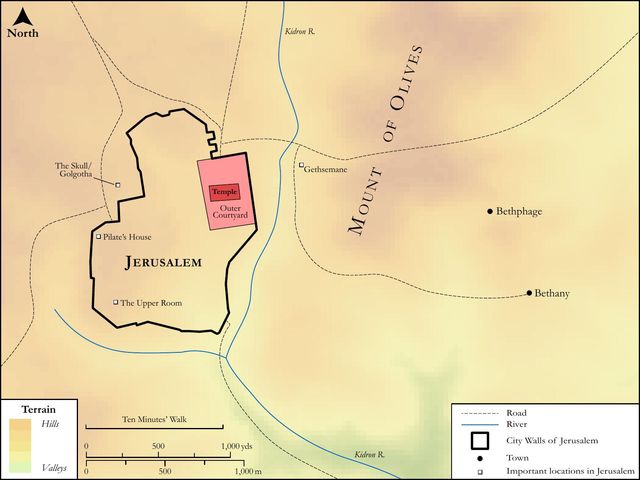
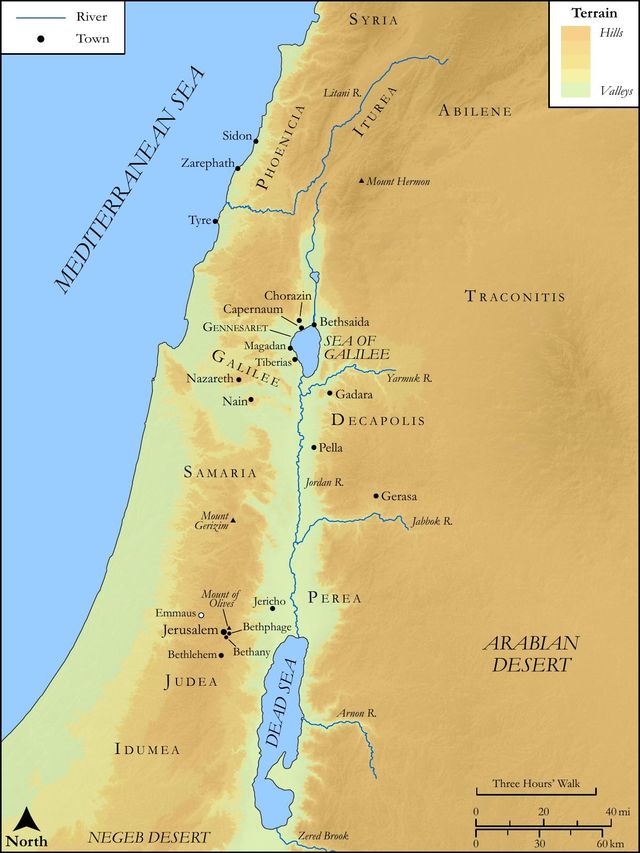
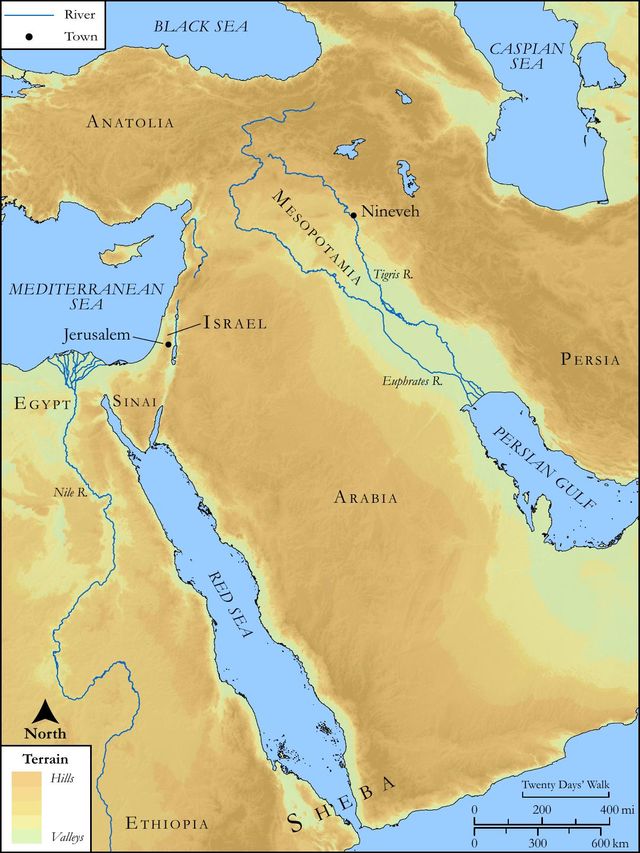
Study this verse
Public-domain commentary
Matthew Henry
From his Commentary on the Whole Bible. Henry comments on passages, not single verses — this entry covers Luke 23:1–12. His three-level outline is real structure in the source text, so it is rendered as structure.
Our Lord Jesus was condemned as a blasphemer in the spiritual court, but it was the most impotent malice that could be that this court was actuated by; for, when they had condemned him, they knew they could not put him to death, and therefore took another course.
I.They accused him before Pilate.
The whole multitude of them arose, when they saw they could go no further with him in their court, and led him unto Pilate, though it was no judgment day, no assizes or sessions; and they demanded justice against him, not as a blasphemer (that was no crime that he took cognizance of), but as one disaffected to the Roman government, which they in their hearts did not look upon as any crime at all, or, if it was one, they themselves were much more chargeable with it than he was; only it would serve the turn and answer the purpose of their malice: and it is observable that that which was the pretended crime, for which they employed the Roman powers to destroy Christ, was the real crime for which the Roman powers not long after destroyed them.
1.Here is the indictment drawn up against him (Luk 23:2), in which they pretended a zeal for Caesar, only to ingratiate themselves with Pilate, but it was all malice against Christ, and nothing else. They misrepresented him,
(1.)As making the people rebel against Caesar. It was true, and Pilate knew it, that there was a general uneasiness in the people under the Roman yoke, and they wanted nothing but an opportunity to shake it off; now they would have Pilate believe that this Jesus was active to foment that general discontent, which, if the truth was known, they themselves were the aiders and abettors of: We have found him perverting the nation; as if converting them to God's government were perverting them from the civil government; whereas nothing tends more to make men good subjects than making them Christ's faithful followers. Christ had particularly taught that they ought to give tribute to Caesar, though he knew there were those that would be offended at him for it; and yet he is here falsely accused as forbidding to give tribute to Caesar. Innocency is no fence against calumny.
(2.)As making himself a rival with Caesar, though the very reason why they rejected him, and would not own him to be the Messiah, was because he did not appear in worldly pomp and power, and did not set up for a temporal prince, nor offer to do any thing against Caesar; yet this is what they charged him with, that he said, he himself is Christ a king. He did say that he was Christ, and, if so, then a king, but not such a king as was ever likely to give disturbance to Caesar. When his followers would have made him a king (Joh 6:15), he declined it, though by the many miracles he wrought he made it appear that if he would have set up in competition with Caesar he would have been too hard for him.
2.His pleading to the indictment: Pilate asked him, Art thou the king of the Jews? Luk 23:3. To which he answered, Thou sayest it; that is, "It is as thou sayest, that I am entitled to the government of the Jewish nation; but in rivalship with the scribes and Pharisees, who tyrannize over them in matters of religion, not in rivalship with Caesar, whose government relates only to their civil interests." Christ's kingdom is wholly spiritual, and will not interfere with Caesar's jurisdiction. Or, "Thou sayest it; but canst thou prove it? What evidence hast thou for it?" All that knew him knew the contrary, that he never pretended to be the king of the Jews, in opposition to Caesar as supreme, or to the governors that were sent by him, but the contrary.
3.Pilate's declaration of his innocency (Luk 23:4): He said to the chief priests, and the people that seemed to join with them in the prosecution, "I find no fault in this man. What breaches of your law he may have been guilty of I am not concerned to enquire, but I find nothing proved upon him that makes him obnoxious to our court."
4.The continued fury and outrage of the prosecutors, Luk 23:5. Instead of being moderated by Pilate's declaration of his innocency, and considering, as they ought to have done, whether they were not bringing the guilt of innocent blood upon themselves, they were the more exasperated, more exceedingly fierce. We do not find that they have any particular fact to produce, much less any evidence to prove it; but they resolve to carry it with noise and confidence, and say it, though they cannot prove it: He stirs up the people to rebel against Caesar, teaching throughout all Judea, beginning from Galilee to this place. He did stir up the people, but it was not to any thing factious or seditious, but to every thing that was virtuous and praiseworthy. He did teach, but they could not charge him with teaching any doctrine that tended to disturb the public peace, or make the government uneasy or jealous.
II.They accused him before Herod.
1.Pilate removed him and his cause to Herod's court. The accusers mentioned Galilee, the northern part of Canaan. "Why," saith Pilate, "is he of that country? Is he a Galilean?" Luk 23:6. "Yes," said they, "that is his head-quarters; there he was spent most of his time." "Let us send him to Herod then," saith Pilate, "for Herod is now in town, and it is but fit he should have cognizance of his cause, since he belongs to Herod's jurisdiction." Pilate was already sick of the cause, and desirous to rid his hands of it, which seems to have been the true reason for sending him to Herod. But God ordered it so for the more evident fulfilling of the scripture, as appears Act 4:26, Act 4:27, where that of David (Psa 2:2), The kings of the earth and the rulers set themselves against the Lord and his Anointed, is expressly said to be fulfilled in Herod and Pontius Pilate.
2.Herod was very willing to have the examining of him (Luk 23:8): When he saw Jesus he was exceedingly glad, and perhaps the more glad because he saw him a prisoner, saw him in bonds. He had heard many things of him in Galilee, where his miracles had for a great while been all the talk of the country; and he longed to see him, not for any affection he had for him or his doctrine, but purely out of curiosity; and it was only to gratify this that he hoped to have seen some miracle done by him, which would serve him to talk of as long as he lived. In order to this, he questioned with him in many things, that at length he might bring him to something in which he might show his power. Perhaps he pumped him concerning things secret, or things to come, or concerning his curing diseases. But Jesus answered him nothing; nor would he gratify him so much as with the performance of one miracle. The poorest beggar, that asked a miracle for the relief of his necessity, was never denied; but this proud prince, that asked a miracle merely for the gratifying of his curiosity, is denied. He might have seen Christ and his wondrous works many a time in Galilee, and would not, and therefore it is justly said, Now he would see them, and shall not; they are hidden from his eyes, because he knew not the day of his visitation. Herod thought, now that he had him in bonds, he might command a miracle, but miracles must not be made cheap, nor Omnipotence be at the beck of the greatest potentate.
3.His prosecutors appeared against him before Herod, for they were restless in the prosecution: They stood, and vehemently accused him (Luk 23:10), impudently and boldly, so the word signifies. They would make Herod believe that he had poisoned Galilee too with his seditious notions. Note, It is no new thing for good men and good ministers, that are real and useful friends to the civil government, to be falsely accused as factious and seditious, and enemies to government.
4.Herod was very abusive to him: He, with his men of war, his attendants, and officers, and great men, set him at nought. They made nothing of him; so the word is. Horrid wickedness! To make nothing of him who made all things. They laughed at him as a fool; for they knew he had wrought many miracles to befriend others, and why would he not now work one to befriend himself? Or, they laughed at him as one that had lost his power, and was become weak as other men. Herod, who had been acquainted with John Baptist, and had more knowledge of Christ too than Pilate had, was more abusive to Christ than Pilate was; for knowledge without grace does but make men the more ingeniously wicked. Herod arrayed Christ in a gorgeous robe, some gaudy painted clothes, as a mock-king; and so he taught Pilate's soldiers afterwards to do him the same indignity. He was ringleader in that abuse.
5.Herod sent him back to Pilate, and it proved an occasion of the making of them friends, they having been for some time before at variance. Herod could not get sight of a miracle, but would not condemn him neither as a malefactor, and therefore sent him again to Pilate (Luk 23:11), and so returned Pilate's civility and respect in sending the prisoner to him; and this mutual obligation, with the messages that passed between them on this occasion, brought them to a better understanding one of another than there had been of late between them, Luk 23:12. They had been at enmity between themselves, probably upon Pilate's killing of the Galileans, who were Herod's subjects (Luk 13:1), or some other such matter of controversy as usually occurs among princes and great men. Observe how those that quarrelled with one another yet could unite against Christ; as Gebal, and Ammon, and Amalek, though divided among themselves, were confederate against the Israel of God, Psa 83:7. Christ is the great peace-maker; both Pilate and Herod owned his innocency, and their agreeing in this cured their disagreeing in other things.
Historical interpretation
Seven Centuries of Reception
7 surviving comments on this verse. Each one is dated, so this reads as a timeline rather than a list.
Select a marker to jump to its quote. Markers stagger vertically where authors wrote within a few decades of each other.
But they bringing two lying witnesses, wished to accuse the Lord falsely; but they being found to disagree, and so their testimony not conspiring together, they altered the accusation to that of treason, saying, "This fellow says that He is a king, and forbids to give tribute to Caesar."
Our Lord is accused and is silent, for He needs no defence. Let them cast about for defence who fear to be conquered. He does not then confirm, the accusation by His silence, but He despises it by not refuting it. Why then should He fear who does not court safety? The Safety of all men forfeits His own, that He may gain that of all.
(lib. iii. c. 8.) He next relates what happens before Pilate, as follows, And they began to accuse him, saying, We found this fellow perverting our nation, &c. Matthew and Mark do not give this, though affirming that they accused Him, but Luke has laid open the very charges which they falsely brought against Him.
You say, "We found this man perverting our people." Tell us in what this perversion consisted? Christ taught repentance. Where did he forbid giving tribute to Caesar? He said, "Give to Caesar the things that are Caesar's, and to God the things that are God's." Where then did he forbid giving tribute to Caesar? Their only purpose was to bring down to death the One who was raising them to life. This was the goal of their strategy, the shameful deeds they planned, of the falsehood they invented, and the bitter words running from their wicked tongues. The law still loudly proclaims to you, "You shall not bear false witness against your neighbor," and "The holy and the just you shall not kill."
That the word of Jesus might be fulfilled which He prophesied of His own death, He shall be delivered to the Gentiles, that is, to the Romans. For Pilate was a Roman, and the Romans had sent him as governor to Judæa.
Now two charges having been brought against our Lord, namely, that He forbade to pay tribute to Cæsar, and called Himself Christ the King, it may be that Pilate had chanced to hear that which our Lord spake, Render unto Cæsar the things which be Cæsar's; and therefore setting aside this accusation as a palpable lie of the Jews, he thought fit to ask concerning that alone of which he knew nothing, the saying about the kingdom; for it follows, Pilate asked him, saying, Art thou the King of the Jews, &c.
He answers the governor in the same words which He used to the Chief Priests, that Pilate might be condemned by his own voice; for it follows, And he answering said, Thou sayest.
But with these words they accuse not Him, but themselves. For to have taught the people, and by teaching to have roused them from their former idleness, and doing this to have passed through the whole land of promise, was an evidence not of sin, but of virtue.
And they began to accuse him, saying: We found this man perverting our nation, and forbidding to give tribute to Caesar, and saying that he himself is Christ a King. The Jews are convicted of impiety, because in accusing the Savior they do not even find anything plausible in the falsehood they can charge him with. And so, as Mark says: their witness did not agree (Mark XIV). However, he himself, to provide us an example of patience, just as he endured being scourged before, so now accused, he is silent and keeps quiet.
Most plainly are they opposed to the truth. For our Lord was so far from forbidding to give tribute, that He commanded it to be given. How then did He pervert the people? Was it that He might take possession of the kingdom? But this is incredible to all, for when the whole multitude wished to choose Him for their king, He was aware of it, and fled.
It seems to me that he asked this question of Christ by way of deriding the wantonness or hypocrisy of the alleged charge. As if he said, Thou a poor humble naked man, with none to help Thee, art accused of seeking a kingdom, for which Thou wouldest need many to help Thee, and much money.
Now they finding nothing else to support their calumny, have resort to the aid of clamour, for it follows, And they were the more fierce, saying, He stirreth up the people, teaching throughout all Jewry, beginning from Galilee to this place. As if they said, He perverts the people, not in one part only, but beginning from Galilee He arrives at this place, having passed through Judæa. I think then that they purposely made mention of Galilee, as desirous to alarm Pilate, for the Galilæans were of a different sect and given to sedition, as, for example, Judas of Galilee who is mentioned in the Acts of the Apostles.
Continue studying Luke 23:2 across the web’s major study libraries — every link below opens this exact verse, chapter, or book on the destination site.
Read & Compare
 BibleGatewayThis verse in more than 200 translations and 70 languages.
 Bible.comThe YouVersion reader — hundreds of translations, reading plans, and highlights.
 ESV.orgCrossway's official English Standard Version reader.
 NET BibleThe NET translation with 60,000+ translators' notes on every rendering decision.
 STEP BibleTyndale House's free study tool — original text, vocabulary, and scholarly resources.
 BibliaLogos Bible Software's free web reader.
 USCCBThe New American Bible (Revised Edition) with the U.S. bishops' study notes.
Commentaries
 BibleHub CommentariesDozens of classic commentaries on this verse, gathered on one page.
 StudyLightMore than 100 commentary sets — the largest collection on the web.
 BibleRefPlain-English commentary on what this verse means, verse by verse.
 Enduring WordDavid Guzik's free commentary on this chapter, widely used by Bible teachers.
 Bible Study ToolsVerse commentary alongside Greek and Hebrew study aids.
Original Language & Research
- BibleHub InterlinearThe verse word by word — original language, transliteration, and English.
- BibleHub LexiconEvery word's original-language definition and Strong's entry.
 Blue Letter BibleDeep-study tools — Strong's numbers, concordance, and word studies.
 CNTR CollationThe earliest Greek manuscripts of this verse, collated letter by letter.
Sermons, Hymns & Audio


TrulyRandomVerse is not affiliated with these sites and doesn’t control their content. They’re linked because they’re genuinely useful.
Summary
Luke 23:2 records the pivotal moment when the Jewish religious leaders, having condemned Jesus on religious grounds, present a set of politically charged and fabricated accusations against Him before Pontius Pilate, the Roman governor. Their aim was to compel Pilate to execute Jesus, as they lacked the authority to impose capital punishment themselves, by twisting Jesus's spiritual claims into seditious acts against Roman rule, specifically alleging He was perverting the nation, forbidding tribute to Caesar, and claiming to be a king in opposition to the emperor.
Context
ShowHideLiterary Context
This verse immediately follows the Jewish Sanhedrin's night trial of Jesus, where He was found guilty of blasphemy for acknowledging His divine Sonship and Messiahship (Luke 22:66-71). The narrative then transitions abruptly to the Roman praetorium, where Jesus is brought before Pilate. The shift in venue necessitates a change in the nature of the accusations. While blasphemy was a capital offense under Jewish law, it held no weight in a Roman court. Therefore, the Jewish leaders skillfully reframe their religious grievances into political threats, knowing that Pilate's primary concern was the maintenance of Roman order and imperial authority in the province of Judea. This strategic shift highlights the manipulative intent behind their actions.
Historical & Cultural Context
Judea was a Roman province, governed by a prefect (like Pilate) who held ultimate authority, including the power of capital punishment. The Jewish people, while granted some religious autonomy, were under Roman occupation, which included the imposition of Roman taxes (tribute to Caesar). This taxation was a constant source of resentment and a symbol of their subjugation, often sparking revolts. Any individual claiming to be a "king" or inciting rebellion against Roman taxation would be immediately perceived as a grave threat to imperial stability and a challenge to Caesar's supreme authority. The Jewish leaders understood this political reality perfectly, crafting charges that would resonate with Pilate's concerns about sedition and public order, rather than theological disputes which he would likely dismiss as internal Jewish squabbles.
Key Themes
ShowHideLuke 23:2 powerfully introduces several key themes that permeate the passion narrative. Firstly, the theme of False Accusation and Injustice is central, as Jesus is subjected to charges that are demonstrably untrue, particularly regarding the tribute to Caesar, which directly contradicts His own teaching to "render unto Caesar the things which be Caesar's" (Luke 20:25). Secondly, the verse highlights the Clash of Kingdoms, contrasting Jesus's spiritual, heavenly kingship with the earthly, political power structures of Rome and the misguided expectations of the Jewish leaders for a political Messiah. Thirdly, it underscores the theme of Political Manipulation and Expediency, as the religious elite prioritize their own power and perceived stability over truth and justice, using Roman authority as a tool to eliminate Jesus. Finally, the verse foreshadows the Rejection of the Messiah by His own people, as their leaders actively seek His death through deceptive means.
Exposition and Analysis
ShowHideKey Word Analysis
ShowHideData, this word means "to distort, i.e. (figuratively) misinterpret, or (morally) corrupt." In this context, the accusers allege that Jesus was actively misleading and corrupting the Jewish nation. This charge implies that Jesus was an agitator, turning the people away from loyalty to Rome and inciting them towards rebellion. It paints a picture of a dangerous revolutionary who was undermining the established order, a serious accusation designed to provoke a strong Roman response.
Defines this as "a load (as borne), i.e. (figuratively) a tax (properly, an individual assessment on persons or property; whereas τέλος is usually a general toll on goods or travel)." This specific term refers to the Roman poll tax, a direct and resented symbol of Roman subjugation. The accusation that Jesus was "forbidding to give tribute to Caesar" was a direct charge of treason, striking at the heart of Roman financial and political control, and was a deliberate falsehood given Jesus's teaching on the matter.
According to Strong's G935, this term refers to "a sovereign (abstractly, relatively, or figuratively)." While Jesus truly is a King, His kingship is spiritual and eternal, not of this world (John 18:36). The accusers deliberately presented Jesus's spiritual claim to Messiahship ("Christ") as a claim to an earthly, political throne, thereby portraying Him as a rival to Caesar and a threat to Roman imperial authority. This was the most potent accusation, designed to ensure a death sentence.
Verse Breakdown
ShowHide"And they began to accuse him, saying"
This phrase identifies the accusers as the Jewish religious leaders who brought Jesus to Pilate. The use of "began to accuse" suggests a formal, concerted effort to present their case, indicating their determination to secure a conviction. Their "saying" introduces the specific charges they leveled against Jesus, carefully crafted for the Roman context.
"We found this [fellow] perverting the nation"
This is the first and broadest charge, asserting that Jesus was a seditious figure, misleading the Jewish people and turning them away from Roman authority. The term "perverting" (G1294, diastréphō) implies corruption and distortion, painting Jesus as a dangerous agitator who was undermining social and political order. This was a grave accusation in the eyes of Rome, which prioritized stability in its provinces.
"and forbidding to give tribute to Caesar"
This is a direct and specific charge of treason, alleging that Jesus was actively hindering the collection of Roman taxes. This was a blatant lie, as Jesus had famously taught His disciples to "render unto Caesar the things which be Caesar's" (Luke 20:25). This accusation was designed to provoke Pilate's immediate concern, as tax collection was fundamental to Roman administration and a common flashpoint for rebellion.
"saying that he himself is Christ a King"
This final accusation twists Jesus's true identity and spiritual claim into a political threat. "Christ" (G5547, Christós) means "Anointed One" or "Messiah," a title with deep spiritual and eschatological significance for the Jews, often associated with a king from David's line. The accusers deliberately presented Jesus's messianic claim as a claim to an earthly throne, thereby suggesting He was a rival to Caesar (G2541, Kaîsar) and a potential leader of a rebellion. This was the most serious charge, aiming directly at the Roman emperor's authority.
Literary Devices
ShowHideLuke 23:2 employs several literary devices to highlight the dramatic tension and the injustice of Jesus's trial. Irony is prominent, as Jesus, the true King of Kings, is accused of being a political usurper, while His accusers, ostensibly upholding the law, are engaged in deceit and manipulation. The accusation of "perverting the nation" is itself an ironic statement, as it is the accusers who are perverting justice and truth. Framing is also evident, as the Jewish leaders deliberately reframe Jesus's spiritual teachings and messianic identity into politically palatable, yet false, charges of sedition and treason. This strategic Misrepresentation of truth for malicious ends is a key element of the narrative. Furthermore, the scene is fraught with Dramatic Tension, building anticipation for Pilate's verdict and foreshadowing the ultimate sacrifice of an innocent man.
Theological and Thematic Connections
ShowHideLuke 23:2 serves as a stark reminder of humanity's capacity for injustice and the lengths to which people will go to eliminate perceived threats to their established power or comfort. Theologically, it underscores the profound contrast between earthly kingdoms, driven by fear, control, and political expediency, and the spiritual kingdom of God, founded on truth, righteousness, and self-sacrificial love. Jesus, the innocent Lamb of God, stands silent before His accusers, embodying the divine patience and submission to the Father's will, even in the face of egregious falsehoods. This moment highlights the world's rejection of its true King, preferring human systems and earthly power over divine authority and spiritual liberation. It also reveals the insidious nature of slander and how truth can be twisted into a weapon against the innocent.
Reflection and Application
ShowHideLuke 23:2 presents a powerful and sobering scene that challenges believers to reflect on the nature of truth, justice, and spiritual authority in a world often hostile to God's kingdom. It reminds us that following Christ may lead to misunderstanding, false accusations, and opposition from those who cling to earthly power or conventional wisdom. Just as Jesus faced politically motivated lies, we too may encounter situations where our faith or actions are misrepresented, or where spiritual truths are twisted for worldly gain. This verse calls us to cultivate discernment, to stand firm in the truth of God's Word, and to resist the temptation to compromise our convictions for the sake of worldly acceptance or comfort. It also prompts us to examine our own hearts: are we quick to judge or accuse others based on incomplete information or personal biases? Do we prioritize our own agendas over the pursuit of truth and righteousness? Ultimately, this passage encourages us to trust in God's sovereign plan, knowing that even in moments of profound injustice, His purposes will prevail.
Questions for Reflection
ShowHideFAQ
ShowHideWhy did the Jewish leaders bring Jesus to Pilate with political charges instead of religious ones?
ShowHideThe Jewish Sanhedrin had already condemned Jesus on religious grounds, specifically for blasphemy, because He claimed to be the Son of God and the Messiah (Luke 22:66-71). However, under Roman occupation, the Jewish authorities did not have the legal right to execute someone, especially not for a religious offense that held no weight in Roman law. They needed the Roman prefect, Pontius Pilate, to authorize Jesus's execution. To achieve this, they strategically reframed their religious grievances into political accusations of sedition, treason, and claiming kingship in opposition to Caesar, knowing these charges would be taken seriously by Pilate as threats to Roman imperial authority and stability.
Was Jesus actually forbidding people to pay tribute to Caesar?
ShowHideNo, this was a deliberate and malicious falsehood. Jesus explicitly taught the opposite. When questioned by His adversaries about paying taxes to Caesar, Jesus famously responded, "Render therefore unto Caesar the things which be Caesar's, and unto God the things which be God's" (Luke 20:25). This teaching affirmed the legitimacy of paying taxes to the governing authorities while also prioritizing one's duty to God. The Jewish leaders' accusation was a calculated lie designed to incite Pilate's anger and secure a death sentence.
What was the significance of the accusation that Jesus claimed to be "Christ a King"?
ShowHideThe term "Christ" (Greek: Christos) means "Anointed One" or "Messiah," a title with profound spiritual and eschatological significance for the Jewish people, often associated with a promised king from the line of David who would deliver Israel. While Jesus truly is the Messiah and King, His kingdom is spiritual and "not of this world" (John 18:36). The Jewish leaders deliberately twisted this spiritual claim into a political one, portraying Jesus as an earthly king who would rival Caesar and lead a rebellion against Roman rule. This was the most dangerous accusation they could make, as it directly challenged the supreme authority of the Roman Emperor and was a capital offense.
Christ-Centered Fulfillment
ShowHideLuke 23:2, with its litany of false accusations against Jesus, profoundly points to Christ's ultimate fulfillment as the suffering Servant and the true King. The charges of "perverting the nation," "forbidding tribute to Caesar," and claiming to be "Christ a King" highlight the world's misunderstanding and rejection of God's Anointed One. Yet, it is precisely through this unjust trial and the subsequent crucifixion that Jesus fulfills ancient prophecies, becoming the Lamb of God who takes away the sin of the world (John 1:29). His willingness to endure such slander and political manipulation, remaining silent before His accusers (Isaiah 53:7), demonstrates His perfect obedience to the Father's will and His unwavering commitment to His redemptive mission. The earthly powers sought to eliminate a perceived political rival, but in doing so, they unwittingly participated in God's divine plan to establish a spiritual kingdom far greater than any earthly empire. Jesus's true kingship, though denied and mocked in this moment, is ultimately vindicated through His resurrection and ascension, where He is declared Lord and Christ, King of Kings and Lord of Lords (Philippians 2:8-11; Revelation 19:16). Thus, the false charges in Luke 23:2 paradoxically underscore the truth of His identity and the eternal nature of His reign.