


Luke 22:54
- ΣυλλαβόντεςSullabontesHaving seizedG4815V-2AAP-NPMVerb 2nd Aorist Active Participle Nominative Plural Masculine
- δὲdethenG1161CONJConjunction
- αὐτὸνautonHimG846P-ASMPersonal pronoun Accusative Singular Masculine
- ἤγαγονēgagonthey led [Him] awayG71V-2AAI-3PVerb 2nd Aorist Active Indicative 3rd Plural
- καὶkaiandG2532CONJConjunction
- εἰσήγαγονeisēgagonbroughtG1521V-2AAI-3PVerb 2nd Aorist Active Indicative 3rd Plural
- αὐτὸνautonhimG846P-ASMPersonal pronoun Accusative Singular Masculine
- εἰςeisintoG1519PREPPreposition
- τὴνtēntheG3588T-ASFDefinite article Accusative Singular Feminine
- οἰκίανoikianhomeG3614N-ASFNoun Accusative Singular Feminine
- τοῦtouof theG3588T-GSMDefinite article Genitive Singular Masculine
- ἀρχιερέωςarchiereōshigh priestG749N-GSMNoun Genitive Singular Masculine
- ὁho<the>G3588T-NSMDefinite article Nominative Singular Masculine
- δὲdeAndG1161CONJConjunction
- ΠέτροςPetrosPeterG4074N-NSM-PNoun Nominative Singular Masculine Individual
- ἠκολούθειēkoloutheiwas followingG190V-IAI-3SVerb Imperfect Active Indicative 3rd Singular
- μακρόθενmakrothenafar offG3113ADVAdverb
English is a literal word-by-word gloss of the Greek, not the KJV's wording. Why?
This is the original text the KJV's translators worked from — each Greek word with its own literal English meaning in this verse, prepared by scholars at Tyndale House, Cambridge. The KJV translates whole sentences, not word by word, so its wording differs: one Greek word can become several English words, and the KJV may choose “charity” where the gloss reads “love”. Both are faithful — they answer different questions. For the KJV's own rendering, switch to the KJV text.
Details
See on the biblical-era map
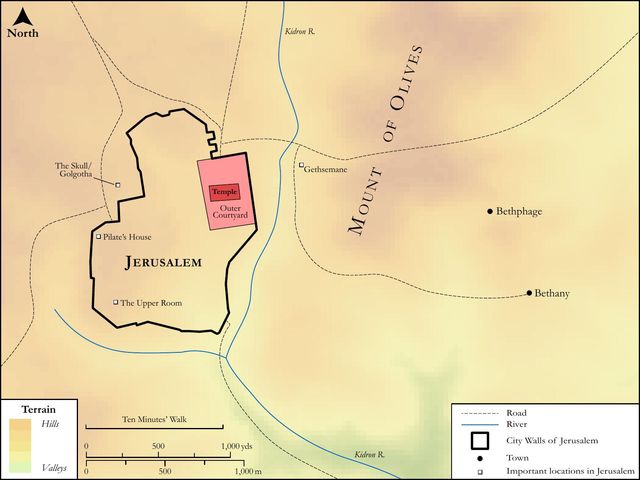
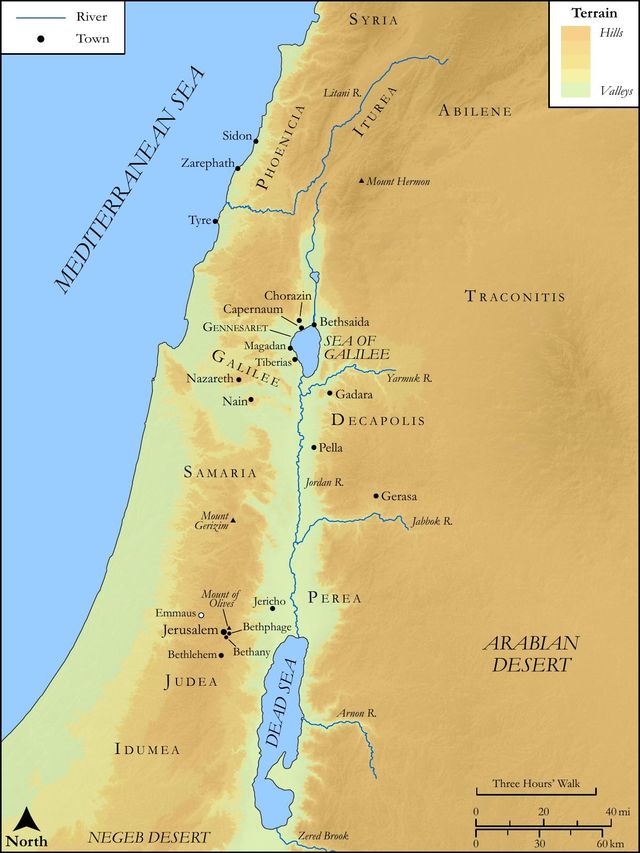

Study this verse
Public-domain commentary
Matthew Henry
From his Commentary on the Whole Bible. Henry comments on passages, not single verses — this entry covers Luke 22:54–62. His two-level outline is real structure in the source text, so it is rendered as structure.
We have here the melancholy story of Peter's denying his Master, at the time when he was arraigned before the high priest, and those that were of the cabal, that were ready to receive the prey, and to prepare the evidence for his arraignment, as soon as it was day, before the great sanhedrim, Luk 22:66. But notice is not taken here, as was in the other evangelists, of Christ's being now upon his examination before the high priest, only of his being brought into the high priest's house, Luk 22:54. But the manner of expression is observable. They took him, and led him, and brought him, which methinks is like that concerning Saul (Sa1 15:12): He is gone about, and passed on, and gone down; and intimates that, even when they had seized their prey, they were in confusion, and, for fear of the people, or rather struck with inward terror upon what they had seen and heard, they took him the furthest way about, or, rather, knew not which way they hurried him, such a hurry were they in in their own bosoms. Now observe,
I.Peter's falling.
1.It began in sneaking. He followed Christ when he was had away prisoner; this was well, and showed a concern for his Master. But he followed afar off, that he might be out of danger. He thought to trim the matter, to follow Christ, and so to satisfy his conscience, but to follow afar off, and so to save his reputation, and sleep in a whole skin.
2.It proceeded in keeping his distance still, and associating himself with the high priest's servants, when he should have been at his master's elbow. The servants kindled a fire in the midst of the hall and sat down together, to talk over their night-expedition. Probably Malchus was among them, and Peter sat down among them, as if he had been one of them, at least would be thought to be so. His fall itself was disclaiming all acquaintance with Christ, and relation to him, disowning him because he was now in distress and danger. He was charged by a sorry simple maid, that belonged to the house, with being a retainer to this Jesus, about whom there was now so much noise. She looked wistfully upon him as he at by the fire, only because he was a stranger, and one whom she had not seen before; and concluding that at this time of night there were no neuters there, and knowing him not to be any of the retinue of the high priest, she concludes him to be one of the retinue of this Jesus, or perhaps she had been some time or other looking about her in the temple, and had seen Jesus there and Peter with him, officious about him, and remembered him; and this man was with him, saith she. And Peter, as he had not the courage to own the charge, so he had not the wit and presence of mind to turn it off, as he might have done many ways, and therefore flatly and plainly denies it: Woman, I know him not. 4. His fall was repeated a second time (Luk 22:58): After a little while, before he had time to recollect himself, another saw him, and said, "Even thou art one of them, as slyly as thou sittest here among the high priest's servants." Not I, saith Peter; Man, I am not. And a third time, about the space of an hour after (for, saith the tempter, "When he is down, down with him; let us follow the blow, till we get him past recovery"), another confidently affirms, strenuously asserts it, "Of a truth this fellow also was with him, let him deny it if he can, for you may all perceive he is a Galilean." But he that has once told a lie is strongly tempted to persist in it; the beginning of that sin is as the letting forth of water. Peter now not only denies that he is a disciple of Christ, but that he knows any thing of him (Luk 22:60): "Man, I know not what thou sayest; I never heard of this Jesus."
II.Peter's getting up again.
See how happily he recovered himself, or, rather, the grace of God recovered him. See how it was brought about: -
1.The cock crew just as he was the third time denying that he knew Christ, and this startled him and put him upon thinking. Note, Small accidents may involve great consequences.
2.The Lord turned and looked upon him. This circumstance we had not in the other evangelists, but it is a very remarkable one. Christ is here called the Lord, for there was much of divine knowledge, power, and grace, appearing in this. Observe, Though Christ had now his back upon Peter, and was upon his trial (when, one would think, he had something else to mind), yet he knew all that Peter said. Note, Christ takes more notice of what we say and do than we think he does. When Peter disowned Christ, yet Christ did not disown him, though he might justly have cast him off, and never looked upon him more, but have denied him before his Father. It is well for us that Christ does not deal with us as we deal with him. Christ looked upon Peter, not doubting but that Peter would soon be aware of it; for he knew that, though he had denied him with his lips, yet his eye would still be towards him. Observe, Though Peter had now been guilty of a very great offence, and which was very provoking, yet Christ would not call to him, lest he should shame him or expose him; he only gave him a look which none but Peter would understand the meaning of, and it had a great deal in it. (1.) It was a convincing look. Peter said that he did not know Christ. Christ turned, and looked upon him, as if he should say, "Dost thou not know me, Peter? Look me in the face, and tell me so." (2.) It was a chiding look. We may suppose that he looked upon him and frowned, or some way signified his displeasure. Let us think with what an angry countenance Christ justly looks upon us when we have sinned. (3.) It was an expostulating upbraiding look: "What, Peter, art thou he that disownest me now, when thou shouldest come and witness for me? What thou a disciple? Thou that wast the most forward to confess me to be the Son of God, and didst solemnly promise thou wouldest never disown me?" (4.) It was a compassionate look; he looked upon him with tenderness. "Poor Peter, how weak is thine heart! How art thou fallen and undone if I do not help thee!" (5.) It was a directing look. Christ guided him with his eye, gave him a wink to go out from that sorry company, to retire, and bethink himself a little, and then he would soon see what he had to do. (6.) It was a significant look: it signified the conveying of grace to Peter's heart, to enable him to repent; the crowing of the cock would not have brought him to repentance without this look, nor will the external means without special efficacious grace. Power went along with this look, to change the heart of Peter, and to bring him to himself, to his right mind.
3.Peter remembered the words of the Lord. Note, The grace of God works in and by the word of God, brings that to mind, and sets that home upon the conscience, and so gives the soul a happy turn. Tolle et lege - Take it up, and read.
4.Then Peter went out, and wept bitterly. One look from Christ melted him into tears of godly sorrow for sin. The candle was newly put out, and then a little thing lighted it again. Christ looked upon the chief priests, and made no impression upon them as he did on Peter, who had the divine seed remaining in him to work upon. It was not the look from Christ, but the grace of God with it, that recovered Peter, and brought him to-rights.
Historical interpretation
Three Centuries of Reception
9 surviving comments on this verse. Each one is dated, so this reads as a timeline rather than a list.
Select a marker to jump to its quote. Markers stagger vertically where authors wrote within a few decades of each other.
(App. Serm. 79.) For to Peter were delivered the keys of the kingdom of heaven, to him were entrusted an innumerable multitude of people, who were wrapped up in sin. But Peter was somewhat too vehement, as the cutting off the car of the High Priest's servant betokens. If he then who was so stern and so severe had obtained the gift of not sinning, what pardon would he have given to the people committed to him? Therefore Divine Providence suffers him first to be holden of sin, that by the consciousness of his own fall he might soften his too harsh judgment towards sinners. When he wished to warm himself at the fire, a maid came to him, of whom it follows, But a certain maid beheld him, &c.
And he followed from a distance, about to deny it; for he could not have denied it if he had joined Christ closely. But perhaps in this we should greatly admire him, that he did not leave the Lord, even when he was afraid. Fear is natural, concern is piety. He fears what is foreign: he does not flee what is his own. What he follows is devotion: what he denies is deception. What is shared is what slips away: what is of faith is what he regrets. Now a fire was burning in the high priest's courtyard: Peter approached to warm himself; because with the Lord locked away, the heat of his mind had also cooled in him.
The wretched men understood not the mystery, nor had reverence unto an outpouring of compassion so merciful, that even His enemies He suffered not to be wounded. For it is said, Then look they him, &c. When we read of Jesus being holden, let us guard against thinking that He is holden with respect to His divine nature, and unwilling through weakness, for He is held captive and bound according to the truth of His bodily nature.
Rightly he followed afar off, soon about to deny, for he could never have denied if he had clung close to Christ. But herein must he be revered, that he forsook not our Lord, even though he was afraid. Fear is the effect of nature, solicitude of tender affection.
And by this time there was a fire burning in the house of the High Priest; as it follows, And when they had kindled a fire, &c. Peter came to warm himself, because his Lord being taken prisoner, the heart of his soul had been chilled in him.
What meaneth it, that a maid is the first to betray Peter, whereas surely men ought the more easily to have recognised him, save that that sex should be plainly implicated in our Lord's murder, in order that it might also be redeemed by His Passion? But Peter when discovered denies, for better that Peter should have denied, than our Lord's word should have failed. Hence it follows, And he denied, saying, Woman, I know him not.
Peter denied, because he promised rashly. He does not deny on the mount, nor in the temple, nor in his own house, but in the judgment-hall of the Jews. There he denies where Jesus was bound, where truth is not. And denying Him he says, I know him not. It were presumptuous to say that he knew Him whom the human mind can not grasp. For no one knoweth the Son but the Father. (Matt. 11:17). Again, a second time he denies Christ; for it follows, And after a little while another saw him, and said, Thou wert also one of them.
For he preferred to deny himself rather than Christ, or because he seemed to deny being of the company of Christ, he truly denied himself.
He is also asked a third time; for it follows, And about the space of one hour after, another confidently affirmed, saying, Of a truth this fellow also was with him.
That is, I know not your blasphemies. But we make excuse for him. He did not excuse himself. For an involved answer is not sufficient for our confessing Jesus, but an open confession is required. And therefore Peter is not represented to have answered this deliberately, for he afterwards recollected himself, and wept.
Lastly, those whom Jesus looks upon weep for their sins. Hence it follows, And Peter remembered the word of the Lord, how he had said to him, Before the cock crow, thou shalt deny me thrice. And he went out, and wept bitterly. Why did he weep? Because he sinned as man. I read of his tears, I do not read of his confession. Tears wash away an offence which it is shame to confess in words. The first and second time he denied and wept not, for as yet our Lord had not looked upon him. He denied the third time, Jesus looked upon him, and he wept bitterly. So then if thou wilt obtain pardon, wash away thy guilt in tears.
(Hom. 83. in Matt.) It is therefore said, to the house of the High Priest, that nothing whatever might be done without the consent of the chief of the Priests. For thither had they all assembled waiting for Christ. Now the great zeal of Peter is manifested in his not flying when he saw all the others doing so; for it follows, But Peter followed afar off.
(Hom. 83. in Joan.) Marvel now at the case of the Master, who though He was a prisoner, had exercised much forethought for His disciple, whom by a look He brought to Himself, and provoked to tears; for it follows, And the Lord turned, and looked upon Peter.
But first He was led to Annas, the father-in-law of Caiaphas, as John says, then to Caiaphas, as Matthew says, but Mark and Luke do not give the name of the High Priest.
(ut sup.) What ails thee, Peter, thy voice is suddenly changed? That mouth full of faith and love, is turned to hatred and unbelief. Not yet awhile is the scourge applied, not yet the instruments of torture. Thy interrogator is no one of authority, who might cause alarm to the confessor. The mere voice of a woman asks the question, and she perhaps not about to divulge thy confession, nor yet a woman, but a door-keeper, a mean slave.
(de Con. Ev. lib. iii. c. 6.) And it is supposed that in the second denial he was addressed by two persons, namely, by the maid whom Matthew and Mark mention, and by another whom Luke speaks of. With respect then to what Luke here relates, And after a little while, &c. Peter had already gone out of the gate, and the cock had crowed the first time, as Mark says; and now he had returned, that, as John says, he might again deny standing by the fire. Of which denial it follows, And Peter said, Man, I am not.
(de Con. Ev. ut sup.) What Matthew and Mark call after a little while, Luke explains by saying, about the space of one hour after; but with regard to the space of time, John says nothing. Likewise when Matthew and Mark record not in the singular but in the plural number those who conversed with Peter, while Luke and John speak of one, we may easily suppose either that Matthew and Mark used the plural for the singular by a common form of speech, or that one person in particular addressed Peter, as being the one who had seen him, and that others trusting to his credit joined in pressing him. But now as to the words which Matthew asserts were said to Peter himself, Truly thou art one of them, for thy speech bewrayeth thee; as also those which to the same Peter John declared to have been said, Did not I see thee in the garden? whereas Mark and Luke state that they spoke to one another concerning Peter; we either believe that they held the right opinion who say that they were really addressed to Peter; (for what was said concerning him in his presence amounts to the same as if it had been said to him;) or that they were said in both ways, and that some of the Evangelists related them one way, some the other.
(ut sup.) The cock-crow we understand to have been after the third denial of Peter, as Mark has expressed it.
Now the Chief Priest means Caiaphas, who according to John was High Priest that year.
But that when our Lord was going to His Passion, Peter followed afar off represents the Church about to follow indeed, that is, to imitate our Lord's Passion, but in a far different manner, for the Church suffers for herself, our Lord suffered for the Church.
In this denial then of Peter we affirm that not only is Christ denied by him who says that He is not Christ, but by him also, who, being a Christian, says he is not.
But he adds, For he is a Galilæan; not that the Galilæans spoke a different language from the inhabitants of Jerusalem, who indeed were Hebrews, but that each separate province and country having its own peculiarities could not avoid a vernacular tone of speech. It follows, And Peter said, Man, I know not what thou sayest.
Holy Scripture is often wont to mark the character of certain events by the nature of the times in which they take place. Hence Peter who sinned at midnight repented at cock-crow; for it follows, And immediately, while he yet spake, the cock crew. The error he committed in the darkness of forgetfulness, he corrected by the remembrance of the true light.
This cock must, I think, be understood mystically as some great Teacher, who rouses the listless and sleepy, saying, Awake, ye righteous, and sin not.
For to look upon him is to have compassion, seeing that not only while penance is being practised, but that it may be practised, the mercy of God is necessary.
Having seized him, they led him to the high priest's house. By high priest, he means Caiaphas, who was the high priest that year, as the evangelist John testifies.
Otherwise: when Peter followed the Lord going to His passion from a distance, it symbolized the Church, which indeed would follow, that is, imitate the passions of the Lord, but in a much different way. For the Church suffers for itself, but He suffered for the Church.
Peter, however, followed from a distance. He rightfully followed from afar, for he was already close to denying. For he could not deny if he had adhered closely to Christ. But in this, he is most worthy of our admiration, that he did not abandon the Lord even when he was afraid. For what he feared was natural; what he followed was devotion; what he denied was deception; what he repented was faith.
Continue studying Luke 22:54 across the web’s major study libraries — every link below opens this exact verse, chapter, or book on the destination site.
Read & Compare
 BibleGatewayThis verse in more than 200 translations and 70 languages.
 Bible.comThe YouVersion reader — hundreds of translations, reading plans, and highlights.
 ESV.orgCrossway's official English Standard Version reader.
 NET BibleThe NET translation with 60,000+ translators' notes on every rendering decision.
 STEP BibleTyndale House's free study tool — original text, vocabulary, and scholarly resources.
 BibliaLogos Bible Software's free web reader.
 USCCBThe New American Bible (Revised Edition) with the U.S. bishops' study notes.
Commentaries
 BibleHub CommentariesDozens of classic commentaries on this verse, gathered on one page.
 StudyLightMore than 100 commentary sets — the largest collection on the web.
 BibleRefPlain-English commentary on what this verse means, verse by verse.
 Enduring WordDavid Guzik's free commentary on this chapter, widely used by Bible teachers.
 Bible Study ToolsVerse commentary alongside Greek and Hebrew study aids.
Original Language & Research
- BibleHub InterlinearThe verse word by word — original language, transliteration, and English.
- BibleHub LexiconEvery word's original-language definition and Strong's entry.
 Blue Letter BibleDeep-study tools — Strong's numbers, concordance, and word studies.
 CNTR CollationThe earliest Greek manuscripts of this verse, collated letter by letter.
Sermons, Hymns & Audio


TrulyRandomVerse is not affiliated with these sites and doesn’t control their content. They’re linked because they’re genuinely useful.
Summary
Luke 22:54 vividly recounts the immediate aftermath of Jesus' arrest in the Garden of Gethsemane, marking the pivotal transition from His freedom to His captivity. It describes the somber procession of Jesus, now a bound prisoner, being led to the residence of the high priest, while simultaneously highlighting the cautious and distant following of Peter, one of Jesus' most prominent disciples, setting the stage for the intense events of the Passion narrative.
Context
ShowHideLiterary Context
This verse serves as a critical bridge, immediately following the dramatic scene of Judas's betrayal, Jesus's arrest by a large multitude, and His miraculous healing of the high priest's servant's ear in Luke 22:47-53. The preceding verses emphasize Jesus's calm submission to the divine will, even as He confronts His captors with a question about their armed approach. Verse 54 then shifts the scene from the open garden to the confines of religious authority, initiating the sequence of illegal trials and interrogations that will culminate in His crucifixion. The detail of Peter following "afar off" directly foreshadows his subsequent denials, which are recounted just a few verses later in Luke 22:55-62.
Historical & Cultural Context
The "high priest's house" refers to the residence of Caiaphas, the reigning high priest, who was also the son-in-law of Annas, a powerful former high priest. Jewish law prohibited trials during religious festivals and at night, making the proceedings that followed Jesus's arrival at this house entirely illegal. The Sanhedrin, the supreme Jewish judicial and religious council, would typically meet in the Temple precincts, but an emergency session, particularly one aimed at securing a conviction, might be convened at the high priest's residence. The atmosphere would have been charged with political and religious tension, as the Jewish authorities sought to eliminate Jesus, whom they perceived as a threat to their power and a blasphemer. Peter's act of following "afar off" (Greek: makróthen) was a common reaction for someone fearful of association, attempting to observe without being implicated, a behavior understandable given the severe penalties for associating with a condemned person.
Key Themes
ShowHideLuke 22:54 contributes significantly to several overarching themes within Luke's Gospel and the broader Passion narrative. It underscores Jesus's Willing Submission and Sovereignty, as He, despite His power, allows Himself to be taken, fulfilling the prophecies of a suffering servant (Isaiah 53:7). Another prominent theme is Human Frailty and the Cost of Discipleship, starkly illustrated by Peter's fear and hesitant following, which contrasts sharply with his earlier bold declaration of loyalty in Luke 22:33. This moment highlights the immense pressure faced by Jesus's followers and the reality that even the most devoted can falter. Finally, the verse subtly points to the Unfolding of God's Redemptive Plan, as every step, even the seemingly unjust arrest and trial, moves towards the ultimate act of salvation on the cross.
Exposition and Analysis
ShowHideKey Word Analysis
ShowHideThis word (G4815) means "to clasp, i.e., seize (arrest, capture)." In this context, it emphasizes the forceful and deliberate act of Jesus's apprehension by the temple guard and Roman soldiers. It highlights Jesus's transition from a free man to a prisoner, an act of human aggression against the divine.
Derived from eis (into) and ágō (to lead), this verb (G1521) means "to introduce (literally or figuratively); to bring in(-to), lead into." It denotes the physical movement of Jesus from the Garden of Gethsemane into the specific location of the high priest's house, signifying the commencement of His formal, albeit illegitimate, legal proceedings.
This term (G190) means "to be in the same way with, i.e., to accompany (specially, as a disciple)." While it generally implies close adherence or discipleship, its modification by "afar off" in this verse dramatically alters its meaning, indicating a hesitant, fearful, and physically distant following, which foreshadows Peter's spiritual and verbal disassociation.
Verse Breakdown
ShowHide"Then took they him, and led him"
This phrase describes the initial actions of Jesus's captors. The verb "took" (syllambánō) signifies a forceful apprehension, emphasizing that Jesus was seized as a criminal. The subsequent "led him" (ágō) indicates His immediate removal from the garden, a forced procession under guard. This marks the beginning of His journey through the various stages of His Passion, highlighting His passive, yet willing, submission to the divine plan despite human coercion.
"and brought him into the high priest's house."
This clause specifies the destination of Jesus's forced journey. The high priest's house (oîkos archiereús) was the center of Jewish religious and judicial authority. Bringing Jesus there signifies the commencement of His formal interrogation and trial by the Sanhedrin. This move from the public, open space of the garden to the private, authoritative setting underscores the shift from arrest to judicial process, even if that process was corrupt.
"And Peter followed afar off."
This poignant detail introduces Peter's actions in parallel to Jesus's ordeal. The verb "followed" (akolouthéō) suggests a continued, albeit hesitant, discipleship. However, the crucial adverb "afar off" (makróthen) emphasizes a significant physical and emotional distance. This detail is loaded with dramatic irony, as Peter, who had just hours earlier vowed to die with Jesus, now keeps his distance out of fear, setting the stage for his subsequent denials and highlighting the fragility of human courage under pressure.
Literary Devices
ShowHideLuke 22:54 employs several powerful literary devices to convey its meaning. Foreshadowing is prominent, as Peter's act of following "afar off" directly anticipates his three denials of Jesus, which immediately follow this scene. This physical distance serves as a powerful Symbolism for his impending spiritual and verbal separation from Christ. There is also a stark Contrast presented between Jesus's unwavering resolve and submission in the face of capture and Peter's wavering loyalty and fear. The narrative uses Juxtaposition by presenting Jesus's forced movement into the center of hostile authority alongside Peter's hesitant, peripheral observation, highlighting the differing paths and experiences of master and disciple in this critical hour.
Theological and Thematic Connections
ShowHideLuke 22:54 is a profound moment that underscores the reality of human weakness even among the most devoted followers, while simultaneously highlighting the unwavering resolve of Christ. Peter's fear-driven distance serves as a sobering reminder that genuine commitment is truly tested in moments of adversity and danger. Yet, even in this moment of Peter's failure, the divine plan for redemption continues to unfold, with Jesus willingly submitting to the unjust process. This verse implicitly points to the necessity of divine grace for steadfast faith, as human strength alone often proves insufficient when faced with overwhelming pressure. It also sets the stage for themes of repentance and restoration, which are central to Peter's later narrative.
Reflection and Application
ShowHideLuke 22:54 offers a stark mirror for self-reflection for every believer. Peter's decision to follow "afar off" is a powerful illustration of how spiritual distance can make us vulnerable to compromise and denial. When we allow fear, busyness, or complacency to create a gap between us and Christ, we become susceptible to faltering in our faith and denying Him, not necessarily with words, but through our actions or inaction. This verse challenges us to examine our own proximity to Jesus, especially when life becomes difficult or when our faith might be tested. Do we draw near to Him in prayer, Scripture, and fellowship, or do we keep Him at a safe, convenient distance? The narrative also reminds us of the profound reality of human weakness, even in the lives of deeply committed disciples. Peter's failure is not presented as an indictment without hope, but as a realistic portrayal of our fallen nature, which ultimately points to our desperate need for God's sustaining grace and the possibility of restoration.
Questions for Reflection
ShowHideFAQ
ShowHideWhy did Peter follow "afar off" if he was so devoted to Jesus?
ShowHidePeter's decision to follow "afar off" (Greek: makróthen) reveals a complex mix of devotion, fear, and human weakness. Just hours earlier, Peter had boldly declared his willingness to go to prison and even die with Jesus (Luke 22:33). His initial act of following shows a lingering loyalty and concern for Jesus, indicating he didn't abandon Him entirely. However, the "afar off" suggests a profound fear for his own safety and a desire to avoid direct association with a man who was now a prisoner facing certain condemnation. This distance was a self-preservation mechanism, a tragic, yet understandable, human response to overwhelming pressure and danger. It underscores the gap between good intentions and the courage required in the face of genuine threat.
Christ-Centered Fulfillment
ShowHideLuke 22:54, while detailing Peter's human frailty, ultimately directs our gaze to the unwavering resolve and sovereign purpose of Christ. Jesus, the true Lamb of God, is led as a sheep to the slaughter (Isaiah 53:7), willingly submitting to the unjust arrest and subsequent trials. Unlike Peter, who kept his distance, Jesus drew ever closer to the very heart of human sin and suffering, not to observe from afar, but to fully enter into it. His journey to the high priest's house was not a defeat, but a deliberate step in God's redemptive plan, a necessary prelude to the cross where He would become the ultimate High Priest, offering Himself as the perfect sacrifice for sin (Hebrews 4:14-16). Peter's failure highlights humanity's inability to stand firm without divine strength, contrasting sharply with Christ's perfect obedience and steadfastness, which ultimately secures our salvation and enables us to draw near to God with confidence (Hebrews 10:19-22). Jesus's journey to the high priest's house, though seemingly a moment of weakness, was in fact the beginning of His triumphant march towards conquering sin and death.