


Luke 23:12
Bible text: King James Version (1769 Blayney text) · Public domain
Bible text: King James Version with Strong's numbers · Public domain
Bible text: Berean Standard Bible · Public domain
Bible text: American Standard Version (1901) · Public domain
Bible text: World English Bible, Messianic edition · Public domain
Bible text: Geneva Bible (1599) · Public domain
Bible text: Young's Literal Translation · Public domain
- ἐγένοντοegenontoBecameG1096V-2ADI-3PVerb 2nd Aorist Middle Deponent Indicative 3rd Plural
- δὲdethenG1161CONJConjunction
- φίλοιphiloifriendsG5384A-NPMAdjective Nominative Plural Masculine
- ὅho<the>G3588T-NSMDefinite article Nominative Singular Masculine
- τεtebothG5037CONJConjunction
- ἩρῴδηςHērōdēsHerodG2264N-NSM-PNoun Nominative Singular Masculine Individual
- καὶkaiandG2532CONJConjunction
- ὁho<the>G3588T-NSMDefinite article Nominative Singular Masculine
- ΠιλᾶτοςPilatosPilateG4091N-NSM-PNoun Nominative Singular Masculine Individual
- ἐνenonG1722PREPPreposition
- αὐτῇautēathatG846P-DSFPersonal pronoun Dative Singular Feminine
- τῇtēa<the>G3588T-DSFDefinite article Dative Singular Feminine
- ἡμέρᾳhēmeradayG2250N-DSFNoun Dative Singular Feminine
- μετ᾽met᾽withG3326PREPPreposition
- ἀλλήλων·allēlōnone anotherG240C-GPMReciprocal pronoun Genitive Plural Masculine
- προϋπῆρχονproupērchonthey were formerlyG4391V-IAI-3PVerb Imperfect Active Indicative 3rd Plural
- γὰρgarforG1063CONJConjunction
- ἐνenatG1722PREPPreposition
- ἔχθρᾳechthraenmityG2189N-DSFNoun Dative Singular Feminine
- ὄντεςontesthey wereG1510V-PAP-NPMVerb Present Active Participle Nominative Plural Masculine
- πρὸςprosbetweenG4314PREPPreposition
- αὐτούςautousthemG846P-APMPersonal pronoun Accusative Plural Masculine
English is a literal word-by-word gloss of the Greek, not the KJV's wording. Why?
This is the original text the KJV's translators worked from — each Greek word with its own literal English meaning in this verse, prepared by scholars at Tyndale House, Cambridge. The KJV translates whole sentences, not word by word, so its wording differs: one Greek word can become several English words, and the KJV may choose “charity” where the gloss reads “love”. Both are faithful — they answer different questions. For the KJV's own rendering, switch to the KJV text.
Details
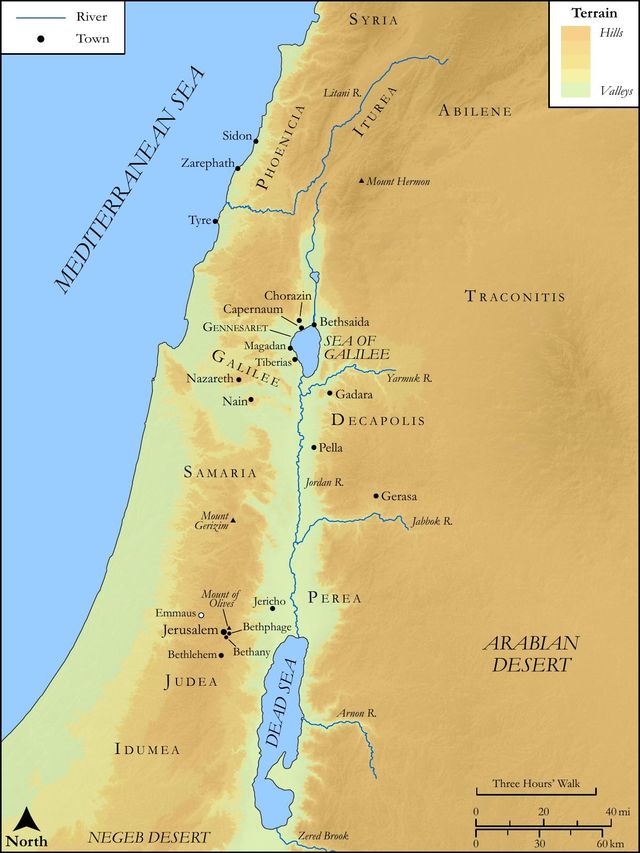
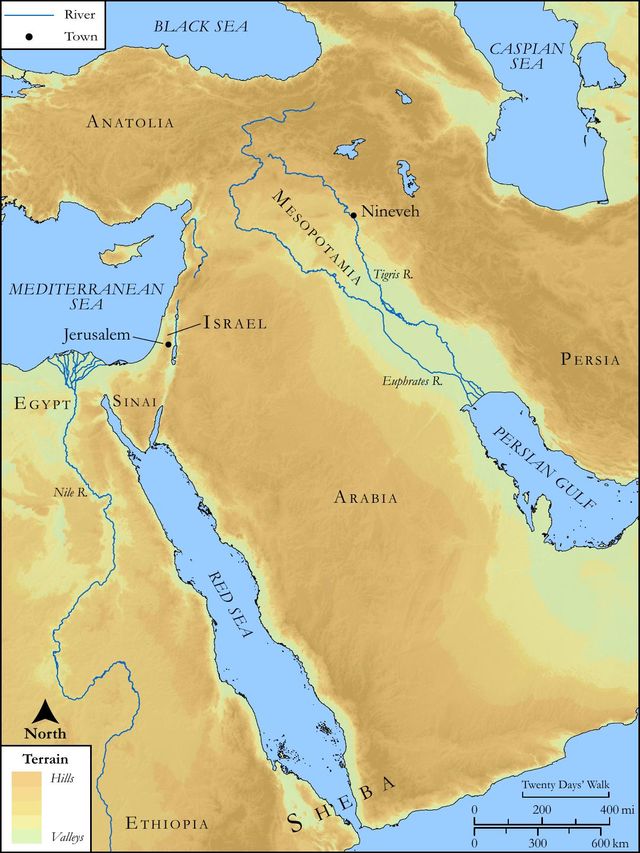
See on the biblical-era maps

Study this verse
Public-domain commentary
Matthew Henry
From his Commentary on the Whole Bible. Henry comments on passages, not single verses — this entry covers Luke 23:1–12. His three-level outline is real structure in the source text, so it is rendered as structure.
Our Lord Jesus was condemned as a blasphemer in the spiritual court, but it was the most impotent malice that could be that this court was actuated by; for, when they had condemned him, they knew they could not put him to death, and therefore took another course.
I.They accused him before Pilate.
The whole multitude of them arose, when they saw they could go no further with him in their court, and led him unto Pilate, though it was no judgment day, no assizes or sessions; and they demanded justice against him, not as a blasphemer (that was no crime that he took cognizance of), but as one disaffected to the Roman government, which they in their hearts did not look upon as any crime at all, or, if it was one, they themselves were much more chargeable with it than he was; only it would serve the turn and answer the purpose of their malice: and it is observable that that which was the pretended crime, for which they employed the Roman powers to destroy Christ, was the real crime for which the Roman powers not long after destroyed them.
1.Here is the indictment drawn up against him (Luk 23:2), in which they pretended a zeal for Caesar, only to ingratiate themselves with Pilate, but it was all malice against Christ, and nothing else. They misrepresented him,
(1.)As making the people rebel against Caesar. It was true, and Pilate knew it, that there was a general uneasiness in the people under the Roman yoke, and they wanted nothing but an opportunity to shake it off; now they would have Pilate believe that this Jesus was active to foment that general discontent, which, if the truth was known, they themselves were the aiders and abettors of: We have found him perverting the nation; as if converting them to God's government were perverting them from the civil government; whereas nothing tends more to make men good subjects than making them Christ's faithful followers. Christ had particularly taught that they ought to give tribute to Caesar, though he knew there were those that would be offended at him for it; and yet he is here falsely accused as forbidding to give tribute to Caesar. Innocency is no fence against calumny.
(2.)As making himself a rival with Caesar, though the very reason why they rejected him, and would not own him to be the Messiah, was because he did not appear in worldly pomp and power, and did not set up for a temporal prince, nor offer to do any thing against Caesar; yet this is what they charged him with, that he said, he himself is Christ a king. He did say that he was Christ, and, if so, then a king, but not such a king as was ever likely to give disturbance to Caesar. When his followers would have made him a king (Joh 6:15), he declined it, though by the many miracles he wrought he made it appear that if he would have set up in competition with Caesar he would have been too hard for him.
2.His pleading to the indictment: Pilate asked him, Art thou the king of the Jews? Luk 23:3. To which he answered, Thou sayest it; that is, "It is as thou sayest, that I am entitled to the government of the Jewish nation; but in rivalship with the scribes and Pharisees, who tyrannize over them in matters of religion, not in rivalship with Caesar, whose government relates only to their civil interests." Christ's kingdom is wholly spiritual, and will not interfere with Caesar's jurisdiction. Or, "Thou sayest it; but canst thou prove it? What evidence hast thou for it?" All that knew him knew the contrary, that he never pretended to be the king of the Jews, in opposition to Caesar as supreme, or to the governors that were sent by him, but the contrary.
3.Pilate's declaration of his innocency (Luk 23:4): He said to the chief priests, and the people that seemed to join with them in the prosecution, "I find no fault in this man. What breaches of your law he may have been guilty of I am not concerned to enquire, but I find nothing proved upon him that makes him obnoxious to our court."
4.The continued fury and outrage of the prosecutors, Luk 23:5. Instead of being moderated by Pilate's declaration of his innocency, and considering, as they ought to have done, whether they were not bringing the guilt of innocent blood upon themselves, they were the more exasperated, more exceedingly fierce. We do not find that they have any particular fact to produce, much less any evidence to prove it; but they resolve to carry it with noise and confidence, and say it, though they cannot prove it: He stirs up the people to rebel against Caesar, teaching throughout all Judea, beginning from Galilee to this place. He did stir up the people, but it was not to any thing factious or seditious, but to every thing that was virtuous and praiseworthy. He did teach, but they could not charge him with teaching any doctrine that tended to disturb the public peace, or make the government uneasy or jealous.
II.They accused him before Herod.
1.Pilate removed him and his cause to Herod's court. The accusers mentioned Galilee, the northern part of Canaan. "Why," saith Pilate, "is he of that country? Is he a Galilean?" Luk 23:6. "Yes," said they, "that is his head-quarters; there he was spent most of his time." "Let us send him to Herod then," saith Pilate, "for Herod is now in town, and it is but fit he should have cognizance of his cause, since he belongs to Herod's jurisdiction." Pilate was already sick of the cause, and desirous to rid his hands of it, which seems to have been the true reason for sending him to Herod. But God ordered it so for the more evident fulfilling of the scripture, as appears Act 4:26, Act 4:27, where that of David (Psa 2:2), The kings of the earth and the rulers set themselves against the Lord and his Anointed, is expressly said to be fulfilled in Herod and Pontius Pilate.
2.Herod was very willing to have the examining of him (Luk 23:8): When he saw Jesus he was exceedingly glad, and perhaps the more glad because he saw him a prisoner, saw him in bonds. He had heard many things of him in Galilee, where his miracles had for a great while been all the talk of the country; and he longed to see him, not for any affection he had for him or his doctrine, but purely out of curiosity; and it was only to gratify this that he hoped to have seen some miracle done by him, which would serve him to talk of as long as he lived. In order to this, he questioned with him in many things, that at length he might bring him to something in which he might show his power. Perhaps he pumped him concerning things secret, or things to come, or concerning his curing diseases. But Jesus answered him nothing; nor would he gratify him so much as with the performance of one miracle. The poorest beggar, that asked a miracle for the relief of his necessity, was never denied; but this proud prince, that asked a miracle merely for the gratifying of his curiosity, is denied. He might have seen Christ and his wondrous works many a time in Galilee, and would not, and therefore it is justly said, Now he would see them, and shall not; they are hidden from his eyes, because he knew not the day of his visitation. Herod thought, now that he had him in bonds, he might command a miracle, but miracles must not be made cheap, nor Omnipotence be at the beck of the greatest potentate.
3.His prosecutors appeared against him before Herod, for they were restless in the prosecution: They stood, and vehemently accused him (Luk 23:10), impudently and boldly, so the word signifies. They would make Herod believe that he had poisoned Galilee too with his seditious notions. Note, It is no new thing for good men and good ministers, that are real and useful friends to the civil government, to be falsely accused as factious and seditious, and enemies to government.
4.Herod was very abusive to him: He, with his men of war, his attendants, and officers, and great men, set him at nought. They made nothing of him; so the word is. Horrid wickedness! To make nothing of him who made all things. They laughed at him as a fool; for they knew he had wrought many miracles to befriend others, and why would he not now work one to befriend himself? Or, they laughed at him as one that had lost his power, and was become weak as other men. Herod, who had been acquainted with John Baptist, and had more knowledge of Christ too than Pilate had, was more abusive to Christ than Pilate was; for knowledge without grace does but make men the more ingeniously wicked. Herod arrayed Christ in a gorgeous robe, some gaudy painted clothes, as a mock-king; and so he taught Pilate's soldiers afterwards to do him the same indignity. He was ringleader in that abuse.
5.Herod sent him back to Pilate, and it proved an occasion of the making of them friends, they having been for some time before at variance. Herod could not get sight of a miracle, but would not condemn him neither as a malefactor, and therefore sent him again to Pilate (Luk 23:11), and so returned Pilate's civility and respect in sending the prisoner to him; and this mutual obligation, with the messages that passed between them on this occasion, brought them to a better understanding one of another than there had been of late between them, Luk 23:12. They had been at enmity between themselves, probably upon Pilate's killing of the Galileans, who were Herod's subjects (Luk 13:1), or some other such matter of controversy as usually occurs among princes and great men. Observe how those that quarrelled with one another yet could unite against Christ; as Gebal, and Ammon, and Amalek, though divided among themselves, were confederate against the Israel of God, Psa 83:7. Christ is the great peace-maker; both Pilate and Herod owned his innocency, and their agreeing in this cured their disagreeing in other things.
Historical interpretation
Seven Centuries of Reception
8 surviving comments on this verse. Each one is dated, so this reads as a timeline rather than a list.
Select a marker to jump to its quote. Markers stagger vertically where authors wrote within a few decades of each other.
Having been bound, Christ went from Caiaphas to Pilate; is this also written? Yes: “And having bound him, they led him away as a present to the King of Jarim.” But some keen listener will object: “Pilate was not a king.” (Let us pass over for the time the main points of the inquiry.) “How then, having bound him, did they lead him as a present to the king?” But read the Gospel: “Pilate, hearing that he was from Galilee, sent him to Herod; for Herod was then king and was present in Jerusalem.” Notice the exactness of the prophet, for he says that he was sent as a present. For “Herod and Pilate became friends that very day; whereas previously they had been at enmity with each other.” It was fitting that he, who was to restore peace between earth and heaven, should first put at peace the very men who condemned him, for the Lord himself was there present, “who reconciles the hearts of the princes of the earth.” Mark the exactness of the prophets and their truthful testimony.
He was silent and did nothing, for Herod's unbelief deserved not to see Him, and the Lord shunned display. And perhaps typically in Herod are represented all the ungodly, who if they have not believed the Law and the Prophets, cannot see Christ's wonderful works in the Gospel.
It is not without reason that He is arrayed by Herod in a white robe, as bearing a sign of His immaculate Passion, that the Lamb of God without spot would take upon Himself the sins of the world.
Under the type also of Herod and Pilate, who from enemies were made friends by Jesus Christ, is preserved the figure of the people of Israel and the Gentile nation; that through our Lord's Passion should come to pass the future concord of both, yet so that the people of the Gentiles should receive the word of God first, and then transmit it by the devotion of their faith to the Jewish people; that they too may with the glory of their majesty clothe the body of Christ, which before they had despised.
There follows an admirable place, where the patience to bear moral harm is poured into the human breast. The Lord is accused, and he is silent: and he is right to be silent, who does not need to defend himself. Let those who fear to be conquered, roam around seeking to be defended. Therefore, he does not confirm the accusation by fearing it, but he despises it by not refuting it. For what would he fear, who does not seek salvation? He betrayed his own salvation for the salvation of all, that it may be acquired by all. And here Pilate absolves: but he absolves by judgment, he crucifies by mystery. But this is specific to Christ: the human aspect, that with unjust judges it seemed more a matter of unwillingness than inability to be defended. But why did the Lord remain silent? He himself gave the answer, saying: If I tell you, you will not believe me; if I ask you, you will not answer me. However, the most remarkable thing is that he preferred to prove himself as a king rather than to speak; so that those who accuse him could not have a reason to condemn him, as they confess what they object to. But Herod, desiring to see some miracles done by him, kept silent and did nothing; for neither did his cruelty deserve to see divine things, nor did the Lord desire to indulge in boasting. And perhaps in Herod all the wicked are symbolized: who, if they do not believe in the Law and the prophets, are unable to see the miracles of Christ's works even in the Gospel.
It is not idle that he is dressed in a white robe by Herod, giving clear indications of his passion; for the great God, without spot, with glory, received the sins of the world. In the figure of Herod and Pilate also, who became friends from enemies through Jesus Christ, the figure of the people of Israel and the Gentile people is preserved, so that through the passion of the Lord there will be future harmony between them both: in such a way, however, that the pious people of the nations receive the word of God and transmit their faith to the Jewish people with their devotion; so that they too may clothe the body of Christ with the glory of their majesty, whom they had previously despised.
(Mor. 10. c. 31.) Now Herod wished to make proof of Christ's fame, desiring to witness His miracles; for it follows, And when Herod saw Jesus, he was glad, &c.
(Mor. 22. c. 16.) From these words we ought to derive a lesson, that whenever our hearers wish as if by praising us to gain knowledge from us, but not to change their own wicked course, we must be altogether silent, lest if from love of ostentation we speak God's word, both they who were guilty cease not to be so, and we who were not become so. And there are many things which betray the motive of a hearer, but one in particular, when they always praise what they hear, yet never follow what they praise.
(Mor. 10. c. 31.) The Redeemer therefore though questioned held His peace, though expected disdained to work miracles. And keeping Himself secretly within Himself, left those who were satisfied to seek for outward things, to remain thankless without, preferring to be openly set at nought by the proud, than be praised by the hollow voices of unbelievers. Hence it follows, And the chief priests and scribes stood and vehemently accused him. And Herod with his men of war set him at nought, and mocked him, and arrayed him in a white robe.
And Herod and Pilate became friends on that day. For previously they had been enemies to each other. This most nefarious pact between Herod and Pilate, which they made in killing Christ, is still maintained by their successors as if by hereditary right, when pagans and Jews, although differing in race and religion as much as in mind, nevertheless agree in persecuting Christians, and in trying to destroy faith in Christ within them.
Pilate having determined not to question our Lord concerning the above-mentioned accusation, is the rather glad now that an opportunity offers to escape from passing judgment upon Him. Hence it is said, When Pilate heard of Galilee, he asked whether the man were a Galilæan. And lest he should be compelled to pass sentence against one whom he knew to be innocent, and delivered for envy, sends Him to be heard by Herod, preferring that he who was the Tetrarch of our Lord's country might be the person either to acquit or punish Him; for it follows, And as soon as he knew that he belonged to Herod's jurisdiction.
Or this alliance between Herod and Pilate signifies that the Gentiles and Jews, though differing in race, religion, and character, agree together in persecuting Christians.
Wherein he follows the Roman law, which provided that every man should be judged by the governor of his own jurisdiction.
Not as though he was about to gain any benefit from the sight, but seized with curiosity he thought he should see that extraordinary man, of whose wisdom and wonderful works he had heard so much. He also wished to hear from His mouth what He could say. Accordingly he asks Him questions, making a sport of Him, and ridiculing Him. But Jesus, who performed all things prudently, and who, as David testifies, ordereth His words with discretion, (Ps. 112:5.) thought it right in such a case to be silent. For a word uttered to one whom it profiteth nothing becomes the cause of his condemnation. Therefore it follows, But he answered him nothing.
Nevertheless, observe how the Devil is thwarted by the thing which He does. He heaps up scorn and reproaches against Christ, whereby it is made manifest that the Lord is not seditious. Otherwise He would not have been derided, when so great a danger was afloat, and that too from a people who were held in suspicion, and so given to change. But the sending of Christ by Pilate to Herod, becomes the commencement of a mutual friendship, Pilate not receiving those who were subject to Herod's authority, as it is added, And they were made friends, &c. Observe the Devil every where uniting together things separate, that he may compass the death of Christ. Let us blush then, if for the sake of our salvation we keep not even our friends in union with us.
Continue studying Luke 23:12 across the web’s major study libraries — every link below opens this exact verse, chapter, or book on the destination site.
Read & Compare
 BibleGatewayThis verse in more than 200 translations and 70 languages.
 Bible.comThe YouVersion reader — hundreds of translations, reading plans, and highlights.
 ESV.orgCrossway's official English Standard Version reader.
 NET BibleThe NET translation with 60,000+ translators' notes on every rendering decision.
 STEP BibleTyndale House's free study tool — original text, vocabulary, and scholarly resources.
 BibliaLogos Bible Software's free web reader.
 USCCBThe New American Bible (Revised Edition) with the U.S. bishops' study notes.
Commentaries
 BibleHub CommentariesDozens of classic commentaries on this verse, gathered on one page.
 StudyLightMore than 100 commentary sets — the largest collection on the web.
 BibleRefPlain-English commentary on what this verse means, verse by verse.
 Enduring WordDavid Guzik's free commentary on this chapter, widely used by Bible teachers.
 Bible Study ToolsVerse commentary alongside Greek and Hebrew study aids.
Original Language & Research
- BibleHub InterlinearThe verse word by word — original language, transliteration, and English.
- BibleHub LexiconEvery word's original-language definition and Strong's entry.
 Blue Letter BibleDeep-study tools — Strong's numbers, concordance, and word studies.
 CNTR CollationThe earliest Greek manuscripts of this verse, collated letter by letter.
Sermons, Hymns & Audio


TrulyRandomVerse is not affiliated with these sites and doesn’t control their content. They’re linked because they’re genuinely useful.
Summary
Luke 23:12 records an unexpected and politically significant reconciliation between Pontius Pilate, the Roman governor, and Herod Antipas, the tetrarch of Galilee, on the very day of Jesus' trial. Previously hostile, these two powerful rulers set aside their animosity, finding common ground in their shared encounter with Jesus. This verse highlights the ironic unity of disparate human authorities in their collective, albeit unwitting, opposition to God's divine plan, even as they sought to evade responsibility for the fate of the innocent Christ.
Context
ShowHideLiterary Context
This verse is situated within the climactic narrative of Jesus' passion, specifically during His trial before the Roman authorities. After Jesus was arrested and brought before Pilate, the governor, learning that Jesus was a Galilean, shrewdly sent Him to Herod Antipas, the tetrarch of Galilee, who was also in Jerusalem for the Passover festival. This transfer, detailed in Luke 23:6-7, was a strategic move by Pilate to shift responsibility and perhaps appease Herod, with whom he had a strained relationship. Herod, eager to see a miracle from Jesus, questioned Him extensively but received no answer. After mocking Jesus and dressing Him in a splendid robe, Herod, like Pilate, found no basis for a death sentence and sent Him back to Pilate (Luke 23:11). It was this series of exchanges, revolving around the person of Jesus, that brought Pilate and Herod into direct and conciliatory contact, leading to the surprising outcome described in verse 12.
Historical & Cultural Context
Pontius Pilate, as the Roman Prefect of Judea, and Herod Antipas, the Jewish tetrarch appointed by Rome over Galilee and Perea, represented distinct but intertwined spheres of authority. Relations between Roman governors and local rulers were often fraught with tension, marked by jurisdictional disputes, political maneuvering, and cultural clashes. Pilate was known for his insensitivity to Jewish customs and his harsh governance, which likely contributed to his "enmity" with Herod. For instance, the massacre of Galileans by Pilate mentioned in Luke 13:1 could have been a source of significant friction, as Galilee was Herod's territory. Herod, for his part, was politically astute but morally bankrupt, having executed John the Baptist. Both men were under pressure to maintain order and avoid any actions that might provoke a popular uprising or displease Emperor Tiberius. Their reconciliation on this day was likely a pragmatic political alliance, born out of a shared dilemma concerning Jesus and a mutual desire to navigate a volatile situation without incurring blame or further instability.
Key Themes
ShowHideLuke 23:12 powerfully contributes to several key themes within the Gospel. Firstly, it highlights the unexpected alliance against Christ, demonstrating how even previously antagonistic human powers can unite in opposition to divine truth and God's Anointed One. This points to a broader spiritual reality where the world's systems, despite their internal divisions, often find common cause in rejecting the light of Christ. Secondly, the verse underscores God's absolute sovereignty over human affairs. Unbeknownst to Pilate and Herod, their actions, including their reconciliation, were not random but were divinely orchestrated to fulfill God's redemptive plan. Their conspiracy against Jesus, as later acknowledged by the early church in Acts 4:27-28, ultimately served to bring about the crucifixion, which secured salvation for humanity. Thirdly, it reveals the nature of political expediency, where alliances are forged not out of genuine friendship or moral conviction, but out of convenience, a shared problem, or a desire to evade responsibility. Both rulers sought to rid themselves of the "Jesus problem," and their mutual deferral of judgment facilitated this temporary truce.
Exposition and Analysis
ShowHideKey Word Analysis
ShowHideThis verb, meaning "to become" or "to come into being," signifies a decisive shift in the relationship between Pilate and Herod. It indicates that their friendship was not a gradual development but a new state of being that "came to pass" on that specific day, directly as a result of their interaction concerning Jesus. The active voice implies a deliberate, though perhaps politically motivated, act of becoming friends.
While translating as "friends," this term in this context does not necessarily imply deep affection or personal camaraderie. Instead, it denotes a cessation of hostility and the establishment of a cooperative, if temporary, relationship. It suggests that they moved from a state of "enmity" to one where they were no longer adversaries, likely for mutual political benefit.
This word describes a state of deep-seated hostility, ill-will, or hatred. It indicates that the previous relationship between Pilate and Herod was not merely one of disagreement or coolness, but a significant and established feud. The use of this strong term emphasizes the dramatic and surprising nature of their reconciliation.
Verse Breakdown
ShowHide"And the same day Pilate and Herod were made friends together:"
This clause highlights the immediate and surprising outcome of Jesus' transfer between the two rulers. The phrase "the same day" emphasizes the suddenness and direct connection of this reconciliation to the events of Jesus' trial. It signifies a profound and unexpected shift from their previous animosity to a state of amicable relations, forged in the crucible of their shared encounter with Christ.
"for before they were at enmity between themselves."
This explanatory clause provides the crucial background that makes the first part of the verse so remarkable. It clarifies that their newfound friendship was not a continuation of an existing positive relationship, but a resolution of a long-standing, deep-seated hostility. The "enmity" (Greek: echthra) implies a strong, active opposition or hatred, making their sudden "friendship" (Greek: philoi) a striking testament to the unifying, albeit perverse, power of their shared interaction with Jesus.
Literary Devices
ShowHideLuke 23:12 is rich in literary devices that enhance its theological and narrative impact. The most prominent is Irony. It is profoundly ironic that Jesus, the Prince of Peace, whose mission is to reconcile humanity to God and to one another, becomes the catalyst for peace between two powerful, previously hostile rulers—a peace, however, that is forged in their shared opposition to Him. This highlights the paradox of human sin, where even good (reconciliation) can arise from evil intentions (rejecting Christ). Another device at play is Juxtaposition, as the verse sharply contrasts their prior state of "enmity" with their newfound "friendship." This stark comparison underscores the dramatic shift in their relationship and the extraordinary circumstances that brought it about. Furthermore, the narrative employs Foreshadowing, as this unexpected alliance against Jesus anticipates the broader spiritual truth that the world, in its various forms and powers, will often unite in opposition to God's truth and His people, as seen throughout church history.
Theological and Thematic Connections
ShowHideThe reconciliation of Pilate and Herod, though seemingly a minor detail, carries significant theological weight. It serves as a stark illustration of how disparate human powers can unite in opposition to God's Anointed One, fulfilling ancient prophecies regarding the nations raging against the Lord and His Messiah. This alliance, born out of political expediency and a shared desire to avoid responsibility for Jesus' fate, paradoxically became an instrument in God's sovereign plan to bring about the atoning sacrifice of Christ. It underscores the truth that even the most malicious human intentions and political machinations cannot thwart the divine will, but rather, are ultimately woven into its fabric for redemptive purposes.
Reflection and Application
ShowHideLuke 23:12 offers profound insights for believers today. Firstly, it reminds us that the world, in its various forms and powers, can indeed unite against Christ and His followers. Even those who are otherwise at odds may find common cause in rejecting biblical truth, suppressing righteousness, or persecuting the church. This should not surprise us, for Jesus Himself warned His disciples of the world's hatred (John 15:18-19). Secondly, despite human machinations, political maneuvering, or personal animosities, this verse powerfully affirms God's unwavering sovereignty. His divine plan for salvation through Christ's sacrifice was not thwarted but advanced through the very actions of those who opposed Him. This provides immense comfort and assurance that God remains in control, even amidst chaos and opposition. Finally, it serves as a cautionary tale about the nature of alliances. Not all friendships or partnerships are built on noble foundations. Sometimes, they are born out of convenience, shared opposition to something good, or a desire to evade responsibility. Believers are called to discern the true nature and motives behind such relationships, ensuring that our own associations are rooted in truth, integrity, and a commitment to God's kingdom.
Questions for Reflection
ShowHideFAQ
ShowHideWhy were Pilate and Herod at enmity before this day?
ShowHideThe Bible does not explicitly state the specific cause of their enmity, but historical and cultural contexts suggest several likely reasons. Pontius Pilate, as the Roman Prefect of Judea, and Herod Antipas, the tetrarch of Galilee and Perea, held overlapping but distinct jurisdictions, leading to potential border disputes or conflicts over authority. Pilate was known for his insensitivity to Jewish customs and his harsh governance, which often led to unrest and could have offended Herod, who, though a Roman appointee, was a Jewish ruler. A specific incident that may have fueled their animosity is Pilate's massacre of Galileans, mentioned in Luke 13:1, as Galilee was Herod's territory. Such an act would have been a direct affront to Herod's authority and a source of deep resentment. Their mutual distrust and political rivalry likely created a long-standing state of hostility.
How did Jesus' trial specifically lead to their friendship?
ShowHideJesus' trial provided the unique circumstances that brought Pilate and Herod into direct contact and facilitated their reconciliation. When Pilate learned that Jesus was from Galilee, he seized the opportunity to send Jesus to Herod, who was also in Jerusalem for the Passover (Luke 23:6-7). This act served multiple purposes for Pilate: it acknowledged Herod's jurisdiction, potentially appeasing him; it shifted the burden of judgment for a politically sensitive case; and it offered a diplomatic gesture. Herod, after questioning and mocking Jesus, found no fault in Him deserving of death and sent Him back to Pilate (Luke 23:11). This mutual deferral of responsibility, coupled with the diplomatic exchange of the prisoner, created a common ground and a shared understanding of their predicament regarding Jesus. Their "friendship" was likely a political truce, a recognition of mutual interest in handling the volatile situation without incurring further blame or unrest, rather than a genuine personal bond.
Christ-Centered Fulfillment
ShowHideLuke 23:12, though seemingly a minor historical detail, offers a profound Christ-centered fulfillment through its paradoxical nature. While Pilate and Herod united in their shared opposition to Jesus, seeking to rid themselves of the "problem" He presented, Jesus Himself is the ultimate Reconciler. Their superficial, politically motivated friendship, forged in the rejection of the Son of God, stands in stark contrast to the true and lasting reconciliation that Christ accomplishes through His atoning work. On the cross, Jesus, the Prince of Peace, bore the enmity between humanity and God, and between divided peoples, breaking down the dividing wall of hostility (Ephesians 2:14-16). His sacrifice did not merely end a political feud but brought about peace for all creation, reconciling all things to God (Colossians 1:19-20). Thus, even as His enemies found a temporary peace in their shared condemnation of Him, Jesus was simultaneously inaugurating the eternal peace that would unite Jew and Gentile, slave and free, and ultimately, humanity with its Creator, fulfilling His mission as the true Peacemaker.