


Luke 23:5
Bible text: King James Version (1769 Blayney text) · Public domain
Bible text: King James Version with Strong's numbers · Public domain
Bible text: Berean Standard Bible · Public domain
Bible text: American Standard Version (1901) · Public domain
Bible text: World English Bible, Messianic edition · Public domain
Bible text: Geneva Bible (1599) · Public domain
Bible text: Young's Literal Translation · Public domain
- οἱhoi<the>G3588T-NPMDefinite article Nominative Plural Masculine
- δὲdeButG1161CONJConjunction
- ἐπίσχυονepischuonthey were insistingG2001V-IAI-3PVerb Imperfect Active Indicative 3rd Plural
- λέγοντεςlegontessayingG3004V-PAP-NPMVerb Present Active Participle Nominative Plural Masculine
- ὅτιhotithatG3754CONJConjunction
- ἀνασείειanaseieiHe stirs upG383V-PAI-3SVerb Present Active Indicative 3rd Singular
- τὸνtontheG3588T-ASMDefinite article Accusative Singular Masculine
- λαὸνlaonpeopleG2992N-ASMNoun Accusative Singular Masculine
- διδάσκωνdidaskōnteachingG1321V-PAP-NSMVerb Present Active Participle Nominative Singular Masculine
- καθ᾽kath᾽throughoutG2596PREPPreposition
- ὅληςholēsallG3650A-GSFAdjective Genitive Singular Feminine
- τῆςtēs<the>G3588T-GSFDefinite article Genitive Singular Feminine
- ἸουδαίαςIoudaiasof JudeaG2449N-GSF-LNoun Genitive Singular Feminine Location
- ἀρξάμενοςarxamenosHe has begunG757V-AMP-NSMVerb Aorist Middle Participle Nominative Singular Masculine
- ἀπὸapofromG575PREPPreposition
- τῆςtēs<the>G3588T-GSFDefinite article Genitive Singular Feminine
- ΓαλιλαίαςGalilaiasGalileeG1056N-GSF-LNoun Genitive Singular Feminine Location
- ἕωςhe'ōsuntilG2193PREPPreposition
- ὧδεhōdehereG5602ADVAdverb
English is a literal word-by-word gloss of the Greek, not the KJV's wording. Why?
This is the original text the KJV's translators worked from — each Greek word with its own literal English meaning in this verse, prepared by scholars at Tyndale House, Cambridge. The KJV translates whole sentences, not word by word, so its wording differs: one Greek word can become several English words, and the KJV may choose “charity” where the gloss reads “love”. Both are faithful — they answer different questions. For the KJV's own rendering, switch to the KJV text.
Details
See on the biblical-era maps
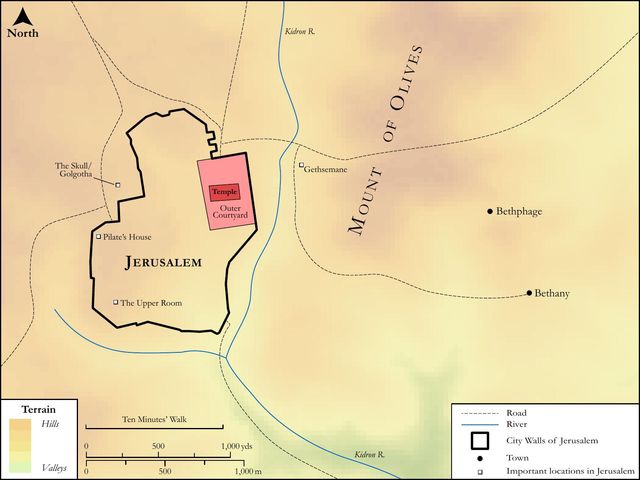
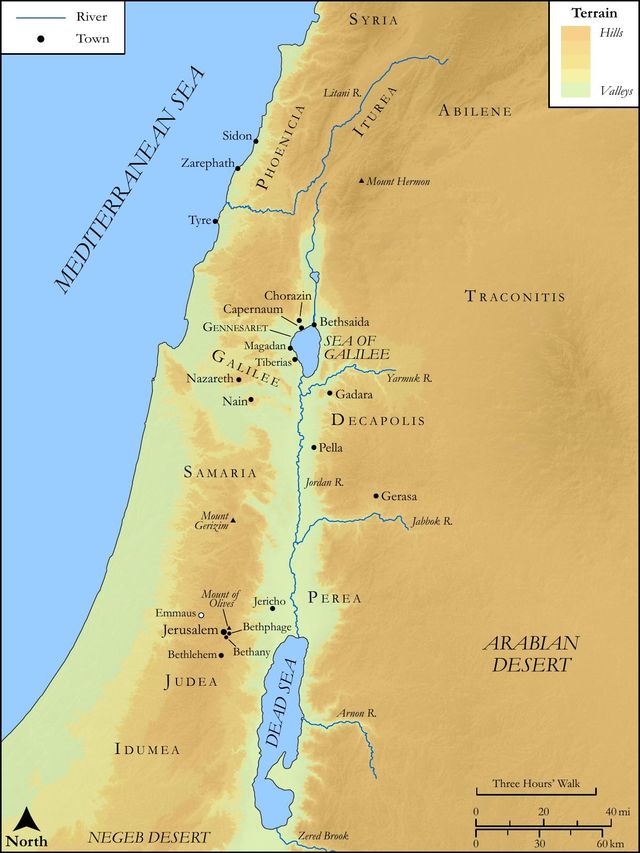
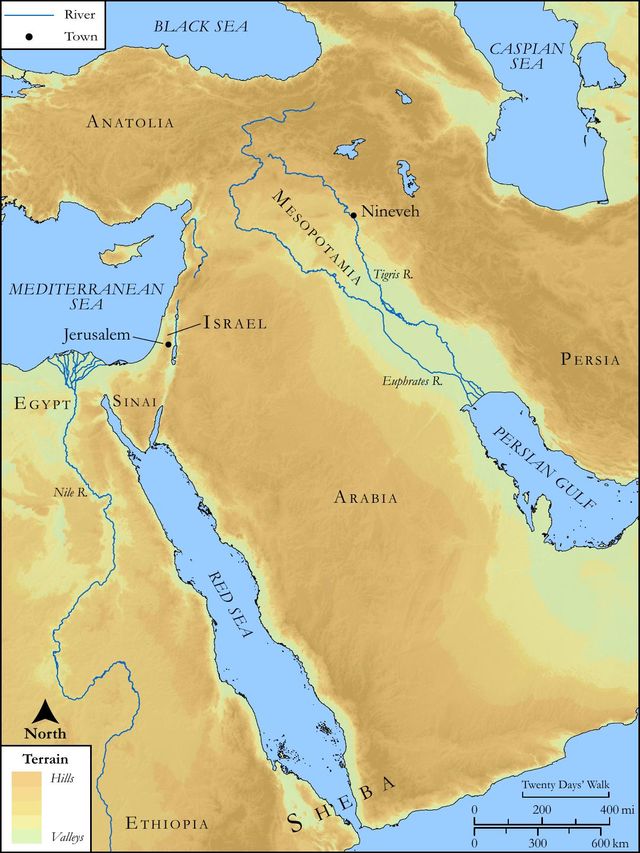
Study this verse
Public-domain commentary
Matthew Henry
From his Commentary on the Whole Bible. Henry comments on passages, not single verses — this entry covers Luke 23:1–12. His three-level outline is real structure in the source text, so it is rendered as structure.
Our Lord Jesus was condemned as a blasphemer in the spiritual court, but it was the most impotent malice that could be that this court was actuated by; for, when they had condemned him, they knew they could not put him to death, and therefore took another course.
I.They accused him before Pilate.
The whole multitude of them arose, when they saw they could go no further with him in their court, and led him unto Pilate, though it was no judgment day, no assizes or sessions; and they demanded justice against him, not as a blasphemer (that was no crime that he took cognizance of), but as one disaffected to the Roman government, which they in their hearts did not look upon as any crime at all, or, if it was one, they themselves were much more chargeable with it than he was; only it would serve the turn and answer the purpose of their malice: and it is observable that that which was the pretended crime, for which they employed the Roman powers to destroy Christ, was the real crime for which the Roman powers not long after destroyed them.
1.Here is the indictment drawn up against him (Luk 23:2), in which they pretended a zeal for Caesar, only to ingratiate themselves with Pilate, but it was all malice against Christ, and nothing else. They misrepresented him,
(1.)As making the people rebel against Caesar. It was true, and Pilate knew it, that there was a general uneasiness in the people under the Roman yoke, and they wanted nothing but an opportunity to shake it off; now they would have Pilate believe that this Jesus was active to foment that general discontent, which, if the truth was known, they themselves were the aiders and abettors of: We have found him perverting the nation; as if converting them to God's government were perverting them from the civil government; whereas nothing tends more to make men good subjects than making them Christ's faithful followers. Christ had particularly taught that they ought to give tribute to Caesar, though he knew there were those that would be offended at him for it; and yet he is here falsely accused as forbidding to give tribute to Caesar. Innocency is no fence against calumny.
(2.)As making himself a rival with Caesar, though the very reason why they rejected him, and would not own him to be the Messiah, was because he did not appear in worldly pomp and power, and did not set up for a temporal prince, nor offer to do any thing against Caesar; yet this is what they charged him with, that he said, he himself is Christ a king. He did say that he was Christ, and, if so, then a king, but not such a king as was ever likely to give disturbance to Caesar. When his followers would have made him a king (Joh 6:15), he declined it, though by the many miracles he wrought he made it appear that if he would have set up in competition with Caesar he would have been too hard for him.
2.His pleading to the indictment: Pilate asked him, Art thou the king of the Jews? Luk 23:3. To which he answered, Thou sayest it; that is, "It is as thou sayest, that I am entitled to the government of the Jewish nation; but in rivalship with the scribes and Pharisees, who tyrannize over them in matters of religion, not in rivalship with Caesar, whose government relates only to their civil interests." Christ's kingdom is wholly spiritual, and will not interfere with Caesar's jurisdiction. Or, "Thou sayest it; but canst thou prove it? What evidence hast thou for it?" All that knew him knew the contrary, that he never pretended to be the king of the Jews, in opposition to Caesar as supreme, or to the governors that were sent by him, but the contrary.
3.Pilate's declaration of his innocency (Luk 23:4): He said to the chief priests, and the people that seemed to join with them in the prosecution, "I find no fault in this man. What breaches of your law he may have been guilty of I am not concerned to enquire, but I find nothing proved upon him that makes him obnoxious to our court."
4.The continued fury and outrage of the prosecutors, Luk 23:5. Instead of being moderated by Pilate's declaration of his innocency, and considering, as they ought to have done, whether they were not bringing the guilt of innocent blood upon themselves, they were the more exasperated, more exceedingly fierce. We do not find that they have any particular fact to produce, much less any evidence to prove it; but they resolve to carry it with noise and confidence, and say it, though they cannot prove it: He stirs up the people to rebel against Caesar, teaching throughout all Judea, beginning from Galilee to this place. He did stir up the people, but it was not to any thing factious or seditious, but to every thing that was virtuous and praiseworthy. He did teach, but they could not charge him with teaching any doctrine that tended to disturb the public peace, or make the government uneasy or jealous.
II.They accused him before Herod.
1.Pilate removed him and his cause to Herod's court. The accusers mentioned Galilee, the northern part of Canaan. "Why," saith Pilate, "is he of that country? Is he a Galilean?" Luk 23:6. "Yes," said they, "that is his head-quarters; there he was spent most of his time." "Let us send him to Herod then," saith Pilate, "for Herod is now in town, and it is but fit he should have cognizance of his cause, since he belongs to Herod's jurisdiction." Pilate was already sick of the cause, and desirous to rid his hands of it, which seems to have been the true reason for sending him to Herod. But God ordered it so for the more evident fulfilling of the scripture, as appears Act 4:26, Act 4:27, where that of David (Psa 2:2), The kings of the earth and the rulers set themselves against the Lord and his Anointed, is expressly said to be fulfilled in Herod and Pontius Pilate.
2.Herod was very willing to have the examining of him (Luk 23:8): When he saw Jesus he was exceedingly glad, and perhaps the more glad because he saw him a prisoner, saw him in bonds. He had heard many things of him in Galilee, where his miracles had for a great while been all the talk of the country; and he longed to see him, not for any affection he had for him or his doctrine, but purely out of curiosity; and it was only to gratify this that he hoped to have seen some miracle done by him, which would serve him to talk of as long as he lived. In order to this, he questioned with him in many things, that at length he might bring him to something in which he might show his power. Perhaps he pumped him concerning things secret, or things to come, or concerning his curing diseases. But Jesus answered him nothing; nor would he gratify him so much as with the performance of one miracle. The poorest beggar, that asked a miracle for the relief of his necessity, was never denied; but this proud prince, that asked a miracle merely for the gratifying of his curiosity, is denied. He might have seen Christ and his wondrous works many a time in Galilee, and would not, and therefore it is justly said, Now he would see them, and shall not; they are hidden from his eyes, because he knew not the day of his visitation. Herod thought, now that he had him in bonds, he might command a miracle, but miracles must not be made cheap, nor Omnipotence be at the beck of the greatest potentate.
3.His prosecutors appeared against him before Herod, for they were restless in the prosecution: They stood, and vehemently accused him (Luk 23:10), impudently and boldly, so the word signifies. They would make Herod believe that he had poisoned Galilee too with his seditious notions. Note, It is no new thing for good men and good ministers, that are real and useful friends to the civil government, to be falsely accused as factious and seditious, and enemies to government.
4.Herod was very abusive to him: He, with his men of war, his attendants, and officers, and great men, set him at nought. They made nothing of him; so the word is. Horrid wickedness! To make nothing of him who made all things. They laughed at him as a fool; for they knew he had wrought many miracles to befriend others, and why would he not now work one to befriend himself? Or, they laughed at him as one that had lost his power, and was become weak as other men. Herod, who had been acquainted with John Baptist, and had more knowledge of Christ too than Pilate had, was more abusive to Christ than Pilate was; for knowledge without grace does but make men the more ingeniously wicked. Herod arrayed Christ in a gorgeous robe, some gaudy painted clothes, as a mock-king; and so he taught Pilate's soldiers afterwards to do him the same indignity. He was ringleader in that abuse.
5.Herod sent him back to Pilate, and it proved an occasion of the making of them friends, they having been for some time before at variance. Herod could not get sight of a miracle, but would not condemn him neither as a malefactor, and therefore sent him again to Pilate (Luk 23:11), and so returned Pilate's civility and respect in sending the prisoner to him; and this mutual obligation, with the messages that passed between them on this occasion, brought them to a better understanding one of another than there had been of late between them, Luk 23:12. They had been at enmity between themselves, probably upon Pilate's killing of the Galileans, who were Herod's subjects (Luk 13:1), or some other such matter of controversy as usually occurs among princes and great men. Observe how those that quarrelled with one another yet could unite against Christ; as Gebal, and Ammon, and Amalek, though divided among themselves, were confederate against the Israel of God, Psa 83:7. Christ is the great peace-maker; both Pilate and Herod owned his innocency, and their agreeing in this cured their disagreeing in other things.
Historical interpretation
Seven Centuries of Reception
5 surviving comments on this verse. Each one is dated, so this reads as a timeline rather than a list.
Select a marker to jump to its quote. Markers stagger vertically where authors wrote within a few decades of each other.
Our Lord is accused and is silent, for He needs no defence. Let them cast about for defence who fear to be conquered. He does not then confirm, the accusation by His silence, but He despises it by not refuting it. Why then should He fear who does not court safety? The Safety of all men forfeits His own, that He may gain that of all.
(lib. iii. c. 8.) He next relates what happens before Pilate, as follows, And they began to accuse him, saying, We found this fellow perverting our nation, &c. Matthew and Mark do not give this, though affirming that they accused Him, but Luke has laid open the very charges which they falsely brought against Him.
But they prevailed, saying: He stirs up the people, teaching throughout all Judea, beginning from Galilee even to here. This speech of the accusers teaches more that he who is accused is innocent, and that they who accuse are perverse. For to have taught the people, and by teaching to have stirred them from the indolence of former times, and by such an action to have traversed from Galilee to Judea, that is the entire land of promise from end to end, this is shown to be an indication of virtue, not of crime. For indeed some lover of the Lord, as he also did, could place this same statement in the place of praise, saying to good listeners: You know that the word was proclaimed throughout all Judea. For starting from Galilee after the baptism which John preached, Jesus of Nazareth, how God anointed him with the Holy Spirit and power, who went about doing good, and healing all who were oppressed by the devil, because the Lord was with him. Finally, Pilate, not thinking it necessary to question the Savior about this, but seizing the opportunity, more desires to set him free by judging him. For it follows:
That the word of Jesus might be fulfilled which He prophesied of His own death, He shall be delivered to the Gentiles, that is, to the Romans. For Pilate was a Roman, and the Romans had sent him as governor to Judæa.
Now two charges having been brought against our Lord, namely, that He forbade to pay tribute to Cæsar, and called Himself Christ the King, it may be that Pilate had chanced to hear that which our Lord spake, Render unto Cæsar the things which be Cæsar's; and therefore setting aside this accusation as a palpable lie of the Jews, he thought fit to ask concerning that alone of which he knew nothing, the saying about the kingdom; for it follows, Pilate asked him, saying, Art thou the King of the Jews, &c.
He answers the governor in the same words which He used to the Chief Priests, that Pilate might be condemned by his own voice; for it follows, And he answering said, Thou sayest.
But with these words they accuse not Him, but themselves. For to have taught the people, and by teaching to have roused them from their former idleness, and doing this to have passed through the whole land of promise, was an evidence not of sin, but of virtue.
Most plainly are they opposed to the truth. For our Lord was so far from forbidding to give tribute, that He commanded it to be given. How then did He pervert the people? Was it that He might take possession of the kingdom? But this is incredible to all, for when the whole multitude wished to choose Him for their king, He was aware of it, and fled.
It seems to me that he asked this question of Christ by way of deriding the wantonness or hypocrisy of the alleged charge. As if he said, Thou a poor humble naked man, with none to help Thee, art accused of seeking a kingdom, for which Thou wouldest need many to help Thee, and much money.
Now they finding nothing else to support their calumny, have resort to the aid of clamour, for it follows, And they were the more fierce, saying, He stirreth up the people, teaching throughout all Jewry, beginning from Galilee to this place. As if they said, He perverts the people, not in one part only, but beginning from Galilee He arrives at this place, having passed through Judæa. I think then that they purposely made mention of Galilee, as desirous to alarm Pilate, for the Galilæans were of a different sect and given to sedition, as, for example, Judas of Galilee who is mentioned in the Acts of the Apostles.
Continue studying Luke 23:5 across the web’s major study libraries — every link below opens this exact verse, chapter, or book on the destination site.
Read & Compare
 BibleGatewayThis verse in more than 200 translations and 70 languages.
 Bible.comThe YouVersion reader — hundreds of translations, reading plans, and highlights.
 ESV.orgCrossway's official English Standard Version reader.
 NET BibleThe NET translation with 60,000+ translators' notes on every rendering decision.
 STEP BibleTyndale House's free study tool — original text, vocabulary, and scholarly resources.
 BibliaLogos Bible Software's free web reader.
 USCCBThe New American Bible (Revised Edition) with the U.S. bishops' study notes.
Commentaries
 BibleHub CommentariesDozens of classic commentaries on this verse, gathered on one page.
 StudyLightMore than 100 commentary sets — the largest collection on the web.
 BibleRefPlain-English commentary on what this verse means, verse by verse.
 Enduring WordDavid Guzik's free commentary on this chapter, widely used by Bible teachers.
 Bible Study ToolsVerse commentary alongside Greek and Hebrew study aids.
Original Language & Research
- BibleHub InterlinearThe verse word by word — original language, transliteration, and English.
- BibleHub LexiconEvery word's original-language definition and Strong's entry.
 Blue Letter BibleDeep-study tools — Strong's numbers, concordance, and word studies.
 CNTR CollationThe earliest Greek manuscripts of this verse, collated letter by letter.
Sermons, Hymns & Audio


TrulyRandomVerse is not affiliated with these sites and doesn’t control their content. They’re linked because they’re genuinely useful.
Summary
Luke 23:5 captures the escalating hostility of the Jewish leaders during Jesus' trial before Pontius Pilate. Despite Pilate's initial declaration of Jesus' innocence, the chief priests and scribes intensify their accusations, shifting from religious charges to politically charged allegations of sedition. They vehemently claim Jesus is inciting rebellion among the people by teaching throughout all Judea, specifically highlighting His ministry's reach from Galilee to Jerusalem, thereby attempting to portray Him as a dangerous revolutionary who threatens Roman authority.
Context
ShowHideLiterary Context
This verse immediately follows Pilate's initial declaration of Jesus' innocence. The Jewish leaders' response in Luke 23:5 demonstrates their relentless determination to secure a conviction, regardless of the evidence. Having failed to secure a condemnation on religious grounds that would concern a Roman governor, they pivot to a political accusation designed to provoke Pilate's intervention. This escalation sets the stage for the subsequent pressure on Pilate, culminating in the crowd's demand for Jesus' crucifixion later in Luke 23. The narrative highlights the stark contrast between Pilate's assessment and the accusers' fervent, unfounded claims.
Historical & Cultural Context
Judea in the 1st century AD was under Roman occupation, a period marked by simmering nationalist sentiment and occasional uprisings against Roman rule. Galilee, in particular, was known as a hotbed of zealous activity and potential rebellion, making any accusation of "stirring up the people" from that region highly potent and concerning to a Roman governor like Pilate. The Jewish leaders understood this political sensitivity and strategically framed Jesus' widespread teaching ministry as a threat to public order and Roman authority. Their goal was to leverage Roman fear of sedition to achieve their desired outcome, knowing that Pilate would not be interested in internal Jewish religious disputes.
Key Themes
ShowHideThis verse contributes significantly to several key themes within Luke's Gospel and the broader Passion narrative. It underscores the theme of unjust accusation and slander, as Jesus' peaceful teachings about the Kingdom of God are deliberately distorted into charges of sedition. It highlights the escalating opposition Jesus faced, demonstrating the relentless and growing determination of His accusers to see Him condemned, regardless of the truth. Furthermore, the mention of Jesus "teaching throughout all Jewry, beginning from Galilee to this place" ironically affirms the widespread scope of Jesus' ministry, which His accusers twist into evidence of a dangerous revolutionary movement. This geographical detail echoes the prophetic anticipation of the Gospel spreading from Jerusalem to the ends of the earth.
Exposition and Analysis
ShowHideKey Word Analysis
ShowHideThis word, derived from a root meaning "to avail further" or "insist stoutly," indicates an intensified, forceful, and unyielding insistence. It conveys the idea that the accusers were not merely repeating their claims but were pressing them with increased vehemence and determination, reflecting their desperate resolve to overcome Pilate's initial reluctance to condemn Jesus.
Literally meaning "to shake up" or "to excite," this term carries the strong implication of inciting to revolt or causing civil unrest. It is a politically charged accusation, designed to portray Jesus as a dangerous instigator of rebellion against Roman authority, which would be a capital offense. This word directly targets Pilate's primary concern: maintaining peace and order in the province.
This word refers to the act of instructing, imparting knowledge, or proclaiming doctrine. While Jesus' actual teaching was spiritual and focused on the Kingdom of God, repentance, and righteousness, His accusers twist this legitimate and widespread activity into evidence of seditious intent. The very nature of His ministry, which involved public instruction, is weaponized against Him in this accusation.
Verse Breakdown
ShowHide"And they were the more fierce"
This phrase emphasizes the heightened intensity and vehemence of the Jewish leaders' accusations. Despite Pilate's declaration of no fault, their resolve to condemn Jesus only grew stronger, indicating a deep-seated animosity and a strategic pivot in their approach.
"saying, He stirreth up the people"
This is the core of their political charge. They accuse Jesus of being a rabble-rouser, an agitator who incites the populace to rebellion. This accusation directly appeals to Pilate's responsibility to maintain civil order and suppress any potential insurrections, framing Jesus as a threat to Roman stability.
"teaching throughout all Jewry"
This part of the accusation highlights the widespread nature of Jesus' ministry, implying that His influence was not confined to a small sect but had permeated the entire region of Judea. While factually true that Jesus taught widely, the accusers present this as evidence of a large-scale, dangerous movement.
"beginning from Galilee to this place"
This geographical detail is crucial. Galilee was known for its volatile political climate and frequent nationalist uprisings. By emphasizing that Jesus' "seditious" teaching originated in Galilee and extended all the way to Jerusalem ("this place"), the accusers sought to maximize the perceived threat, linking Jesus to a region notorious for anti-Roman sentiment.
Literary Devices
ShowHideLuke 23:5 employs several literary devices to heighten the drama and underscore the injustice of Jesus' trial. Hyperbole is evident in the accusers' claim that Jesus was "teaching throughout all Jewry," implying a pervasive, dangerous influence that exaggerates the nature of His spiritual ministry into a political threat. There is significant dramatic irony in this verse, as the accusers, in their desperate attempt to condemn Jesus by highlighting His widespread influence, inadvertently affirm the truth of His extensive ministry and the reach of His message, which would indeed spread throughout the world. The scene is charged with tension, as the verbal assault of the Jewish leaders intensifies against Pilate's initial assessment, creating a palpable sense of conflict and the inevitability of a tragic outcome. The accusers' words also represent a profound act of slander and misrepresentation, twisting Jesus' peaceful teachings into charges of sedition, thus showcasing the corrupt nature of the legal proceedings against Him.
Theological and Thematic Connections
ShowHideLuke 23:5 powerfully illustrates the world's opposition to God's truth, epitomized by the unjust accusations leveled against Jesus. The relentless hostility of the Jewish leaders, fueled by envy and a misunderstanding of Jesus' spiritual kingdom, mirrors a recurring biblical theme: the righteous suffering at the hands of the wicked. This verse underscores the reality that those who faithfully proclaim God's message may face slander and persecution, as their message often challenges entrenched powers and popular misconceptions. The accusers' attempt to paint Jesus as a political revolutionary stands in stark contrast to His actual mission of spiritual liberation and reconciliation, highlighting the profound chasm between human political agendas and God's redemptive plan.
Reflection and Application
ShowHideLuke 23:5 serves as a poignant reminder that truth often faces fierce opposition, especially when it challenges established powers, popular opinion, or deeply held prejudices. It vividly illustrates how good intentions and beneficial work, such as Jesus' teaching ministry, can be deliberately twisted into malicious accusations. For believers today, this passage encourages perseverance in living out one's faith and proclaiming the Gospel, even when facing slander, unjust criticism, or being misunderstood. It calls us to draw strength from Christ's example of enduring false accusations with grace, truth, and unwavering commitment to His Father's will. We are reminded that our ultimate vindication comes not from human courts or public opinion, but from God, who sees and knows all things. This verse challenges us to examine our own reactions when faced with injustice: do we respond with anger, or with the quiet dignity and truthfulness modeled by our Savior?
Questions for Reflection
ShowHideFAQ
ShowHideWhy did the Jewish leaders accuse Jesus of sedition rather than blasphemy to Pilate?
ShowHideThe Jewish leaders accused Jesus of sedition (stirring up the people) to Pilate because blasphemy, while a capital offense under Jewish law, was not a crime punishable by death under Roman law. Pilate, as the Roman governor, would not have been concerned with internal Jewish religious disputes. However, inciting rebellion against Roman authority was a grave political offense, directly threatening Roman peace and order, and was punishable by crucifixion. By shifting their accusation to a political charge, they aimed to compel Pilate to act, knowing that he would be obligated to address any perceived threat to Roman rule, as seen in Luke 23:2.
Christ-Centered Fulfillment
ShowHideLuke 23:5, with its depiction of Jesus facing false accusations of sedition and widespread agitation, profoundly points to His Christ-centered fulfillment as the innocent Suffering Servant. Though His accusers twisted His peaceful teaching ministry into a political threat, Jesus was indeed "stirring up" the people, but not for rebellion against Rome. He was stirring them to repentance and faith in the Kingdom of God, fulfilling the prophetic call for a Messiah who would proclaim good news to the poor and liberty to the captives, as He declared in Luke 4:18-19. His journey "from Galilee to this place" (Jerusalem) was not the march of a revolutionary, but the deliberate path of the Lamb of God, who came to lay down His life as a ransom for many, as prophesied in Isaiah 53:7. The false charges and the relentless opposition He faced were part of God's sovereign plan to bring about the ultimate sacrifice for sin, demonstrating that Jesus, the true King, would conquer not by political power, but by humble obedience and sacrificial love, ultimately establishing a kingdom that is not of this world but reigns eternally.