


John 16:3
- καὶkaiAndG2532CONJConjunction
- ταῦταtautathese thingsG3778D-APNDemonstrative pronoun Accusative Plural Neuter
- ποιήσουσινpoiēsousinthey will doG4160V-FAI-3PVerb Future Active Indicative 3rd Plural
- ὑμῖνhuminto youG4771P-2DPPersonal pronoun Dative 2nd Plural
- ὅτιhotibecauseG3754CONJConjunction
- οὐκouknotG3756PRT-NNegative Particle Negative
- ἔγνωσανegnōsanthey knowG1097V-2AAI-3PVerb 2nd Aorist Active Indicative 3rd Plural
- τὸνtontheG3588T-ASMDefinite article Accusative Singular Masculine
- πατέραpateraFatherG3962N-ASM-TNoun Accusative Singular Masculine Title
- οὐδὲoudenorG3761CONJ-NConjunction Negative
- ἐμέemeMe myselfG1473P-1ASPersonal pronoun Accusative 1st Singular
English is a literal word-by-word gloss of the Greek, not the KJV's wording. Why?
This is the original text the KJV's translators worked from — each Greek word with its own literal English meaning in this verse, prepared by scholars at Tyndale House, Cambridge. The KJV translates whole sentences, not word by word, so its wording differs: one Greek word can become several English words, and the KJV may choose “charity” where the gloss reads “love”. Both are faithful — they answer different questions. For the KJV's own rendering, switch to the KJV text.
Details
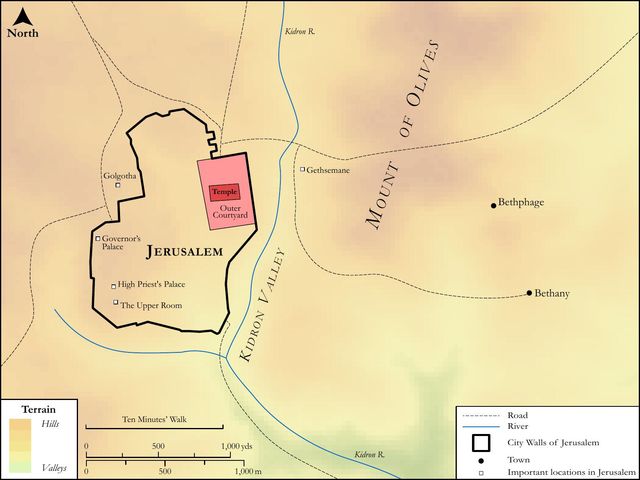
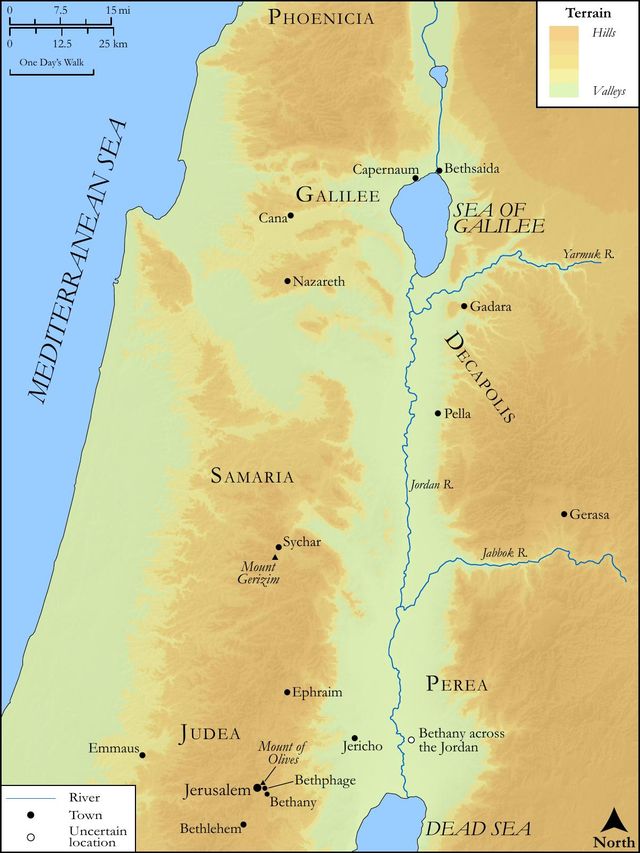
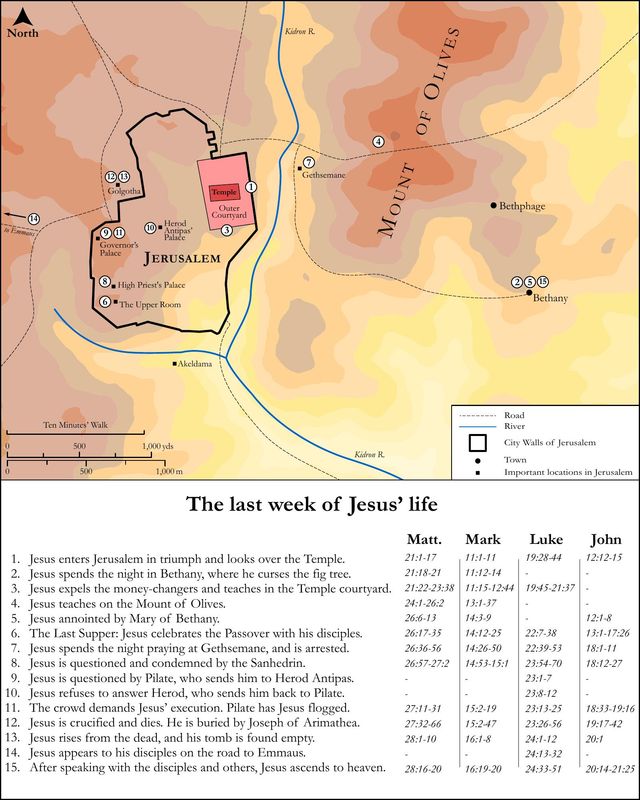
See on the biblical-era map
Study this verse
Public-domain commentary
Matthew Henry
From his Commentary on the Whole Bible. Henry comments on passages, not single verses — this entry covers John 16:1–6. His three-level outline is real structure in the source text, so it is rendered as structure.
Christ dealt faithfully with his disciples when he sent them forth on his errands, for he told them the worst of it, that they might sit down and count the cost. He had told them in the chapter before to expect the world's hatred; now here in these verses,
I.He gives them a reason why he alarmed them thus with the expectation of trouble:
These things have I spoken unto you, that you should not be offended, or scandalized, Joh 16:1.
1.The disciples of Christ are apt to be offended at the cross; and the offence of the cross is a dangerous temptation, even to good men, to turn back from the ways of God, or turn aside out of them, or drive on heavily in them; to quit either their integrity or their comfort. It is not for nothing that a suffering time is called an hour of temptation.
2.Our Lord Jesus, by giving us notice of trouble, designed to take off the terror of it, that it might not be a surprise to us. Of all the adversaries of our peace, in this world of troubles, none insult us more violently, nor put our troops more into disorder, than disappointment does; but we can easily welcome a guest we expect, and being fore-warned are fore-armed - Praemoniti, praemuniti.
II.He foretels particularly what they should suffer (Joh 16:2):
"Those that have power to do it shall put you out of their synagogues; and this is not the worst, they shall kill you." Ecce duo-gladii - Behold two swords drawn against the followers of the Lord Jesus.
1.The sword of ecclesiastical censure; this is drawn against them by the Jews, for they were the only pretenders to church-power. They shall cast you out of their synagogues; aposunagōgous poiēsousin humas - they shall make you excommunicates. (1.) "They shall cast you out of the particular synagogues you were members of." At first, they scourged them in their synagogues as contemners of the law (Mat 10:17), and at length cast them out as incorrigible. (2.) "They shall cast you out of the congregation of Israel in general, the national church of the Jews; shall debar you from the privileges of that, put you into the condition of an outlaw," qui caput gerit lupinum - to be knocked on the head, like another wolf; "they will look upon you as Samaritans, as heathen men and publicans." Interdico tibi aqua et igne - I forbid you the use of water and fire. And were it not for the penalties, forfeitures, and incapacities, incurred hereby, it would be no injury to be thus driven out of a house infected and falling. Note, It has often been the lot of Christ's disciples to be unjustly excommunicated. Many a good truth has been branded with an anathema, and many a child of God delivered to Satan.
2.The sword of civil power: "The time cometh, the hour is come; now things are likely to be worse with you than hitherto they have been; when you are expelled as heretics, they will kill you, and think they do God service, and others will think so too." (1.) You will find them really cruel: They will kill you. Christ's sheep have been accounted as sheep for the slaughter; the twelve apostles (we are told) were all put to death, except John. Christ had said (Joh 15:27), You shall bear witness, martureite - you shall be martyrs, shall seal the truth with your blood, your heart's blood. (2.) You will find them seemingly conscientious; they will think they do God service; they will seem latreian prospherein - to offer a good sacrifice to God; as those that cast out God's servants of old, and said, Let the Lord be glorified, Isa 66:5. Note, [1.] It is possible for those that are real enemies to God's service to pretend a mighty zeal for it. The devil's work has many a time been done in God's livery, and one of the most mischievous enemies Christianity ever had sits in the temple of God. Nay, [2.] It is common to patronise an enmity to religion with a color of duty to God, and service to his church. God's people have suffered the greatest hardships from conscientious persecutors. Paul verily thought he ought to do what he did against the name of Jesus. This does not at all lessen the sin of the persecutors, for villanies will never be consecrated by putting the name of God to them; but it does enhance the sufferings of the persecuted, to die under the character of being enemies to God; but there will be a resurrection of names as well as of bodies at the great day.
III.He gives them the true reason of the world's enmity and rage against them (Joh 16:3):
"These things will they do unto you, not because you have done them any harm, but because they have not known the Father, nor me. Let this comfort you, that none will be your enemies but the worst of men." Note,
1.Many that pretend to know God are wretchedly ignorant of him. Those that pretend to do him service thought they knew him, but it was a wrong notion they had of him. Israel transgressed the covenant, and yet cried, My God, we know thee. Hos 8:1, Hos 8:2.
2.Those that are ignorant of Christ cannot have any right knowledge of God. In vain do men pretend to know God and religion, while they slight Christ and Christianity.
3.Those are very ignorant indeed of God and Christ that think it an acceptable piece of service to persecute good people. Those that know Christ know that he came not into the world to destroy men's lives, but to save them; that he rules by the power of truth and love, not of fire and sword. Never was such a persecuting church as that which makes ignorance the mother of devotion.
IV.He tells them why he gave them notice of this now, and why not sooner.
1.Why he told them of it now (Joh 16:4), not to discourage them, or add to their present sorrow; nor did he tell them of their danger that they might contrive how to avoid it, but that "when the time shall come (and you may be sure it will come), you may remember that I told you." Note, When suffering times come it will be of use to us to remember what Christ has told us of sufferings.
(1.)That our belief of Christ's foresight and faithfulness may be confirmed; and,
(2.)That the trouble may be the less grievous, for we were told of it before, and we took up our profession in expectation of it, so that it ought not to be a surprise to us, nor looked upon as a wrong to us. As Christ in his sufferings, so his followers in theirs, should have an eye to the fulfilling of the scripture.
2.Why he did not tell them of it sooner: "I spoke not this to you from the beginning when you and I came to be first acquainted, because I was with you." (1.) While he was with them, he bore the shock of the world's malice, and stood in the front of the battle; against him the powers of darkness levelled all their force, not against small or great, but only against the king of Israel, and therefore he did not need to say so much to them of suffering, because it did not fall much to their share; but we do find that from the beginning he bade them prepare for sufferings; and therefore, (2.) It seems rather to be meant of the promise of another comforter. This he had said little of to them at the beginning, because he was himself with them to instruct, guide, and comfort them, and then they needed not the promise of the Spirit's extraordinary presence. The children of the bride-chamber would not have so much need of a comforter till the bridegroom should be taken away.
V.He expresses a very affectionate concern for the present sadness of his disciples, upon occasion of what he had said to them (Joh 16:5, Joh 16:6): "Now I am to be no longer with you, but go my way to him that sent me, to repose there, after this fatigue; and none of you asketh me, with any courage, Whither goest thou? But, instead of enquiring after that which would comfort you, you pore upon that which looks melancholy, and sorrow has filled your heart."
1.He had told them that he was about to leave them: Now I go my way. He was not driven away by force, but voluntarily departed; his life was not extorted from him, but deposited by him. He went to him that sent him, to give an account of his negotiation. Thus, when we depart out of this world, we go to him that sent us into it, which should make us all solicitous to live to good purposes, remembering we have a commission to execute, which must be returned at a certain day.
2.He had told them what hard times they must suffer when he was gone, and that they must not expect such an easy quiet life as they had had. Now, if these were the legacies he had to leave to them, who had left all for him, they would be tempted to think they had made a sorry bargain of it, and were, for the present, in a consternation about it, in which their master sympathizes with them, yet blames them, (1.) That they were careless of the means of comfort, and did not stir up themselves to seek it: None of you asks me, Whither goest thou? Peter had started this question (Joh 13:36), and Thomas had seconded it (Joh 14:5), but they did not pursue it, they did not take the answer; they were in the dark concerning it, and did not enquire further, nor seek for fuller satisfaction; they did not continue seeking, continue knocking. See what a compassionate teacher Christ is, and how condescending to the weak and ignorant. Many a teacher will not endure that the learner should ask the same question twice; if he cannot take a thing quickly, let him go without it; but our Lord Jesus knows how to deal with babes, that must be taught with precept upon precept. If the disciples here would have found that his going away was for his advancement, and therefore his departure from them should not inordinately trouble them (for why should they be against his preferment?) and for their advantage, and therefore their sufferings for him should not inordinately trouble them; for a sight of Jesus at the right hand of God would be an effectual support to them, as it was to Stephen. Note, A humble believing enquiry into the design and tendency of the darkest dispensations of Providence would help to reconcile us to them, and to grieve the less, and fear the less, because of them; it will silence us to ask, Whence came they? but will abundantly satisfy us to ask, Whither go they? for we know they work for good, Rom 8:28.
(2.)That they were too intent, and pored too much, upon the occasions of their grief: Sorrow has filled their hearts. Christ had said enough to fill them with joy (Joh 15:11); but by looking at that only which made against them, and overlooking that which made for them, they were so full of sorrow that there was no room left for joy. Note, It is the common fault and folly of melancholy Christians to dwell upon the dark side of the cloud, to meditate nothing but terror, and turn a deaf ear to the voice of joy and gladness. That which filled the disciples' hearts with sorrow, and hindered the operation of the cordials Christ administered, was too great an affection to this present life. They were big with hopes of their Master's external kingdom and glory, and that they should shine and reign with him: and now, instead of that, to hear of nothing but bonds and afflictions, this filled them with sorrow. Nothing is a greater prejudice to our joy in God than the love of the world; and the sorrow of the world, the consequence of it.
Historical interpretation
Historical reception
5 surviving comments on this verse. Each one is dated, so this reads as a timeline rather than a list.
Select a marker to jump to its quote. Markers stagger vertically where authors wrote within a few decades of each other.
(Hom. lxxxviii) Then He consoles them: And all these things will they do unto you, because they have not known the Father nor Me. As if He said, Let this consolation content you.
"And these things will they do, because they have not known the Father, nor Me."
"It is sufficient for your comfort that ye endure these things for My sake, and the Father's." Here He remindeth them of the blessedness of which He spake at the beginning, "Blessed are ye, when men shall revile you, and persecute you, and shall say all manner of evil against you falsely, for My sake. Rejoice, and be exceeding glad; for great is your reward in heaven."
Finally, to what He had thus told them, He added the words: "But the hour cometh, that whosoever killeth you will think that he doeth God service: and these things will they do unto you, because they have not known the Father, nor me." That is to say, they have not known the Father, nor His Son, to whom they think they will be doing service in slaying you. Words which the Lord added in the way of consolation to His own, who should be driven out of the Jewish synagogues. For it is in thus announcing beforehand what evils they would have to endure for their testimony in His behalf, that He said, "They will put you out of the synagogues." Nor does He say, And the hour cometh, that whosoever killeth you will think that he doeth God service. What then? "But the hour cometh:" just in the way He would have spoken, were He foretelling them of something good that would follow such evils. What, then, does He mean by the words, "They will put you out of the synagogues: but the hour cometh"? As if He would have gone on to say this: They, indeed, will scatter you, but I will gather you; or, They shall, indeed, scatter you, but the hour of your joy cometh. What, then, has the word which He uses, "but the hour cometh," to do here, as if He were going on to promise them comfort after their tribulation, when apparently He ought rather to have said, in the form of continuous narration, And the hour cometh? But He said not, And it cometh, although predicting the approach of one tribulation after another, instead of comfort after tribulation. Could it have been that such a separation from the synagogues would so discompose them, that they would prefer to die, rather than remain in this life apart from the Jewish assemblies? Far surely would those be from such discomposure, who were seeking, not the praise of men, but of God. What, then, of the words, "They will put you out of the synagogues: but the hour cometh;" when apparently He ought rather to have said, And the hour cometh, "that whosoever killeth you will think that he doeth God service"? For it is not even said, But the hour cometh that they shall kill you, as if implying that their comfort for such a separation would be found in the death that would befall them; but "The hour cometh," He says, "that whosoever killeth you will think that he doeth God service." On the whole, I do not think He wished to convey any further meaning than that they might understand and rejoice that they themselves would gain so many to Christ, by being driven out of the Jewish congregations, that it would be found insufficient to expel them, and they would not suffer them to live for fear of all being converted by their preaching to the name of Christ, and so turned away from the observance of Judaism, as if it were the very truth of God. For so ought we to understand the reference of His words to the Jews, when He said of them, "They will put you out of the synagogues." For the witnesses, in other words, the martyrs of Christ, were likewise slain by the Gentiles: they, however, thought not that it was to the true God, but to their own false deities, that they were doing service when they so acted. But every Jew that slew the preachers of Christ reckoned that he was doing God service; believing as he did that all who were converted to Christ were deserting the God of Israel. For it was also by the same reasoning that they were incited to the murder of Christ Himself: because their own words on this subject have also been put on record. "Ye perceive that the whole world is gone after him:" "If we let him live, the Romans will come, and take away both our place and nation." And those of Caiaphas: "It is expedient for us that one man should die for the people, and not that the whole nation should perish." And accordingly in this address He sought by His own example to stimulate His disciples, to whom He had just been saying, "If they have persecuted me, they will also persecute you;" that as in slaying Him they thought they had done God a service, so also would it be in reference to them.
In these words the Lord Jesus Christ defends himself and also accuses the audacity of the Jews … censuring those who dishonor him by their cruelty toward the holy apostles. For the charge of transgression will not merely have reference to their treatment of the saints but also will bear on the one who laid on them the service of apostleship. Just as God said to the holy Samuel concerning the children of Israel, “They have not rejected you, but they have rejected me.”
He showed that the zeal of the Jews was a zeal not according to knowledge, as also Paul says, but that it had gone far astray and wandered out of the straight path, even though according to the purpose that was in them it seemed to be manifested for the sake of God. For these misguided men thought that by arming themselves with the command given by Moses they pleased God, the Giver of the Law, and actually supposed, that by opposing the prophetic utterances of Christ, they gained credit with Him. For it was for this reason that they persecuted so hotly the preachers of the message of the Gospel, but were ignorant that they were falling into every kind of folly, and by their insults against the Son were transgressing against God the Father Himself, and further, were convicted of complete ignorance of the Nature of the Father and that of the Son Who manifested Himself from Him. And, what is marvellous, they were eager to crown Moses, the wisest of men, who was a minister of the Law given by angels, with the highest honours, but did not shrink from loading with the worst insults our Lord Jesus Christ, Who expounded the unspeakable Will of God, and said clearly, I do nothing of Myself: but the Father which sent Me He hath given Me a commandment, what I should say, and what I should speak----even though God the Father worked marvels with Him, and testified by a voice heard from above: This is My beloved Son, in Whom I am well pleased. It is then unquestionable that if any one should choose bitterly to assail those who convey the Divine message, he will be in complete ignorance of the Undivided and Consubstantial Trinity. For such an one, when he excludes from the honour that is His due the Word manifesting Himself from Him, to suit his own conceit, knows not the Father. For would it not be received as an assured truth by those who are able discreetly to deal with the doctrine of the Trinity, that, since He is of the same Substance with the Father, He will speak in absolute conformity with the Will of the Father; and that, as He partakes in His glory, the dignity of the Father will be equally insulted when He is attacked? In these words then the Lord Jesus Christ defends Himself, and also accuses the audacity of the Jews; fastening thereby a bitter and dreadful censure on those who dishonour Him by their cruelty towards the holy Apostles. For the charge of transgression will not merely have reference to the Saints, but will mount up to Him Who laid upon them the service of apostleship; just as God said unto the holy Samuel concerning the children of Israel: They have not rejected thee, but they have rejected Me.
Most dangerous is it then to refuse to bestow on the Saints the honour which is their due; for the charge of transgression against them will mount up to Him Who gave them their mission.
Continue studying John 16:3 across the web’s major study libraries — every link below opens this exact verse, chapter, or book on the destination site.
Read & Compare
 BibleGatewayThis verse in more than 200 translations and 70 languages.
 Bible.comThe YouVersion reader — hundreds of translations, reading plans, and highlights.
 ESV.orgCrossway's official English Standard Version reader.
 NET BibleThe NET translation with 60,000+ translators' notes on every rendering decision.
 STEP BibleTyndale House's free study tool — original text, vocabulary, and scholarly resources.
 BibliaLogos Bible Software's free web reader.
 USCCBThe New American Bible (Revised Edition) with the U.S. bishops' study notes.
Commentaries
 BibleHub CommentariesDozens of classic commentaries on this verse, gathered on one page.
 StudyLightMore than 100 commentary sets — the largest collection on the web.
 BibleRefPlain-English commentary on what this verse means, verse by verse.
 Enduring WordDavid Guzik's free commentary on this chapter, widely used by Bible teachers.
 Bible Study ToolsVerse commentary alongside Greek and Hebrew study aids.
Original Language & Research
- BibleHub InterlinearThe verse word by word — original language, transliteration, and English.
- BibleHub LexiconEvery word's original-language definition and Strong's entry.
 Blue Letter BibleDeep-study tools — Strong's numbers, concordance, and word studies.
 CNTR CollationThe earliest Greek manuscripts of this verse, collated letter by letter.
Sermons, Hymns & Audio


TrulyRandomVerse is not affiliated with these sites and doesn’t control their content. They’re linked because they’re genuinely useful.
Summary
In this pivotal verse from Jesus' Farewell Discourse, John 16:3, Jesus elucidates the profound spiritual ignorance that undergirds the intense persecution His disciples will endure. He reveals that the hostile actions of those who oppose them—including expulsion from synagogues and even martyrdom—stem not from a mere misunderstanding, but from a fundamental lack of experiential knowledge of both God the Father and of Jesus Himself. This forewarning serves to prepare and strengthen His followers, providing divine insight into the spiritual battle they are called to face.
Context
ShowHideLiterary Context
John 16:3 is embedded within Jesus' extensive "Farewell Discourse" (John 13-17), a deeply intimate and instructive conversation with His disciples on the eve of His crucifixion. Specifically, it follows Jesus' explicit warnings in John 16:1-2 that His followers would face severe opposition, including being "put out of the synagogues" and even killed, with their persecutors believing they are "doing God service." Verse 3 provides the theological rationale for such extreme hostility, linking the persecutors' actions directly to their spiritual blindness. This immediate context establishes the gravity of the coming trials and Jesus' compassionate foresight in preparing His disciples for them, ensuring they would not "stumble" or be "offended" when these events transpired. The discourse consistently prepares the disciples for life after Jesus' physical departure, emphasizing the role of the Holy Spirit and the nature of their ongoing mission in a hostile world.
Historical & Cultural Context
The persecution Jesus describes was not hypothetical but a looming reality for His Jewish disciples. Expulsion from the synagogue (herem) was a severe social and religious ostracization, effectively cutting individuals off from their community, family, and religious life. This was a common tactic employed by the Jewish religious authorities against those who confessed Jesus as the Messiah, as seen in John 9:22. The threat of being killed for one's faith was also a real danger, foreshadowing events like the martyrdom of Stephen (Acts 7:54-60) and James (Acts 12:1-2). The persecutors, often zealous for what they believed was the purity of their tradition and the honor of God, genuinely thought they were serving God by eliminating what they perceived as heresy or blasphemy. This highlights a tragic irony: their actions, intended to honor God, were in fact a demonstration of their profound ignorance of God's true nature and His Son.
Key Themes
ShowHideThis verse powerfully contributes to several overarching themes in John's Gospel. Firstly, it reinforces the theme of Persecution and the World's Hatred, explaining that opposition to believers is not arbitrary but rooted in spiritual ignorance. The world's animosity towards Jesus' followers is an extension of its hatred for Jesus Himself, as articulated in John 15:18-20. Secondly, it underscores the Unity and Inseparable Nature of the Father and the Son. Jesus' statement, "they have not known the Father, nor me," inextricably links the knowledge of the Father with the knowledge of the Son, a central Johannine Christological theme (e.g., John 10:30). To reject Jesus is to reject God, and vice-versa. Thirdly, the verse highlights Jesus' Divine Foreknowledge and Pastoral Care. By revealing the underlying cause of future suffering, Jesus provides His disciples with a framework for understanding their trials, offering comfort and preventing them from stumbling. This prophetic insight demonstrates His sovereign control and deep care for His own, preparing them to endure with faith and understanding.
Exposition and Analysis
ShowHideKey Word Analysis
ShowHideThis verb, G4160, is a broad term meaning "to make or do" in a very wide application. In this context, it refers to the active, hostile deeds of persecution that the world would inflict upon Jesus' disciples. It encompasses a range of actions, from excommunication to physical violence and even death, emphasizing the concrete and severe nature of the opposition.
This word signifies more than mere intellectual acquaintance; it denotes a deep, experiential, and personal knowledge or relationship. The persecutors' problem is not simply a lack of factual information about God or Jesus, but a profound absence of a saving, transformative relationship with them. Their actions are a direct consequence of this spiritual blindness and alienation.
This term refers to God as the "father" in a literal or figurative sense. In this verse, it emphasizes God's unique relationship with Jesus and, by extension, with believers. The persecutors' failure to "know" the Father means they do not understand His character, His will, or His redemptive plan, which is fully revealed in Jesus. Their actions against Jesus' followers are thus an offense against God Himself.
Verse Breakdown
ShowHide"And these things will they do unto you"
This clause directly refers to the severe persecutions Jesus has just warned about in John 16:2. The phrase "these things" (Greek, taûta) explicitly links the actions to the prior context, signifying the concrete and hostile deeds—such as excommunication from the synagogue and even murder—that the world would inflict upon Jesus' followers. The active verb "will they do" (Greek, poiéō) underscores the certainty and severity of the coming opposition, emphasizing that it will be a deliberate and harmful act directed specifically "unto you," the disciples.
"because they have not known the Father, nor me"
This crucial clause provides the underlying reason and spiritual diagnosis for the world's hostility. The conjunction "because" (Greek, hóti) introduces the causal explanation. The core issue is a fundamental lack of "known" (Greek, ginōskō), which implies not just intellectual understanding, but a deep, personal, and experiential relationship. Those who persecute do so out of a profound spiritual ignorance; they do not genuinely recognize, relate to, or understand the true nature of God the Father, nor do they comprehend or acknowledge Jesus' divine identity and mission. This spiritual blindness is the root cause of their animosity, making their actions a tragic manifestation of their alienation from the divine truth. The phrase "nor me" (Greek, oudé emé) powerfully links the knowledge of the Father with the knowledge of Jesus, reinforcing the inseparable unity between them.
Literary Devices
ShowHideJohn 16:3 employs several powerful literary devices. Foreshadowing is prominent, as Jesus explicitly predicts the future persecution of His disciples, preparing them mentally and spiritually for trials to come. This serves as a form of pastoral care, allowing them to understand the nature of their suffering rather than being caught off guard. There is also a profound Irony at play: those who claim to be zealous for God and believe they are "doing God service" (John 16:2) are, in fact, demonstrating their complete ignorance of God and His Son. Their actions, intended to honor God, are the very antithesis of His will. Furthermore, the verse utilizes Contrast by highlighting the stark difference between the disciples, who have come to know the Father through Jesus, and the world, which remains in spiritual darkness. This contrast underscores the exclusive nature of the true knowledge of God, accessible only through Christ. Finally, the repetition of the concept of "knowing" (or not knowing) the Father and Jesus throughout John's Gospel serves as a form of Thematic Emphasis, reinforcing the central importance of this experiential knowledge for eternal life and true relationship with God.
Theological and Thematic Connections
ShowHideJohn 16:3 profoundly articulates that the world's hostility towards Christ's followers is not merely a social or political phenomenon, but a deeply spiritual one, rooted in a fundamental ignorance of God. This ignorance is not passive but actively manifests in opposition to God's revealed truth in Jesus Christ. The verse underscores the inseparable unity of the Father and the Son, asserting that true knowledge of one necessitates true knowledge of the other. Consequently, rejection of Jesus is inherently a rejection of God the Father. This theological truth provides believers with a crucial framework for understanding suffering for their faith: it is a direct consequence of their identification with Christ and a testament to the world's spiritual blindness, rather than a sign of their own failure or God's abandonment.
Reflection and Application
ShowHideJohn 16:3 offers profound insights for contemporary believers facing various forms of opposition or misunderstanding for their faith. It reminds us that such experiences are not anomalies but align with Jesus' explicit predictions. When we encounter hostility, ridicule, or even ostracism because of our commitment to Christ, this verse provides a crucial interpretive lens: the root cause is often a spiritual void, a lack of genuine, experiential knowledge of God and His Son. This understanding can transform our response from bitterness or confusion to compassion and prayer for those who oppose us, recognizing their spiritual blindness. It also serves as a powerful validation of our faith; our suffering is not random but is directly tied to our identification with Christ, confirming that we are truly His. This should fortify our resolve, knowing that our trials are part of a larger spiritual narrative and that our witness, even in suffering, can point others to the very knowledge of God they lack. Ultimately, the verse compels us to deepen our own "knowing" of the Father and the Son, ensuring our faith is rooted in an authentic, transformative relationship that empowers us to endure and to love even our adversaries.
Questions for Reflection
ShowHideFAQ
ShowHideWhy do people persecute believers if they are supposedly doing God's service?
ShowHideJesus explains that those who persecute His followers, even believing they are serving God (John 16:2), do so because they "have not known the Father, nor me." This "not knowing" (Greek, ginōskō) is not merely a lack of information, but a profound absence of a personal, experiential relationship with God. They operate from a distorted understanding of God's will and character, often driven by religious zeal that is devoid of true spiritual insight. Their actions, though religiously motivated, are a tragic manifestation of their spiritual blindness and alienation from the very God they claim to serve. They fail to recognize God's true nature as revealed in Jesus Christ, and thus, their service is misguided and contrary to His heart.
Christ-Centered Fulfillment
ShowHideJohn 16:3, though a warning about future persecution, finds its ultimate Christ-centered fulfillment not only in the disciples' suffering but in the very person and work of Jesus Himself. Jesus is the perfect revelation of the Father, declaring, "He that hath seen me hath seen the Father" (John 14:9). The world's failure to "know the Father, nor me" is precisely why it rejected and crucified Jesus, the Son of God. His suffering and death on the cross were the ultimate acts of persecution by those who were spiritually blind, yet these acts paradoxically became the means of salvation for all who would come to "know" Him and the Father through faith. Jesus, as the Lamb of God, willingly endured the hatred and ignorance of the world, fulfilling prophecies of a suffering servant (Isaiah 53:3-5), so that through His sacrifice, humanity might gain true knowledge of God and eternal life (John 17:3). Thus, the persecution of His followers is a continuation of the world's rejection of Christ, but it is also a participation in His suffering and a testament to the ongoing spiritual battle that He has already decisively won through His resurrection and ascension.