


John 15:27
- καὶkaiAlsoG2532CONJConjunction
- ὑμεῖςhumeisyou yourselvesG4771P-2NPPersonal pronoun Nominative 2nd Plural
- δὲdenowG1161CONJConjunction
- μαρτυρεῖτεmartureitebear witnessG3140V-PAI-2PVerb Present Active Indicative 2nd Plural
- ὅτιhotibecauseG3754CONJConjunction
- ἀπ᾽ap᾽fromG575PREPPreposition
- ἀρχῆςarchēs[the] beginningG746N-GSFNoun Genitive Singular Feminine
- μετ᾽met᾽withG3326PREPPreposition
- ἐμοῦemouMeG1473S-1SGSNPossessive pronoun Genitive 1st Person Singular Neuter
- ἐστεesteyou areG1510V-PAI-2PVerb Present Active Indicative 2nd Plural
English is a literal word-by-word gloss of the Greek, not the KJV's wording. Why?
This is the original text the KJV's translators worked from — each Greek word with its own literal English meaning in this verse, prepared by scholars at Tyndale House, Cambridge. The KJV translates whole sentences, not word by word, so its wording differs: one Greek word can become several English words, and the KJV may choose “charity” where the gloss reads “love”. Both are faithful — they answer different questions. For the KJV's own rendering, switch to the KJV text.
Details
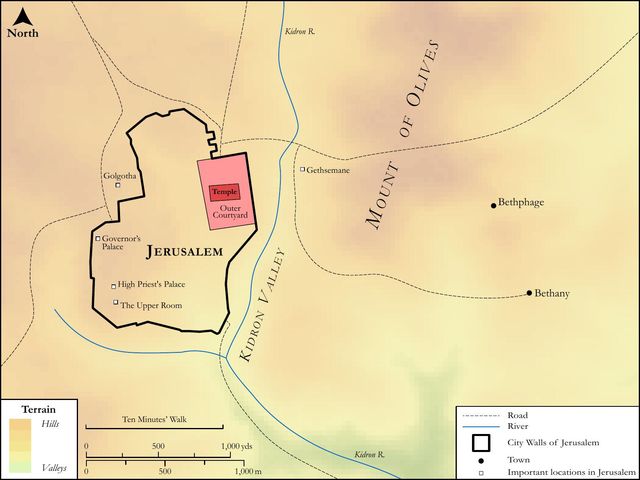
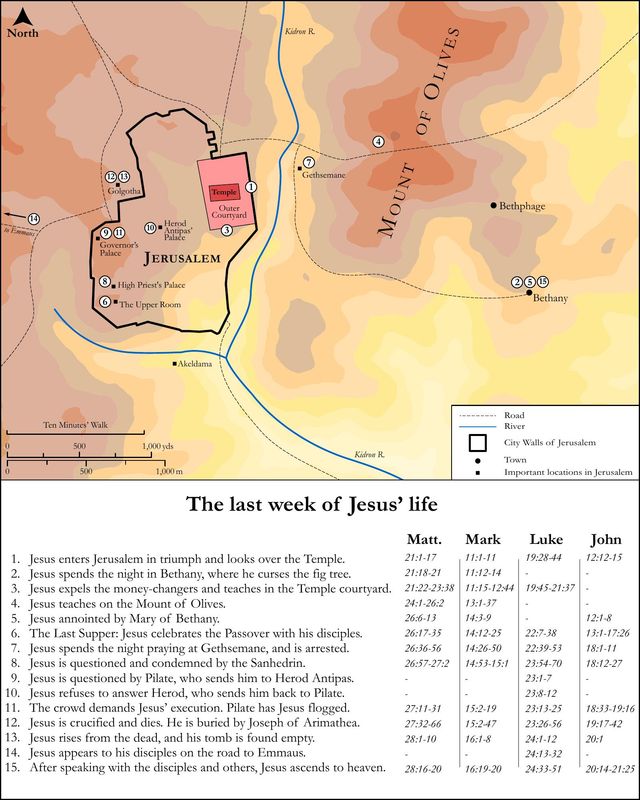
See on the biblical-era map

Study this verse
Public-domain commentary
Matthew Henry
From his Commentary on the Whole Bible. Henry comments on passages, not single verses — this entry covers John 15:26–27. His four-level outline is real structure in the source text, so it is rendered as structure.
Christ having spoken of the great opposition which his gospel was likely to meet with in the world, and the hardships that would be put upon the preachers of it, lest any should fear that they and it would be run down by that violent torrent, he here intimates to all those that were well-wishers to his cause and interest what effectual provision was made for supporting it, both by the principal testimony of the Spirit (Joh 15:26), and the subordinate testimony of the apostles (Joh 15:27), and testimonies are the proper supports of truth.
I.It is here promised that the blessed Spirit shall maintain the cause of Christ in the world, notwithstanding the opposition it should meet with. Christ, when he was reviled, committed his injured cause to his Father, and did not lose by his silence, for the Comforter came, pleaded it powerfully, and carried it triumphantly. "When the Comforter or Advocate is come, who proceedeth from the Father, and whom I will send to supply the want of my bodily presence, he shall testify of me against those that hate me without cause." We have more in this verse concerning the Holy Ghost than in any one verse besides in the Bible; and, being baptized into his name, we are concerned to acquaint ourselves with him as far as he is revealed.
1.Here is an account of him in his essence, or subsistence rather. He is the Spirit of truth, who proceedeth from the Father. Here,
(1.)He is spoken of as a distinct person; not a quality or property, but a person under the proper name of a Spirit, and proper title of the Spirit of truth, a title fitly given him where he is brought in testifying.
(2.)As a divine person, that proceedeth from the Father, by out-goings that were of old, from everlasting. The spirit or breath of man, called the breath of life, proceeds from the man, and by it modified he delivers his mind, by it invigorated he sometimes exerts his strength to blow out what he would extinguish, and blow up what he would excite. Thus the blessed Spirit is the emanation of divine light, and the energy of divine power. The rays of the sun, by which it dispenses and diffuses its light, heat, and influence, proceed from the sun, and yet are one with it. The Nicene Creed says, The Spirit proceedeth from the Father and the Son, for he is called the Spirit of the Son, Gal 4:6. And the Son is here said to send him. The Greek church chose rather to say, from the Father by the Son.
2.In his mission.
(1.)He will come in a more plentiful effusion of his gifts, graces, and powers, than had ever yet been. Christ had been long the ho erchomenos - he that should come; now the blessed Spirit is so.
(2.)I will send him to you from the Father. He had said (Joh 14:16), I will pray the Father, and he shall send you the Comforter, which bespeaks the Spirit to be the fruit of the intercession Christ makes within the veil: here he says, I will send him, which bespeaks him to be the fruit of his dominion within the veil. The Spirit was sent,
[1.]By Christ as Mediator, now ascended on high to give gifts unto men, and all power being given to him.
[2.]From the Father: "Not only from heaven, my Father's house" (the Spirit was given in a sound from heaven, Act 2:2), "but according to my Father's will and appointment, and with his concurring power and authority." [3.] To the apostles to instruct them in their preaching, enable them for working, and carry them through their sufferings. He was given to them and their successors, both in Christianity and in the ministry; to them and their seed, and their seed's seed, according to that promise, Isa 59:21.
3.In his office and operations, which are two: - (1.) One implied in the title given to him; he is the Comforter, or Advocate. An advocate for Christ, to maintain his cause against the world's infidelity, a comforter to the saints against the world's hatred. (2.) Another expressed: He shall testify of me. He is not only an advocate, but a witness for Jesus Christ; he is one of the three that bear record in heaven, and the first of the three that bear witness on earth. Jo1 5:7, Jo1 5:8. He instructed the apostles, and enabled them to work miracles; he indited the scriptures, which are the standing witnesses that testify of Christ, Joh 5:39. The power of the ministry is derived from the Spirit, for he qualifies ministers; and the power of Christianity too, for he sanctifies Christians, and in both testifies of Christ.
II.It is here promised that the apostles also, by the Spirit's assistance, should have the honour of being Christ's witnesses (Joh 15:27):
And you also shall bear witness of me, being competent witnesses, for you have been with me from the beginning of my ministry. Observe here,
1.That the apostles were appointed to be witnesses for Christ in the world. When he had said, The Spirit shall testify, he adds, And you also shall bear witness. Note, The Spirit's working is not to supersede, but to engage and encourage ours. Though the Spirit testify, ministers also must bear their testimony, and people attend to it; for the Spirit of grace witnesses and works by the means of grace. The apostles were the first witnesses that were called in the famous trial between Christ and the prince of this world, which issued in the ejectment of the intruder. This intimates,
(1.)The work cut out for them; they were to attest the truth, the whole truth, and nothing but the truth, concerning Christ, for the recovering of his just right, and the maintaining of his crown and dignity. Though Christ's disciples fled when they should have been witnesses for him upon his trial before the high priest and Pilate, yet after the Spirit was poured out upon them they appeared courageous in vindication of the cause of Christ against the accusations it was loaded with. The truth of the Christian religion was to be proved very much by the evidence of matter of fact, especially Christ's resurrection, of which the apostles were in a particular manner chosen witnesses (Act 10:41), and they bore their testimony accordingly, Act 3:15; Act 5:32. Christ's ministers are his witnesses.
(2.)The honour put upon them hereby - that they should be workers together with God. "The Spirit shall testify of me, and you also, under the conduct of the Spirit, and in concurrence with the Spirit (who will preserve you from mistaking in that which you relate on your own knowledge, and will inform you of that which you cannot know but by revelation), shall bear witness." This might encourage them against the hatred and contempt of the world, that Christ had honoured them, and would own them.
2.That they were qualified to be so: You have been with me from the beginning. They not only heard his public sermons, but had constant private converse with him. He went about doing good, and, while others saw the wonderful and merciful works that he did in their own town and country only, those that went about with him were witnesses of them all. They had likewise opportunity of observing the unspotted purity of his conversation, and could witness for him that they never saw in him, nor heard from him, any thing that had the least tincture of human frailty. Note.
(1.)We have great reason to receive the record which the apostles gave of Christ, for they did not speak by hearsay, but what they had the greatest assurance of imaginable, Pe2 1:16; Jo1 1:1, Jo1 1:3.
(2.)Those are best able to bear witness for Christ that have themselves been with him, by faith, hope, and love, and by living a life of communion with God in him. Ministers must first learn Christ, and then preach him. Those speak best of the things of God that speak experimentally. It is particularly a great advantage to have been acquainted with Christ from the beginning, to understand all things from the very first, Luk 1:3. To have been with him from the beginning of our days. An early acquaintance and constant converse with the gospel of Christ will make a man like a good householder.
Historical interpretation
Historical reception
6 surviving comments on this verse. Each one is dated, so this reads as a timeline rather than a list.
Select a marker to jump to its quote. Markers stagger vertically where authors wrote within a few decades of each other.
(Hom. lxxvii. 2) The disciples might say, If they have heard words from Thee, such as none other hath spoken, if they have seen works of Him, such as none other hath done, and yet have not been convinced, but have hated Thy Father, and Thee with Him, why dost Thou send us to preach? How shall we be believed? Such thoughts as these He now answers: But when the Comforter is come, Whom I will send unto you from the Father, even the Spirit of Truth which proceedeth from the Father, he shall testify of Me.
(Hom. lxxvii. 3) He calls Him not the Holy Spirit, but the Spirit of truth, to show the perfect faith that was due to Him. He knew that He proceedeth from the Father, for He knew all things; He knew where He Himself came from, as He says of Himself above, I know whence I came, and whither I go. (John 8:14)
In matters of belief, the very thing that gives one a right to be believed is the fact of having learned what you believe from eyewitnesses.… Therefore John also says, “I saw and bore record that this is the Son of God.” … Accordingly, Jesus gave them permission to rest many details of their testimony on the fact of their having seen them when he said, “And you also are witnesses because you have been with me from the beginning.” The apostles themselves also often speak in a similar way. … For they more readily received the testimony of people who had been his companions because the notion of the Spirit was as yet very much beyond them. Therefore John also at that time, in his Gospel, speaking of the blood and water, said, he himself saw it, making the fact of his having seen it equivalent to the highest testimony for them, although the witness of the Spirit is more certain than the evidence of sight, but not so with unbelievers.
Which Paul doth also. For when many wondered how that the Jews believed not, he brings in Prophets foretelling it of old, and declaring the cause; that their wickedness and pride were the cause of their unbelief. "Well then; if they kept not Thy saying, neither will they keep ours; if they persecuted Thee, therefore they will persecute us also; if they saw signs, such as none other man wrought; if they heard words such as none other spake, and profited nothing; if they hate Thy Father and Thee with Him, wherefore," saith one, "hast Thou sent us in among them? How after this shall we be worthy of belief? which of our kindred will give heed to us?" That they may not therefore be troubled by such thoughts, see what sort of comfort he addeth.
"When the Comforter is come, whom I will send unto you from the Father, even the Spirit of Truth, which proceedeth from the Father, He shall testify of Me. And ye also shall bear witness, because ye have been with Me from the beginning."
"He shall be worthy of belief, for He is the Spirit of Truth." On this account He called It not "Holy Spirit," but "Spirit of Truth." But the, "proceedeth from the Father," showeth that He knoweth all things exactly, as Christ also saith of Himself, that "I know whence come and whither I go", speaking in that place also concerning truth. "Whom will send." Behold, it is no longer the Father alone, but the Son also who sendeth. "And ye too," He saith, "have a right to be believed, who have been with Me, who have not heard from others." Indeed, the Apostles confidently rely on this circumstance, saying, "We who did eat and drink with Him." And to show that this was not merely said to please, the Spirit beareth witness to the words spoken.
When you speak, the Spirit, through its testimony, will confirm your words with evident signs, as also the apostle said, “My speech and my proclamation were not with plausible words of wisdom but with a demonstration of the Spirit and of power.” The signs that happened through the power of the Spirit in the name of the Lord showed the greatness of him who underwent passion and, at the same time, the foolishness of those who dared crucify him.
"And ye also," He says," shall bear witness, because ye have been with me from the beginning." The Holy Spirit shall bear witness, and so also shall ye. For, just because ye have been with me from the beginning, they can preach what ye know; which ye cannot do at present, because the fullness of that Spirit is not yet present within you. "He therefore shall testify of me, and ye also shall bear witness:" for the love of God shed abroad in your hearts by the Holy Spirit, who shall be given unto you, will give you the confidence needful for such witness-bearing. And that certainly was still wanting to Peter, when, terrified by the question of a lady's maid, he could give no true testimony; but, contrary to his own promise, was driven by the greatness of his fear thrice to deny Him. But there is no such fear in love, for perfect love casteth out fear. In fine, before the Lord's passion, his slavish fear was questioned by a bond-woman; but after the Lord's resurrection, his free love by the very Lord of freedom: and so on the one occasion he was troubled, on the other tranquillized; there he denied the One he had loved, here he loved the One he had denied. But still even then that very love was weak and straitened, till strengthened and expanded by the Holy Spirit. And then that Spirit, pervading him thus with the fullness of richer grace, kindled his hitherto frigid heart to such a witness-bearing for Christ, and unlocked those lips that in their previous tremor had suppressed the truth, that, when all on whom the Holy Spirit had descended were speaking in the tongues of all nations to the crowds of Jews collected around, he alone broke forth before the others in the promptitude of his testimony in behalf of the Christ, and confounded His murderers with the account of His resurrection. And if any one would enjoy the pleasure of gazing on a sight so charming in its holiness, let him read the Acts of the Apostles: and there let him be filled with amazement at the preaching of the blessed Peter, over whose denial of his Master he had just been mourning; there let him behold that tongue, itself translated from diffidence to confidence, from bondage to liberty, converting to the confession of Christ the tongues of so many of His enemies, not one of which he could bear when lapsing himself into denial. And what shall I say more? In him there shone forth such an effulgence of grace, and such a fullness of the Holy Spirit, and such a weight of most precious truth poured from the lips of the preacher, that he transformed that vast multitude of Jews who were the adversaries and murderers of Christ into men that were ready to die for His name, at whose hands he himself was formerly afraid to die with his Master. All this did that Holy Spirit when sent, who had previously only been promised. And it was these great and marvellous gifts of His own that the Lord foresaw, when He said, "They have both seen and hated both me and my Father: that the word might be fulfilled that is written in their law, They hated me without a cause. But when the Comforter is come, whom I will send unto you from the Father, even the Spirit of truth, who proceedeth from the Father, He shall testify of me: and ye also shall bear witness." For He, in bearing witness Himself, and inspiring such witnesses with invincible courage, divested Christ's friends of their fear, and transformed into love the hatred of His enemies.
But when the Spirit bears witness, you yourselves also, He says, will bear witness with Him. For you have been eye-witnesses and spectators of what I have done among My own, being even with Me as My disciples.
Continue studying John 15:27 across the web’s major study libraries — every link below opens this exact verse, chapter, or book on the destination site.
Read & Compare
 BibleGatewayThis verse in more than 200 translations and 70 languages.
 Bible.comThe YouVersion reader — hundreds of translations, reading plans, and highlights.
 ESV.orgCrossway's official English Standard Version reader.
 NET BibleThe NET translation with 60,000+ translators' notes on every rendering decision.
 STEP BibleTyndale House's free study tool — original text, vocabulary, and scholarly resources.
 BibliaLogos Bible Software's free web reader.
 USCCBThe New American Bible (Revised Edition) with the U.S. bishops' study notes.
Commentaries
 BibleHub CommentariesDozens of classic commentaries on this verse, gathered on one page.
 StudyLightMore than 100 commentary sets — the largest collection on the web.
 BibleRefPlain-English commentary on what this verse means, verse by verse.
 Enduring WordDavid Guzik's free commentary on this chapter, widely used by Bible teachers.
 Bible Study ToolsVerse commentary alongside Greek and Hebrew study aids.
Original Language & Research
- BibleHub InterlinearThe verse word by word — original language, transliteration, and English.
- BibleHub LexiconEvery word's original-language definition and Strong's entry.
 Blue Letter BibleDeep-study tools — Strong's numbers, concordance, and word studies.
 CNTR CollationThe earliest Greek manuscripts of this verse, collated letter by letter.
Sermons, Hymns & Audio


TrulyRandomVerse is not affiliated with these sites and doesn’t control their content. They’re linked because they’re genuinely useful.
Summary
In John 15:27, Jesus commissions His disciples to bear witness to Him, specifically highlighting their unique qualification for this task: their intimate, firsthand experience of His earthly ministry "from the beginning." This verse underscores the foundational role of apostolic eyewitness testimony, empowered by the Holy Spirit (as mentioned in the preceding verse), in establishing the truth of the Gospel message and extending Christ's kingdom into the world.
Context
ShowHideLiterary Context
John 15:27 is the concluding statement of a significant section within Jesus' Farewell Discourse (John 13-17), delivered to His disciples in the upper room on the night before His crucifixion. This particular segment, beginning around John 15:18, addresses the world's hatred and persecution that the disciples will inevitably face because of their association with Jesus. Jesus reassures them by promising the coming of the Holy Spirit, the "Spirit of truth," who will testify about Him (John 15:26). Verse 27 then establishes a dual testimony: the internal, divine witness of the Spirit and the external, human witness of the disciples. This dual witness provides a robust and credible foundation for the Gospel, preparing the disciples for their post-resurrection mission.
Historical & Cultural Context
In ancient Jewish and Roman legal systems, the concept of "witness" (Greek: martys) was crucial for establishing truth. Testimony from multiple, credible eyewitnesses was highly valued and often required for conviction or validation. Jesus' emphasis on the disciples having "been with me from the beginning" directly appeals to this cultural understanding of credible, firsthand accounts. Their long-term, intimate association with Jesus throughout His public ministry, from His baptism to His resurrection, positioned them as uniquely qualified to attest to His identity, teachings, miracles, and ultimately, His redemptive work. This was not merely a spiritual experience but a verifiable historical reality that they were called to proclaim.
Key Themes
ShowHideThis verse contributes significantly to several key themes prevalent in John's Gospel and the broader New Testament. Firstly, it highlights the authority of eyewitness testimony, emphasizing that the foundational truth of Christianity rests on verifiable accounts from those who personally encountered Jesus. This theme is echoed in the opening of 1 John 1:1-3, where the apostle explicitly states he is writing about what he has "heard, which we have seen with our eyes, which we have looked upon, and our hands have handled." Secondly, the verse underscores the theme of empowered witness, as the disciples' human testimony is not self-sufficient but is inextricably linked to and validated by the Holy Spirit's divine witness promised in John 15:26. This divine enablement is crucial for their mission, as further elaborated in Acts 1:8, where Jesus promises power when the Holy Spirit comes upon them, enabling them to be His witnesses "to the ends of the earth." Finally, the verse serves as a commissioning for mission and evangelism, calling the disciples to their future role as heralds of the good news, despite the anticipated opposition from the world, a theme Jesus repeatedly warns about in John 15:18-25.
Exposition and Analysis
ShowHideKey Word Analysis
ShowHideThis verb (G3140) means "to be a witness, to testify, to give evidence." It carries the weight of legal testimony, implying the presentation of factual information from direct observation. The term is deeply significant in the New Testament, often associated with the proclamation of the Gospel and, tragically, with suffering or death for that testimony (hence its connection to the English word "martyr"). Here, it signifies the disciples' active role in proclaiming the truth about Jesus based on their personal experience.
This preposition (G3326) denotes accompaniment, association, or proximity. In this context, it emphasizes the disciples' continuous and intimate presence alongside Jesus throughout His ministry. It's not merely a casual acquaintance but a close, shared experience that forms the basis of their credible testimony. This "being with" Jesus implies shared life, shared teachings, and shared experiences that uniquely qualify them.
This noun (G746) refers to a commencement, the first point in time or order. In the context of Jesus' ministry, "from the beginning" typically refers to the start of His public ministry, likely from His baptism by John the Baptist or the calling of His first disciples. This phrase underscores the comprehensiveness and longevity of the disciples' observation, ensuring their witness was not based on isolated incidents but on a sustained, firsthand engagement with Jesus' entire public life and teachings.
Verse Breakdown
ShowHide"And ye also shall bear witness,"
This clause serves as a direct command and commissioning. The "also" (G2532, kaí) connects their witness directly to the Holy Spirit's testimony mentioned in the preceding verse (John 15:26), indicating a complementary, not a redundant, role. The disciples are not merely passive recipients of truth but active proclaimers, called to articulate what they have seen and heard. Their witness is essential for the spread of the Gospel.
"because ye have been with me from the beginning."
This clause provides the foundational reason and unique qualification for their witness. Their credibility stems from their personal, continuous, and intimate association with Jesus throughout His earthly ministry. This firsthand experience distinguishes them from all others and establishes their testimony as authoritative and reliable. It highlights the historical grounding of the Christian faith in the life and deeds of Jesus Christ, as observed by those closest to Him.
Literary Devices
ShowHideJohn 15:27 employs several significant literary devices. The most prominent is Commissioning, as Jesus directly instructs and empowers His disciples for their future role as His witnesses. This is not merely a prediction but an active mandate, setting the stage for the apostolic mission described in the book of Acts. Closely related is Justification, where Jesus provides a clear and compelling reason for their unique role: their sustained, intimate presence with Him from the outset of His ministry. This justification underscores the Credibility of their future testimony, appealing to the ancient understanding of eyewitness accounts as the most reliable form of evidence. The phrase "from the beginning" also functions as a form of Temporal Framing, emphasizing the comprehensive scope of their observation, from the initial stages of Jesus' public life through its culmination. This deepens the authority of their witness, suggesting a full and complete understanding of all that Jesus said and did.
Theological and Thematic Connections
ShowHideJohn 15:27 is profoundly significant for understanding the nature of Christian truth and its transmission. It establishes the apostolic witness as foundational and authoritative, rooted in direct encounter with the incarnate Christ. This verse highlights the Trinitarian cooperation in salvation history: the Father sends the Son, the Son reveals the Father, the Spirit testifies of the Son, and the disciples, empowered by the Spirit, testify of the Son. The disciples' unique position as eyewitnesses ensured the integrity and historical veracity of the Gospel message, providing a verifiable account against which all future claims about Jesus could be measured. Their witness, therefore, is not merely a recounting of facts but a Spirit-empowered proclamation of divine truth, inviting others into a saving relationship with Christ.
Reflection and Application
ShowHideWhile we, as believers today, were not physically "with Jesus from the beginning" in the same way the apostles were, John 15:27 still profoundly shapes our understanding of witness. Our testimony is built upon the faithful witness of the apostles, preserved for us in the inspired Scriptures. We are called to bear witness to the Christ revealed in the Bible, illuminated by the Holy Spirit, and experienced personally in our lives. This means diligently engaging with the written Word, allowing it to shape our understanding of Jesus, and then sharing how His truth has transformed us. Our personal stories of encountering Christ's power, love, and grace become powerful complements to the apostolic witness, demonstrating the living reality of the Gospel in the present day. Just as the Spirit empowered the first disciples, He empowers us today to speak with conviction, clarity, and compassion, making our lives a living testimony to the Lord Jesus Christ.
Questions for Reflection
ShowHideFAQ
ShowHideWhat is the significance of the disciples being "with me from the beginning"?
ShowHideThe phrase "with me from the beginning" (G575, apó and G746, archḗ) signifies the disciples' unique qualification as firsthand, continuous eyewitnesses to Jesus' entire public ministry. This long-term, intimate association provided them with comprehensive knowledge of His teachings, miracles, character, and ultimately, His death and resurrection. In a culture that valued direct testimony, their sustained presence with Jesus established their unparalleled credibility as authentic proclaimers of the Gospel. It ensured that the foundational message of Christianity was rooted in historical fact, observed and transmitted by those who lived alongside Jesus.
How does the disciples' witness relate to the Holy Spirit's witness mentioned in John 15:26?
ShowHideThe disciples' witness is complementary to, not independent of, the Holy Spirit's witness. John 15:26 states that the Spirit of truth will "bear witness about me," and then John 15:27 adds, "And ye also shall bear witness." This establishes a dual testimony: the Spirit provides the internal, divine validation and empowerment, while the disciples provide the external, human, and historical account. The Spirit enables the disciples to speak with conviction and illuminates the truth for those who hear, making their human testimony supernaturally effective. Without the Spirit, their witness would lack divine power; without their human witness, the historical facts of Jesus' life would not be proclaimed. This partnership is crucial for the spread of the Gospel, as seen in Acts 1:8.
Christ-Centered Fulfillment
ShowHideJohn 15:27 finds its ultimate Christ-centered fulfillment in the very person and work of Jesus, to whom the disciples are called to bear witness. Their testimony is not about themselves or their experiences in isolation, but entirely about Christ—His divine identity, His redemptive mission, His sacrificial death, and His glorious resurrection. The disciples were "with" Jesus not merely as observers, but as participants in the unfolding of God's redemptive plan, culminating in the Lamb of God who takes away the sin of the world. Their witness, empowered by the Spirit of Christ, serves to reveal Him as the promised Messiah, the fulfillment of Old Testament prophecies, and the unique mediator between God and humanity (1 Timothy 2:5). Through their faithful proclamation, Christ continues to be made known to every generation, drawing all people to Himself (John 12:32). Thus, their witness is a conduit for the ongoing reign and redemptive power of Christ in the world, ensuring that the good news of His salvation echoes through time, inviting all to believe in the One whom God has sent (John 3:16).