


Exodus 19:7
Bible text: King James Version (1769 Blayney text) · Public domain
Bible text: Berean Standard Bible · Public domain
Bible text: American Standard Version (1901) · Public domain
Bible text: World English Bible, Messianic edition · Public domain
Bible text: Geneva Bible (1599) · Public domain
Bible text: Young's Literal Translation · Public domain
- וַיָּבֹאvai·ya·Vo'and he wentH935Conj-w ¦ V-Qal-ConsecImperf-3msVerb Qal Consecutive Imperfect 3rd Singular Masculineוַandיָּבֹאhe went
- מֹשֶׁהmo·ShehMosesH4872N-proper-mNoun Proper Masculine
- וַיִּקְרָאvai·yik·Ra'and he summonedH7121Conj-w ¦ V-Qal-ConsecImperf-3msVerb Qal Consecutive Imperfect 3rd Singular Masculineוַandיִּקְרָאhe summoned
- לְזִקְנֵיle·zik·Nei<to> [the] elders ofH2205Prep-l ¦ Adj-mpcAdjective Plural Masculine Constructלְ<to>זִקְנֵי[the] elders of
- הָעָםha·'Amthe peopleH5971Art ¦ N-msNoun Singular Masculine Absoluteהָtheעָםpeople
- וַיָּשֶׂםvai·Ya·semand he setH7760Conj-w ¦ V-Qal-ConsecImperf-3msVerb Qal Consecutive Imperfect 3rd Singular Masculineוַandיָּשֶׂםhe set
- לִפְנֵיהֶםlif·nei·Hem<to> before themH6440Prep-l ¦ N-mpc ¦ 3mpNoun Plural Masculine Constructלִ<to>פְנֵיbeforeהֶםthem
- אֵת'et<obj.>H853DirObjMParticle Object Indicator
- כָּלkolallH3605N-mscNoun Singular Masculine Construct
- הַדְּבָרִיםha·de·va·Rimthe wordsH1697Art ¦ N-mpNoun Plural Masculine Absoluteהַtheדְּבָרִיםwords
- הָאֵלֶּהha·'E·leh<the> theseH428Art ¦ PrtParticle Demonstrativeהָ<the>אֵלֶּהthese
- אֲשֶׁר'a·SherwhichH834RelParticle Relative
- צִוָּהוּtzi·Va·huhe had commanded himH6680V-Piel-Perf-3ms ¦ 3msVerb Piel Perfect 3rd Singular Masculineצִוָּhe had commandedהוּhim
- יְהוָהYah·wehYahwehH3068N-properNoun Proper Title
English is a literal word-by-word gloss of the Hebrew, not the KJV's wording. Why?
This is the original text the KJV's translators worked from — each Hebrew word with its own literal English meaning in this verse, prepared by scholars at Tyndale House, Cambridge. The KJV translates whole sentences, not word by word, so its wording differs: one Hebrew word can become several English words, and the KJV may choose “the LORD” where the gloss reads “Yahweh”. Both are faithful — they answer different questions. For the KJV's own rendering, switch to the KJV text.
Details
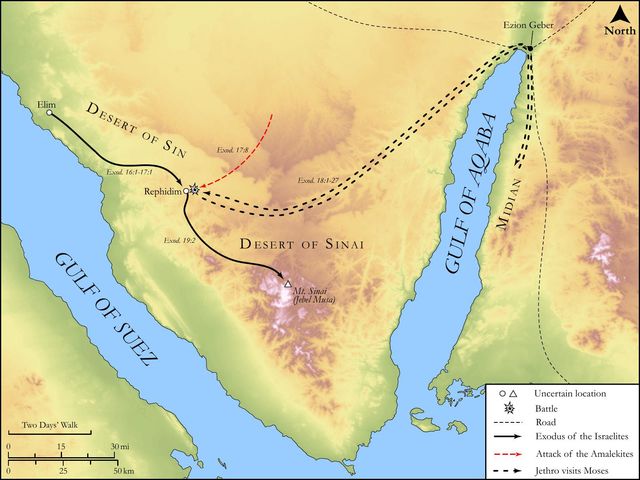
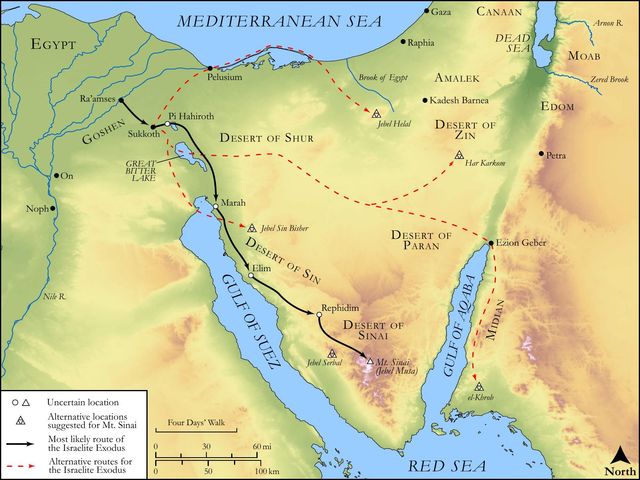
See on the biblical-era maps

Study this verse
Public-domain commentary
Matthew Henry
From his Commentary on the Whole Bible. Henry comments on passages, not single verses — this entry covers Exodus 19:1–8. His four-level outline is real structure in the source text, so it is rendered as structure.
Here is, I. The date of that great charter by which Israel was incorporated. 1. The time when it bears date (Exo 19:1) - in the third month after they came out of Egypt. It is computed that the law was given just fifty days after their coming out of Egypt, in remembrance of which the feast of Pentecost was observed the fiftieth day after the passover, and in compliance with which the Spirit was poured out upon the apostles at the feast of pentecost, fifty days after the death of Christ. In Egypt they had spoken of a three days' journey into the wilderness to the place of their sacrifice (Exo 5:3), but it proved to be almost a two months' journey; so often are we out in the calculation of times, and things prove longer in the doing than we expected. 2. The place whence it bears date - from Mount Sinai, a place which nature, not art, had made eminent and conspicuous, for it was the highest in all that range of mountains. Thus God put contempt upon cities, and palaces, and magnificent structures, setting up his pavilion on the top of a high mountain, in a waste and barren desert, there to carry on this treaty. It is called Sinai, from the multitude of thorny bushes that overspread it.
II.The charter itself.
Moses was called up the mountain (on the top of which God had pitched his tent, and at the foot of which Israel had pitched theirs), and was employed as the mediator, or rather no more than the messenger of the covenant: Thus shalt thou say to the house of Jacob, and tell the children of Israel, Exo 19:3. Here the learned bishop Patrick observes that the people are called by the names both of Jacob and Israel, to remind them that those who had lately been as low as Jacob when he went to Padan-aram had now grown as great as God made him when he came thence (justly enriched with the spoils of him that had oppressed him) and was called Israel. Now observe,
1.That the maker, and first mover, of the covenant, is God himself. Nothing was said nor done by this stupid unthinking people themselves towards this settlement; no motion made, no petition put up for God's favour, but this blessed charter was granted ex mero motu - purely out of God's own good-will. Note, In all our dealings with God, free grace anticipates us with the blessings of goodness, and all our comfort is owing, not to our knowing God, but rather to our being known of him, Gal 4:9. We love him, visit him, and covenant with him, because he first loved us, visited us, and covenanted with us. God is the Alpha, and therefore must be the Omega.
2.That the matter of the covenant is not only just and unexceptionable, and such as puts no hardship upon them, but kind and gracious, and such as gives them the greatest privileges and advantages imaginable.
(1.)He reminds them of what he had done for them, Exo 19:4. He had righted them, and avenged them upon their persecutors and oppressors: "You have seen what I did unto the Egyptians, how many lives were sacrificed to Israel's honour and interests:" He had given them unparalleled instances of his favour to them, and his care of them: I bore you on eagles' wings, a high expression of the wonderful tenderness God had shown for them. It is explained, Deu 32:11, Deu 32:12. It denotes great speed. God not only came upon the wing for their deliverance (when the set time was come, he rode on a cherub, and did fly), but he hastened them out, as it were, upon the wing. He did it also with great ease, with the strength as well as with the swiftness of an eagle: those that faint not, nor are weary, are said to mount up with wings as eagles, Isa 40:31. Especially, it denotes God's particular care of them and affection to them. Even Egypt, that iron furnace, was the nest in which these young ones were hatched, where they were first formed as the embryo of a nation; when, by the increase of their numbers, they grew to some maturity, they were carried out of that nest. Other birds carry their young in their talons, but the eagle (they say) upon her wings, so that even those archers who shoot flying cannot hurt the young ones, unless they first shoot through the old one. Thus, in the Red Sea, the pillar of cloud and fire, the token of God's presence, interposed itself between the Israelites and their pursuers (lines of defence which could not be forced, a wall which could not be penetrated): yet this was not all; their way so paved, so guarded, was glorious, but their end much more so: I brought you unto myself. They were brought not only into a state of liberty and honour, but into covenant and communion with God. This, this was the glory of their deliverance, as it is of ours by Christ, that he died, the just for the unjust, that he might bring us to God. This God aims at in all the gracious methods of his providence and grace, to bring us back to himself, from whom we have revolted, and to bring us home to himself, in whom alone we can be happy. He appeals to themselves, and their own observation and experience, for the truth of what is here insisted on: You have seen what I did; so that they could not disbelieve God, unless they would first disbelieve their own eyes. They saw how all that was done was purely the Lord's doing. It was not they that reached towards God, but it was he that brought them to himself. Some have well observed that the Old Testament church is said to be borne upon eagles' wings, denoting the power of that dispensation, which was carried on with a high hand an out-stretched arm; but the New Testament church is said to be gathered by the Lord Jesus, as a hen gathers her chickens under her wings (Mat 23:37), denoting the grace and compassion of that dispensation, and the admirable condescension and humiliation of the Redeemer.
(2.)He tells them plainly what he expected and required from them in one word, obedience (Exo 19:5), that they should obey his voice indeed and keep his covenant. Being thus saved by him, that which he insisted upon was that they should be ruled by him. The reasonableness of this demand is, long after, pleaded with them, that in the day he brought them out of the land of Egypt this was the condition of the covenant, Obey my voice (Jer 7:23); and this he is said to protest earnestly to them, Jer 11:4, Jer 11:7. Only obey indeed, not in profession and promise only, not in pretence, but in sincerity. God had shown them real favours, and therefore required real obedience.
(3.)He assures them of the honour he would put upon them, and the kindness he would show them, in case they did thus keep his covenant (Exo 19:5, Exo 19:6): Then you shall be a peculiar treasure to me. He does not specify any one particular favour, as giving them the land of Canaan, or the like, but expresses it in that which was inclusive of all happiness, that he would be to them a God in covenant, and they should be to him a people.
[1.]God here asserts his sovereignty over, and propriety in, the whole visible creation: All the earth is mine. Therefore he needed them not; he that had so vast a dominion was great enough, and happy enough, without concerning himself for so small a demesne as Israel was. All nations on the earth being his, he might choose which he pleased for his peculiar, and act in a way of sovereignty.
[2.]He appropriates Israel to himself, First, As a people dear unto him. You shall be a peculiar treasure; not that God was enriched by them, as a man is by his treasure, but he was pleased to value and esteem them as a man does his treasure; they were precious in his sight and honourable (Isa 43:4); he set his love upon them (Deu 7:7), took them under his special care and protection, as a treasure that is kept under lock and key. He looked upon the rest of the world but as trash and lumber in comparison with them. By giving them divine revelation, instituted ordinances, and promises inclusive of eternal life, by sending his prophets among them, and pouring out his Spirit upon them, he distinguished them from, and dignified them above, all people. And this honour have all the saints; they are unto God a peculiar people (Tit 2:14), his when he makes up his jewels. Secondly, As a people devoted to him, to his honour and service (Exo 19:6), a kingdom of priests, a holy nation. All the Israelites, if compared with other people, were priests unto God, so near were they to him (Psa 148:14), so much employed in his immediate service, and such intimate communion they had with him. When they were first made a free people it was that they might sacrifice to the Lord their God, as priests; they were under God's immediate government, and the tendency of the laws given them was to distinguish them from others, and engage them for God as a holy nation. Thus all believers are, through Christ, made to our God kings and priests (Rev 1:6), a chosen generation, a royal priesthood, Pe1 2:9.
III.Israel's acceptance of this charter, and consent to the conditions of it.
1.Moses faithfully delivered God's message to them (Exo 19:7): He laid before their faces all those words; he not only explained to them what God had given him in charge, but he put it to their choice whether they would accept these promises upon these terms or no. His laying it to their faces denotes his laying it to their consciences.
2.They readily agreed to the covenant proposed. They would oblige themselves to obey the voice of God, and take it as a great favour to be made a kingdom of priests to him. They answered together as one man, nemine contradicente - without a dissentient voice (Exo 19:8): All that the Lord hath spoken we will do. Thus they strike the bargain, accepting the Lord to be to them a God, and giving up themselves to be to him a people. O that there had been such a heart in them!
3.Moses, as a mediator, returned the words of the people to God, Exo 19:8. Thus Christ, the Mediator between us and God, as a prophet reveals God's will to us, his precepts and promises, and then as a priest offers up to God our spiritual sacrifices, not only of prayer and praise, but of devout affections and pious resolutions, the work of his own Spirit in us. Thus he is that blessed days-man who lays his hand upon us both.
Continue studying Exodus 19:7 across the web’s major study libraries — every link below opens this exact verse, chapter, or book on the destination site.
Read & Compare
 BibleGatewayThis verse in more than 200 translations and 70 languages.
 Bible.comThe YouVersion reader — hundreds of translations, reading plans, and highlights.
 ESV.orgCrossway's official English Standard Version reader.
 NET BibleThe NET translation with 60,000+ translators' notes on every rendering decision.
 STEP BibleTyndale House's free study tool — original text, vocabulary, and scholarly resources.
 BibliaLogos Bible Software's free web reader.
 USCCBThe New American Bible (Revised Edition) with the U.S. bishops' study notes.
Commentaries
 BibleHub CommentariesDozens of classic commentaries on this verse, gathered on one page.
 StudyLightMore than 100 commentary sets — the largest collection on the web.
 BibleRefPlain-English commentary on what this verse means, verse by verse.
 Enduring WordDavid Guzik's free commentary on this chapter, widely used by Bible teachers.
 Bible Study ToolsVerse commentary alongside Greek and Hebrew study aids.
Original Language & Research
- BibleHub InterlinearThe verse word by word — original language, transliteration, and English.
- BibleHub LexiconEvery word's original-language definition and Strong's entry.
 Blue Letter BibleDeep-study tools — Strong's numbers, concordance, and word studies.
 SefariaThe Hebrew text with Rashi and centuries of Jewish commentary.
Sermons, Hymns & Audio


TrulyRandomVerse is not affiliated with these sites and doesn’t control their content. They’re linked because they’re genuinely useful.
Summary
Exodus 19:7 marks a pivotal moment in Israel's history, detailing Moses' faithful and immediate obedience in conveying God's covenant proposal to the Israelite elders upon his descent from Mount Sinai. After his divine encounter, Moses convened the representative leaders of the people, transparently presenting "all these words" that the LORD had commanded him. This crucial step established the foundation for Israel's corporate decision to enter into a covenant relationship with Yahweh, underscoring the clarity of divine communication and the people's collective responsibility to respond to His revealed will.
Context
ShowHideLiterary Context
Exodus 19:7 is strategically positioned at a critical juncture in the biblical narrative, immediately following Israel's arrival at the base of Mount Sinai, as described in Exodus 19:1-2. Prior to this verse, God had summoned Moses to the mountain and delivered a profound message outlining His gracious intentions for His people. This divine address recalled their miraculous deliverance from Egyptian bondage and proposed a unique covenant relationship, famously stating, "You yourselves have seen what I did to the Egyptians, and how I bore you on eagles' wings and brought you to myself" (Exodus 19:4). God offered them the unparalleled status of a "peculiar treasure," a "kingdom of priests," and a "holy nation" contingent upon their obedience to His voice and adherence to His covenant, as detailed in Exodus 19:5-6. Moses' subsequent descent and the gathering of the elders in verse 7 represent the essential human response to this divine initiative, bridging the gap between God's sovereign declaration and the people's reception and decision. It directly precedes the nation's collective affirmation in Exodus 19:8 and the subsequent preparations for God's awe-inspiring descent upon the mountain.
Historical & Cultural Context
At the historical moment of Exodus 19, the Israelites, recently liberated from centuries of slavery in Egypt, were encamped at the foot of Mount Sinai, a location imbued with immense theological significance as the destined site of the covenant. The "elders of the people" (Hebrew: זְקֵנִים, zəqēnîm) were not merely older individuals but recognized and respected leaders within the intricate tribal and family structures of Israel. They functioned as vital representatives, authoritative judges, and official spokesmen for their respective clans and families. Their role was indispensable in mediating communication between the central leadership (Moses) and the broader populace, ensuring that crucial messages and national decisions were effectively disseminated and corporately received. This system of leadership was a common feature in Israel and among the nations of that day, where elders often wielded significant authority and bore responsibility for the welfare, governance, and judicial matters of their communities. Moses' act of convening them and presenting God's "words" was a formal, culturally appropriate, and legally significant method of initiating a national dialogue regarding the terms of a proposed covenant—a foundational legal and social agreement that would profoundly define Israel's identity and their unique relationship with Yahweh.
Key Themes
ShowHideExodus 19:7 contributes significantly to several overarching themes within the book of Exodus and the broader Pentateuch. Firstly, it highlights the theme of Divine Initiative and Revelation, demonstrating that God Himself initiates the covenant relationship with Israel, revealing His character and His will through direct communication with Moses (Exodus 19:3-6). Secondly, it underscores the critical theme of Mediation, with Moses serving as the indispensable intermediary between the holy God and His people, faithfully transmitting the divine message without alteration. This mediatorial role is central to the Sinai narrative and foreshadows future mediatorial figures. Thirdly, the verse emphasizes Corporate Responsibility and Covenant, as the elders, representing the entire nation, are called to hear and respond to God's terms. The covenant is not merely an individual agreement but a national one, requiring a collective assent from the people, as anticipated in Exodus 19:8. This moment sets the stage for Israel's identity as a covenant people, bound by divine law and promise.
Exposition and Analysis
ShowHideKey Word Analysis
ShowHideFrom דָבַר; a word; by implication, a matter (as spoken of) or thing. In this context, "all these words" refers to the entire divine message and covenant proposal that the LORD had just delivered to Moses on Mount Sinai (Exodus 19:3-6). The term dâbâr carries significant weight, often denoting not merely spoken sounds but authoritative pronouncements, decrees, or matters of importance. Here, it emphasizes the divine origin and binding nature of the covenant terms, highlighting that what Moses conveyed was a complete and authoritative revelation from God, not a human suggestion or negotiation.
From זָקֵן; old; aged, ancient (man), elder(-est), old (man, men and...women), senator. The "elders" were the recognized and respected leaders within the tribal and family structures of Israel. They were chosen not just for their age but for their wisdom, experience, and ability to represent and govern the community. Moses' specific act of calling them signifies a formal and official presentation of God's message to the legitimate leadership of the nation, who were responsible for disseminating it to the wider populace and facilitating their corporate response. Their presence lent authority and legitimacy to the proceedings.
H7760 (sûwm, to put) and H6440 (pânîym, face). This is a powerful Hebrew idiom, literally meaning "and he placed before their faces." It signifies a direct, open, and unambiguous presentation. Moses did not obscure, withhold, or modify God's words; rather, he presented them fully, transparently, and clearly for the elders' immediate consideration and response. The phrase underscores the divine expectation for a clear and uncoerced decision from the people through their representatives, emphasizing that the message was made fully accessible and demanded their direct attention.
Verse Breakdown
ShowHide"And Moses came"
This phrase denotes Moses' immediate descent from Mount Sinai following his profound encounter with God. It underscores his prompt obedience and readiness to fulfill his crucial mediatorial role, effectively bridging the divine realm with human reception. His swift action highlights the urgency and importance of the message he carried.
"and called for the elders of the people"
Upon returning to the Israelite camp, Moses did not address the entire congregation directly but specifically convened the elders. This action demonstrates respect for the established hierarchical structure of Israelite society and acknowledges the elders' representative function. As recognized leaders, they were the appropriate intermediaries through whom significant national matters were communicated, deliberated, and then conveyed to the broader populace.
"and laid before their faces"
This vivid action signifies a direct, open, and transparent presentation of God's message. It implies that the divine words were not hidden, veiled, or delivered in an obscure manner, but were made fully accessible and understandable to the elders. This act demanded their full attention and conscious consideration, setting the stage for a clear and informed response from the nation.
"all these words which the LORD commanded him"
This concluding phrase emphatically underscores both the completeness and the divine authority of the message. Moses faithfully relayed the entirety of God's instructions and covenant proposal, without any addition, subtraction, or personal interpretation. The explicit emphasis on "the LORD commanded him" reinforces that the message originated directly from God Himself (Yᵉhôvâh), establishing its binding nature and the absolute necessity of Israel's obedient response.
Literary Devices
ShowHideExodus 19:7 primarily employs Mediation and Preparatory Action. Moses functions as the central Mediator, bridging the immense gap between the transcendent, holy God and the human community of Israel. His physical descent from the mountain and subsequent gathering of the elders visually and narratively represent this crucial mediatorial role. The verse also serves as a critical Preparatory Action, meticulously setting the stage for the formal covenant ceremony and the subsequent giving of the Law at Sinai. It masterfully builds Anticipation for the people's collective response to God's covenant proposal and the impending, more direct encounter with God's presence upon the mountain. Furthermore, the clear, direct presentation of God's words, powerfully implied by the idiom "laid before their faces," highlights the divine commitment to Transparency and the expectation of Accountability inherent in God's dealings with His chosen people.
Theological and Thematic Connections
ShowHideExodus 19:7 profoundly illustrates the interconnected themes of divine initiative, faithful mediation, and corporate responsibility within the covenant relationship. God, in His sovereign grace and unwavering love, initiates the covenant with Israel, revealing His character, His past acts of deliverance, and His future intentions through His chosen messenger, Moses. This act of divine communication underscores God's profound desire for a relationship with His people, one founded on clearly revealed truth and requiring a conscious, informed choice. Moses' immediate and transparent relaying of "all these words" demonstrates the critical role of faithful spiritual leadership in conveying God's message without compromise or distortion, ensuring the people are fully informed of their obligations and privileges. The gathering of the elders signifies the corporate nature of the covenant, where the entire nation, through its representatives, is called to hear, consider, and respond to God's terms. This pivotal moment emphasizes that the covenant is a bilateral agreement, requiring both divine proposal and human assent.
Reflection and Application
ShowHideExodus 19:7 stands as a powerful testament to the clarity, intentionality, and authority with which God communicates His divine will, and concurrently, it highlights the profound responsibility incumbent upon those who receive it. Just as Moses faithfully presented God's words to the elders, so too are believers today called to receive, understand, and respond to God's revealed truth in the Holy Scriptures. Our faith is not a passive intellectual exercise but an active, dynamic engagement with the divine will, requiring us to truly internalize God's words—to "lay them before our faces"—to consider their profound implications, and to make a conscious, obedient choice to live in accordance with them. This verse also underscores the perpetual need for faithful spiritual leadership within the church, leadership that clearly, transparently, and unreservedly communicates biblical truth, thereby equipping and empowering the community to respond in genuine obedience and heartfelt devotion. It challenges each of us to honestly assess how diligently we are listening to God's voice through His Word and how intentionally we are applying His commands in both our individual lives and our corporate fellowship.
Questions for Reflection
ShowHideFAQ
ShowHideWhat was the significance of Moses calling the "elders of the people" specifically?
ShowHideMoses called the elders because they were the recognized and authoritative representatives of the Israelite tribes and families. In Israel, elders served as crucial community leaders, judges, and spokesmen. By presenting God's covenant proposal to them, Moses ensured that the message was delivered to the legitimate, established leadership who could then effectively communicate it to the entire nation and facilitate their corporate response. This was a formal, culturally appropriate, and legally significant way to initiate a national decision of such immense importance, as further evidenced by their later participation in the covenant ratification ceremony in Exodus 24:1.
What were "all these words which the LORD commanded him"?
ShowHide"All these words" refer specifically to the covenant proposal God had just delivered to Moses on Mount Sinai, as detailed in Exodus 19:3-6. This included God's powerful reminder of His miraculous deliverance of Israel from Egypt ("how I bore you on eagles' wings and brought you to myself," Exodus 19:4), and the conditional promise that if they would "obey my voice and keep my covenant," they would be His "peculiar treasure... a kingdom of priests, and a holy nation" (Exodus 19:5-6). These were the foundational terms of the covenant God desired to establish with Israel, defining their unique identity and relationship with Him.
What does the phrase "laid before their faces" imply about the communication?
ShowHideThe idiom "laid before their faces" (Hebrew: וַיָּשֶׂם לִפְנֵיהֶם, wayyāśem lifnêhem) profoundly emphasizes that Moses presented God's words directly, clearly, and without any concealment, ambiguity, or modification. It signifies that the message was made fully transparent, accessible, and understandable to the elders, requiring their direct attention and conscious consideration. This act underscored that the Israelites were being given a clear choice to accept or reject God's terms, highlighting their corporate responsibility to respond decisively to divine revelation. It was not a veiled or hidden communication, but one demanding a solemn and informed answer from the entire nation.
Christ-Centered Fulfillment
ShowHideExodus 19:7, with Moses acting as the faithful and indispensable mediator between a holy God and His chosen people Israel, powerfully foreshadows the ultimate and perfect mediation of Jesus Christ. Just as Moses descended from the awe-inspiring mountain to present God's authoritative "words" to the elders, so Christ, the eternal Word made flesh (John 1:14), descended from heaven to fully reveal the Father's will and establish a new and infinitely better covenant. While Moses presented a conditional covenant based on Israel's obedience to the Law, Jesus embodies the New Covenant, a covenant of grace established through His own perfect obedience, sinless life, and atoning sacrifice (Hebrews 8:6). He did not merely "lay words before faces" as an external messenger; rather, He became the living embodiment of God's truth, offering Himself as the Lamb of God who takes away the sin of the world (John 1:29). Through Christ, God's ultimate command—to believe in His Son (John 6:29)—is laid before all humanity, inviting a response of saving faith and participation in an eternal, unconditional covenant secured by His precious blood (Luke 22:20).