


Acts 7:37
Bible text: King James Version (1769 Blayney text) · Public domain
Bible text: King James Version with Strong's numbers · Public domain
Bible text: Berean Standard Bible · Public domain
Bible text: American Standard Version (1901) · Public domain
Bible text: World English Bible, Messianic edition · Public domain
Bible text: Geneva Bible (1599) · Public domain
Bible text: Young's Literal Translation · Public domain
- οὗτόςhoutosThisG3778D-NSMDemonstrative pronoun Nominative Singular Masculine
- ἐστινestinisG1510V-PAI-3SVerb Present Active Indicative 3rd Singular
- ὁhotheG3588T-NSMDefinite article Nominative Singular Masculine
- ΜωϋσῆςMōusēsMosesG3475N-NSM-PNoun Nominative Singular Masculine Individual
- ὁho<the>G3588T-NSMDefinite article Nominative Singular Masculine
- εἴπαςeipashaving saidG2036V-2AAP-NSMVerb 2nd Aorist Active Participle Nominative Singular Masculine
- τοῖςtoisto theG3588T-DPMDefinite article Dative Plural Masculine
- υἱοῖςhuioissonsG5207N-DPMNoun Dative Plural Masculine
- Ἰσραήλ·Israēlof IsraelG2474N-GSM-LNoun Genitive Singular Masculine Location
- προφήτηνprophētēnA prophetG4396N-ASMNoun Accusative Singular Masculine
- ὑμῖνhuminfor youG4771P-2DPPersonal pronoun Dative 2nd Plural
- ἀναστήσειanastēseiwill raise upG450V-FAI-3SVerb Future Active Indicative 3rd Singular
- κύριοςkurios[the] LordG2962N-NSM-TNoun Nominative Singular Masculine Title
- ὁho<the>G3588T-NSMDefinite article Nominative Singular Masculine
- θεὸςtheosGodG2316N-NSM-TNoun Nominative Singular Masculine Title
- ὑμῶνhumōnof youG4771P-2GPPersonal pronoun Genitive 2nd Plural
- ἐκekout fromG1537PREPPreposition
- τῶνtōntheG3588T-GPMDefinite article Genitive Plural Masculine
- ἀδελφῶνadelphōnbrothersG80N-GPMNoun Genitive Plural Masculine
- ὑμῶνhumōnof youG4771P-2GPPersonal pronoun Genitive 2nd Plural
- ὡςhōslikeG5613PRTParticle or Disjunctive
- ἐμέememe myselfG1473P-1ASPersonal pronoun Accusative 1st Singular
- αὐτοῦautouof himG846P-GSMPersonal pronoun Genitive Singular Masculine
- ἀκούσεσθεakousestheyou will listen toG191V-FDI-2PVerb Future Middle Deponent Indicative 2nd Plural
English is a literal word-by-word gloss of the Greek, not the KJV's wording. Why?
This is the original text the KJV's translators worked from — each Greek word with its own literal English meaning in this verse, prepared by scholars at Tyndale House, Cambridge. The KJV translates whole sentences, not word by word, so its wording differs: one Greek word can become several English words, and the KJV may choose “charity” where the gloss reads “love”. Both are faithful — they answer different questions. For the KJV's own rendering, switch to the KJV text.
Details
See on the biblical-era maps
Study this verse
Public-domain commentary
Matthew Henry
From his Commentary on the Whole Bible. Henry comments on passages, not single verses — this entry covers Acts 7:30–41. His three-level outline is real structure in the source text, so it is rendered as structure.
Stephen here proceeds in his story of Moses; and let any one judge whether these are the words of one that was a blasphemer of Moses or no; nothing could be spoken more honourably of him. Here is,
I.The vision which he saw of the glory of God at the bush (Act 7:30):
When forty years had expired (during all which time Moses was buried alive in Midian, and was now grown old, and one would think past service), that it might appear that all his performances were products of a divine power and promise (as it appeared that Isaac was a child of promise by his being born of parents stricken in years), now, at eighty years old, he enters upon that post of honour to which he was born, in recompence for his self-denial at forty years old. Observe,
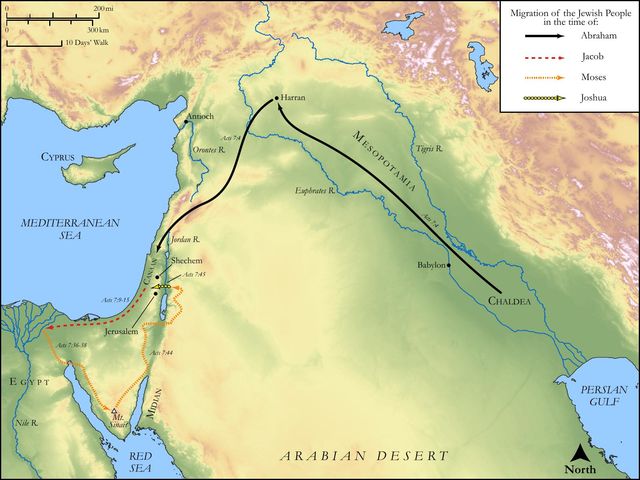
1.Where God appeared to him: In the wilderness of Mount Sinai, Act 7:30. And, when he appeared to him there, that was holy ground (Act 7:33), which Stephen takes notice of, as a check to those who prided themselves in the temple, that holy place, as if there were no communion to be had with God but there; whereas God met Moses, and manifested himself to him, in a remote obscure place in the wilderness of Sinai. They deceive themselves if they think God is confined to places; he can bring his people into a wilderness, and there speak comfortably to them.
2.How he appeared to him: In a flame of fire (for our God is a consuming fire), and yet the bush, in which this fire was, though combustible matter, was not consumed, which, as it represented the state of Israel in Egypt (where, though they were in the fire of affliction, yet they were not consumed), so perhaps it may be looked upon as a type of Christ's incarnation, and the union between the divine and human nature: God, manifested in the flesh, was as the flame of fire manifested in the bush.
3.How Moses was affected with this:
(1.)He wondered at the sight, Act 7:31. It was a phenomenon with the solution of which all his Egyptian learning could not furnish him. He had the curiosity at first to pry into it: I will turn aside now, and see this great sight; but the nearer he drew the more he was struck with amazement; and,
(2.)He trembled, and durst not behold, durst not look stedfastly upon it; for he was soon aware that it was not a fiery meteor, but the angel of the Lord; and no other than the Angel of the covenant, the Son of God himself. This set him a trembling. Stephen was accused for blaspheming Moses and God (Act 6:11), as if Moses had been a little god; but by this it appears that he was a man, subject to like passions as we are, and particularly that of fear, upon any appearance of the divine majesty and glory.
II.The declaration which he heard of the covenant of God (Act 7:32):
The voice of the Lord came to him; for faith comes by hearing; and this was it: I am the God of Isaac, and the God of Jacob; and therefore, 1. "I am the same that I was." The covenant God made with Abraham some ages ago was, I will be to thee a God, a God all-sufficient. "Now," saith God, "that covenant is still in full force; it is not cancelled nor forgotten, but I am, as I was, the God of Abraham, and now I will make it to appear so;" for all the favours, all the honours God put upon Israel, were founded upon this covenant with Abraham, and flowed from it. 2. "I will be the same that I am." For if the death of Abraham, Isaac, and Jacob, cannot break the covenant-relation between God and them (as by this it appears it cannot), then nothing else can: and then he will be a God, (1.) To their souls, which are now separated from their bodies. Our Saviour by this proves the future state, Mat 22:31, Mat 22:32. Abraham is dead, and yet God is still his God, therefore Abraham is still alive. God never did that for him in this world which would answer the true intent and full extent of that promise, that he would be the God of Abraham; and therefore it must be done for him in the other world. Now this is that life and immortality which are brought to light by the gospel, for the full conviction of the Sadducees, who denied it. Those therefore who stood up in defence of the gospel, and endeavoured to propagate it, were so far from blaspheming Moses that they did the greatest honour imaginable to Moses, and that glorious discovery which God made of himself to him at the bush. (2.) To their seed. God, in declaring himself thus the God of their fathers, intimated his kindness to their seed, that they should be beloved for the fathers' sakes, Rom 11:28; Deu 7:8. Now the preachers of the gospel preached up this covenant, the promise made of God unto the fathers; unto which promise those of the twelve tribes that did continue serving God hoped to come, Act 26:6, Act 26:7. And shall they, under colour of supporting the holy place and the law, oppose the covenant which was made with Abraham and his seed, his spiritual seed, before the law was given, and long before the holy place was built? Since God's glory must be for ever advanced, and our glorying for ever silenced, God will have our salvation to be by promise, and not by the law; the Jews therefore who persecuted the Christians, under pretence that they blasphemed the law, did themselves blaspheme the promise, and forsook all their own mercies that were contained in it.
III.The commission which God gave him to deliver Israel out of Egypt.
The Jews set up Moses in competition with Christ, and accused Stephen as a blasphemer because he did not do so too. But Stephen here shows that Moses was an eminent type of Christ, as he was Israel's deliverer. When God had declared himself the God of Abraham he proceeded, 1. To order Moses into a reverent posture: "Put off thy shoes from thy feet. Enter not upon sacred things with low, and cold, and common thoughts. Keep thy foot, Ecc 5:1. Be not hasty and rash in thy approaches to God; tread softly." 2. To order Moses into a very eminent service. When he is ready to receive commands, he shall have commission. He is commissioned to demand leave from Pharaoh for Israel to go out of his land, and to enforce that demand, Act 7:34. Observe, (1.) The notice God took both of their sufferings and of their sense of their sufferings: I have seen, I have seen their affliction, and have heard their groaning. God has a compassionate regard to the troubles of his church, and the groans of his persecuted people; and their deliverance takes rise from his pity. (2.) The determination he fixed to redeem them by the hand of Moses: I am come down to deliver them. It should seem, though God is present in all places, yet he uses that expression here of coming down to deliver them because that deliverance was typical of what Christ did, when, for us men, and for our salvation, he came down from heaven; he that ascended first descended. Moses is the man that must be employed: Come, and I will send thee into Egypt: and, if God send him, he will own him and give him success.
IV.His acting in pursuance of this commission, wherein he was a figure of the Messiah.
And Stephen takes notice here again of the slights they had put upon him, the affronts they had given him, and their refusal to have him to reign over them, as tending very much to magnify his agency in their deliverance.
1.God put honour upon him whom they put contempt upon (Act 7:35): This Moses whom they refused (whose kind offers and good offices they rejected with scorn, saying, Who made thee a ruler and a judge? Thou takest too much upon thee, thou son of Levi, Num 16:3), this same Moses did God send to be a ruler, and a deliverer, by the hand of the angel which appeared to him in the bush. It may be understood either that God sent to him by the hand of the angel going along with him he became a complete deliverer. Now, by this example, Stephen would intimate to the council that this Jesus whom they now refused, as their fathers did Moses, saying, Who made thee a prophet and a king? Who gave thee this authority? even this same has God advanced to be a prince and a Saviour, a ruler and a deliverer; as the apostles had told them awhile ago (Act 5:30, Act 5:31), that the stone which the builders refused was become the head-stone in the corner, Act 4:11.
2.God showed favour to them by him, and he was very forward to serve them, though they had thrust him away. God might justly have refused them his service, and he might justly have declined it; but it is all forgotten: they are not so much as upbraided with it, Act 4:36. He brought them out, notwithstanding, after he had shown wonders and signs in the land of Egypt (which were afterwards continued for the completing of their deliverance, according as the case called for them) in the Red Sea and in the wilderness forty years. So far is he from blaspheming Moses that he admires him as a glorious instrument in the hand of God for the forming of the Old Testament church. But it does not at all derogate from his just honour to say that he was but an instrument, and that he is outshone by this Jesus, whom he encourages these Jews yet to close with, and to come into his interest, not fearing but that then they should be received into his favour, and receive benefit by him, as the people of Israel were delivered by Moses, though they had once refused him.
V.His prophecy of Christ and his grace, Act 4:37.
He not only was a type of Christ (many were so that perhaps had not an actual foresight of his day), but Moses spoke of him (Act 4:37): This is that Moses who said unto the children of Israel, A prophet shall the Lord your God raise up unto you of your brethren. This is spoken of as one of the greatest honours God put upon him (nay, as that which exceeded all the rest), that by him he gave notice to the children of Israel of the great prophet that should come into the world, raised their expectation of him, and required them to receive him. When his bringing them out of Egypt is spoken of it is with an emphasis of honour, This is that Moses, Exo 6:26. And so it is here, This is that Moses. Now this is very full to Stephen's purpose; in asserting that Jesus should change the customs of the ceremonial law, he was so far from blaspheming Moses that really he did him the greatest honour imaginable, by showing how the prophecy of Moses was accomplished, which was so clear, that, as Christ told them himself, If they had believed Moses, they would have believed him, Joh 5:46.
1.Moses, in God's name, told them that, in the fulness of time, they should have a prophet raised up among them, one of their own nation, that should be like unto him (Deu 18:15, Deu 18:18), - a ruler and a deliverer, a judge and a lawgiver, like him, - who should therefore have authority to change the customs that he had delivered, and to bring in a better hope, as the Mediator of a better testament.
2.He charged them to hear that prophet, to receive his dictates, to admit the change he would make in their customs, and to submit to him in every thing; "and this will be the greatest honour you can do to Moses and to his law, who said, Hear you him; and came to be a witness to the repetition of this charge by a voice from heaven, at the transfiguration of Christ, and by his silence gave consent to it," Mat 17:5.
VI.The eminent services which Moses continued to do to the people of Israel, after he had been instrumental to bring them out of Egypt, Act 7:38. And herein also he was a type of Christ, who yet so far exceeds him that it is no blasphemy to say, "He has authority to change the customs that Moses delivered." It was the honour of Moses,
1.That he was in the church in the wilderness; he presided in all the affairs of it for forty years, was king in Jeshurun, Deu 33:5. The camp of Israel is here called the church in the wilderness; for it was a sacred society, incorporated by a divine charter under a divine government, and blessed with divine revelation. The church in the wilderness was a church, though it was not yet perfectly formed, as it was to be when they came to Canaan, but every man did that which was right in his own eyes, Deu 12:8, Deu 12:9. It was the honour of Moses that he was in that church, and many a time it had been destroyed if Moses had not been in it to intercede for it. But Christ is the president and guide of a more excellent and glorious church than that in the wilderness was, and is more in it, as the life and soul of it, than Moses could be in that.
2.That he was with the angel that spoke to him in the mount Sinai, and with our fathers - was with him in the holy mount twice forty days, with the angel of the covenant, Michael, our prince. Moses was immediately conversant with God, but never lay in his bosom as Christ did from eternity. Or these words may be taken thus: Moses was in the church in the wilderness, but it was with the angel that spoke to him in mount Sinai, that is, at the burning bush; for that was said to be at mount Sinai (Act 7:30); that angel went before him, and was guide to him, else he could not have been a guide to Israel; of this God speaks (Exo 23:20), I send an angel before thee, and Exo 33:2. And see Num 20:16. He was in the church with the angel, without whom he could have done no service to the church; but Christ is himself that angel which was with the church in the wilderness, and therefore has an authority above Moses.
3.That he received the lively oracles to give unto them; not only the ten commandments, but the other instructions which the Lord spoke unto Moses, saying, Speak them to the children of Israel.
(1.)The words of God are oracles, certain and infallible, and of unquestionable authority and obligation; they are to be consulted as oracles, and by them all controversies must be determined.
(2.)They are lively oracles, for they are the oracles of the living God, not of the dumb and dead idols of the heathens: the word that God speaks is spirit and life; not that the law of Moses could give life, but it showed the way to life: If thou wilt enter into life, keep the commandments.
(3.)Moses received them from God, and delivered nothing as an oracle to the people but what he had first received from God.
(4.)The lively oracles which he received from God he faithfully gave to the people, to be observed and preserved. It was the principal privilege of the Jews that to them were committed the oracles of God; and it was by the hand of Moses that they were committed. As Moses gave them not that bread, so neither did he give them that law from heaven (Joh 6:32), but God gave it to them; and he that gave them those customs by his servant Moses might, no doubt, when he pleased, change the customs by his Son Jesus, who received more lively oracles to give unto us than Moses did.
VII.The contempt that was, after this, and notwithstanding this, put upon him by the people.
Those that charged Stephen with speaking against Moses would do well to answer what their own ancestors had done, and they tread in their ancestors' steps.
1.They would not obey him, but thrust him from them, Act 7:39. They murmured at him, mutinied against him, refused to obey his orders, and sometimes were ready to stone him. Moses did indeed give them an excellent law, but by this it appeared that it could not make the comers there unto perfect (Heb 10:1), for in their hearts they turned back again into Egypt, and preferred their garlic and onions there before the manna they had under the guidance of Moses, or the milk and honey they hoped for in Canaan. Observe, Their secret disaffection to Moses, with their inclination to Egyptianism, if I may so call it. This was, in effect, turning back to Egypt; it was doing it in heart. Many that pretend to be going forward towards Canaan, by keeping up a show and profession of religion, are, at the same time, in their hearts turning back to Egypt, like Lot's wife to Sodom, and will be dealt with as deserters, for it is the heart that God looks at. Now, if the customs that Moses delivered to them could not prevail to change them, wonder not that Christ comes to change the customs, and to introduce a more spiritual way of worship.
2.They made a golden calf instead of him, which besides the affront that was thereby offered to God, was a great indignity to Moses: for it was upon this consideration that they made the calf, because "as for this Moses, who brought us out of the land of Egypt, we know not what is become of him; therefore make us gods of gold;" as if a calf were sufficient to supply the want of Moses, and as capable of going before them into the promised land. So they made a calf in those days when the law was given them, and offered sacrifices unto the idol, and rejoiced in the work of their own hands. So proud were they of their new god that when they had sat down to eat and drink, they rose up to play! By all this it appears that there was a great deal which the law could not do, in that it was weak through the flesh; it was therefore necessary that this law should be perfected by a better hand, and he was no blasphemer against Moses who said that Christ had done it.
Historical interpretation
Three Centuries of Reception
4 surviving comments on this verse. Each one is dated, so this reads as a timeline rather than a list.
Select a marker to jump to its quote. Markers stagger vertically where authors wrote within a few decades of each other.
"But also a witnessing voice was heard from heaven, saying, 'This is my beloved Son, in whom I am well pleased; hear Him.' And in addition to this, willing to convict more fully of error the prophets from whom they asserted that they had learned, He proclaimed that they died desiring the truth, but not having learned it, saying, 'Many prophets and kings desired to see what ye see, and to hear what you hear; and verily I say to you, they neither saw nor heard.' Still further He said, 'I am he concerning whom Moses prophesied, saying, A Prophet shall the Lord our God raise unto you of your brethren, like unto me: Him hear in all things; and whosoever will not hear that Prophet shall die.' "
"Wonders and signs," etc. He shows, that the prophecy must by all means be fulfilled, and that Moses is not opposed to Him. "Which said unto the children of Israel, A prophet," etc. He shows, that the prophecy must by all means be fulfilled, and that Moses is not opposed to Him.
"This" same Moses, he says,-and observe how he points to his renown-"this" same Moses, he says, "brought them out, after that he had showed wonders and signs in the land of Egypt, and in the Red sea, and in the wilderness forty years. This is that Moses, which said unto the children of Israel, A prophet shall the Lord your God raise up unto you of your brethren, like unto me": set at naught like me. Him, likewise, Herod wished to kill, and in Egypt He found preservation just as it was with the former, even when He was a babe, He was aimed at for destruction.
This is Moses who said to the sons of Israel: God will raise up for you a prophet from among your brothers, like me. Like me, visible in the flesh, but more wonderful in majesty and more terrible in majesty than I. He says, lest the doctrine of Christ be thought new and foreign, it is Moses himself, whom your fathers did not wish to obey, who preaches and says that he will come in the form of a man and will give the precepts of life to all souls.
Continue studying Acts 7:37 across the web’s major study libraries — every link below opens this exact verse, chapter, or book on the destination site.
Read & Compare
 BibleGatewayThis verse in more than 200 translations and 70 languages.
 Bible.comThe YouVersion reader — hundreds of translations, reading plans, and highlights.
 ESV.orgCrossway's official English Standard Version reader.
 NET BibleThe NET translation with 60,000+ translators' notes on every rendering decision.
 STEP BibleTyndale House's free study tool — original text, vocabulary, and scholarly resources.
 BibliaLogos Bible Software's free web reader.
 USCCBThe New American Bible (Revised Edition) with the U.S. bishops' study notes.
Commentaries
 BibleHub CommentariesDozens of classic commentaries on this verse, gathered on one page.
 StudyLightMore than 100 commentary sets — the largest collection on the web.
 BibleRefPlain-English commentary on what this verse means, verse by verse.
 Enduring WordDavid Guzik's free commentary on this chapter, widely used by Bible teachers.
 Bible Study ToolsVerse commentary alongside Greek and Hebrew study aids.
Original Language & Research
- BibleHub InterlinearThe verse word by word — original language, transliteration, and English.
- BibleHub LexiconEvery word's original-language definition and Strong's entry.
 Blue Letter BibleDeep-study tools — Strong's numbers, concordance, and word studies.
 CNTR CollationThe earliest Greek manuscripts of this verse, collated letter by letter.
Sermons, Hymns & Audio


TrulyRandomVerse is not affiliated with these sites and doesn’t control their content. They’re linked because they’re genuinely useful.
Summary
Acts 7:37 stands as a cornerstone in Stephen's defense before the Sanhedrin, where he meticulously recounts Israel's history to demonstrate their persistent pattern of rejecting God's chosen messengers. In this pivotal verse, Stephen directly quotes Moses' prophetic words from Deuteronomy 18:15, asserting that Jesus Christ is the promised "Prophet like unto Moses," thereby indicting his listeners for their rejection of God's ultimate messenger and the fulfillment of this ancient prophecy.
Context
ShowHideLiterary Context
Acts 7:37 is situated within Stephen's lengthy and impassioned speech, which spans the entirety of Acts 7. Accused of blasphemy against Moses and the temple (Acts 6:11-14), Stephen's address is not merely a legal defense but a profound theological exposition of Israel's history. He traces God's dealings with His people from Abraham through Joseph, Moses, and the wilderness generation, culminating in the building of the temple. Stephen's narrative consistently highlights God's faithfulness juxtaposed with Israel's recurring rebellion and rejection of divinely appointed leaders and prophets. This specific verse, quoting Moses, serves as a powerful rhetorical device, turning the tables on his accusers by showing that their venerated lawgiver himself foretold a future prophet whom they were commanded to hear, a command they now violate by rejecting Jesus. The speech builds to a climax, revealing that their rejection of Jesus is merely the latest, and most egregious, instance in a long history of resisting the Holy Spirit and persecuting God's messengers, as further detailed in Acts 7:51-53.
Historical & Cultural Context
Stephen delivered this speech before the Sanhedrin, the supreme Jewish judicial and religious council, composed of Sadducees and Pharisees. In first-century Judaism, Moses was revered as the preeminent prophet and lawgiver, whose authority was unquestionable. The Law given through Moses at Sinai was the foundation of Jewish identity and religious practice. The expectation of a future prophet "like Moses" was deeply ingrained in Jewish messianic hopes, stemming from Deuteronomy 18:15-18. Many believed this prophet would be a new Moses, leading Israel to a new exodus or delivering a new revelation. Stephen's audience would have immediately recognized the quote and understood its profound implications. By applying this prophecy to Jesus, Stephen directly challenged their understanding of messianic fulfillment and their adherence to the very Law they claimed to uphold, implying that their rejection of Jesus was a rejection of Moses' own prophecy.
Key Themes
ShowHideThis verse contributes significantly to several overarching themes within Acts and the broader New Testament. Firstly, it underscores the theme of Prophetic Fulfillment, asserting that Jesus Christ is the long-awaited "Prophet like unto Moses," the ultimate fulfillment of God's promises. Just as Moses was a deliverer, lawgiver, and mediator of the Old Covenant, Jesus is presented as the greater Deliverer, the one who inaugurates the new covenant, and the supreme Mediator between God and humanity. Secondly, it highlights the theme of Divine Authority and Obedience. The command "him shall ye hear" emphasizes that this coming Prophet would speak with absolute divine authority, and His words were to be received with complete obedience. Stephen implicitly argues that by rejecting Jesus, the Jewish leaders were repeating their ancestors' error of not listening to God's chosen messenger, a pattern evident throughout Israel's history, as Stephen details in Acts 7:39-43. Thirdly, the verse reinforces the theme of Israel's Historical Pattern of Rejection, demonstrating how the nation consistently resisted God's Spirit and rejected His appointed leaders, from Moses himself (as seen in Acts 7:35) to the prophets, and now, climactically, to Jesus.
Exposition and Analysis
ShowHideKey Word Analysis
ShowHideThis term (G4396) refers to a foreteller or an inspired speaker. In the biblical context, a prophet is one who speaks on behalf of God, conveying divine messages, often predicting future events, but primarily calling people to obedience to God's will. Stephen's use of "prophet" here directly connects to the Deuteronomic prophecy, identifying Jesus as the one uniquely chosen by God to speak His authoritative word.
The verb (G450) means "to stand up," "arise," or "raise up." In this context, it signifies God's sovereign act of appointing or bringing forth a leader or figure. The Lord Himself would "raise up" this prophet, indicating divine initiative and authorization, emphasizing that this prophet would not emerge by human will but by God's deliberate design.
This primary verb (G191) means "to hear" in various senses, including to give audience, to listen, to understand, and implicitly, to obey. The command "him shall ye hear" is not merely about auditory perception but about attentive listening that leads to submission and obedience. It underscores the authoritative nature of the prophet's message and the expectation of a responsive, obedient faith from the people.
Verse Breakdown
ShowHide"This is that Moses, which said unto the children of Israel,"
Stephen begins by identifying Moses, the revered lawgiver, as the speaker of the prophecy. This immediately establishes a common ground with his Jewish audience, who held Moses in the highest esteem. By attributing the prophecy directly to Moses, Stephen lends immense authority and familiarity to his subsequent claim about Jesus.
"A prophet shall the Lord your God raise up unto you of your brethren, like unto me;"
This is the core of the quotation from Deuteronomy 18:15. It foretells the coming of a future prophet, divinely appointed ("raise up") by "the Lord your God." The phrase "of your brethren" emphasizes that this prophet would be a fellow Israelite, sharing their heritage and humanity. The crucial comparison "like unto me" (Greek: hōs emé) highlights the unique parallels between Moses and this coming prophet. Moses was a deliverer, lawgiver, mediator, and one who spoke with God face-to-face. The promised prophet would share these characteristics, yet ultimately surpass them.
"him shall ye hear."
This concluding command is an imperative, demanding absolute attention and obedience to the words of the promised prophet. It implies that the prophet's message carries divine authority, making listening and obeying a non-negotiable requirement for God's people. Stephen's inclusion of this command serves as a direct indictment of his audience, implying that their rejection of Jesus is a failure to heed Moses' own prophetic instruction.
Literary Devices
ShowHideStephen's speech is rich in Rhetoric, employing a historical survey to build a compelling argument. The direct Quotation of Deuteronomy 18:15 is a powerful rhetorical move, grounding his argument in the authoritative words of Moses, whom his accusers revered. This quotation functions as a form of Argumentum ad Hominem (though not fallacious), using the very authority his opponents respect against their current stance. The phrase "like unto me" introduces Typology, presenting Moses as a type or foreshadowing of the greater, ultimate Prophet, Jesus Christ. This Typological comparison is central to Stephen's argument, demonstrating continuity in God's redemptive plan while highlighting the superiority of the antitype (Christ) over the type (Moses). The entire speech, including this verse, also serves as a sustained Allusion to Israel's history of rebellion, culminating in their rejection of Jesus.
Theological and Thematic Connections
ShowHideActs 7:37 is profoundly significant as it explicitly identifies Jesus as the fulfillment of a foundational Old Testament prophecy concerning the coming of a unique prophet. This verse underscores the continuity of God's redemptive plan, demonstrating that Jesus' ministry was not a deviation but the culmination of divine revelation foretold centuries earlier. It establishes Jesus' supreme authority, positioning Him as the definitive voice of God, whose words demand ultimate allegiance and obedience. The theological implication is that to reject Jesus is to reject God's final and most complete revelation, and to stand in opposition to the very prophetic word given through Moses.
Reflection and Application
ShowHideActs 7:37 serves as a powerful reminder of Jesus Christ's unparalleled authority and the imperative for all people to listen to and obey His teachings. Just as the Israelites were commanded to hear the promised Prophet, so too are we, as believers, called to submit our lives to the Living Word of God. This verse challenges us to consider the depth of our obedience: are we truly hearing Jesus, not just intellectually, but with a heart prepared to act on His commands? It encourages a deeper engagement with the Gospels and the entire New Testament, recognizing them as the authoritative revelation of the Prophet promised by Moses. Furthermore, it prompts us to examine our own tendencies to resist God's truth, drawing a parallel to Israel's historical pattern of rebellion. Our faith is not merely intellectual assent but an active, ongoing commitment to hear and follow the voice of our Lord.
Questions for Reflection
ShowHideFAQ
ShowHideWhy is Stephen's quote of Deuteronomy 18:15 in Acts 7:37 so important?
ShowHideStephen's quote is crucial because it directly identifies Jesus Christ as the fulfillment of a significant Old Testament prophecy. By quoting Moses, Stephen legitimizes Jesus' authority and mission within the framework of Jewish expectation. It serves as a powerful theological argument, demonstrating that the very Law and prophets revered by the Sanhedrin pointed to Jesus. Stephen uses this prophecy to show that the Jewish leaders, in rejecting Jesus, were repeating their ancestors' pattern of rejecting God's chosen messengers, thereby indicting them for their spiritual blindness and disobedience to Moses' own command to "hear" this coming prophet. This quote is a cornerstone of the early Christian argument for Jesus' messianic identity.
Christ-Centered Fulfillment
ShowHideActs 7:37 finds its ultimate Christ-centered fulfillment in Jesus, who is revealed as the Prophet superior to Moses in every respect. While Moses mediated the Old Covenant and delivered the Law, Jesus is the Mediator of a new and better covenant and the embodiment of God's grace and truth, as stated in John 1:17. Just as Moses led Israel out of slavery, Jesus delivers humanity from the bondage of sin and death, leading His people into true freedom (Luke 4:18-19). He is the one whom the Father explicitly commands us to hear, as echoed by the voice from heaven at His Transfiguration: "This is my Son, whom I have chosen; listen to him!" (Luke 9:35). Jesus not only spoke God's words but was Himself the Word made flesh, the perfect revelation of God. His life, death, and resurrection constitute the ultimate prophetic act, revealing God's redemptive plan and securing eternal salvation. Therefore, to hear Jesus is to hear God, and to obey Him is to enter into the fullness of God's promised blessings.