


Numbers 20:16
- וַנִּצְעַקva·nitz·'Akand we cried outH6817Conj-w ¦ V-Qal-ConsecImperf-1cpVerb Qal Consecutive Imperfect 1st Plural common genderוַandנִּצְעַקwe cried out
- אֶל'eltoH413PrepPreposition
- יְהוָהYah·wehYahwehH3068N-properNoun Proper Title
- וַיִּשְׁמַעvai·yish·Ma'and he heardH8085Conj-w ¦ V-Qal-ConsecImperf-3msVerb Qal Consecutive Imperfect 3rd Singular Masculineוַandיִּשְׁמַעhe heard
- קֹלֵנוּko·Le·nuour voiceH6963N-msc ¦ 1cpNoun Singular Masculine Constructקֹלֵvoiceנוּour
- וַיִּשְׁלַחvai·yish·Lachand he sentH7971Conj-w ¦ V-Qal-ConsecImperf-3msVerb Qal Consecutive Imperfect 3rd Singular Masculineוַandיִּשְׁלַחhe sent
- מַלְאָךְmal·'Akhan angelH4397N-msNoun Singular Masculine Absolute
- וַיֹּצִאֵנוּvai·yo·tzi·'E·nuand he brought out usH3318Conj-w ¦ V-Hiphil-ConsecImperf-3ms ¦ 1cpVerb Hiphil Consecutive Imperfect 3rd Singular Masculineוַandיֹּצִאֵhe brought outנוּus
- מִמִּצְרָיִםmi·mitz·Ra·yimfrom EgyptH4714Prep-m ¦ N-properNoun Proper LocationמִfromמִּצְרָיִםEgypt
- וְהִנֵּהve·hi·Nehand here!H2009Conj-w ¦ PrtParticle Interjectionוְandהִנֵּהhere!
- אֲנַחְנוּ'a·Nach·nuweH587Pro-1cpPronoun Personal 1st Plural common gender
- בְקָדֵשׁve·ka·Desh[are] in KadeshH6946Prep-b ¦ N-properNoun Proper Locationבְ[are] inקָדֵשׁKadesh
- עִיר'ir<the> city ofH5892N-fscNoun Singular Feminine Construct
- קְצֵהke·Tzeh[the] outskirt[s] ofH7097N-mscNoun Singular Masculine Construct
- גְבוּלֶךָge·vu·Le·khayour territoryH1366N-msc ¦ 2msNoun Singular Masculine Constructגְבוּלֶterritoryךָyour
English is a literal word-by-word gloss of the Hebrew, not the KJV's wording. Why?
This is the original text the KJV's translators worked from — each Hebrew word with its own literal English meaning in this verse, prepared by scholars at Tyndale House, Cambridge. The KJV translates whole sentences, not word by word, so its wording differs: one Hebrew word can become several English words, and the KJV may choose “the LORD” where the gloss reads “Yahweh”. Both are faithful — they answer different questions. For the KJV's own rendering, switch to the KJV text.
Details
See on the biblical-era maps
Study this verse
Public-domain commentary
Matthew Henry
From his Commentary on the Whole Bible. Henry comments on passages, not single verses — this entry covers Numbers 20:14–21. His two-level outline is real structure in the source text, so it is rendered as structure.
We have here the application made by Israel to the Edomites. The nearest way to Canaan from the place where Israel now lay encamped was through the country of Edom. Now,
I.Moses sends ambassadors to treat with the king of Edom for leave to pass through his country, and gives them instructions what to say, Num 20:14-17.
1.They are to claim kindred with the Edomites: Thus saith thy brother Israel. Both nations descended from Abraham and Isaac, their common ancestors; Esau and Jacob, the two fathers of their respective nations, were twin-brothers; and therefore, for relation-sake, they might reasonably expect this kindness from them; nor needed the Edomites to fear that their brother Israel had any ill design upon them, or would take any advantages against them.
2.They are to give a short account of the history and present state of Israel, which, they take it for granted, the Edomites were no strangers to. And in this there was a double plea: - (1.) Israel had been abused by the Egyptians, and therefore ought to be pitied and succoured by their relations: "The Egyptians vexed us and our fathers, but we may hope our brethren the Edomites will not be so vexatious." (2.) Israel had been wonderfully saved by the Lord, and therefore ought to be countenanced and favoured (Num 20:16): "We cried unto the Lord, and he sent an angel, the angel of his presence, the angel of the covenant, the eternal Word, who had brought us forth out of Egypt, and led us hither." It was therefore the interest of the Edomites to ingratiate themselves with a people that had so great an interest in heaven and were so much its favourites, and it was at their peril if they offered them any injury. It is our wisdom and duty to be kind to those whom God is pleased to own, and to take his people for our people. Come in, thou blessed of the Lord.
3.They are humbly to beg a passport through their country. Though God himself, in the pillar of cloud and fire, was Israel's guide, in following which they might have justified their passing through any man's ground against all the world, yet God would have this respect paid to the Edomites, to show that no man's property ought to be invaded under colour of religion. Dominion is founded in providence, not in grace. Thus when Christ was to pass through a village of the Samaritans, to whom his coming was likely to be offensive, he sent messengers before his face to ask leave, Luk 9:52. Those that would receive kindness must not disdain to request it.
4.They are to give security for the good behaviour of the Israelites in this march, that they would keep in the king's high road, that they would commit no trespass upon any man's property, either in ground or water, that they would not so much as make use of a well without paying for it, and that they would make all convenient speed, as fast as they could well go on their feet, Num 20:17, Num 20:19. Nothing could be offered more fair and neighbourly.
II.The ambassadors returned with a denial, Num 20:18.
Edom, that is, the king of Edom, as protector of his country, said, Thou shalt not pass by me; and, when the ambassadors urged it further, he repeated the denial (Num 20:20) and threatened, if they offered to enter his country, it should be at their peril; he raised his trained bands to oppose them. Thus Edom refused to give Israel passage. This was owing,
1.To their jealousy of the Israelites; they feared they should receive promises. And truly, had this numerous army been under any other discipline and command than that of the righteous God himself, who would no more suffer them to do wrong than to take wrong, there might have been cause for this jealousy; but what could they fear from a nation that had statutes and judgments so righteous?
2.It was owing to the old enmity which Esau bore to Israel. If they had no reason to fear damage by them, yet they were not willing to show so much kindness to them. Esau hated Jacob because of the blessing, and now the hatred revived, when the blessing was ready to be inherited. God would hereby discover the ill-nature of the Edomites to their shame, and try the good-nature of the Israelites to their honour: they turned away from him, and did not take this occasion to quarrel with him. Note, We must not think it strange if the most reasonable requests be denied by unreasonable men, and if those be affronted by men whom God favours. I as a deaf man heard not. After this indignity which the Edomites offered to Israel God gave them a particular caution not to abhor an Edomite (Deu 23:7), though the Edomites had shown such an abhorrence of them, to teach us in such cases not to meditate revenge.
Continue studying Numbers 20:16 across the web’s major study libraries — every link below opens this exact verse, chapter, or book on the destination site.
Read & Compare
 BibleGatewayThis verse in more than 200 translations and 70 languages.
 Bible.comThe YouVersion reader — hundreds of translations, reading plans, and highlights.
 ESV.orgCrossway's official English Standard Version reader.
 NET BibleThe NET translation with 60,000+ translators' notes on every rendering decision.
 STEP BibleTyndale House's free study tool — original text, vocabulary, and scholarly resources.
 BibliaLogos Bible Software's free web reader.
 USCCBThe New American Bible (Revised Edition) with the U.S. bishops' study notes.
Commentaries
 BibleHub CommentariesDozens of classic commentaries on this verse, gathered on one page.
 StudyLightMore than 100 commentary sets — the largest collection on the web.
 BibleRefPlain-English commentary on what this verse means, verse by verse.
 Enduring WordDavid Guzik's free commentary on this chapter, widely used by Bible teachers.
 Bible Study ToolsVerse commentary alongside Greek and Hebrew study aids.
Original Language & Research
- BibleHub InterlinearThe verse word by word — original language, transliteration, and English.
- BibleHub LexiconEvery word's original-language definition and Strong's entry.
 Blue Letter BibleDeep-study tools — Strong's numbers, concordance, and word studies.
 SefariaThe Hebrew text with Rashi and centuries of Jewish commentary.
Sermons, Hymns & Audio


TrulyRandomVerse is not affiliated with these sites and doesn’t control their content. They’re linked because they’re genuinely useful.
Summary
Numbers 20:16 serves as a pivotal point in Moses' diplomatic plea to the King of Edom, seeking peaceful transit for the Israelites as they drew near the conclusion of their wilderness journey. Within this appeal, Moses skillfully recounts Israel's foundational history of suffering in Egypt, emphasizing God's compassionate response to their desperate cries, His miraculous deliverance through an angelic messenger, and their current strategic location at Kadesh, poised directly on Edom's border. The verse powerfully encapsulates God's enduring faithfulness, His attentiveness to His people's pleas, and His active, providential guidance throughout their arduous pilgrimage toward the Promised Land.
Context
ShowHideLiterary Context
Numbers 20 marks a critical transition in the Israelites' wilderness wanderings, signaling the end of the 38-year period of divine judgment and the imminent approach to the Promised Land. Immediately preceding this verse, the narrative details the death of Miriam and, more significantly, the sin of Moses and Aaron at Meribah, where Moses struck the rock instead of speaking to it, resulting in their exclusion from entering Canaan. This diplomatic request to Edom is a crucial strategic maneuver, as Israel seeks to avoid a lengthy and arduous detour around Edomite territory, which would be necessary if passage was denied. The Edomite refusal, which directly follows this appeal, forces Israel to take the longer route, further highlighting the challenges, divine redirection, and continued reliance on God inherent in their journey towards their inheritance. The entire chapter underscores both divine judgment for disobedience and God's consistent, albeit sometimes circuitous, guidance.
Historical & Cultural Context
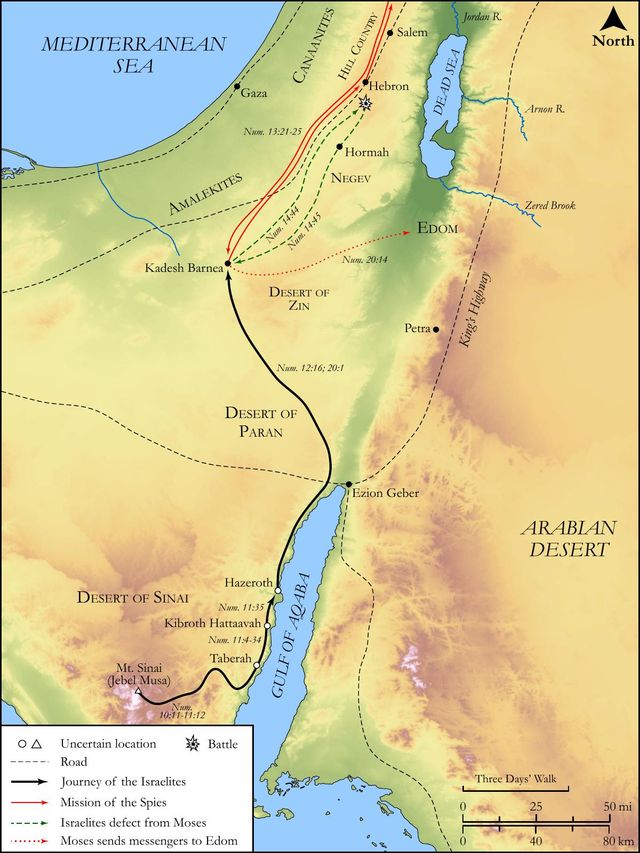
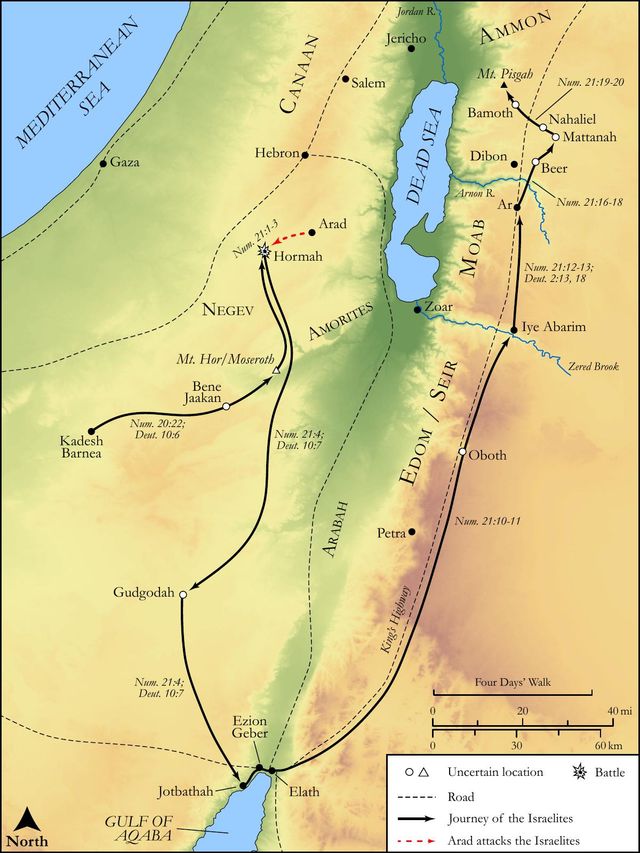
The Israelites, after nearly four decades of nomadic life, found themselves at Kadesh, a significant oasis and strategic location situated on the southern border of Edom. Edom, located southeast of the Dead Sea, was considered a "brother" nation to Israel, as the Edomites were descendants of Esau, Jacob's twin brother. Moses' appeal shrewdly leverages this familial connection, framing the request for passage as a plea from kin. The desired route was likely the "King's Highway," a vital ancient trade route that traversed Edomite territory, offering the most direct path. Such requests for passage were not uncommon in the ancient Near East, though they often involved complex negotiations, assurances of peaceful conduct, and sometimes payment for resources. Moses' detailed historical recounting was a common diplomatic tactic, establishing Israel's legitimacy, demonstrating their peaceful intentions, and subtly reminding Edom of the powerful God who had delivered and sustained Israel.
Key Themes
ShowHideNumbers 20:16 powerfully encapsulates several enduring themes central to the book of Numbers and the broader Pentateuch. The primary theme is Divine Deliverance, vividly recalling the Exodus from Egypt, which serves as the foundational act of God's salvation for His people. This historical precedent underscores God's power and unwavering commitment to rescuing the oppressed. Closely related is the theme of God Hears Prayer, as the verse explicitly states, "when we cried unto the LORD, he heard our voice." This highlights God's accessibility and responsiveness to the desperate pleas of His people, a theme echoed throughout Israel's history (e.g., Exodus 2:23-25). Furthermore, the mention of God sending "an angel" points to Divine Guidance and Provision, signifying God's active, personal presence and protection throughout their wilderness journey, often identified as the Angel of the Lord. Finally, the verse contributes to the overarching theme of Israel's Pilgrimage and God's Faithfulness, summarizing their arduous journey from bondage to their current position on the cusp of the Promised Land, sustained by God's unwavering faithfulness despite their trials and rebellions.
Exposition and Analysis
ShowHideKey Word Analysis
ShowHideThis verb denotes a deep, often desperate, cry for help, a loud and urgent appeal born out of distress or oppression. It is not a casual request but an earnest, often agonizing, plea. In the context of Israel in Egypt, it signifies the profound suffering and bondage that led them to appeal to God, highlighting the severity of their affliction and the earnestness of their supplication. God's hearing of this "cry" implies not just auditory perception but a compassionate, responsive action, underscoring the depth of their need and God's readiness to intervene.
While literally meaning "to hear," in biblical theology, shâmaʻ often implies more than just perceiving sound. It encompasses listening attentively, understanding, and, crucially, responding or acting upon what is heard. When God "hears" the cries of His people, it signifies His active engagement, His attentiveness to their plight, and His readiness to intervene on their behalf. This word underscores God's personal and active involvement in the affairs of His people, demonstrating His covenant faithfulness and compassion.
This term literally means "messenger" and can refer to human or divine agents. In this context, given the miraculous deliverance from Egypt and the consistent guidance in the wilderness, it unequivocally refers to a divine messenger. This "angel" is often understood as the "Angel of the LORD," a significant figure in the Old Testament who frequently acts as God's direct representative, embodying His presence and executing His will. The sending of this angel signifies God's direct, supernatural intervention and leadership in Israel's history, highlighting His commitment to His people's salvation.
Verse Breakdown
ShowHide"And when we cried unto the LORD, he heard our voice"
This opening clause establishes the foundational dynamic of Israel's relationship with God: their desperate need and His compassionate responsiveness. It vividly recalls the intense suffering of the Israelites under Egyptian bondage and their earnest pleas for deliverance. God's "hearing" their voice signifies His deep empathy, His active attention to the plight of His oppressed people, and His readiness to intervene, setting the stage for His subsequent powerful actions.
"and sent an angel, and hath brought us forth out of Egypt"
This phrase details the method and outcome of God's response to Israel's cry. The sending of "an angel" (likely the Angel of the LORD) points to divine, supernatural agency in the Exodus, emphasizing that this was not a natural event but a miraculous act of God's power and direct leadership. "Hath brought us forth out of Egypt" refers to the paradigmatic act of salvation, the liberation from slavery, which defines Israel's identity and serves as a perpetual reminder of God's redemptive power and faithfulness.
"and, behold, we [are] in Kadesh, a city in the uttermost of thy border"
This final clause grounds the historical recounting in the present reality of Moses' diplomatic appeal. It states Israel's current geographical location, emphasizing their immediate proximity to Edomite territory and the urgency of their request for passage. The phrase "behold, we are" serves to highlight their immediate presence and the direct nature of their need, underscoring the purpose of recounting their history: to explain their current situation and justify their request for a peaceful and direct route.
Literary Devices
ShowHideMoses' diplomatic speech in Numbers 20:16 employs several effective literary devices to achieve its persuasive aim. The most prominent is Recapitulation, where Moses succinctly summarizes a vast and foundational segment of Israel's history—their suffering in Egypt, their desperate cry to God, and God's miraculous deliverance—to establish context and build his case for peaceful passage. This historical summary also functions as an Appeal to Shared Experience and Divine Authority, subtly reminding Edom of the powerful God who stands behind Israel and implying the futility of opposing His will. The phrase "when we cried unto the LORD, he heard our voice" uses Pathos, appealing to a sense of empathy for Israel's past suffering and God's compassionate response, aiming to soften Edom's stance. The repeated emphasis on God's actions ("he heard," "sent an angel," "brought us forth") highlights Divine Agency, underscoring God's consistent faithfulness and active involvement in Israel's journey. The entire verse is part of a larger Diplomatic Overture, carefully crafted language designed to persuade and secure a favorable outcome, blending historical fact with a present, urgent request.
Theological and Thematic Connections
ShowHideNumbers 20:16 profoundly illustrates God's unwavering character as the compassionate Deliverer and the Hearer of His people's cries. The Exodus, recalled here, is not merely a historical event but the foundational paradigm of salvation, demonstrating God's power to liberate from any form of bondage. It underscores the truth that God is attentive to the groaning of the oppressed and actively intervenes on their behalf, often through His chosen messengers or direct divine presence. This verse also highlights the enduring nature of God's covenant faithfulness, as He continues to guide and sustain His people through their wilderness journeys, even when they falter. The Angel of the Lord's consistent leadership throughout Israel's pilgrimage foreshadows God's ongoing, personal involvement in the lives of His people, guiding them towards their ultimate inheritance.
Reflection and Application
ShowHideNumbers 20:16 offers profound encouragement and practical lessons for believers today. Just as God heard the desperate cries of Israel in their bondage and faithfully delivered them, so too does He hear our cries in our own times of distress, oppression, or spiritual bondage. This verse is a powerful reminder that our God is not distant or indifferent but is intimately involved in the lives of His people, ready to intervene. It calls us to cultivate a posture of earnest prayer, knowing that our sincere pleas do not fall on deaf ears. Furthermore, reflecting on God's past faithfulness—both in biblical history and in our personal testimonies—serves as a vital anchor for our faith in present challenges. When we face our own "wilderness" experiences or stand at a "Kadesh" moment, uncertain of the path ahead, we can draw strength from remembering how God has consistently guided and provided. This verse encourages us to trust in His ongoing leadership, knowing that He sends His "angel"—His Spirit, His Word, His providential care—to lead us through to our promised inheritance.
Questions for Reflection
ShowHideFAQ
ShowHideWhy did Moses recount Israel's history to the King of Edom?
ShowHideMoses' recounting of Israel's history to the King of Edom was a multi-faceted diplomatic maneuver. Firstly, it served to explain Israel's presence at Edom's border and their urgent need for passage, framing it within their long, divinely guided journey from Egyptian bondage. Secondly, by emphasizing God's powerful deliverance from Egypt and His continuous guidance, Moses subtly asserted the divine backing of the Israelite nation, implying that to deny them passage would be to oppose God's will. Thirdly, it appealed to the shared kinship between Israel (descendants of Jacob) and Edom (descendants of Esau), hoping that this familial bond would elicit a compassionate response and peaceful cooperation. It was a comprehensive plea, combining historical context, theological justification, and a request for brotherly kindness.
Who was the "angel" mentioned in the verse that God sent?
ShowHideThe "angel" (Hebrew: mal'akh) mentioned in Numbers 20:16 is widely understood by biblical scholars to refer to the "Angel of the LORD," a significant divine figure in the Old Testament. This is not merely a created angelic being, but often a pre-incarnate manifestation of God Himself or a direct divine representative who embodies God's presence and authority. This Angel was instrumental in leading Israel out of Egypt, guiding them through the wilderness, and fighting their battles (e.g., Exodus 23:20-23). The sending of this Angel underscores God's personal, active, and supernatural involvement in the deliverance and guidance of His people, demonstrating His intimate care and power.
What is the significance of Kadesh as Israel's location in this verse?
ShowHideKadesh (or Kadesh-Barnea) was a highly significant location for Israel. It was a major oasis and a strategic point on the southern border of Edom, serving as a gateway to the Promised Land from the south. It was also the site of several pivotal events during the wilderness wanderings, including the initial rebellion of the spies (Numbers 13-14), the subsequent 38-year wandering sentence, and, immediately prior to this verse, the sin of Moses and Aaron at Meribah (Numbers 20:1-13). Being "in Kadesh, a city in the uttermost of thy border" highlights Israel's immediate geographical position, their readiness to proceed, and the urgency of their diplomatic request to Edom for a direct route to their inheritance. It marked a critical juncture, signifying the end of one phase of their journey and the beginning of their final approach to the land God had promised.
Christ-Centered Fulfillment
ShowHideNumbers 20:16, though rooted in Israel's ancient history, finds profound Christ-centered fulfillment in the person and work of Jesus Christ. The "cries" of Israel in Egypt, heard by God, foreshadow the universal human condition of bondage to sin and death, from which only God can deliver. Just as God "sent an angel" to lead and deliver His people, so too did He send His Son, Jesus Christ, as the ultimate Messenger and Deliverer. Jesus is the greater Angel of the Lord, the very "Angel of His presence" (as referenced in Isaiah 63:9), who not only guides but embodies God's saving presence among us. He is the one who truly "brings us forth out of Egypt"—out of the slavery of sin and the dominion of darkness, into His marvelous light and freedom (as proclaimed in Colossians 1:13-14). Israel's journey through the wilderness, led by God's provision, typifies the Christian life, a pilgrimage through this world, where Christ Himself is our spiritual food and drink, the true Rock from which living water flows (as seen in 1 Corinthians 10:1-4). He is the ultimate Shepherd who leads His flock to the heavenly Canaan, the true Promised Land. In Christ, God's promise to hear our cries and deliver us is perfectly fulfilled, as He offers ultimate liberation from sin's power and leads us by His Spirit to our eternal inheritance, far surpassing the earthly one Israel sought at Kadesh (underscored in Hebrews 3:7-19 and John 8:36).