


Numbers 16:3
Bible text: King James Version (1769 Blayney text) · Public domain
Bible text: King James Version with Strong's numbers · Public domain
Bible text: Berean Standard Bible · Public domain
Bible text: American Standard Version (1901) · Public domain
Bible text: World English Bible, Messianic edition · Public domain
Bible text: Geneva Bible (1599) · Public domain
Bible text: Young's Literal Translation · Public domain
- וַיִּקָּהֲלוּvai·yi·ka·ha·Luand they assembledH6950Conj-w ¦ V-Niphal-ConsecImperf-3mpVerb Niphal Consecutive Imperfect 3rd Plural Masculineוַandיִּקָּהֲלוּthey assembled
- עַל'alonH5921PrepPreposition
- מֹשֶׁהmo·ShehMosesH4872N-proper-mNoun Proper Masculine
- וְעַלve·'aland onH5921Conj-w ¦ PrepPrepositionוְandעַלon
- אַהֲרֹן'a·ha·RonAaronH175N-proper-mNoun Proper Masculine
- וַיֹּאמְרוּvai·yo·me·Ruand they saidH559Conj-w ¦ V-Qal-ConsecImperf-3mpVerb Qal Consecutive Imperfect 3rd Plural Masculineוַandיֹּאמְרוּthey said
- אֲלֵהֶם'a·le·Hemto themH413Prep ¦ 3mpPreposition Definiteאֲלֵtoהֶםthem
- רַבravenoughH7227Adj-msAdjective Singular Masculine Absolute
- לָכֶםla·Khemfor <the> youPrep-l ¦ 2mpSuffix Personal 2nd Plural Masculineלָfor <the>כֶםyou
- כִּיkithatH3588PrtParticle Conditional
- כָלkholallH3605N-mscNoun Singular Masculine Construct
- הָעֵדָהha·'e·Dahthe congregationH5712Art ¦ N-fsNoun Singular Feminine Absoluteהָtheעֵדָהcongregation
- כֻּלָּםku·Lamall of themH3605N-msc ¦ 3mpNoun Singular Masculine Constructכֻּלָּall ofםthem
- קְדֹשִׁיםke·do·Shim[are] holyH6918Adj-mpAdjective Plural Masculine Absolute
- וּבְתוֹכָםu·ve·to·Khamand [is] among midst of themH8432Conj-w ¦ Prep-b ¦ N-msc ¦ 3mpNoun Singular Masculine Constructוּandבְ[is] amongתוֹכָmidst ofםthem
- יְהוָהYah·wehYahwehH3068N-properNoun Proper Title
- וּמַדּוּעַu·ma·Du·a'and why?H4069Conj-w ¦ InterrogParticle Interrogativeוּandמַדּוּעַwhy?
- תִּתְנַשְּׂאוּtit·na·se·'Udo you exalt yourselvesH5375V-Hithpael-Imperf-2mpVerb Hithpael Imperfect 2nd Plural Masculine
- עַל'aloverH5921PrepPreposition
- קְהַלke·Hal[the] assembly ofH6951N-mscNoun Singular Masculine Construct
- יְהוָהYah·wehYahwehH3068N-properNoun Proper Title
English is a literal word-by-word gloss of the Hebrew, not the KJV's wording. Why?
This is the original text the KJV's translators worked from — each Hebrew word with its own literal English meaning in this verse, prepared by scholars at Tyndale House, Cambridge. The KJV translates whole sentences, not word by word, so its wording differs: one Hebrew word can become several English words, and the KJV may choose “the LORD” where the gloss reads “Yahweh”. Both are faithful — they answer different questions. For the KJV's own rendering, switch to the KJV text.
Details
See on the biblical-era map
Study this verse
Public-domain commentary
Matthew Henry
From his Commentary on the Whole Bible. Henry comments on passages, not single verses — this entry covers Numbers 16:1–11. His four-level outline is real structure in the source text, so it is rendered as structure.
Here is, I. An account of the rebels, who and what they were, not, as formerly, the mixed multitude and the dregs of the people, who are therefore never named, but men of distinction and quality, that made a figure. Korah was the ring-leader: he formed and headed the faction; therefore it is called the gainsaying of Korah, Jde 1:11. He was cousin-german to Moses, they were brothers' children, yet the nearness of the relation could not restrain him from being insolent and rude to Moses. Think it not strange if a man's foes be those of his own house. With him joined Dathan and Abiram, chief men of the tribe of Reuben, the eldest son of Jacob. Probably Korah was disgusted both at the preferment of Aaron to the priesthood and the constituting of Elizaphan to the head of the Kohathites (Num 3:30); and perhaps the Reubenites were angry that the tribe of Judah had the first post of honour in the camp. On is mentioned (Num 16:1) as one of the heads of the faction, but never after in the whole story, either because, as some think, he repented and left them, or because he did not make himself so remarkable as Dathan and Abiram did. The Kohathites encamped on the same side of the tabernacle that the Reubenites did, which perhaps gave Korah an opportunity of drawing them in, whence the Jews say, Woe to the wicked man, and woe to his neighbour, who is in danger of being infected by him. And, these being themselves men of renown, they seduced into the conspiracy two hundred and fifty princes of the assembly (Num 16:2); probably they were first-born, or at least heads of families, who, before the elevation of Aaron, had themselves ministered in holy things. Note, The pride, ambition, and emulation, of great men, have always been the occasion of a great deal of mischief both in churches and states. God by his grace make great men humble, and so give peace in our time, O Lord! Famous men, and men of renown, as these are described to be, were the great sinners of the old world, Gen 6:4. The fame and renown which they had did not content them; they were high, but would be higher, and thus the famous men became infamous.
II.The rebels' remonstrance, Num 16:3.
That which they quarrel with is the settlement of the priesthood upon Aaron and his family, which they think an honour too great for Moses to give and Aaron to accept, and so they are both charged with usurpation: You take too much upon you; or, "Let it suffice you to have domineered thus long, and now think of resigning your places to those who have as good a title to them and are as well able to manage them." 1. They proudly boast of the holiness of the congregation, and the presence of God in it. "They are holy, every one of them, and as fit to be employed in offering sacrifice as Aaron is, and as masters of families formerly were, and the Lord is among them, to direct and own them." Small reason they had to boast of the people's purity, or of God's favour, as the people had been so frequently and so lately polluted with sin, and were now under the marks of God's displeasure, which should have made them thankful for priests to mediate between them and God; but, instead of that, they envy them. 2. They unjustly charge Moses and Aaron with taking the honour they had to themselves, whereas it was evident, beyond contradiction, that they were called of God to it, Heb 5:4. So that they would either have no priests at all, nor any government, none to preside either in civil or sacred things, none over the congregation, none above it, or they would not acquiesce in that constitution of the government which God had appointed. See here, (1.) What spirit levellers are of, and those that despise dominions, and resist the powers that God has set over them; they are proud, envious, ambitious, turbulent, wicked, and unreasonable men. (2.) What usage even the best and most useful men may expect, even from those they have been serviceable to. If those be represented as usurpers that have the best titles, and those as tyrants that govern best, let them recollect that Moses and Aaron were thus abused.
III.Moses's conduct when their remonstrance was published against him. How did he take it?
1.He fell on his face (Num 16:4), as before, Num 14:5. Thus he showed how willing he would have been to yield to them, and how gladly he would have resigned his government, if it would have consisted with his duty to God and his fidelity to the trust reposed in him. Thus also he applied to God, by prayer, for direction what to say and to do upon this sad occasion. He would not speak to them till he had thus humbled and composed his own spirit (which could not but begin to be heated), and had received instruction from God. The heart of the wise in such a case studies to answer, and asks counsel at God's mouth.
2.He agrees to refer the case to God, and leave it to him to decide it, as one well assured of the goodness of his title, and yet well content to resign, if God thought fit, to gratify this discontented people with another nomination. An honest cause fears not a speedy trial; even tomorrow let it be brought on, Num 16:5-7. Let Korah and his partisans bring their censers, and offer incense before the Lord, and, if he testify his acceptance of them, well and good; Moses is now as willing that all the Lord's people should be priests, if God so pleased, as before that they should all be prophets, Num 11:29. But if God, upon an appeal to him, determine (as no doubt he would) for Aaron, they would find it highly dangerous to make the experiment: and therefore he puts it off till tomorrow, to try whether, when they had slept upon it, they would desist, and let fall their pretensions.
3.He argues the case fairly with them, to still the mutiny with fair reasoning, if possible, before the appeal came to God's tribunal, for then he knew it would end in the confusion of the complainants.
(1.)He calls them the sons of Levi, Num 16:7, and again Num 16:8. They were of his own tribe, nay, they were of God's tribe; it was therefore the worse in them thus to mutiny both against God and against him. It was not long since the sons of Levi had bravely appeared on God's side, in the matter of the golden calf, and got immortal honour by it; and shall those that were then the only innocents now be the leading criminals, and lose all the honour they had won? Could there be such chaff on God's floor? Levites, and yet rebels?
(2.)He retorts their charge upon themselves. They had unjustly charged Moses and Aaron with taking too much upon them, though they had done no more than what God put upon them; nay, says Moses, You take too much upon you, you sons of Levi. Note, Those that take upon them to control and contradict God's appointment take too much upon them. It is enough for us to submit; it is too much to prescribe.
(3.)He shows them the privilege they had as Levites, which was sufficient for them, they needed not to aspire to the honour of the priesthood, Num 16:9, Num 16:10. He reminds them how great the honour was to which they were preferred, as Levites.
[1.]They were separated from the congregation of Israel, distinguished from them, dignified above them; instead of complaining that Aaron's family was advanced above theirs, they ought to have been thankful that their tribe was advanced above the rest of the tribes, though they had been in all respects upon the level with them. Note, It will help to keep us from envying those that are above us duly to consider how many there are below us. Instead of fretting that any are preferred before us in honour, power, estate, or interest, in gifts, graces, or usefulness, we have reason to bless God if we, who are less than the least, are not put among the very last. Many perhaps who deserve better are not preferred so well.
[2.]They were separated to very great and valuable honours, First, To draw near to God, nearer than the common Israelites, though they also were a people near unto him; the nearer any are to God the greater is their honour. Secondly, To do the service of the tabernacle. It is honour enough to bear the vessels of the sanctuary, and to be employed in any part of the service of the tabernacle. God's service is not only perfect freedom, but high preferment. Thirdly, To stand before the congregation to minister unto them. Note, Those are truly great that serve the public, and it is the honour of God's ministers to be the church's ministers; nay, which adds to the dignity put upon them,
[3.]It was the God of Israel himself that separated them. It was his act and deed to put them into their place, and therefore they ought not to have been discontented: and he it was likewise that put Aaron into his place, and therefore they ought not to have envied him.
(4.)He convicts them of the sin of undervaluing those privileges: Seemeth it a small thing unto you? As if he had said, "It ill becomes you of all men to grudge Aaron the priesthood, when at the same time that he was advanced to that honour you were designed for another honour dependent upon it, and shine with rays borrowed from him." Note, [1.] The privilege of drawing near to the God of Israel is not a small thing in itself, and therefore must not appear small to us. To those who neglect opportunities of drawing near to God, who are careless and formal in it, to whom it is a task and not a pleasure, we may properly put this question: "Seemeth it a small thing to you that God has made you a people near unto him?" [2.] Those who aspire after and usurp the honours forbidden them put a great contempt upon the honours allowed them. We have each of us as good a share of reputation as God sees fit for us, and sees us fit for, and much better than we deserve; and we ought to rest satisfied with it, and not, as these, exercise ourselves in things too high for us: Seek you the priesthood also? They would not own that they sought it, but Moses saw that they had this in their eye; the law had provided very well for those that served at the altar, and therefore they would put in for the office.
(5.)He interprets their mutiny to be a rebellion against God (Num 16:11); while they pretended to assert the holiness and liberty of the Israel of God, they really took up arms against the God of Israel: You are gathered together against the Lord. Note, Those that strive against God's ordinances and providences, whatever they pretend, and whether they are aware of it or no, do indeed strive with their Maker. Those resist the prince who resist those that are commissioned by him: for, alas! says Moses, What is Aaron, that you murmur against him? If murmurers and complainers would consider that the instruments they quarrel with are but instruments whom God employs, and that they are but what he makes them, and neither more nor less, better nor worse, they would not be so bold and free in their censures and reproaches as they are. Those that found the priesthood, as it was settled, a blessing, must give all the praise to God; but if any found it a burden they must not therefore quarrel with Aaron, who is but what he is made, and does but as he is bidden. Thus he interested God in the cause, and so might be sure of speeding well in his appeal.
Historical interpretation
Historical reception
3 surviving comments on this verse. Each one is dated, so this reads as a timeline rather than a list.
Select a marker to jump to its quote. Markers stagger vertically where authors wrote within a few decades of each other.
Thus Korah, Dathan and Abiram, who tried to assume for themselves in opposition to Moses and Aaron the freedom to sacrifice, immediately paid the penalty for their efforts. The earth, breaking its bonds, opened up into a deep chasm, and the opening of the receding ground swallowed up the standing and the living. And not only did the anger of the indignant God strike those who had been the authors [of the revolt], but also fire that went out from the Lord in speedy revenge consumed 250 others, participants and sharers in the same madness, who had been joined together with them in the daring plan. Clearly [this] warned and showed that whatever the wicked attempt by human will to destroy God’s plan is done against God.
But that they are said to have the same God the Father as we, to know the same Christ the Son, the same Holy Spirit, can be of no avail to such as these. For even Korah, Dathan, and Abiram knew the same God as did the priest Aaron and Moses. Living under the same law and religion, they invoke the one and true God, who was to be invoked and worshipped; yet, because they transgressed the ministry of their office in opposition to Aaron the priest, who bad received the legitimate priesthood by the condescension of God and the ordination of the Lord, and claimed to themselves the power of sacrificing, divinely stricken, they immediately suffered punishment for their unlawful endeavours; and sacrifices offered irreligiously and lawlessly, contrary to the right of divine appointment, could not be accepted, nor profit them.
Let those then who dissent learn to fear to rouse up the Lord, and to appease His priests. What! did not the earthquake swallow up Dathan, Abiron, and Korah because of their dissension? For when Korah, Dathan, and Abiron had stirred up two hundred and fifty men against Moses and Aaron to separate themselves from them, they rose up against them and said: "Let it suffice you that all the congregation are holy, every one, and the Lord is amongst them."
Whereupon the Lord was angry and spoke to the whole congregation. The Lord considered and knew those that were His, and drew His saints to Himself; and those whom He chose not, He did not draw to Himself. And the Lord commanded that Korah and all those who had risen up with him against Moses and Aaron the priests of the Lord should take to themselves censers, and put on incense, that he who was chosen of the Lord might be established as holy among the Levites of the Lord. And Moses said to Korah: "Hear me, ye sons of Levi: Is this a small thing unto you, that God hath separated you from the congregation of Israel, and brought you near to Himself, to minister the service of the Tabernacle of the Lord." And farther on, "Seek ye the priesthood also, so that thou and all thy congregation are gathered against the Lord. And what is Aaron that ye murmur about him?"
Considering, then, what causes of offence existed, that unworthy persons desired to discharge the offices of the priesthood, and therefore were causing dissensions; and were murmuring in censure of the judgment of God in the choice of His priest, the whole people were seized with a great fear, and dread of punishment came upon them all. But when all implore that all perish not for the insolence of few, those guilty of the wickedness are marked out; and two hundred and fifty men with their leaders are separated from the whole body of the people; and then the earth with a groan cleaves asunder in the midst of the people, a deep gulf opens, the offenders are swallowed up, and are so removed from all the elements of this world, as neither to pollute the air by breathing it, nor the heavens by beholding them, nor the sea by their touch, nor the earth by their sepulchres.
Continue studying Numbers 16:3 across the web’s major study libraries — every link below opens this exact verse, chapter, or book on the destination site.
Read & Compare
 BibleGatewayThis verse in more than 200 translations and 70 languages.
 Bible.comThe YouVersion reader — hundreds of translations, reading plans, and highlights.
 ESV.orgCrossway's official English Standard Version reader.
 NET BibleThe NET translation with 60,000+ translators' notes on every rendering decision.
 STEP BibleTyndale House's free study tool — original text, vocabulary, and scholarly resources.
 BibliaLogos Bible Software's free web reader.
 USCCBThe New American Bible (Revised Edition) with the U.S. bishops' study notes.
Commentaries
 BibleHub CommentariesDozens of classic commentaries on this verse, gathered on one page.
 StudyLightMore than 100 commentary sets — the largest collection on the web.
 BibleRefPlain-English commentary on what this verse means, verse by verse.
 Enduring WordDavid Guzik's free commentary on this chapter, widely used by Bible teachers.
 Bible Study ToolsVerse commentary alongside Greek and Hebrew study aids.
Original Language & Research
- BibleHub InterlinearThe verse word by word — original language, transliteration, and English.
- BibleHub LexiconEvery word's original-language definition and Strong's entry.
 Blue Letter BibleDeep-study tools — Strong's numbers, concordance, and word studies.
 SefariaThe Hebrew text with Rashi and centuries of Jewish commentary.
Sermons, Hymns & Audio


TrulyRandomVerse is not affiliated with these sites and doesn’t control their content. They’re linked because they’re genuinely useful.
Summary
Numbers 16:3 encapsulates the audacious challenge of Korah, Dathan, Abiram, and 250 prominent Israelite leaders against the divinely appointed authority of Moses and Aaron. This verse articulates their central accusation: that Moses and Aaron have overstepped their bounds, asserting that the entire congregation is equally holy and that the Lord's presence is universally among them, thereby questioning the necessity and legitimacy of distinct, elevated leadership. It marks the precipice of a profound rebellion rooted in spiritual pride and a fundamental misunderstanding of God's divinely established order.
Context
ShowHideLiterary Context
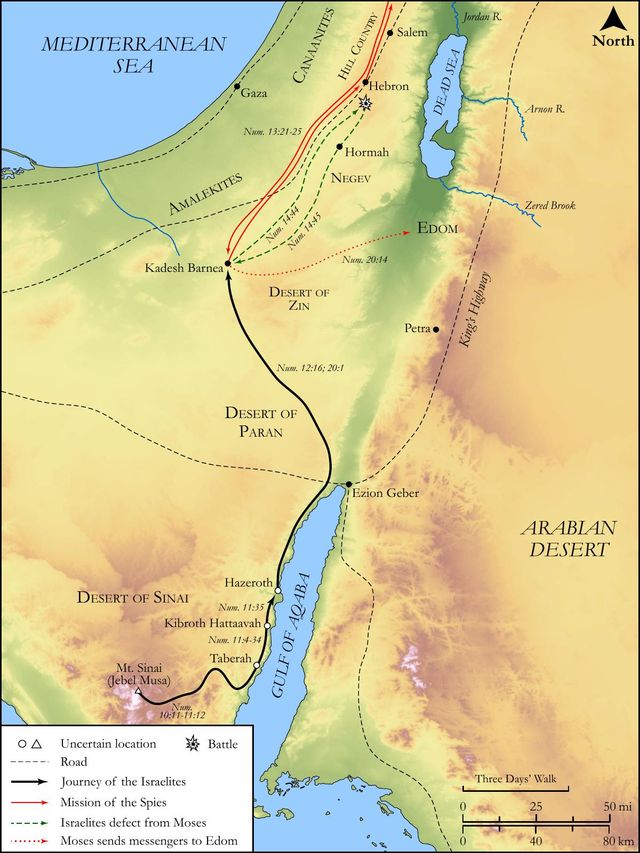
Numbers 16:3 immediately follows the introduction of Korah, a Levite, and Dathan and Abiram, Reubenites, along with 250 respected leaders, who "rose up before Moses" (Numbers 16:1-2). This rebellion is not an isolated incident but the culmination of a series of grumblings and acts of disobedience that have plagued Israel throughout their wilderness journey, particularly after the devastating judgment at Kadesh-Barnea, where God declared that the generation would not enter the Promised Land (Numbers 14). The people's persistent murmuring against God and His appointed leaders, including recent challenges regarding the priesthood and the land (Numbers 15), sets a tense and defiant backdrop for this direct challenge to Moses' and Aaron's authority. The rebellion's severity is amplified by its organized nature and the high status of its participants, indicating a deep-seated discontent with God's established order and a desire to usurp positions of power.
Historical & Cultural Context
In ancient Israel, leadership was fundamentally theocratic, meaning God Himself was the ultimate ruler, and human leaders like Moses and Aaron served as His divinely appointed representatives. Moses functioned as the supreme prophet, lawgiver, and civil leader, while Aaron and his descendants held the exclusive right to the high priesthood and the sacrificial system. This structure was not based on popular vote or human merit but on divine election and consecration. The concept of "holiness" (qadosh) was central to Israel's identity; they were a nation "set apart" by God (Exodus 19:6). However, within this corporate holiness, specific individuals and families were consecrated for particular, sacred functions, such as the Levites for temple service and the Aaronic line for the priesthood. The rebels' claim that "all the congregation are holy" twisted this truth, conflating the general, positional holiness of the nation with the specific, functional holiness required for unique, divinely ordained offices, thereby undermining the very foundation of God's governance.
Key Themes
ShowHideThe core of the rebellion in this verse revolves around several critical themes. Firstly, it embodies a profound Challenge to Divine Authority. The rebels' questioning of Moses and Aaron's leadership is, at its heart, a rejection of God's sovereign choice and the distinct roles He established for the functioning of His covenant community (as Moses later clarifies in Numbers 16:11). Secondly, Spiritual Pride and Envy are evident. Korah, a Levite, appears to covet the priestly office reserved for Aaron's lineage, while Dathan and Abiram, Reubenites, dispute Moses' civil leadership, revealing a desire to usurp positions not granted to them by God. Their accusation, "ye take too much upon you," ironically exposes their own ambition. Thirdly, there is a dangerous Misunderstanding of Holiness. While Israel was indeed a nation set apart by God, a "kingdom of priests and a holy nation" (Exodus 19:6), this corporate holiness did not negate the necessity for specific, consecrated leadership and priestly functions within the community. The rebels mistakenly believed that universal holiness implied universal access to all sacred offices, blurring the divinely established distinctions. Finally, the verse highlights the theme of Usurpation of Leadership, as the rebels seek to elevate themselves by dismantling the existing, God-ordained structure.
Exposition and Analysis
ShowHideKey Word Analysis
ShowHideMeaning "abundant" or "much." In this context, it conveys the idea of exceeding appropriate bounds or taking on an excessive amount of authority. The rebels use this term to accuse Moses and Aaron of overreaching their legitimate roles, implying they have become presumptuous and self-aggrandizing in their leadership.
Meaning "sacred" or "set apart." While the entire congregation of Israel was indeed set apart by God as His special people, this term here is misused by the rebels. They conflate the general, positional holiness of the nation with the specific, functional holiness required for distinct, divinely appointed offices like the priesthood or prophetic leadership, thereby attempting to nullify the unique roles God had established.
A primitive root meaning "to lift" or "to exalt." In its reflexive form used here, it means "to lift oneself up" or "to exalt oneself." The rebels accuse Moses and Aaron of self-exaltation and pride, ironically reflecting their own desire for elevation and control. This accusation stands in stark contrast to Moses' renowned humility, highlighting the rebels' distorted perception and their own sinful ambition.
Verse Breakdown
ShowHide"And they gathered themselves together against Moses and against Aaron,"
This clause underscores the organized and unified nature of the rebellion. It was not a spontaneous outburst but a deliberate, concerted effort by a significant number of prominent individuals, including Levites and tribal leaders. The phrase "gathered themselves together" suggests a formal assembly or conspiracy, indicating the seriousness and premeditated nature of their challenge to the established divine order.
"and said unto them, [Ye take] too much upon you,"
This is the direct, confrontational accusation leveled by the rebels. It is an insolent and audacious challenge to the legitimacy of Moses' and Aaron's leadership, implying they have overstepped their authority and are acting presumptuously. This statement sets the tone for the rebellion, framing it as a righteous indignation against perceived tyranny, while in reality, it reveals their own rebellious hearts.
"seeing all the congregation [are] holy, every one of them, and the LORD [is] among them:"
This is the rebels' theological justification for their challenge. They appeal to the corporate holiness of Israel and God's pervasive presence among His people. While it contains a partial truth (Israel was indeed a holy nation and God was present), their application was flawed. They argued that if everyone is holy and God is everywhere, then there is no need for distinct, divinely appointed leaders or a special priesthood, thus undermining the very structure God had ordained for His covenant people.
"wherefore then lift ye up yourselves above the congregation of the LORD?"
This is a rhetorical question designed not to elicit information but to accuse and condemn. It implies that Moses and Aaron are acting out of self-interest and pride, unjustly elevating themselves above the rest of the community. This question ironically exposes the rebels' own desire for power and their spiritual blindness to the divine source of Moses' and Aaron's authority, which was rooted in God's call, not human ambition.
Literary Devices
ShowHideNumbers 16:3 masterfully employs several literary devices to convey the gravity and nature of Korah's rebellion. Irony is prominent, as the rebels accuse Moses and Aaron of self-exaltation ("lift ye up yourselves"), when it is precisely the rebels who are driven by pride and a desire to usurp authority for themselves. Moses, in contrast, is consistently depicted as the most humble man on earth (Numbers 12:3). The use of a Rhetorical Question ("wherefore then lift ye up yourselves...") serves to challenge and condemn, rather than genuinely inquire. It is a loaded question, designed to assert the rebels' premise of Moses' and Aaron's illegitimacy and to incite the congregation against them. Furthermore, there is a clear Contrast drawn between the rebels' self-serving ambition and the divinely appointed, humble leadership of Moses and Aaron. This contrast highlights the fundamental conflict between human will and divine decree, a recurring theme in the wilderness narrative.
Theological and Thematic Connections
ShowHideNumbers 16:3 stands as a stark theological warning against the dangers of spiritual pride and the usurpation of divinely appointed authority. The rebels' flawed understanding of corporate holiness, where they conflated the general consecration of the entire nation with the specific, functional holiness required for particular offices, reveals a profound spiritual blindness. This rebellion underscores that while God calls all His people to be holy and is present among them, He also establishes specific structures and chooses particular individuals for leadership, not based on human merit or popular vote, but on His sovereign will. To challenge these divinely ordained roles is not merely to challenge human leaders, but to challenge God Himself, as Moses correctly identifies (Numbers 16:11). This passage thus affirms the necessity of recognizing and submitting to God's established order, understanding that true authority flows from God's call, not human ambition or a misguided sense of egalitarianism that denies divine distinction.
Reflection and Application
ShowHideThe account of Korah's rebellion in Numbers 16:3 serves as a timeless cautionary tale for all believers and communities of faith. It challenges us to examine our own hearts for the subtle seeds of spiritual pride, envy, and a desire for positions or influence not granted by God. In an age that often champions radical egalitarianism and distrust of authority, this passage reminds us that while all believers are indeed "holy" in Christ and have direct access to God, this does not negate the divine pattern of appointed, gifted leadership within the church. True humility involves recognizing God's call on others and submitting to His established order, even when it doesn't align with our personal preferences or ambitions. We are called to serve faithfully in the roles God has given us, rather than coveting or challenging the roles He has given to others. This passage encourages us to cultivate a spirit of contentment, respect for spiritual authority, and a deep reliance on God's wisdom in ordering His people for their good and His glory.
Questions for Reflection
ShowHideFAQ
ShowHideWhat was the core motivation behind Korah's rebellion?
ShowHideWhile the rebels publicly claimed equality and universal holiness as their justification, the underlying motivation for Korah's rebellion was primarily spiritual pride, envy, and a desire to usurp the divinely appointed roles of Moses and Aaron. Korah, a Levite, seemingly envied the exclusive priestly office held by Aaron's family, while Dathan and Abiram, Reubenites, disputed Moses' civil and prophetic leadership. Their accusation that Moses and Aaron "take too much upon you" was a thinly veiled attempt to seize power and elevate themselves, driven by discontent with their own God-given positions and a rejection of God's established order.
How does the statement "all the congregation are holy" fit with God's designation of specific leaders?
ShowHideIsrael was indeed a nation "holy" to the Lord, set apart for His purposes as a "kingdom of priests and a holy nation" (Exodus 19:6). This corporate holiness meant they were distinct from other nations and consecrated to God. However, within this holy nation, God established specific, functional roles and offices—like the Aaronic priesthood and Moses' prophetic leadership—that required special consecration and divine appointment. The rebels' error was to conflate the general, positional holiness of the entire community with the specific, functional holiness required for particular offices. They denied God's right to appoint distinct leaders for distinct tasks, mistakenly believing that universal holiness implied universal access to all sacred functions, thereby undermining God's established order for the proper functioning of His covenant people.
Why was this rebellion considered so serious by God?
ShowHideThis rebellion was not merely a personal dispute with Moses and Aaron; it was a direct challenge to God's sovereign authority and His established order for His people. Moses and Aaron were God's chosen instruments, and to reject them was to reject God Himself, as Moses plainly states in Numbers 16:11. God's severe and immediate judgment, opening the earth to swallow the rebels (Numbers 16:31-33), underscored the extreme gravity of usurping divine authority, challenging God's chosen servants, and defiling the sanctity of the roles He appoints. It was an assault on the very foundation of the covenant relationship and the theocratic governance of Israel, threatening to unravel the divine order.
Christ-Centered Fulfillment
ShowHideNumbers 16:3, with its account of rebellion against divinely appointed leadership and a flawed understanding of holiness, finds profound Christ-centered fulfillment in the person and work of Jesus. Unlike Korah and his company, who sought to "lift themselves up" through human ambition and challenged God's chosen ones, Jesus, though truly God, "did not consider equality with God something to be used to his own advantage; rather, he emptied himself, by taking the form of a servant" (Philippians 2:6-7). He is the ultimate High Priest, appointed not by human lineage or self-exaltation, but by God Himself, "after the order of Melchizedek" (Hebrews 5:6), having no need to offer sacrifices for His own sins. Through His perfect sacrifice, Jesus truly makes His entire "congregation" holy, not merely in a national sense, but by imparting His own righteousness to all who believe, making them a "royal priesthood, a holy nation" (1 Peter 2:9). This new covenant holiness, however, does not negate the need for leadership, but redefines it under Christ's supreme headship as the "head of the church" (Ephesians 1:22-23), from whom all true authority flows. In Christ, the dangers of human pride and rebellion are overcome by divine humility and perfect submission, establishing a new community where all are holy in Him, yet ordered by His loving and wise authority for His glory.