


2 Samuel 17:16
- וְעַתָּהve·'a·Tahand thereforeH6258Conj-w ¦ AdvAdverbוְandעַתָּהtherefore
- שִׁלְחוּshil·ChusendH7971V-Qal-Imp-2mpVerb Qal Imperative 2nd Plural Masculine
- מְהֵרָהme·he·RahquicklyH4120AdvAdverb
- וְהַגִּידוּve·ha·Gi·duand tellH5046Conj-w ¦ V-Hiphil-Imp-2mpVerb Hiphil Imperative 2nd Plural Masculineוְandהַגִּידוּtell
- לְדָוִדle·da·Vidto DavidH1732Prep-l ¦ N-proper-mNoun Proper MasculineלְtoדָוִדDavid
- לֵאמֹרle·Mor<to> sayingH559Prep-l ¦ V-Qal-InfVerb Qal Infinitive Constructלֵ<to>אמֹרsaying
- אַל'almay notH408NegParticle Negative
- תָּלֶןTa·lenyou pass [the] nightH3885V-Qal-Imperf-2msVerb Qal Imperfect 2nd Singular Masculine
- הַלַּיְלָהha·Lay·lahthis nightH3915Art ¦ N-msNoun Singular Masculine Absoluteהַthisלַּיְלָהnight
- בְּעַרְבוֹתbe·'ar·Votat [the] desert plains ofH6160Prep-b ¦ N-fpcNoun Plural Feminine Constructבְּatעַרְבוֹת[the] desert plains of
- הַמִּדְבָּרha·mid·Barthe wildernessH4057Art ¦ N-msNoun Singular Masculine Absoluteהַtheמִּדְבָּרwilderness
- וְגַםve·Gamand alsoH1571Conj-w ¦ AdvAdverbוְandגַםalso
- עָבוֹרa·Vorcertainly <to pass over>H5674V-Qal-InfAbsVerb Qal Infinitive Absolute
- תַּעֲבוֹרta·'a·Voryou will pass overH5674V-Qal-Imperf-2msVerb Qal Imperfect 2nd Singular Masculine
- פֶּןpenlestH6435PrtParticle Conditional
- יְבֻלַּעye·vu·La'it should be swallowed upH1104V-Pual-Imperf-3msVerb Pual Imperfect 3rd Singular Masculine
- לַמֶּלֶךְla·Me·lekhto the kingH4428Prep-l ¦ N-msNoun Singular Masculine Absoluteלַto theמֶּלֶךְking
- וּלְכָלu·le·kholand to allH3605Conj-w ¦ Prep-l ¦ N-mscNoun Singular Masculine Constructוּandלְtoכָלall
- הָעָםha·'Amthe peopleH5971Art ¦ N-msNoun Singular Masculine Absoluteהָtheעָםpeople
- אֲשֶׁר'a·SherwhichH834RelParticle Relative
- אִתּוֹ'i·To[is] with himH854Prep ¦ 3msPreposition Definiteאִתּ[is] withוֹhim
English is a literal word-by-word gloss of the Hebrew, not the KJV's wording. Why?
This is the original text the KJV's translators worked from — each Hebrew word with its own literal English meaning in this verse, prepared by scholars at Tyndale House, Cambridge. The KJV translates whole sentences, not word by word, so its wording differs: one Hebrew word can become several English words, and the KJV may choose “the LORD” where the gloss reads “Yahweh”. Both are faithful — they answer different questions. For the KJV's own rendering, switch to the KJV text.
Details
See on the biblical-era map
Study this verse
Public-domain commentary
Matthew Henry
From his Commentary on the Whole Bible. Henry comments on passages, not single verses — this entry covers 2 Samuel 17:15–21.
We must now leave David's enemies pleasing themselves with the thoughts of a sure victory by following Hushai's counsel, and sending a summons, no doubt, to all the tribes of Israel, to come to the general rendezvous at a place appointed, pursuant to that counsel; and we next find David's friends consulting how to get him notice of all this, that he might steer his course accordingly. Hushai tells the priests what had passed in council, Sa2 17:15. But, it should seem, he was not sure but that yet Ahithophel's counsel might be followed, and was therefore jealous lest, if he made not the best of his way, the king would be swallowed up, and all the people that were with him, Sa2 17:16. Perhaps, as he was called in to give advice (Sa2 17:5), so he was dismissed before they came to that resolve (Sa2 17:14) in favour of his advice, or he feared they might afterwards change their mind. However, it was good to provide against the worst, and therefore to hasten those valuable lives out of the reach of these destroyers. Such strict guards did Absalom set upon all the avenues to Jerusalem that they had much ado to get this necessary intelligence to David. 1. The young priests that were to be the messengers were forced to retire secretly out of the city, by En-rogel, which signifies, as some say, the fountain of a spy. Surely it went ill with Jerusalem when two such faithful priests as they were might not be seen to come into the city. 2. Instructions were sent to them by a poor simple young woman, who probably went to that well under pretence of fetching water, Sa2 17:17. If she carried the message by word of mouth, there was danger of her making some mistake or blunder in it; but Providence can make an ignorant girl a trusty messenger, and serve its wise counsels by the foolish things of the world. 3. Yet, by the vigilance of Absalom's spies, they were discovered, and information was brought to Absalom of their motions: A lad saw them and told him, Sa2 17:18. 4. They, being aware that they were discovered, sheltered themselves in a friend's house in Bahurim, where David had refreshed himself but just before, Sa2 16:14. There they were happily hidden in a well, which now, in summer time, perhaps was dry, Sa2 17:18. The woman of the house very ingeniously covered the mouth of the well with a cloth, on which she spread corn to dry, so that the pursuers were not aware that there was a well; else they would have searched it, Sa2 17:19. Thus far the woman did well; but we know not how to justify her further concealing them with a lie, Sa2 17:20. We must not do evil that good may come of it. However, hereby the messengers were protected, and the pursuers were defeated and returned to Absalom without their prey. It was well that Absalom did not hereupon fall upon their two fathers, Zadok and Abiathar, as Saul on Ahimelech for his kindness to David: but God restrained him. Being thus preserved, they brought their intelligence very faithfully to David (Sa2 17:21), with this advice of his friends, that he should not delay to pass over Jordan, near to which, it seems, he now was. There, as some think, he penned the 42nd and 43rd Psalms, looking back upon Jerusalem from the land of Jordan, Psa 42:6.
Historical interpretation
Historical reception
1 surviving comment on this verse from the historical church.
For in the history, Hushai is mentioned as the chief companion of David and the son of Arachi, but in the psalm, Hushai is the son of Jemini. Neither he nor any other of those appearing in the history was the son of Jemini. Perhaps he was called the son of Jemini for this reason, because he displayed great valor and strength through a mere pretense of friendship, going over, as he pretended, to Absalom, but in reality thwarting the plans of Ahithophel, a very skilled man, well trained in military affairs, who was giving his counsel. “The son of Jemini” is interpreted “the son of the right hand.” By his proposals he prevented the acceptance of the plan of Ahithophel—that no time should intervene in the affairs but that an attack should be made immediately on the father while he was unprepared—“in order that,” as Scripture says, “the Lord might bring all evils upon Absalom.” At all events, he seemed to them to introduce more plausible reasons for postponement and delay, while his real purpose was to give time to David to gather his forces. Because of Hushai’s counsel he was acceptable to Absalom, who said, “The counsel of Hushai the Archite is better than the counsel of Ahithophel.”However, Hushai informed David through the priests Zadok and Abiathar of the decision and bade him not to camp in Araboth in the desert but urged him to cross it. Since, then, he was on the right hand of David through his good advice, he obtained the name from his brave deed. Surely it is because of this that he is called “son of Jemini,” that is, “son of the right hand.” It is a custom of Scripture not only to give those who are more wicked a name from their sin rather than from their fathers but also to call the better sons from the virtue characterizing them.
Continue studying 2 Samuel 17:16 across the web’s major study libraries — every link below opens this exact verse, chapter, or book on the destination site.
Read & Compare
 BibleGatewayThis verse in more than 200 translations and 70 languages.
 Bible.comThe YouVersion reader — hundreds of translations, reading plans, and highlights.
 ESV.orgCrossway's official English Standard Version reader.
 NET BibleThe NET translation with 60,000+ translators' notes on every rendering decision.
 STEP BibleTyndale House's free study tool — original text, vocabulary, and scholarly resources.
 BibliaLogos Bible Software's free web reader.
 USCCBThe New American Bible (Revised Edition) with the U.S. bishops' study notes.
Commentaries
 BibleHub CommentariesDozens of classic commentaries on this verse, gathered on one page.
 StudyLightMore than 100 commentary sets — the largest collection on the web.
 BibleRefPlain-English commentary on what this verse means, verse by verse.
 Enduring WordDavid Guzik's free commentary on this chapter, widely used by Bible teachers.
 Bible Study ToolsVerse commentary alongside Greek and Hebrew study aids.
Original Language & Research
- BibleHub InterlinearThe verse word by word — original language, transliteration, and English.
- BibleHub LexiconEvery word's original-language definition and Strong's entry.
 Blue Letter BibleDeep-study tools — Strong's numbers, concordance, and word studies.
 SefariaThe Hebrew text with Rashi and centuries of Jewish commentary.
Sermons, Hymns & Audio


TrulyRandomVerse is not affiliated with these sites and doesn’t control their content. They’re linked because they’re genuinely useful.
Summary
2 Samuel 17:16 captures the urgent, life-saving message dispatched by Hushai the Archite, David's loyal double agent, to warn King David. This pivotal communication reveals Ahithophel's immediate and destructive plan against David and his loyalists, compelling David to abandon his vulnerable position in the wilderness plains and swiftly cross the Jordan River. The message underscores the critical need for immediate action to prevent the king and his followers from being utterly annihilated by Absalom's forces, highlighting a moment of intense peril and divine intervention.
Context
ShowHideLiterary Context
This verse serves as the immediate culmination of a high-stakes strategic battle of wits between Ahithophel, Absalom's brilliant but treacherous chief advisor, and Hushai, David's faithful friend operating as a counter-intelligence agent. Following Absalom's successful seizure of Jerusalem and David's hasty retreat (2 Samuel 15:13), Ahithophel advised Absalom to pursue David without delay with a small, swift force, aiming to strike him down before he could regroup (2 Samuel 17:1-3). David, upon learning of Ahithophel's formidable counsel—which was "as if one had inquired at the oracle of God" (2 Samuel 16:23)- had prayed for God to "turn the counsel of Ahithophel into foolishness". God answered this prayer through Hushai, who, feigning loyalty to Absalom, offered a more appealing but time-consuming counter-counsel, advocating for a massive, all-Israelite mobilization (2 Samuel 17:7-13). Absalom, by divine design, accepted Hushai's counsel (2 Samuel 17:14), creating the crucial window of opportunity for David's escape that verse 16 addresses. This verse is Hushai's urgent follow-up, dispatching the vital warning via Zadok and Abiathar's sons, Jonathan and Ahimaaz, to ensure David capitalized on the delay.
Historical & Cultural Context
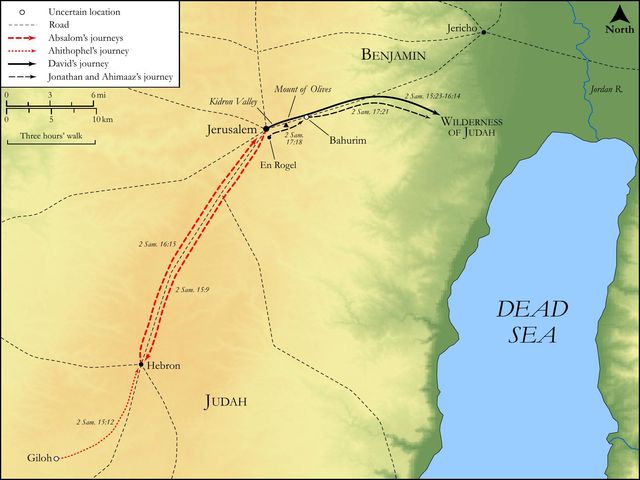
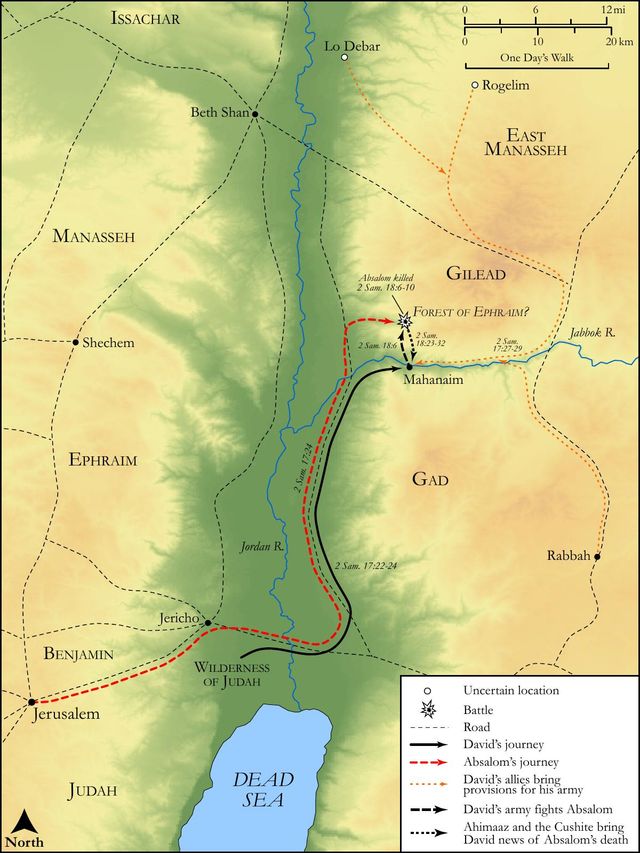
The events unfold in ancient Israel during the tumultuous period of the monarchy, specifically during Absalom's rebellion against his father, King David. Such rebellions were not uncommon in the ancient Near East, often driven by succession disputes and charismatic figures. The role of royal advisors like Ahithophel was paramount; their counsel could decide the fate of kingdoms, often being regarded with near-divine authority. The geographical setting is crucial: David had fled Jerusalem and was likely in the exposed wilderness plains west of the Jordan River. The Jordan itself served as a significant natural barrier. Crossing it meant moving into the Transjordan region, which offered more rugged, defensible terrain, potential for gathering allies (e.g., from Gilead), and a greater distance from Absalom's immediate power base in Jerusalem. The "plains of the wilderness" (likely the Arabah, a desolate rift valley) would have offered little cover or strategic advantage for David's small, weary company against a swift, determined attack, hence the extreme urgency of Hushai's warning to cross the river.
Key Themes
ShowHideThe passage powerfully articulates several interconnected themes. Divine Providence is central, as the entire episode, particularly Hushai's successful counter-counsel, is explicitly attributed to God's sovereign intervention to "defeat the good counsel of Ahithophel" (2 Samuel 17:14). God uses human agents and their actions, even in the midst of political intrigue and betrayal, to achieve His purposes and protect His anointed. Urgency and Imminent Danger are palpable, conveyed by the repeated calls for speed ("quickly," "speedily") and the dire warning of being "swallowed up," highlighting the existential threat David faced. This underscores the razor-thin margin of safety and the critical nature of timely intelligence. Finally, Loyalty and Strategic Intelligence are vividly portrayed through Hushai's unwavering faithfulness to David. Operating undercover at immense personal risk, his cunning and strategic thinking prove instrumental in saving the king's life, demonstrating the invaluable role of faithful allies and divinely-inspired wisdom in times of crisis.
Exposition and Analysis
ShowHideKey Word Analysis
ShowHideThis adverb emphasizes the extreme urgency of the situation. It conveys a sense of immediate necessity, indicating that any delay could be fatal. It's not merely a suggestion but a desperate plea for swift action, highlighting the razor-thin margin of safety David had. The repetition of this concept ("send quickly," "speedily pass over") underscores the critical temporal element of the warning.
Literally meaning "to cross over," in this context it specifically refers to crossing the Jordan River. This act signifies a strategic retreat to a safer, more defensible position. It implies not only movement but a definitive shift in location to escape immediate danger and gain time and geographical advantage against the pursuing forces. It represents a transition from vulnerability to relative security.
This vivid verb means to engulf, consume, or utterly destroy. It paints a picture of total annihilation, not just defeat or capture, but complete obliteration. The imagery evokes a predator devouring its prey, emphasizing the totality of the danger David and his people faced had they been caught by Absalom's forces. This powerful word underscores the critical nature of Hushai's warning and the need for immediate, decisive action.
Verse Breakdown
ShowHide"Now therefore send quickly, and tell David, saying,"
This opening phrase conveys the immediate and urgent command from Hushai to his messengers (Zadok and Abiathar's sons, Jonathan and Ahimaaz). "Now therefore" links this message directly to the preceding events, particularly Hushai's successful frustration of Ahithophel's counsel. The imperative "send quickly" sets the tone for the entire message, emphasizing speed as the paramount factor for David's survival.
"Lodge not this night in the plains of the wilderness,"
This is a direct, negative command, warning David against remaining in his current vulnerable location. The "plains of the wilderness" refers to the exposed, low-lying areas west of the Jordan, where David's small, exhausted group would be easily found and overwhelmed by Absalom's rapidly mobilizing army. To "lodge" implies settling down for the night, which would be a fatal mistake given Ahithophel's initial plan for a night attack.
"but speedily pass over;"
This is the positive, urgent command, providing the solution to the immediate danger. "Speedily" reiterates the need for haste, reinforcing the "quickly" from the beginning of the verse. "Pass over" refers to crossing the Jordan River, which would put a significant natural barrier between David and Absalom's forces, buying David precious time to regroup and strategize in the more defensible Transjordan region.
"lest the king be swallowed up, and all the people that [are] with him."
This clause reveals the dire consequence of inaction and the reason for the extreme urgency. The phrase "swallowed up" is a powerful metaphor for complete destruction or annihilation, indicating that Ahithophel's plan, if executed, would result in the total defeat and death of David and everyone loyal to him. This highlights the high stakes of the rebellion and the critical nature of Hushai's warning, emphasizing the totality of the threat.
Literary Devices
ShowHideThe passage effectively employs several literary devices to heighten its dramatic tension and convey its urgent message. The vivid Imagery of "swallowed up" is particularly striking, evoking a terrifying picture of complete engulfment and annihilation, which underscores the existential threat David faced. The repeated use of adverbs like "quickly" and "speedily" creates a palpable sense of Urgency and rapid pace, mirroring the critical need for immediate action. There is also a strong element of Dramatic Irony, as Absalom and his advisors are completely unaware that Hushai, whom they believe to be a loyal counselor, is actively working against them to save David. This hidden truth adds a layer of suspense and highlights the unseen divine hand at work. Furthermore, the passage contains Foreshadowing, as Hushai's successful counter-counsel and urgent warning of impending doom subtly hint at David's eventual deliverance and Absalom's ultimate defeat, reinforcing the overarching theme of divine providence and the preservation of God's anointed.
Theological and Thematic Connections
ShowHideThis critical verse, while seemingly a simple military warning, is deeply embedded in a larger theological narrative of God's sovereign protection over His anointed king. It demonstrates that even when human plots are meticulously crafted and seem unstoppable, God can, and often does, intervene through unexpected means and seemingly ordinary human agents to frustrate the plans of the wicked and preserve His purposes. Hushai's loyalty and strategic brilliance are not merely human attributes but are divinely empowered to serve God's overarching plan for David and his kingdom. The urgency of the message also speaks to the reality of spiritual warfare, where vigilance and decisive action are often required to escape the schemes of the enemy. It reminds us that God's deliverance often comes through human cooperation with divine wisdom, highlighting the importance of discerning and heeding wise counsel, especially when it aligns with God's protective hand and sovereign will.
Reflection and Application
ShowHideThe narrative of Hushai's urgent warning to David offers profound lessons for believers today. In our own lives, we often face situations where we feel "swallowed up" by overwhelming circumstances, relentless opposition, or the cunning schemes of others. This passage encourages us to remember that God is sovereign even over the most meticulously crafted human plots and the most dire threats. It reminds us of the importance of seeking and heeding wise counsel, especially from those who demonstrate unwavering loyalty to God's truth and to us. Just as David's prayer was answered through Hushai's strategic intervention, we are called to pray for wisdom and discernment, trusting that God can use unexpected people and circumstances to provide deliverance and protection. Furthermore, the urgency in Hushai's message underscores the need for decisive action when God reveals a clear path or warns of impending danger. Procrastination in the face of divine guidance can have dire consequences. Finally, the story celebrates the profound value of loyal friendship and community, reminding us to cultivate relationships with those who will stand with us, offer wise counsel, and speak truth into our lives, even at great personal risk.
Questions for Reflection
ShowHideFAQ
ShowHideWhat was Ahithophel's original counsel, and why was it so dangerous for David?
ShowHideAhithophel's original counsel to Absalom was to immediately pursue David with a small, hand-picked force of 12,000 men, striking him down while he was weary and vulnerable in the wilderness, before he could regroup or gather strength (2 Samuel 17:1-3). This plan was exceptionally dangerous because it was strategically sound and designed for a swift, decisive victory. Ahithophel understood that David, though a formidable warrior, was currently on the run and demoralized. A rapid, overwhelming assault would have caught David unprepared, likely resulting in his death and the complete collapse of his loyalists, effectively ending the rebellion in Absalom's favor.
How did Hushai manage to frustrate Ahithophel's counsel, and what was his counter-proposal?
ShowHideHushai frustrated Ahithophel's counsel by pretending to be a loyal advisor to Absalom, offering a counter-proposal that appealed to Absalom's vanity and desire for a grand, overwhelming victory. Hushai argued that David was a seasoned warrior, not easily caught, and that a small force risked defeat. Instead, he proposed gathering all of Israel, "from Dan even to Beersheba," to march against David with an immense army, ensuring a total, undeniable victory where David and his forces would be "swallowed up" like dew on the ground (2 Samuel 17:7-13). This counsel, though seemingly more impressive, bought David the crucial time he needed to escape and regroup.
How does this event demonstrate God's hand at work in the narrative?
ShowHideThis event powerfully demonstrates God's hand at work in several ways. Firstly, David had explicitly prayed that God would "turn the counsel of Ahithophel into foolishness". The success of Hushai's counter-counsel is presented as a direct answer to this prayer. Secondly, the text explicitly states, "For the Lord had purposed to defeat the good counsel of Ahithophel, to the intent that the Lord might bring evil upon Absalom" (2 Samuel 17:14). This verse clearly attributes the frustration of Ahithophel's plan and the acceptance of Hushai's counsel to God's sovereign will and intervention. God used Hushai as His instrument to protect David and ensure the continuation of His covenant promises.
Christ-Centered Fulfillment
ShowHideThe urgent warning to King David in 2 Samuel 17:16, urging him to "speedily pass over" to avoid being "swallowed up," finds its ultimate spiritual fulfillment in the person and work of Jesus Christ. David, as the anointed king, faced a rebellion that threatened his very existence, foreshadowing the spiritual rebellion of humanity against God. Just as Hushai's wisdom and loyalty saved David from imminent destruction, Christ is the ultimate "wise counsel" and "loyal friend" who delivers humanity from the threat of eternal death and judgment. The imagery of being "swallowed up" by an enemy vividly portrays the power of sin and death, which held humanity captive. However, Christ, through His death and resurrection, conquered these enemies, ensuring that those who trust in Him will not be "swallowed up" by the grave or eternal separation from God. He is the one who calls us to "pass over" from death to life (John/5-24), from the dominion of darkness to His wonderful light (Colossians/1-13), and from the bondage of sin to the freedom of His grace (Romans/6-22). His urgent call to repentance and faith is the divine "send quickly" that secures our eternal safety, allowing us to "lodge not" in the vulnerable plains of sin and self-reliance, but to "speedily pass over" into the secure kingdom of God, where we are eternally safe in Him (Hebrews/4-16).