


New Testament · General Epistles · Book 61 of 66
2 Peter
Peter’s last letter, written as his death drew near, to keep believers growing in the knowledge of Christ against false teachers and scoffers at his coming.
- 3 chapters
- 61 verses
- About 7 minutes to read
- Letters to the Churches, c. AD 48–96
Peter wrote this letter knowing that “shortly I must put off this my tabernacle” (2 Peter 1:14), and he wrote it to put believers “in remembrance” of what they already knew (1:13). He names two dangers. False teachers will rise in the church as false prophets rose in Israel, “even denying the Lord that bought them” (2:1). Scoffers will ask, “Where is the promise of his coming?” (3:4). Against both he sets what God has already given, “all things that pertain unto life and godliness” (1:3), and a faith that grows by diligence.
Peter grounds what he teaches in what he saw and in what was written. He heard the Father’s voice “when we were with him in the holy mount” (1:18), and the prophets “spake as they were moved by the Holy Ghost” (1:21). Before he ends he sets Paul’s epistles beside “the other scriptures” (3:16). The letter is framed by knowledge: grace is multiplied “through the knowledge of God, and of Jesus our Lord” (1:2), and the last words are “grow in grace, and in the knowledge of our Lord and Saviour Jesus Christ” (3:18).
But grow in grace, and in the knowledge of our Lord and Saviour Jesus Christ. To him be glory both now and for ever. Amen.
2 Peter 3:18 KJV
Before you read
- Who wrote it
- Simon Peter, “a servant and an apostle of Jesus Christ” (2 Peter 1:1). He writes as an eyewitness of the transfiguration (1:16–18) and calls this his “second epistle” (3:1).
- When it was written
- Near the end of Peter’s life, which Christ had shown him (1:14; John 21:18–19), and after Paul had written to the same readers (3:15–16).
- To whom
- “Them that have obtained like precious faith with us” (1:1). It is his second letter to them (3:1); the first, 1 Peter, went to believers scattered through Pontus, Galatia, Cappadocia, Asia and Bithynia (1 Peter 1:1).
How 2 Peter is laid out
6 movements · 12 passages · 61 verses
Precious faith, and virtue added
1:1–11 · 11 verses
Simon Peter greets those who share “like precious faith.” God’s divine power has given them all things for life and godliness, and promises by which they partake of the divine nature. To faith they are to add virtue, knowledge, temperance, patience, godliness, brotherly kindness and charity, and so make their calling and election sure and enter the everlasting kingdom.
Eyewitnesses and the prophetic word
1:12–21 · 10 verses
Knowing that his death is near, as Christ showed him, Peter will keep them in remembrance. The apostles did not follow “cunningly devised fables”: they saw Christ’s majesty and heard the Father’s voice on the holy mount. Believers have also “a more sure word of prophecy,” a light in a dark place, for its writers “spake as they were moved by the Holy Ghost.”
False teachers and old judgments
2:1–9 · 9 verses
As false prophets arose among the people, false teachers will arise among them, bringing in damnable heresies and making merchandise of believers with feigned words. Their judgment does not linger. God spared not the angels that sinned, the old world in the flood, or Sodom and Gomorrha, yet he saved Noah and delivered just Lot. The Lord knows how to deliver the godly.
Wells without water
2:10–22 · 13 verses
The teachers are presumptuous and selfwilled, speak evil of dignities, have eyes full of adultery, and follow the way of Balaam, who loved the wages of unrighteousness and was rebuked by a dumb ass. They promise liberty while they are servants of corruption. Those entangled again after knowing Christ end worse than they began, like the dog and the sow of the proverb.
Where is the promise?
3:1–10 · 10 verses
In this second letter Peter recalls the words of the holy prophets and the commandment of the apostles. Scoffers will mock the promise of the Lord’s coming, ignoring that by the word of God the world once perished in the flood, and that the same word keeps it for fire. The Lord is not slack but longsuffering, and his day will come as a thief.
Holy living until that day
3:11–18 · 8 verses
Since all these things shall be dissolved, believers are to live in holiness, looking for new heavens and a new earth wherein dwelleth righteousness, and to be found of him in peace. Paul, too, wrote that the Lord’s longsuffering is salvation, in letters the unstable wrest as they do the other scriptures. Peter closes: beware, grow in grace and knowledge, and give Christ glory.
The words 2 Peter turns on
God gives knowledge of the Saviour and all that pertains to godliness; the believer answers with diligence. The false teachers face destruction, and the whole letter looks to his coming.
- ἐπίγνωσις epígnōsisknowledge, full recognition4 verses
- εὐσέβεια eusébeiagodliness, reverence toward God4 verses
- σωτήρ sōtḗrSaviour, deliverer5 verses
- σπουδάζω spoudázōgive diligence, endeavour3 verses
- ἀπώλεια apṓleiadestruction, perdition; damnable, pernicious5 verses
- παρουσία parousíacoming, presence3 verses
What 2 Peter teaches
epígnōsis · knowledge
Knowledge that bears fruit
Grace and peace are multiplied “through the knowledge of God, and of Jesus our Lord” (1:2), and God’s power has given all things for life and godliness “through the knowledge of him that hath called us” (1:3). The word is epignōsis, and in every use here it is knowledge of a person, God or Christ. To faith the believer is to add virtue, knowledge, temperance, patience, godliness, brotherly kindness and charity (1:5–7), so as not to be “barren nor unfruitful in the knowledge of our Lord Jesus Christ” (1:8). That diligence does not earn the calling, which is God’s; it makes the calling and election “sure” (1:10). The letter ends where it began: “grow in grace, and in the knowledge of our Lord and Saviour Jesus Christ” (3:18).
prophēteía · prophecy
A more sure word
Peter rests the faith on two witnesses. The first is his own: “we have not followed cunningly devised fables … but were eyewitnesses of his majesty” (1:16). The second is the prophetic word, “a light that shineth in a dark place, until the day dawn” (1:19). Its certainty lies in its source: “the prophecy came not in old time by the will of man: but holy men of God spake as they were moved by the Holy Ghost” (1:21). The commandment of the apostles stands beside the words of the prophets (3:2), and Paul’s epistles are counted with “the other scriptures,” which the unlearned wrest “unto their own destruction” (3:16). The false teachers come with “feigned words” (2:3); the church holds a word God gave.
apṓleia · destruction
False teachers among you
As “there were false prophets also among the people,” Peter writes, “there shall be false teachers among you” (2:1). Their heresies are “damnable,” heresies of apōleia, destruction, and the same word is their “swift destruction” (2:1) and the “perdition of ungodly men” (3:7). Peter answers them from three judgments of old: the angels that sinned, the flood and Sodom. In two of them God also delivered, Noah and “just Lot,” for “the Lord knoweth how to deliver the godly out of temptations” (2:9). Christians have read the turning back of 2:20–22 in two ways: of men who had known “the way of righteousness” and turned from it (Ezekiel 18:24), or of men only outwardly washed, like the sow of the proverb (2:22), who “went out from us, but they were not of us” (1 John 2:19).
parousía · coming
The promise of his coming
The scoffers ask, “Where is the promise of his coming? for since the fathers fell asleep, all things continue as they were from the beginning of the creation” (3:4). Peter answers that all things have not continued. By the word of God the world “that then was, being overflowed with water, perished” (3:6), and by the same word the present heavens and earth are “reserved unto fire” (3:7). The delay is longsuffering, “not willing that any should perish, but that all should come to repentance” (3:9). Some read “any” of all men, as God “will have all men to be saved” (1 Timothy 2:4); others of the “us-ward,” the Lord’s own, for whom his longsuffering is “salvation” (3:15). On either reading the waiting is mercy, and the day still comes “as a thief in the night” (3:10).
Christ in 2 Peter
The letter’s first line calls him “God and our Saviour Jesus Christ” (1:1). One Greek article governs both titles, as in “our Lord and Saviour Jesus Christ” (1:11), which plainly names one person; Paul speaks the same way of “the great God and our Saviour Jesus Christ” (Titus 2:13). Others read two persons, as in the next verse (1:2). The last line gives him the glory Scripture gives to God: “To him be glory both now and for ever” (3:18; Romans 11:36).
Peter’s own witness is the transfiguration, where he heard the Father say, “This is my beloved Son, in whom I am well pleased” (1:17; Matthew 17:5). Matthew sets it straight after Christ’s word that some there would “see the Son of man coming in his kingdom” (Matthew 16:28), and Peter calls it “the power and coming of our Lord Jesus Christ” (1:16): the glory of the coming the scoffers deny was shown beforehand on the mount. The false teachers deny “the Lord that bought them” (2:1), and Peter’s first letter names the price, “the precious blood of Christ” (1 Peter 1:19).
People
By how many verses name them
Places
2 named
- GomorrhaCondemned with Sodom in the same overthrow1
- SodomTurned to ashes as an ensample to the ungodly; Lot delivered1
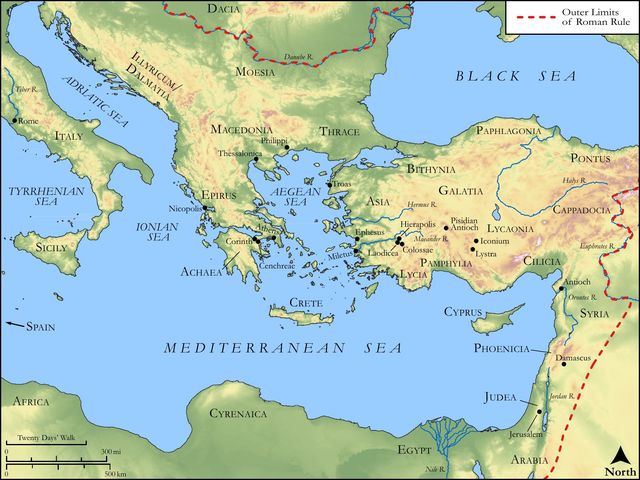
Where 2 Peter reaches
The passages it leans on, and the ones that lean on it
2 Peter 1:17–18 Matthew 17:1–5
The transfiguration Peter witnessed, as the Gospel tells it, with the Father’s voice from the cloud.
2 Peter 1:20–21 2 Timothy 3:16
Scripture’s source: holy men moved by the Holy Ghost, and all scripture given by inspiration of God.
Jude gives the same examples: the angels kept in chains under darkness, and Sodom and Gomorrha.
Moses’ psalm: a thousand years in God’s sight are but as yesterday.
2 Peter 3:13 Isaiah 65:17 Revelation 21:1
New heavens and a new earth, promised through Isaiah and seen by John.
Books 2 Peter links to most
The Church Fathers on 2 Peter
217 quotations from 37 writers before AD 800 · the ten most quoted, in date order
- Clement99
- Tertullian220
- Hippolytus235
- Lucius Caecilius Firmianus Lactantius325
- Chrysostom407
- Augustine430
- Cyril444
- Hilary449
- Andreas614
- Bede735
Andreas of Caesarea, on “like precious faith with us” in the letter’s first line.
Notice how right from the start Peter encourages the souls of the believers by raising them up to the same spiritual level as that of the apostles. For the grace of baptism is the same in every believer.
Origen read “partakers of the divine nature” as the fellowship of the Holy Spirit.
What is the fellowship of the Holy Spirit? Peter describes this by calling it “sharing in the divine nature.”
Augustine, on why the false teachers are wells without water.
Peter calls these people dry springs—springs, because they have received knowledge of the Lord Christ, but dry, because they do not live in accordance with that knowledge.
Hilary of Arles, on a day with the Lord as a thousand years.
Just as a man works for a day and afterwards remembers what he has done, so God does not forget even after a thousand years. It may be a long time before he gets round to punishing sinners, but when he does so he uses his power in a single instant.
Keep studying
Articles