


2 Peter 1:2
Bible text: King James Version (1769 Blayney text) · Public domain
Bible text: Berean Standard Bible · Public domain
Bible text: American Standard Version (1901) · Public domain
Bible text: World English Bible, Messianic edition · Public domain
Bible text: Geneva Bible (1599) · Public domain
Bible text: Young's Literal Translation · Public domain
- ΧάριςCharisGraceG5485N-NSFNoun Nominative Singular Feminine
- ὑμῖνhuminto youG4771P-2DPPersonal pronoun Dative 2nd Plural
- καὶkaiandG2532CONJConjunction
- εἰρήνηeirēnēpeaceG1515N-NSFNoun Nominative Singular Feminine
- πληθυνθείηplēthuntheiēwould be multipliedG4129V-APO-3SVerb Aorist Passive Optative 3rd Singular
- ἐνeninG1722PREPPreposition
- ἐπιγνώσειepignōsei[the] knowledgeG1922N-DSFNoun Dative Singular Feminine
- τοῦtou<the>G3588T-GSMDefinite article Genitive Singular Masculine
- θεοῦtheouof GodG2316N-GSM-TNoun Genitive Singular Masculine Title
- καὶkaiandG2532CONJConjunction
- ἸησοῦIēsouof JesusG2424N-GSM-PNoun Genitive Singular Masculine Individual
- τοῦtoutheG3588T-GSMDefinite article Genitive Singular Masculine
- κυρίουkuriouLordG2962N-GSM-TNoun Genitive Singular Masculine Title
- ἡμῶνhēmōnof usG3165P-1GPPersonal pronoun Genitive 1st Plural
English is a literal word-by-word gloss of the Greek, not the KJV's wording. Why?
This is the original text the KJV's translators worked from — each Greek word with its own literal English meaning in this verse, prepared by scholars at Tyndale House, Cambridge. The KJV translates whole sentences, not word by word, so its wording differs: one Greek word can become several English words, and the KJV may choose “charity” where the gloss reads “love”. Both are faithful — they answer different questions. For the KJV's own rendering, switch to the KJV text.
Details
See on the biblical-era maps

Study this verse
Public-domain commentary
Matthew Henry
From his Commentary on the Whole Bible. Henry comments on passages, not single verses — this entry covers 2 Peter 1:1–4. His four-level outline is real structure in the source text, so it is rendered as structure.
The apostle Peter, being moved by the Holy Ghost to write once more to those who from among the Jews were turned to faith in Christ, begins this second epistle with an introduction, wherein the same persons are described and the same blessings are desired that are in the preface to his former letter; but there are some additions or alterations which ought to be taken notice of, in all the three parts of the introduction.
I.We have here a description of the person who wrote the epistle, by the name of Simon, as well as Peter, and by the title of servant, as well as that of apostle. Peter, being in both epistles, seems to be the name most frequently used, and with which he may be thought to be best pleased, it being given him by our Lord, upon his confessing Jesus to be Christ the Son of the living God, and the very name signifying and sealing that truth to be the fundamental article, the rock on which all must build; but the name Simon, though omitted in the former epistle, is mentioned in this, lest the total omission of that name, which was given him when he was circumcised, should make the Jewish believers, who were all zealous of the law, to become jealous of the apostle, as if he disclaimed and despised circumcision. He here styles himself a servant (as well as an apostle) of Jesus Christ; in this he may be allowed to glory, as David does, Psa 116:16. The service of Christ is the way to the highest honour, Joh 12:26. Christ himself is King of kings, and Lord of lords; and he makes all his servants kings and priests unto God, Rev 1:6. How great an honour is it to be the servants of this Master! This is what we cannot, without sin, be ashamed of. To triumph in being Christ's servant is very proper for those who are engaging others to enter into or abide in the service of Christ.
II.We have an account of the people to whom the epistle is written.
They are described in the former epistle as elect according to the foreknowledge of God the Father, and here as having obtained precious faith in our Lord Jesus Christ; for the faith here mentioned is vastly different from the false faith of the heretic, and the feigned faith of the hypocrite, and the fruitless faith of the formal professor, how orthodox soever he is. It is the faith of God's elect (Tit 1:1), wrought by the Spirit of God in effectual calling. Observe,
1.True saving faith is a precious grace, and that not only as it is very uncommon, very scarce, even in the visible church, a very small number of true believers among a great multitude of visible professors (Mat 22:14), but true faith is very excellent and of very great use and advantage to those who have it. The just lives by faith, a truly divine spiritual life; faith procures all the necessary supports and comforts of this excellent life; faith goes to Christ, and buys the wine and milk (Isa 55:1) which are the proper nourishment of the new creature; faith buys and brings home the tried gold, the heavenly treasure that enriches; faith takes and puts on the white raiment, the royal robes that clothe and adorn, Rev 3:18. Observe,
2.Faith is alike precious in the private Christian and in the apostle; it produces the same precious effects in the one and in the other. Faith unites the weak believer to Christ as really as it does the strong one, and purifies the heart of one as truly as of another; and every sincere believer is by his faith justified in the sight of God, and that from all sins, Act 13:39. Faith, in whomsoever it exists, takes hold of the same precious Saviour, and applies the same precious promises.
3.This precious faith is obtained of God. Faith is the gift of God, wrought by the Spirit, who raised up Jesus Christ from the dead.
4.The preciousness of faith, as well as our obtaining it, is through the righteousness of Christ. The satisfactory meritorious righteousness and obedience of Christ gives faith all its value and preciousness: and the righteousness of such a person cannot but be of infinite value to those who by faith receive it. For,
(1.)This Jesus Christ is God, yea, our God, as it is in the original. He is truly God, an infinite Being, who has wrought out this righteousness, and therefore it must be of infinite value.
(2.)He is the Saviour of those that believe, and as such he yielded this meritorious obedience; and therefore it is of such great benefit and advantage to them, because, as surety and Saviour, he wrought out this righteousness in their stead.
III.We have the apostolical benediction, wherein he wishes for the multiplication and increase of the divine favour to them, and the advancement and growth of the work of grace in them, and that peace with God and in their own consciences (which cannot be without grace) may abound in them. This is the very same benediction that is in the former epistle; but here he adds,
1.An account of the way and means whereby grace and peace are multiplied - it is through the knowledge of God and Jesus Christ; this acknowledging or believing in the only living and true God, and Jesus Christ whom he has sent, is the great improvement of spiritual life, or it could not be the way to life eternal, Joh 17:3.
2.The ground of the apostle's faith in asking, and of the Christian's hope in expecting, the increase of grace. What we have already received should encourage us to ask for more; he who has begun the work of grace will perfect it. Observe,
(1.)The fountain of all spiritual blessings is the divine power of Jesus Christ, who could not discharge all the office of Mediator, unless he was God as well as man.
(2.)All things that have any relation to, and influence upon, the true spiritual life, the life and power of godliness, are from Jesus Christ; in him all fulness dwells, and it is from him that we receive, and grace for grace (Joh 1:16), even all that is necessary for the preserving, improving, and perfecting of grace and peace, which, according to some expositors, are called here in this verse godliness and life.
(3.)Knowledge of God, and faith in him, are the channel whereby all spiritual supports and comforts are conveyed to us; but then we must own and acknowledge God as the author of our effectual calling, for so he is here described: Him that hath called us to glory and virtue. Observe here, The design of God in calling or converting men is to bring them to glory and virtue, that is, peace and grace, as some understand it; but many prefer the marginal rendering, by glory and virtue; and so we have effectual calling set forth as the work of the glory and virtue, or the glorious power, of God, which is described Eph 1:19. It is the glory of God's power to convert sinners; this is the power and glory of God which are seen and experienced in his sanctuary (Psa 63:2); this power or virtue is to be extolled by all that are called out of darkness into marvellous light, Pe1 2:9.
(4.)In the fourth verse the apostle goes on to encourage their faith and hope in looking for an increase of grace and peace, because the same glory and virtue are employed and evidenced in giving the promises of the gospel that are exercised in our effectual calling. Observe,
[1.]The good things which the promises make over are exceedingly great. Pardon of sin is one of the blessings here intended; how great this is all who know any thing of the power of God's anger will readily confess, and this is one of those promised favours in bestowing whereof the power of the Lord is great, Num 14:17. To pardon sins that are numerous and heinous (every one of which deserves God's wrath and curse, and that for ever) is a wonderful thing, and is so called, Psa 119:18.
[2.]The promised blessings of the gospel are very precious; as the great promise of the Old Testament was the Seed of the woman, the Messiah (Heb 11:39), so the great promise of the New Testament is the Holy Ghost (Luk 24:49), and how precious must the enlivening, enlightening, sanctifying Spirit be!
[3.]Those who receive the promises of the gospel partake of the divine nature. They are renewed in the spirit of their mind, after the image of God, in knowledge, righteousness, and holiness; their hearts are set for God and his service; they have a divine temper and disposition of soul; though the law is the ministration of death, and the letter killeth, yet the gospel is the ministration of life, and the Spirit quickeneth those who are naturally dead in trespasses and sins.
[4.]Those in whom the Spirit works the divine nature are freed from the bondage of corruption. Those who are, by the Spirit of grace, renewed in the spirit of their mind, are translated into the liberty of the children of God; for it is the world in which corruption reigns. Those who are not of the Father, but of the world, are under the power of sin; the world lies in wickedness, Jo1 5:19. And the dominion that sin has in the men of the world is through lust; their desires are to it, and therefore it rules over them. The dominion that sin has over us is according to the delight we have in it.
Historical interpretation
Six Centuries of Reception
3 surviving comments on this verse. Each one is dated, so this reads as a timeline rather than a list.
Select a marker to jump to its quote. Markers stagger vertically where authors wrote within a few decades of each other.
There is nothing to equal this, which is why we pray and seek after the angel of peace. Everywhere we pray for peace in the churches—in the prayers, in the supplications and in the sermons. And the Guardian of the church gives it to us not once or twice but many times over: “Peace be unto you.” Why? Because peace is the mother of all good things and the foundation of our joy. For this reason Christ taught his disciples that when they entered people’s houses they were to say: “Peace be unto you.” Without peace everything else is useless.
Grace and peace be multiplied to you, etc. In the first Epistle he wrote: Grace and peace be multiplied to you (1 Peter 1). But in this one: Grace and peace be fulfilled to you, because, of course, he wrote the former letter to those beginning, and this one to those more perfect. For peace and grace are multiplied to those advancing well in this life through faith, but will be fulfilled for those arriving in the other life through vision. Hence, well, when saying: Grace and peace be fulfilled to you, he added: In the knowledge of our Lord Jesus Christ. Because this is eternal life (he says), that they know you the only true God, and Jesus Christ whom you have sent (John 17). And again: If the Son sets you free, you will be truly free, and you will know the truth, and the truth will set you free (John 8).
Simon Peter, a servant and apostle of Jesus Christ, to those who have obtained a faith of equal standing with ours by the righteousness of our God and Savior Jesus Christ. May grace and peace be multiplied to you in the knowledge of God and of Jesus our Lord.
"Simon." It is also written as Simeon. For Simon is short for Simeon: just as from Metrodoros we have Metras, from Menodoros we have Menas, and from Theodosios we have Theudas. Immediately from the beginning, he lifts the minds and souls of believers, inspiring them to equal diligence in preaching with the apostles.
For it is not just that those who have obtained a faith of equal standing should be in any way inferior to those who have been declared to be equals. Moreover, Peter receives them everywhere with peace, not that which is of the world, but that which is rooted in the knowledge of God. For this alone is called peace, as it frees us from offense and hatred toward God. Therefore, Christ also grants this to us as he departs to the Father, and when he rose from the dead, he proclaimed, "Peace be with you." (Jn. 14:27; 20:19,21,26) And in the churches, we pray that the angel of peace may be given to us: and the priest frequently grants this to the people from the altar: we also use this in our mutual addresses, that this is the mother of all good things, and the substance of our joy. Therefore, Christ commanded His disciples to first offer this divinely as they entered homes: (Luke 10:5) “Grace to you and peace.”
The order is as follows: May grace and peace be multiplied to you, as all things that pertain to life and godliness, in the knowledge of God and of Jesus our Lord, since by His divine power this grace has been granted to you, the knowledge, glory, and virtue of Him: through which the greatest promises have been given: that you may become partakers of the divine nature, having escaped the corruption that is in the world through lust.
“In the knowledge of God.” Otherwise: To you who have equally been honored with us in the knowledge of God and of our Lord Jesus Christ, may grace and peace be multiplied through the righteousness of our God. Or this is the order: In the knowledge of God and of our Lord Jesus Christ, which knowledge has been granted through His divine power, everything that pertains to life and godliness, and that very knowledge of Him who called us by glory and virtue, by which glory and virtue precious and magnificent promises have been granted, so that you may become partakers of the divine nature, escaping the corruption that is in the world through lust. But also for this very reason, applying all diligence, add to your faith virtue, to virtue knowledge, to knowledge self-control, and to self-control perseverance, and to perseverance godliness, and to godliness brotherly kindness, and to brotherly kindness love (2 Peter 1:3).
Continue studying 2 Peter 1:2 across the web’s major study libraries — every link below opens this exact verse, chapter, or book on the destination site.
Read & Compare
 BibleGatewayThis verse in more than 200 translations and 70 languages.
 Bible.comThe YouVersion reader — hundreds of translations, reading plans, and highlights.
 ESV.orgCrossway's official English Standard Version reader.
 NET BibleThe NET translation with 60,000+ translators' notes on every rendering decision.
 STEP BibleTyndale House's free study tool — original text, vocabulary, and scholarly resources.
 BibliaLogos Bible Software's free web reader.
 USCCBThe New American Bible (Revised Edition) with the U.S. bishops' study notes.
Commentaries
 BibleHub CommentariesDozens of classic commentaries on this verse, gathered on one page.
 StudyLightMore than 100 commentary sets — the largest collection on the web.
 BibleRefPlain-English commentary on what this verse means, verse by verse.
 Enduring WordDavid Guzik's free commentary on this chapter, widely used by Bible teachers.
 Bible Study ToolsVerse commentary alongside Greek and Hebrew study aids.
Original Language & Research
- BibleHub InterlinearThe verse word by word — original language, transliteration, and English.
- BibleHub LexiconEvery word's original-language definition and Strong's entry.
 Blue Letter BibleDeep-study tools — Strong's numbers, concordance, and word studies.
 CNTR CollationThe earliest Greek manuscripts of this verse, collated letter by letter.
Sermons, Hymns & Audio


TrulyRandomVerse is not affiliated with these sites and doesn’t control their content. They’re linked because they’re genuinely useful.
Summary
The Apostle Peter opens his second epistle with a profound and expansive blessing, praying for an ever-increasing measure of "grace" and "peace" upon his readers. This multiplication of divine favor and inner tranquility is not presented as an arbitrary gift but as a direct consequence of a deepening, intimate, and experiential "knowledge" of God the Father and Jesus Christ, our Lord. This salutation immediately sets the theological trajectory for the entire letter, emphasizing that true spiritual growth and steadfastness are rooted in a transformative understanding of the divine.
Context
ShowHideLiterary Context
This verse serves as the opening salutation of Peter's second epistle, immediately following the identification of the author and the recipients in 2 Peter 1:1. As a standard apostolic greeting, it conveys a blessing, but Peter expands upon the typical "grace and peace" by adding the crucial phrase "be multiplied unto you through the knowledge of God, and of Jesus our Lord." This addition is not merely a stylistic flourish but a foundational theological statement that anticipates the epistle's central themes. The subsequent verses, 2 Peter 1:3-4, immediately connect God's divine power and precious promises to this same "knowledge," indicating that this opening blessing is intrinsically linked to the means by which believers grow in godliness and escape the world's corruption.
Historical & Cultural Context
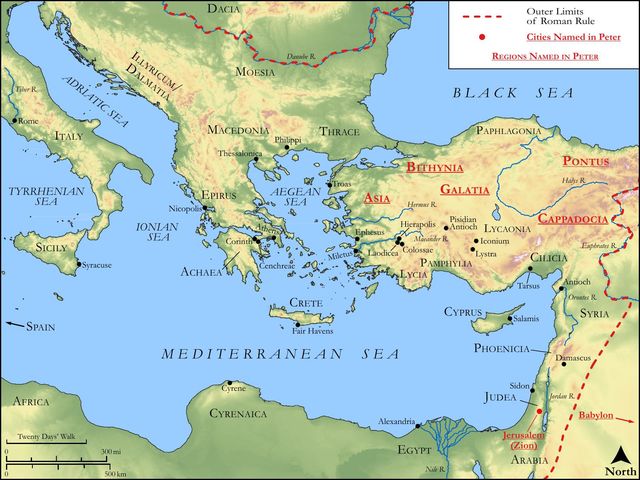
Peter's second epistle is addressed to believers, likely scattered across Asia Minor, facing significant challenges from within the church. The primary threat is the infiltration of false teachers (addressed extensively in 2 Peter 2) who deny the Lord, promote immorality, and scoff at the promise of Christ's return (2 Peter 3:3-4). In this turbulent environment, Peter's prayer for "multiplied grace and peace" is deeply relevant. Grace provides the divine enablement and favor needed to resist error and live righteously, while peace offers inner stability and wholeness amidst external turmoil and deceptive influences. The emphasis on "knowledge" serves as an antidote to the false teachings, which often relied on superficial or distorted understandings of God.
Key Themes
ShowHideSecond Peter is profoundly concerned with the themes of genuine knowledge versus false teaching, spiritual growth and godliness, and the certainty of Christ's return and the Day of the Lord. This opening verse immediately introduces the theme of knowledge as the conduit for divine blessings. The "multiplication" of grace and peace underscores God's desire for the abundant spiritual well-being of His people, not just a static measure. It also subtly introduces the theme of progression in the Christian life, which is further developed in 2 Peter 1:5-7, where believers are exhorted to diligently "add" virtues to their faith, ensuring that they are "not ineffective or unfruitful in the knowledge of our Lord Jesus Christ" (2 Peter 1:8).
Exposition and Analysis
ShowHideKey Word Analysis
ShowHideThis term, derived from a verb meaning "to rejoice," signifies graciousness, favor, and divine influence upon the heart, which is then reflected in the life. In this context, it refers to God's unmerited favor and divine enablement, the spiritual power and blessings He bestows upon believers. It encompasses all that God freely gives to humanity, not based on merit but on His benevolent character.
Rooted in a verb meaning "to join," this word denotes a state of wholeness, well-being, and reconciliation. It implies harmony, tranquility, and the absence of conflict, both internally and externally. In a theological sense, it refers to the state of being reconciled with God and experiencing the resultant inner calm and spiritual prosperity that flows from that relationship.
Distinct from mere intellectual acquaintance (gnōsis), epígnōsis signifies a full, precise, or experiential recognition and discernment. It implies a deep, intimate, and transformative understanding that comes from personal relationship and engagement, rather than just factual information. Peter uses this term throughout his letter to emphasize a true, saving, and transformative knowledge of God and Jesus Christ, contrasting it with the superficial or erroneous claims of the false teachers he addresses.
Verse Breakdown
ShowHide"Grace and peace be multiplied unto you"
This is a profound apostolic benediction, a prayer or wish for the recipients. The verb "multiplied" (Greek: plēthýnō) indicates an increase, an overflowing abundance, rather than a static measure. It signifies Peter's desire for the believers to experience an ever-growing supply of God's unmerited favor and inner spiritual wholeness. This multiplication suggests a dynamic, progressive experience of divine blessing, not merely a one-time endowment.
"through the knowledge of God, and of Jesus our Lord"
This crucial phrase identifies the means or channel by which grace and peace are multiplied. The preposition "through" (Greek: en, here denoting instrumentality or means) establishes a direct causal link. The "knowledge" specified is epígnōsis, a deep, personal, and transformative understanding. It is not just about knowing facts about God and Jesus, but intimately knowing God the Father and Jesus Christ as Lord. This implies that the more intimately believers know God and Jesus, the more they will experience an increase in divine grace and peace in their lives. The pairing of "God" (referring to the Father) and "Jesus our Lord" emphasizes the co-equal and unified source of this knowledge and the blessings it brings.
Literary Devices
ShowHidePeter employs several literary devices in this concise opening. The verse functions as a Benediction or blessing, a common feature in ancient letters, but it is elevated beyond a mere formality. The use of the verb "multiplied" (Greek: plēthýnō) serves as a form of Emphasis, highlighting the abundance and progressive nature of the grace and peace Peter desires for his readers. This word choice conveys a sense of overflowing divine provision. Furthermore, the phrase "through the knowledge of God, and of Jesus our Lord" establishes a clear Causal Relationship or conditionality. It explicitly links the multiplication of these spiritual blessings to a specific, active pursuit of deep knowledge, making the blessing contingent upon the believer's engagement with the divine. This structure underscores a key theological principle: spiritual benefits are often tied to spiritual disciplines and relational intimacy.
Theological and Thematic Connections
ShowHideThe theological significance of 2 Peter 1:2 lies in its articulation of the dynamic relationship between divine blessing and personal knowledge of God. It posits that grace and peace are not passively received in a static measure but are actively multiplied as believers deepen their intimate understanding of the Father and the Son. This "knowledge" is not intellectual assent alone, but a transformative, experiential relationship that reorients one's life. It underscores the active role of the believer in pursuing God, recognizing that spiritual vitality and inner tranquility are directly proportional to the depth of one's communion with the divine. This verse sets the stage for Peter's subsequent exhortations to grow in godliness, emphasizing that such growth is both enabled by God's grace and propelled by a genuine, living knowledge of Him.
Reflection and Application
ShowHidePeter's opening prayer in 2 Peter 1:2 offers a profound principle for Christian living: the pathway to experiencing an ever-increasing abundance of God's grace and peace is through a deepening, intimate knowledge of Him and His Son, Jesus. This isn't merely about acquiring more facts or doctrines, but about cultivating a transformative relationship that impacts every facet of our being. In a world often characterized by anxiety, turmoil, and spiritual deception, the promise of multiplied grace—God's empowering presence and unmerited favor—and peace—His profound inner tranquility—is immensely comforting and stabilizing. To walk in this multiplied blessing requires intentional pursuit: diligent engagement with God's Word, fervent and consistent prayer, active obedience to His commands, and a conscious effort to know Him more fully through all circumstances of life. As we draw nearer to God in this intimate knowledge, our lives are progressively transformed, reflecting more of His character and experiencing the profound spiritual well-being He offers.
Questions for Reflection
ShowHideFAQ
ShowHideWhat is the significance of "multiplied" grace and peace in 2 Peter 1:2?
ShowHideThe term "multiplied" (Greek: plēthýnō) signifies an ever-increasing, overflowing abundance of God's grace and peace, rather than a static or fixed amount. This is highly significant because it implies a dynamic and progressive experience of divine blessing. It means that God desires for believers not just to have grace and peace, but for these spiritual realities to grow and abound in their lives. This multiplication is directly linked to the depth of one's "knowledge" of God and Jesus, suggesting that as our understanding and intimacy with God deepen, so too does our experience of His favor and inner tranquility. It's a promise of progressive spiritual well-being and enablement, particularly vital for believers facing spiritual challenges and false teachings, as was the case for Peter's original audience (see 2 Peter 2:1-3).
Christ-Centered Fulfillment
ShowHideSecond Peter 1:2 finds its ultimate Christ-centered fulfillment in recognizing that Jesus Christ is not only the supreme revelation of God but also the very embodiment and source of the grace and peace Peter speaks of. The "knowledge of God, and of Jesus our Lord" is intrinsically linked, as Jesus is the perfect image of the invisible God (Colossians 1:15) and the one through whom all divine truth and grace are mediated (John 1:17). It is in Christ that believers find true peace with God, having been reconciled through His atoning sacrifice (Romans 5:1). He is our peace, breaking down all barriers (Ephesians 2:14), and in Him are hidden all the treasures of wisdom and knowledge (Colossians 2:2-3). Therefore, to pursue a deeper knowledge of God is to pursue a deeper knowledge of Christ, and as we do, the grace that saves and sustains us, and the peace that transcends all understanding, are indeed multiplied through Him.