


Matthew 14:4
- ἔλεγενelegenWere sayingG3004V-IAI-3SVerb Imperfect Active Indicative 3rd Singular
- γὰρgarforG1063CONJConjunction
- ὁho<the>G3588T-NSMDefinite article Nominative Singular Masculine
- ἸωάννηςIōannēsJohnG2491N-NSM-PNoun Nominative Singular Masculine Individual
- αὐτῷ·autōto himG846P-DSMPersonal pronoun Dative Singular Masculine
- οὐκoukNotG3756PRT-NNegative Particle Negative
- ἔξεστίνexestinit is lawfulG1832V-PAI-3SVerb Present Active Indicative 3rd Singular
- σοιsoifor youG4771P-2DSPersonal pronoun Dative 2nd Singular
- ἔχεινecheinto haveG2192V-PANVerb Present Active Infinitive
- αὐτήνautēnherG846P-ASFPersonal pronoun Accusative Singular Feminine
English is a literal word-by-word gloss of the Greek, not the KJV's wording. Why?
This is the original text the KJV's translators worked from — each Greek word with its own literal English meaning in this verse, prepared by scholars at Tyndale House, Cambridge. The KJV translates whole sentences, not word by word, so its wording differs: one Greek word can become several English words, and the KJV may choose “charity” where the gloss reads “love”. Both are faithful — they answer different questions. For the KJV's own rendering, switch to the KJV text.
Details
See on the biblical-era map
Study this verse
Public-domain commentary
Matthew Henry
From his Commentary on the Whole Bible. Henry comments on passages, not single verses — this entry covers Matthew 14:1–12. His four-level outline is real structure in the source text, so it is rendered as structure.
We have here the story of John's martyrdom. Observe,
I.The occasion of relating this story here, Mat 14:1, Mat 14:2. Here is,
1.The account brought to Herod of the miracles which Christ wrought. Herod the tetrarch or chief governor of Galilee heard of the fame of Jesus. At that time, when his countrymen slighted him, upon the account of his meanness and obscurity, he began to be famous at court. Note, God will honour those that are despised for his sake. And the gospel, like the sea, gets in one place what it loses in another. Christ had now been preaching and working miracles above two years; yet, it should seem, Herod had not heard of him till now, and now only heard the fame of him. Note, It is the unhappiness of the great ones of the world, that they are most out of the way of hearing the best things (Co1 2:8). Which none of the princes of this world knew, Co1 1:26. Christ's disciples were now sent abroad to preach, and to work miracles in his name, and this spread the fame of him more than ever; which was an indication of the spreading of the gospel by their means after his ascension.
2.The construction he puts upon this (Mat 14:2); He said to his servants that told him of the fame of Jesus, as sure as we are here, this is John the Baptist; he is risen from the dead. Either the leaven of Herod was not Sadducism, for the Sadducees say, There is no resurrection (Act 23:8); or else Herod's guilty conscience (as is usual with atheists) did at this time get the mastery of his opinion, and now he concludes, whether there be a general resurrection or no, that John Baptist is certainly risen, and therefore mighty works do show forth themselves in him. John, while he lived, did no miracle (Joh 10:41); but Herod concludes, that, being risen from the dead, he is clothed with a greater power than he had while he was living. And he very well calls the miracles he supposed him to work, not his mighty works, but mighty works showing forth themselves in him. Observe here concerning Herod,
(1.)How he was disappointed in what he intended by beheading John. He thought if he could get that troublesome fellow out of the way, he might go on in his sins, undisturbed and uncontrolled; yet no sooner is that effected, than he hears of Jesus and his disciples preaching the same pure doctrine that John preached; and, which is more, even the disciples confirming it by miracles in their Master's name. Note, Ministers may be silenced, and imprisoned, and banished, and slain, but the word of God cannot be run down. The prophets live not for ever, but the word takes hold, Zac 1:5, Zac 1:6. See Ti2 2:9. Sometimes God raises up many faithful ministers out of the ashes of one. This hope there is of God's trees, though they be cut down, Job 14:7-9.
(2.)How he was filled with causeless fears, merely from the guilt of his own conscience. Thus blood cries, not only from the earth on which it was shed, but from the heart of him that shed it, and makes him Magoṙmissabib - A terror round about, a terror to himself. A guilty conscience suggests every thing that is frightful, and, like a whirlpool, gathers all to itself that comes near it. Thus the wicked flee when none pursue (Pro 28:1); are in great fear, where no fear is, Psa 14:5. Herod, by a little enquiry, might have found out that this Jesus was in being long before John Baptist's death, and therefore could not be Johannes redivivus - John restored to life; and so he might have undeceived himself; but God justly left him to this infatuation.
(3.)How, notwithstanding this, he was hardened in his wickedness; for though he was convinced that John was a prophet, and one owned of God, yet he does not express the least remorse or sorrow for his sin in putting him to death. The devils believe and tremble, but they never believe and repent. Note, There may be the terror of strong convictions, where there is not the truth of a saving conversion.
II.The story itself of the imprisonment and martyrdom of John.
These extraordinary sufferings of him who was the first preacher of the gospel, plainly show that bonds and afflictions will abide the professors of it. As the first Old Testament saint, so the first New Testament minister, died a martyr. And if Christ's forerunner was thus treated, let not his followers expect to be caressed by the world. Observe here,
1.John's faithfulness in reproving Herod, Mat 14:3, Mat 14:4. Herod was one of John's hearers (Mar 6:20), and therefore John might be the more bold with him. Note, Ministers, who are reprovers by office, are especially obliged to reprove those that are under their charge, and not to suffer sin upon them; they have the fairest opportunity of dealing with them, and with them may expect the most favourable acceptance.
The particular sin he reproved him for was, marrying his brother Philip's wife, not his widow (that had not been so criminal), but his wife. Philip was now living, and Herod inveigled his wife from him, and kept here for his own. Here was a complication of wickedness, adultery, incest, besides the wrong done to Philip, who had had a child by this woman; and it was an aggravation of the wrong, that he was his brother, his half-brother, by the father, but not by the mother. See Psa 50:20. For this sin John reproved him; not by tacit and oblique allusions, but in plain terms, It is not lawful for thee to have her. He charges it upon him as a sin; not, It is not honourable, or, It is not safe, but, It is not lawful; the sinfulness of sin, as it is the transgression of the law, is the worst thing in it. This was Herod's own iniquity, his beloved sin, and therefore John Baptist tells him of this particularly. Note, (1.) That which by the law of God is unlawful to other people, is by the same law unlawful to princes and the greatest of men. They who rule over men must not forget that they are themselves but men, and subject to God. "It is not lawful for thee, any more than for the meanest subject thou hast, to debauch another man's wife." There is no prerogative, no, not for the greatest and most arbitrary kings, to break the laws of God. (2.) If princes and great men break the law of God, it is very fit they should be told of it by proper persons, and in a proper manner. As they are not above the commands of God's word, so they are not above the reproofs of his ministers. It is not fit indeed, to say to a king, Thou art Belial (Job 34:18), any more than to call a brother Raca, or, Thou fool: it is not fit, while they keep within the sphere of their own authority, to arraign them. But it is fit that, by those whose office it is, they should be told what is unlawful, and told with application, Thou art the man; for it follows there (Mat 14:19), that God (whose agents and ambassadors faithful ministers are) accepteth not the persons of princes, nor regardeth the rich more than the poor.
2.The imprisonment of John for his faithfulness, Mat 14:3. Herod laid hold on John when he was going on to preach and baptize, put an end to his work, bound him, and put him in prison; partly to gratify his own revenge, and partly to please Herodias, who of the two seemed to be most incensed against him; it was for her sake that he did it. Note,
(1.)Faithful reproofs, if they do not profit, usually provoke; if they do not do good, they are resented as affronts, and they that will not bow to the reproof, will fly in the face of the reprover and hate him, as Ahab hated Micaiah, Kg1 22:8. See Pro 9:8; Pro 15:10, Pro 15:12. Veritas odium parit - Truth produces hatred.
(2.)It is no new thing for God's ministers to suffer ill for doing well. Troubles abide those most that are most diligent and faithful in doing their duty, Act 20:20. Perhaps some of John's friends would blame him as indiscreet in reproving Herod, and tell him he had better be silent than provoke Herod, whose character he knew very well, thus to deprive him of his liberty; but away with that discretion that would hinder men from doing their duty as magistrates, ministers, or Christian friends; I believe John's own heart did not reproach him for it, but this testimony of his conscience for him made his bonds easy, that he suffered for well-doing, and not as a busy-body in other men's matters, Pe1 4:15.
3.The restraint that Herod lay under from further venting of his rage against John, Mat 14:5.
(1.)He would have put him to death. Perhaps that was not intended at first when he imprisoned him, but his revenge by degrees boiled up to that height. Note, The way of sin, especially the sin of persecution, is down-hill; and when once a respect to Christ's ministers is cast off and broken through in one instance, that is at length done, which the man would sooner have thought himself a dog than to have been guilty of, Kg2 8:13.
(2.)That which hindered him was his fear of the multitude, because they counted John as a prophet. It was not because he feared God (if the fear of God had been before his eyes he would not have imprisoned him), nor because he feared John, though formerly he had had a reverence for him (his lusts had overcome that), but because he feared the people; he was afraid for himself, his own safety, and the safety of his government, his abuse of which he knew had already rendered him odious to the people, whose resentments being so far heated already would be apt, upon such a provocation as the putting of a prophet to death, to break out into a flame. Note,
[1.]Tyrants have their fears. Those who are, and affect to be, the terror of the mighty, are many times the greatest terror of all to themselves; and when they are most ambitious to be feared by the people, are most afraid of them.
[2.]Wicked men are restrained from the most wicked practices, merely by their secular interest, and not by any regard to God. A concern for their ease, credit, wealth, and safety, being their reigning principle, as it keeps them from many duties, so it keeps them from many sins, which otherwise they would not be restrained from; and this is one means by which sinners are kept from being overmuch wicked, Ecc 7:17. The danger of sin that appears to sense, or to fancy only, influences men more than that which appears to faith. Herod feared that the putting of John to death might raise a mutiny among the people, which it did not; but he never feared it might raise a mutiny in his own conscience, which it did, Mat 14:2. Men fear being hanged for that which they do not fear being damned for.
4.The contrivance of bringing John to his death. Long he lay in prison; and, against the liberty of the subject (which, blessed be God, is secured to us of this nation by law), might neither be tried nor bailed. It is computed that he lay a year and a half a close prisoner, which was about as much time as he had spent in his public ministry, from his first entrance into it. Now here we have an account of his release, not by any other discharge than death, the period of all a good man's troubles, that brings the prisoners to rest together, so that they hear not the voice of the oppressor, Job 3:18.
Herodias laid the plot; her implacable revenge thirsted after John's blood, and would be satisfied with nothing less. Cross the carnal appetites, and they turn into the most barbarous passions; it was a woman, a whore, and the mother of harlots, that was drunk with the blood of the saints, Rev 17:5, Rev 17:6. Herodias contrived how to bring about the murder of John so artificially as to save Herod's credit, and so to pacify the people. A sorry excuse is better than none. But I am apt to think, that if the truth were known, Herod was himself in the plot; and with all his pretences of surprise and sorrow, was privy to the contrivance, and knew before what would be asked. And his pretending his oath, and respect to his guests, was all but sham and grimace. But if he were trepanned into it ere he was aware, yet because it was the thing he might have prevented, and would not, he is justly found guilty of the whole contrivance. Though Jezebel bring Naboth to his end, yet if Ahab take possession, he hath killed. So, though Herodias contrive the beheading of John, yet if Herod consent to it, and take pleasure in it, he is not only an accessary, but a principal murderer. Well, the scene being laid behind the curtain, let us see how it was acted upon the stage, and in what method. Here we have,
(1.)The humouring of Herod by the damsel's dancing upon a birthday. It seems, Herod's birthday was kept with some solemnity; in honour of the day, there must needs be, as usual, a ball at court; and, to grace the solemnity, the daughter of Herodias danced before them; who being the queen's daughter, it was more than she ordinarily condescended to do. Note, Times of carnal mirth and jollity are convenient times for carrying on bad designs against God's people. When the king was made sick with bottles of wine, he stretched out his hand with scorners (Hos 7:5), for it is part of the sport of a fool to do mischief, Pro 10:23. The Philistines, when their heart was merry, called for Samson to abuse him. The Parisian massacre was at a wedding. This young lady's dancing pleased Herod. We are not told who danced with her, but none pleased Herod like her dancing. Note, A vain and graceless heart is apt to be greatly in love with the lusts of the flesh and of the eye, and when it is so, it is entering into further temptation; for by that Satan gets and keeps possession. See Pro 23:31-33. Herod was now in a mirthful mood, and nothing was more agreeable to him than that which fed his vanity.
(2.)The rash and foolish promise which Herod made to this wanton girl, to give her whatsoever she would ask: and this promise confirmed with an oath, Mat 14:7. It was a very extravagant obligation which Herod here entered into, and no way becoming a prudent man that is afraid of being snared in the words of his mouth (Pro 6:2), much less a good man that fears an oath, Ecc 9:2. To put this blank into her hand, and enable her to draw upon him at pleasure, was too great a recompense for such a sorry piece of merit; and, I am apt to think, Herod would not have been guilty of such an absurdity, if he had not been instructed of Herodias, as well as the damsel. Note, Promissory oaths are ensnaring things, and, when made rashly, are the products of inward corruption, and the occasion of many temptations. Therefore, swear not so at all, lest thou have occasion to say, It was an error, Ecc 5:6.
(3.)The bloody demand the young lady made of John the Baptist's head, Mat 14:8. She was before instructed of her mother. Note, The case of those children is very sad, whose parents are their counsellors to do wickedly, as Ahaziah's (Ch2 22:3); who instruct them and encourage them in sin, and set them bad examples; for the corrupt nature will sooner be quickened by bad instructions than restrained and mortified by good ones. Children ought not to obey their parents against the Lord, but if they command them to sin, must say, as Levi did to father and mother, they have not seen them.
Herod having given her her commission, and Herodias her instructions, she requires John the Baptist's head in a charger. Perhaps Herodias feared lest Herod should grow weary of her (as lust useth to nauseate and be cloyed), and then would make John Baptist's reproof a pretence to dismiss her; to prevent which she contrives to harden Herod in it by engaging him in the murder of John. John must be beheaded then; that is the death by which he must glorify God; and because it was his who died first after the beginning of the gospel, though the martyrs died various kinds of deaths, and not so easy and honourable as this, yet this is put for all the rest, Rev 20:4, where we read of the souls of those that were beheaded for the witness of Jesus. Yet this is not enough, the thing must be humoured too, and not only a revenge, but a fancy must be gratified; it must be given her here in a charger, served up in blood, as a dish of meat at the feast, or sauce to all the other dishes; it is reserved for the third course, to come up with the rarities. He must have no trial, no public hearing, no forms of law or justice must add solemnity to his death; but he is tried, condemned, and executed, in a breath. It was well for him he was so mortified to the world that death could be no surprise to him, though ever so sudden. It must be given her, and she will reckon it a recompence for her dancing, and desire no more.
(4.)Herod's grant of this demand (Mat 14:9); The king was sorry, at least took on him to be so, but, for the oath's sake, he commanded it to be given her. Here is,
[1.]A pretended concern for John. The king was sorry. Note, Many a man sins with regret, that never has any true regret for his sin; is sorry to sin, yet is utterly a stranger to godly sorrow; sins with reluctancy, and yet goes on to sin. Dr. Hammond suggests, that one reason of Herod's sorrow was, because it was his birthday festival, and it would be an ill omen to shed blood on that day, which, as other days of joy, used to be graced with acts of clemency; Natalem colimus, tacete lites - We are celebrating the birthday, let there be no contentions.
[2.]Here is a pretended conscience of his oath, with a specious show of honour and honesty; he must needs do something, for the oath's sake. Note, It is a great mistake to think that a wicked oath will justify a wicked action. It was implied so necessarily, that it needed not be expressed, that he would do any thing for her that was lawful and honest; and when she demanded what was otherwise, he ought to have declared, and he might have done it honourably, that the oath was null and void, and the obligation of it ceased. No man can lay himself under an obligation to sin, because God has already so strongly obliged every man against sin.
[3.]Here is a real baseness in compliance with wicked companions. Herod yielded, not so much for the sake of the oath, but because it was public, and in compliment to them that sat at meat with him; he granted the demand that he might not seem, before them, to have broken his engagement. Note, A point of honour goes much further with many than a point of conscience. Those who sat at meat with him, probably, were as well pleased with the damsel's dancing as he, and therefore would have her by all means to be gratified in a frolic, and perhaps were as willing as she to see John the Baptist's head off. However, none of them had the honesty to interpose, as they ought to have done, for the preventing of it, as Jehoiakim's princes did, Jer 36:25. If some of the common people had been here, they would have rescued this Jonathan, as Sa1 14:45.
[4.]Here is a real malice to John at the bottom of this concession, or else he might have found out evasions enough to have got clear of his promise. Note, Though a wicked mind never wants an excuse, yet the truth of the matter is, that every man is tempted when he is drawn aside of his own lust, and enticed, Jam 1:14. Perhaps Herod presently reflecting upon the extravagance of his promise, on which she might ground a demand of some vast sum of money, which he loved a great deal better than John the Baptist, was glad to get clear of it so easily; and therefore immediately issues out a warrant for the beheading of John the Baptist, it should seem not in writing, but only by word of mouth; so little account is made of that precious life; he commanded it to be given her.
(5.)The execution of John, pursuant to this grant (Mat 14:10); He sent and beheaded John in the prison. It is probable the prison was very near, at the gate of the palace; and thither an officer was sent to cut off the head of this great man. He must be beheaded with expedition, to gratify Herodias, who was in a longing condition till it was done. It was done in the night, for it was at supper-time, after supper, it is likely. It was done in the prison, not at the usual place of execution, for fear of an uproar. A great deal of innocent blood, of martyr's blood, has thus been huddled up in corners, which, when God comes to make inquisition for blood, the earth shall disclose, and shall no more cover, Isa 26:21; Psa 9:12.
Thus was that voice silenced, that burning and shining light extinguished; thus did that prophet, that Elias, of the new Testament, fall a sacrifice to the resentments of an imperious, whorish woman. Thus did he, who was great in the sight of the Lord, die as a fool dieth, his hands were bound, and his feet put into fetters; and as a man falleth before wicked men, so he fell, a true martyr to all intents and purposes: dying, though not for the professions of his faith, yet for the performance of his duty. However, though his work was soon done, it was done and his testimony finished, for till then none of God's witnesses are slain. And God brought this good out of it, that hereby his disciples, who while he lived, though in prison, kept close to him, now after his death heartily closed with Jesus Christ.
5.The disposal of the poor remains of this blessed saint and martyr. The head and body being separated,
(1.)The damsel brought the head in triumph to her mother, as a trophy of the victories of her malice and revenge, Mat 14:11. Jerome ad Rufin, relates, that when Herodias had John the Baptist's head brought her, she gave herself the barbarous diversion of pricking the tongue with a needle, as Fulvia did Tully's. Note, Bloody minds are pleased with bloody sights, which those of tender spirits shrink and tremble at. Sometimes the insatiable rage of bloody persecutors has fallen upon the dead bodies of the saints, and made sport with them, Psa 79:2. When the witnesses are slain, they that dwell on the earth rejoice over them, and make merry, Rev 11:10; Psa 14:4, Psa 14:5.
(2.)The disciples buried the body, and brought the news in tears to our Lord Jesus. The disciples of John had fasted often whole their master was in prison, their bridegroom was taken away from them, and they prayed earnestly for his deliverance, as the church did for Peter's, Act 12:5. They had free access to him in prison, which was a comfort to them, but they wished to see him at liberty, that he might preach to others; but now on a sudden all their hopes are dashed. Disciples weep and lament, when the world rejoices. Let us see what they did.
[1.]They buried the body. Note, There is a respect owing to the servants of Christ, not only while they live, but in their bodies and memories when they are dead. Concerning the first two New Testament martyrs, it is particularly taken notice of, that they were decently buried, John the Baptist by his disciples, and Stephen by devout men (Act 8:2); yet there was no enshrining of their bones or other relics, a piece of superstition which sprung up long after, when the enemy had sowed tares. That over-doing, in respect to the bodies of the saints, is undoing; though they are not to be vilified, yet they are not to be deified.
[2.]They went and told Jesus; not so much that he might shift for his own safety (no doubt he heard it from others, the country rang of it), as they might receive comfort from him, and be taken in among his disciples. Note, First, When any thing ails us at any time, it is our duty and privilege to make Christ acquainted with it. It will be a relief to our burthened spirits to unbosom ourselves to a friend we may be free with. Such a relation dead or unkind, such a comfort lost or embittered, go and tell Jesus who knows already, but will know from us, the trouble of our souls in adversity. Secondly, We must take heed, lest our religion and the profession of it die with our ministers; when John was dead, they did not return every man to his own, but resolved to abide by it still. When the shepherds are smitten, the sheep need not be scattered while they have the great Shepherd of the sheep to go to, who is still the same, Heb 13:8, Heb 13:20. The removal of ministers should bring us nearer to Christ, into a more immediate communion with him. Thirdly, Comforts otherwise highly valuable, are sometimes therefore taken from us, because they come between us and Christ, and are apt to carry away that love and esteem which are due to him only: John had long since directed his disciples to Christ, and turned them over to him, but they could not leave their old master while he lived; therefore he is removed that they may go to Jesus, whom they had sometimes emulated and envied for John's sake. It is better to be drawn to Christ by want and loss, than not to come to him at all. If our masters be taken from our head, this is our comfort, we have a Master in heaven, who himself is our Head.
Josephus mentions this story of the death of John the Baptist (Antiq. 18.116-119), and adds, that a fatal destruction of Herod's army in his war with Aretas, king of Petrea (whose daughter was Herod's wife, whom he put away to make room for Herodias), was generally considered by the Jews to be a just judgment upon him, for putting John the Baptist to death. Herod having, at the instigation of Herodias, disobliged the emperor, was deprived of his government, and they were both banished to Lyons in France; which, says Josephus, was his just punishment for hearkening to her solicitations. And, lastly, it is storied of this daughter of Herodias, that going over the ice in winter, the ice broke, and she slipt in up to her neck, which was cut through by the sharpness of the ice. God requiring her head (says Dr. Whitby) for that of the Baptist; which, if true, was a remarkable providence.
Historical interpretation
Twelve Centuries of Reception
11 surviving comments on this verse. Each one is dated, so this reads as a timeline rather than a list.
Select a marker to jump to its quote. Markers stagger vertically where authors wrote within a few decades of each other.
Now some of the Jews thought that the destruction of Herod's army came from God, and that very justly, as a punishment of what he did against John, that was called the Baptist: for Herod slew him, who was a good man, and commanded the Jews to exercise virtue, both as to righteousness towards one another, and piety towards God, and so to come to baptism; for that the washing [with water] would be acceptable to him, if they made use of it, not in order to the putting away [or the remission] of some sins [only], but for the purification of the body; supposing still that the soul was thoroughly purified beforehand by righteousness. Now when [many] others came in crowds about him, for they were very greatly moved [or pleased] by hearing his words, Herod, who feared lest the great influence John had over the people might put it into his power and inclination to raise a rebellion, (for they seemed ready to do any thing he should advise,) thought it best, by putting him to death, to prevent any mischief he might cause, and not bring himself into difficulties, by sparing a man who might make him repent of it when it would be too late. Accordingly he was sent a prisoner, out of Herod's suspicious temper, to Macherus, the castle I before mentioned, and was there put to death. Now the Jews had an opinion that the destruction of this army was sent as a punishment upon Herod, and a mark of God's displeasure to him.
It is not without reason that the Evangelist here specifies the time, but that you may understand the pride and carelessness of the tyrant; inasmuch as he had not at the first made himself acquainted with the things concerning Christ, but now only after long time. Thus they, who in authority are fenced about with much pomp, learn these things slowly, because they do not much regard them.
Observe how great a thing is virtue; Herod fears John even after he is dead, and philosophizes concerning the resurrection; as it follows; And he saith to his servants, This is John the Baptist, he is risen from the dead, and therefore mighty works are wrought in him.
And this relation is not set before us as a principal matter, because the Evangelist's only object was to tell us concerning Christ, and nothing beyond, unless so far as it furthered this object. He says then, For Herod had seized John, and bound him.
Yet he speaks not to the woman but to the husband, as he was the chief person.
"At that time Herod the tetrarch heard of the fame of Jesus." For Herod the king, this man's father, he that slew the children, was dead.
But not without a purpose doth the evangelist signify the time, but to make thee observe also the haughtiness of the tyrant, and his thoughtlessness, in that not at the beginning did he inform himself about Christ, but after a very long time. For such are they that are in places of power, and are encompassed with much pomp, they learn these things late, because they do not make much account of them.
But mark thou, I pray thee, how great a thing virtue is, that he was afraid of him even when dead, and out of his fear he speaks wisely even concerning a resurrection.
"For he said," it is mentioned, "unto his servants, This is John, whom I slew, he is risen from the dead, and therefore the mighty powers do work in him." Seest thou the intensity of his fear? for neither then did he dare to publish it abroad, but he still speaks but to his own servants.
But yet even this opinion savored of the soldier, and was absurd. For many besides had risen from the dead, and no one had wrought anything of the kind. And his words seem to me to be the language both of vanity, and of fear. For such is the nature of unreasonable souls, they admit often a mixture of opposite passions.
But Luke affirms that the multitudes said, "This is Elias, or Jeremias, or one of the old prophets," but he, as uttering forsooth something wiser than the rest, made this assertion.
But it is probable that before this, in answer to them that said He was John (for many had said this too), he had denied it, and said, "I slew him," priding himself and glorying in it. For this both Mark and Luke report that he said, "John I beheaded." But when the rumor prevailed, then he too saith the same as the people.
Then the evangelist relates to us also the history. And what might his reason be for not introducing it as a subject by itself? Because all their labor entirely was to tell what related to Christ, and they made themselves no secondary work besides this, except it were again to contribute to the same end. Therefore neither now would they have mentioned the history were it not on Christ's account, and because Herod said, "John is risen again."
But Mark saith, that Herod exceedingly honored the man, and this, when reproved. So great a thing is virtue.
Then his narrative proceeds thus: "For Herod had laid hold on John, and bound him, and put him in prison, for Herodias' sake, his brother Philip's wife. For John said unto him, It is not lawful for thee to have her. And when he would have put him to death, he feared the people, because they counted him as a prophet."
And wherefore doth he not address his discourse at all to her, but to the man? Because it depended more on him.
But see how inoffensive he makes his accusation, as relating a history rather than bringing a charge.
(vv. 3, 4.) For Herod had arrested John, bound him, and put him in prison because of Herodias, his brother Philip's wife. Because John had said to him, 'It is not lawful for you to have her.' The ancient history tells us that Philip, the son of Herod the Great (under whom the Lord fled to Egypt), the brother of this Herod under whom Christ suffered, had married Herodias, the daughter of King Aretas; but later, due to some disputes arising against his son-in-law, he took his daughter back and gave her in marriage to Herod, his enemy and the former husband of Herodias. However, who this Philip is, the evangelist Luke explains more fully: In the fifteenth year of the reign of Tiberius Caesar, when Pontius Pilate was governor of Judea; and Herod was tetrarch of Galilee; and his brother Philip was tetrarch of the region of Ituraea and Trachonitis (Luke 3:1). Therefore, John the Baptist, who came in the spirit and power of Elijah, with the same authority that Elijah had rebuked Ahab and Jezebel (1 Kings 21), accused Herod and Herodias of having entered into an unlawful marriage and of not being allowed to marry his brother's wife while his brother was still alive. John preferred to risk his life before the king rather than be forgetful of God's commandments because of flattery.
One of the Ecclesiastical interpreters asks what caused Herod to think that John was risen from the dead; as though we had to account for the errors of an alien, or as though the heresy of metempsychosis was at all supported by this place—a heresy which teaches that souls pass through various bodies after a long period of years—for the Lord was thirty years old when John was beheaded.
The old history tells us, that Philip the son of Herod the greater, the brother of this Herod, had taken to wife Herodias daughter of Aretas, king of the Arabs; and that he, the father-in-law, having afterwards cause of quarrel with his son-in-law, took away his daughter, and to grieve her husband gave her in marriage to his enemy Herod. John the Baptist therefore, who came in the spirit and power of Elias, with the same authority that he had exerted over Ahab and Jezebel, rebuked Herod and Herodias, because that they had entered into unlawful wedlock; it being unlawful while the own brother yet lives to take his wife. He preferred to endanger himself with the King, than to be forgetful of the commandments of God in commending himself to him.
He feared a disturbance among the people for John's sake, for he knew that multitudes had been baptized by him in Jordan; but he was overcome by love of his wife, which had already made him neglect the commands of. God.
Ancient history tells us that Philip the son of Herod the Great (under whom the Lord fled into Egypt), the brother of that Herod under whom Christ suffered, took as his wife Herodias the daughter of King Phetrai. Later his father-in-law, after a rivalry between him and his son-in-law, took his daughter and, to the great chagrin of the first husband, Herod his enemy united with her in marriage. As to just who this Philip was, Luke the Evangelist notes clearly, “In the fifteenth year of the reign of Tiberias Caesar, and Herod being tetrarch of Galilee, and his brother Philip tetrarch of the region of Ituraea and Trachonitis.”Therefore John the Baptist, who had come in the spirit and power of Elijah, with the same authority whereby the latter had rebuked Ahab and Jezebel, upbraided Herod and Herodias because they had entered into an unlawful marriage. He did so because it is not lawful to take the wife of one’s own living brother. John preferred to incur the king’s anger rather than, through fawning, be unmindful of God’s commandments.
(De Cons. Ev. ii. 44.) Luke does not give this in the same order, but where he is speaking of the Lord's baptism, so that he took beforehand an event which happened long afterwards. For after that saying of John's concerning the Lord, that His fan is in His hand, he straightway adds this, which, as we may gather from John's Gospel, did not follow immediately. For he relates that after Jesus was baptized, He went into Galilee, and thence returned into Judæa, and baptized there near to the Jordan before John was cast into prison. But neither Matthew nor Mark have placed John's imprisonment in that order in which it appears from their own writings that it took place; for they also say that when John was delivered up, the Lord went into Galilee, and after many things there done, then by occasion of the fame of Christ reaching Herod they relate what took place in the imprisonment and beheading of John. The cause for which he had been cast into prison he shows when he says, On account of Herodias his brother's wife. For John had said unto him, It is not lawful for thee to have her.
John aroused Herod by his moral admonitions, not by any formal accusation. He wanted to correct, not to suppress. Herod, however, preferred to suppress rather than be reconciled. To those who are held captive, the freedom of the one innocent of wrongdoing becomes hateful. Virtue is undesirable to those who are immoral; holiness is abhorrent to those who are impious; chastity is an enemy to those who are impure; integrity is a hardship for those who are corrupt; frugality runs counter to those who are self-indulgent; mercy is intolerable to those who are cruel, as is loving-kindness to those who are pitiless and justice to those who are unjust. The Evangelist indicates this when he says, “John said to him, ‘It is not lawful for you to have the wife of your brother Philip.’ ” This is where John runs into trouble. He who admonishes those who are evil gives offense. He who repudiates wrongdoers runs into trouble. John was saying what was proper of the law, what was proper of justice, what was proper of salvation and what was proper certainly not of hatred but of love. And look at the reward he received from the ungodly for his loving concern!
Perhaps some one may ask how it can be here said, At that time Herod heard, seeing that we have long before read that Herod was dead, and that on that the Lord returned out of Egypt. This question is answered, if we remember that there were two Herods. On the death of the first Herod, his son Archelaus succeeded him, and after ten years was sent into exile to Vienne in Gaul. Then Cæsar Augustus gave command that the kingdom should be divided into tetrarchies, and gave three parts to the sons of Herod. This Herod then who beheaded John is the son of that greater Herod under whom the Lord was born; and this is confirmed by the Evangelist adding the tetrarch.
From this place we may learn how great the jealousy of the Jews was; that John could have risen from the dead, Herod, an alien-born, here declares, without any witness that he had risen: concerning Christ, whom the Prophets had foretold, the Jews preferred to believe, that He had not risen, but had been carried away by stealth. This intimates that the Gentile heart is more disposed to belief than that of the Jews.
All men have well thought concerning the power of the resurrection, that the saints shall have greater power after they have risen from the dead, than they had while they were yet weighed down with the infirmity of the flesh; wherefore Herod says, Therefore mighty works are wrought in him.
(non occ.) THE. Evangelist had above shown the Pharisees speaking falsely against Christ's miracles, and just now His fellow-citizens wondering, yet despising Him; he now relates what opinion Herod had formed concerning Christ on hearing of His miracles, and says, At that time Herod the tetrarch heard the fame of Jesus.
(ord.) Having mentioned this supposition of John's resurrection, because he had never yet spoken of his death, he now returns, and narrates how it came to pass.
(ord.) And perhaps he observed the Jewish Law, according to which John forbade him this adultery. And desiring to kill him, he feared the people.
(ord.) The fear of God amends us, the fear of man torments us, but alters not our will; it rather renders us more impatient to sin as it has held us back for a time from our indulgence.
Continue studying Matthew 14:4 across the web’s major study libraries — every link below opens this exact verse, chapter, or book on the destination site.
Read & Compare
 BibleGatewayThis verse in more than 200 translations and 70 languages.
 Bible.comThe YouVersion reader — hundreds of translations, reading plans, and highlights.
 ESV.orgCrossway's official English Standard Version reader.
 NET BibleThe NET translation with 60,000+ translators' notes on every rendering decision.
 STEP BibleTyndale House's free study tool — original text, vocabulary, and scholarly resources.
 BibliaLogos Bible Software's free web reader.
 USCCBThe New American Bible (Revised Edition) with the U.S. bishops' study notes.
Commentaries
 BibleHub CommentariesDozens of classic commentaries on this verse, gathered on one page.
 StudyLightMore than 100 commentary sets — the largest collection on the web.
 BibleRefPlain-English commentary on what this verse means, verse by verse.
 Enduring WordDavid Guzik's free commentary on this chapter, widely used by Bible teachers.
 Bible Study ToolsVerse commentary alongside Greek and Hebrew study aids.
Original Language & Research
- BibleHub InterlinearThe verse word by word — original language, transliteration, and English.
- BibleHub LexiconEvery word's original-language definition and Strong's entry.
 Blue Letter BibleDeep-study tools — Strong's numbers, concordance, and word studies.
 CNTR CollationThe earliest Greek manuscripts of this verse, collated letter by letter.
Sermons, Hymns & Audio


TrulyRandomVerse is not affiliated with these sites and doesn’t control their content. They’re linked because they’re genuinely useful.
Summary
Matthew 14:4 captures the pivotal moment when John the Baptist directly confronts Herod Antipas, the tetrarch, for his unlawful marriage to Herodias, his brother Philip's wife. This courageous declaration, "It is not lawful for thee to have her," underscores John's unwavering commitment to divine truth and prophetic integrity, setting the stage for his imprisonment and eventual martyrdom, and highlighting the irreconcilable conflict between God's moral law and human transgression, especially among those in power.
Context
ShowHideLiterary Context
This verse is embedded within the narrative of John the Baptist's imprisonment and execution, which immediately follows Jesus's miraculous feeding of the five thousand and precedes His walking on water. Matthew strategically places this account of John's martyrdom to highlight the dangerous cost of prophetic witness and to foreshadow the opposition Jesus Himself would face. The preceding verse, Matthew 14:3, explicitly states John's imprisonment "for Herodias' sake," making Matthew 14:4 the direct explanation for Herod's action. The subsequent verses detail Herodias's vengeful plot and John's beheading, serving as a stark reminder of the consequences of challenging corrupt authority and the ultimate sacrifice made by God's faithful servants.
Historical & Cultural Context
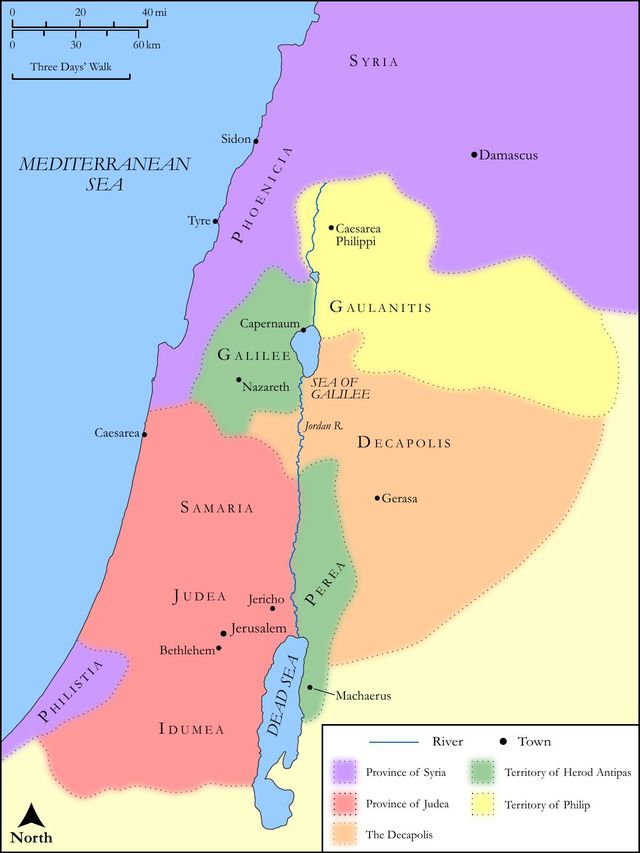
Herod Antipas, the son of Herod the Great, ruled as tetrarch of Galilee and Perea. His marriage to Herodias, his niece and the wife of his half-brother Philip (not the tetrarch Philip, but another brother of the same name), was a flagrant violation of Mosaic Law, specifically Leviticus 18:16 and Leviticus 20:21, which prohibited marrying a brother's wife while the brother was still alive (though Philip was alive, Herodias had divorced him, which was not recognized under Jewish law, making the union adulterous and incestuous). John the Baptist, as a prophet in the tradition of Elijah, felt compelled to call out this public sin, regardless of Herod's political power or the personal danger involved. This act of confronting a ruler on moral grounds was characteristic of Old Testament prophets who often challenged kings to adhere to God's covenant.
Key Themes
ShowHideMatthew 14:4 powerfully contributes to several key themes. Firstly, it exemplifies Moral Courage and Prophetic Integrity, as John fearlessly rebukes the powerful, prioritizing God's law over personal safety. This echoes the stance of prophets like Nathan confronting David in 2 Samuel 12. Secondly, the verse underscores The Authority of God's Law, asserting its supremacy over human decrees and royal prerogative. John's declaration is not a personal opinion but a statement of divine truth, highlighting that even rulers are accountable to God's standards. Thirdly, it illustrates the Confrontation of Sin, particularly when it is public and committed by those in authority. John's directness served as a public denouncement of Herod's immoral actions, demonstrating the prophetic call to expose unrighteousness, even when it leads to severe personal cost, as seen in John's subsequent martyrdom (Matthew 14:6-12).
Exposition and Analysis
ShowHideKey Word Analysis
ShowHideThis particle introduces the reason or explanation for John's imprisonment mentioned in the preceding verse. It signals that what follows is the justification for Herod's actions against John, emphasizing the direct causal link between John's bold statement and his fate. It highlights the immediate consequence of rebuking the powerful.
This term goes beyond mere legal permissibility to encompass moral propriety and divine sanction. John's use of "not lawful" implies that Herod's marriage was not only against the established Jewish law (Mosaic Law) but was also morally wrong in God's eyes, lacking divine approval and therefore spiritually illegitimate. It signifies a transgression against a higher, divine standard, not just a human statute.
In this context, "to have" (her) signifies more than simple possession; it refers to the state of being married to or cohabiting with. John's direct statement challenges the legitimacy of Herod's marital relationship with Herodias, asserting that their union is fundamentally illicit and contrary to God's design for marriage. It speaks to the ongoing, active state of their forbidden relationship.
Verse Breakdown
ShowHide"For John said unto him,"
This opening clause immediately establishes John the Baptist as the speaker and Herod Antipas as the recipient of his direct address. The particle "For" (G1063, gár) links this statement directly to John's imprisonment mentioned in Matthew 14:3, indicating that John's words were the precipitating cause of Herod's wrath. It highlights John's initiative in confronting the tetrarch, demonstrating his prophetic courage and conviction.
"It is not lawful"
This is the core of John's prophetic declaration. The Greek word éxesti (G1832) implies not just a legal prohibition but a moral and divine impropriety. John is asserting that Herod's marriage to Herodias is fundamentally wrong in God's sight, violating divine law and moral order. This is a direct challenge to Herod's authority and his personal conduct, grounded in God's immutable standards rather than human opinion or political expediency.
"for thee to have her."
This final phrase specifies the object of John's condemnation: Herod's illicit relationship with Herodias. "To have her" (G2192, échō) refers to the state of being married to or possessing her as a wife. John's statement is precise and unambiguous, directly naming the sin. This directness, while courageous, also made him a dangerous adversary to Herod and, more critically, to Herodias, who bore a deep grudge against him.
Literary Devices
ShowHideMatthew 14:4 employs several potent literary devices. Direct Speech is prominently featured, as John's exact words are recorded, lending immediacy and authenticity to the confrontation. This direct address underscores John's courage and the clarity of his prophetic message. The verse also functions as a moment of Confrontation, pitting divine law against human power and moral righteousness against personal indulgence. This confrontation is central to the narrative, highlighting the clash between the kingdom of God and the kingdoms of this world. Furthermore, the verse serves as a powerful instance of Foreshadowing. John's willingness to rebuke the powerful, leading to his imprisonment and eventual martyrdom, foreshadows the ultimate fate of Jesus, who would also confront religious and political authorities and suffer for righteousness. There is also an element of Irony, as the powerful tetrarch is morally exposed and condemned by a humble prophet, demonstrating that true authority rests not in political might but in adherence to divine truth.
Theological and Thematic Connections
ShowHideJohn the Baptist's courageous declaration in Matthew 14:4 resonates deeply with the broader biblical narrative concerning prophetic witness, the sanctity of God's law, and the call to confront sin without compromise. John embodies the Old Testament prophetic tradition, where God's messengers were often tasked with challenging kings and leaders who strayed from divine commands. His unwavering stance against Herod's unlawful marriage underscores the universal and unchanging nature of God's moral standards, which apply to all, regardless of status or power. This act of confronting blatant sin, even at great personal cost, serves as a powerful reminder that faithfulness to God may require unpopular stands and carries inherent risks, yet it is a non-negotiable aspect of true discipleship.
Reflection and Application
ShowHideMatthew 14:4 stands as a timeless challenge to believers, urging us to cultivate a similar spirit of moral courage and prophetic integrity in a world often hostile to God's truth. John's example reminds us that faithfulness to Christ may necessitate speaking uncomfortable truths, even when it means standing against prevailing cultural norms or confronting those in positions of influence. This is not a call to self-righteous condemnation, but rather a summons to uphold God's unchanging standards with conviction, motivated by love for God and a desire for righteousness. In an age where moral relativism often blurs clear biblical distinctions, John's unwavering declaration serves as a powerful anchor, reminding us that God's Word remains the ultimate arbiter of right and wrong. We are called to embody integrity, to live by biblical principles, and to speak truth in love, trusting that God's strength will sustain us, even when our faithfulness comes at a personal cost.
Questions for Reflection
ShowHideFAQ
ShowHideWhy was John's statement so dangerous for him, and why did Herod react so severely?
ShowHideJohn's statement was incredibly dangerous because it directly challenged the moral authority and public image of Herod Antipas, a powerful Roman-appointed tetrarch. Herod's marriage to Herodias was a public scandal and a clear violation of Jewish law, which John, as a prophet, was compelled to expose. For a ruler, such a public denouncement, especially one rooted in divine law, undermined his legitimacy and could incite unrest among the populace who respected John. Herod's reaction, leading to John's imprisonment (Matthew 14:3), was driven by a complex mix of political expediency, personal pride, and the manipulative influence of Herodias, who harbored a deep grudge against John for exposing her sin (Mark 6:19). While Herod initially "feared John" and "kept him safe" because he knew John was a righteous man (Mark 6:20), his weakness in the face of Herodias's vengeful plotting ultimately led to John's execution (Matthew 14:6-12).
What does "not lawful" imply beyond mere legalism in this context?
ShowHideThe Greek word translated "lawful" is exesti (G1832), which carries a deeper meaning than simply "legal" in a human, civil sense. It implies what is morally permissible, divinely sanctioned, and inherently proper according to a higher standard. When John declares, "It is not lawful for thee to have her," he is not merely citing a technicality of Mosaic Law, but asserting that Herod's marriage is fundamentally wrong in God's eyes. It lacks divine approval and therefore is morally illegitimate. This highlights the prophetic role of calling people to account not just to human statutes, but to God's immutable character and His revealed will, emphasizing that God's law is ultimately about righteousness and holiness, not just a set of rules. This broader understanding of "lawful" underscores the theological weight of John's confrontation, making it a matter of divine judgment rather than a mere legal dispute.
Christ-Centered Fulfillment
ShowHideJohn the Baptist's courageous confrontation with Herod, culminating in his martyrdom, serves as a profound foreshadowing of Jesus Christ's own ministry and ultimate sacrifice. John, as the last and greatest of the Old Testament prophets, fulfilled his role as the forerunner, preparing the way for the Messiah by calling people to repentance and righteousness. His willingness to suffer for truth, even unto death, mirrors the path of the Suffering Servant, Jesus, who would similarly confront the sin and hypocrisy of His generation (Matthew 23) and ultimately lay down His life as the perfect sacrifice for the sins of the world (Isaiah 53). John's declaration that Herod's marriage was "not lawful" points to the absolute moral authority of God's law, which Jesus did not come to abolish but to fulfill (Matthew 5:17). In Christ, God's perfect righteousness is both upheld and made accessible through His atoning work. John's life, marked by uncompromising truth and self-sacrifice, ultimately points beyond himself to the Lamb of God, who truly takes away the sin of the world (John 1:29), offering not just a challenge to sin, but the ultimate solution to it.