


Luke 8:51
- ἐλθὼνelthōnhaving enteredG2064V-2AAP-NSMVerb 2nd Aorist Active Participle Nominative Singular Masculine
- δὲdethenG1161CONJConjunction
- εἰςeisintoG1519PREPPreposition
- τὴνtēntheG3588T-ASFDefinite article Accusative Singular Feminine
- οἰκίανoikianhouseG3614N-ASFNoun Accusative Singular Feminine
- οὐκouknotG3756PRT-NNegative Particle Negative
- ἀφῆκενaphēkenHe did allowG863V-AAI-3SVerb Aorist Active Indicative 3rd Singular
- εἰσελθεῖνeiseltheinto go inG1525V-2AANVerb 2nd Aorist Active Infinitive
- τιναtinaanyoneG5100X-ASMIndefinite pronoun Accusative Singular Masculine
- εἰeionlyG1487CONDConjunction
- μὴmēexceptG3361PRT-NNegative Particle Negative
- ΠέτρονPetronPeterG4074N-ASM-PNoun Accusative Singular Masculine Individual
- καὶkaiandG2532CONJConjunction
- ἸωάννηνIōannēnJohnG2491N-ASM-PNoun Accusative Singular Masculine Individual
- καὶkaiandG2532CONJConjunction
- ἸάκωβονIakōbonJamesG2385N-ASM-PNoun Accusative Singular Masculine Individual
- καὶkaiandG2532CONJConjunction
- τὸνtontheG3588T-ASMDefinite article Accusative Singular Masculine
- πατέραpaterafatherG3962N-ASMNoun Accusative Singular Masculine
- τῆςtēsof theG3588T-GSFDefinite article Genitive Singular Feminine
- παιδὸςpaidoschildG3816N-GSFNoun Genitive Singular Feminine
- καὶkaiandG2532CONJConjunction
- τὴνtēntheG3588T-ASFDefinite article Accusative Singular Feminine
- μητέραmēteramotherG3384N-ASFNoun Accusative Singular Feminine
English is a literal word-by-word gloss of the Greek, not the KJV's wording. Why?
This is the original text the KJV's translators worked from — each Greek word with its own literal English meaning in this verse, prepared by scholars at Tyndale House, Cambridge. The KJV translates whole sentences, not word by word, so its wording differs: one Greek word can become several English words, and the KJV may choose “charity” where the gloss reads “love”. Both are faithful — they answer different questions. For the KJV's own rendering, switch to the KJV text.
Details
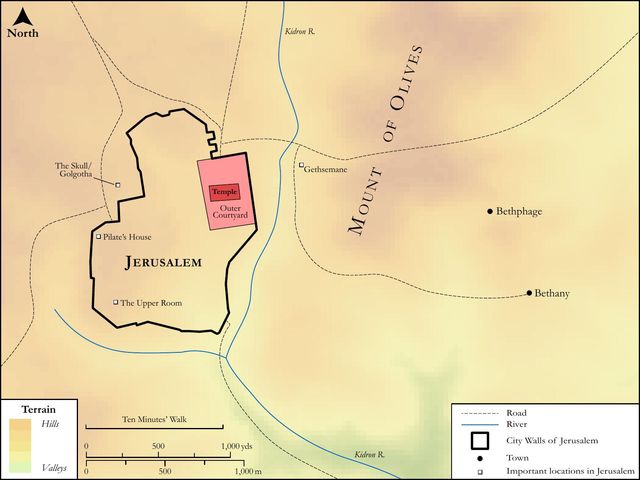
See on the biblical-era map


Study this verse
Public-domain commentary
Matthew Henry
From his Commentary on the Whole Bible. Henry comments on passages, not single verses — this entry covers Luke 8:40–56. His two-level outline is real structure in the source text, so it is rendered as structure.
Christ was driven away by the Gadarenes; they were weary of him, and willing to be rid of him. But when he had crossed the water, and returned to the Galileans, they gladly received him, wished and waited for his return, and welcomed him with all their hearts when he did return, Luk 8:40. If some will not accept the favours Christ offers them, others will. If the Gadarenes be not gathered, yet there are many among whom Christ shall be glorious. When Christ had done his work on the other side of the water he returned, and found work to do in the place whence he came, fresh work. They that will lay out themselves to do good shall never want occasion for it. The needy you have always with you.
We have here two miracles interwoven, as they were in Matthew and Mark - the raising of Jairus's daughter to life, and the cure of the woman that had an issue of blood, as he was going in a crowd to Jairus's house. We have here,
I.A public address made to Christ by a ruler of the synagogue, whose name was Jairus, on the behalf of a little daughter of his, that was very ill, and, in the apprehension of all about here, lay a dying. This address was very humble and reverent. Jairus, though a ruler, fell down at Jesus's feet, as owning him to be a ruler above him. It was very importunate. He besought him that he would come into his house; not having the faith, at least not having the thought, of the centurion, who desired Christ only to speak the healing word at a distance. But Christ complied with his request; he went along with him. Strong faith shall be applauded, and yet weak faith shall not be rejected. In the houses where sickness and death are, it is very desirable to have the presence of Christ. When Christ was going, the people thronged him, some out of curiosity to see him, others out of an affection to him. Let us not complain of a crowd, and a throng, and a hurry, as long as we are in the way of our duty, and doing good; but otherwise it is what every wise man will keep himself out of as much as he can.
II.Here is a secret application made to Christ by a woman ill of a bloody issue, which had been the consumption of her body and the consumption of her purse too; for she had spent all her living upon physicians, and was never the better, Luk 8:43. The nature of her disease was such that she did not care to make a public complaint of it (it was agreeable to the modesty of her sex to be very shy of speaking of it), and therefore she took this opportunity of coming to Christ in a crowd; and the more people were present the more likely she thought it was that she should be concealed. Her faith was very strong; for she doubted not but that by the touch of the hem of his garment she should derive from him healing virtue sufficient for her relief, looking upon him to be such a full fountain of mercies that she should steal a cure and he not miss it. Thus many a poor soul is healed, and helped, and saved, by Christ, that is lost in a crowd, and that nobody takes notice of. The woman found an immediate change for the better in herself, and that her disease was cured, Luk 8:44. As believers have comfortable communion with Christ, so they have comfortable communications from him incognito - secretly, meat to eat that the world knows not of, and joy that a stranger does not intermeddle with.
III.Here is a discovery of this secret cure, to the glory both of the physician and the patient.
1.Christ takes notice that there is a cure wrought: Virtue is gone out of me, Luk 8:46. Those that have been healed by virtue derived from Christ must own it, for he knows it. He speaks of it here, not in a way of complaint, as if he were hereby either weakened or wronged, but in a way of complacency. It was his delight that virtue was gone out of him to do any good, and he did not grudge it to the meanest; they were as welcome to it as to the light and heat of the sun. Nor had he the less virtue in him for the going out of the virtue from him for he is an overflowing fountain.
2.The poor patient owns her case, and the benefit she had received: When she saw that she was not hid, she came, and fell down before him, Luk 8:47. Note, The consideration of this, that we cannot be hid from Christ, should engage us to pour out our hearts before him, and to show before him all our sin and all our trouble. She came trembling, and yet her faith saved her, Luk 8:48. Note, There may be trembling where yet there is saving faith. She declared before all the people for what cause she had touched him because she believed that a touch would cure her, and it did so. Christ's patients should communicate their experiences to one another.
3.The great physician confirms her cure, and sends her away with the comfort of it: Be of good comfort; thy faith hath made thee whole, Luk 8:48. Jacob got the blessing from Isaac clandestinely, and by a wile; but, when the fraud was discovered, Isaac ratified it designedly. It was obtained surreptitiously and under-hand, but it was secured and seconded above-board. So was the cure here. He is blessed, and he shall be blessed; so here, She is healed, and she shall be healed.
IV.Here is an encouragement to Jairus not to distrust the power of Christ, though his daughter was now dead, and they that brought him the tidings advised him not to give the Master any further trouble about her: Fear not, saith Christ, only believe. Note, Our faith in Christ should be bold and daring, as well as our zeal for him. They that are willing to do any thing for him may depend upon his doing great things for them, above what they are able to ask or think. When the patient is dead there is no room for prayer, or the use of means; but here, though the child is dead, yet believe, and all shall be well. Post mortem medicus - to call in the physician after death, is an absurdity; but not post mortem Christus - to call in Christ after death.
V.The preparatives for the raising of her to life again.
1.The choice Christ made of witnesses that should see the miracle wrought. A crowd followed him, but perhaps they were rude and noisy; however, it was not fit to let such a multitude come into a gentleman's house, especially now that the family was all in sorrow; therefore he sent them back, and not because he was afraid to let the miracle pass their scrutiny; for he raised Lazarus and the widow's son publicly. He took none with him but Peter, and James, and John, that triumvirate of his disciples that he was most intimate with, designing these three, with the parents, to be the only spectators of the miracle, they being a competent number to attest the truth of it.
2.The check he gave to the mourners. They all wept, and bewailed her; for, it seems, she was a very agreeable hopeful child, and dear not only to the parents, but to all the neighbours. But Christ bid them not weep; for she is not dead, but sleepeth. He means, as to her peculiar case, that she was not dead for good and all, but that she should now shortly be raised to life, so that it would be to her friends as if she had been but a few hours asleep. But it is applicable to all that die in the Lord; therefore we should not sorrow for them as those that have no hope, because death is but a sleep to them, not only as it is a rest from all the toils of the days of time, but as there will be a resurrection, a waking and rising again to all the glories of the days of eternity. This was a comfortable word which Christ said to these mourners, yet they wickedly ridiculed it, and laughed him to scorn for it here was a pearl cast before swine. They were ignorant of the scriptures of the Old Testament who bantered it as an absurd thing to call death a sleep; yet this good came out of that evil that hereby the truth of the miracle was evinced; for they knew that she was dead, they were certain of it, and therefore nothing less than a divine power could restore her to life. We find not any answer that he made them; but he soon explained himself, I hope to their conviction, so that they would never again laugh at any word of his. But he put them all out, Luk 8:54. They were unworthy to be the witnesses of this work of wonder; they who in the midst of their mourning were so merrily disposed as to laugh at him for what he said would, it may be, have found something to laugh at in what he did, and therefore are justly shut out.
VI.Her return to life, after a short visit to the congregation of the dead:
He took her by the hand (as we do by one that we would awake out of sleep, and help up), and he called, saying, Maid, arise, Luk 8:55. Thus the hand of Christ's grace goes along with the calls of his word, to make them effectual. Here that is expressed which was only implied in the other evangelists, that her spirit came again; her soul returned again to animate her body. This plainly proves that the soul exists and acts in a state of separation from the body, and therefore is immortal; that death does not extinguish this candle of the Lord, but takes it out of a dark lantern. It is not, as Grotius well observes, the krasis or temperament of the body, or anything that dies with it; but it is anthupostaton ti - something that subsists by itself, which, after death, is somewhere else than where the body is. Where the soul of this child was in this interval we are not told; it was in the hand of the Father of spirits, to whom all souls at death return. When her spirit came again she arose, and made it appear that she was alive by her motion, as she did also by her appetite; for Christ commanded to give her meat. As babes newly born, so those that are newly raised, desire spiritual food, that they may grow thereby. In the last verse, we need not wonder to find her parents astonished; but if that implies that they only were so, and not the other by-standers, who had laughed Christ to scorn, we may well wonder at their stupidity, which perhaps was the reason why Christ would not have it proclaimed, as well as to give an instance of his humility.
Historical interpretation
Eleven Centuries of Reception
11 surviving comments on this verse. Each one is dated, so this reads as a timeline rather than a list.
Select a marker to jump to its quote. Markers stagger vertically where authors wrote within a few decades of each other.
Five men are said to have been with the Lord when He obtained testimony from the Father,-namely, Peter, and James, and John, and Moses, and Elias. The Lord also, as the fifth person, entered into the apartment of the dead maiden, and raised her up again; for, says the Scripture, "He suffered no man to go in, save Peter and James, and the father and mother of the maiden."
(Orat. in Pass. et Crucem. Dom. 4.) Our Lord requires faith from those who invoke Him, not because He needs the assistance of others, (for He is both the Lord and Giver of faith,) but not to seem to bestow His gifts according to His acceptance of persons, He shows that He favours those who believe, lest they should receive benefits without faith, and lose them by unbelief. For when He bestows a favour, He wishes it to last, and when He heals, the cure to remain undisturbed.
When the woman was healed, our Lord said, “Who touched me?” so that she could profess her healing before everyone. Also in the case of the little girl, he said, “She is sleeping” so that the spectators might testify that she was dead, and then seeing her restored to life, these who scorned would be converted into believers. The witness given by them concerning the death of the little girl and her restoration to life performed by the Lord was a witness in anticipation of his death. Those who would see that he was alive again would not deny it.
Jesus took the girl’s hand, healed her, and ordered that she should be given something to eat. This is evidence of life, so that not an apparition but the truth may be believed. Blessed is he whose hand Wisdom holds. I wish that righteousness held my acts and my hands. I want the Word of God to hold me, bring me into his closet, turn away the spirit of error, replace it with that of salvation, and order that I be given something to eat! The Word of God is the Bread of heaven. The Wisdom that filled the holy altar with the nourishment of the divine body and blood says, “Come, eat of my bread, and drink wine that I have mixed for you.” What is the reason for such diversity? Above, Christ raised the son of the widow in public. Here, he dismissed several eyewitnesses. I think that the Lord’s compassion is also revealed since the widowed mother of an only son did not suffer delay. He is prompt; for fear that she would be further afflicted. It is also wise that the church would immediately believe through the widow’s son, but the Jews, albeit a few, would believe through the daughter of the ruler of the synagogue.
What shall I say about the daughter of the ruler of the synagogue, at whose death the people were mourning and the flute players were playing their music? In the belief that she was indeed dead, solemn funeral services were being performed. The spirit returned immediately at the voice of the Lord, she arose with revived body, and she partook of food to furnish proof that she was alive.
For they believe not who throng Him; they believe who touch. By faith Christ is touched, by faith He is seen. Lastly, to express the faith of her who touched Him, He says, I know that virtue is gone out of me, which is a more palpable sign, that the Divine Nature is not confined within the possibility of man's condition, and the compass of the human body, but eternal virtue overflows beyond the bounds of our mediocrity. For the Gentile people is not released by man's aid, but the gathering of nations is the gift of God, which even by its little faith turns to itself the everlasting mercy. For if we think what our faith is, and understand how great the Son of God is, we see that in comparison of Him we touch only the hem, we cannot reach the upper parts of the garment. If then we also wish to be cured, let us touch by faith the hem of Christ. But he who has touched Him is not hidden. Happy the man who has touched the extreme part of the Word. For who can comprehend the whole?
But still also were the servants of the ruler incredulous with regard to the resurrection, which Jesus had foretold in the Law, fulfilled in the Gospel; therefore say they, Do not trouble him; (Ps. 16.) as if it were impossible for Him to raise the dead.
Therefore having entered into the house, He called a few to be judges of the coming resurrection: for the resurrection was not soon believed by the many. What then was the cause of this great difference? In a former case the widow's son is raised up before all, here a few only are set apart to judge. But I think that herein the mercy of the Lord is shown, since the widowed mother of an only son suffered no delay. There is also the token of wisdom, that in the widow's son we should see the Church quick in believing; in the ruler of the synagogue's daughter, the Jews about indeed to believe, but out of a great many only a few. Lastly, when our Lord says, She is not dead, but sleepeth, they laughed Him to scorn. For whoever believes not, laughs. Let them therefore mourn their dead who think they are dead. Where there is a belief of the resurrection, the notion is not of death but of rest.
Now the Lord taking hold of the hand of the maid, cured her. Blessed is he whom wisdom takes by the hand, that she may bring him into her secret places, and command to be given him to eat. For the bread of heaven is the word of God. Hence comes also that wisdom which has filled its altars with the food of the body and blood of God. Come, she says, eat my bread, and drink the wine which I have mixed for you. (Prov. 9:5.)
(Hom. 31. in Matt.) Our Lord conveniently waited until the death of the girl, that the miracle of her resurrection might be made public. For which reason also He goes slower, and speaks longer with the woman, that the daughter of the ruler of the synagogue may expire, and messengers come to tell Him. As it is said, While he yet spake, there cometh one from the ruler of the synagogue's house, saying unto him, Thy daughter is dead.
(ubi sup.) But He took not with Him His other disciples, so provoking them to a strange desire, because also they were not yet fully prepared, but He took Peter, and with him the sons of Zebedee, that the others also might imitate them. He took also the parents as witnesses, lest any should say the evidence of the resurrection was false. Luke adds to this also, that He shut out from the house those that were weeping, and showed that they were unworthy of a sight of this kind. For it follows, And they all wept, and bewailed her. But if He then shut them out, much more now. For then it had not yet been revealed that death was turned into sleep. Let no one then hereafter despise himself, bringing an insult to the victory of Christ, whereby He has overcome death, and turned it into sleep. In proof of which it is added, But he said, Weep not; she is not dead, but sleepeth, &c. showing that all things were at His command, and that He would bring her to life as if He were awakening her from sleep. They yet nevertheless laughed Him to scorn. For it follows, And they laughed him to scorn. He did not reprove them nor put an end to their laughter, that laughter also might be a sign of death. For since generally, after a miracle has been performed men continue unfaithful, He takes them by their own words. But that He might by sight dispose to the belief of the resurrection, He takes the hand of the maid. As it follows, But he took her by the hand, and called, saying, Maid, arise. And when He had taken her by the hand, He awoke her. As it follows, And her spirit returned, and she arose straightway. For He poured not into her another soul, but restored the same which she had breathed forth. Nor does he only awake the maid, but orders her to take food. For it follows, And he commanded to give her meat. That it might not seem like a vision what was done. Nor did He Himself give to her, but He commanded others to do it. As also He said in the case of Lazarus, Loose him. (John 11:44.) And afterwards He made him partake of meat with Him.
But mystically, when the woman was cured of the issue of blood, word is brought that the daughter of the ruler of the synagogue is dead; because while the Church was cleansed from the stain of its sins, the Synagogue was forthwith destroyed by unbelief and envy; by unbelief indeed, in that it refused to believe in Christ; by envy, in that it was grieved that the Church had believed.
Or this is even to this day said by those who see the state of the synagogue so destitute that they do not believe it can be restored, and therefore think nothing of praying for its resurrection. But those things which are impossible with men are possible with God. Therefore said the Lord to him, Fear not, only believe, and she shall be made whole. (Luke 18:27.) The father of the girl is taken for the assembly of the doctors of the Law, which if it were willing to believe, the Synagogue also which is subject to it will be safe.
The Synagogue also, because it has lost the joy of the Bridegroom, whereby alone it can live. lying dead as it were among those that mourn, understands not even the reason why it weeps.
Now the maid arose straightway, because when Christ strengthens the hand, man revives from the death of the soul. For there are some, who only by the secret thought of sin are conscious of bringing death to themselves. The Lord signifying that such He brings to life again, raised the daughter of the ruler of the synagogue. But others, by committing the very evil in which they delight, carry their dead as it were without the gates, and to show that He raises these, He raised the widow's son without the gates. But some also, by habits of sin, bury themselves, as it were, and become corrupt; and to raise these also the grace of the Saviour is not wanting; to intimate which He raised from the dead Lazarus, who had been four days in the grave. But the deeper the death of the soul, so much the more intense should be the fervour of penitence. Hence He raises with a gentle voice the maid who lay dead in the room, the youth who was carried out He strengthens with many words, but to raise him who had been dead four days, He groaned in His spirit, He poured forth tears, and cried with a loud voice. But here also we must observe, that a public calamity needs a public remedy. Slight offences seek to be blotted out by secret penitence. The maid lying in the house rises again with few witnesses; the youth without the house is raised in the presence of a great crowd who accompanied him. Lazarus summoned from the tomb was known to many nations.
And when he came to the house, he did not allow anyone to enter with him except Peter, James, and John, and the father and mother of the girl. Previously, the son of the widow was publicly raised, here several witnesses are removed. Therefore, I think that the kindness of the Lord is again shown in this, because the widow, being the mother of an only child, did not suffer delays, and therefore, to avoid further affliction, maturity is added. It is also a form of wisdom, in that the son of the widow quickly believed in the Church, in the daughter of the ruler of the synagogue, indeed, the Jews will believe, but fewer of the many.
When He was about to raise the dead He put all out, as teaching us to be free from vain-glory, and to do nothing for show, for when any one ought to perform miracles, he must not be in the midst of a great many, but alone and apart from the other. As it follows, And when he came into the house, he suffered no man to go in, save Peter, and James, and John. Now these only He permitted to enter as the Heads of His disciples, and able to conceal the miracle. For He did not wish to be revealed to many before His time, perhaps on account of the envy of the Jews. So also when any one envies us, we ought not to make known to him our righteousness, lest we give him an occasion of greater envy.
(Severus.) He next charges the parents, astonished at the miracle, and almost crying out, not to publish abroad what was done. As it follows, And her parents were astonished; but he charged them that they should tell no man what was done; showing that He is the Giver of good things, but not covetous of glory, and that He gives the whole, receiving nothing. But he who seeks after the glory of his works has indeed shown forth something, but receives something.
Continue studying Luke 8:51 across the web’s major study libraries — every link below opens this exact verse, chapter, or book on the destination site.
Read & Compare
 BibleGatewayThis verse in more than 200 translations and 70 languages.
 Bible.comThe YouVersion reader — hundreds of translations, reading plans, and highlights.
 ESV.orgCrossway's official English Standard Version reader.
 NET BibleThe NET translation with 60,000+ translators' notes on every rendering decision.
 STEP BibleTyndale House's free study tool — original text, vocabulary, and scholarly resources.
 BibliaLogos Bible Software's free web reader.
 USCCBThe New American Bible (Revised Edition) with the U.S. bishops' study notes.
Commentaries
 BibleHub CommentariesDozens of classic commentaries on this verse, gathered on one page.
 StudyLightMore than 100 commentary sets — the largest collection on the web.
 BibleRefPlain-English commentary on what this verse means, verse by verse.
 Enduring WordDavid Guzik's free commentary on this chapter, widely used by Bible teachers.
 Bible Study ToolsVerse commentary alongside Greek and Hebrew study aids.
Original Language & Research
- BibleHub InterlinearThe verse word by word — original language, transliteration, and English.
- BibleHub LexiconEvery word's original-language definition and Strong's entry.
 Blue Letter BibleDeep-study tools — Strong's numbers, concordance, and word studies.
 CNTR CollationThe earliest Greek manuscripts of this verse, collated letter by letter.
Sermons, Hymns & Audio


TrulyRandomVerse is not affiliated with these sites and doesn’t control their content. They’re linked because they’re genuinely useful.
Summary
Luke 8:51 captures a pivotal moment in Jesus's ministry, immediately preceding the resurrection of Jairus's daughter. This verse highlights Jesus's intentional control over the environment surrounding His divine acts, as He carefully selects a small, intimate group—His inner circle of disciples and the maiden's parents—to witness the profound restoration of life. This deliberate choice underscores the sacred, personal, and deeply significant nature of the miracle about to unfold, setting it apart from mere public spectacle.
Context
ShowHideLiterary Context
This verse is situated at a critical juncture in Luke's narrative, following the dramatic healing of the woman with the issue of blood, which momentarily interrupted Jesus's journey to Jairus's house. Just as Jesus finishes speaking with the healed woman, messengers arrive with the devastating news that Jairus's daughter has died (Luke 8:49). Despite this grim report, Jesus immediately offers a powerful counter-command and promise to Jairus: "Fear not: believe only, and she shall be made whole" (Luke 8:50). Upon arriving at the house, Jesus encounters the customary scene of loud mourning, wailing, and professional lamentation (Luke 8:52), typical of Jewish funeral practices. Rather than performing the miracle amidst this tumultuous crowd, Jesus deliberately clears the room, creating a private space for the divine intervention, thus emphasizing the intimate and personal nature of the impending resurrection.
Historical & Cultural Context
First-century Jewish society had well-established customs surrounding death and mourning. Upon a death, professional mourners (often women) would be hired to lament loudly, tear their clothes, and play flutes, creating a public display of grief. This "tumult" (Luke 8:52) that Jesus encounters at Jairus's house was a standard part of these rituals. Furthermore, contact with a dead body was considered ritually defiling according to Mosaic Law (Numbers 19:11-13), requiring purification. Jesus's actions in entering the house and touching the dead girl (Luke 8:54) demonstrate His authority over such ritual concerns, symbolizing His power to overcome spiritual and physical death, which transcends human defilement. The selection of witnesses also aligns with the cultural importance of credible testimony in Jewish legal and social contexts.
Key Themes
ShowHideLuke 8:51 contributes significantly to several overarching themes within Luke's Gospel and the broader biblical narrative. Foremost among these is Jesus's Authority Over Death, showcasing His unique power to restore life, a power demonstrated earlier in the raising of the widow's son at Nain (Luke 7:11-17). The verse also highlights the theme of Discipleship and the Inner Circle, as Peter, James, and John are consistently chosen by Jesus to witness His most profound moments, such as the Transfiguration and His agony in Gethsemane. This selective access underscores their privileged role and the weight of their future testimony. Finally, the passage subtly reinforces the theme of Privacy in Miracles, as Jesus often chose to perform His most intimate miracles away from the crowds, or instructed those He healed not to immediately publicize the event, thereby preventing sensationalism and focusing on the genuine faith involved and the spiritual implications rather than mere spectacle.
Exposition and Analysis
ShowHideKey Word Analysis
ShowHideThis verb, G863, means "to send forth," but in this context, it carries the sense of "to permit," "to allow," or "to let go." The KJV's "suffered" is an older English usage of "permitted." Here, it emphasizes Jesus's deliberate and active choice to restrict access, not a passive allowance. He intentionally did not permit others to enter, demonstrating His control over the scene.
This compound verb, G1525, from eis (into) and erchomai (to come/go), literally means "to enter in" or "to come into." Its use here, in conjunction with aphíēmi, highlights the physical action of entering the house/room. Jesus's refusal to "suffer... to go in" means He actively prevented entry, ensuring the space for the miracle remained private and controlled.
This noun, G3816, can mean "boy," "girl," "child," or even "servant/slave." In this context, given the narrative of Jairus's daughter, it unequivocally refers to a young girl. The use of "maiden" emphasizes her youth and vulnerability, making the miracle of her resurrection all the more poignant and miraculous.
Verse Breakdown
ShowHide"And when he came into the house"
This clause marks Jesus's arrival at the specific location of the miracle—Jairus's home. It signifies the transition from the public sphere, where Jesus had just healed the woman and received the news of the girl's death, to a more private setting.
"he suffered no man to go in, save Peter, and James, and John"
This is the core action of the verse, demonstrating Jesus's deliberate selection process. The phrase "suffered no man to go in" (meaning "permitted no one to enter") underscores Jesus's authority and intention to limit witnesses. The explicit naming of Peter, James, and John highlights their unique position within Jesus's inner circle, chosen to witness His most profound divine acts.
"and the father and the mother of the maiden"
This final clause completes the list of those permitted to witness the miracle. The inclusion of the parents is crucial, as they are the ones whose faith was challenged and whose daughter's life was at stake. Their presence ensures that the immediate family, those most intimately affected, are direct witnesses to God's restorative power in their home.
Literary Devices
ShowHideLuke 8:51 employs several significant literary devices. Selection and Exclusion are primary, as Jesus actively chooses who will witness the miracle, deliberately excluding the larger crowd and most of His disciples. This act of selection serves to highlight the special status of Peter, James, and John, emphasizing their role as privileged witnesses to key moments in Jesus's ministry. There is also a strong element of Contrast in this verse: the chaotic, public wailing and mourning outside the room (implied by the context) are contrasted with the quiet, intimate space Jesus creates within the house. This shift from public spectacle to private solemnity underscores the sacred nature of the impending divine act. Furthermore, the passage uses Foreshadowing, as Jesus's control over who witnesses this resurrection foreshadows the later, more profound, and equally selective witnessing of His own resurrection by chosen apostles.
Theological and Thematic Connections
ShowHideLuke 8:51 profoundly illustrates Jesus's sovereign authority and His deliberate approach to ministry. By limiting the witnesses to the raising of Jairus's daughter, Jesus not only ensured the privacy necessary for such an intimate act of divine power but also cultivated a core group of disciples who would become foundational witnesses to His most significant works, including His ultimate victory over death. This selective witnessing underscores the sacredness of God's intervention and the privileged role of those called to testify to His power. It also teaches us that God often works in quiet, personal ways, inviting a deeper, more intimate faith rather than seeking public acclaim. The passage serves as a powerful testament to Jesus's unique power over death, offering a glimpse into the life-giving authority that would culminate in His own resurrection.
Reflection and Application
ShowHideLuke 8:51 offers profound insights into the nature of God's work and our role as His followers. Jesus's deliberate choice to limit the witnesses reminds us that not all of God's powerful acts are meant for public display or sensationalism. Sometimes, God invites us into intimate, private spaces to witness His power and presence, cultivating a deeper, more personal faith. This passage challenges us to consider where we seek God's presence—in the clamor of the crowd or in the quiet intimacy of belief. It encourages us to trust in Jesus's power even when circumstances seem hopeless, just as Jairus was called to believe despite his daughter's death. Furthermore, being among the chosen witnesses, like Peter, James, and John, is a privilege that comes with responsibility—to faithfully bear witness to what God has done. We are called to be attentive to the subtle, powerful ways God works in our own lives and in the lives of those around us, recognizing that His most profound interventions often occur in spaces of quiet faith and trust.
Questions for Reflection
ShowHideFAQ
ShowHideWhy did Jesus only allow Peter, James, and John, along with the parents, to witness the raising of Jairus's daughter?
ShowHideJesus's decision to limit the witnesses to His inner circle (Peter, James, and John) and the girl's parents was multifaceted. Firstly, it established a pattern of privileged access for these three disciples, who were consistently chosen to witness Jesus's most profound moments, such as the Transfiguration and His agony in Gethsemane. This prepared them for their future leadership roles and the weighty testimony they would bear. Secondly, it fostered an atmosphere of intimacy and solemnity, preventing the miracle from becoming a public spectacle or a source of mere sensationalism. Jesus often sought to avoid drawing crowds for the wrong reasons, preferring to focus on genuine faith and the spiritual significance of His actions. Lastly, the presence of the parents ensured that the immediate family, those most deeply affected, were undeniable witnesses to the restoration of their daughter's life, reinforcing the personal nature of God's intervention.
Was Jesus trying to hide His power or the miracle by limiting the witnesses?
ShowHideNo, Jesus was not trying to hide His power, but rather to control the context and impact of His miracles. His actions were a deliberate choice to prevent misinterpretation or exploitation of His divine authority. By limiting the witnesses, Jesus ensured that the focus remained on the power of God and the faith involved, rather than on public acclaim or political implications. He often instructed those He healed not to immediately tell others (e.g., Mark 1:43-44), not to conceal His power, but to manage the growing crowds and allow His message to be understood on its own terms, free from sensationalism. In this instance, He created an environment conducive to a profound, personal encounter with God's life-giving power, witnessed by those who would truly understand its significance.
Christ-Centered Fulfillment
ShowHideLuke 8:51, with its depiction of Jesus's authority over death and His careful selection of witnesses, finds its ultimate Christ-centered fulfillment in the person and work of Jesus Christ Himself. The raising of Jairus's daughter is a powerful foreshadowing of Jesus's own resurrection, the ultimate victory over death for all humanity. Just as Jesus commanded the maiden to "Arise!" (Luke 8:54), He Himself would conquer the grave, demonstrating His absolute power as "the resurrection, and the life" (John 11:25). The chosen witnesses—Peter, James, and John—who saw the maiden raised, would later become the foundational apostles who bore witness to Christ's own bodily resurrection, proclaiming Him as the Lord of life. This passage reminds us that Jesus's power to restore physical life is a tangible sign of His greater power to grant spiritual life and eternal salvation. Through His death and resurrection, Jesus opens the way for all who believe in Him to experience a spiritual resurrection from sin and a future bodily resurrection to eternal life, fulfilling the promise of new life that He demonstrated in Jairus's home. His exclusive power over death, first displayed in such miracles, culminates in His triumph over the grave, offering hope and life to a world bound by sin and mortality (Romans 6:4).