


Mark 5:36
- ὉHo<the>G3588T-NSMDefinite article Nominative Singular Masculine
- δὲdeAndG1161CONJConjunction
- ἸησοῦςIēsousJesusG2424N-NSM-PNoun Nominative Singular Masculine Individual
- εὐθέωςeutheōsimmediatelyG2112ADVAdverb
- παρακούσαςparakousashaving ignoredG3878V-AAP-NSMVerb Aorist Active Participle Nominative Singular Masculine
- τὸνtontheG3588T-ASMDefinite article Accusative Singular Masculine
- λόγονlogonwordG3056N-ASMNoun Accusative Singular Masculine
- λαλούμενονlaloumenonspokenG2980V-PPP-ASMVerb Present Passive Participle Accusative Singular Masculine
- λέγειlegeiHe saysG3004V-PAI-3SVerb Present Active Indicative 3rd Singular
- τῷtōto theG3588T-DSMDefinite article Dative Singular Masculine
- ἀρχισυναγώγῳ·archisunagōgōruler of the synagogueG752N-DSMNoun Dative Singular Masculine
- μὴmēNotG3361PRT-NNegative Particle Negative
- φοβοῦphoboudo fearG5399V-PNM-2SVerb Present Middle Or Passive Deponent Imperative 2nd Singular
- μόνονmonononlyG3441A-ASNAdjective Accusative Singular Neuter
- πίστευεpisteuedo believeG4100V-PAM-2SVerb Present Active Imperative 2nd Singular
English is a literal word-by-word gloss of the Greek, not the KJV's wording. Why?
This is the original text the KJV's translators worked from — each Greek word with its own literal English meaning in this verse, prepared by scholars at Tyndale House, Cambridge. The KJV translates whole sentences, not word by word, so its wording differs: one Greek word can become several English words, and the KJV may choose “charity” where the gloss reads “love”. Both are faithful — they answer different questions. For the KJV's own rendering, switch to the KJV text.
Details
See on the biblical-era map
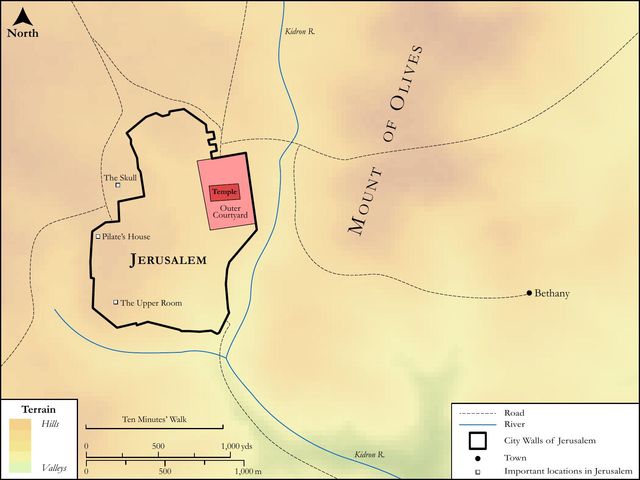
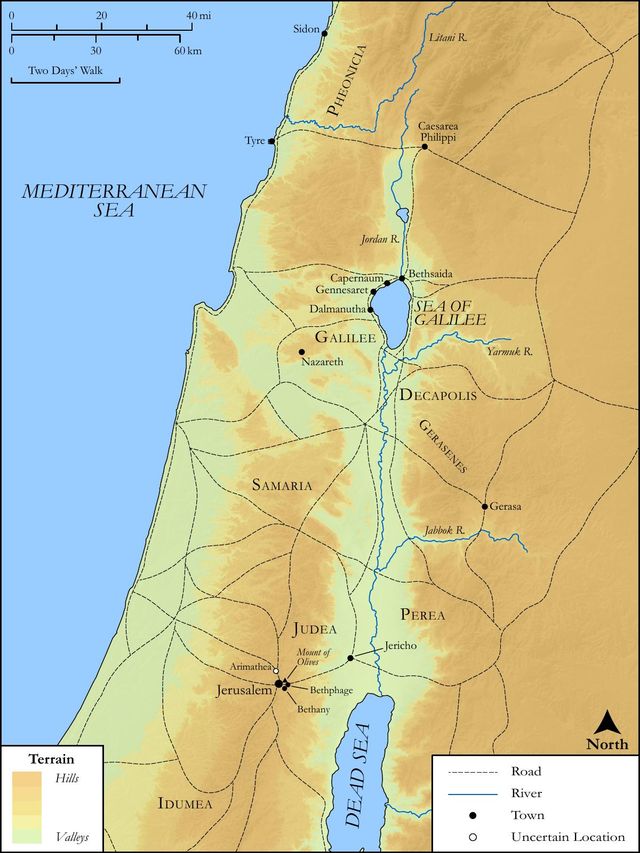
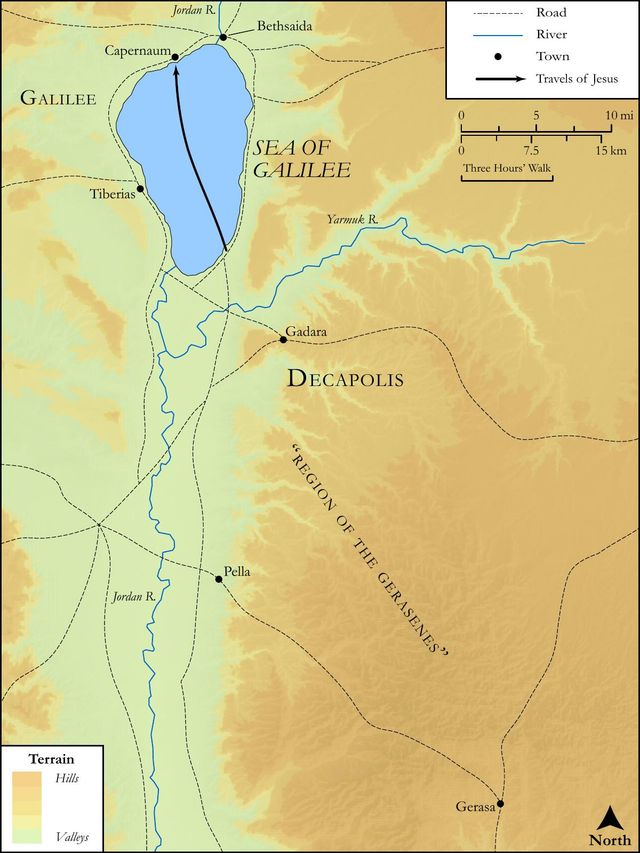
Study this verse
Public-domain commentary
Matthew Henry
From his Commentary on the Whole Bible. Henry comments on passages, not single verses — this entry covers Mark 5:35–43. His two-level outline is real structure in the source text, so it is rendered as structure.
Diseases and deaths came into the world by the sin and disobedience of the first Adam; but by the grace of the second Adam both are conquered. Christ, having healed an incurable disease, here goes on to triumph over death, as in the beginning of the chapter he had triumphed over an outrageous devil.
I.The melancholy news is brought to Jairus, that his daughter is dead, and therefore, if Christ be as other physicians, he comes too late.
While there is life, there is hope, and room for the use of means; but when life is gone, it is past recall; Why troublest thou the Master any further? Mar 5:35. Ordinarily, the proper thought in this case, is, "The matter is determined, the will of God is done, and I submit, I acquiesce; The Lord gave, and the Lord hath taken away. While the child was alive, I fasted and wept; for I said, Who can tell but God will yet be gracious to me, and the child shall live? But now that it is dead, wherefore should I weep? I shall go to it, but it shall not return to me." With such words we should quiet ourselves at such a time, that our souls may be as a child that is weaned from his mother: but there the case was extraordinary; the death of the child doth not, as usually, put an end to the narrative.
II.Christ encourageth the afflicted father yet to hope that his application to Christ on the behalf of his child should not be in vain.
Christ had staid to work a cure by the way, but he shall be no sufferer by that, nor loser by the gain of others; Be not afraid, only believe. We may suppose Jairus at a pause, whether he should ask Christ to go on or no; but have we not as much occasion for the grace of God, and his consolations, and consequently of the prayers of our ministers and Christian friends, when death is in the house, as when sickness is? Christ therefore soon determines this matter; "Be not afraid that my coming will be to no purpose, only believe that I will make it turn to a good account." Note,
1.We must not despair concerning our relations that are dead, nor sorrow for them as those that have no hope. See what is said to Rachel, who refused to be comforted concerning her children, upon the presumption that they were not; Refrain thy voice from weeping, and thine eyes from tears; for there is hope in thine end, that thy children shall come again, Jer 31:16, Jer 31:17. Therefore fear not, faint not.
2.Faith is the only remedy against disquieting grief and fear at such a time: let that silence them, Only believe. Keep up a confidence in Christ, and a dependence upon him, and he will do what is for the best. Believe the resurrection, and then be not afraid.
III.He went with a select company to the house where the dead child was.
He had, by the crowd that attended him, given advantage to the poor woman he last healed, and, having done that, now he shook off the crowd, and suffered no man to follow him (to follow with him, so the word is), but his three bosom-disciples, Peter, and James, and John; a competent number to be witnesses of the miracle, but not such a number as that his taking them with him might look like vainglory.
IV.He raised the dead child to life; the circumstances of the narrative here are much the same as we had them in Matthew; only here we may observe,
1.That the child was extremely well beloved, for the relations and neighbours wept and wailed greatly. It is very afflictive when that which is come forth like a flower is so soon cut down, and withereth before it is grown up; when that grieves us, of which we said, This same shall comfort us.
2.That it was evident beyond dispute, that the child was really and truly dead. Their laughing Christ to scorn, for saying, She is not dead, but sleepeth, though highly reprehensible, serves for the proof of this.
3.That Christ put those out as unworthy to be witnesses of the miracle, who were noisy in their sorrow, and were so ignorant in the things of God, as not to understand him when he spoke of death as a sleep, or so scornful, as to ridicule him for it.
4.That he took the parents of the child to be witnesses of the miracle, because in it he had an eye to their faith, and designed it for their comfort, who were the true, for they were the silent mourners.
5.That Christ raised the child to life by a word of power, which is recorded here, and recorded in Syriac, the language in which Christ spoke, for the greater certainty of the thing; Talitha, cumi; Damsel, I say unto thee, Arise. Dr. Lightfoot saith, It was customary with the Jews, when they gave physic to one that was sick, to say, Arise from thy disease; meaning, We wish thou mayest arise: but to one that was dead, Christ said, Arise from the dead; meaning, I command that thou arise; nay, there is more in it - the dead have not power to arise, therefore power goes along with this word, to make it effectual. Da quod jubes, et jube quod vis - Give what thou commandest, and command what thou wilt. Christ works while he commands, and works by the command, and therefore may command what he pleaseth, even the dead to arise. Such is the gospel call to those that are by nature dead in trespasses and sins, and can no more rise from that death by their own power, than this child could; and yet that word, Awake, and arise from the dead, is neither vain, nor in vain, when it follows immediately, Christ shall give thee light, Eph 5:14. It is by the word of Christ that spiritual life is given, I said unto thee, Live, Eze 16:6.
6.That the damsel, as soon as life returned, arose, and walked, Mar 5:42. Spiritual life will appear by our rising from the bed of sloth and carelessness, and our walking in a religious conversation, our walking up and down in Christ's name and strength; even from those that are of the age of twelve years, it may be expected that they should walk as those whom Christ has raised to life, otherwise than in the native vanity of their minds.
7.That all who saw it, and heard of it, admired the miracle, and him that wrought it; They were astonished with a great astonishment. They could not but acknowledge that there was something in it extraordinary and very great, and yet they knew not what to make of it, or to infer from it. Their wonder should have worked forward to a lively faith, but it rested in a stupor or astonishment.
8.That Christ endeavoured to conceal it; He charged them straitly, that no man should know it. It was sufficiently known to a competent number, but he would not have it as yet proclaimed any further; because his own resurrection was to be the great instance of his power over death, and therefore the divulging of other instances must be reserved till that great proof was given: let one part of the evidence be kept private, till the other part, on which the main stress lies, be made ready.
9.That Christ took care something should be given her to eat. By this it appeared that she was raised not only to life, but to a good state of health, that she had an appetite to her meat; even the new-born babes in Christ's house desire the sincere milk, Pe1 2:1, Pe1 2:2. And it is observable, that, as Christ, when at first he had made man, presently provided food for him, and food out of the earth of which he was made (Gen 1:29), so now when he had given a new life, he took care that something should be given to eat; for is he has given life, he may be trusted to give livelihood, because the life is more than meat, Mat 6:25. Where Christ hath given spiritual life, he will provide food for the support and nourishment of it unto life eternal, for he will never forsake, or be wanting to, the work of his own hands.
Historical interpretation
Nine Centuries of Reception
10 surviving comments on this verse. Each one is dated, so this reads as a timeline rather than a list.
Select a marker to jump to its quote. Markers stagger vertically where authors wrote within a few decades of each other.
It was told the ruler of the synagogue, Thy daughter is dead. But Jesus said to him, She is not dead, but sleepeth. Both are true, for the meaning is, She is dead to you, but to Me she is asleep.
When the chief of the synagogue asked him about his daughter, Jesus said to him: “Only firmly believe and your daughter shall live.” He believed and so his daughter lived and arose. Similarly when Lazarus died, our Lord said to Martha, “If you believe, your brother shall rise.” Martha said to him, “Yes, Lord, I believe.” And he raised him after four days.… So let us draw near then, my beloved, to faith, since its powers are so many. For faith raised up [Enoch] to the heavens and conquered the deluge. Faith causes the barren to sprout forth. It delivers from the sword. It raises up from the pit. It enriches the poor. It releases the captives. It delivers the persecuted. It brings down the fire. It divides the sea. It cleaves the rock, and gives to the thirsty water to drink. It satisfies the hungry. It raises the dead, and brings them up from Sheol. It stills the billows. It heals the sick. It conquers hosts. It overthrows walls. It stops the mouths of lions, and quenches the flame of fire. It humiliates the proud, and brings the humble to honor. All these mighty works are wrought by faith. Now this is faith; when one believes in God the Lord of all, Who made the heavens and the earth and the seas and all that is in them. He made Adam in his image. He gave the law to Moses. He sent his Spirit upon the prophets. Moreover he sent his Christ into the world, that we should believe in the resurrection of the dead; and should also trust in the efficacy of our baptism. This is the faith of the church of God. So distance yourselves from all divinations and sorceries and Chaldean arts and magic, and superficial prayers and rites and moons and seasons, from fornication and lewd music, from vain doctrines which are instruments of the adversary, from the allure of honeyed words, from blasphemy and from adultery. Do not bear false witness or speak with a double tongue.
(ad Pam. Ep. 57) Some one may accuse the Evangelist of a falsehood in his explanation, in that he has added, I say unto thee, when in Hebrew, Talitha cumi only means, Damsel, arise; but He adds, I say unto thee, Arise, to express that His meaning was to call and command her. It goes on, For she was of the age of twelve years.
(ubi sup.) It is not said that he assented to his friends who brought the tidings and wished to prevent the Master from coming, so that our Lord's saying, Fear not, only believe, is not a rebuke for his want of faith, but was intended to strengthen the belief which he had already. But if the Evangelist had related, that the ruler of the synagogue joined the friends who came from his house, in saying that Jesus should not be troubled, the words which Matthew relates him to have said, namely, that the damsel was dead, would then have been contrary to what was in his mind. It goes on, And he suffered no man to follow him, save Peter, and James, and John the brother of James.
(Vict. Ant. e Cat. in Marc.) But He Himself commands them not to wail, as if the damsel was not dead, but sleeping; wherefore it says, And when he was come in, he saith unto them, Why make ye this ado, and weep? the damsel is not dead, but sleepeth.
(Mor. 4, 27) Morally again, our Redeemer raised the damsel in the house, the young man without the gate, Lazarus in the tomb; he still lies dead in the house, whose sin is concealed; he is carried without the gate, whose sin has broken forth into the madness of an open deed; he lies crushed under the mound of the tomb, who in the commission of sin, lies powerless beneath the weight of habit.
“But Jesus, overhearing the word that was spoken, said to the synagogue leader, ‘Do not be afraid; only believe.’” The synagogue leader is understood as the teacher of the law, about whom the Lord says, “The scribes and the Pharisees sit on Moses’ seat” (Matthew 23). For if he himself is willing to believe, the Synagogue subject to him will also be saved.
(ubi sup.) Wherefore one believing woman touches the Lord, whilst the crowd throngs Him, because He, who is grieved by divers heresies, or by wicked habits, is worshipped faithfully with the heart of the Catholic Church alone. But the Church of the Gentiles came behind Him; because though it did not see the Lord present in the flesh, for the mysteries of His Incarnation had been gone through, yet it attained to the grace of His faith, and so when by partaking of His sacraments, it merited salvation from its sins, as it were the fountain of its blood was dried up by the touch of His garments. And the Lord looked round about to see her who had done this, because He judges that all who deserve to be saved are worthy of His look and of His pity.
(ubi sup.) For to men she was dead, who were unable to raise her up; but to God she was asleep, in whose purpose both the soul was living, and the flesh was resting, to rise again. Whence it became a custom amongst Christians, that the dead, who, they doubt not, will rise again, should be said to sleep. It goes on, And they laughed him to scorn.
(ubi sup.) Because they chose rather to laugh at than to believe in this saying concerning her resurrection, they are deservedly excluded from the place, as unworthy to witness His power in raising her, and the mystery of her rising; wherefore it goes on, But when he had put them all out, he taketh the father and the mother of the damsel, and them that were with him, and entereth in where the damsel was lying.
(ubi sup.) Mystically; the woman was cured of a bloody flux, and immediately after the daughter of the ruler of the synagogue is reported to be dead, because as soon as the Church of the Gentiles is washed from the stain of vice, and called daughter by the merits of her faith, at once the synagogue is broken up on account of its zealous treachery and envy; treachery, because it did not choose to believe in Christ; envy, because it was vexed at the faith of the Church. What the messengers told the ruler of the synagogue, Why troublest thou the Master any more, is said by those in this day who, seeing the state of the synagogue, deserted by God, believe that it cannot be restored, and therefore think that we are not to pray that it should be restored. But if the ruler of the synagogue, that is, the assembly of the teachers of the Law, determine to believe, the synagogue also, which is subjected to them, will be saved. Further, because the synagogue lost the joy of having Christ to dwell in it, as its faithlessness deserved, it lies dead as it were, amongst persons weeping and wailing. Again, our Lord raised the damsel by taking hold of her hand, because the hands of the Jews, which are full of blood, must first be cleansed, else the synagogue, which is dead, cannot rise again. But in the woman with the bloody flux, and the raising of the damsel, is shown the salvation of the human race, which was so ordered by the Lord, that first some from Judæa, then the fulness of the Gentiles, might come in, and so all Israel might be saved. Again, the damsel was twelve years old, and the woman had suffered for twelve years, because the sinning of unbelievers was contemporary with the beginning of the faith of believers; wherefore it is said, Abraham believed on God, and it was counted to him for righteousnessu. (Gen. 15:6)
(ubi sup.) And we may remark, that lighter and daily errors may be cured by the remedy of a lighter penance. Wherefore the Lord raises the damsel, lying in the inner chamber with a very easy cry, saying, Damsel, arise; but that he who had been four days dead might quit the prison of the tomb, He groaned in spirit, He was troubled, He shed tears. In proportion, then, as the death of the soul presses the more heavily, so much the more ardently must the fervour of the penitent press forward. But this too must be observed, that a public crime requires a public reparation; wherefore Lazarus, when called from the sepulchre, was placed before the eyes of the people: but slight sins require to be washed out by a secret penance, wherefore the damsel lying in the house is raised up before few witnesses, and those are desired to tell no man. The crowd also is cast out before the damsel is raised; for if a crowd of worldly thoughts be not first cast out from the hidden parts of the heart, the soul, which lies dead within, cannot rise. Well too did she arise and walk, for the soul, raised from sin, ought not only to rise from the filth of its crimes, but also to make advances in good works, and soon it is necessary that it should be filled with heavenly bread, that is, made partaker of the Divine Word, and of the Altar.
Those who were about the ruler of the synagogue, thought that Christ was one of the prophets, and for this reason they thought that they should beg of Him to come and pray over the damsel. But because she had already expired, they thought that He ought not to be asked to do so. Therefore it is said, While he yet spake, there came messengers to the ruler of the synagogue, which said, Thy daughter is dead; why troublest thou the Master any further? But the Lord Himself persuades the father to have confidence. For it goes on, As soon as Jesus heard the word which was spoken, he saith to the ruler of the synagogue, Be not afraid; only believe.
For Christ in His lowliness would not do any thing for display. It goes on, And he cometh to the house of the ruler of the synagogue, and seeth the tumult, and them that wept and wailed greatly.
But they laugh at Him, as if unable to do any thing farther; and in this He convicts them of bearing witness involuntarily, that she was really dead whom He raised up, and therefore, that it would be a miracle if He raised her.
(non occ.) The Evangelist added this, to show that she was of an age to walk. By her walking, she is shown to have been not only raised up, but also perfectly cured. It continues, And a they were astonished with a great astonishment.
Continue studying Mark 5:36 across the web’s major study libraries — every link below opens this exact verse, chapter, or book on the destination site.
Read & Compare
 BibleGatewayThis verse in more than 200 translations and 70 languages.
 Bible.comThe YouVersion reader — hundreds of translations, reading plans, and highlights.
 ESV.orgCrossway's official English Standard Version reader.
 NET BibleThe NET translation with 60,000+ translators' notes on every rendering decision.
 STEP BibleTyndale House's free study tool — original text, vocabulary, and scholarly resources.
 BibliaLogos Bible Software's free web reader.
 USCCBThe New American Bible (Revised Edition) with the U.S. bishops' study notes.
Commentaries
 BibleHub CommentariesDozens of classic commentaries on this verse, gathered on one page.
 StudyLightMore than 100 commentary sets — the largest collection on the web.
 BibleRefPlain-English commentary on what this verse means, verse by verse.
 Enduring WordDavid Guzik's free commentary on this chapter, widely used by Bible teachers.
 Bible Study ToolsVerse commentary alongside Greek and Hebrew study aids.
Original Language & Research
- BibleHub InterlinearThe verse word by word — original language, transliteration, and English.
- BibleHub LexiconEvery word's original-language definition and Strong's entry.
 Blue Letter BibleDeep-study tools — Strong's numbers, concordance, and word studies.
 CNTR CollationThe earliest Greek manuscripts of this verse, collated letter by letter.
Sermons, Hymns & Audio


TrulyRandomVerse is not affiliated with these sites and doesn’t control their content. They’re linked because they’re genuinely useful.
Summary
Mark 5:36 captures a pivotal moment of divine intervention and profound spiritual instruction, as Jesus, upon hearing the devastating news of Jairus's daughter's death, immediately turns to the grieving father with a powerful command: "Be not afraid, only believe." This concise declaration serves as a timeless testament to the supremacy of faith over fear, offering a beacon of hope and a direct challenge to human despair in the face of seemingly insurmountable circumstances, setting the stage for a miraculous demonstration of Christ's authority over life and death.
Context
ShowHideLiterary Context
This verse is strategically placed at a dramatic climax within the narrative of Jairus, a synagogue ruler, whose desperate plea for his dying twelve-year-old daughter initiated Jesus's journey toward his home. The narrative flow is intentionally interrupted by the healing of the woman with a twelve-year issue of blood, a delay that heightens the tension and seemingly seals the daughter's fate. Just as Jesus finishes speaking with the healed woman, messengers arrive with the crushing news: "Thy daughter is dead: why troublest thou the Master any further?" (Mark 5:35). It is precisely at this moment of ultimate human despair and apparent finality that Jesus intercepts the message, turning directly to Jairus to counter the news of death with a command to believe, thus pivoting the narrative from despair to the expectation of a miracle.
Historical & Cultural Context
In first-century Jewish society, death was viewed with profound grief and a sense of finality, often accompanied by immediate mourning rituals, including the hiring of professional mourners who would begin their lamentations as soon as death was confirmed. The ruler of the synagogue, or archisynagogos, was a respected and influential figure responsible for the administration and oversight of the synagogue services, including inviting speakers and ensuring order. For such a prominent figure to humbly prostrate himself before Jesus, a traveling rabbi, as Jairus did (Mark 5:22), underscored the depth of his desperation and the burgeoning recognition of Jesus's unique authority. The arrival of messengers confirming death would have been culturally understood as the definitive end, making Jesus's subsequent command to "only believe" a radical counter-cultural statement that defied all conventional expectations and medical realities of the time.
Key Themes
ShowHideMark 5:36 powerfully contributes to several overarching themes in the Gospel of Mark. Firstly, it underscores the theme of Jesus's Authority Over Sickness and Death. Following the healing of the woman with the issue of blood, this verse sets the stage for an even greater demonstration of power – the resurrection of the dead, showcasing Jesus's absolute sovereignty not only over physical ailments but over life itself. Secondly, it highlights the Primacy of Faith. Jesus's command to Jairus, "Be not afraid, only believe," encapsulates a core message throughout Mark: that genuine faith is active trust in Jesus, even when circumstances seem hopeless. This echoes the broader biblical call to trust God in the face of fear, as seen in passages like Isaiah 41:10 or Psalm 27:1. Finally, the verse exemplifies the theme of Divine Compassion and Intervention. Despite the delay and the seemingly irreversible outcome, Jesus's immediate response to Jairus's distress demonstrates His deep empathy and His readiness to intervene miraculously when human hope is exhausted, leading directly to the resurrection of Jairus's daughter in Mark 5:41-42.
Exposition and Analysis
ShowHideKey Word Analysis
ShowHideThis verb signifies "to hear" in various senses, including to give audience to, to come to the ears, or to understand. In this context, it implies Jesus's immediate and full comprehension of the devastating news that had just been spoken. It's not merely passive reception of sound but an active, attentive hearing that prompts an immediate and decisive response.
This word means to frighten, or passively, to be alarmed. It can also imply reverence or awe. Here, in the negative imperative "Be not afraid" (μὴ φοβοῦ), it directly addresses Jairus's natural human fear, panic, and despair in the face of his daughter's death. Jesus commands him to cast off the paralyzing grip of terror and anxiety.
This verb means to have faith (in, upon, or with respect to, a person or thing), to credit, or to entrust (especially one's spiritual well-being to Christ). In this critical moment, Jesus is not asking for mere intellectual assent to a fact, but for a profound, active, and unwavering trust in His power and authority, even when all evidence points to the contrary. It's a call to entrust the impossible situation to Him.
This adverb means merely or alone. Its inclusion here is crucial, emphasizing that belief is the sole requirement or condition Jesus places upon Jairus. It strips away all other considerations, worries, or perceived obstacles, narrowing the focus entirely to the act of faith in Jesus.
Verse Breakdown
ShowHide"As soon as Jesus heard the word that was spoken"
This clause highlights Jesus's immediate and perceptive awareness of the messengers' devastating news. The phrase "as soon as" (Greek, euthéōs) emphasizes the swiftness of His response, underscoring His presence, attentiveness, and readiness to intervene precisely at the moment of crisis, before despair could fully set in.
"he saith unto the ruler of the synagogue"
This shows Jesus's direct and personal address to Jairus, cutting through the noise of the crowd and the despair of the messengers' report. His focus is entirely on the father, whose faith is now being tested by the ultimate tragedy. This direct address underscores the personal nature of Jesus's compassion and His targeted instruction.
"Be not afraid"
This is a direct command (an imperative in the Greek) to counter the natural human response of fear and despair in the face of death. Jesus recognizes Jairus's emotional state and immediately confronts it, calling him to reject the paralyzing power of fear that would prevent him from receiving the miracle. It's an instruction to actively resist succumbing to hopelessness.
"only believe"
This is the core of Jesus's instruction and the key to the impending miracle. The word "only" (Greek, mónon) emphasizes that nothing else is required—no ritual, no further action, just a singular, unwavering trust in Jesus's power and willingness to act. It's a call for active, confident faith that looks beyond the visible reality of death to the invisible power of God.
Literary Devices
ShowHideMark 5:36 is rich with literary devices that amplify its dramatic impact and theological significance. The most prominent is the use of Imperative Mood in Jesus's commands, "Be not afraid" and "only believe." These are not suggestions but direct, authoritative injunctions, reflecting Jesus's divine authority and His expectation of immediate obedience and trust. There is a powerful Juxtaposition between the news of death and Jesus's words of life. The messengers deliver a message of finality and despair, immediately followed by Jesus's counter-message of hope and possibility, setting up a dramatic tension between human limitation and divine power. The verse also employs Dramatic Irony and Foreshadowing. The audience knows, or is led to expect, that Jesus has the power to overcome death, while Jairus, in that moment, is grappling with the apparent end. Jesus's command to "only believe" subtly foreshadows the miraculous resurrection that is about to occur, hinting at His power before it is fully revealed. Finally, the Direct Address to Jairus ("he saith unto the ruler of the synagogue") personalizes the divine encounter, making the command a specific challenge to an individual's faith in a moment of profound personal crisis.
Theological and Thematic Connections
ShowHideMark 5:36 is a profound theological statement on the nature of faith and the character of God, particularly as revealed in Jesus Christ. It asserts that genuine faith is not the absence of fear, but the active choice to trust in God's power and goodness despite the presence of fear and seemingly insurmountable circumstances. This verse elevates belief beyond mere intellectual assent, portraying it as a dynamic, active reliance on Jesus's authority, even over death itself. It underscores the truth that God's power is not limited by human limitations or the finality of death, and that His divine intervention is often contingent upon, or at least responsive to, a posture of unwavering faith. The command "only believe" distills the essence of discipleship: to fix one's gaze upon Christ, rather than on the overwhelming problems, and to trust in His sovereign will and ability.
Reflection and Application
ShowHideMark 5:36 offers an enduring and deeply comforting truth for believers navigating the inevitable crises and heartbreaks of life. In a world where devastating news, unexpected tragedies, and seemingly impossible situations often leave us paralyzed by fear and despair, Jesus's simple yet profound command echoes across the centuries: "Be not afraid, only believe." This verse calls us to a radical reorientation of our perspective, urging us to shift our focus from the overwhelming problem to the omnipotent Problem-Solver. It reminds us that our faith is not merely for easy times, but is most powerfully demonstrated and deepened in moments of extreme adversity. To "only believe" means to actively choose trust over terror, hope over hopelessness, and divine power over human limitation. It challenges us to cultivate a faith that is not based on what we see or understand, but on the unwavering character and limitless ability of Jesus Christ, who has authority even over death itself. This is an invitation to surrender our fears and anxieties into His capable hands, trusting that He is able to do immeasurably more than all we ask or imagine, even when all human hope is gone.
Questions for Reflection
ShowHideFAQ
ShowHideWhy did Jesus say "only believe" when Jairus's daughter was already dead?
ShowHideJesus's command to "only believe" in Mark 5:36 was a direct counter to the finality of the messengers' report that Jairus's daughter had died. For Jesus, death was not an insurmountable barrier, but another realm subject to His divine authority. By telling Jairus to "only believe," Jesus was not dismissing the reality of death, but rather inviting Jairus to look beyond the natural realm to the supernatural power of God. It was a call to trust in Jesus's unique ability to intervene even in the most hopeless of circumstances, demonstrating that His power extends beyond healing to resurrection itself. This command served to prepare Jairus's heart to receive the miracle that was about to unfold, shifting his focus from the devastating news to the limitless power of the Son of God.
Is this verse a promise that God will always heal or intervene if we "only believe"?
ShowHideWhile Mark 5:36 powerfully illustrates God's ability and willingness to intervene miraculously in response to faith, it is crucial to interpret it within the broader biblical context. This verse does not guarantee that every act of faith will result in physical healing or a specific desired outcome in every situation. God's sovereignty means His will is supreme, and sometimes His purpose involves suffering or death, as seen in the lives of many faithful biblical figures and martyrs. Instead, the promise embedded in "only believe" is that God is always faithful, always powerful, and always worthy of our trust, regardless of the outcome. True belief means trusting God's wisdom and goodness even when His answer is not what we expect, knowing that He works all things for the good of those who love Him (Romans 8:28). It is a call to trust His character, not just His capacity to perform miracles on demand.
How does this verse relate to trusting God in seemingly impossible situations today?
ShowHideMark 5:36 remains profoundly relevant for believers facing impossible situations today. It serves as a powerful reminder that human limitations and the finality of circumstances do not define God's power or His ability to intervene. When faced with financial ruin, terminal illness, broken relationships, or any crisis that seems beyond repair, Jesus's words encourage us to resist the natural inclination to fear and despair. Instead, we are called to actively choose faith, placing our trust in His sovereignty and power. This doesn't mean ignoring reality, but rather seeing reality through the lens of God's limitless capability. It's an invitation to surrender control, release anxiety, and lean into the divine promise that with God, nothing is impossible (Luke 1:37).
Christ-Centered Fulfillment
ShowHideMark 5:36, with its powerful command to "Be not afraid, only believe," finds its ultimate Christ-centered fulfillment in the person and work of Jesus Himself, who is the very embodiment of the life-giving power that overcomes death. Jairus's desperate plea and subsequent act of faith in a seemingly hopeless situation foreshadow the greater truth that Jesus is not merely a healer, but "the resurrection and the life" (John 11:25). His immediate response to the news of death, a command to believe, points directly to His unique divine authority over all creation, including the grave. The ultimate demonstration of this authority is found in His own triumph over death through His crucifixion and resurrection, which serves as the bedrock of Christian faith (1 Corinthians 15:20-22). Through His resurrection, Jesus has disarmed the power of death and the grave, offering eternal life to all who believe in Him (Romans 6:9-11). Therefore, Jairus's act of faith in Mark 5:36 becomes a microcosm of the saving faith required of all humanity: to look to Jesus, the conqueror of death, and to believe in Him for the gift of eternal life, trusting that because He lives, we too shall live (John 14:19).