


Luke 8:1
- ΚαὶKaiAndG2532CONJConjunction
- ἐγένετοegenetoit came to passG1096V-2ADI-3SVerb 2nd Aorist Middle Deponent Indicative 3rd Singular
- ἐνenafterwardG1722PREPPreposition
- τῷtō<the>G3588T-DSMDefinite article Dative Singular Masculine
- καθεξῆςkathexēssoonG2517ADVAdverb
- καὶkaithatG2532CONJConjunction
- αὐτὸςautosHe himselfG846P-NSMPersonal pronoun Nominative Singular Masculine
- διώδευενdiōdeuenwas travelingG1353V-IAI-3SVerb Imperfect Active Indicative 3rd Singular
- κατὰkatathroughoutG2596PREPPreposition
- πόλινpolincityG4172N-ASFNoun Accusative Singular Feminine
- καὶkaiandG2532CONJConjunction
- κώμηνkōmēnvillageG2968N-ASFNoun Accusative Singular Feminine
- κηρύσσωνkērussōnpreachingG2784V-PAP-NSMVerb Present Active Participle Nominative Singular Masculine
- καὶkaiandG2532CONJConjunction
- εὐαγγελιζόμενοςeuangelizomenosevangelisingG2097V-PMP-NSMVerb Present Middle Participle Nominative Singular Masculine
- τὴνtēnof theG3588T-ASFDefinite article Accusative Singular Feminine
- βασιλείανbasileiankingdomG932N-ASFNoun Accusative Singular Feminine
- τοῦtou<the>G3588T-GSMDefinite article Genitive Singular Masculine
- θεοῦtheouof GodG2316N-GSM-TNoun Genitive Singular Masculine Title
- καὶkaiAndG2532CONJConjunction
- οἱhoitheG3588T-NPMDefinite article Nominative Plural Masculine
- δώδεκαdōdekaTwelveG1427A-NUIAdjective
- σὺνsun[were] withG4862PREPPreposition
- αὐτῷautōHimG846P-DSMPersonal pronoun Dative Singular Masculine
English is a literal word-by-word gloss of the Greek, not the KJV's wording. Why?
This is the original text the KJV's translators worked from — each Greek word with its own literal English meaning in this verse, prepared by scholars at Tyndale House, Cambridge. The KJV translates whole sentences, not word by word, so its wording differs: one Greek word can become several English words, and the KJV may choose “charity” where the gloss reads “love”. Both are faithful — they answer different questions. For the KJV's own rendering, switch to the KJV text.
Details
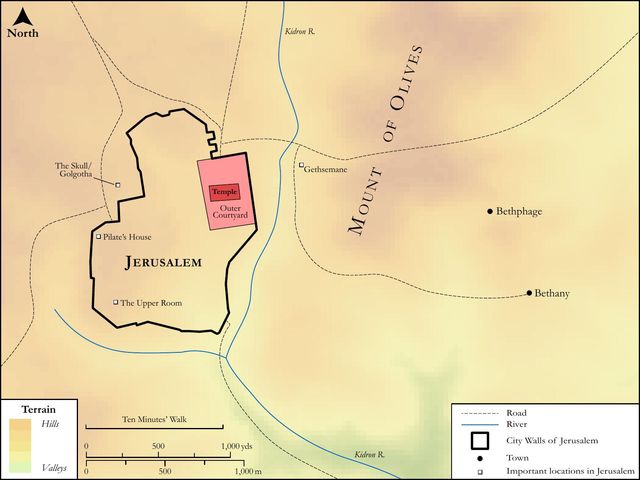
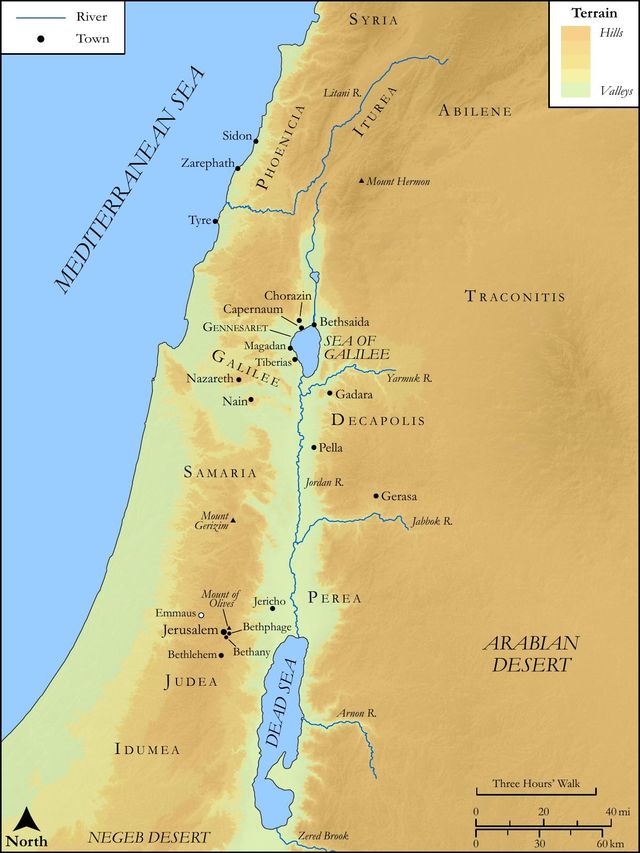
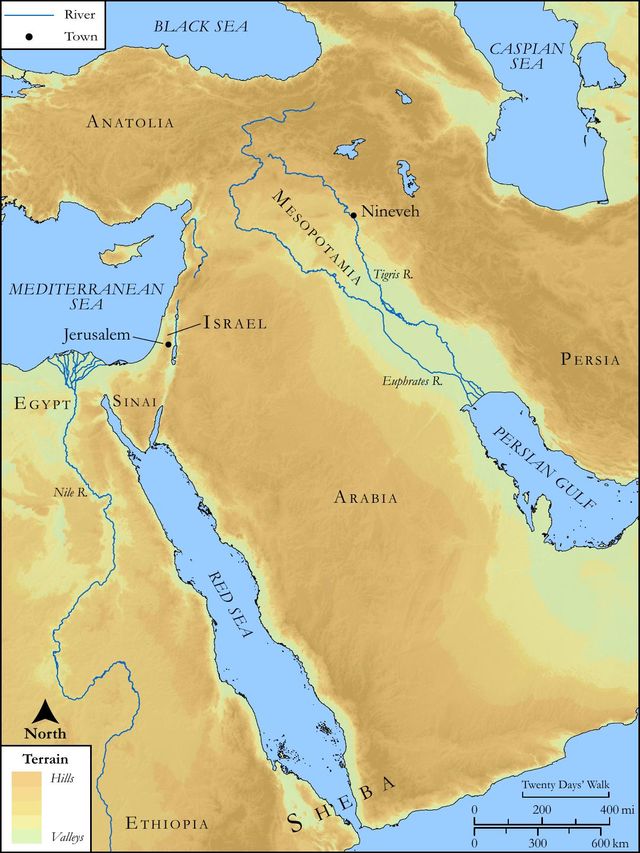
See on the biblical-era map
Study this verse
Public-domain commentary
Matthew Henry
From his Commentary on the Whole Bible. Henry comments on passages, not single verses — this entry covers Luke 8:1–3. His two-level outline is real structure in the source text, so it is rendered as structure.
We are here told,
I.What Christ made the constant business of his life - it was preaching; in that work he was indefatigable, and went about doing good (Luk 8:1), afterward - en tō kathexēs - ordine, in the proper time or method. Christ took his work before him and went about it regularly. He observed a series or order of business, so that the end of one good work was the beginning of another. Now observe here,
1.Where he preached: He went about - diōdeue - peragrabat. He was an itinerant preacher, did not confine himself to one place, but diffused the beams of his light. Circumibat - He went his circuit, as a judge, having found his preaching perhaps most acceptable where it was new. He went about through every city, that none might plead ignorance. Hereby he set an example to his disciples; they must traverse the nations of the earth, as he did the cities of Israel. Nor did he confine himself to the cities, but went into the villages, among the plain country-people, to preach to the inhabitants of the villages, Jdg 5:11.
2.What he preached: He showed the glad tidings of the kingdom of God, that it was now to be set up among them. Tidings of the kingdom of God are glad tidings, and those Jesus Christ came to bring; to tell the children of men that God was willing to take all those under his protection that were willing to return to their allegiance. It was glad tidings to the world that there was hope of its being reformed and reconciled.
3.Who were his attendants: The twelve were with him, not to preach if he were present, but to learn from him what and how to preach hereafter, and, if occasion were, to be sent to places where he could not go. Happy were these his servants that heard his wisdom.
II.Whence he had the necessary supports of life:
He lived upon the kindness of his friends. There were certain women, who frequently attended his ministry, that ministered to him of their substance, Luk 8:2, Luk 8:3. Some of them are named; but there were many others, who were zealously affected to the doctrine of Christ, and thought themselves bound in justice to encourage it, having themselves found benefit, and in charity, hoping that many others might find benefit by it too.
1.They were such, for the most part, as had been Christ's patients, and were the monuments of his power and mercy; they had been healed by him of evil spirits and infirmities. Some of them had been troubled in mind, had been melancholy, others of them afflicted in body, and he had been to them a powerful healer. He is the physician both of body and soul, and those who have been healed by him ought to study what they shall render to him. We are bound in interest to attend him, that we may be ready to apply ourselves to him for help in case of a relapse; and we are bound in gratitude to serve him and his gospel, who hath saved us, and saved us by it.
2.One of them was Mary Magdalene, out of whom had been cast seven devils; a certain number for an uncertain. Some think that she was one that had been very wicked, and then we may suppose her to be the woman that was a sinner mentioned just before, Luk 7:37. Dr. Lightfoot, finding in some of the Talmudists' writings that Mary Magdalene signified Mary the plaiter of hair, thinks it applicable to her, she having been noted, in the days of her iniquity and infamy, for that plaiting of hair which is opposed to modest apparel, Ti1 2:9. But, though she had been an immodest woman, upon her repentance and reformation she found mercy, and became a zealous disciple of Christ. Note, The greatest of sinners must not despair of pardon; and the worse any have been before their conversion the more they should study to do for Christ after. Or, rather, she was one that had been very melancholy, and then, probably, it was Mary the sister of Lazarus, who was a woman of a sorrowful spirit, who might have been originally of Magdala, but removed to Bethany. This Mary Magdalene was attending on Christ's cross and his sepulchre, and, if she was not Mary the sister of Lazarus, either that particular friend and favourite of Christ's did not attend then, or the evangelists did not take notice of her, neither of which we can suppose; thus Dr. Lightfoot argues. Yet there is this to be objected against it that Mary Magdalene is reckoned among the women that followed Jesus from Galilee (Mat 27:55, Mat 27:56); whereas Mary the sister of Lazarus had her residence in Bethany.
3.Another of them was Joanna the wife of Chuza, Herod's steward. She had been his wife (so some), but was now a widow, and left in good circumstances. If she was now his wife, we have reason to think that her husband, though preferred in Herod's court, had received the gospel, and was very willing that his wife should be both a hearer of Christ and a contributor to him.
4.There were many of them that ministered to Christ of their substance. It was an instance of the meanness of that condition to which our Saviour humbled himself that he needed it, and of his great humility and condescension that he accepted it. Though he was rich, yet for our sakes he became poor, and lived upon alms. Let none say that they scorn to be beholden to the charity of their neighbours, when Providence has brought them into straits; but let them ask and be thankful for it as a favour. Christ would rather be beholden to his known friends for a maintenance for himself and his disciples than be burdensome to strangers in the cities and villages whither he came to preach. Note, It is the duty of those who are taught in the word to communicate to them who teach them in all good things; and those who are herein liberal and cheerful honour the Lord with their substance, and bring a blessing upon it.
Historical interpretation
Nine Centuries of Reception
12 surviving comments on this verse. Each one is dated, so this reads as a timeline rather than a list.
Select a marker to jump to its quote. Markers stagger vertically where authors wrote within a few decades of each other.
Nor indeed, if, among the Greeks, in accordance with the carelessness of custom, women and wives are classed under a common name-however, there is a name proper to wives-shall we therefore so interpret Paul as if he demonstrates the apostles to have had wives? For if he were disputing about marriages, as he does in the sequel, where the apostle could better have named some particular example, it would appear right for him to say, "For have we not the power of leading about wives, like the other apostles and Cephas? "But when he subjoins those (expressions)which show his abstinence from (insisting on) the supply of maintenance, saying, "For have we not the power of eating and drinking? "he does not demonstrate that "wives" were led about by the apostles, whom even such as have not still have the power of eating and drinking; but simply "women," who used to minister to them in the stone way (as they did) when accompanying the Lord. But further, if Christ reproves the scribes and Pharisees, sitting in the official chair of Moses, but not doing what they taught, what kind of (supposition).
For He who descends from heaven to earth, brings tidings to them that dwell on earth of a heavenly kingdom But who ought to preach the kingdom of heaven? Many prophets came, yet preached not the kingdom of heaven, for how could they pretend to speak of things which they perceived not?
For He who descends from heaven to earth, brings tidings to them that dwell on earth of a heavenly kingdom. But who ought to preach the kingdom of heaven? Many prophets came, yet preached not the kingdom of heaven, for how could they pretend to speak of things which they perceived not?
For He passes from place to place, that He may not only gain many, but may consecrate many places. He sleeps and labors, that He may sanctify sleep and labor. He weeps, that He may give a value to tears. He preaches heavenly things, that He may exalt His hearers.
(Orat. xxxvii. 2.) For He passes from place to place, that He may not only gain many, but may consecrate many places. He sleeps and labours, that He may sanctify sleep and labour. He weeps, that He may give a value to tears. He preaches heavenly things, that He may exalt His hearers.
(in Matt. 27:55.) It was a Jewish custom, nor was it thought blameable, according to the ancient manners of that nation, that women should afford of their substance food and clothing to their teachers. This custom, as it might cause offence to the Gentiles, St. Paul relates he had cast off. (1 Cor. 9:15.) But these ministered unto the Lord of their substance, that He might reap their carnal things from whom they had reaped spiritual things. Not that the Lord needed the food of His creatures, but that He might set an example to masters, that they ought to be content with food and clothing from their disciples.
(lib. iii. ep. 206.) Now this kingdom of God some think to be higher and better than the heavenly kingdom, but some think it to be one and the same in reality, but called by different names; at one time the kingdom of God from Him who reigneth, but at another the kingdom of heaven from the Angels and Saints, His subjects, who are said to be of heaven.
(Hom. 33. in Ev.) For what is understood by the seven devils, but all vices? For since all time is comprehended by seven days, rightly by the number seven is universality represented: Mary therefore had seven devils, for she was full of every kind of vice. It follows, And Joanna the wife of Chuza Herod's steward, and Susanna, and many others who ministered to him of their substance.
Now this kingdom of God some think to be higher and better than the heavenly kingdom, but some think it to be one and the same in reality but called by different names; at one time the kingdom of God from Him who reigns, but at another the kingdom of heaven from the Angels and Saints, His subjects, who are said to be of heaven.
But like the eagle, enticing its young ones to fly, our Lord, step by step, raises up His disciples to heavenly things. He first of all teaches in the synagogues, and performs miracles. He next chooses twelve whom He names Apostles; He afterwards takes them alone with Him, as He preached throughout the cities and villages, as it follows, And the twelve were with him.
Mary Magdalene is the same of whose repentance, without mention of her name, we have just read. For the Evangelist, when he relates her going with our Lord, rightly distinguishes her by her known name, but when describing the sinner but penitent, He speaks of her generally as a woman; lest the mark of her former guilt should blacken a name of so great report. Out of whom seven devils are reported to have gone, that it might be shown that she was full of all vices.
But Mary is by interpretation, "bitter sea," because of the loud wailing of her penitence; Magdalene, "a tower, or rather belonging to a tower," from the tower of which it is said, Thou art become my hope, my strong tower from the face of my enemy. (Ps. 61:3.) Joanna is by interpretation "the Lord her grace," or "the merciful Lord," for from Him cometh every thing that we live upon. But if Mary, cleansed from the corruption of her sins, points to the Church of the Gentiles, why does not Joanna represent the same Church formerly subject to the worship of idols?
For every evil spirit whilst he acts for the devil's kingdom, is as it were Herod's steward. Susanna is interpreted, "a lily," or its grace, because of the fragrance and whiteness of the heavenly life, and the golden heat of inward love.
And it happened afterward, that he was traveling through cities and villages, preaching and evangelizing the kingdom of God, and the twelve were with him. We see in Christ's disciples the fulfillment of what we read said about that ancient people of the Hebrews. Nor is it surprising, because the same God of both Testaments will give blessing through the Son, who gave the law through the servant. As it says, a (mother) eagle provoking her young to fly, and hovering over them, spreads her wings, takes them up, and bears them on her shoulders (Deut. XXXII). For just as the young birds, newly born, cannot yet conquer the air by flying until they become feathered: so all the faithful, to be able to fly to heavenly things, must first clothe themselves with the wing of virtues in the nest of faith. Thus the apostles themselves, teachers of the faithful, gradually ascend to the heights, so that they can also preside over the teaching of others. First indeed the Lord teaches in synagogues, performs miracles, spreads renown everywhere, receives the crowds coming to him, heals, instructs. Hence he makes disciples, refreshes at the wedding of the bridegroom, leads them through fields, and defends them from the bites of serpentine Pharisees, like the young eagles with the stone brought against the bites of serpents. From these he chooses twelve, whom he names apostles, but he first teaches them in the presence of the crowd, giving to the usual benefits to the wretched along with the threatening crowd. Afterward, however, as it has been read herein, preaching through cities and villages, he retains only those who might hear him more intimately, explaining to them alone the mysteries of the kingdom of God, which he had spoken to others in parables. As if finally, with the manifestation of his virtues, firm as with the protection of wings, he gives them the power to heal, and sends them out to preach the kingdom of God.
He who descended from heaven, for our example and imitation, gives us a lesson not to be slothful in teaching. Hence it is said, And it came to pass afterward that he went, &c.
Not teaching or preaching, but to be instructed by Him. But lest it should seem that the women were hindered from following Christ, it is added, And certain women which had been healed of evil spirits and infirmities, Mary called Magdalene, out of whom went seven devils.
Continue studying Luke 8:1 across the web’s major study libraries — every link below opens this exact verse, chapter, or book on the destination site.
Read & Compare
 BibleGatewayThis verse in more than 200 translations and 70 languages.
 Bible.comThe YouVersion reader — hundreds of translations, reading plans, and highlights.
 ESV.orgCrossway's official English Standard Version reader.
 NET BibleThe NET translation with 60,000+ translators' notes on every rendering decision.
 STEP BibleTyndale House's free study tool — original text, vocabulary, and scholarly resources.
 BibliaLogos Bible Software's free web reader.
 USCCBThe New American Bible (Revised Edition) with the U.S. bishops' study notes.
Commentaries
 BibleHub CommentariesDozens of classic commentaries on this verse, gathered on one page.
 StudyLightMore than 100 commentary sets — the largest collection on the web.
 BibleRefPlain-English commentary on what this verse means, verse by verse.
 Enduring WordDavid Guzik's free commentary on this chapter, widely used by Bible teachers.
 Bible Study ToolsVerse commentary alongside Greek and Hebrew study aids.
Original Language & Research
- BibleHub InterlinearThe verse word by word — original language, transliteration, and English.
- BibleHub LexiconEvery word's original-language definition and Strong's entry.
 Blue Letter BibleDeep-study tools — Strong's numbers, concordance, and word studies.
 CNTR CollationThe earliest Greek manuscripts of this verse, collated letter by letter.
Sermons, Hymns & Audio


TrulyRandomVerse is not affiliated with these sites and doesn’t control their content. They’re linked because they’re genuinely useful.
Summary
Luke 8:1 serves as a pivotal summary statement, encapsulating the extensive and purposeful nature of Jesus Christ's ongoing ministry throughout the region of Galilee and beyond. It highlights His unwavering commitment to proclaiming the central message of the Kingdom of God, a mission undertaken with the constant companionship and active involvement of His chosen twelve disciples, underscoring the collaborative and training aspects of His public outreach.
Context
ShowHideLiterary Context
This verse acts as a significant transitional and summarizing statement within Luke's Gospel. It follows a series of powerful narratives in Luke 7, including the healing of the centurion's servant, the raising of the widow's son at Nain, and the anointing of Jesus by a sinful woman, all of which demonstrate Jesus' divine authority, compassion, and the radical nature of His Kingdom message. Luke 8:1 then sets the stage for the subsequent parables, most notably the Parable of the Sower in Luke 8:4-15, which immediately follows, illustrating how the "glad tidings" are received. It underscores that Jesus' teaching was not confined to a single location but was a pervasive, active endeavor.
Historical & Cultural Context
Jesus' ministry as an itinerant preacher was a common, though highly impactful, method of disseminating religious and philosophical teachings in the ancient world. Traveling "throughout every city and village" meant reaching both established urban centers and smaller, more remote communities, ensuring broad exposure to His message. This widespread travel also highlights the Jewish expectation of a coming messianic kingdom, which Jesus was now proclaiming to be "at hand" or even "among you" (Luke 17:21). The presence of "the twelve" with Him was also culturally significant, mirroring the rabbinic practice of disciples accompanying their master, but also uniquely foreshadowing their future apostolic role as the foundation of the new Israel.
Key Themes
ShowHideLuke 8:1 powerfully contributes to several overarching themes in Luke's Gospel. Firstly, it emphasizes the extensive and inclusive nature of Jesus' ministry, demonstrating His desire to reach all people, regardless of their social standing or location, with the transformative message of God's reign. Secondly, the verse reiterates the centrality of the Kingdom of God as the core content of Jesus' preaching, a theme consistently highlighted from His inaugural sermon in Luke 4:43. This "kingdom" is not merely a future political entity but God's sovereign rule breaking into the present through Jesus Himself. Finally, the presence of "the twelve" underscores the theme of discipleship and apostolic training, indicating that Jesus was not only proclaiming the Kingdom but also actively preparing His followers to continue this mission, as evidenced by their later commissioning in Luke 9:1-6.
Exposition and Analysis
ShowHideKey Word Analysis
ShowHideFrom diá (through) and hodeúō (to travel), this verb signifies an active, pervasive movement. It implies a deliberate and systematic journeying through various locations rather than a casual or sporadic visit. This highlights the intentionality and tireless nature of Jesus' evangelistic mission, emphasizing His commitment to widespread proclamation.
This verb literally means "to announce good news" or "to evangelize." It specifically refers to the proclamation of the gospel, the joyous message of salvation and the establishment of God's reign. The use of this term underscores that Jesus' primary activity was not merely teaching or performing miracles, but delivering a message of profound hope and transformation.
This noun denotes royalty, rule, or a realm. In the context of Jesus' ministry, it refers to God's sovereign reign, which is both a present reality inaugurated by Jesus' coming and a future consummation. It encompasses God's redemptive plan, His righteous governance, and the sphere of His divine authority, forming the very core of Jesus' message.
Verse Breakdown
ShowHide"And it came to pass afterward,"
This introductory phrase, common in Luke's narrative, serves as a temporal marker, indicating a continuation of Jesus' ministry following the events described in the preceding chapter. It suggests a sustained period of activity, not an isolated incident, emphasizing the ongoing nature of His work.
"that he went throughout every city and village,"
This clause describes the geographical scope and method of Jesus' ministry. "Every city and village" implies a comprehensive and widespread outreach, demonstrating His commitment to reaching diverse populations, from urban centers to rural communities. It speaks to the tireless, itinerant nature of His mission.
"preaching and shewing the glad tidings of the kingdom of God:"
This is the core purpose of Jesus' journey. "Preaching" (kērýssō) implies a public, authoritative proclamation, while "shewing the glad tidings" (euangelízō) specifies the content as "good news." The object of this proclamation is explicitly "the kingdom of God," signifying God's active, sovereign rule breaking into human history through Jesus, offering salvation and restoration.
"and the twelve [were] with him,"
This final clause highlights the crucial role of the disciples. Their constant presence signifies ongoing training and participation in Jesus' ministry. They were not just observers but active apprentices, learning firsthand the message and methods of the Kingdom, preparing them for their future commission.
Literary Devices
ShowHideLuke 8:1 functions primarily as a Summary Statement, efficiently consolidating the essence of Jesus' ongoing public ministry into a single, comprehensive sentence. This provides the reader with a clear overview before delving into specific events. The phrase "went throughout every city and village" employs Hyperbole or Generalization to convey the extensive and pervasive nature of Jesus' travels, emphasizing His tireless commitment to reaching a broad audience. The verse also utilizes Emphasis through the pairing of "preaching and shewing the glad tidings," underscoring the dual nature of His communication: authoritative proclamation and joyful announcement. Finally, the inclusion of "the twelve" serves as a subtle Foreshadowing of their future apostolic mission, indicating their training and integral role in the unfolding narrative of the Kingdom.
Theological and Thematic Connections
ShowHideLuke 8:1 profoundly encapsulates the heart of Jesus' earthly mission: the active, widespread proclamation of God's sovereign rule. This verse serves as a theological anchor, reminding us that the Kingdom of God is not merely a future hope but a present reality inaugurated by Christ's presence and power. It highlights the divine initiative in redemption, as God, through His Son, actively seeks to establish His reign in human hearts and society. The inclusion of the twelve disciples underscores the communal and reproductive nature of this mission, where the message is not only proclaimed but also embodied and multiplied through trained followers. This pattern of active outreach and discipleship remains foundational for the church's mission today, reflecting God's desire for all to hear and respond to the good news of His Kingdom.
Reflection and Application
ShowHideLuke 8:1 offers a powerful blueprint for contemporary believers and the Church. Jesus' example of tirelessly going "throughout every city and village" challenges us to move beyond passive invitation to proactive engagement in sharing the gospel. Our mission, like His, must be characterized by an intentional, widespread outreach to all segments of society, driven by the urgency and joy of the "glad tidings." Furthermore, the verse underscores the paramount importance of centering our message on the Kingdom of God – its present reality, its transforming power, and its call to repentance and faith. Finally, the presence of "the twelve" reminds us that ministry is not a solo endeavor but a communal, discipled effort. We are called not only to proclaim but also to equip and empower others, fostering a culture of mentorship and shared mission, ensuring that the Kingdom message continues to spread through generations of faithful witnesses.
Questions for Reflection
ShowHideFAQ
ShowHideWhat does "the glad tidings of the kingdom of God" truly mean?
ShowHide"The glad tidings of the kingdom of God" (Greek: euangelion tēs basileías tou theoú) is the core message of Jesus' ministry. It refers to the "good news" that God's sovereign rule and reign (His "kingdom") is breaking into human history through Jesus Christ. This is not merely a political or earthly kingdom, but a spiritual reality where God's will is done, His authority is recognized, and His redemptive purposes are fulfilled. It encompasses the forgiveness of sins, the defeat of evil, the promise of eternal life, and the restoration of humanity's relationship with God. Jesus Himself embodies and inaugurates this Kingdom, offering salvation and inviting people to live under God's loving rule. This message is foundational throughout the Gospels, as seen in Mark 1:14-15 and Luke 4:43.
Christ-Centered Fulfillment
ShowHideLuke 8:1, while describing Jesus' earthly itinerant ministry, profoundly points to His ultimate Christ-centered fulfillment. The "glad tidings of the kingdom of God" that Jesus preached were not merely abstract concepts but were embodied in His very person and work. He is the King of this Kingdom, the one through whom God's reign is established and made manifest. His tireless journeying "throughout every city and village" foreshadows the universal scope of His redemptive work, culminating in His death, resurrection, and ascension, which secured the Kingdom's victory over sin and death. The presence of "the twelve" with Him prefigures the Great Commission, where His followers would be sent out to continue proclaiming these same glad tidings to the ends of the earth, testifying to the King and His Kingdom. Ultimately, Luke 8:1 reminds us that the Kingdom of God is not just a message, but a reality powerfully initiated by Christ, who now reigns as Lord, having delivered us from the domain of darkness into His beloved Son's Kingdom. Every city and village reached by Jesus' feet in Galilee anticipates the day when every knee will bow and every tongue confess that Jesus Christ is Lord, and the kingdoms of this world will finally become the kingdom of our Lord and of His Christ.