


Deuteronomy 33:27
Bible text: King James Version (1769 Blayney text) · Public domain
Bible text: Berean Standard Bible · Public domain
Bible text: American Standard Version (1901) · Public domain
Bible text: World English Bible, Messianic edition · Public domain
Bible text: Geneva Bible (1599) · Public domain
Bible text: Young's Literal Translation · Public domain
- מְעֹנָהme·'o·Nah[is] a hiding placeH4585N-fsNoun Singular Feminine Absolute
- אֱלֹהֵי'e·Lo·hei[the] God ofH430N-mpcNoun Plural Masculine Construct
- קֶדֶםKe·demancient timeH6924N-msNoun Singular Masculine Absolute
- וּמִתַּחַתu·mi·Ta·chatand [are] <from> beneathH8478Conj-w ¦ Prep-m ¦ N-msNoun Singular Masculine Absoluteוּandמִ[are] <from>תַּחַתbeneath
- זְרֹעֹתze·ro·'Otarms ofH2220N-fpcNoun Plural Feminine Construct
- עוֹלָםo·LamantiquityH5769N-msNoun Singular Masculine Absolute
- וַיְגָרֶשׁvay·Ga·reshand he has driven outH1644Conj-w ¦ V-Piel-ConsecImperf-3msVerb Piel Consecutive Imperfect 3rd Singular Masculineוַandיְגָרֶשׁhe has driven out
- מִפָּנֶיךָmi·pa·Nei·khafrom before youH6440Prep-m ¦ N-mpc ¦ 2msNoun Plural Masculine Constructמִfromפָּנֶיbeforeךָyou
- אוֹיֵב'o·Yev[the] enemyH341V-Qal-Prtcpl-msVerb Qal Participle Singular Masculine Absolute
- וַיֹּאמֶרvai·Yo·merand he has saidH559Conj-w ¦ V-Qal-ConsecImperf-3msVerb Qal Consecutive Imperfect 3rd Singular Masculineוַandיֹּאמֶרhe has said
- הַשְׁמֵדhash·MeddestroyH8045V-Hiphil-Imp-2msVerb Hiphil Imperative 2nd Singular Masculine
English is a literal word-by-word gloss of the Hebrew, not the KJV's wording. Why?
This is the original text the KJV's translators worked from — each Hebrew word with its own literal English meaning in this verse, prepared by scholars at Tyndale House, Cambridge. The KJV translates whole sentences, not word by word, so its wording differs: one Hebrew word can become several English words, and the KJV may choose “the LORD” where the gloss reads “Yahweh”. Both are faithful — they answer different questions. For the KJV's own rendering, switch to the KJV text.
Details
See on the biblical-era map
Study this verse
Public-domain commentary
Matthew Henry
From his Commentary on the Whole Bible. Henry comments on passages, not single verses — this entry covers Deuteronomy 33:26–29. His three-level outline is real structure in the source text, so it is rendered as structure.
These are the last words of all that ever Moses, that great writer, that great dictator, either wrote himself or had written from his dictation; they are therefore very remarkable, and no doubt we shall find them very improving. Moses, the man of God (who had as much reason as ever any mere man had to know both), with his last breath magnifies both the God of Israel and the Israel of God. They are both incomparable in his eye; and we are sure that in this his judgment of both his eye did not wax dim.
I.No God like the God of Israel.
None of the gods of the nations were capable of doing that for their worshippers which Jehovah did for his: There is none like unto the God of Jeshurun, Deu 33:26. Note, When we are expecting that God should bless us in doing well for us we must bless him by speaking well of him: and one of the most solemn ways of praising God is by acknowledging that there is none like him. Now,
1.This was the honour of Israel. Every nation boasted of its god; but none had such a God to boast of as Israel had.
2.It was their happiness that they were taken into covenant with such a God. Two things he takes notice of as proofs of the incontestable pre-eminence of the God of Jeshurun above all other gods:
(1.)His sovereign power and authority: He rides upon the heavens, and with the greatest state and magnificence on the skies. Riding on the heavens denotes his greatness and glory, in which he manifests himself to the upper world, and the use he makes of the influences of heaven, and the productions of the clouds, in bringing to pass his own counsels in this lower world: he manages and directs them as a man does the horse he rides on. When he has any thing to do for his people he rides upon the heavens to do it; for he does it swiftly and strongly: no enemy can either anticipate or obstruct the progress of him that rides on the heavens.
(2.)His boundless eternity; he is the eternal God, and his arms are everlasting, Deu 33:27. The gods of the heathen were but lately invented, and would shortly perish; but the God of Jeshurun is eternal: he was before all worlds, and will be when time and days shall be no more. See Hab 1:12.
II.No people like the Israel of God.
Having pronounced each tribe happy, in the close he pronounces all together very happy, so happy in all respects that there was no nation under the sun comparable to them (Deu 33:29): Happy art thou, O Israel, a people whose God is the Lord, on that account truly happy, and none like unto thee. If Israel honour God as a non-such God, he will favour them so as to make them a non-such people, the envy of all their neighbours and the joy of all their well-wishers. Who is like unto thee, O people? Behold, thou art fair, my love, says Christ of his spouse. To which she presently returns, Behold thou art fair, my beloved. What one nation (no, not all the nations together) is like thy people Israel? Sa2 7:23. What is here said of the church of Israel and the honours and privileges of it is certainly to be applied to the church of the first-born, that are written in heaven. The Christian church is the Israel of God, as the apostle calls it (Gal 6:16), on which there shall be peace, and which is dignified above all societies in the world, as Israel was.
1.Never were people so well seated and sheltered (Deu 33:27): The eternal God is thy refuge. Or, as the word signifies, "thy habitation, or mansion-house, in which thou art safe, and easy, and at rest, as a man in his own house." Every Israelite indeed is at home in God; the soul returns to him, and reposes in him as its resting-place (Psa 116:7), its hiding-place, Psa 32:7. And those that make him their habitation shall have all the comforts and benefits of a habitation in him, Psa 91:1. Moses had an eye to God as the habitation of Israel when they were wandering in the wilderness (Psa 90:1): Lord, thou hast been our dwelling-place in all generations. And now that they were going to settle in Canaan they must not change their habitation; still they will need, and still they shall have, the eternal God for their dwelling-place; without him Canaan itself would be a wilderness, and a land of darkness.
2.Never were people so well supported and borne up: Underneath are the everlasting arms; that is, the almighty power of God is engaged for the protection and consolation of all that trust in him, in their greatest straits and distresses, and under the heaviest burdens. The everlasting arms shall support,
(1.)The interests of the church in general, that they shall not sink, or be run down; underneath the church is that rock of ages on which it is built, and against which the gates of hell shall never prevail, Mat 16:18.
(2.)The spirits or particular believers, so that, though they may be oppressed, they shall not be overwhelmed by any trouble. How low soever the people of God are at any time brought, everlasting arms are underneath them to keep the spirit from sinking, from fainting, and the faith from failing, even when they are pressed above measure. The everlasting covenant, and the everlasting consolations that flow from it, are indeed everlasting arms, with which believers have been wonderfully sustained, and kept cheerful in the worst of times; divine grace is sufficient for them, Co2 12:9.
3.Never were people so well commanded and led on to battle: "He shall thrust out the enemy from before thee by his almighty power, which will make room for thee; and by a commission which will bear thee out he shall say, Destroy them." They were now entering upon a land that was in the full possession of a strong and formidable people, and who, being its first planters, looked upon themselves as its rightful owners; how shall Israel justify, and how shall they accomplish, the expulsion of them?
(1.)God will give them a commission to destroy the Canaanites, and that will justify them, and bear them out in it, against all the world. He that is sovereign Lord of all lives and all lands not only allowed and permitted, but expressly commanded and appointed the children of Israel both to take possession of the land of Canaan and to put the sword to the people of Canaan, which, being thus authorized, they might not only lawfully but honourably do, without incurring the least stain or imputation of theft by the one or murder by the other.
(2.)God will give them power and ability to destroy them; nay, he will in effect do it to their hands: he will thrust out the enemy from before them; for the very fear of Israel shall put them to flight. God drive out the heathen to plant his people, Psa 44:2. Thus believers are more than conquerors over their spiritual enemies, through Christ that loved them. The captain of our salvation thrust out the enemy from before us when he overcame the world and spoiled principalities and powers on the cross; and the word of command to us is, "Destroy them; pursue the victory, and you shall divide the spoil."
4.Never were people so well secured and protected (Deu 33:28): Israel shall then dwell in safety alone. Those that dwell in God, and make his name their strong tower, dwell in safety; the place of their defence is the munitions of rocks, Isa 33:16. They shall dwell in safety alone.
(1.)Though alone. Though they contract no alliances with their neighbours, nor have any reason to expect help or succour from any of them, yet they shall dwell in safety; they shall really be safe, and they shall think themselves so.
(2.)Because alone. They shall dwell in safety as long as they continue pure, and unmixed with the heathen, a singular and peculiar people. Their distinction from other nations, though it made them like a speckled bird (Jer 12:9), and exposed them to the ill-will of those about them, yet was really their preservation from the mischief their neighbours wished them, as it kept them under the divine protection. All that keep close to God shall be kept safely by him. It is promised that in the kingdom of Christ Israel shall dwell safely, Jer 23:6.
5.Never were people so well provided for: The fountain of Jacob (that is, the present generation of that people, which is as the fountain to all the streams that shall hereafter descend and be derived from it) shall now presently be fixed upon a good land. The eye of Jacob (so it might be read, for the same word signifies a fountain and an eye) is upon the land of corn and wine, that is, where they now lay encamped they had Canaan in their eye, it was just before their faces, on the other side the river, and they would have it in their hands and under their feet quickly. This land upon which they had set their eye was blessed both with the fatness of the earth and the dew of heaven; it was a land of corn and wine, substantial and useful productions: also his heavens (as if the heavens were particularly designed to be blessings to that land) shall drop down dew, without which, though the soil were ever so good, the corn and wine would soon fail. Every Israelite indeed has his eye, the eye of faith, upon the better country, the heavenly Canaan, which is richly replenished with better things than corn and wine.
6.Never were people so well helped. If they were in any strait, God himself rode upon the heavens for their help, Deu 33:26. And they were a people saved by the Lord, Deu 33:29. If they were in danger of any harm, or in want of any good, they had an eternal God to go to, an almighty power to trust to; nothing could hurt those whom God helped, nor was it possible that the people should perish which was saved by the Lord. Those that are added to the gospel Israel are such as shall be saved, Act 2:47.
7.Never were people so well armed. God himself was the shield of their help by whom they were armed defensively, and sufficiently guarded against all assailants: and he was the sword of their excellency, by whom they were armed offensively, and made both formidable and successful in all their wars. God is called the sword of their excellency because, in fighting for them, he made them to excel other people, or because in all he did for them he had an eye to his sanctuary among them, which is called the excellency of Jacob, Psa 47:4; Eze 24:21; Amo 6:8. Those in whose hearts is the excellency of holiness have God himself for their shield and sword - are defended by the whole armour of God; his word is their sword, and faith in it is their shield, Eph 6:16, Eph 6:17.
8.Never were people so well assured of victory over their enemies: They shall be found liars unto thee; That is, "shall be forced to submit to thee sorely against their will, so that it will be but a counterfeit submission; yet the point shall be gained, for thou shalt tread upon their necks" (so the Septuagint), which we find done, Jos 10:24. "Thou shalt tread down their strong-holds, be they ever so high, and trample upon their palaces and temples, though esteemed ever so sacred. If thy enemies be found liars to thee" (so some read it), "thou shalt tread upon their high places; if they will not be held by the bonds of leagues and treaties, they shall be broken by the force of war." Thus shall the God of peace tread Satan under the feet of all believers, and shall do it shortly, Rom 16:20.
Now lay all this together, and then you will say, Happy art thou, O Israel! Who is like unto thee, O people! Thrice happy the people whose God is the Lord.
Historical interpretation
Historical reception
1 surviving comment on this verse from the historical church.
Underneath are the everlasting arms: Though the dwelling of God be above in heaven, his arms are always stretched out to help us here below.
Continue studying Deuteronomy 33:27 across the web’s major study libraries — every link below opens this exact verse, chapter, or book on the destination site.
Read & Compare
 BibleGatewayThis verse in more than 200 translations and 70 languages.
 Bible.comThe YouVersion reader — hundreds of translations, reading plans, and highlights.
 ESV.orgCrossway's official English Standard Version reader.
 NET BibleThe NET translation with 60,000+ translators' notes on every rendering decision.
 STEP BibleTyndale House's free study tool — original text, vocabulary, and scholarly resources.
 BibliaLogos Bible Software's free web reader.
 USCCBThe New American Bible (Revised Edition) with the U.S. bishops' study notes.
Commentaries
 BibleHub CommentariesDozens of classic commentaries on this verse, gathered on one page.
 StudyLightMore than 100 commentary sets — the largest collection on the web.
 BibleRefPlain-English commentary on what this verse means, verse by verse.
 Enduring WordDavid Guzik's free commentary on this chapter, widely used by Bible teachers.
 Bible Study ToolsVerse commentary alongside Greek and Hebrew study aids.
Original Language & Research
- BibleHub InterlinearThe verse word by word — original language, transliteration, and English.
- BibleHub LexiconEvery word's original-language definition and Strong's entry.
 Blue Letter BibleDeep-study tools — Strong's numbers, concordance, and word studies.
 SefariaThe Hebrew text with Rashi and centuries of Jewish commentary.
Sermons, Hymns & Audio


TrulyRandomVerse is not affiliated with these sites and doesn’t control their content. They’re linked because they’re genuinely useful.
Summary
Deuteronomy 33:27, a pinnacle of Moses' final blessing upon Israel, serves as a profound declaration of God's unwavering presence, omnipotent power, and steadfast protection as His people stand on the threshold of the Promised Land. It majestically portrays the Lord as an eternal, secure dwelling place whose perpetual strength undergirds His chosen people, actively intervening to vanquish their adversaries and guarantee their victory and security. This verse encapsulates the enduring faithfulness of God and His dynamic, sovereign role in the lives of His covenant nation.
Context
ShowHideLiterary Context
This powerful verse is strategically positioned within Moses' valedictory address and blessing to the twelve tribes of Israel, meticulously recorded in Deuteronomy 33. Having comprehensively reviewed God's covenant faithfulness and the divine Law in the preceding chapters, Moses, on the cusp of his departure and Israel's momentous entry into Canaan, imparts specific, prophetic blessings upon each tribe, from Reuben to Asher (Deuteronomy 33:6-25). Deuteronomy 33:27 then transcends individual tribal blessings to serve as a grand, climactic summation and a general benediction for all Israel. It provides a foundational, overarching promise of God's omnipresent protection and His active role in securing their future in the land. This verse stands as a final, comforting assurance amidst the daunting challenges of conquest and settlement, reinforcing the profound themes of divine election, covenant loyalty, and God's unyielding commitment that permeate the entire book of Deuteronomy.
Historical & Cultural Context
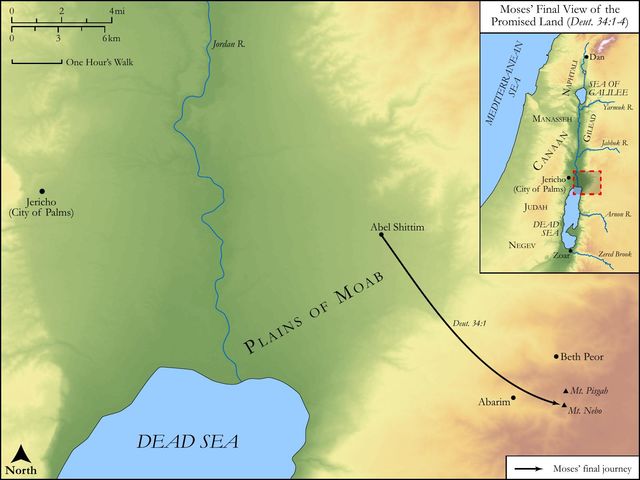
The historical setting is critically important for understanding the resonance of this promise: Israel is encamped on the plains of Moab, poised to cross the Jordan River and commence the formidable conquest of Canaan. Moses, their venerable and irreplaceable leader, is about to die, and a new generation, forged in the crucible of the wilderness, is preparing to confront formidable Canaanite nations. In this context of profound transition, uncertainty, and impending conflict, the promise of God as an "eternal refuge" and "everlasting arms" would have provided immense comfort, courage, and spiritual fortitude. The concept of a divine "refuge" or "dwelling place" (Hebrew: ma'on) was deeply significant for a people who had been nomadic for forty years and were now entering a land where they would establish permanent homes, yet still face constant, existential threats. The imagery of God's "arms" speaks powerfully of divine strength, protective power, and even parental care, as when the LORD "bare thee, as a man doth bear his son" in the wilderness. Furthermore, the explicit command to "thrust out the enemy" and "destroy them" points directly to the unique nature of Israel's divinely ordained holy war (herem) against the inhabitants of Canaan, underscoring God's direct, active, and sovereign involvement in their battles and His commitment to purifying the land for His covenant people.
Key Themes
ShowHideDeuteronomy 33:27 powerfully articulates several core theological and narrative themes central to the book of Deuteronomy and Israel's identity. Firstly, it highlights the Eternity and Immutability of God, emphasizing His timeless nature as the ultimate source of stability and security, a theme eloquently echoed in Psalm 90:1-2. Secondly, it profoundly underscores Divine Refuge and Sustained Support, portraying God as a secure, permanent dwelling place and an unwavering source of strength. His "everlasting arms" provide perpetual comfort, upholding, and sustenance, much like the assurance found in Psalm 46:1. Thirdly, the verse boldly proclaims God's Active Deliverance and Guaranteed Victory, assuring Israel that their success in conquering the Promised Land is not merely a human endeavor but is divinely guaranteed and executed. God Himself will engage with and decisively defeat their adversaries. This theme of divine intervention in battle is foundational to Israel's history, exemplified by God's command in Exodus 14:14 and His promise to fight for His people throughout their conquest, as triumphantly declared in Joshua 23:10.
Exposition and Analysis
ShowHideKey Word Analysis
ShowHidemᵉʻôwnâh signifies "an abode, of God (the Tabernacle or the Temple), men (their home) or animals (their lair); hence, a retreat (asylum)." This word implies more than a temporary hiding spot; it denotes a secure, intimate, and permanent dwelling place. When applied to God, it suggests that He Himself is the ultimate home and sanctuary for His people, a place of profound safety and enduring rest where they can reside securely, protected from all threats and finding ultimate belonging.
ʻôwlâm means "properly, concealed, i.e. the vanishing point; generally, time out of mind (past or future), i.e. (practically) eternity; frequentatively, adverbial (especially with prepositional prefix) always." This term denotes infinite duration, stretching boundlessly into both past and future. When combined with "arms," it conveys an image of infinite, perpetual strength and unwavering support, emphasizing that God's power and commitment to uphold His people are boundless, never tiring, and always present, regardless of the depth of their need or the severity of their fall.
zᵉrôwaʻ refers to "the arm (as stretched out), or (of animals) the foreleg; figuratively, force." This word is consistently used in scripture to represent strength, power, and might, particularly divine power. In the context of "everlasting arms," it paints a vivid picture of God's active, powerful, and tender embrace. It signifies His capacity to uphold, sustain, and defend His people with an unyielding, personal strength that is always available and never diminishes.
Verse Breakdown
ShowHide"The eternal God is thy refuge"
This foundational clause establishes God's unchanging nature as timeless and pre-existent, providing a permanent and utterly secure dwelling place for His covenant people. It boldly asserts that Israel's ultimate security and stability are not found in human might, earthly fortifications, or transient circumstances, but solely in the very being of the sovereign, pre-existent God. He is their ultimate home, their unshakeable foundation.
"and underneath are the everlasting arms"
This profoundly comforting imagery portrays God's constant, unwavering, and personal support. The word "underneath" suggests that no matter how deep one's despair, how profound a fall, or how dire the circumstances, God's perpetually strong, tender, and infinite arms are always there—ready to catch, uphold, sustain, and prevent ultimate collapse, providing both comfort and an unyielding foundation. It speaks to His intimate, sustaining presence.
"and he shall thrust out the enemy from before thee"
This clause transitions from God's character to His active, dynamic intervention on behalf of His people. "Thrust out" (H1644, gârash) implies a forceful, decisive, and complete expulsion. It highlights God's role as a divine warrior who actively removes obstacles and adversaries from His people's path, ensuring their progress, security, and success in the face of opposition, demonstrating His commitment to their covenant inheritance.
"and shall say, Destroy them"
This final, authoritative phrase emphasizes God's sovereign command and explicit authorization for Israel's conquest. It underscores that the victory over the Canaanites is not merely a human endeavor or a matter of military strategy, but a divinely ordained and commanded act. This reinforces God's ultimate authority over history and warfare, and His unwavering commitment to fulfilling His covenant promises through direct, powerful intervention.
Literary Devices
ShowHideDeuteronomy 33:27 is rich with powerful Metaphor and evocative Imagery, painting vivid pictures of God's protective and sustaining nature. God is presented as a Refuge, a secure dwelling place, which is a profound metaphor for ultimate safety, belonging, and security. The phrase "underneath are the everlasting arms" is another potent metaphor, conveying divine strength, tenderness, and unwavering support, akin to a parent holding and upholding a beloved child. The verse also employs Personification when it describes God as actively "thrusting out" enemies and "saying, Destroy them," attributing human-like actions and speech to the divine being to emphasize His direct involvement, sovereign will, and personal commitment to His people's victory. The overall structure of the blessing, of which this verse is a climactic part, is highly Poetic, characterized by elevated language, rhythmic qualities, and evocative imagery designed to inspire awe, trust, and profound confidence in God's boundless power and unfailing faithfulness.
Theological and Thematic Connections
ShowHideDeuteronomy 33:27 stands as a powerful testament to God's enduring attributes and His unwavering covenant faithfulness. It speaks profoundly to His omnipresence and omnipotence, assuring His people that He is not merely a distant, detached deity but an intimately involved protector and provider. The designation "eternal God" underscores His immutability; His character, nature, and promises do not change with time or circumstance, providing an unshakeable foundation for faith in a world of flux. His "everlasting arms" signify His perpetual strength and unwavering commitment to uphold His people through every trial, demonstrating His tender, personal care alongside His mighty power. Furthermore, God's active role in "thrusting out the enemy" highlights His absolute sovereignty over all creation, including the forces of opposition, and His unwavering commitment to fulfilling His covenant promises, even through direct, decisive intervention in human history. This verse serves as a profound assurance that God is both the secure dwelling place and the active, victorious defender of His people, guaranteeing their ultimate well-being.
Reflection and Application
ShowHideDeuteronomy 33:27 offers profound comfort and timeless assurance to believers navigating a world of constant change, uncertainty, and spiritual opposition. It serves as a powerful reminder that our ultimate security and stability are not found in fleeting circumstances, human strength, or earthly achievements, but solely in the unchanging, eternal God. When anxieties mount, when life feels unstable, or when we face overwhelming challenges, this verse invites us to find our "refuge" in Him—a permanent, secure, and inviolable dwelling place for our souls. The vivid imagery of "everlasting arms" encourages us to lean fully and unreservedly on His perpetual strength, knowing with absolute certainty that no matter how deep our struggles, how profound our falls, or how heavy our burdens, His unwavering support is always beneath us, ready to uphold, comfort, and sustain. This divine promise empowers us to face spiritual battles, personal obstacles, and external threats with unwavering courage, trusting in God's active power to overcome adversaries and deliver us, knowing that He fights for us and equips us to stand firm in faith. Ultimately, it calls us to rest in His sovereign care, finding profound peace and unshakable security in His perpetual presence and unfailing love.
Questions for Reflection
ShowHideFAQ
ShowHideWhat does "the eternal God is thy refuge" mean for us today?
ShowHideFor believers today, "the eternal God is thy refuge" means that God is our permanent, secure, and unchanging dwelling place, not merely a temporary shelter from life's storms. His eternal nature ensures that His promises, His protection, His character, and His love are immutable and always available, regardless of the shifting circumstances of our lives. In a world marked by constant flux, instability, and uncertainty, He remains our constant, secure home, providing ultimate safety, peace, and ultimate belonging. This profound truth invites us to find our deepest rest, identity, and security solely in Him, knowing He is always there.
How do "everlasting arms" relate to God's character and our experience?
ShowHideThe "everlasting arms" signify God's infinite strength, tender care, and unwavering, perpetual presence. It is a powerful and deeply comforting image of boundless, continuous support, implying that no matter how deep one's despair, how profound one's fall, or how dire one's circumstances, God's support is always beneath, ready to uphold, comfort, and prevent utter collapse. This speaks directly to God's boundless power to sustain His people through all trials, His unfailing love that never gives up, and His unwavering commitment to never let His children be utterly cast down, much like the promise of His steadfast love that endures forever found throughout Psalm 136.
Does God still "thrust out the enemy" today, or was that only for ancient Israel's conquest?
ShowHideWhile the immediate context of Deuteronomy 33:27 refers to the physical conquest of Canaan, the profound principle of God actively "thrusting out the enemy" extends powerfully to the spiritual realm for believers today. God continues to battle against spiritual enemies—Satan, sin, and death—on behalf of His people. Through the finished work of Christ, He has already secured the decisive and ultimate victory over these forces, and He continues to empower believers to overcome temptation, spiritual opposition, and the schemes of the adversary in their daily lives. This is profoundly evident in New Testament teachings on spiritual warfare, where believers are called to stand firm, knowing that God is their ultimate deliverer and that He will crush Satan under their feet, as triumphantly promised in Romans 16:20.
Christ-Centered Fulfillment
ShowHideDeuteronomy 33:27 finds its ultimate and most profound fulfillment in the person and work of Jesus Christ. He is the very embodiment of the "eternal God," the Alpha and Omega, who existed before all creation, through whom all things were made, and in whom all things hold together (John 1:1-3). In Him, we find our perfect "refuge," for He is the secure, living dwelling place to whom all who are weary and burdened are invited to come and find true rest for their souls (Matthew 11:28). The "everlasting arms" of God are most clearly and powerfully seen in Christ's sustaining power, as He upholds the universe by the word of His power (Hebrews 1:3) and promises to never leave or forsake His followers, assuring His constant, abiding presence (Hebrews 13:5). Furthermore, the promise that God "shall thrust out the enemy" is climactically fulfilled in Christ's decisive victory over sin, death, and the devil through His crucifixion and glorious resurrection. On the cross, Jesus disarmed the spiritual powers and authorities, triumphing over them by it (Colossians 2:15), and through His death, He destroyed him who has the power of death, that is, the devil (Hebrews 2:14). Thus, in Christ, we not only have an eternal refuge and everlasting support, but also a decisive, irreversible victory over every spiritual adversary, securing our ultimate salvation, eternal inheritance, and present freedom.