


Mark 1:16
- παράγωνparagōnpassingG3855V-PAP-NSMVerb Present Active Participle Nominative Singular Masculine
- δὲdenowG1161CONJConjunction
- παρὰparabyG3844PREPPreposition
- τὴνtēntheG3588T-ASFDefinite article Accusative Singular Feminine
- θάλασσανthalassanSeaG2281N-ASFNoun Accusative Singular Feminine
- τῆςtēs<the>G3588T-GSFDefinite article Genitive Singular Feminine
- ΓαλιλαίαςGalilaiasof GalileeG1056N-GSF-LNoun Genitive Singular Feminine Location
- εἶδενeidenHe sawG1492V-2AAI-3SVerb 2nd Aorist Active Indicative 3rd Singular
- ΣίμωναSimōnaSimonG4613N-ASM-PNoun Accusative Singular Masculine Individual
- καὶkaiandG2532CONJConjunction
- ἈνδρέανAndreanAndrewG406N-ASM-PNoun Accusative Singular Masculine Individual
- τὸνtontheG3588T-ASMDefinite article Accusative Singular Masculine
- ἀδελφὸνadelphonbrotherG80N-ASMNoun Accusative Singular Masculine
- αὐτοῦautouof himG846P-GSMPersonal pronoun Genitive Singular Masculine
- ἀμφιβάλλονταςamphiballontasnet-castingV-PAP-APMVerb Present Active Participle Accusative Plural Masculine
- ἀμφίβληστρονamphiblēstrona netG293N-ASNNoun Accusative Singular Neuter
- ἐνenintoG1722PREPPreposition
- τῇtēatheG3588T-DSFDefinite article Dative Singular Feminine
- θαλάσσῃ·thalassēseaG2281N-DSFNoun Dative Singular Feminine
- ἦσανēsanthey wereG1510V-IAI-3PVerb Imperfect Active Indicative 3rd Plural
- γὰρgarforG1063CONJConjunction
- ἁλιεῖςhalieisfishermenG231N-NPMNoun Nominative Plural Masculine
English is a literal word-by-word gloss of the Greek, not the KJV's wording. Why?
This is the original text the KJV's translators worked from — each Greek word with its own literal English meaning in this verse, prepared by scholars at Tyndale House, Cambridge. The KJV translates whole sentences, not word by word, so its wording differs: one Greek word can become several English words, and the KJV may choose “charity” where the gloss reads “love”. Both are faithful — they answer different questions. For the KJV's own rendering, switch to the KJV text.
Details
See on the biblical-era map
Study this verse
Public-domain commentary
Matthew Henry
From his Commentary on the Whole Bible. Henry comments on passages, not single verses — this entry covers Mark 1:14–22. His three-level outline is real structure in the source text, so it is rendered as structure.
Here is, I. A general account of Christ's preaching in Galilee. John gives an account of his preaching in Judea, before this (ch. 2 and 3), which the other evangelists had omitted, who chiefly relate what occurred in Galilee, because that was least known at Jerusalem. Observe,
1.When Jesus began to preach in Galilee; After that John was put in prison. When he had finished his testimony, then Jesus began his. Note, The silencing of Christ's ministers shall not be the suppressing of Christ's gospel; if some be laid aside, others shall be raised up, perhaps mightier than they, to carry on the same work.
2.What he preached; The gospel of the kingdom of God. Christ came to set up the kingdom of God among men, that they might be brought into subjection to it, and might obtain salvation in it; and he set it up by the preaching of his gospel, and a power going along with it.
Observe, (1.) The great truths Christ preached; The time is fulfilled, and the kingdom of God is at hand. This refers to the Old Testament, in which the kingdom of the Messiah was promised, and the time fixed for the introducing of it. They were not so well versed in those prophecies, nor did they so well observe the signs of the times, as to understand it themselves, and therefore Christ gives them notice of it; "The time prefixed is now at hand; glorious discoveries of divine light, life, and love, are now to be made; a new dispensation far more spiritual and heavenly than that which you have hitherto been under, is now to commence." Note, God keeps time; when the time is fulfilled, the kingdom of God is at hand, for the vision is for an appointed time, which will be punctually observed, though it tarry past our time.
(2.)The great duties inferred from thence. Christ gave them to understand the times, that they might know what Israel ought to do; they fondly expected the Messiah to appear in external pomp and power, not only to free the Jewish nation from the Roman yoke, but to make it have dominion over all its neighbours, and therefore thought, when that kingdom of God was at hand, they must prepare for war, and for victory and preferment, and great things in the world; but Christ tells them, in the prospect of that kingdom approaching, they must repent, and believe the gospel. They had broken the moral law, and could not be saved by a covenant of innocency, for both Jew and Gentile are concluded under guilt. They must therefore take the benefit of a covenant of grace, must submit to a remedial law, and this is it - repentance towards God, and faith towards our Lord Jesus Christ. They had not made use of the prescribed preservatives, and therefore must have recourse to the prescribed restoratives. By repentance we must lament and forsake our sins, and by faith we must receive the forgiveness of them. By repentance we must give glory to our Creator whom we have offended; by faith we must give glory to our Redeemer who came to save us from our sins. Both these must go together; we must not think either that reforming our lives will save us without trusting in the righteousness and grace of Christ, or that trusting in Christ will save us without the reformation of our hearts and lives. Christ hath joined these two together, and let no man think to put them asunder. They will mutually assist and befriend each other. Repentance will quicken faith, and faith will make repentance evangelical; and the sincerity of both together must be evidenced by a diligent conscientious obedience to all God's commandments. Thus the preaching of the gospel began, and thus it continues; still the call is, Repent, and believe, and live a life of repentance and a life of faith.
II.Christ appearing as a teacher, here is next his calling of disciples, Mar 1:16-20. Observe,
1.Christ will have followers. If he set up a school, he will have scholars; if he set up his standard, he will have soldiers; if he preach, he will have hearers. He has taken an effectual course to secure this; for all that the Father has given him, shall, without fail, come to him.
2.The instruments Christ chose to employ in setting up his kingdom, were the weak and foolish things of the world; not called from the great sanhedrim, or the schools of the rabbin, but picked up from among the tarpaulins by the sea-side, that the excellency of the power might appear to be wholly of God, and not at all of them.
3.Though Christ needs not the help of man, yet he is pleased to make use of it in setting up his kingdom, that he might deal with us not in a formidable but in a familiar way, and that in his kingdom the nobles and governors may be of ourselves, Jer 31:21.
4.Christ puts honour upon those who, though mean in the world, are diligent in their business, and loving to one another; so those were, whom Christ called. He found them employed, and employed together. Industry and unity are good and pleasant, and there the Lord Jesus commands the blessing, even this blessing, Follow me.
5.The business of ministers is to fish for souls, and win them to Christ. The children of men, in their natural condition, are lost, wander endlessly in the great ocean of this world, and are carried down the stream of its course and way; they are unprofitable. Like leviathan in the waters, they play therein; and often, like the fishes of the sea, they devour one another. Ministers, in preaching the gospel, cast the net into the waters, Mat 13:47. Some are enclosed and brought to shore, but far the greater number escape. Fishermen take great pains, and expose themselves to great perils, so do ministers; and they have need of wisdom. If many a draught brings home nothing, yet they must go on.
6.Those whom Christ called, must leave all, to follow him; and by his grace he inclines them to do so. Not that we must needs go out of the world immediately, but we must sit loose to the world, and forsake every thing that is inconsistent with our duty to Christ, and that cannot be kept without prejudice to our souls. Mark takes notice of James and John, that they left not only their father (which we had in Matthew), but the hired servants, whom perhaps they loved as their own brethren, being their fellow-labourers and pleasant comrades; not only relations, but companions, must be left for Christ, and old acquaintance. Perhaps it is an intimation of their care for their father; they did not leave him without assistance, they left the hired servants with him. Grotius thinks it is mentioned as an evidence that their calling was gainful to them, for it was worth while to keep servants in pay, to help them in it, and their hands would be much missed, and yet they left it.
III.Here is a particular account of his preaching in Capernaum, one of the cities of Galilee; for though John Baptist chose to preach in a wilderness, and did well, and did good, yet it doth not therefore follow, that Jesus must do so too; the inclinations and opportunities of ministers may very much differ, and yet both be in the way of their duty, and both useful. Observe,
1.When Christ came into Capernaum, he straightway applied himself to his work there, and took the first opportunity of preaching the gospel. Those will think themselves concerned not to lose time, who consider what a deal of work they have to do, and what a little time to do it in.
2.Christ religiously observed the sabbath day, though not by tying himself up to the tradition of the elders, in all the niceties of the sabbath-rest, yet (which was far better) by applying himself to, and abounding in, the sabbath-work, in order to which the sabbath-rest was instituted.
3.Sabbaths are to be sanctified in religious assemblies, if we have opportunity; it is a holy day, and must be honoured with a holy convocation; this was the good old way, Act 13:27; Act 15:21. On the sabbath-day, tois sabbasin - on the sabbath-days; every sabbath-day, as duly as it returned, he went into the synagogue.
4.In religious assemblies on sabbath-days, the gospel is to be preached, and those to be taught, who are willing to learn the truth as it is in Jesus.
5.Christ was a non-such preacher; he did not preach as the scribes, who expounded the law of Moses by rote, as a school-boy says his lesson, but were neither acquainted with it (Paul himself, when a Pharisee, was ignorant of the law), nor affected with it; it came not from the heart, and therefore came not with authority. But Christ taught as one that had authority, as one that knew the mind of God, and was commissioned to declare it.
6.There is much in the doctrine of Christ, that is astonishing; the more we hear it, the more cause we shall see to admire it.
Historical interpretation
Nine Centuries of Reception
7 surviving comments on this verse. Each one is dated, so this reads as a timeline rather than a list.
Select a marker to jump to its quote. Markers stagger vertically where authors wrote within a few decades of each other.
Further, we are mystically carried away to heaven, like Elias, by this chariot, drawn by these fishers, as by four horses. On these four corner-stones the first Church is built; in these, as in the four Hebrew letters, (יהוה) we acknowledge the tetragrammaton, the name of the Lord, we who are commanded, after their example, to hear the voice of the Lord, and to forget (Ps. 45:11) the people of wickedness, and the house of our fathers' conversation, which is folly before God, and the spider's net, in the meshes of which we, like gnats, were all but fallen, and were confined by things vain as the air, which hangs on nothing; loathing also the ship of our former walk. For Adam, our forefather according to the flesh, is clothed with the skins of dead beasts; but now, having put off the old man, with his deeds, following the new man we are clothed with those skins of Solomon, with which the bride rejoices that she has been made beautiful. (Cant. 1:4. Vulg.) Again, Simon, means obedient; Andrew, manly; James, supplanter;f John, grace; by which four names, we are knit together into God's host;g by obedience, that we may listen; by manliness, that we do battle; by overthrowing, that we may persevere; by grace, that we may be preserved. (supplantatione) Which four virtues are called cardinal; for by prudence, we obey; by justice, we bear ourselves manfully; by temperance, we tread the serpent underfoot; by fortitude, we earn the grace of God.
Reflect on the nature and grandeur of the one Almighty God who could associate himself with the poor of the lowly fisherman’s class. To use them to carry out God’s mission baffles all rationality. For having conceived the intention, which no one ever before had done, of spreading his own commands and teachings to all nations, and of revealing himself as the teacher of the religion of the one Almighty God to all humanity, he thought good to use the most unsophisticated and common people as ministers of his own design. Maybe God just wanted to work in the most unlikely way. For how could inarticulate folk be made able to teach, even if they were appointed teachers to only one person, much less to a multitude? How should those who were themselves without education instruct the nations? … When he had thus called them as his followers, he breathed into them his divine power, and filled them with strength and courage. As God himself he spoke God’s true word to them in his own way, enabling them to do great wonders, and made them pursuers of rational and thinking souls, by empowering them to come after him, saying: “Come, follow me, and I will make you fish for people.” With this empowerment God sent them forth to be workers and teachers of holiness to all the nations, declaring them heralds of his own teaching.
For by the net of holy preaching they drew fish, that is, men, from the depths of the sea, that is, of infidelity, to the light of faith. Wonderful indeed is this fishing! for fishes when they are caught, soon after die; when men are caught by the word of preaching, they rather are made alive.
And passing along the Sea of Galilee, He saw Simon and Andrew, etc. These were the first to be called to follow the Lord. Fishermen and unlearned men are sent to preach, so that the faith of believers would not be thought to rest in human eloquence and learning but in the power of God. It is possible, however, to ask how He called the fishermen two by two from their boats: first Peter and Andrew, then moving a little further, the other two sons of Zebedee, as Matthew and Mark recount, while Luke says their two boats were filled with that great catch of fish, and he mentions James and John, the sons of Zebedee, as Peter’s partners called to help, when they could not pull in the nets due to the fullness, and all marveled at the multitude of fish that had been caught, and He said only to Peter: Fear not, from henceforth thou shalt catch men (Luke 5), yet they followed Him with their boats drawn up on land. From this, it is understood that what Luke suggests first happened indeed, and that they were not yet called by the Lord at that time, but it was only foretold to Peter that he would catch men. This was not said as if he would never catch fish again. For after the Lord's resurrection, we read that they went fishing. It was said, therefore, that henceforth he would catch men, not that he would no longer catch fish. Thus, according to Luke, we understand they went back to fishing customarily, so that later what Matthew and Mark recount happened, when He called them two by two, and He commanded them to follow Him, first the two of Peter and Andrew, then the two sons of Zebedee. For then, without dragging their boats to shore as if preoccupied with returning, they followed Him as one who called and commanded them to follow. And they entered Capernaum; and immediately on the Sabbath, He entered the synagogue and taught them. That He frequented the very gifts of His teaching and healing on the Sabbaths, He teaches that He is not under the law but above the law, who also came to fulfill the same law, not to dissolve it; not to choose the Jewish Sabbath, on which it was neither permitted to kindle a fire nor to move hand or foot, but the true Sabbath, and the rest beloved to the Lord, if we dedicate ourselves to the salvation of souls, abstaining from servile work, that is, from all illicit actions.
(ubi sup.) Repent, therefore, and believe; that is, renounce dead works; for of what use is believing without good works? The merit of good works does not, however, bring to faith, but faith begins, that good works may follow.
(in Marc. i. 6) Now fishers and unlettered men are sent to preach, that the faith of believers might be thought to lie in the power of God, not in eloquence or in learning. It goes on to say, and immediately they left their nets, and followed him.
(ubi sup.) It may be asked, how he could call two fishers from each of the boats, (first, Peter and Andrew, then having gone a little further, the two others, sons of Zebedee,) when Luke says that James and John were called to help Peter and Andrew, and that it was to Peter only that Christ said, Fear not, from this time thou shalt catch men; (Luke 5:10) he also says, that at the same time, when they had brought their ships to land, they followed him. We must therefore understand that that transaction which Luke intimates happened first, and afterwards that they, as their custom was, had returned to their fishing. So that what Mark here relates happened afterwards; for in this case they followed the Lord, without drawing their boats ashore, (which they would have done had they meant to return,) and followed Him, as one calling them, and ordering them to follow.
As the Evangelist John relates, Peter and Andrew were disciples of the Forerunner, but seeing that John had borne witness to Jesus, they joined themselves to him; afterwards, grieving that John had been cast into prison, they returned to their trade. Wherefore there follows, casting nets into the sea, for they were fishers. Look then upon them, living on their own labours, not on the fruits of iniquity; for such men were worthy to become the first disciples of Christ; whence it is subjoined, And Jesus said unto them, Come ye after me. Now He calls them for the second time; for this is the second calling in respect of that, of which we read in John. But it is shown to what they were called, when it is added, I will make you become fishers of men.
For we must not allow any time to lapse, but at once follow the Lord. After these again, He catches James and John, because they also, though poor, supported the old age of their father. Wherefore there follows, And when he had gone a little farther thence, he saw James the son of Zebedee, &c. But they left their father, because he would have hindered them in following Christ. Do thou, also, when thou art hindered by thy parents, leave them, and come to God. It is shown by this that Zebedee was not a believer; but the mother of the Apostles believed, for she followed Christ, when Zebedee was dead.
We must know also, that action is first called, then contemplation; for Peter is the type of the active life, for he was more ardent than the others, just as the active life is the more bustling; but John is the type of the contemplative life, for he speaks more fully of divine things.
(non occ.) The Evangelist, having mentioned the preaching of Christ to the multitude, goes on to the calling of the disciples, whom he made ministers of his preaching, whence it follows, And passing along the sea of Galilee, &c.
Continue studying Mark 1:16 across the web’s major study libraries — every link below opens this exact verse, chapter, or book on the destination site.
Read & Compare
 BibleGatewayThis verse in more than 200 translations and 70 languages.
 Bible.comThe YouVersion reader — hundreds of translations, reading plans, and highlights.
 ESV.orgCrossway's official English Standard Version reader.
 NET BibleThe NET translation with 60,000+ translators' notes on every rendering decision.
 STEP BibleTyndale House's free study tool — original text, vocabulary, and scholarly resources.
 BibliaLogos Bible Software's free web reader.
 USCCBThe New American Bible (Revised Edition) with the U.S. bishops' study notes.
Commentaries
 BibleHub CommentariesDozens of classic commentaries on this verse, gathered on one page.
 StudyLightMore than 100 commentary sets — the largest collection on the web.
 BibleRefPlain-English commentary on what this verse means, verse by verse.
 Enduring WordDavid Guzik's free commentary on this chapter, widely used by Bible teachers.
 Bible Study ToolsVerse commentary alongside Greek and Hebrew study aids.
Original Language & Research
- BibleHub InterlinearThe verse word by word — original language, transliteration, and English.
- BibleHub LexiconEvery word's original-language definition and Strong's entry.
 Blue Letter BibleDeep-study tools — Strong's numbers, concordance, and word studies.
 CNTR CollationThe earliest Greek manuscripts of this verse, collated letter by letter.
Sermons, Hymns & Audio


TrulyRandomVerse is not affiliated with these sites and doesn’t control their content. They’re linked because they’re genuinely useful.
Summary
Mark 1:16 marks a pivotal moment in Jesus' ministry, initiating the direct call of His first disciples. As Jesus walks along the familiar shores of the Sea of Galilee, He encounters Simon and Andrew, two brothers diligently engaged in their daily livelihood as fishermen. This seemingly ordinary scene becomes the backdrop for an extraordinary divine initiative, as Jesus identifies and approaches those He intends to transform into foundational members of His burgeoning kingdom movement, highlighting His sovereign choice and the readiness of these men for a radical new purpose.
Context
ShowHideLiterary Context
Mark's Gospel begins with a concise and action-packed introduction to Jesus' public ministry. Following John the Baptist's preparatory work and Jesus' baptism and temptation in the wilderness (Mark 1:9-13), Jesus proclaims the arrival of God's kingdom in Galilee (Mark 1:14-15). Verse 16 immediately transitions from this general proclamation to the specific act of calling His first disciples. This rapid succession of events underscores Mark's characteristic emphasis on Jesus' authority and the urgency of His mission. The calling of Simon and Andrew, followed by James and John in the subsequent verses (Mark 1:19-20), establishes the core group that will accompany Jesus throughout His earthly ministry, setting the stage for the narrative's unfolding.
Historical & Cultural Context
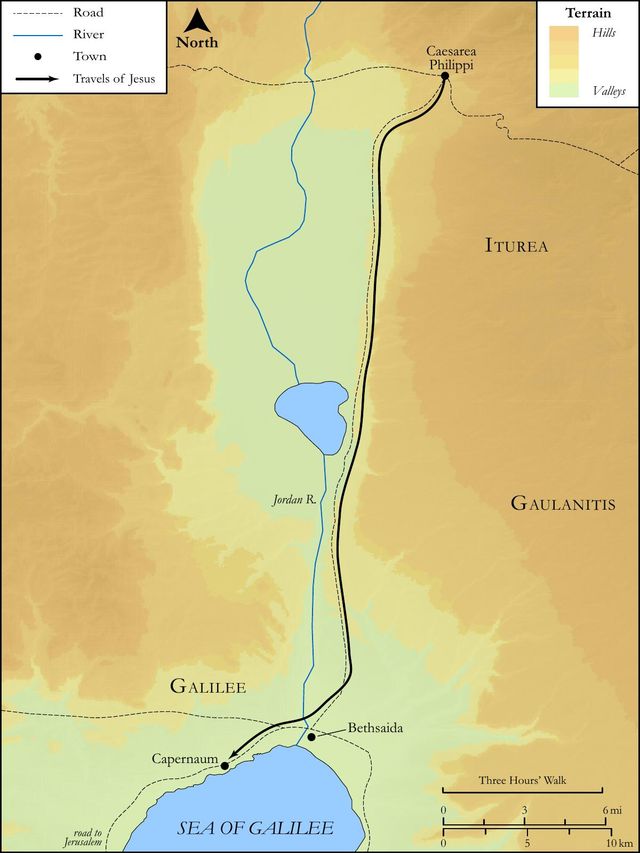
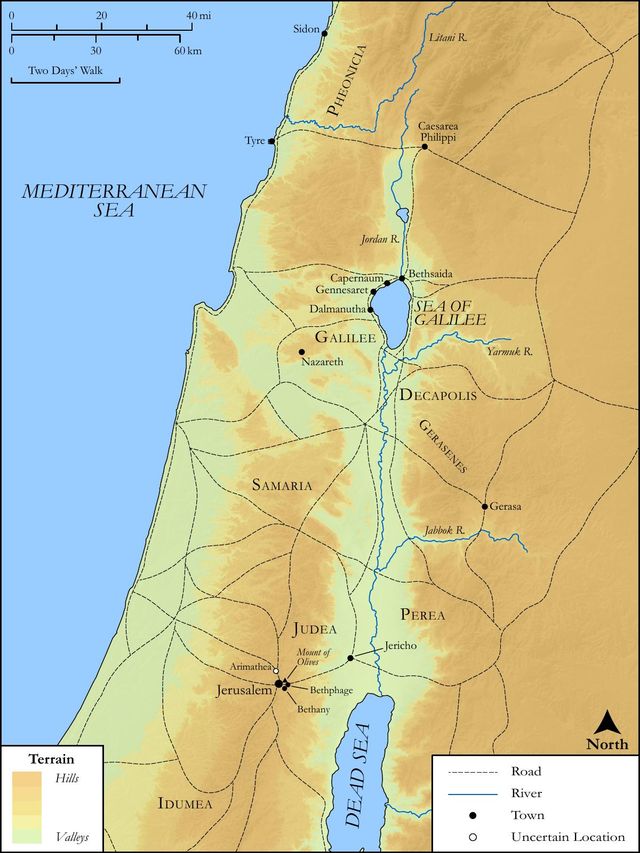
The Sea of Galilee, also known as Lake Gennesaret or Tiberias, was a bustling center of fishing and trade in the 1st century CE. Its waters teemed with fish, supporting a robust industry that provided a livelihood for thousands. Towns like Capernaum, Bethsaida, and Magdala dotted its shores, inhabited by a diverse population of Jews and Gentiles. Fishermen like Simon and Andrew were not wealthy elites but hardworking, often rugged, individuals whose lives were dictated by the rhythms of the sea. Their profession required physical strength, resilience, patience, and a deep understanding of their environment. Fishing was a communal endeavor, often involving family businesses and partnerships, which explains the presence of brothers and later, partners, in Jesus' initial call. Jesus' decision to begin His ministry and call disciples in Galilee, a region often viewed with disdain by the religious establishment in Jerusalem (John 7:52), highlights His unconventional approach and His focus on reaching ordinary people in their everyday lives.
Key Themes
ShowHideMark 1:16 contributes significantly to several overarching themes in the Gospel of Mark. Firstly, it powerfully illustrates the Divine Initiative of Jesus. He is not passively waiting for followers but actively seeking them out, demonstrating His sovereign authority and purpose in establishing His kingdom (Mark 1:14-15). Secondly, the verse highlights the theme of Ordinary Lives, Extraordinary Call. Simon and Andrew are common laborers, not religious scholars or temple officials, emphasizing that God often chooses and empowers those from humble backgrounds for His grand purposes. This challenges conventional notions of spiritual leadership and underscores God's ability to work through anyone willing to respond. Finally, this verse sets the stage for the theme of Radical Discipleship. While their full response is detailed in the following verse, their presence at their daily work, casting nets, immediately presents them as available and engaged, foreshadowing the immediate and transformative nature of the call to "follow me" and become "fishers of men" (Mark 1:17).
Exposition and Analysis
ShowHideKey Word Analysis
ShowHideThis verb means "to tread all around, i.e., walk at large; figuratively, to live, deport oneself, follow." It implies a purposeful movement, not merely a casual stroll. Jesus is actively moving through the region, engaged in His mission, which leads Him to this encounter. His "walking" signifies His active presence and engagement with the world He came to redeem.
This primary verb means "to see (literally or figuratively); by implication, (in the perfect tense only) to know." It suggests more than a casual glance; it implies a perceptive, discerning gaze. Jesus "saw" Simon and Andrew not just physically, but with an understanding of their potential and their future role in His kingdom. It denotes a recognition and selection, a divine insight into their lives and destiny.
Derived from the word for "salt water," this term refers to a sailor or, by implication, a fisherman. It precisely identifies their profession and livelihood. This detail is crucial for understanding the immediate context of their lives and the profound nature of the call that would transform them from catching fish to catching people.
Verse Breakdown
ShowHide"Now as he walked by the sea of Galilee,"
This opening phrase establishes the setting and Jesus' active presence. The "Sea of Galilee" is not just a geographical location but a vibrant economic and social hub, indicating that Jesus' ministry is not confined to synagogues or religious centers but extends to the everyday lives and workplaces of ordinary people. His "walking" signifies His intentional movement and the beginning of His public engagement with individuals.
"he saw Simon and Andrew his brother"
This clause highlights Jesus' divine initiative and keen observation. He actively "saw" these specific individuals, indicating a purposeful selection rather than a random encounter. The mention of them as "brother" emphasizes their familial bond and shared livelihood, setting the stage for a joint call to discipleship.
"casting a net into the sea: for they were fishers."
This final part describes their current occupation and the immediate context of their lives. They are actively engaged in their profession, demonstrating diligence and skill. The phrase "casting a net" vividly portrays their labor. The concluding statement "for they were fishers" provides the reason for their activity and underscores their identity, which Jesus is about to radically redefine. This detail emphasizes that Jesus calls people from their ordinary vocations, transforming their skills and lives for a higher purpose.
Literary Devices
ShowHideMark 1:16 employs several literary devices to enhance its meaning and impact. Setting is crucial, as the "sea of Galilee" provides a vivid and relatable backdrop for the encounter, grounding the divine call in an ordinary, human context. The act of "casting a net" functions as powerful Symbolism, not only describing their literal work but also foreshadowing their future role as "fishers of men" (Mark 1:17). This is an instance of subtle Foreshadowing, hinting at the transformative nature of Jesus' call. The seemingly mundane activity of fishing contrasts sharply with the extraordinary divine encounter, creating a sense of Irony where the sacred interrupts the secular, demonstrating that God's kingdom breaks into everyday life. The concise and direct language, characteristic of Mark's Gospel, contributes to the sense of urgency and immediacy surrounding Jesus' actions and the disciples' subsequent response.
Theological and Thematic Connections
ShowHideMark 1:16 serves as a foundational text for understanding the nature of discipleship and the Kingdom of God. It underscores the divine initiative in salvation, demonstrating that God actively seeks out and calls individuals into relationship and service. This call is not based on pre-existing spiritual qualifications or social status, but on God's sovereign choice and grace. The transformation of ordinary fishermen into apostles highlights God's power to use the seemingly insignificant for monumental purposes, a theme echoed throughout biblical history. It teaches us that true calling often intersects with our daily lives and vocations, inviting us to surrender our personal ambitions for a greater, God-given purpose. This encounter also lays the groundwork for the communal aspect of discipleship, as brothers are called together, forming the nucleus of a new spiritual family centered around Jesus.
Reflection and Application
ShowHideMark 1:16 offers profound insights for contemporary believers, reminding us that God's call is often extended in the midst of our ordinary lives, not just in moments of spiritual intensity. Simon and Andrew were not in a synagogue or engaged in religious study; they were diligently at work, performing their daily tasks. This teaches us that faithfulness in our current vocations and circumstances can be the very ground upon which God's transformative call lands. We are encouraged to cultivate an attentiveness to God's presence and prompting in our routines, recognizing that every aspect of our lives can be consecrated for His kingdom. The immediate and decisive nature of the call, though the full response is in the next verse, challenges us to consider our own readiness to drop what we are doing and follow Jesus when He calls, trusting that His purpose for us is far greater than anything we might leave behind. This verse invites us to embrace a posture of availability and willingness, knowing that God delights in using ordinary people for extraordinary, kingdom-advancing purposes.
Questions for Reflection
ShowHideFAQ
ShowHideWhy did Jesus choose fishermen as His first disciples?
ShowHideJesus' choice of fishermen like Simon and Andrew was highly significant for several reasons. Firstly, it demonstrated His counter-cultural approach, as He often called individuals from the margins or ordinary vocations rather than the religious elite, emphasizing that God's kingdom is open to all who respond in faith (1 Corinthians 1:26-29). Secondly, their profession provided a powerful metaphor for their future ministry: just as they were skilled at catching fish, Jesus would transform them into "fishers of men" (Mark 1:17), adept at bringing people into the kingdom. Their work also instilled qualities like hardiness, patience, teamwork, and resilience—traits essential for the challenging work of ministry. Finally, their ordinary background underscored the divine power at work; their effectiveness would clearly be attributed to God, not their own inherent qualifications.
Christ-Centered Fulfillment
ShowHideMark 1:16, while seemingly a simple narrative of Jesus calling His first disciples, profoundly foreshadows the Christ-centered nature of the new covenant and the church. Jesus, the Son of God and the promised Messiah, actively initiates the formation of a new community, demonstrating His sovereign authority over all creation and all people. His "seeing" and "calling" of Simon and Andrew is a direct manifestation of His divine mission to gather a people for Himself, echoing the prophetic promises of God gathering His scattered flock (Ezekiel 34:11-16). The transformation of "fishers" into "fishers of men" (Mark 1:17) points directly to the Great Commission given by the resurrected Christ, where His followers are tasked with making disciples of all nations (Matthew 28:18-20). This initial call on the shores of Galilee is a microcosm of the broader redemptive work of Christ, who, through His life, death, and resurrection, empowers ordinary individuals by the Holy Spirit to participate in His ongoing mission of reconciling the world to God (2 Corinthians 5:17-20). Thus, Mark 1:16 is not merely a historical account but a foundational moment in the establishment of Christ's church, built upon His divine initiative and the transformed lives of those He calls.