


Luke 6:14
Bible text: King James Version (1769 Blayney text) · Public domain
Bible text: Berean Standard Bible · Public domain
Bible text: American Standard Version (1901) · Public domain
Bible text: World English Bible, Messianic edition · Public domain
Bible text: Geneva Bible (1599) · Public domain
Bible text: Young's Literal Translation · Public domain
- ΣίμωναSimōnaSimonG4613N-ASM-PNoun Accusative Singular Masculine Individual
- ὃνhonwhomG3739R-ASMRelative pronoun Accusative Singular Masculine
- καὶkaialsoG2532CONJConjunction
- ὠνόμασενōnomasenHe namedG3687V-AAI-3SVerb Aorist Active Indicative 3rd Singular
- ΠέτρονPetronPeterG4074N-ASM-PNoun Accusative Singular Masculine Individual
- καὶkaiandG2532CONJConjunction
- ἈνδρέανAndreanAndrewG406N-ASM-PNoun Accusative Singular Masculine Individual
- τὸνtontheG3588T-ASMDefinite article Accusative Singular Masculine
- ἀδελφὸνadelphonbrotherG80N-ASMNoun Accusative Singular Masculine
- αὐτοῦautouof himG846P-GSMPersonal pronoun Genitive Singular Masculine
- ἸάκωβονIakōbonJamesG2385N-ASM-PNoun Accusative Singular Masculine Individual
- καὶkaiandG2532CONJConjunction
- ἸωάννηνIōannēnJohnG2491N-ASM-PNoun Accusative Singular Masculine Individual
- ΦίλιππονPhilipponPhilipG5376N-ASM-PNoun Accusative Singular Masculine Individual
- καὶkaiandG2532CONJConjunction
- ΒαρθολομαῖονBartholomaionBartholomewG918N-ASM-PNoun Accusative Singular Masculine Individual
English is a literal word-by-word gloss of the Greek, not the KJV's wording. Why?
This is the original text the KJV's translators worked from — each Greek word with its own literal English meaning in this verse, prepared by scholars at Tyndale House, Cambridge. The KJV translates whole sentences, not word by word, so its wording differs: one Greek word can become several English words, and the KJV may choose “charity” where the gloss reads “love”. Both are faithful — they answer different questions. For the KJV's own rendering, switch to the KJV text.
Details
See on the biblical-era maps
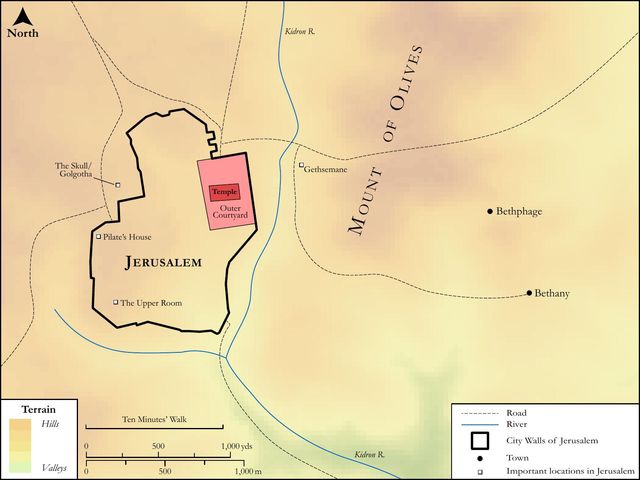
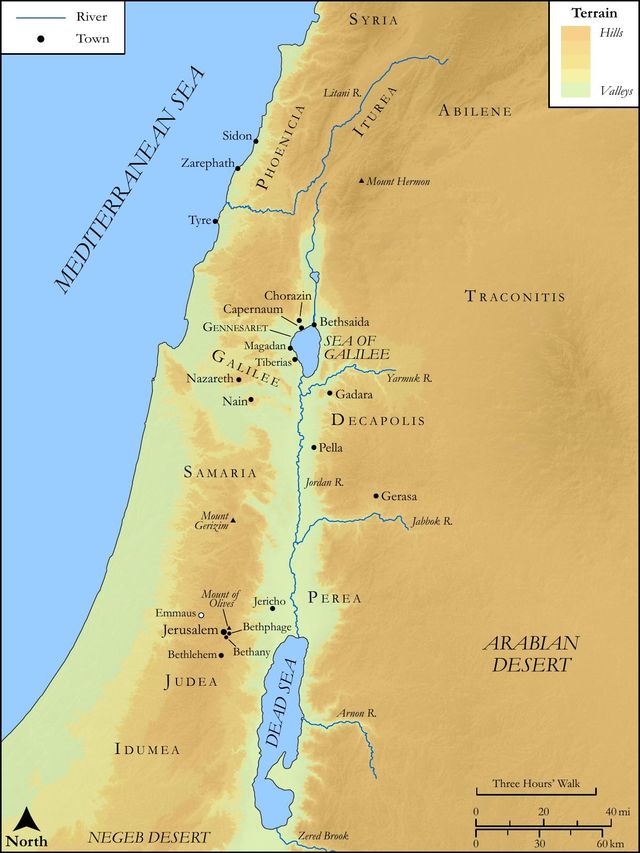
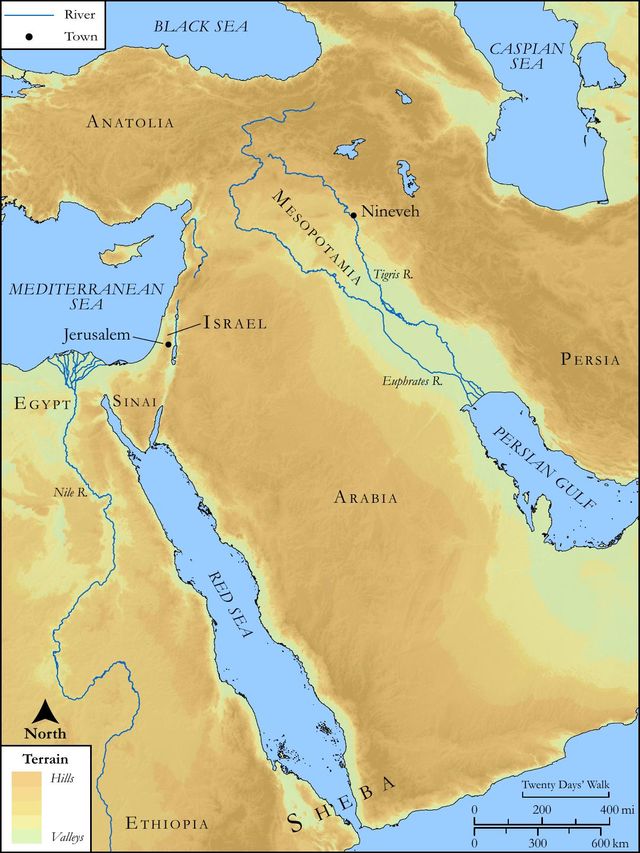
Study this verse
Public-domain commentary
Matthew Henry
From his Commentary on the Whole Bible. Henry comments on passages, not single verses — this entry covers Luke 6:12–19. His two-level outline is real structure in the source text, so it is rendered as structure.
In these verses, we have our Lord Jesus in secret, in his family, and in public; and in all three acting like himself.
I.In secret we have him praying to God, Luk 6:12.
This evangelist takes frequent notice of Christ's retirements, to give us an example of secret prayer, by which we must keep up our communion with God daily, and without which it is impossible that the soul should prosper. In those days, when his enemies were filled with madness against him, and were contriving what to do to him, he went out to pray; that he might answer the type of David (Psa 109:4), For my love, they are my adversaries; but I give myself unto prayer. Observe,
1.He was alone with God; he went out into a mountain, to pray, where he might have no disturbance or interruption given him; we are never less alone than when we are thus alone. Whether there was any convenient place built upon this mountain, for devout people to retire to for their private devotions, as some think, and that that oratory, or place of prayer, is meant here by hē proseuchē tou theou, to me seems very uncertain. He went into a mountain for privacy, and therefore, probably, would not go to a place frequented by others.
2.He was long alone with God: He continued all night in prayer. We think one half hour a great deal to spend in the duties of the closet; but Christ continued a whole night in meditation and secret prayer. We have a great deal of business at the throne of grace, and we should take a great delight in communion with God, and by both these we may be kept sometimes long at prayer.
II.In his family we have him nominating his immediate attendants, that should be the constant auditors of his doctrine and eye-witnesses of his miracles, that hereafter they might be sent forth as apostles, his messengers to the world, to preach his gospel to it, and plant his church in it, Luk 6:13. After he had continued all night in prayer, one would have thought that, when it was day, he should have reposed himself, and got some sleep. No, as soon as any body was stirring, he called unto him his disciples. In serving God, our great care should be, not to lose time, but to make the end of one good duty the beginning of another. Ministers are to be ordained with prayer more than ordinarily solemn. The number of the apostles was twelve. Their names are here recorded; it is the third time that we have met with them, and in each of the three places the order of them differs, to teach both ministers and Christians not to be nice in precedency, not in giving it, much less in taking it, but to look upon it as a thing not worth taking notice of; let it be as it lights. He that in Mark was called Thaddeus, in Matthew Lebbeus, whose surname was Thaddeus, is here called Judas the brother of James, the same that wrote the epistle of Jude. Simon, who in Matthew and Mark was called the Canaanite, is here called Simon Zelotes, perhaps for his great zeal in religion. Concerning these twelve here named we have reason to say, as the queen of Sheba did of Solomon's servants, Happy are thy men, and happy are these thy servants, that stand continually before thee, and hear thy wisdom; never were men so privileged, and yet one of them had a devil, and proved a traitor (Luk 6:16); yet Christ, when he chose him, was not deceived in him.
III.In public we have him preaching and healing, the two great works between which he divided his time, Luk 6:17.
He came down with the twelve from the mountain, and stood in the plain, ready to receive those that resorted to him; and there were presently gathered about him, not only the company of his disciples, who used to attend him, but also a great multitude of people, a mixed multitude out of all Judea and Jerusalem. Though it was some scores of miles from Jerusalem to that part of Galilee where Christ now was, - though at Jerusalem they had abundance of famous rabbin, that had great names, and bore a mighty sway, - yet they came to hear Christ. They came also from the sea-coast of Tyre and Sidon. Though they who lived there were generally men of business, and though they bordered upon Canaanites, yet there were some well affected to Christ; such there were dispersed in all parts, here and there one.
1.They came to hear him and he preached to them. Those that have not good preaching near them had better travel far for it than be without it. It is worth while to go a great way to hear the word of Christ, and to go out of the way of other business for it.
2.They came to be cured by him, and he healed them. Some were troubled in body, and some in mind; some had diseases, some had devils; but both the one and the other, upon their application to Christ, were healed, for he has power over diseases and devils (Luk 6:17, Luk 6:18), over the effects and over the causes. Nay, it should seem, those who had no particular diseases to complain of yet found it a great confirmation and renovation to their bodily health and vigour to partake of the virtue that went out of him; for (Luk 6:19) the whole multitude sought to touch him, those that were in health as well as those that were sick, and they were all, one way or other, the better for him: he healed them all; and who is there that doth not need, upon some account or other, to be healed? There is a fulness of grace in Christ, and healing virtue in him, and ready to go out from him, that is enough for all, enough for each.
Historical interpretation
Eleven Centuries of Reception
14 surviving comments on this verse. Each one is dated, so this reads as a timeline rather than a list.
Select a marker to jump to its quote. Markers stagger vertically where authors wrote within a few decades of each other.
Again, He changes the name of Simon to peter, inasmuch as the Creator also altered the names of Abram, and Sarai, and Oshea, by calling the latter Joshua, and adding a syllable to each of the former.
If you listen to Luke, you will not hear him calling Matthew a publican nor subordinating him to Thomas, for he knows him to be the greater, and puts him first and Thomas second. Mark has done the same.… So Luke honored Matthew, according to what they delivered, who from the beginning were eyewitnesses and ministers of the Word.
But our Lord and Savior, not very long after the beginning of his preaching, called the twelve apostles and to them alone of all his disciples he gave the name of apostles as a special honor. Later he proclaimed seventy others, and them also he sent out two by two in advance of himself into every place and city where he himself was to come.
The two next are James and John, as it follows, James and John, both indeed sons of Zebedee, who were also fishermen. After them he mentions Philip and Bartholomew. John says Philip was of Bethsaida, of the city of Andrew and Peter. Bartholomew was a simple man, devoid of all worldly knowledge and guile. But Matthew was called from those who used to collect taxes; concerning whom he adds Matthew and Thomas.
It says, “He called unto him his disciples, and he chose twelve of them,” whom he appointed sowers of the faith, to spread the help of human salvation throughout the world. At the same time, observe the heavenly counsel. He chose not wise men, nor rich men, nor nobles, but fishermen and tax collectors, whom he would direct, lest they seem to have seduced some by wisdom, or bought them with riches, or attracted them to their own grace with the authority of power and nobility. He did this so that the reasoning of truth, not the grace of disputation, should prevail.
You have heard then the words of Him who says, Stretch forth thy hand. That is a frequent and common cure, and thou that thinkest thy hand is whole, beware lest it be contracted by avarice or sacrilege. Stretch it forth oftener to help thy neighbour, to protect the widow, to save from injury him whom you see the victim of unjust attack; stretch it forth to the poor man who beseeches thee; stretch it forth to the Lord, to ask pardon of thy sins; as the hand is stretched forth so is it healed. (1 Kings 13:5, 6.)
Let not thy ears be open to deceit, that thou shouldest think that the Son of God prays from want of strength, that He may obtain what He could not perform; for being Himself the Author of power, the Master of obedience, He leads us by His own example to the precepts of virtue.
Every where also He prays alone, for human wishes comprehend not the wisdom of God; and no one can be a partaker of the secrets of Christ. But not every one who prays ascends a mountain, he only who prays advancing from earthly things to higher, who is not anxious for the riches or honours of the world. All whose minds are raised above the world ascend the mountain. In the Gospel therefore you will find, that the disciples alone ascend the mountain with the Lord. But thou, O Christian, hast now the character given, the form prescribed which thou shouldest imitate; as it follows, And he continued all night in prayer to God. For what oughtest thou to do for thy salvation, when Christ continues all night in prayer for thee?
But what does it become thee to do when thou wouldest commence any work of piety, when Christ, about to send out His disciples, first prayed? for it follows, And when it was day, he called his disciples, &c. whom truly He destined to be the means of spreading the salvation of man through the world. Turn thy eyes also to the heavenly council. Not the wise men, not the rich, not the noble, but He chose to send out fishermen and publicans, that they might not seem to turn men to their grace by riches or by the influence of power and rank, and that the force of truth, not the graces of oratory, might prevail.
Judas too is chosen, not through inadvertence but through Providence. How great is the truth that not even a hostile minister weakens! How great is the integrity of the Lord, who preferred to endanger his judgment among us, rather than his compassion! For he had assumed the frailty of man, and therefore [he did not] refuse those aspects of human weakness. He was willing to be forsaken, he was willing to be betrayed, he was willing to be surrendered by his own apostles, so that you, when abandoned by an ally, betrayed by an ally, may bear it in good order.
But mark the great carefulness of the Evangelist. He not only says that the holy Apostles were chosen, but he enumerates them by name, that no one should dare to insert any others in the catalogue; Simon, whom he also called Peter, and Andrew his brother.
But if we may learn the interpretation of the Apostles' names, know that Peter means, "loosening or knowing;" Andrew, "glorious power," or "answering;" but James, "apostle of grief;" John, "the grace of the Lord;" Matthew, "given;" Philip, "large mouth," or the "orifice of a torch;" Bartholomew, "the son of him who lets down water;" Thomas, "deep or twin;" James the son of Alphæus, "supplanter of the step of life;" Judas, "confession;" Simon, "obedience."
Note the extreme moderation of the Evangelist. He does not simply say that the holy apostles were appointed, but rather, by introducing the record of these chief ones each by name, takes care that no other one should venture to enroll himself in the company of those that were chosen.
But all these things were being heard by the Pharisees, who were greedy and derided him. The Lord was indeed admonishing the scribes and Pharisees, not to think highly of themselves, not to presume on their own righteousness, but to receive sinners and publicans who repent, and to redeem by alms their sins which might incidentally appear; but they derided the teacher of mercy, humility, and frugality for two main reasons. Because, forsooth, either he commanded less useful things, never to be performed as if he were giving harmful orders, or certainly useful things, but being superfluous brought forward what they had already done.
He not only surnamed Peter first, but long before this, when he was brought by Andrew, it is said, Thou shall be called Cephas, which is by interpretation, a stone (John 1:42.). But Luke, wishing to mention the names of the disciples, since it was necessary to call him Peter, wished shortly to imply that this was not his name before, but the Lord had given it to him.
Matthew places himself after his fellow-disciple Thomas, from humility, whereas by the other Evangelists he is put before him. It follows, James the son of Alphæus, and Simon who is called Zelotes.
But in a mystical sense the mountain on which our Lord chose His disciples represents the loftiness of justice in which they were to be instructed, and which they were to preach to others; so also the law was given on a mountain.
Simon, whom he surnamed Peter, and Andrew his brother. Not now for the first time did he give Simon the surname Peter, but long before, when, having been brought to him by his brother Andrew, he looked at him and said: "You are Simon, son of Jonah, you shall be called Cephas," which is translated as Peter (John I). But when Luke, wanting to enumerate the names of the twelve apostles, had to mention Peter, he wished to briefly note that he was not previously called by this name, but the Lord surnamed him thus, even though it was not then, but when John recorded the very words of the Lord, evidently making the listeners attentive. For if he had been previously called this, you would not see the mystery of the rock in the same way, thinking he was so named by chance, and not by God's providence. Therefore, he wished him to be called by another name first, so that through the very change of name, the liveliness of the sacrament might be commended. Therefore, in Latin it is Peter, in Syriac Cephas, and in both languages, the name is derived from rock, undoubtedly that which Paul said: "The rock was Christ" (1 Cor. X). For just as Christ, the true light, granted the apostles to be called the light of the world, so also to Simon, who believed in Christ the rock, he granted the name Peter. Referring to another etymology, he said: "You are Peter, and on this rock I will build my Church" (Matt. XVI). Hence, some violently seeking a Hebrew etymology for the Latin or Greek name say that Peter is interpreted as "one who loosens," or "one who takes off his shoes," or "one who recognizes," although both the exposition of John's Gospel, which I recalled, and the Hebrew language itself, which does not sound the P letter at all, testify that this name is not Hebrew. For those who abusively write Fetrum for Peter, as well as Faulum for Paul, and Filatum for Pilate, violently attach a false interpretation to a fictitious name. Simon, however, is interpreted as obedient. Moreover, Andrew is a Greek name, derived from ἀπὸ τοῦ ἀνδρός, that is from "man," meaning manly. These names rightfully adorn the first of the apostles, who soon recognized the Lamb of God from John and took care to see and hear him. But the fact that Simon is interpreted as "putting aside sadness" or "hearing sorrow," fits that time when, after the resurrection, having seen the Lord, he put aside the sadness of his death or his denial, but immediately heard the sorrow of his own death, with the Lord saying: "But when you grow old, you will stretch out your hands, and another will gird you and lead you where you do not wish to go" (John XXI).
He also chose twelve disciples, whom he called apostles, and commanded them to preach the kingdom of heaven which he came upon earth to declare, and to make heavenly us who are low and earthly, by virtue of his incarnation.
(non occ.) When adversaries rose up against the miracles and teaching of Christ, He chose Apostles as defenders and witnesses of the truth, and prefaces their election with prayer; as it is said, And it came to pass, &c.
Because in truth he was of Cana in Galilee, which is interpreted zeal; and this is added to distinguish him from Simon Peter. It follows, Judas the brother of James, and Judas Iscariot, who also betrayed him.
Continue studying Luke 6:14 across the web’s major study libraries — every link below opens this exact verse, chapter, or book on the destination site.
Read & Compare
 BibleGatewayThis verse in more than 200 translations and 70 languages.
 Bible.comThe YouVersion reader — hundreds of translations, reading plans, and highlights.
 ESV.orgCrossway's official English Standard Version reader.
 NET BibleThe NET translation with 60,000+ translators' notes on every rendering decision.
 STEP BibleTyndale House's free study tool — original text, vocabulary, and scholarly resources.
 BibliaLogos Bible Software's free web reader.
 USCCBThe New American Bible (Revised Edition) with the U.S. bishops' study notes.
Commentaries
 BibleHub CommentariesDozens of classic commentaries on this verse, gathered on one page.
 StudyLightMore than 100 commentary sets — the largest collection on the web.
 BibleRefPlain-English commentary on what this verse means, verse by verse.
 Enduring WordDavid Guzik's free commentary on this chapter, widely used by Bible teachers.
 Bible Study ToolsVerse commentary alongside Greek and Hebrew study aids.
Original Language & Research
- BibleHub InterlinearThe verse word by word — original language, transliteration, and English.
- BibleHub LexiconEvery word's original-language definition and Strong's entry.
 Blue Letter BibleDeep-study tools — Strong's numbers, concordance, and word studies.
 CNTR CollationThe earliest Greek manuscripts of this verse, collated letter by letter.
Sermons, Hymns & Audio


TrulyRandomVerse is not affiliated with these sites and doesn’t control their content. They’re linked because they’re genuinely useful.
Summary
Luke 6:14 marks a foundational moment in Jesus' earthly ministry, detailing the initial five individuals chosen from among His broader disciples to serve as apostles. This verse, following a night of fervent prayer by Jesus, lists Simon (who was also named Peter), Andrew his brother, James, John, Philip, and Bartholomew, thereby commencing the formal establishment of the core group entrusted with carrying forward the Gospel message and laying the groundwork for the nascent church.
Context
ShowHideLiterary Context
This verse is situated immediately after Jesus' profound act of spending the entire night in prayer to God on a mountain. This preceding act underscores the divine intentionality and solemnity of the decision to select these twelve men. Following His prayer, Jesus "called His disciples to Himself; and from them He chose twelve whom He also named apostles" (Luke 6:13), setting the stage for the specific naming of the first six in verse 14. The list of apostles continues in Luke 6:15-16, leading directly into the significant Sermon on the Plain, where Jesus delivers core teachings to a large multitude, with these newly appointed apostles as His immediate audience and future emissaries.
Historical & Cultural Context
In the 1st-century Jewish context, a rabbi would gather disciples (talmidim) who would learn from him and emulate his life. However, Jesus' selection of twelve apostles goes beyond this traditional model. The number twelve is highly symbolic, echoing the twelve tribes of Israel, signifying the re-establishment of God's covenant people and the new spiritual Israel. This act was a deliberate formation of a leadership core for a new spiritual movement, distinct from the existing religious structures. The chosen men, primarily Galileans, represented a cross-section of ordinary society, including fishermen, tax collectors, and zealots, reflecting Jesus' inclusive approach and His intention to build His kingdom not on worldly power but on divine calling and transformation.
Key Themes
ShowHideThe selection of the apostles in Luke 6:12-16 highlights several key themes central to Luke's Gospel and the broader biblical narrative. Firstly, it emphasizes Divine Sovereignty and Election, demonstrating that Jesus' choices are not arbitrary but divinely ordained and purposeful, stemming from direct communion with the Father. Secondly, it establishes the Foundation of the New Community, as these twelve men are commissioned to be the foundational pillars of the church, entrusted with the authoritative proclamation of the Gospel and the continuation of Jesus' ministry, as seen in passages like Acts 1:8. Thirdly, the renaming of Simon to Peter (meaning "rock") underscores the theme of Transformation and Commissioning, signifying a new identity and a specific, foundational role within God's redemptive plan, a theme further elaborated in Matthew 16:18.
Exposition and Analysis
ShowHideKey Word Analysis
ShowHideThis is a common Hebrew name (Shim'on), meaning "he has heard" or "hearing." In this context, it refers to Simon Peter, one of the most prominent disciples. His original name signifies his human identity before his divine calling and transformation.
From onoma (name), this verb means "to name, i.e., assign an appellation; by extension, to utter, mention, profess." The act of Jesus "naming" Simon as Peter is not merely a descriptive act but a performative one, signifying a new identity, purpose, and authority bestowed upon him. It highlights Jesus' sovereign power to redefine and commission.
This word means "a piece of rock" or "stone," distinct from petra (a large rock or bedrock). As a name, it signifies the foundational role Simon would play. This renaming is a prophetic declaration of his future character and leadership, emphasizing his stability and foundational contribution to the early church.
Verse Breakdown
ShowHide"Simon, (whom he also named Peter,)"
This clause immediately introduces the first and arguably most prominent of the apostles, Simon. The parenthetical addition "whom he also named Peter" is crucial, highlighting Jesus' deliberate act of bestowing a new name upon Simon. This renaming (from Símōn to Pétros) signifies a profound shift in identity and destiny, marking him as a "rock" or "stone" upon which the church would be built, as further elaborated by Jesus in Matthew 16:18. It underscores Jesus' authority to rename and redefine individuals for His purposes.
"and Andrew his brother,"
This introduces Andrew, Simon Peter's brother. The inclusion of their familial relationship emphasizes the human connections within the group, yet their calling transcends mere kinship. Andrew was one of the first disciples to follow Jesus, and he then brought his brother Simon to Jesus (John 1:40-42), demonstrating an early evangelistic impulse and highlighting the ripple effect of discipleship.
"James and John,"
These two brothers, often referred to as the "sons of Zebedee," are consistently listed among the inner circle of Jesus' disciples, alongside Peter. They were given the nickname "Sons of Thunder" (Mark 3:17) by Jesus, hinting at their zealous and sometimes impetuous nature. Their inclusion here signifies their significant role and close relationship with Jesus, often being present at pivotal moments in His ministry.
"Philip and Bartholomew,"
This clause introduces the next pair of apostles. Philip is noted in John's Gospel as being from Bethsaida, the same town as Andrew and Peter (John 1:44). Bartholomew is widely believed to be Nathanael, whom Philip brought to Jesus (John 1:45-51). Their inclusion broadens the geographic and social representation of the chosen twelve, demonstrating Jesus' call extending beyond immediate family or close associates.
Literary Devices
ShowHideLuke 6:14 employs several subtle but significant literary devices. The most prominent is Nomenclature, specifically the act of Renaming, as seen with Simon being named Peter. This renaming is not merely a descriptive detail but a prophetic act, imbuing Simon with a new identity and a future role, foreshadowing his foundational leadership. The consistent use of the conjunction "and" (καί, G2532) throughout the listing of names serves as a device of Enumeration and Juxtaposition, systematically presenting each chosen individual. This repetitive structure emphasizes the deliberate and sequential nature of Jesus' selection process. Furthermore, the selection itself, particularly the number twelve, functions as Symbolism, intentionally evoking the twelve tribes of Israel and signifying the establishment of a new covenant community, a spiritual Israel, under the leadership of these chosen men.
Theological and Thematic Connections
ShowHideThe selection of these apostles in Luke 6:14, following Jesus' night of prayer, highlights the profound theological truth that divine calling is rooted in divine initiative and purpose. These individuals, ordinary in their worldly standing, were specifically chosen and commissioned by Christ to be His authoritative representatives and the initial bearers of His message. Their appointment underscores the principle that God often chooses the "weak things of the world to shame the strong" (1 Corinthians 1:27) to accomplish His extraordinary purposes, demonstrating His power through human vessels. This foundational act sets the stage for the spread of the Gospel, emphasizing the importance of Spirit-empowered leadership and the continuity of Christ's mission through His chosen ones.
Reflection and Application
ShowHideLuke 6:14 offers profound insights for contemporary believers, reminding us that God's work is initiated and sustained by His divine wisdom and choice, often through seemingly ordinary individuals. Jesus' example of spending an entire night in prayer before making this crucial decision highlights the absolute necessity of deep, sustained communion with God when facing significant life choices or embarking on new ministries. It underscores that true leadership and spiritual effectiveness flow not from human strategy alone, but from divine guidance and empowerment. For us, this means that our callings, whether grand or seemingly small, are not accidental but are part of God's sovereign plan, requiring our humble submission and reliance on Him. We are encouraged to embrace our unique roles within the body of Christ, knowing that our sufficiency comes from God who equips us for every good work, just as He equipped these first apostles.
Questions for Reflection
ShowHideFAQ
ShowHideWhy did Jesus choose twelve apostles, and what is the significance of that number?
ShowHideJesus chose twelve apostles to symbolize the re-establishment of the new spiritual Israel, mirroring the twelve tribes of Israel from the Old Testament. This number signifies the foundational nature of their role in God's new covenant community, representing the continuity of God's redemptive plan while inaugurating a new era. They were to be the authoritative witnesses to His life, death, and resurrection, and the initial leaders of the church, extending God's kingdom to all nations. The number twelve thus carries significant theological weight, marking them as the patriarchs of the new people of God.
Were the apostles perfect individuals, and what does their selection teach us about God's choice of leaders?
ShowHideNo, the apostles were not perfect individuals. The biblical narrative frequently highlights their human failings, misunderstandings, and moments of doubt, such as Peter's denial of Jesus (Luke 22:54-62) or James and John's desire for prominent seats (Mark 10:35-45). Their selection teaches us that God's choice of leaders is not based on inherent perfection or worldly qualifications, but on His sovereign grace and purpose. He chooses ordinary, flawed people and then equips them, transforms them, and uses them mightily for His glory, demonstrating that His power is made perfect in weakness (2 Corinthians 12:9).
Christ-Centered Fulfillment
ShowHideThe selection of the twelve apostles in Luke 6:14 is a profoundly Christ-centered act, demonstrating Jesus' sovereign authority and His strategic establishment of the foundational pillars for His kingdom. These men were chosen not merely as disciples, but as "apostles," meaning "sent ones," directly commissioned by Christ to extend His redemptive work. This act foreshadows the ongoing mission of the church, which is the body of Christ, to carry His message to the ends of the earth (Acts 1:8). Just as Jesus chose and empowered these individuals, He continues to call and equip believers today through the indwelling Holy Spirit, enabling them to participate in His divine mission. The apostles' future role in bearing witness to Christ's resurrection (Acts 2:32) and establishing the church (Ephesians 2:20) directly flows from this foundational moment, revealing Jesus as the ultimate Head of the Church, who builds His kingdom through His chosen and empowered people. Their lives and ministries, recorded in the New Testament, serve as a testament to the transformative power of Christ and the enduring nature of His call to discipleship and mission.