


Job 23:16
- וְאֵלVe·'eland GodH410Conj-w ¦ N-msNoun Singular Masculine AbsoluteוְandאֵלGod
- הֵרַךְhe·Rakhhe has made faintH7401V-Hiphil-Perf-3msVerb Hiphil Perfect 3rd Singular Masculine
- לִבִּיli·Bimy heartH3820N-msc ¦ 1csNoun Singular Masculine Constructלִבִּheartיmy
- וְשַׁדַּיve·sha·Daiand [the] AlmightyH7706Conj-w ¦ N-properNoun Proper Titleוְandשַׁדַּי[the] Almighty
- הִבְהִילָנִיhiv·hi·La·nihe has terrified meH926V-Hiphil-Perf-3ms ¦ 1csVerb Hiphil Perfect 3rd Singular Masculineהִבְהִילָhe has terrifiedנִיme
English is a literal word-by-word gloss of the Hebrew, not the KJV's wording. Why?
This is the original text the KJV's translators worked from — each Hebrew word with its own literal English meaning in this verse, prepared by scholars at Tyndale House, Cambridge. The KJV translates whole sentences, not word by word, so its wording differs: one Hebrew word can become several English words, and the KJV may choose “the LORD” where the gloss reads “Yahweh”. Both are faithful — they answer different questions. For the KJV's own rendering, switch to the KJV text.
Details
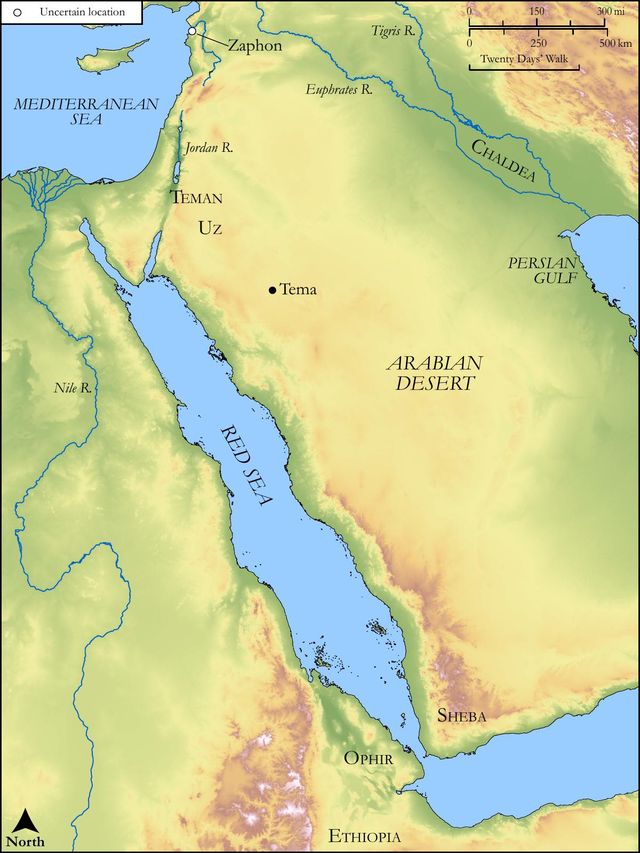
See on the biblical-era map
Study this verse
Public-domain commentary
Matthew Henry
From his Commentary on the Whole Bible. Henry comments on passages, not single verses — this entry covers Job 23:13–17. His three-level outline is real structure in the source text, so it is rendered as structure.
Some make Job to complain here that God dealt unjustly and unfairly with him in proceeding to punish him without the least relenting or relaxation, though he had such incontestable evidences to produce of his innocency. I am loth to think holy Job would charge the holy God with iniquity; but his complaint is indeed bitter and peevish, and he reasons himself into a sort of patience per force, which he cannot do without reflecting upon God as dealing hardly with him, but he must bear it because he cannot help it; the worst he says is that God deals unaccountably with him.
I.He lays down good truths, and truths which were capable of a good improvement, Job 23:13, Job 23:14.
1.That God's counsels are immutable: He is in one mind, and who can turn him? He is one (so some read it) or in one; he has no counsellors by whose interest he might be prevailed with to alter his purpose: he has no counsellors by whose interest he might be prevailed with to alter his purpose: he is one with himself, and never alters his mind, never alters his measures. Prayer has prevailed to change God's way and his providence, but never was his will or purpose changed; for known unto God are all his works.
2.That his power is irresistible: What his soul desires or designs even that he does, and nothing can stand in his way or put him upon new counsels. Men desire many things which they may not do, or cannot do, or dare not do. But God has an incontestable sovereignty; his will is so perfectly pure and right that it is highly fit he should pursue all its determinations. And he has an uncontrollable power. None can stay his hand. Whatever the Lord pleased that did he (Psa 135:6), and always will, for it is always best.
3.That all he does is according to the counsel of his will (Job 23:14): He performs the thing that is appointed for me. Whatever happens to us, it is God that performs it (Psa 57:2), and an admirable performance the whole will appear to be when the mystery of God shall be finished. He performs all that, and that only, which was appointed, and in the appointed time and method. This may silence us, for what is appointed cannot be altered. But to consider that, when God was appointing us to eternal life and glory as our end, he was appointing to this condition, this affliction, whatever it is, in our way, this may do more than silence us, it may satisfy us that it is all for the best; though what he does we know not now, yet we shall know hereafter.
4.That all he does is according to the custom of his providence: Many such things are with him, that is, He does many things in the course of his providence which we can give no account of, but must resolve into his absolute sovereignty. Whatever trouble we are in others have been in the like. Our case is not singular; the same afflictions are accomplished in our brethren, Pe1 5:9. Are we sick or sore, impoverished and stripped? Are our children removed by death or our friends unkind? This is what God has appointed for us, and many such things are with him. Shall the earth be forsaken for us?
II.He makes but a bad use of these good truths.
Had he duly considered them, he might have said, "Therefore am I easy and pleased, and well reconciled to the way of my God concerning me; therefore will I rejoice in hope that my troubles will issue well at last." But he said, Therefore am I troubled at his presence, Job 23:15. Those are indeed of troubled spirits who are troubled at the presence of God, as the psalmist, who remembered God and was troubled, Psa 77:3. See what confusion poor Job was now in, for he contradicted himself: just now he was troubled for God's absence (Job 23:8, Job 23:9); now he is troubled at his presence. When I consider, I am afraid of him. What he now felt made him fear worse. There is indeed that which, if we consider it, will show that we have cause to be afraid of God - his infinite justice and purity, compared with our own sinfulness and vileness; but if, withal, we consider his grace in a Redeemer, and our compliance with that grace, our fears will vanish and we shall see cause to hope in him. See what impressions were made upon him by the wounds of his spirit.
1.He was very fearful (Job 23:16): The Almighty troubled him, and so made his heart soft, that is, utterly unable to bear any thing, and afraid of every thing that stirred. There is a gracious softness, like that of Josiah, whose heart was tender, and trembled at the word of God; but this is meant of a grievous softness which apprehends every thing that is present to be pressing and every thing future to be threatening.
2.He was very fretful, peevish indeed, for he quarrels with God,
(1.)Because he did not die before his troubles, that he might never have seen them (Because I was not cut off before the darkness, Job 23:17), and yet if, in the height of his prosperity, he had received a summons to the grave, he would have thought it hard. This may help to reconcile us to death, whenever it comes, that we do not know what evil we may be taken away from. But when trouble comes it is folly to wish we had not lived to see it and it is better to make the best of it.
(2.)Because he was left to live so long in his troubles, and the darkness was not covered from his face by his being hidden in the grave. We should bear the darkness better than thus if we would but remember that to the upright there sometimes arises a marvellous light in the darkness; however, there is reserved for them a more marvellous light after it.
Historical interpretation
Two Centuries of Reception
2 surviving comments on this verse. Each one is dated, so this reads as a timeline rather than a list.
Select a marker to jump to its quote. Markers stagger vertically where authors wrote within a few decades of each other.
This unexpected disaster, he says, did not happen according to human logic. I discern that this blow comes from the hand of God. And he is right in speaking of the darkness that “covers my face,” because this darkness is not ordinary darkness but is of his own dejection.
51. By divine gift the heart of the righteous man is said to be made soft, in that it is penetrated with the fear of the judgment from Above. For that it is soft, which is capable of being penetrated, but that is hard, which cannot be penetrated. Whence it is said by Solomon, Happy is the man that feareth always, but he that hardeneth his heart shall fall into mischief. [Prov. 28, 14] And so the merit of his dread he ascribes not to himself but to his Creator, who says, For God maketh my heart soft, and the Almighty troubleth me. Now the hearts of good men are not secure but troubled, in that whilst they think of the heavy weight of the future reckoning, they do not seek to enjoy rest here, and they interrupt their security by the thought of the interior severity. Which persons nevertheless, in the midst of the very chastenings of fear, often recall their mind to the gifts, and that by comforting they may cheer themselves, amidst this which they fear, they bring back the eye to the gifts which they have received, that hope may buoy up him whom fear bears down.
Continue studying Job 23:16 across the web’s major study libraries — every link below opens this exact verse, chapter, or book on the destination site.
Read & Compare
 BibleGatewayThis verse in more than 200 translations and 70 languages.
 Bible.comThe YouVersion reader — hundreds of translations, reading plans, and highlights.
 ESV.orgCrossway's official English Standard Version reader.
 NET BibleThe NET translation with 60,000+ translators' notes on every rendering decision.
 STEP BibleTyndale House's free study tool — original text, vocabulary, and scholarly resources.
 BibliaLogos Bible Software's free web reader.
 USCCBThe New American Bible (Revised Edition) with the U.S. bishops' study notes.
Commentaries
 BibleHub CommentariesDozens of classic commentaries on this verse, gathered on one page.
 StudyLightMore than 100 commentary sets — the largest collection on the web.
 BibleRefPlain-English commentary on what this verse means, verse by verse.
 Enduring WordDavid Guzik's free commentary on this chapter, widely used by Bible teachers.
 Bible Study ToolsVerse commentary alongside Greek and Hebrew study aids.
Original Language & Research
- BibleHub InterlinearThe verse word by word — original language, transliteration, and English.
- BibleHub LexiconEvery word's original-language definition and Strong's entry.
 Blue Letter BibleDeep-study tools — Strong's numbers, concordance, and word studies.
 SefariaThe Hebrew text with Rashi and centuries of Jewish commentary.
Sermons, Hymns & Audio


TrulyRandomVerse is not affiliated with these sites and doesn’t control their content. They’re linked because they’re genuinely useful.
Summary
Job 23:16 captures the patriarch Job's profound and raw expression of terror and inner dissolution, as he perceives God not as a source of comfort or justice, but as the direct cause of his overwhelming distress. In this verse, Job articulates a deep-seated fear that paralyzes his spirit and melts away his courage, attributing this debilitating state directly to the active hand of the Almighty. It is a poignant cry from a man wrestling with the incomprehensible mystery of divine sovereignty in the face of intense, unmerited suffering, revealing the deep psychological and spiritual toll of his trials.
Context
ShowHideLiterary Context
Job 23 forms a crucial part of Job's third cycle of speeches, following the brief and unconvincing words of Eliphaz in Job 22. In this chapter, Job intensifies his passionate longing to find God and present his case directly, believing he has been unjustly afflicted. He expresses profound frustration that God seems hidden, His presence elusive, and His ways inscrutable. Despite this fervent desire to approach God's tribunal, Job is simultaneously overwhelmed and terrified by God's immense, unassailable power and sovereignty. Verse 16 specifically articulates the internal, psychological toll this divine mystery and perceived divine antagonism take on Job, revealing the depth of his fear and spiritual anguish as he grapples with a God who appears both absent and actively hostile, yet undeniably powerful.
Historical & Cultural Context
The Book of Job is set in the land of Uz, a location generally understood to be outside of Israel, suggesting a universal human experience of suffering not confined to a specific covenant people. While the exact historical period is debated, the patriarchal customs, the absence of Mosaic Law, and the ancient wisdom tradition evident in the dialogue point to a very early period in biblical history. In ancient Near Eastern cultures, divine retribution for sin was a common belief, and prosperity was often seen as a sign of divine favor, while suffering indicated divine displeasure. Job's friends operate firmly within this framework, which makes Job's insistence on his innocence and his direct challenge to God's justice all the more radical and culturally transgressive. Job's lament in verse 16 reflects the profound terror of a person in such a cultural context who believes they are under divine judgment without understanding why, facing a God whose actions defy conventional wisdom and cultural expectations of divine justice.
Key Themes
ShowHideJob 23:16 powerfully contributes to several overarching themes within the Book of Job. Primarily, it highlights Job's Despair and Fear, illustrating how his courage and inner fortitude are melting away under the pressure of his unexplained suffering. The verse also underscores The Overwhelming Nature of God's Power, specifically God's omnipotence, here perceived by Job as being directed against him, causing deep trouble rather than comfort. This challenges the simplistic understanding of divine justice often presented by his friends. Furthermore, the verse encapsulates The Mystery of Suffering, as Job grapples with how a just and powerful God can allow such intense, seemingly unwarranted suffering for a righteous man. Job feels God is actively "troubling" him, yet the reasons remain hidden, deepening his agony and leading him to question divine governance, a central tension throughout the book, from Job's initial lament to God's eventual response. His fear of God's hiddenness and overwhelming power is a recurring motif, intensifying as the dialogue progresses and no human explanation suffices.
Exposition and Analysis
ShowHideKey Word Analysis
ShowHideThis primitive root signifies to soften, to be tender, or to be faint-hearted. In this context, it conveys a profound sense of utter demoralization, a loss of internal strength, courage, and resolve due to overwhelming fear and distress. Job's heart is not merely saddened but has become pliable and vulnerable, stripped of its former resilience, indicating a deep psychological and spiritual unraveling under the pressure of his trials.
Derived from a root meaning "to be strong" or "to destroy," Shadday is one of the oldest and most profound names for God in the Old Testament, emphasizing God's absolute power, self-sufficiency, and devastating might. While often associated with divine blessing and provision (e.g., Genesis 17:1), Job's use of this term here is ironic and poignant. He perceives this immense, uncontainable power not as a source of comfort or protection, but as actively wielded against him, causing his profound terror and distress. This highlights the terrifying aspect of God's sovereignty when one is experiencing inexplicable suffering.
This primitive root means to tremble inwardly, to palpitate, or to be suddenly alarmed or agitated. It describes a state of profound agitation, panic, and deep emotional turmoil. Job is not just experiencing discomfort; he is being actively thrown into a state of terror and confusion by God. This word emphasizes the active, unsettling nature of God's perceived action upon Job's inner being, contributing to his "softened" heart and demonstrating the profound psychological impact of his trials.
Verse Breakdown
ShowHide"For God maketh my heart soft"
This clause reveals Job's internal state of profound fear and demoralization, directly attributing it to God's action. His "heart" (Hebrew lêb), the seat of his courage, resolve, and inner being, is rendered weak and vulnerable, stripped of its fortitude. This is not a self-inflicted condition but a consequence of what Job perceives as divine intervention, leaving him exposed to overwhelming terror and emotional dissolution.
"and the Almighty troubleth me"
This second clause functions in synonymous parallelism with the first, intensifying and clarifying the nature of God's perceived action. The use of "the Almighty" (Shadday) underscores the immense, uncontainable power behind the "troubling" and emphasizes the terrifying might that Job feels is being directed against him. The "troubling" is an active, unsettling, and terrifying experience, confirming that Job's "softened heart" is a direct result of divine terror and not merely a passive state of sadness or despair.
Literary Devices
ShowHideJob 23:16 employs several powerful literary devices to convey Job's profound anguish. Personification is evident as Job attributes active agency to God, portraying Him as directly causing his internal state ("maketh my heart soft," "troubleth me"). This vivid imagery transforms an abstract concept of divine will into a tangible, almost physical assault on Job's spirit. The verse also utilizes Synonymous Parallelism, where the second clause ("and the Almighty troubleth me") reiterates and intensifies the meaning of the first ("For God maketh my heart soft"). This repetition emphasizes the singular source and overwhelming nature of Job's distress, reinforcing that his internal weakness is a direct consequence of God's active "troubling." Furthermore, there is an element of Irony in Job's use of "the Almighty" (Shadday). This name, typically associated with God's power to bless and sustain, is here invoked by Job to describe the terrifying, destructive force he believes God is wielding against him, highlighting the profound reversal of his expectations and the depth of his disillusionment. The language itself borders on Hyperbole, as Job expresses an extreme, all-consuming terror that leaves him utterly undone.
Theological and Thematic Connections
ShowHideJob 23:16 offers a raw glimpse into the human struggle with divine sovereignty and the mystery of suffering. It challenges simplistic theological frameworks that equate suffering with sin, revealing a righteous man's profound disorientation when God's actions seem to contradict His character. This verse underscores the biblical theme that even the most devout can experience deep spiritual anguish and perceive God as an adversary during times of inexplicable pain. It affirms the legitimacy of honest lament, demonstrating that faith does not preclude expressing profound fear, confusion, or even accusations toward God. Job's cry is a testament to a wrestling faith that, despite its terror, continues to engage with the divine, even when God's ways are inscrutable, holding onto the hope that, like Job, we too may eventually encounter Him and find understanding, or at least peace, in His sovereign presence.
Reflection and Application
ShowHideJob 23:16 serves as a powerful reminder that authentic faith allows for the full spectrum of human emotion, including profound fear and confusion in the face of suffering. Job's vulnerability in admitting that God "maketh my heart soft" and "troubleth me" grants us permission to bring our own raw, unvarnished emotions before the Almighty. In moments when life's trials feel overwhelming, and God's presence seems distant or even adversarial, this verse encourages us not to suppress our true feelings but to voice our deepest anxieties and questions directly to Him. It teaches us that lament is a legitimate form of prayer, a courageous act of trust that God is big enough to handle our accusations, our terror, and our despair. Rather than demanding immediate answers, Job's example invites us to persist in seeking God, even when His ways are inscrutable, holding onto the hope that, like Job, we too may eventually encounter Him and find understanding, or at least peace, in His sovereign presence. This verse validates the experience of feeling undone by God's perceived actions, providing a space for honest spiritual wrestling.
Questions for Reflection
ShowHideFAQ
ShowHideDoes Job's statement mean God is truly malicious or cruel?
ShowHideJob's statement "For God maketh my heart soft, and the Almighty troubleth me" reflects his perception and experience of God's actions during his intense suffering, not necessarily a definitive theological declaration of God's character. In his profound distress, Job feels God is actively causing his terror and inner dissolution. This is a raw, honest expression of his agony and confusion, a lament from a man who cannot reconcile his righteousness with his overwhelming pain. The Book of Job ultimately reveals that God is not malicious, but sovereign, and His ways are often beyond human comprehension. While Job feels troubled by God, the narrative reveals God's ultimate purpose is not to harm Job but to demonstrate His sovereignty and Job's unwavering, though struggling, faithfulness (see Job 42:7-10). Job's words here are a cry of pain, not a theological treatise on divine malevolence. His expression is a testament to the depth of his suffering and his struggle to understand divine justice, a struggle that God Himself acknowledges and validates.
Christ-Centered Fulfillment
ShowHideJob 23:16, with its raw depiction of a righteous man utterly undone by what he perceives as divine antagonism, finds profound resonance and ultimate fulfillment in the person and work of Jesus Christ. While Job experiences terror from the Almighty, Jesus, the Son of God, fully entered into human suffering and experienced the ultimate "troubling" for us. In the Garden of Gethsemane, Jesus' soul was "very sorrowful, even to death" (Matthew 26:38), and He prayed with such agony that His sweat became like drops of blood (Luke 22:44). On the cross, He cried out, "My God, my God, why have you forsaken me?" (Matthew 27:46), experiencing a profound sense of abandonment and the full weight of divine wrath against sin, an experience far deeper than Job's. Jesus, the sinless Lamb of God, allowed His heart to be "softened" and "troubled" by the Father's will and the burden of humanity's sin, not because of His own transgression, but to redeem us from ours. Through His suffering, death, and resurrection, Christ transforms the terror of a seemingly hostile God into the comforting presence of a God who has suffered with us and for us, offering us peace and reconciliation where Job found only fear and confusion (Romans 5:1). He is the ultimate High Priest who sympathizes with our weaknesses, having been tempted in every respect as we are, yet without sin (Hebrews 4:15), meaning He fully understands our "softened hearts" and our troubled spirits, offering grace and help in our time of need.