


Job 24:1
Bible text: King James Version (1769 Blayney text) · Public domain
Bible text: Berean Standard Bible · Public domain
Bible text: American Standard Version (1901) · Public domain
Bible text: World English Bible, Messianic edition · Public domain
Bible text: Geneva Bible (1599) · Public domain
Bible text: Young's Literal Translation · Public domain
- מַדּוּעַma·Du·a'why?H4069InterrogParticle Interrogative
- מִשַּׁדַּיMi·sha·daifrom [the] AlmightyH7706Prep-m ¦ N-properNoun Proper Titleמִfromשַּׁדַּי[the] Almighty
- לֹאlo'notH3808NegParticle Negative
- נִצְפְּנוּnitz·pe·Nuhave they been stored upH6845V-Niphal-Perf-3cpVerb Niphal Perfect 3rd Plural common gender
- עִתִּים'i·TimtimesH6256N-cpNoun Plural common gender Absolute
- וְיֹדְעָיוve·yo·de·'ovand [those who] know himH3045Conj-w ¦ V-Qal-Prtcpl-mp ¦ 3msVerb Qal Participle Plural Masculine Constructוְandיֹדְעָי[those who] knowוhim
- לֹאlo'notH3808NegParticle Negative
- חָזוּCha·zuhave they seen?H2372V-Qal-Perf-3cpVerb Qal Perfect 3rd Plural common gender
- יָמָיוya·Mavhis daysH3117N-mpc ¦ 3msNoun Plural Masculine Constructיָמָיdaysוhis
English is a literal word-by-word gloss of the Hebrew, not the KJV's wording. Why?
This is the original text the KJV's translators worked from — each Hebrew word with its own literal English meaning in this verse, prepared by scholars at Tyndale House, Cambridge. The KJV translates whole sentences, not word by word, so its wording differs: one Hebrew word can become several English words, and the KJV may choose “the LORD” where the gloss reads “Yahweh”. Both are faithful — they answer different questions. For the KJV's own rendering, switch to the KJV text.
Details
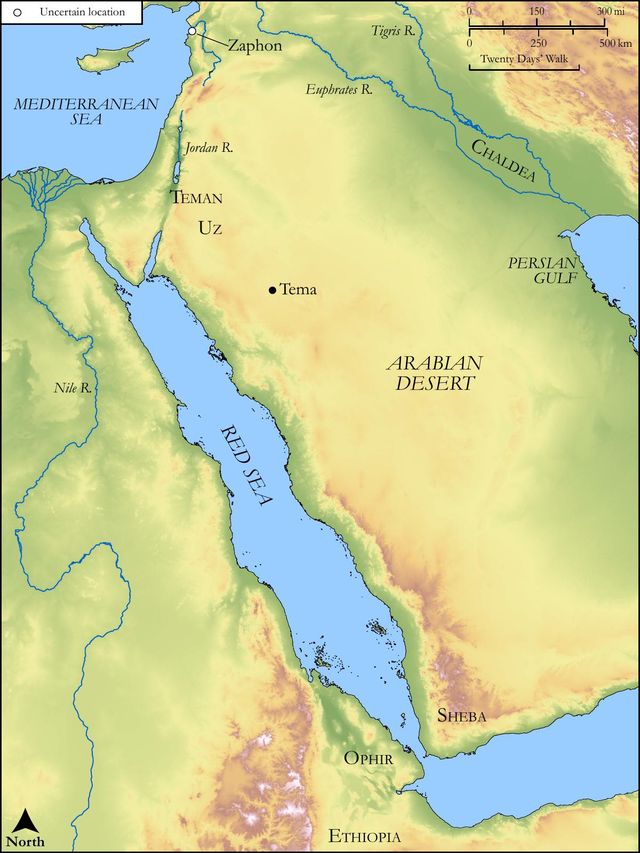
See on the biblical-era map
Study this verse
Public-domain commentary
Matthew Henry
From his Commentary on the Whole Bible. Henry comments on passages, not single verses — this entry covers Job 24:1–12. His two-level outline is real structure in the source text, so it is rendered as structure.
Job's friends had been very positive in it that they should soon see the fall of wicked people, how much soever they might prosper for a while. By no means, says Job; though times are not hidden from the Almighty, yet those that know him do not presently see his day, Job 24:1. 1. He takes it for granted that times are not hidden from the Almighty; past times are not hidden from his judgment (Ecc 3:15), present times are not hidden from his providence (Mat 10:29), future times are not hidden from his prescience, Act 15:18. God governs the world, and therefore we may be sure he takes cognizance of it. Bad times are not hidden from him, though the bad men that make the times bad say one to another, He has forsaken the earth, Psa 94:6, Psa 94:7. Every man's times are in his hand, and under his eye, and therefore it is in his power to make the times of wicked men in this world miserable. He foresees the time of every man's death, and therefore, if wicked men die before they are punished for their wickedness, we cannot say, "They escaped him by surprise;" he foresaw it, nay, he ordered it. Before Job will enquire into the reasons of the prosperity of wicked men he asserts God's omniscience, as one prophet, in a similar case, asserts his righteousness (Jer 12:1), another his holiness (Hab 1:13), another his goodness to his own people, Psa 73:1. General truths must be held fast, though we may find it difficult to reconcile them to particular events. 2. He yet asserts that those who know him (that is, wise and good people who are acquainted with him, and with whom his secret is) do not see his day, - the day of his judging for them; this was the thing he complained of in his own case (Job 23:8), that he could not see God appearing on his behalf to plead his cause, - the day of his judging against open and notorious sinners, that is called his day, Psa 37:13. We believe that day will come, but we do not see it, because it is future, and its presages are secret. 3. Though this is a mystery of Providence, yet there is a reason for it, and we shall shortly know why the judgment is deferred; even the wisest, and those who know God best, do not yet see it. God will exercise their faith and patience, and excite their prayers for the coming of his kingdom, for which they are to cry day and night to him, Luk 18:7.
For the proof of this, that wicked people prosper, Job specifies two sorts of unrighteous ones, whom all the world saw thriving in their iniquity: -
I.Tyrants, and those that do wrong under pretence of law and authority.
It is a melancholy sight which has often been seen under the sun, wickedness in the place of judgment (Ecc 3:16), the unregarded tears of the oppressed, while on the side of the oppressors there was power (Ecc 4:1), the violent perverting of justice and judgment, Ecc 5:8.
1.They disseize their neighbours of their real estates, which came to them by descent from their ancestors. They remove the land-marks, under pretence that they were misplaced (Job 24:2), and so they encroach upon their neighbours' rights and think they effectually secure that to their posterity which they have got wrongfully, by making that to be an evidence for them which should have been an evidence for the rightful owner. This was forbidden by the law of Moses (Deu 19:14), under a curse, Deu 27:17. Forging or destroying deeds is now a crime equivalent to this.
2.They dispossess them of their personal estates, under colour of justice. They violently take away flocks, pretending they are forfeited, and feed thereof; as the rich man took the poor man's ewe lamb, Sa2 12:4. If a poor fatherless child has but an ass of his own to get a little money with, they find some colour or other to take it away, because the owner is not able to contest with them. It is all one if a widow has but an ox for what little husbandry she has; under pretence of distraining for some small debt, or arrears of rent, this ox shall be taken for a pledge, though perhaps it is the widow's all. God has taken it among the titles of his honour to be a Father of the fatherless and a judge of the widows; and therefore those will not be reckoned his friends that do not to their utmost protect and help them; but those he will certainly reckon with as his enemies that vex and oppress them.
3.They take all occasions to offer personal abuses to them, Job 24:4. They will mislead them if they can when they meet them on the high-way, so that the poor and needy are forced to hide themselves from them, having no other way to secure themselves from them. They love in their hearts to banter people, and to make fools of them, and do them a mischief if they can, especially to triumph over poor people, whom they turn out of the way of getting relief, threaten to punish them as vagabonds, and so force them to abscond, and laugh at them when they have done. Some understand those barbarous actions (Job 24:9, Job 24:10) to be done by those oppressors that pretend law for what they do: They pluck the fatherless from the breast; that is, having made poor infants fatherless, they make them motherless too; having taken away the father's life, they break the mother's heart, and so starve the children and leave them to perish. Pharaoh and Herod plucked children from the breast to the sword; and we read of children brought forth to the murderers, Hos 9:13. Those are inhuman murderers indeed that can with so much pleasure suck innocent blood. They take a pledge of the poor, and so they rob the spital; nay, they take the poor themselves for a pledge (as some read it), and probably it was under this pretence that they plucked the fatherless from the breast, distraining them for slaves, as Neh 5:5. Cruelty to the poor is great wickedness and cries aloud for vengeance. Those who show no mercy to such as lie at their mercy shall themselves have judgment without mercy. Another instance of their barbarous treatment of those they have advantage against is that they take from them even their necessary food and raiment; they squeeze them so with their extortion that they cause them to go naked without clothing (Job 24:10) and so catch their death. And if a poor hungry family has gleaned a sheaf of corn, to make a little cake of, that they may eat it and die, even that they take away from them, being well pleased to see them perish for want, while they themselves are fed to the full.
4.They are very oppressive to the labourers they employ in their service. They not only give them no wages, though the labourer is worthy of his hire (and this is a crying sin, Jam 5:4), but they will not so much as give them meat and drink: Those that carry their sheaves are hungry; so some read it (Job 24:10), and it agrees with Job 24:11, that those who make oil within their walls, and with a great deal of toil labour at the wine-presses, yet suffer thirst, which was worse than muzzling the mouth of the ox that treads out the corn. Those masters forget that they have a Master in heaven who will not allow the necessary supports of life to their servants and labourers, not caring whether they can live by their labour or no.
5.It is not only among the poor country people, but in the cities also, that we see the tears of the oppressed (Job 24:12): Men groan from out of the city, where the rich merchants and traders are as cruel with their poor debtors as the landlords in the country are with their poor tenants. In cities such cruel actions as these are more observed than in obscure corners of the country and the wronged have easier access to justice to right themselves; and yet the oppressors there fear neither the restraints of the law nor the just censures of their neighbours, but the oppressed groan and cry out like wounded men, and can no more ease and help themselves, for the oppressors are inexorable and deaf to their groans.
II.He speaks of robbers, and those that do wrong by downright force, as the bands of the Sabeans and Chaldeans, which had lately plundered him.
He does not mention them particularly, lest he should seem partial to his own cause, and to judge of men (as we are apt to do) by what they are to us; but among the Arabians, the children of the east (Job's country), there were those that lived by spoil and rapine, making incursions upon their neighbours, and robbing travellers. See how they are described here, and what mischief they do, Job 24:5-8.
1.Their character is that they are as wild asses in the desert, untamed, untractable, unreasonable, Ishmael's character (Gen 16:12), fierce and furious, and under no restraint of law or government, Jer 2:23, Jer 2:24. They choose the deserts for their dwelling, that they may be lawless and unsociable, and that they may have opportunity of doing the more mischief. The desert is indeed the fittest place for such wild people, Job 39:6. But no desert can set men out of the reach of God's eye and hand.
2.Their trade is to steal, and to make a prey of all about them. They have chosen it as their trade; it is their work, because there is more to be got by it, and it is got more easily, than by an honest calling. They follow it as their trade; they follow it closely; they go forth to it as their work, as man goes forth to his labour, Psa 104:23. They are diligent and take pains at it: They rise betimes for a prey. If a traveller be out early, they will be out as soon to rob him. They live by it as a man lives by his trade: The wilderness (not the grounds there but the roads there) yieldeth food for them and for their children; they maintain themselves and their families by robbing on the high-way, and bless themselves in it without any remorse of compassion or conscience, and with as much security as if it were honestly got; as Ephraim, Hos 12:7, Hos 12:8.
3.See the mischief they do to the country. They not only rob travellers, but they make incursions upon their neighbours, and reap every one his corn in the field (Job 24:6), that is, they enter upon other people's ground, cut their corn, and carry it away as freely as if it were their own. Even the wicked gather the vintage, and it is their wickedness; or, as we read it, They gather the vintage of the wicked, and so one wicked man is made a scourge to another. What the wicked got by extortion (which is their way of stealing) these robbers get from them in their way of stealing; thus oftentimes are the spoilers spoiled, Isa 33:1.
4.The misery of those that fall into their hands (Job 24:7, Job 24:8): They cause the naked, whom they have stripped, not leaving them the clothes to their backs, to lodge, in the cold nights, without clothing, so that they are wet with the showers of the mountains, and, for want of a better shelter, embrace the rock, and are glad of a cave or den in it to preserve them from the injuries of the weather. Eliphaz had charged Job with such inhumanity as this, concluding that Providence would not thus have stripped him if he had not first stripped the naked of their clothing, Job 22:6. Job here tells him there were those that were really guilty of those crimes with which he was unjustly charged and yet prospered and had success in their villanies, the curse they laid themselves under working invisibly; and Job thinks it more just to argue as he did, from an open notorious course of wickedness inferring a secret and future punishment, than to argue as Eliphaz did, who from nothing but present trouble inferred a course of past secret iniquity. The impunity of these oppressors and spoilers is expressed in one word (Job 24:12): Yet God layeth not folly to them, that is, he does not immediately prosecute them with his judgments for these crimes, nor make them examples, and so evince their folly to all the world. He that gets riches, and not by right, at his end shall be a fool, Jer 17:11. But while he prospers he passes for a wise man, and God lays not folly to him until he saith, Thou fool, this night thy soul shall be required of thee, Luk 12:20.
Historical interpretation
Historical reception
2 surviving comments on this verse. Each one is dated, so this reads as a timeline rather than a list.
Select a marker to jump to its quote. Markers stagger vertically where authors wrote within a few decades of each other.
“Times are not hidden from the Almighty.” [Job] raises the same question he had discussed above, but now with a profession of faith. He says that he certainly knows that parts of his censorship in blotting out the merits of people follow the course of his justice, but, in the present situation, many things happen that seem to deny this judgment. With this impression in his mind he pursues the crimes of the wicked to the end of his speech. “Times are not hidden,” he says, “from the Almighty,” that is, in his knowledge dwells a full awareness of all our moments. It is as if he said, God does not ignore any time of our actions even as we change them constantly, yet we, who touch him with the devotion of our mind, ignore how many days of patience and deferment he hangs on our judgment.“Others removed the landmarks.” It must be noticed, in this reproof of human vices, that they are weighed more lightly or more seriously according to their effect on the virtue of soul. Thus Job and his friends are affected in different ways by different vices; the friends only accuse the acts of inhumanity, whereas Job describes the crimes of iniquity, violence, robbery, lewdness, pride and impiety.
54. What are called ‘the days’ of God, save His very Eternity itself? which is sometimes described by the announcement of ‘one day,’ as where it is written, For one day in Thy courts is better than a thousand. [Ps. 84, 10] But sometimes on account of its length it is represented by the expression of a number of days, whereof it is written, Thy years are throughout all generations. [Ps. 102, 24] We then are wrapped up within the divisions of time, through this that we are created beings. But God, Who is the Creator of all things, by His Eternity encompasses our times. And so he says, Times are not hidden from the Almighty; they that know Him, know not His days; seeing that He, indeed, sees all of ours to the comprehending thereof, but all that is His we are in no degree able to comprehend. But whereas the nature of God is simple, it is very much to be wondered at why he should say, They that know Him, know not His days. For it is not that He Himself is one thing and His ‘days’ another; since God is that thing which He hath. For He hath eternity, yet He is Himself Eternity. He hath Light, yet He is Himself His own Light. He hath brightness, yet He is Himself His own Brightness. And so in Him it is not one thing to be, and another thing to have. What does it mean then to say, They that know Him, know not His days, except that even they that know Him, do not know Him as yet? For even they who already hold Him by faith, as yet know Him not by appearance. And whereas He, Whom we truly believe, is Himself eternity to Himself, yet in what way there is that eternity of Him we know not. For in the thing that we hear touching the power of the Divine Nature, we are sometimes used to imagine such things as we know by experience. Thus every single thing that begins and ends, is bounded by the beginning and ending. And if it be by any little delay stayed from being ended, it is called long; on which same length whilst a man carries back the eyes of his mind in recollection, and stretches them out before in anticipation, as it were over a space of time he expands them in imagination. And when he hears the eternity of God mentioned in human sort, to his mind on the stretch he sets forth long spaces of life, in which same he may ever measure both what has gone away in the rear as a thing to be retained in the memory, and what remains before as a thing to be looked forward to in the intention.
55. But as often as in the case of eternity we have such thoughts, we do not as yet know eternity. For that which is neither commenced by a beginning nor finished by an ending, is there, where neither is there looked forward to that which shall come, nor does there pass by that which may be recalled to mind, but that alone is, which is everlasting BEING. Which though we and the Angels with a beginning begin to see to be, yet we see it to be without beginning, where it is to be always without end, in such a way, that the mind never extends itself to things following in a sequence, as if things that are were multiplied and made long. For though by the Spirit of Prophecy it is said, The Lord shall reign for ever and [LXX so.] for worlds and further [Exod. 15, 18]; after the manner of Holy Writ, the Spirit spoke in man’s way to men, so as to speak of ‘further’ there, where looking forward could not enter. For eternity has no ‘further,’ which has it always to be, wherein no part of its length goes by that another part should take its place, but the whole at once is Being, that nothing should seem to be wanting to it, which it may not see, in which eternity every thing that is the mind sees to be at once not slow and long. But in speaking such things of the days of eternity we are trying to see something more than we do see. And so let it be rightly said, They that know Him know not His days; in that though we already know God by faith, yet how His Eternity is at once without a past before all ages, without a future after all ages, long without delay, and everlasting without looking forward, we do not see. Thus blessed Job, whilst bearing a type of Holy Church, (because he restrains himself under a great bridling of knowledge, so as not to be wiser than he ought to be,) and testifying that the days of God can never be understood, directly brings back the view of the mind to the pride of Heretics who aim to be deeply enlightened, and what they are incapable of taking in at all, they boast that they know in perfect measure.
Continue studying Job 24:1 across the web’s major study libraries — every link below opens this exact verse, chapter, or book on the destination site.
Read & Compare
 BibleGatewayThis verse in more than 200 translations and 70 languages.
 Bible.comThe YouVersion reader — hundreds of translations, reading plans, and highlights.
 ESV.orgCrossway's official English Standard Version reader.
 NET BibleThe NET translation with 60,000+ translators' notes on every rendering decision.
 STEP BibleTyndale House's free study tool — original text, vocabulary, and scholarly resources.
 BibliaLogos Bible Software's free web reader.
 USCCBThe New American Bible (Revised Edition) with the U.S. bishops' study notes.
Commentaries
 BibleHub CommentariesDozens of classic commentaries on this verse, gathered on one page.
 StudyLightMore than 100 commentary sets — the largest collection on the web.
 BibleRefPlain-English commentary on what this verse means, verse by verse.
 Enduring WordDavid Guzik's free commentary on this chapter, widely used by Bible teachers.
 Bible Study ToolsVerse commentary alongside Greek and Hebrew study aids.
Original Language & Research
- BibleHub InterlinearThe verse word by word — original language, transliteration, and English.
- BibleHub LexiconEvery word's original-language definition and Strong's entry.
 Blue Letter BibleDeep-study tools — Strong's numbers, concordance, and word studies.
 SefariaThe Hebrew text with Rashi and centuries of Jewish commentary.
Sermons, Hymns & Audio


TrulyRandomVerse is not affiliated with these sites and doesn’t control their content. They’re linked because they’re genuinely useful.
Summary
Job 24:1 initiates Job's final and most extensive discourse, a profound lament that starkly questions the apparent disparity between God's absolute knowledge and the pervasive reality of unpunished injustice in the world. Grappling with immense personal suffering, Job boldly challenges the conventional understanding of divine retribution by asking why the "times" of judgment, which are fully known to the Almighty, are not visibly evident to those who should recognize God's hand, implying a perplexing and painful delay in divine intervention against the wicked.
Context
ShowHideLiterary Context
This verse serves as the powerful opening to Job's longest and culminating response to his friends, immediately following Bildad's brief and theologically rigid speech in Job 25. Bildad's discourse, a concise assertion of God's immense power and human impurity, offers no comfort or explanation for Job's plight, concluding with a rhetorical question about man's righteousness before God (Job 25:4). Job finds these simplistic pronouncements utterly inadequate in the face of his own experience and the widespread injustice he observes. Chapter 24 then unfolds as Job's detailed and graphic indictment of the wicked's actions and their disconcerting impunity, presenting a stark counter-evidence to his friends' rigid doctrine of immediate divine retribution. This chapter represents a poignant peak in Job's honest, unvarnished wrestling with the problem of evil and God's apparent hiddenness, pushing the boundaries of conventional wisdom.
Historical & Cultural Context
The book of Job is set in the land of Uz, likely reflecting a patriarchal societal structure, though its precise historical dating remains a subject of scholarly debate. The prevailing cultural and theological understanding, particularly championed by Job's friends, adhered to a strict retributive justice system: righteousness invariably led to prosperity, while wickedness inevitably resulted in suffering. This worldview was often intertwined with covenant theology, where blessings were contingent on obedience and curses on disobedience. Job's lament in Job 24 directly confronts this mechanistic view of divine justice, reflecting a deeper, more complex reality that transcends simplistic formulas. His questions resonate deeply with the broader wisdom literature tradition, which frequently grapples with life's paradoxes, the limits of human understanding, and the inscrutability of divine ways. The cultural expectation was for God to visibly intervene to uphold order and justice, making Job's observation of persistent, unpunished injustice profoundly perplexing and scandalous.
Key Themes
ShowHideJob 24:1 powerfully introduces several core themes that are central to the entire book of Job. Firstly, it highlights the profound Paradox of Divine Omniscience and Apparent Inaction. Job acknowledges God's absolute knowledge and control over all "times," a premise that paradoxically intensifies his perplexity over God's seeming delay in judgment. This tension between God's perfect awareness and humanity's limited understanding of His timing is a foundational element of the book. Secondly, the verse squarely addresses the Problem of Evil and Justice, particularly the observed prosperity of the wicked. Job vividly describes criminals, oppressors, and the unrighteous who appear to escape punishment, while the innocent endure hardship, directly challenging the simplistic theology of his friends who insisted that suffering was always a direct consequence of sin. This honest wrestling with injustice is a universal human experience, echoing similar laments found in Psalm 73. Finally, the verse underscores Job's Persistent Struggle with Faith. Despite profound suffering and the accusations of his friends, Job never fully abandons his faith. Instead, he boldly brings his deepest questions and grievances directly to God, as evidenced by his earlier declaration, "Though he slay me, yet will I trust in him". This is not a denial of God but a desperate plea for understanding, reflecting a wrestling that ultimately deepens, rather than destroys, his faith.
Exposition and Analysis
ShowHideKey Word Analysis
ShowHideThis noun refers to "appointed times," "seasons," or "fixed periods." In this context, it carries the nuance of specific moments or occasions, particularly those appointed by God for judgment or intervention. Job's assertion that these "times" are not hidden from God emphasizes God's absolute foreknowledge and sovereignty over all events, including the precise timing of justice. The perplexity arises because if God knows the precise moment for judgment, why does that judgment not manifest visibly in the world?
This is one of the most prominent divine names in the book of Job, appearing 31 times. Shadday (often translated as "Almighty" or "God Almighty") emphasizes God's power, sufficiency, and overwhelming might. By addressing God as Shadday, Job acknowledges God's supreme authority and ability to act decisively, making His apparent inaction even more baffling to the suffering patriarch. It highlights the vast chasm between God's infinite power and Job's finite, suffering understanding.
While the KJV translates this as "his days" (plural and possessive), the root word yôwm refers to "a day" (as the warm hours), whether literal (from sunrise to sunset, or one sunset to the next), or figurative (a space of time defined by an associated term). In this context, "his days" refers to God's specific periods or appointed times of intervention, revelation, or judgment. It implies the moments when God makes His presence, power, and justice evident in the world. Job's question, "do they that know him not see his days?" is a poignant lament that those who should be most attuned to God's workings—or even the wicked who should be made to acknowledge His power—do not perceive these moments of divine reckoning. It underscores the concept of divine timing, which often differs radically from human expectations and desires for immediate justice.
Verse Breakdown
ShowHide"Why, seeing times are not hidden from the Almighty,"
This opening clause establishes Job's foundational premise and the source of his perplexity: God is omniscient. He knows all "times," all events, all deeds, and all appointed moments for action. The rhetorical "Why" immediately signals Job's profound bewilderment and challenge. He is not questioning God's knowledge or power, but rather the apparent disconnect between God's perfect awareness and the observable reality of pervasive injustice. This sets up the central tension that drives the entire lament in Job 24.
"do they that know him not see his days?"
This is the core of Job's agonizing question and his theological dilemma. If God knows everything and is all-powerful, why are His "days" of judgment or intervention not visible or apparent, especially to "they that know him"? This phrase could refer to the righteous who expect to see God's justice vindicated, or perhaps even to the wicked who should be compelled to acknowledge God's power through His judgment. Job is lamenting the seeming absence of clear divine action, which makes it difficult for anyone, even believers, to discern God's hand in the world's affairs and understand His providential governance.
Literary Devices
ShowHideJob 24:1 masterfully employs several literary devices to convey Job's deep anguish and theological struggle. The verse opens with a powerful Rhetorical Question, "Why, seeing times are not hidden from the Almighty, do they that know him not see his days?" This question is not posed to elicit an answer from his friends, but rather to express Job's profound bewilderment and to challenge the simplistic theological framework that has been offered to him. It functions as a Lament, a common genre in biblical literature where the speaker voices sorrow, complaint, or protest to God concerning suffering or injustice. Furthermore, the verse encapsulates a profound Paradox: the all-knowing, all-powerful God appears to be inactive or hidden in the face of pervasive evil. This tension between divine attributes and observable reality creates a sense of Irony, as those who "know him" (presumably the righteous or those who should understand God's ways) are precisely the ones who cannot "see his days" of justice, contrary to what one might expect.
Theological and Thematic Connections
ShowHideJob 24:1 profoundly engages with the perennial theological dilemma of divine justice and the problem of evil. It highlights the tension between God's absolute sovereignty and omniscience, and the human experience of suffering and injustice. Job's question is not a denial of God's existence or power, but a raw, honest plea for understanding why God's perfect knowledge does not seem to translate into immediate, visible intervention against the wicked. This wrestling with God's timing and hiddenness is a crucial aspect of mature faith, acknowledging that God's ways are often beyond human comprehension. The verse challenges any simplistic "cause-and-effect" theology that assumes immediate retribution for sin or reward for righteousness, pushing the audience to consider the deeper mysteries of God's providential governance and the ultimate triumph of His justice.
Reflection and Application
ShowHideJob 24:1 invites believers to engage in honest and courageous wrestling with God, particularly when faced with life's profound paradoxes and the apparent triumph of injustice. It validates the experience of questioning God's timing and methods, reminding us that true faith is not the absence of doubt, but rather the willingness to bring our deepest perplexities directly to the Almighty. In a world where evil often seems to prosper and justice is delayed, this verse encourages us to trust in God's character and ultimate purposes, even when His immediate actions are inscrutable. It challenges us to move beyond simplistic answers and embrace a more nuanced understanding of divine providence, recognizing that God's wisdom and timing far transcend our limited human perspective. Our faith is often refined in the crucible of unanswered questions, leading to a deeper reliance on who God is, rather than merely what He does or when He does it, fostering a patient endurance rooted in His unchanging character.
Questions for Reflection
ShowHideFAQ
ShowHideWhat does "times are not hidden from the Almighty" mean?
ShowHideThis phrase asserts God's absolute omniscience and sovereignty over all time and events. It means that God is fully aware of every moment, every deed, and every appointed time for judgment or intervention. Nothing escapes His notice; there are no surprises for the Almighty. Job's premise here is that God knows precisely when and how justice should be executed, making His apparent inaction all the more perplexing to the suffering patriarch. It highlights God's complete control and knowledge, even when His actions are not immediately apparent to human observers, as seen in Psalm 139:1-6.
Who are "they that know him" in this verse?
ShowHide"They that know him" likely refers primarily to those who have a relationship with God, particularly the righteous or faithful individuals who would expect to see God's justice manifest in the world. It could also broadly refer to humanity in general, implying that even those who should recognize divine activity are unable to perceive God's "days" of judgment or intervention. Job's lament is that even for those who are attuned to God, His actions are not clear or evident in the face of widespread injustice, leading to a profound crisis of understanding.
What are "his days" that Job refers to?
ShowHide"His days" refers to the specific periods or appointed times when God reveals His presence, power, and justice in the world, particularly through acts of judgment or intervention. Job is asking why these moments of divine reckoning are not visibly apparent, allowing the wicked to seemingly prosper without immediate consequence. It speaks to the concept of God's timing for justice, which often differs from human expectations for immediate retribution. The full revelation of God's "days" is often a future reality, as seen in passages like Psalm 73:17 and 2 Peter 3:8-10.
Christ-Centered Fulfillment
ShowHideJob 24:1, with its profound lament over God's apparent hiddenness and the perplexing delay of justice, finds its ultimate resolution and reinterpretation in the person and work of Jesus Christ. The "times" that are not hidden from the Almighty are perfectly revealed in God's grand redemptive plan, culminating in Christ's first and second comings. The ultimate "day" of God's decisive intervention was not a visible judgment on the wicked in Job's time, but the paradoxical "day" when God's own Son, the Lamb of God who takes away the sin of the world, suffered unjustly on the cross. This event, seemingly the epitome of injustice, was in fact God's appointed time to deal with the problem of evil and sin definitively (Romans 5:8). What was hidden from Job – the precise timing and method of God's justice – is made clear in the cross, where God's righteousness and His mercy meet in a divine embrace (Psalm 85:10). Furthermore, the "days" of God's ultimate and visible justice are yet to come, fully revealed in Christ's glorious second advent, when every hidden thing will be brought to light and perfect justice will be meted out to all (Matthew 25:31-46). Thus, the Christian perspective understands that God's "days" are not absent, but perfectly timed, encompassing both the saving work of Christ and His future return to establish His eternal kingdom (Revelation 21:1-4).