


Genesis 21:25
- וְהוֹכִחַve·ho·Khi·achand he rebukedH3198Conj-w ¦ V-Hiphil-ConsecPerf-3msVerb Hiphil Consecutive Perfect 3rd Singular Masculineוְandהוֹכִחַhe rebuked
- אַבְרָהָם'av·ra·HamAbrahamH85N-proper-mNoun Proper Masculine
- אֶת'et<obj.>H853DirObjMParticle Object Indicator
- אֲבִימֶלֶךְ'a·vi·Me·lekhAbimelechH40N-proper-mNoun Proper Masculine
- עַל'alonH5921PrepPreposition
- אֹדוֹת'o·dot[the] causes ofH182N-fpcNoun Plural Feminine Construct
- בְּאֵרbe·'Er[the] well ofH875N-fscNoun Singular Feminine Construct
- הַמַּיִםha·Ma·yim<the> waterH4325Art ¦ N-mpNoun Plural Masculine Absoluteהַ<the>מַּיִםwater
- אֲשֶׁר'a·SherwhichH834RelParticle Relative
- גָּזְלוּga·ze·Luthey had seizedH1497V-Qal-Perf-3cpVerb Qal Perfect 3rd Plural common gender
- עַבְדֵי'av·Dei[the] servants ofH5650N-mpcNoun Plural Masculine Construct
- אֲבִימֶלֶךְ'a·vi·Me·lekhAbimelechH40N-proper-mNoun Proper Masculine
English is a literal word-by-word gloss of the Hebrew, not the KJV's wording. Why?
This is the original text the KJV's translators worked from — each Hebrew word with its own literal English meaning in this verse, prepared by scholars at Tyndale House, Cambridge. The KJV translates whole sentences, not word by word, so its wording differs: one Hebrew word can become several English words, and the KJV may choose “the LORD” where the gloss reads “Yahweh”. Both are faithful — they answer different questions. For the KJV's own rendering, switch to the KJV text.
Details
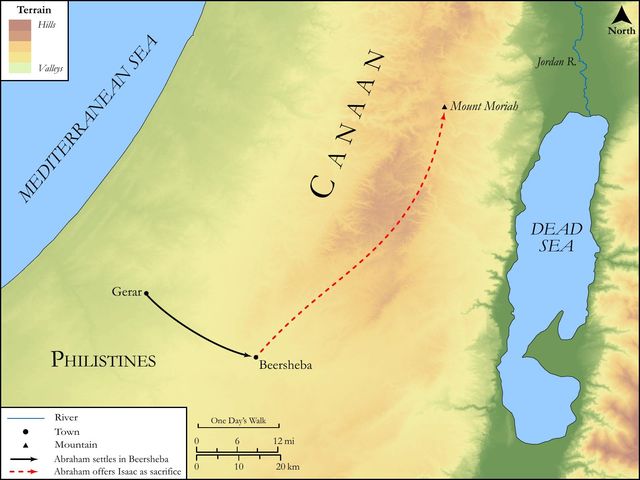
See on the biblical-era map


Study this verse
Public-domain commentary
Matthew Henry
From his Commentary on the Whole Bible. Henry comments on passages, not single verses — this entry covers Genesis 21:22–32. His three-level outline is real structure in the source text, so it is rendered as structure.
We have here an account of the treaty between Abimelech and Abraham, in which appears the accomplishment of that promise (Gen 12:2) that God would make his name great. His friendship is valued, is courted, though a stranger, though a tenant at will to the Canaanites and Perizzites.
I.The league is proposed by Abimelech, and Phichol his prime-minister of state and general of his army.
1.The inducement to it was God's favour to Abraham (Gen 21:22): "God is with thee in all that thou doest, and we cannot but take notice of it." Note,
(1.)God in his providence sometimes shows his people such tokens for good that their neighbours cannot but take notice of it, Psa 86:17. Their affairs do so visibly prosper, and they have such remarkable success in their undertakings, that a confession is extorted from all about them of God's presence with them.
(2.)It is good being in favour with those that are in favour with God, and having an interest in those that have an interest in heaven, Zac 8:23. We will go with you, for we have heard that God is with you. We do well for ourselves if we have fellowship with those that have fellowship with God, Jo1 1:3.
2.The tenour of it was, in general, that there should be a firm and constant friendship between the two families, which should not upon any account be violated. This bond of friendship must be strengthened by the bond of an oath, in which the true God was appealed to, both as a witness of their sincerity and an avenger in case either side were treacherous, Gen 21:23. Observe,
(1.)He desires the entail of this league upon his posterity and the extension of it to his people. He would have his son, and his son's son, and his land likewise, to have the benefit of it. Good men should secure an alliance and communion with the favourites of Heaven, not for themselves only, but for theirs also.
(2.)He reminds Abraham of the fair treatment he had found among them: According to the kindness I have done unto thee. As those that have received kindness must return it, so those that have shown kindness may expect it.
II.It is consented to by Abraham, with a particular clause inserted about a well. In Abraham's part of this transaction observe,
1.He was ready to enter into this league with Abimelech, finding him to be a man of honour and conscience, and that had the fear of God before his eyes: I will swear, Gen 21:24. Note,
(1.)Religion does not make men morose and unconversable; I am sure it ought not. We must not, under colour of shunning bad company, be sour to all company, and jealous of every body.
(2.)An honest mind does not startle at giving assurances: if Abraham say that he will be true to Abimelech, he is not afraid to swear it; an oath is for confirmation.
2.He prudently settled the matter concerning a well, about which Abimelech's servants had quarrelled with him. Wells of water, it seems, were choice goods in that country: thanks be to God, that they are not so scarce in ours.
(1.)Abraham mildly told Abimelech of it, Gen 21:25. Note, If our brother trespass against us, we must, with the meekness of wisdom, tell him his fault, that the matter may be fairly accommodated and an end made of it, Mat 18:15.
(2.)He acquiesced in Abimelech's justification of himself in this matter: I wot not who has done this thing, Gen 21:26. Many are suspected of injustice and unkindness that are perfectly innocent, and we ought to be glad when they clear themselves. The faults of servants must not be imputed to their masters, unless they know of them and justify them; and no more can be expected from an honest man than that he be ready to do right as soon as he knows that he has done wrong.
(3.)He took care to have his title to the well cleared and confirmed, to prevent any disputes or quarrels for the future, Gen 21:30. It is justice, as well as wisdom, to do thus, in perptuam rei memoriam - that the circumstance may be perpetually remembered.
3.He made a very handsome present to Abimelech, Gen 21:27. It was not any thing curious or fine that he presented to him, but that which was valuable and useful - sheep and oxen, in gratitude for Abimelech's kindness to him, and in token of hearty friendship between them. The interchanging of kind offices is the improving of love: that which is mine is my friend's.
4.He ratified the covenant by an oath, and registered it by giving a new name to the place (Gen 21:31), Beer-sheba, the well of the oath, in remembrance of the covenant they swore to, that they might be ever mindful of it; or the well of seven, in remembrance of the seven lambs given to Abimelech, as a consideration for his confirming Abraham's title to that well. Note, Bargains made must be remembered, that we may make them good, and may not break our word through oversight.
Continue studying Genesis 21:25 across the web’s major study libraries — every link below opens this exact verse, chapter, or book on the destination site.
Read & Compare
 BibleGatewayThis verse in more than 200 translations and 70 languages.
 Bible.comThe YouVersion reader — hundreds of translations, reading plans, and highlights.
 ESV.orgCrossway's official English Standard Version reader.
 NET BibleThe NET translation with 60,000+ translators' notes on every rendering decision.
 STEP BibleTyndale House's free study tool — original text, vocabulary, and scholarly resources.
 BibliaLogos Bible Software's free web reader.
 USCCBThe New American Bible (Revised Edition) with the U.S. bishops' study notes.
Commentaries
 BibleHub CommentariesDozens of classic commentaries on this verse, gathered on one page.
 StudyLightMore than 100 commentary sets — the largest collection on the web.
 BibleRefPlain-English commentary on what this verse means, verse by verse.
 Enduring WordDavid Guzik's free commentary on this chapter, widely used by Bible teachers.
 Bible Study ToolsVerse commentary alongside Greek and Hebrew study aids.
Original Language & Research
- BibleHub InterlinearThe verse word by word — original language, transliteration, and English.
- BibleHub LexiconEvery word's original-language definition and Strong's entry.
 Blue Letter BibleDeep-study tools — Strong's numbers, concordance, and word studies.
 SefariaThe Hebrew text with Rashi and centuries of Jewish commentary.
Sermons, Hymns & Audio


TrulyRandomVerse is not affiliated with these sites and doesn’t control their content. They’re linked because they’re genuinely useful.
Summary
Genesis 21:25 records a pivotal moment where Abraham directly confronts Abimelech, the Philistine king, concerning a well of water that Abimelech's servants had unjustly seized. This incident, occurring immediately after the solemn establishment of a covenant between the two men, underscores the critical importance of vital resources in the ancient Near East and highlights the ongoing necessity of upholding justice and integrity even within existing agreements to maintain peace and trust.
Context
ShowHideLiterary Context
This verse is strategically placed immediately following the formal covenant sworn between Abraham and Abimelech at Beer-sheba, as detailed in Genesis 21:22-24. The swift emergence of a dispute over a well, despite the recent oath, serves as an immediate test of the covenant's integrity and the sincerity of both parties. It reveals that even the most binding agreements require vigilance and a commitment to justice to remain effective. The resolution of this specific conflict, leading to the naming of Beer-sheba ("well of the oath"), is recounted in Genesis 21:30-31, demonstrating how this dispute is integral to the narrative flow and the establishment of a significant geographical and theological landmark.
Historical & Cultural Context
In the arid and semi-arid regions of the ancient Near East, water sources like wells were not merely conveniences but were indispensable for survival. They sustained human life, livestock, and agricultural endeavors, functioning as primary indicators of wealth, territorial claim, and community viability. Control over wells was a frequent cause of conflict, as demonstrated by other disputes over water in the patriarchal narratives (e.g., Genesis 26:17-22). For nomadic peoples like Abraham, who possessed vast flocks and a large household, secure access to water was paramount. The Philistines, a settled people, also relied on these resources, making the dispute over the well a clash of vital interests and property rights within a newly formed diplomatic relationship.
Key Themes
ShowHideGenesis 21:25 contributes significantly to several overarching themes within the book of Genesis and the broader biblical narrative. It highlights the theme of justice and righteousness, as Abraham actively seeks to rectify a wrong rather than passively accept it. The incident also underscores the integrity of covenants, demonstrating that even divinely sanctioned or humanly sworn agreements require ongoing commitment and the willingness to address breaches. Furthermore, it touches upon leadership responsibility, as Abimelech, though perhaps unaware, is held accountable for the actions of his servants. Finally, the dispute over the well reinforces the theme of divine provision and human stewardship of essential resources, a recurring motif throughout the Pentateuch, emphasizing that God's blessings often come with the responsibility of just management.
Exposition and Analysis
ShowHideKey Word Analysis
ShowHideThis term means "to be right (i.e. correct); reciprocal, to argue; causatively, to decide, justify or convict." Abraham's action was not merely an accusation but a firm, reasoned confrontation aimed at establishing justice, correcting a wrong, and bringing conviction to Abimelech concerning his servants' actions. It implies a desire for reconciliation and rectification rather than simple blame.
This refers to "a pit; especially a well." In the ancient Near East, wells were more than just holes in the ground; they were lifelines, representing a community's sustenance, wealth, and territorial claim. The dispute over this specific "well of water" (H875 + H4325, mayim) highlights the critical value of this resource and the gravity of its violent seizure.
This primitive root means "to pluck off; specifically to flay, strip or rob; catch, consume, exercise (robbery), pluck (off), rob, spoil, take away (by force, violence), tear." The use of gâzal powerfully conveys the unjust, aggressive, and forceful nature of the servants' actions, emphasizing that the well was not merely occupied but seized through an act of robbery or plunder, a clear violation of Abraham's rights.
Verse Breakdown
ShowHide"And Abraham reproved Abimelech"
This clause establishes Abraham's proactive and direct response to the injustice. Rather than resorting to violence or passive grievance, he engages the Philistine king in a formal and reasoned confrontation. His "reproof" (as analyzed above) signifies an attempt to bring about conviction and rectify the situation through dialogue.
"because of a well of water"
This specifies the object of the dispute—a crucial and highly valued resource in the arid region. The phrase underscores the economic and existential importance of water rights in the ancient world, making the conflict over this well a matter of survival and property.
"which Abimelech's servants had violently taken away"
This final clause identifies the perpetrators and the nature of their action. It clarifies that the injustice was committed by Abimelech's subordinates, and the use of the term "violently taken away" (Hebrew gâzal) highlights the forceful, unjust, and aggressive seizure of Abraham's property, underscoring the severity of the transgression.
Literary Devices
ShowHideThe verse employs several literary devices. Conflict is central, immediately presenting a dispute that tests the recently established covenant between Abraham and Abimelech. The Symbolism of the "well of water" is profound; it represents life, sustenance, and territorial rights, making its seizure an act of existential threat. The narrative uses Direct Confrontation as a plot device, showcasing Abraham's character and his commitment to justice through peaceful, yet firm, means. This direct address also serves as a Foreshadowing of future land and resource disputes that will characterize the relationship between Israel and its neighbors, emphasizing the ongoing struggle for possession and security in the promised land.
Theological and Thematic Connections
ShowHideGenesis 21:25 provides a profound illustration of the biblical imperative for justice and the practical outworking of faith in daily life. Abraham's willingness to confront wrongdoing, even when it involves a powerful king, demonstrates that a man of faith is called not to passive acceptance of injustice, but to active, righteous engagement. This incident underscores the sacredness of property rights and the principle that leaders are accountable for the actions of those under their authority. Furthermore, it highlights that covenants, whether divine or human, require ongoing commitment, communication, and a willingness to address breaches to maintain their integrity and foster true peace. The dispute over the well also subtly points to God's provision and the human responsibility to steward resources justly, avoiding covetousness and violent seizure.
Reflection and Application
ShowHideGenesis 21:25 offers enduring wisdom for navigating conflict and upholding integrity in our own lives. Abraham's example teaches us the vital importance of addressing injustices directly and peacefully, rather than allowing resentment to fester or resorting to destructive means. His "reproof" models a form of righteous confrontation—firm yet reasoned—aimed at restoring what is right and fostering reconciliation. For believers today, this means having the courage to speak truth in love, to stand for justice in our spheres of influence, and to engage in difficult conversations with grace and clarity, always seeking resolution that honors God. Moreover, the passage serves as a powerful reminder for those in positions of authority—whether parents, employers, community leaders, or government officials—to be acutely aware of and take responsibility for the actions of those under their charge. True leadership demands oversight, accountability, and a commitment to ensuring that justice and fairness prevail within one's domain. The ultimate resolution of this well dispute, leading to the naming of Beer-sheba, demonstrates that honest communication and a commitment to justice can indeed lead to lasting peace and the establishment of secure agreements.
Questions for Reflection
ShowHideFAQ
ShowHideWhy did Abraham choose to "reprove" Abimelech instead of taking the well back by force?
ShowHideAbraham's decision to "reprove" (Hebrew: yâkach) Abimelech, rather than using force, reflects his character as a man of faith and peace. He had recently entered into a solemn covenant with Abimelech (see Genesis 21:22-24), and a violent response would have violated that agreement, potentially escalating conflict and undermining the very peace he had just secured. His approach demonstrates a desire for justice through direct, reasoned communication, upholding the integrity of the covenant and seeking a peaceful, righteous resolution. This aligns with his previous actions, such as his peaceful separation from Lot to avoid strife in Genesis 13:8-9.
Does this incident imply Abimelech was intentionally deceitful or unjust?
ShowHideThe text does not explicitly state that Abimelech was intentionally deceitful or that he personally ordered the seizure of the well. In Genesis 21:26, Abimelech claims ignorance of his servants' actions, stating, "I knew not of it." This suggests that the injustice was likely committed by his subordinates without his direct knowledge or command. However, Abraham's reproof still holds Abimelech accountable as the leader, emphasizing the significant responsibility of those in authority for the conduct of those under their charge, even if those actions were unknown to them. It highlights the principle of leadership accountability regardless of direct complicity.
Christ-Centered Fulfillment
ShowHideWhile Genesis 21:25 describes a specific historical dispute over a physical resource, it profoundly points to Christ in its underlying themes. Abraham's pursuit of justice and his willingness to confront wrongdoing peacefully foreshadow the ultimate Peacemaker and Upholder of Righteousness, Jesus Christ. Just as Abraham sought to restore what was unjustly taken, Christ came to reclaim what was lost to humanity through sin, establishing a new and eternal covenant by His blood, a covenant far superior to any human agreement (as described in Hebrews 8:6). He perfectly embodies the yakach (reproof/conviction) of God, confronting sin and injustice with divine truth and grace (as seen in John 3:20 and John 16:8). Furthermore, the conflict over the well, a source of vital water, prefigures Christ as the ultimate source of "living water," which truly sustains and gives eternal life (as He declares in John 4:10-14 and John 7:37-38). The resolution of this earthly conflict, leading to the "well of the oath," serves as a tangible type of the lasting peace and secure provision found only in Christ, who is our ultimate covenant fulfillment and the wellspring of all true life.