


Genesis 21:28
Bible text: King James Version (1769 Blayney text) · Public domain
Bible text: Berean Standard Bible · Public domain
Bible text: American Standard Version (1901) · Public domain
Bible text: World English Bible, Messianic edition · Public domain
Bible text: Geneva Bible (1599) · Public domain
Bible text: Young's Literal Translation · Public domain
- וַיַּצֵּבvai·ya·Tzevand he setH5324Conj-w ¦ V-Hiphil-ConsecImperf-3msVerb Hiphil Consecutive Imperfect 3rd Singular Masculineוַandיַּצֵּבhe set
- אַבְרָהָם'av·ra·HamAbrahamH85N-proper-mNoun Proper Masculine
- אֶת'et<obj.>H853DirObjMParticle Object Indicator
- שֶׁבַעShe·va'sevenH7651Adj-csAdjective Numerical Singular common gender Absolute
- כִּבְשֹׂתkiv·Sotewe-lambs ofH3535N-fpcNoun Plural Feminine Construct
- הַצֹּאןha·Tzonthe flockH6629Art ¦ N-csNoun Singular common gender Absoluteהַtheצֹּאןflock
- לְבַדְּהֶןle·va·de·Hento alone themH905Prep-l ¦ N-msc ¦ 3fpNoun Singular Masculine Constructלְtoבַדְּaloneהֶןthem
English is a literal word-by-word gloss of the Hebrew, not the KJV's wording. Why?
This is the original text the KJV's translators worked from — each Hebrew word with its own literal English meaning in this verse, prepared by scholars at Tyndale House, Cambridge. The KJV translates whole sentences, not word by word, so its wording differs: one Hebrew word can become several English words, and the KJV may choose “the LORD” where the gloss reads “Yahweh”. Both are faithful — they answer different questions. For the KJV's own rendering, switch to the KJV text.
Details
See on the biblical-era maps


Study this verse
Public-domain commentary
Matthew Henry
From his Commentary on the Whole Bible. Henry comments on passages, not single verses — this entry covers Genesis 21:22–32. His three-level outline is real structure in the source text, so it is rendered as structure.
We have here an account of the treaty between Abimelech and Abraham, in which appears the accomplishment of that promise (Gen 12:2) that God would make his name great. His friendship is valued, is courted, though a stranger, though a tenant at will to the Canaanites and Perizzites.
I.The league is proposed by Abimelech, and Phichol his prime-minister of state and general of his army.
1.The inducement to it was God's favour to Abraham (Gen 21:22): "God is with thee in all that thou doest, and we cannot but take notice of it." Note,
(1.)God in his providence sometimes shows his people such tokens for good that their neighbours cannot but take notice of it, Psa 86:17. Their affairs do so visibly prosper, and they have such remarkable success in their undertakings, that a confession is extorted from all about them of God's presence with them.
(2.)It is good being in favour with those that are in favour with God, and having an interest in those that have an interest in heaven, Zac 8:23. We will go with you, for we have heard that God is with you. We do well for ourselves if we have fellowship with those that have fellowship with God, Jo1 1:3.
2.The tenour of it was, in general, that there should be a firm and constant friendship between the two families, which should not upon any account be violated. This bond of friendship must be strengthened by the bond of an oath, in which the true God was appealed to, both as a witness of their sincerity and an avenger in case either side were treacherous, Gen 21:23. Observe,
(1.)He desires the entail of this league upon his posterity and the extension of it to his people. He would have his son, and his son's son, and his land likewise, to have the benefit of it. Good men should secure an alliance and communion with the favourites of Heaven, not for themselves only, but for theirs also.
(2.)He reminds Abraham of the fair treatment he had found among them: According to the kindness I have done unto thee. As those that have received kindness must return it, so those that have shown kindness may expect it.
II.It is consented to by Abraham, with a particular clause inserted about a well. In Abraham's part of this transaction observe,
1.He was ready to enter into this league with Abimelech, finding him to be a man of honour and conscience, and that had the fear of God before his eyes: I will swear, Gen 21:24. Note,
(1.)Religion does not make men morose and unconversable; I am sure it ought not. We must not, under colour of shunning bad company, be sour to all company, and jealous of every body.
(2.)An honest mind does not startle at giving assurances: if Abraham say that he will be true to Abimelech, he is not afraid to swear it; an oath is for confirmation.
2.He prudently settled the matter concerning a well, about which Abimelech's servants had quarrelled with him. Wells of water, it seems, were choice goods in that country: thanks be to God, that they are not so scarce in ours.
(1.)Abraham mildly told Abimelech of it, Gen 21:25. Note, If our brother trespass against us, we must, with the meekness of wisdom, tell him his fault, that the matter may be fairly accommodated and an end made of it, Mat 18:15.
(2.)He acquiesced in Abimelech's justification of himself in this matter: I wot not who has done this thing, Gen 21:26. Many are suspected of injustice and unkindness that are perfectly innocent, and we ought to be glad when they clear themselves. The faults of servants must not be imputed to their masters, unless they know of them and justify them; and no more can be expected from an honest man than that he be ready to do right as soon as he knows that he has done wrong.
(3.)He took care to have his title to the well cleared and confirmed, to prevent any disputes or quarrels for the future, Gen 21:30. It is justice, as well as wisdom, to do thus, in perptuam rei memoriam - that the circumstance may be perpetually remembered.
3.He made a very handsome present to Abimelech, Gen 21:27. It was not any thing curious or fine that he presented to him, but that which was valuable and useful - sheep and oxen, in gratitude for Abimelech's kindness to him, and in token of hearty friendship between them. The interchanging of kind offices is the improving of love: that which is mine is my friend's.
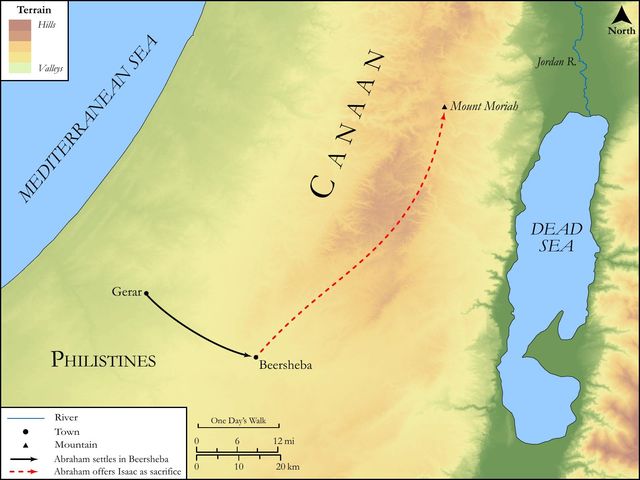
4.He ratified the covenant by an oath, and registered it by giving a new name to the place (Gen 21:31), Beer-sheba, the well of the oath, in remembrance of the covenant they swore to, that they might be ever mindful of it; or the well of seven, in remembrance of the seven lambs given to Abimelech, as a consideration for his confirming Abraham's title to that well. Note, Bargains made must be remembered, that we may make them good, and may not break our word through oversight.
Continue studying Genesis 21:28 across the web’s major study libraries — every link below opens this exact verse, chapter, or book on the destination site.
Read & Compare
 BibleGatewayThis verse in more than 200 translations and 70 languages.
 Bible.comThe YouVersion reader — hundreds of translations, reading plans, and highlights.
 ESV.orgCrossway's official English Standard Version reader.
 NET BibleThe NET translation with 60,000+ translators' notes on every rendering decision.
 STEP BibleTyndale House's free study tool — original text, vocabulary, and scholarly resources.
 BibliaLogos Bible Software's free web reader.
 USCCBThe New American Bible (Revised Edition) with the U.S. bishops' study notes.
Commentaries
 BibleHub CommentariesDozens of classic commentaries on this verse, gathered on one page.
 StudyLightMore than 100 commentary sets — the largest collection on the web.
 BibleRefPlain-English commentary on what this verse means, verse by verse.
 Enduring WordDavid Guzik's free commentary on this chapter, widely used by Bible teachers.
 Bible Study ToolsVerse commentary alongside Greek and Hebrew study aids.
Original Language & Research
- BibleHub InterlinearThe verse word by word — original language, transliteration, and English.
- BibleHub LexiconEvery word's original-language definition and Strong's entry.
 Blue Letter BibleDeep-study tools — Strong's numbers, concordance, and word studies.
 SefariaThe Hebrew text with Rashi and centuries of Jewish commentary.
Sermons, Hymns & Audio


TrulyRandomVerse is not affiliated with these sites and doesn’t control their content. They’re linked because they’re genuinely useful.
Summary
Genesis 21:28 records Abraham's deliberate act of setting aside seven ewe lambs from his flock, a specific and symbolic gesture within the context of forming a covenant with Abimelech, the king of Gerar. This action served as a tangible witness and confirmation of the solemn oath sworn between them, particularly regarding Abraham's rightful claim to a well, thereby illustrating the covenant practices of the patriarchs and underscoring the profound significance of the number seven in establishing binding agreements.
Context
ShowHideLiterary Context
This verse is a pivotal moment within the broader narrative of Abraham's interactions with Abimelech, beginning in Genesis 21:22. Abimelech, accompanied by Phichol, his chief captain, approaches Abraham to propose a treaty, acknowledging God's evident blessing upon Abraham's life. Abraham, seizing the opportunity, voices a grievance regarding a well that Abimelech's servants had seized, a critical resource in the arid region. To resolve this dispute and establish a lasting peace, Abraham initially offers sheep and oxen to Abimelech. However, it is the distinctive act described in Genesis 21:28—setting aside "seven ewe lambs of the flock by themselves"—that precedes and formalizes the oath, serving as a unique witness to the agreement. This act culminates in the naming of the place as Beersheba, meaning "well of the oath" or "well of seven," as explicitly stated in Genesis 21:31, solidifying the covenant's significance.
Historical & Cultural Context
Among the patriarchs and their neighbours, covenants and treaties were foundational to social, political, and economic stability. These agreements were often formalized through elaborate rituals, including the exchange of gifts, the swearing of oaths, and the use of symbolic objects or actions to serve as witnesses. Wells were incredibly valuable assets, representing life and sustenance in a desert environment, and disputes over their ownership were common and serious. The act of "setting aside" animals for a specific purpose was a recognized part of covenant ceremonies, often involving a sacrifice or a designated offering to seal the agreement. The animals served as a tangible, living testimony, understood by all parties to represent the binding nature of the oath. This practice ensured that the terms of the agreement were remembered and respected, providing a clear and undeniable record in a pre-literate society.
Key Themes
ShowHideThe passage in Genesis 21 and specifically Genesis 21:28 contributes to several overarching themes within the book of Genesis and the broader biblical narrative. Firstly, it highlights the theme of Covenant, not just between God and humanity, but also between human parties, demonstrating the principles of trust, integrity, and dispute resolution. Secondly, the concept of Witness and Testimony is central; the lambs serve as a physical embodiment of the oath, emphasizing the importance of verifiable proof in establishing truth and preventing future conflict. Thirdly, the Significance of Numbers, particularly the number seven, is powerfully illustrated. This number frequently symbolizes completeness, perfection, or divine order throughout Scripture, and its linguistic connection to the Hebrew word for "oath" (שָׁבַע, shava) underscores its profound theological and ceremonial weight in this context, making the seven lambs a direct representation of the solemnity and binding nature of the agreement.
Exposition and Analysis
ShowHideGenesis 21:28 details a specific, deliberate action by Abraham: "And Abraham set seven ewe lambs of the flock by themselves." This was not merely a casual gift but a crucial component of a formal covenant ceremony, designed to establish a lasting agreement and resolve a dispute over a well. The separation of these particular animals underscores their role as a distinct and undeniable witness to the impending oath.
Key Word Analysis
ShowHideA primitive root meaning "to station, in various applications (literally or figuratively); appointed, deputy, erect, establish, lay, officer, pillar, present, rear up, set (over, up), settle, sharpen, establish, (make to) stand(-ing, still, up, upright), best state." In this context, Abraham's action is not passive but an active, deliberate "stationing" or "establishing" of these lambs for a specific, formal purpose. It implies a firm, unchangeable designation.
A primitive cardinal number, "seven (as the sacred full one); also (adverbially) seven times; by implication, a week; by extension, an indefinite number." This number is profoundly symbolic in biblical contexts, frequently representing completeness, perfection, or divine order. Crucially, it is linguistically linked to the Hebrew word for "oath" (שָׁבַע - shava), making the seven lambs a direct embodiment of the oath's solemnity and completeness.
Feminine of כֶּבֶשׂ, "a ewe; (ewe) lamb." These specific animals, young and unblemished, were often used in sacrifices and offerings, as later under the law of Moses, signifying purity and value. Their selection highlights the preciousness and solemnity of the covenant being established.
Verse Breakdown
ShowHide"And Abraham set"
This phrase emphasizes Abraham's agency and intentionality. He is the active party initiating this specific action within the covenant-making process. It is a deliberate, formal act, not a casual offering.
"seven ewe lambs of the flock"
The precise number "seven" is highly significant, carrying symbolic weight related to completeness and oaths. The designation "ewe lambs" specifies young, female sheep, animals of value, often given in the covenants of the patriarchs as a tangible witness or pledge. They are taken "of the flock," indicating they are from Abraham's own possessions, making the offering personal and costly.
"by themselves"
This crucial phrase indicates separation and distinction. These seven lambs were not part of the general gift of sheep and oxen Abraham had already given Abimelech (Genesis 21:27). By setting them "by themselves," Abraham designates them for a unique, specific, and symbolic purpose—to serve as a visible, living witness to the covenant and the oath being sworn, highlighting their special role in the formalization of the agreement.
Literary Devices
ShowHideThe verse makes significant use of Symbolism. The number seven is a powerful symbol throughout the Bible, representing completeness, perfection, and divine covenant. Here, it directly links to the Hebrew word for "oath" (shava), making the seven ewe lambs a symbolic representation of the solemnity and binding nature of the covenant. The ewe lambs themselves serve as a tangible, living witness or testimony to the agreement, a common practice among the patriarchs, where physical tokens reinforced verbal agreements, as in the heap of witness between Jacob and Laban. This act of setting them "by themselves" also employs Emphasis, drawing particular attention to these specific animals and their unique role, distinguishing them from other gifts and highlighting their importance as a formal, undeniable sign of the oath.
Theological and Thematic Connections
ShowHideGenesis 21:28 provides a profound illustration of the practical and symbolic elements of covenant-making, a central theme throughout the Old Testament. It demonstrates how tangible acts and specific witnesses were essential to formalize agreements between human parties, reflecting principles that also apply to covenants between God and humanity. The meticulous nature of Abraham's actions underscores the gravity and binding nature of oaths, emphasizing the importance of integrity and truthfulness in all dealings. This passage also powerfully demonstrates the theological significance of numbers, particularly "seven," which consistently appears in Scripture as a symbol of divine completion, perfection, and the solemnity of an oath, reinforcing its weight beyond mere numerical value.
Reflection and Application
ShowHideThe account in Genesis 21:28 emphasizes the enduring importance of clear, witnessed agreements in all facets of life. Whether in personal relationships, business dealings, or community interactions, establishing transparent terms and having reliable witnesses can prevent future disputes and foster trust. Abraham's example encourages believers to seek peaceful resolutions to conflicts and to conduct their affairs with integrity and transparency, ensuring that their words are backed by demonstrable actions. Just as the Word became flesh to provide the ultimate witness and fulfillment of God's promises, our commitments should be clear and verifiable. This passage reminds us that our integrity in keeping our word and honoring our commitments is a powerful testimony to our character and, ultimately, to the God we serve, who is Himself a covenant-keeping God. We are called to live lives marked by faithfulness, just as Abraham sought to establish a faithful agreement.
Questions for Reflection
ShowHideFAQ
ShowHideWhy did Abraham set aside exactly seven lambs?
ShowHideThe number seven (Hebrew: shebaʻ, H7651) is deeply significant in the Bible, often symbolizing completeness, perfection, or divine order. Crucially, it is linguistically linked to the Hebrew word for "oath" (שָׁבַע - shava). Therefore, the seven ewe lambs were not an arbitrary number but a deliberate, symbolic act to solemnize the oath and serve as a tangible "witness of the oath" between Abraham and Abimelech. This act reinforced the gravity and binding nature of their covenant, which is further highlighted by the naming of Beersheba, meaning "well of the oath" or "well of seven," in Genesis 21:31.
What is the broader significance of this specific act in the narrative of Abraham?
ShowHideThis act highlights Abraham's character as a man who values peace, justice, and clear agreements. It demonstrates his commitment to resolving disputes honorably and formally, even with a foreign king like Abimelech. By setting aside these lambs, Abraham establishes a clear and undeniable witness, a vital practice in the covenants of the patriarchs for ensuring that the terms of an agreement are remembered and respected. This event also directly leads to the naming of Beersheba, a significant location in biblical history, forever linking the place to this covenant and the "well of the oath." It underscores Abraham's role as a man of integrity, whose word is backed by demonstrable actions and solemn commitments, reflecting his walk of faith with God, who is Himself a covenant-keeping God (as seen in Genesis 15:18).
Christ-Centered Fulfillment
ShowHideWhile Genesis 21:28 details an earthly covenant between Abraham and Abimelech, it subtly points to the ultimate covenant established through Christ. Abraham's act of setting aside a witness for an oath prefigures Christ as the ultimate "faithful and true witness" (Revelation 3:14) to God's promises. The peace established between Abraham and Abimelech, secured by an oath and a tangible witness, foreshadows the deeper, eternal peace that Christ brings between God and humanity through the New Covenant, ratified not by lambs but by His own precious blood (Hebrews 9:11-14). He is the fulfillment of all oaths and covenants, the "Amen" to God's promises (2 Corinthians 1:20), ensuring the complete and perfect reconciliation symbolized by the number seven. Through His finished work on the cross, Christ brings humanity into a lasting relationship with God, fulfilling the promise of a multitude of descendants and a blessed inheritance, not merely of land, but of eternal life in Him (Galatians 3:16).