


Exodus 40:7
- וְנָתַתָּve·na·ta·Taand you will putH5414Conj-w ¦ V-Qal-ConsecPerf-2msVerb Qal Consecutive Perfect 2nd Singular Masculineוְandנָתַתָּyou will put
- אֶת'et<obj.>H853DirObjMParticle Object Indicator
- הַכִּיֹּרha·ki·Yorthe laverH3595Art ¦ N-msNoun Singular Masculine Absoluteהַtheכִּיֹּרlaver
- בֵּיןbeinbetweenH996Adj-mscAdjective Numerical Singular Masculine Construct
- אֹהֶל'O·hel[the] tent ofH168N-mscNoun Singular Masculine Construct
- מוֹעֵדmo·'EdmeetingH4150N-msNoun Singular Masculine Absolute
- וּבֵיןu·Veinand betweenH996Conj-w ¦ Adj-mscAdjective Numerical Singular Masculine Constructוּandבֵיןbetween
- הַמִּזְבֵּחַha·miz·Be·achthe altarH4196Art ¦ N-msNoun Singular Masculine Absoluteהַtheמִּזְבֵּחַaltar
- וְנָתַתָּve·na·ta·Taand you will putH5414Conj-w ¦ V-Qal-ConsecPerf-2msVerb Qal Consecutive Perfect 2nd Singular Masculineוְandנָתַתָּyou will put
- שָׁםshamthereH8033AdvAdverb
- מָיִםMa·yimwaterH4325N-mpNoun Plural Masculine Absolute
English is a literal word-by-word gloss of the Hebrew, not the KJV's wording. Why?
This is the original text the KJV's translators worked from — each Hebrew word with its own literal English meaning in this verse, prepared by scholars at Tyndale House, Cambridge. The KJV translates whole sentences, not word by word, so its wording differs: one Hebrew word can become several English words, and the KJV may choose “the LORD” where the gloss reads “Yahweh”. Both are faithful — they answer different questions. For the KJV's own rendering, switch to the KJV text.
Details
See on the biblical-era map

Study this verse
Public-domain commentary
Matthew Henry
From his Commentary on the Whole Bible. Henry comments on passages, not single verses — this entry covers Exodus 40:1–15.
The materials and furniture of the tabernacle had been viewed severally and approved, and now they must be put together. 1. God here directs Moses to set up the tabernacle and the utensils of it in their places. Though the work of the tabernacle was finished, and every thing ready for rearing, and the people, no doubt, were very desirous to see it up, yet Moses will not erect it till he has express orders for doing so. It is good to see God going before us in every step, Psa 37:23. The time for doing this is fixed to the first day of the first month (Exo 40:2), which wanted but fourteen days of a year since they came out of Egypt; and a good year's work there was done in it. Probably the work was made ready but just at the end of the year, so that the appointing of this day gave no delay, or next to none, to this good work. We must not put off any necessary duty under pretence of waiting for some remarkable day; the present season is the most convenient. But the tabernacle happening to be set up on the first day of the first month intimates that it is good to begin the year with some good work. Let him that is the first have the first; and let the things of his kingdom be first sought. In Hezekiah's time we find they began to sanctify the temple on the first day of the first month, Ch2 29:17. The new moon (which by their computation was the first day of every month) was observed by them with some solemnity; and therefore this first new moon of the year was thus made remarkable. Note, When a new year begins, we should think of serving God more and better than we did the year before. Moses is particularly ordered to set up the tabernacle itself first, in which God would dwell and would be served (Exo 40:2), then to put the ark in its place, and draw the veil before it (Exo 40:3), then to fix the table, and the candlestick, and the altar of incense, without the veil (Exo 40:4, Exo 40:5), and to fix the hanging of the door before the door. Then in the court he must place the altar of burnt offering, and the laver (Exo 40:6, Exo 40:7); and, lastly, he must set up the curtains of the court, and a hanging for a court-gate. And all this would be easily done in one day, many hands no doubt being employed in it under the direction of Moses. 2. He directs Moses, when he had set up the tabernacle and all the furniture of it, to consecrate it and them, by anointing them with the oil which was prepared for the purpose, Exo 30:25, etc. It was there ordered that this should be done; here it was ordered that it should be done now, Exo 40:9-11. Observe, Every thing was sanctified when it was put in its proper place, and not till then, for till then it was not fit for the use to which it was to be sanctified. As every thing is beautiful in its season, so is every thing in its place. 3. He directs him to consecrate Aaron and his sons. When the goods were brought into God's house, they were marked first, and then servants were hired to bear the vessels of the Lord; and those must be clean who were put into that office, Exo 40:12-15. The law which was now ordered to be put in execution we had before, ch. 29. Thus in the visible church, which is God's tabernacle among men, it is requisite that there be ministers to keep the charge of the sanctuary, and that they receive the anointing.
Continue studying Exodus 40:7 across the web’s major study libraries — every link below opens this exact verse, chapter, or book on the destination site.
Read & Compare
 BibleGatewayThis verse in more than 200 translations and 70 languages.
 Bible.comThe YouVersion reader — hundreds of translations, reading plans, and highlights.
 ESV.orgCrossway's official English Standard Version reader.
 NET BibleThe NET translation with 60,000+ translators' notes on every rendering decision.
 STEP BibleTyndale House's free study tool — original text, vocabulary, and scholarly resources.
 BibliaLogos Bible Software's free web reader.
 USCCBThe New American Bible (Revised Edition) with the U.S. bishops' study notes.
Commentaries
 BibleHub CommentariesDozens of classic commentaries on this verse, gathered on one page.
 StudyLightMore than 100 commentary sets — the largest collection on the web.
 BibleRefPlain-English commentary on what this verse means, verse by verse.
 Enduring WordDavid Guzik's free commentary on this chapter, widely used by Bible teachers.
 Bible Study ToolsVerse commentary alongside Greek and Hebrew study aids.
Original Language & Research
- BibleHub InterlinearThe verse word by word — original language, transliteration, and English.
- BibleHub LexiconEvery word's original-language definition and Strong's entry.
 Blue Letter BibleDeep-study tools — Strong's numbers, concordance, and word studies.
 SefariaThe Hebrew text with Rashi and centuries of Jewish commentary.
Sermons, Hymns & Audio


TrulyRandomVerse is not affiliated with these sites and doesn’t control their content. They’re linked because they’re genuinely useful.
Summary
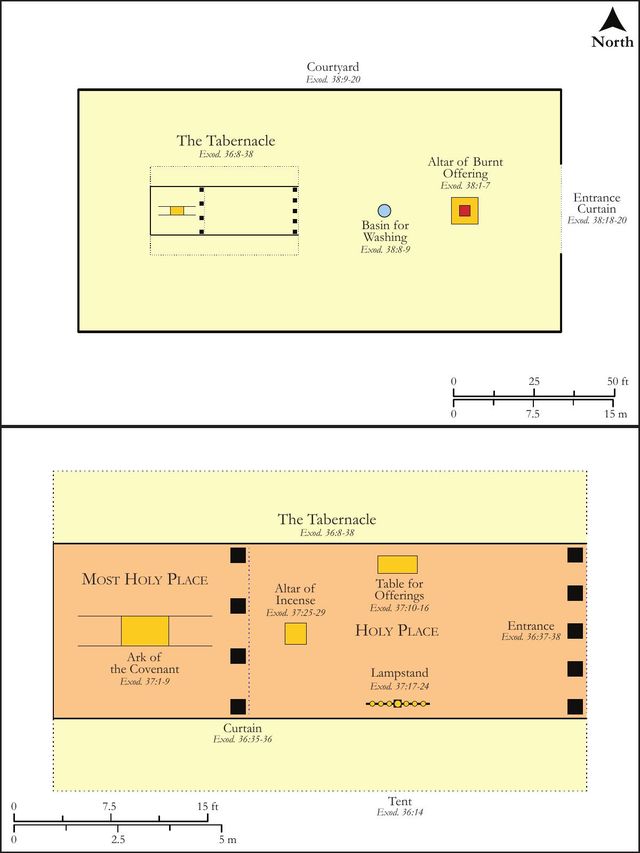
Exodus 40:7 precisely details the divinely ordained placement of the bronze laver within the Tabernacle's outer court. This instruction, part of the meticulous commands for the sanctuary's final assembly, underscores God's unwavering demand for ritual purity and holiness from His priests. The laver's strategic position between the altar of burnt offering and the Tent of Meeting emphasized the indispensable role of cleansing after dealing with sin and before entering God's immediate presence, thereby highlighting the absolute necessity of sanctification for divine communion.
Context
ShowHideLiterary Context
Exodus 40 serves as the climactic conclusion to the detailed instructions and subsequent construction of the Tabernacle, a narrative thread meticulously woven throughout the latter half of the book, beginning in Exodus 25. This chapter meticulously records Moses' faithful execution of every divine command concerning the Tabernacle's erection and the anointing of its components and priests. Verses 1-15 provide the specific sequence for setting up the sanctuary, from the framework to the furnishings. Verse 7 specifically dictates the placement of the laver, following the setting up of the altar of burnt offering (verse 6) and preceding the anointing of the Tent of Meeting (verse 9). The entire chapter culminates in the awe-inspiring manifestation of God's glory, which descends to fill the completed Tabernacle, signifying His dwelling among His people, as powerfully depicted in Exodus 40:34-35.
Historical & Cultural Context
The Tabernacle was not merely a structure but a portable, sacred space designed by God as the tangible symbol of His presence among the Israelites during their wilderness wanderings. Its design, rituals, and the precise placement of its elements, though uniquely revealed by Yahweh, resonated with ancient Near Eastern concepts of sacred space and divine accessibility, yet stood in stark contrast to pagan practices. The laver's placement, "between the tent of the congregation and the altar," was functionally and symbolically crucial. The altar of burnt offering, situated in the outer court, was where sacrifices were made to atone for sin, addressing the fundamental barrier between a holy God and sinful humanity. The Tent of Meeting, or Tent of the Congregation, containing the Holy Place and the Most Holy Place, represented the direct dwelling place of God. Therefore, the laver served as an essential intermediary, ensuring that priests underwent ritual cleansing after dealing with the defilement of sin (at the altar) but before entering the immediate presence of God. This arrangement powerfully underscored the absolute necessity of purity and holiness for divine encounter, a principle foundational to ancient Israelite worship and distinct from the often-impure rituals of surrounding cultures.
Key Themes
ShowHideThis verse, within the broader context of Exodus, contributes significantly to several key themes. It highlights the theme of Divine Order and Meticulousness, demonstrating God's precise and detailed instructions for every aspect of worship and His dwelling place. The placement of the laver emphasizes the theme of Holiness and Purity, revealing God's unyielding demand for ceremonial and moral cleanness from those who would serve Him and approach His presence. It underscores that access to God is not casual but requires a divinely ordained process of purification. Furthermore, the laver's function contributes to the theme of Atonement and Sanctification, illustrating the sequence in which sin must first be dealt with (at the altar) before purification for service and communion can occur. This physical arrangement visually teaches the spiritual journey from initial cleansing from sin to ongoing sanctification for fellowship.
Exposition and Analysis
ShowHideKey Word Analysis
ShowHideThis Hebrew term (H3595) refers to a round basin or washbowl, often made of bronze. In the Tabernacle, it was specifically designed for the priests to wash their hands and feet, a mandatory ritual before performing their sacred duties at the altar or entering the Tent of Meeting (as commanded in Exodus 30:18-21). Its construction from the polished bronze mirrors of the Israelite women (mentioned in Exodus 38:8) adds a layer of symbolic depth, perhaps suggesting self-reflection and the need for internal purity.
This compound Hebrew term (H168, H4150), often translated as "Tent of Meeting," refers to the portable sanctuary itself. The word ʼôhel signifies a "tent" or "dwelling," while môwʻêd denotes an "appointed time" or "appointed place of meeting." Thus, it was the designated place where God would meet with Moses and commune with His people. It housed the Holy Place and the Most Holy Place, representing the very dwelling place of God's tangible presence among Israel.
This term (H4196) refers specifically to the altar of burnt offering, located in the outer court of the Tabernacle. Derived from a root meaning "to sacrifice," it was the primary place where animal sacrifices were offered to God for the atonement of sins. This altar served as the initial point of interaction for an Israelite seeking to approach God, symbolizing the foundational requirement of sacrifice to address sin before any further communion.
Verse Breakdown
ShowHide"And thou shalt set the laver between the tent of the congregation and the altar"
This clause provides the precise, divinely ordained location for the laver within the Tabernacle's outer court. Its placement was not arbitrary but strategically positioned as an intermediary point. Priests would first approach the altar of burnt offering (where sin was atoned for through sacrifice), then proceed to the laver for ritual cleansing, and only then could they enter the Tent of Meeting (where God's presence dwelt). This physical arrangement visually and functionally communicated the necessary sequence: atonement for sin, followed by purification from defilement, as prerequisites for access to and service before a holy God.
"and shalt put water therein"
This simple yet crucial command highlights the functional purpose of the laver. It was not merely a symbolic fixture but a practical vessel designed to hold water, the essential medium for the required ritual washing. The presence of water signifies the practical means by which the priests were to achieve the necessary ritual purity before engaging in their sacred service, underscoring the constant and tangible need for cleansing from ceremonial and moral impurities.
Literary Devices
ShowHideExodus 40:7 employs several significant literary devices to convey its profound theological meaning. Divine Command is pervasive, with the imperative verbs "shalt set" and "shalt put" underscoring God's direct, authoritative instruction for the Tabernacle's construction. This emphasizes His meticulous nature and the absolute necessity of adhering to His precise will in worship. Symbolism is paramount, as the laver itself stands as a powerful symbol of purification, sanctification, and holiness. The water it contained represents cleansing, while its strategic placement symbolizes the required spiritual journey from atonement (at the altar) to sanctification (at the laver) before communion with a holy God (in the Tent of Meeting). Furthermore, the entire Tabernacle system, including the laver, functions as Typology, foreshadowing greater spiritual realities. The physical cleansing required for the Old Covenant priests points forward to the spiritual cleansing necessary for all believers in the New Covenant, ultimately achieved through the atoning and sanctifying work of Christ. The precise spatial arrangement also exemplifies Architectural Theology, where the physical layout of the sacred space communicates profound theological truths about God's character and the pathway to His presence.
Theological and Thematic Connections
ShowHideExodus 40:7, in its description of the laver's placement and purpose, profoundly underscores the biblical theme of holiness and the absolute necessity of purification for communion with God. It reveals that access to God is not casual but requires a divinely appointed means of cleansing, a principle that transcends the Old Covenant ritual and finds its ultimate fulfillment in Christ. The strategic positioning of the laver between the altar of sacrifice and the Tent of Meeting visually teaches that atonement for sin must precede purification, and both are prerequisites for approaching the Holy One. This sequence highlights God's unyielding demand for purity from those who would serve Him, demonstrating that even after sin is dealt with, defilement must be washed away to maintain intimate fellowship.
Reflection and Application
ShowHideThe ancient command concerning the laver in Exodus 40:7, while part of a superseded covenant, offers enduring spiritual principles for believers today. It serves as a powerful reminder that approaching a holy God always necessitates a form of cleansing. While we no longer perform ritual washings, the spiritual reality remains: our fellowship with God requires ongoing purification from the defilements of sin. This is not about earning God's favor, but about maintaining the purity of relationship that Christ has already established for us. Just as the priests needed to wash repeatedly, we too need daily spiritual cleansing through confession and the renewing power of God's Word and the Holy Spirit. The laver's position reminds us that cleansing follows atonement, meaning our daily walk of sanctification flows from the finished work of Christ on the cross. It calls us to a life of intentional purity, recognizing that our access to God is precious and demands reverence, humility, and a commitment to living in a way that honors His holiness. This daily "washing" involves examining our hearts, confessing our sins, and allowing the truth of God's Word to purify our thoughts and actions, enabling us to walk in closer fellowship with Him.
Questions for Reflection
ShowHideFAQ
ShowHideWhy was the laver placed specifically "between the tent of the congregation and the altar"?
ShowHideThe placement of the laver was divinely strategic, not arbitrary, and held profound symbolic and functional significance. The altar of burnt offering was where animal sacrifices were made to atone for sin, representing the initial step of dealing with humanity's fallen state and the penalty of sin. The Tent of Meeting (or Tent of the Congregation) was where God's presence dwelt, signifying direct communion and intimate fellowship. Therefore, the laver was positioned as an essential intermediary step. Priests had to pass the altar, then wash at the laver, before entering the Tent of Meeting. This sequence visually and functionally taught that while atonement (at the altar) dealt with the penalty of sin, purification (at the laver) was necessary for ceremonial and moral defilement, ensuring that those who drew near to God were ritually and symbolically clean. It underscored the principle that holiness is required for intimate fellowship with a holy God, and that both expiation and purification are necessary for access to His presence.
Christ-Centered Fulfillment
ShowHideThe bronze laver, strategically positioned for cleansing before entering God's holy presence, finds its ultimate and perfect fulfillment in Jesus Christ. The Old Covenant priests required repeated physical washings because their own righteousness was insufficient, and the sacrifices they offered were imperfect and temporary, only covering sins ceremonially. However, Jesus, our great High Priest, offered Himself as the perfect, once-for-all sacrifice, providing complete and eternal atonement for sin (as described in Hebrews 9:11-14). His shed blood is the true "water" that cleanses us not merely outwardly, but spiritually and eternally, washing away our sins and making us righteous before God (as celebrated in Revelation 1:5). Furthermore, the laver's purpose of daily cleansing for service is echoed in Christ's teaching on ongoing sanctification. While we are declared "clean" through His finished work on the cross (as Jesus told Peter in John 13:10), we still need daily purification from the defilements of the world and the flesh. This ongoing cleansing is achieved through confession of sin (1 John 1:9), the sanctifying power of God's Word (Ephesians 5:26), and the indwelling work of the Holy Spirit (Titus 3:5). Thus, the laver points to Christ as the source of both our initial justification and our ongoing sanctification, enabling us to draw near to God with confidence through a new and living way (Hebrews 10:19-22).