


Exodus 40:4
Bible text: King James Version (1769 Blayney text) · Public domain
Bible text: King James Version with Strong's numbers · Public domain
Bible text: Berean Standard Bible · Public domain
Bible text: American Standard Version (1901) · Public domain
Bible text: World English Bible, Messianic edition · Public domain
Bible text: Geneva Bible (1599) · Public domain
Bible text: Young's Literal Translation · Public domain
- וְהֵבֵאתָve·he·ve·Taand you will bringH935Conj-w ¦ V-Hiphil-ConsecPerf-2msVerb Hiphil Consecutive Perfect 2nd Singular Masculineוְandהֵבֵאתָyou will bring
- אֶת'et<obj.>H853DirObjMParticle Object Indicator
- הַשֻּׁלְחָןha·shul·Chanthe tableH7979Art ¦ N-msNoun Singular Masculine Absoluteהַtheשֻּׁלְחָןtable
- וְעָרַכְתָּve·'a·rakh·Taand you will arrangeH6186Conj-w ¦ V-Qal-ConsecPerf-2msVerb Qal Consecutive Perfect 2nd Singular Masculineוְandעָרַכְתָּyou will arrange
- אֶת'et<obj.>H853DirObjMParticle Object Indicator
- עֶרְכּוֹer·Koits arrangementH6187N-msc ¦ 3msNoun Singular Masculine Constructעֶרְכּarrangementוֹits
- וְהֵבֵאתָve·he·ve·Taand you will bringH935Conj-w ¦ V-Hiphil-ConsecPerf-2msVerb Hiphil Consecutive Perfect 2nd Singular Masculineוְandהֵבֵאתָyou will bring
- אֶת'et<obj.>H853DirObjMParticle Object Indicator
- הַמְּנֹרָהha·me·no·Rahthe lampstandH4501Art ¦ N-fsNoun Singular Feminine Absoluteהַtheמְּנֹרָהlampstand
- וְהַעֲלֵיתָve·ha·'a·lei·Taand you will lift upH5927Conj-w ¦ V-Hiphil-ConsecPerf-2msVerb Hiphil Consecutive Perfect 2nd Singular Masculineוְandהַעֲלֵיתָyou will lift up
- אֶת'et<obj.>H853DirObjMParticle Object Indicator
- נֵרֹתֶיהָne·ro·Tei·haits lampsH5216N-fpc ¦ 3fsNoun Plural Feminine Constructנֵרֹתֶיlampsהָits
English is a literal word-by-word gloss of the Hebrew, not the KJV's wording. Why?
This is the original text the KJV's translators worked from — each Hebrew word with its own literal English meaning in this verse, prepared by scholars at Tyndale House, Cambridge. The KJV translates whole sentences, not word by word, so its wording differs: one Hebrew word can become several English words, and the KJV may choose “the LORD” where the gloss reads “Yahweh”. Both are faithful — they answer different questions. For the KJV's own rendering, switch to the KJV text.
Details
See on the biblical-era maps

Study this verse
Public-domain commentary
Matthew Henry
From his Commentary on the Whole Bible. Henry comments on passages, not single verses — this entry covers Exodus 40:1–15.
The materials and furniture of the tabernacle had been viewed severally and approved, and now they must be put together. 1. God here directs Moses to set up the tabernacle and the utensils of it in their places. Though the work of the tabernacle was finished, and every thing ready for rearing, and the people, no doubt, were very desirous to see it up, yet Moses will not erect it till he has express orders for doing so. It is good to see God going before us in every step, Psa 37:23. The time for doing this is fixed to the first day of the first month (Exo 40:2), which wanted but fourteen days of a year since they came out of Egypt; and a good year's work there was done in it. Probably the work was made ready but just at the end of the year, so that the appointing of this day gave no delay, or next to none, to this good work. We must not put off any necessary duty under pretence of waiting for some remarkable day; the present season is the most convenient. But the tabernacle happening to be set up on the first day of the first month intimates that it is good to begin the year with some good work. Let him that is the first have the first; and let the things of his kingdom be first sought. In Hezekiah's time we find they began to sanctify the temple on the first day of the first month, Ch2 29:17. The new moon (which by their computation was the first day of every month) was observed by them with some solemnity; and therefore this first new moon of the year was thus made remarkable. Note, When a new year begins, we should think of serving God more and better than we did the year before. Moses is particularly ordered to set up the tabernacle itself first, in which God would dwell and would be served (Exo 40:2), then to put the ark in its place, and draw the veil before it (Exo 40:3), then to fix the table, and the candlestick, and the altar of incense, without the veil (Exo 40:4, Exo 40:5), and to fix the hanging of the door before the door. Then in the court he must place the altar of burnt offering, and the laver (Exo 40:6, Exo 40:7); and, lastly, he must set up the curtains of the court, and a hanging for a court-gate. And all this would be easily done in one day, many hands no doubt being employed in it under the direction of Moses. 2. He directs Moses, when he had set up the tabernacle and all the furniture of it, to consecrate it and them, by anointing them with the oil which was prepared for the purpose, Exo 30:25, etc. It was there ordered that this should be done; here it was ordered that it should be done now, Exo 40:9-11. Observe, Every thing was sanctified when it was put in its proper place, and not till then, for till then it was not fit for the use to which it was to be sanctified. As every thing is beautiful in its season, so is every thing in its place. 3. He directs him to consecrate Aaron and his sons. When the goods were brought into God's house, they were marked first, and then servants were hired to bear the vessels of the Lord; and those must be clean who were put into that office, Exo 40:12-15. The law which was now ordered to be put in execution we had before, ch. 29. Thus in the visible church, which is God's tabernacle among men, it is requisite that there be ministers to keep the charge of the sanctuary, and that they receive the anointing.
Continue studying Exodus 40:4 across the web’s major study libraries — every link below opens this exact verse, chapter, or book on the destination site.
Read & Compare
 BibleGatewayThis verse in more than 200 translations and 70 languages.
 Bible.comThe YouVersion reader — hundreds of translations, reading plans, and highlights.
 ESV.orgCrossway's official English Standard Version reader.
 NET BibleThe NET translation with 60,000+ translators' notes on every rendering decision.
 STEP BibleTyndale House's free study tool — original text, vocabulary, and scholarly resources.
 BibliaLogos Bible Software's free web reader.
 USCCBThe New American Bible (Revised Edition) with the U.S. bishops' study notes.
Commentaries
 BibleHub CommentariesDozens of classic commentaries on this verse, gathered on one page.
 StudyLightMore than 100 commentary sets — the largest collection on the web.
 BibleRefPlain-English commentary on what this verse means, verse by verse.
 Enduring WordDavid Guzik's free commentary on this chapter, widely used by Bible teachers.
 Bible Study ToolsVerse commentary alongside Greek and Hebrew study aids.
Original Language & Research
- BibleHub InterlinearThe verse word by word — original language, transliteration, and English.
- BibleHub LexiconEvery word's original-language definition and Strong's entry.
 Blue Letter BibleDeep-study tools — Strong's numbers, concordance, and word studies.
 SefariaThe Hebrew text with Rashi and centuries of Jewish commentary.
Sermons, Hymns & Audio


TrulyRandomVerse is not affiliated with these sites and doesn’t control their content. They’re linked because they’re genuinely useful.
Summary
Exodus 40:4 meticulously details God's precise instructions to Moses for furnishing the Holy Place within the newly completed Tabernacle, specifically focusing on the placement and arrangement of the Table of Showbread and the Menorah. This verse signifies the culmination of God's elaborate design for a portable sanctuary and Moses' unwavering obedience in preparing a sacred dwelling for the Lord among His people. The careful arrangement of these articles underscores God's demand for order, holiness, and reverence in worship, symbolizing His perpetual provision and illuminating presence.
Context
ShowHideLiterary Context
Exodus 40 serves as the climactic conclusion to the book of Exodus, bringing to fruition the grand narrative of Israel's deliverance from Egyptian bondage, the covenant at Sinai, and the detailed blueprint for God's dwelling place. Verses 1-33 meticulously recount Moses' faithful adherence to every divine command, from the erection of the Tabernacle's framework to the hanging of its curtains and the placement of its sacred articles. This particular verse focuses on the interior furnishings of the Holy Place, immediately preceding the anointing of the Tabernacle and its priests in Exodus 40:9-15 and the glorious descent of God's presence that fills the sanctuary in Exodus 40:34-38. The pervasive refrain "as the Lord commanded Moses" throughout the chapter emphasizes the perfect obedience required and rendered in establishing God's dwelling among His people.
Historical & Cultural Context
The construction of the Tabernacle occurred in the wilderness, a nomadic environment where a portable sanctuary was indispensable for Israel's journey. This tent-like structure became the central hub of Israelite worship and communal life, symbolizing God's immanent presence among His chosen people. Among the nations round about, temples were understood as the earthly abodes of their gods, and their precise construction and furnishing were believed to be vital for inviting and maintaining the presence of those gods. The meticulous instructions for the Tabernacle, including the items mentioned in this verse, reflect Yahweh's unique holiness and His desire for a covenantal relationship with His redeemed people, but on His own terms. Unlike pagan temples built to appease capricious gods, the Tabernacle was a sacred space where a holy God condescended to dwell with a redeemed people, establishing a unique relationship. The articles within, such as the Table of Showbread and the Menorah, were not merely decorative but held profound symbolic and functional significance within Israel's cultic practices, representing God's provision, guidance, and the path to His presence.
Key Themes
ShowHideThis verse contributes significantly to several overarching themes in Exodus and the Pentateuch. Firstly, it highlights the theme of Divine Order and Holiness, emphasizing God's meticulousness and His demand for precision in all matters related to His worship. Every detail of the Tabernacle's construction and furnishing was divinely ordained, underscoring that access to a holy God requires adherence to His specific commands. Secondly, the verse reinforces the theme of God's Dwelling Among His People, demonstrating His desire for intimate fellowship with Israel, a desire that culminates in the filling of the Tabernacle with His glory at the chapter's end. Thirdly, the items themselves represent God's Provision and Illumination: the Table of Showbread speaks to His sustenance, while the Menorah symbolizes His light and guidance. Moses' faithful execution of these commands exemplifies the theme of Obedience to Divine Command, a recurring motif throughout the book, particularly evident in Exodus 39 and Exodus 40.
Exposition and Analysis
ShowHideKey Word Analysis
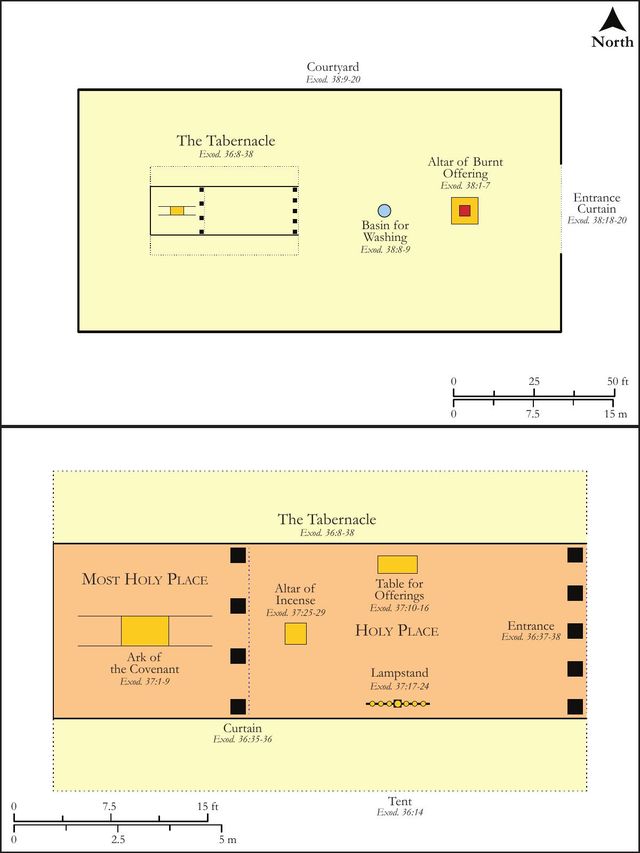
ShowHideDerived from H7979, this term refers specifically to the Table of Showbread, a piece of acacia wood overlaid with pure gold, positioned on the north side of the Holy Place. It was designed to hold twelve loaves of unleavened bread, representing the twelve tribes of Israel, perpetually set before the Lord. While the term broadly means "table" (as spread out), in this sacred context, it denotes a specific liturgical furnishing central to Israel's covenant worship.
This primitive root means "to set in a row, i.e. arrange, put in order." The phrase "set in order the things that are to be set in order upon it" (using the related noun H6187, ʻêrek, meaning "a pile, equipment, estimate") implies a deliberate, precise, and systematic placement, not merely a casual deposition. This highlights the divine demand for meticulousness, reverence, and ritual exactitude in handling sacred objects and in approaching God's presence.
This primitive root means "to ascend" or "to cause to ascend." In this context, "light the lamps thereof" uses ʻâlâh to denote causing the light to ascend or go up, implying the act of kindling or igniting the wicks so that the light would shine forth. This verb emphasizes the active role of the priest in maintaining the constant illumination of the Menorah, which was essential for the functioning of the Holy Place and symbolized God's ever-present guidance.
Verse Breakdown
ShowHide"And thou shalt bring in the table"
This instruction commands Moses to physically transport the Table of Showbread into the Holy Place. Its designated position on the north side of the sanctuary signifies the establishment of God's tangible provision within His dwelling place, ready for the priestly service.
"and set in order the things that are to be set in order upon it"
This clause refers to the precise arrangement of the twelve loaves of showbread (also known as "bread of the Presence"), which were to be laid out in two stacks of six, accompanied by bowls of frankincense. This was a perpetual offering, symbolizing God's unwavering provision for Israel's sustenance and Israel's continuous presence before God. The emphasis on "setting in order" underscores the ritual precision and intentionality demanded by God for His worship.
"and thou shalt bring in the candlestick"
Moses is further commanded to bring the Menorah, the seven-branched lampstand made of pure hammered gold, into the Holy Place. Its placement on the south side, opposite the Table of Showbread, was crucial for providing the sole source of illumination within the sacred chamber.
"and light the lamps thereof"
This final command specifies the priestly duty of ensuring that the lamps of the Menorah were continually kindled and maintained, burning from evening until morning. The constant light was indispensable for the priests performing their duties in the Holy Place and served as a powerful, enduring symbol of God's illuminating presence, divine truth, and spiritual guidance for His people.
Literary Devices
ShowHideExodus 40:4 is rich with significant literary devices that amplify its theological weight. Symbolism is paramount, as each item mentioned—the Table of Showbread and the Menorah—is imbued with profound theological meaning. The Table, with its perpetual bread, symbolizes God's unfailing provision for His people and the enduring covenant relationship that sustains Israel. The Menorah, with its constant light, symbolizes God's divine presence as the ultimate source of truth, guidance, and spiritual illumination in a world of darkness. The meticulous detail in the instructions throughout Exodus, culminating in this verse, also highlights the device of Repetition of the theme of divine command and human obedience, reinforcing the absolute importance of adhering precisely to God's revealed will. Furthermore, the entire act of setting up the Tabernacle, including these specific furnishings, functions as Foreshadowing, pointing forward to God's ultimate dwelling among humanity in the person of Jesus Christ and the spiritual realities of the New Covenant that transcend the physical types.
Theological and Thematic Connections
ShowHideExodus 40:4, though a seemingly straightforward instruction, is profoundly significant theologically. It speaks volumes about God's orderly nature, His fervent desire for structured and reverent worship, and His unwavering commitment to dwelling intimately among His people. The Table of Showbread powerfully represents God's faithful provision for the physical and spiritual sustenance of His people, while the Menorah signifies His indispensable role as the source of all light, truth, and understanding, guiding His people through the wilderness of life. The meticulous obedience required of Moses in arranging these sacred elements underscores the fundamental principle that approaching a holy God demands intentionality, precision, and profound reverence, reflecting His perfect character and sovereign authority. This careful preparation was not arbitrary but essential for the manifestation of God's glory, establishing a foundational pattern for how humanity can draw near to the divine presence.
Reflection and Application
ShowHideThe detailed instructions and Moses' faithful execution in Exodus 40:4 serve as a profound call to consider the intentionality and reverence with which we approach God in our own lives and in corporate worship. Just as every item in the Tabernacle had its precise place and sacred purpose, our spiritual lives should be marked by divine order, clear purpose, and a conscious, abiding awareness of God's holy presence. The powerful symbols of provision (the showbread) and illumination (the Menorah) serve as timeless reminders that God is our ultimate sustainer and our infallible guide. We are invited to live in constant, humble reliance on His abundant provision and to walk perpetually in the radiant light of His truth, allowing Him to illuminate every step of our paths. Our lives, as temples of the Holy Spirit, should be thoughtfully "set in order" to honor Him, reflecting His character, and actively welcoming His indwelling presence. This requires disciplined spiritual practices, an unwavering commitment to biblical truth, and a heart of worship that prioritizes His glory above all else.
Questions for Reflection
ShowHideFAQ
ShowHideWhat was the purpose of the Table of Showbread and the Menorah in the Tabernacle?
ShowHideThe Table of Showbread, positioned on the north side of the Holy Place, held twelve loaves representing the twelve tribes of Israel. Its purpose was to symbolize God's continuous provision for His people and their perpetual presence before Him in covenant relationship. The Menorah, or golden lampstand, was placed on the south side and served as the sole source of light within the Holy Place. It symbolized God as the ultimate source of all spiritual light, truth, and understanding, illuminating the path for His people and signifying His constant, guiding presence. Both items were integral to the daily priestly service and deeply symbolic of the profound covenant relationship between God and Israel, as detailed in Exodus 25.
Why was such meticulous detail required for setting up the Tabernacle and its furnishings?
ShowHideThe meticulous detail in setting up the Tabernacle, as vividly recounted in Exodus 40, underscored several crucial theological principles. Firstly, it emphasized God's absolute holiness and His demand for reverence, precision, and purity in all matters related to His worship and presence. Secondly, it highlighted the perfect obedience required of Moses and, by extension, of Israel, demonstrating that God's presence is contingent upon faithful adherence to His divine commands. Thirdly, every single detail was divinely inspired and carried profound symbolic meaning, pointing to deeper spiritual truths and ultimately foreshadowing the perfect redemptive work of Jesus Christ. The precision ensured that the earthly Tabernacle truly reflected the heavenly pattern revealed to Moses on Mount Sinai, as affirmed in Hebrews 8:5.
Christ-Centered Fulfillment
ShowHideExodus 40:4, with its focus on the Table of Showbread and the Menorah, finds its ultimate and glorious fulfillment in Jesus Christ. The Table of Showbread, symbolizing God's perpetual provision and Israel's covenant presence before Him, powerfully foreshadows Jesus as the Bread of Life. He is the true, living sustenance descended from heaven, offering eternal life to all who believe, thereby ensuring our perpetual, unhindered presence before God through His perfect sacrifice. Similarly, the Menorah, the sole source of light in the Holy Place, points directly to Jesus as the Light of the World. He illuminates the pervasive darkness of sin and spiritual ignorance, revealing the Father in His fullness and guiding humanity into saving truth and eternal salvation. Just as the Tabernacle was God's tangible dwelling place among His people, Jesus is Immanuel, God with us, the ultimate fulfillment of God's profound desire to dwell intimately among humanity. Through His sacrificial death and glorious resurrection, He became the true and perfect temple, and now, by His indwelling Spirit, He makes believers living temples (1 Corinthians 6:19). The meticulous order of the Tabernacle points to the perfect order and divine completion of God's redemptive plan in Christ, who perfectly fulfilled all righteousness and established a new and living way into God's very presence (Hebrews 10:19-20).