


Exodus 37:10
Bible text: King James Version (1769 Blayney text) · Public domain
Bible text: King James Version with Strong's numbers · Public domain
Bible text: Berean Standard Bible · Public domain
Bible text: American Standard Version (1901) · Public domain
Bible text: World English Bible, Messianic edition · Public domain
Bible text: Geneva Bible (1599) · Public domain
Bible text: Young's Literal Translation · Public domain
- וַיַּעַשׂvai·Ya·'asand he madeH6213Conj-w ¦ V-Qal-ConsecImperf-3msVerb Qal Consecutive Imperfect 3rd Singular Masculineוַandיַּעַשׂhe made
- אֶת'et<obj.>H853DirObjMParticle Object Indicator
- הַשֻּׁלְחָןha·shul·Chanthe tableH7979Art ¦ N-msNoun Singular Masculine Absoluteהַtheשֻּׁלְחָןtable
- עֲצֵי'a·Tzeiwood<s> ofH6086N-mpcNoun Plural Masculine Construct
- שִׁטִּיםshi·TimacaciaH7848N-mpNoun Plural Masculine Absolute
- אַמָּתַיִם'a·ma·Ta·yim[was] two cubitsH520N-fdNoun Dual Feminine Absolute
- אָרְכּוֹ'a·re·Koits lengthH753N-msc ¦ 3msNoun Singular Masculine Constructאָרְכּlengthוֹits
- וְאַמָּהve·'a·Mahand [was] a cubitH520Conj-w ¦ N-fsNoun Singular Feminine Absoluteוְandאַמָּה[was] a cubit
- רָחְבּוֹra·che·Boits breadthH7341N-msc ¦ 3msNoun Singular Masculine Constructרָחְבּbreadthוֹits
- וְאַמָּהve·'a·Mahand [was] a cubitH520Conj-w ¦ N-fsNoun Singular Feminine Absoluteוְandאַמָּה[was] a cubit
- וָחֵצִיva·Che·tziand a halfH2677Conj-w ¦ N-msNoun Singular Masculine Absoluteוָandחֵצִיa half
- קֹמָתוֹko·ma·Toits heightH6967N-fsc ¦ 3msNoun Singular Feminine Constructקֹמָתheightוֹits
English is a literal word-by-word gloss of the Hebrew, not the KJV's wording. Why?
This is the original text the KJV's translators worked from — each Hebrew word with its own literal English meaning in this verse, prepared by scholars at Tyndale House, Cambridge. The KJV translates whole sentences, not word by word, so its wording differs: one Hebrew word can become several English words, and the KJV may choose “the LORD” where the gloss reads “Yahweh”. Both are faithful — they answer different questions. For the KJV's own rendering, switch to the KJV text.
Details
See on the biblical-era maps

Study this verse
Public-domain commentary
Matthew Henry
From his Commentary on the Whole Bible. Henry comments on passages, not single verses — this entry covers Exodus 37:10–24.
Here is, 1. The making of the table on which the show-bread was to be continually placed. God is a good householder, that always keeps a plentiful table. Is the world his tabernacle? His providence in it spreads a table for all the creatures: he provides food for all flesh. Is the church his tabernacle? His grace in it spreads a table for all believers, furnished with the bread of life. But observe how much the dispensation of the gospel exceeds that of the law. Though here was a table furnished, it was only with show-bread, bread to be looked upon, not to be fed upon, while it was on this table, and afterwards only by the priests; but to the table which Christ has spread in the new covenant all real Christians are invited guests; and to them it is said, Eat, O friends, come eat of my bread. What the law gave but a sight of at a distance, the gospel gives the enjoyment of, and a hearty welcome to. 2. The making of the candlestick, which was not of wood overlaid with gold, but all beaten work of pure gold only, Exo 37:17, Exo 37:22. This signified that light of divine revelation with which God's church upon earth (which is his tabernacle among men) has always been enlightened, being always supplied with fresh oil from Christ the good Olive, Zac 4:2, Zac 4:3. God's manifestations of himself in this world are but candle-light compared with the daylight of the future state. The Bible is a golden candlestick; it is of pure gold, Psa 19:10. From it light is diffused to every part of God's tabernacle, that by it his spiritual priests may see to minister unto the Lord, and to do the service of his sanctuary. This candlestick has not only its bowls for necessary use, but its knops and flowers for ornament; there are many things which God saw fit to beautify his word with which we can no more give a reason for than for these knops and flowers, and yet we are sure that they were added for a good purpose. Let us bless God for this candlestick, have an eye to it continually, and dread the removal of it out of its place.
Continue studying Exodus 37:10 across the web’s major study libraries — every link below opens this exact verse, chapter, or book on the destination site.
Read & Compare
 BibleGatewayThis verse in more than 200 translations and 70 languages.
 Bible.comThe YouVersion reader — hundreds of translations, reading plans, and highlights.
 ESV.orgCrossway's official English Standard Version reader.
 NET BibleThe NET translation with 60,000+ translators' notes on every rendering decision.
 STEP BibleTyndale House's free study tool — original text, vocabulary, and scholarly resources.
 BibliaLogos Bible Software's free web reader.
 USCCBThe New American Bible (Revised Edition) with the U.S. bishops' study notes.
Commentaries
 BibleHub CommentariesDozens of classic commentaries on this verse, gathered on one page.
 StudyLightMore than 100 commentary sets — the largest collection on the web.
 BibleRefPlain-English commentary on what this verse means, verse by verse.
 Enduring WordDavid Guzik's free commentary on this chapter, widely used by Bible teachers.
 Bible Study ToolsVerse commentary alongside Greek and Hebrew study aids.
Original Language & Research
- BibleHub InterlinearThe verse word by word — original language, transliteration, and English.
- BibleHub LexiconEvery word's original-language definition and Strong's entry.
 Blue Letter BibleDeep-study tools — Strong's numbers, concordance, and word studies.
 SefariaThe Hebrew text with Rashi and centuries of Jewish commentary.
Sermons, Hymns & Audio


TrulyRandomVerse is not affiliated with these sites and doesn’t control their content. They’re linked because they’re genuinely useful.
Summary
Exodus 37:10 meticulously describes the construction of the Table of Showbread, a vital furnishing for the Holy Place within the Tabernacle. This verse specifies its material as durable shittim wood and provides its exact dimensions: two cubits in length, one cubit in breadth, and one and a half cubits in height. This detailed account highlights the faithful and precise execution of God's divine blueprint by Bezalel and the skilled craftsmen, underscoring the paramount importance of meticulous obedience in sacred worship and the enduring nature of the materials chosen for God's dwelling place among His people.
Context
ShowHideLiterary Context
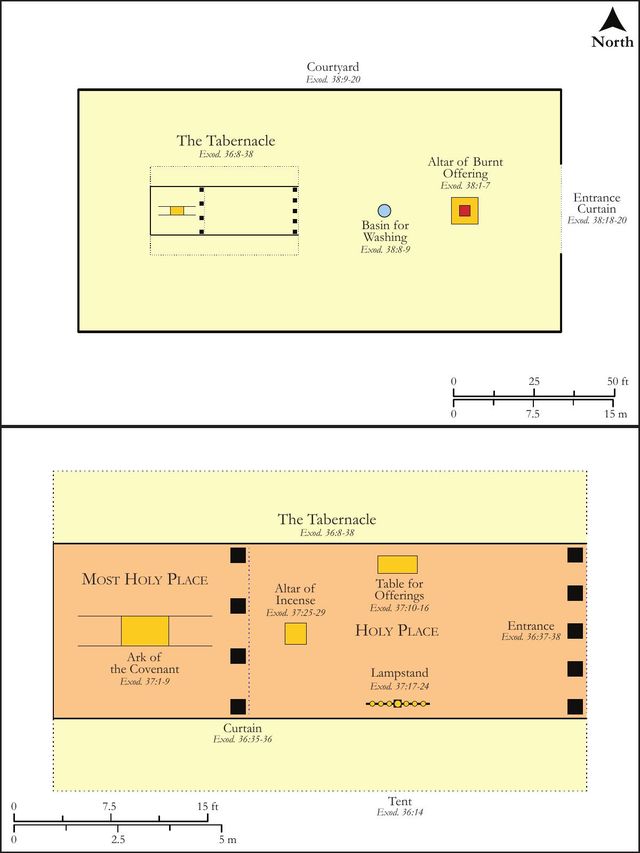
Exodus 37:10 is situated within the second major section of the book of Exodus (chapters 25-40), which details the construction and erection of the Tabernacle and its sacred furnishings. Specifically, this verse falls within the narrative of the Tabernacle's actual construction (chapters 35-40), following the detailed divine instructions given to Moses on Mount Sinai (chapters 25-31). The preceding verses in Exodus 37 describe the crafting of the Ark of the Covenant, while the verses immediately following 37:10 continue to detail the Table of Showbread, including its rings, poles, and utensils. This meticulous and often repetitive recounting of the instructions followed by their execution serves a crucial literary purpose: it emphasizes the Israelites' faithful adherence to every divine command, demonstrating their complete obedience in bringing God's dwelling place into physical reality, mirroring the divine blueprint found in Exodus 25:23-30. The repetition underscores the Tabernacle's centrality as the locus of worship and God's tangible presence among His people.
Historical & Cultural Context
The selection of "shittim wood" (acacia wood) for the Tabernacle's furnishings was both profoundly practical and symbolic for the Israelites during their wilderness journey. Acacia trees were indigenous to the arid regions of the Sinai Peninsula, making this wood readily available. Crucially, acacia wood is exceptionally hard, dense, and remarkably resistant to decay, insects, and warping, qualities essential for a portable sanctuary designed to be disassembled, transported, and reassembled over decades of nomadic wandering. The Tabernacle itself was a mobile dwelling, reflecting God's dynamic presence accompanying His nomadic people, as described in Exodus 40:36-38. The precise dimensions, given in cubits (an ancient unit of measurement typically from the elbow to the tip of the middle finger, approximately 18-21 inches or 45-53 cm), reflect the divine order and exactitude required for all aspects of the Tabernacle. This precision ensured both structural integrity and symbolic perfection according to God's specific, holy design, differentiating it from human-devised structures.
Key Themes
ShowHideExodus 37:10 contributes significantly to several overarching themes within the book of Exodus and the Pentateuch. Firstly, it highlights the theme of Divine Sovereignty and Meticulous Design. Every detail of the Tabernacle, including the dimensions and materials of the Table of Showbread, was divinely ordained, emphasizing that worship and service must align perfectly with God's revealed will, not human innovation. Secondly, the verse reinforces the theme of Obedience and Faithfulness. The careful construction by Bezalel and the craftsmen, precisely following God's blueprint, serves as a powerful example of Israel's faithfulness in executing God's commands, a stark contrast to their earlier disobedience with the golden calf in Exodus 32. Finally, the Table of Showbread itself, destined to hold the loaves representing the twelve tribes, points to the theme of God's Covenantal Provision and Sustenance. It symbolizes God's unwavering commitment to provide for His people, both physically and spiritually, in His very presence, a theme echoed in the manna provided in Exodus 16.
Exposition and Analysis
ShowHideKey Word Analysis
ShowHideFrom the root meaning "to send" or "to spread out," this term refers to a table, often implying one that is "spread out" for a meal. By implication, it can also refer to the meal itself. In the context of the Tabernacle, it denotes the specific piece of furniture designed to hold the showbread, signifying a place of divine provision and fellowship, akin to a table set for God's people.
This feminine noun, appearing here in its plural form (shittim), refers to the acacia tree. It is derived from a root suggesting "scourging thorns," indicative of the thorny nature of the acacia. The wood from this tree, known for its hardness and durability, was chosen for its practical resilience in the desert environment, symbolizing the enduring and unyielding nature of the sacred objects crafted from it.
This term refers to a unit of measure, specifically the fore-arm (below the elbow). It denotes a standard linear measurement used in ancient times. Its consistent application throughout the Tabernacle's construction underscores the divine demand for precise and exact measurements, ensuring that every component of God's sanctuary was built according to His specific, unvarying design.
Verse Breakdown
ShowHide"And he made the table [of] shittim wood"
This opening clause identifies the subject of the construction, "he" referring to Bezalel (or the craftsmen under his direction), and the object being crafted: the "table" (of showbread). The material, "shittim wood" (acacia), is specified, highlighting its durability and availability in the wilderness, forming the structural core of this sacred furnishing.
"two cubits [was] the length thereof"
This provides the first dimension of the table, establishing its length at two cubits. This measurement (approximately 36-42 inches) indicates a substantial, yet manageable, piece of furniture, suitable for its placement within the Holy Place and for holding the twelve loaves of showbread and associated vessels.
"and a cubit the breadth thereof"
This specifies the width of the table as one cubit (approximately 18-21 inches). This relatively narrow dimension suggests a design optimized for the confines of the Holy Place, allowing for efficient use of space and facilitating the priests' duties around it.
"and a cubit and a half the height thereof"
This final dimension sets the height of the table at one and a half cubits (approximately 27-31.5 inches). This height would have been ergonomically suitable for the priests, allowing comfortable access for placing and removing the showbread and performing other ceremonial functions, emphasizing the functional design inherent in God's blueprint.
Literary Devices
ShowHideThe primary literary device evident in Exodus 37:10, and pervasive throughout the Tabernacle construction narrative, is Precision and Repetition. The meticulous detailing of specific dimensions (length, breadth, height) and materials (shittim wood) for the Table of Showbread is not merely an architectural specification but a deliberate literary technique. This precision underscores the divine origin of the Tabernacle's design and God's demand for absolute adherence to His revealed will in all matters of worship and service. The repetition of these detailed instructions, first given by God to Moses and then recounted as executed by the craftsmen, emphasizes the unyielding importance of following God's commands without deviation. Furthermore, Symbolism is deeply embedded within the text. The durable shittim wood, later overlaid with pure gold (mentioned in subsequent verses), symbolizes the permanence and sacredness of God's dwelling, while the Table itself (the Table of Showbread) symbolizes God's constant provision and covenant faithfulness to His people, pointing beyond the physical object to profound spiritual truths about God's character and His relationship with Israel.
Theological and Thematic Connections
ShowHideExodus 37:10, through its precise description of the Table of Showbread, powerfully communicates several core theological themes. Firstly, it underscores the principle of divine sovereignty and the necessity of human obedience to God's revealed will. Every detail, from material to dimension, was divinely ordained, highlighting that true worship and service are not based on human ingenuity but on faithful adherence to God's blueprint. Secondly, the Table of Showbread itself, destined to hold the twelve loaves representing the twelve tribes of Israel, symbolizes God's unwavering provision and covenant faithfulness to His people. It speaks to God's desire to sustain His people, both physically and spiritually, in His presence. Finally, the sacredness of the materials and the meticulous craftsmanship point to the holiness of God and the reverence due to Him in all aspects of worship, reminding Israel that approaching a holy God requires a holy and prescribed manner.
Reflection and Application
ShowHideThe meticulous detail in Exodus 37:10, describing the construction of the Table of Showbread, serves as a profound reminder for believers today regarding the importance of faithfulness in fulfilling God's commands, even in seemingly minor aspects of our lives and service. Just as Bezalel and the craftsmen diligently followed God's precise blueprint for the Tabernacle, we are called to live our lives in obedience to God's Word, understanding that every detail matters in His eyes. This verse encourages us to consider the quality and intentionality of our spiritual service, whether in our personal devotion, family life, or communal worship. It challenges us to move beyond superficial commitment to a deep, precise adherence to God's revealed will. Furthermore, by focusing on the Table of Showbread, it prompts us to reflect on God's unwavering commitment to provide for His people, both physically and spiritually. It invites us to trust in His provision, to seek constant fellowship with Him, and to acknowledge Him as the ultimate source of all sustenance, finding our deepest nourishment in His presence and His Word, recognizing that He is always faithful to sustain His covenant people.
Questions for Reflection
ShowHideFAQ
ShowHideWhat was the primary purpose of the Table of Showbread in the Tabernacle?
ShowHideThe Table of Showbread, also known as the Table of Presence or the Table of the Presence Bread, served primarily to hold twelve loaves of unleavened bread, symbolizing God's constant provision for the twelve tribes of Israel. These loaves were placed before the Lord continually, signifying the ongoing covenant relationship and fellowship between God and His people. It was a tangible representation of God's faithfulness to sustain His people and His desire for their constant presence before Him, as detailed in Leviticus 24:5-9.
Why was shittim wood specifically chosen for the Tabernacle's furnishings?
ShowHideShittim wood (acacia wood) was chosen for its practical and symbolic qualities. Practically, it was readily available in the Sinai wilderness, and its exceptional hardness, durability, and resistance to decay and insect infestation made it ideal for the portable and long-lasting components of the Tabernacle. Symbolically, its enduring nature underscored the permanence and sacredness of God's dwelling place, even amidst the Israelites' nomadic journey. This durable core was then overlaid with pure gold, signifying the divine glory and purity of God's presence, as seen in the instructions for the Ark of the Covenant in Exodus 25:10-11.
Christ-Centered Fulfillment
ShowHideThe Table of Showbread, meticulously crafted from durable shittim wood and overlaid with pure gold, finds its ultimate and profound fulfillment in the person and work of Jesus Christ. While the showbread symbolized God's constant provision for Israel, Jesus declares Himself to be the "Bread of Life" in John 6:35, offering eternal spiritual nourishment that far surpasses the physical sustenance of the showbread. The Tabernacle's table, with its twelve loaves, pointed to God's covenant faithfulness to His people; Jesus, through His body broken and blood shed on the cross, establishes the New Covenant, providing ultimate and enduring fellowship with God for all who believe, as commemorated in the Lord's Supper (Luke 22:19-20). He is the true and living bread that came down from heaven, giving life to the world (John 6:51), and whoever feeds on Him will live forever. Thus, the Table of Showbread, a testament to God's provision in the Old Covenant, beautifully foreshadows the person and work of Christ, who is our complete and eternal spiritual sustenance and the very presence of God dwelling among us (John 1:14).